David Cronenberg’s “Videodrome” (1983) stands as a masterwork in crafting psychological horror through screenwriting. The film’s exploration of technology’s impact on human consciousness was prescient for its time and remains startlingly relevant today. For writers looking to create stories that delve into technological anxieties, “Videodrome” offers invaluable lessons in building tension, developing metaphor, and constructing meaningful horror.
The Art of the Slow Burn
One of the most striking aspects of “Videodrome’s” screenplay is its methodical pacing. The story begins with Max Renn, a cable TV programmer searching for edgy content, discovering what appears to be a pirate broadcast of extreme violence. Rather than immediately thrusting the protagonist into supernatural territory, writer-director Cronenberg carefully constructs a gradual descent into madness.
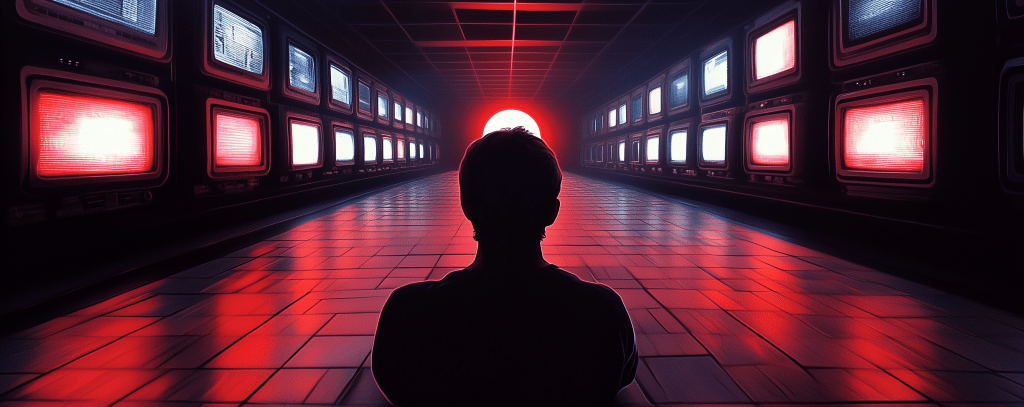
This approach to pacing serves multiple purposes. First, it allows the audience to become invested in Max as a character before his reality begins to unravel. Second, it creates uncertainty about what is “real” within the story’s framework. Writers can learn from how Cronenberg introduces seemingly mundane elements early in the script that later take on horrific significance.
Character as Vehicle for Theme
Max Renn isn’t just a protagonist; he’s a carefully crafted embodiment of the film’s central themes. His profession as a purveyor of shocking content makes him both victim and perpetrator of media exploitation. The screenplay uses his character arc to explore how technology shapes and ultimately transforms human consciousness.
For writers, this demonstrates how character development can serve thematic purposes without becoming didactic. Max’s transformation from cynical media executive to unwitting prophet of the “new flesh” feels organic because his personal journey aligns with the story’s broader philosophical concerns.
Merging the Physical and Psychological
Perhaps the most innovative aspect of “Videodrome’s” screenplay is how it manifests psychological horror in physical terms. The hallucinations Max experiences—particularly the famous “breathing” videotape and biological gun—serve as visceral metaphors for technology’s invasion of human consciousness.
This technique, often called “body horror,” isn’t merely about shock value. The screenplay uses these disturbing physical transformations to externalize internal psychological states. Writers can learn from how Cronenberg’s script builds a vocabulary of physical horror that serves the story’s deeper themes about media consumption and technological dependency.
Dialogue That Deepens Mystery
The screenplay’s dialogue deserves special attention for how it builds the film’s mysterious atmosphere. Consider Professor O’Blivion’s cryptic monologues, delivered entirely through television recordings. His philosophical proclamations about the nature of reality and technology serve multiple purposes:
- They provide necessary exposition without feeling forced
- They deepen the film’s mystery rather than explaining it away
- They contribute to the growing sense of unreality
- They reinforce the film’s themes about mediated experience
Writers can learn from how the screenplay uses dialogue not just to convey information, but to create an atmosphere of intellectual uncertainty that enhances the horror.
Structure and Reality
“Videodrome’s” structure is particularly noteworthy for how it gradually erodes the boundary between reality and hallucination. The screenplay doesn’t simply switch from “real” to “unreal” at a certain point. Instead, it creates a progressive dissolution of reality that mirrors Max’s psychological deterioration.
This approach to structure offers valuable lessons for writers tackling similar material:
- Begin with firm narrative ground
- Introduce elements of uncertainty gradually
- Allow reality to become increasingly fluid
- Never fully clarify what is “real” and what isn’t
- Use structure to reinforce themes
Metaphor and Relevance
While “Videodrome” was written in the early 1980s, its central metaphors about technology’s influence on human consciousness remain remarkably relevant. The screenplay’s concerns about media manipulation, virtual reality, and technological transformation speak even more directly to contemporary audiences familiar with smartphones, social media, and virtual reality.
Writers can learn from how the screenplay builds its metaphors on fundamental human anxieties about technology rather than specific technological details. This approach allows the story to remain relevant despite technological changes.
World-Building Through Implication
The screenplay excels at creating a rich mythology without over-explaining it. The Videodrome signal, the New Flesh philosophy, and the competing factions seeking to control the technology are all introduced with enough detail to be intriguing but enough mystery to be unsettling.
This approach to world-building demonstrates how horror can benefit from strategic ambiguity. The screenplay provides enough information for the story to make emotional sense while leaving enough questions unanswered to maintain psychological tension.
Crafting the Ending
The film’s controversial ending, with its ambiguous blend of reality and hallucination, demonstrates how horror screenwriting can transcend simple resolution. Rather than providing clear answers, the screenplay concludes with a series of increasingly surreal events that force viewers to question everything they’ve seen.
This approach to ending a horror story shows writers how ambiguity can be more effective than explanation when dealing with psychological horror. The lack of clear resolution extends the story’s impact beyond the viewing experience.
Lessons for Modern Writers
“Videodrome’s” screenplay offers several key lessons for contemporary writers:
- Ground technological horror in human psychology
- Use character development to explore themes
- Build atmosphere through strategic ambiguity
- Create metaphors that can evolve with technology
- Don’t feel obligated to explain everything
- Allow structure to reflect psychological states
- Trust the audience to engage with complex ideas
Conclusion
“Videodrome’s” screenplay remains a masterclass in writing technological horror. Its sophisticated approach to character, theme, and structure demonstrates how horror writing can address complex philosophical ideas while maintaining tension and engagement. For modern writers grappling with themes of technology and consciousness, it provides a valuable template for creating meaningful horror that resonates beyond simple scares.
✍️ Whether you’re mastering the art of dialogue, structure, or character development, the power of AI can be a game-changer in your writing journey. My Free Ebook, ‘AI for Authors’ delves into how AI-powered prompts can provide a unique edge to your storytelling process. If you’re intrigued by the prospect of supercharging your fiction skills, download your free copy today and explore new horizons in creative writing.

