The Impact of AI on Actors and Performances
Artificial intelligence (AI) is rapidly transforming industries across the globe, and the world of entertainment is no exception. As AI technology continues to advance, it is increasingly being integrated into the film and television industries, influencing everything from screenwriting to post-production. However, one of the most profound impacts of AI is on actors and their performances. This article explores how AI is reshaping the roles of actors, the ethical considerations that come with this shift, and what the future may hold for performers in an AI-driven world.
The Emergence of AI in Acting
The integration of AI into acting has been a gradual process, beginning with relatively simple applications and evolving into more complex and sophisticated technologies. Early uses of AI in acting included digital enhancements and visual effects that allowed actors to perform in fantastical environments or to appear younger or older on screen. As these technologies have advanced, AI has begun to take on more central roles in the creation and enhancement of performances.
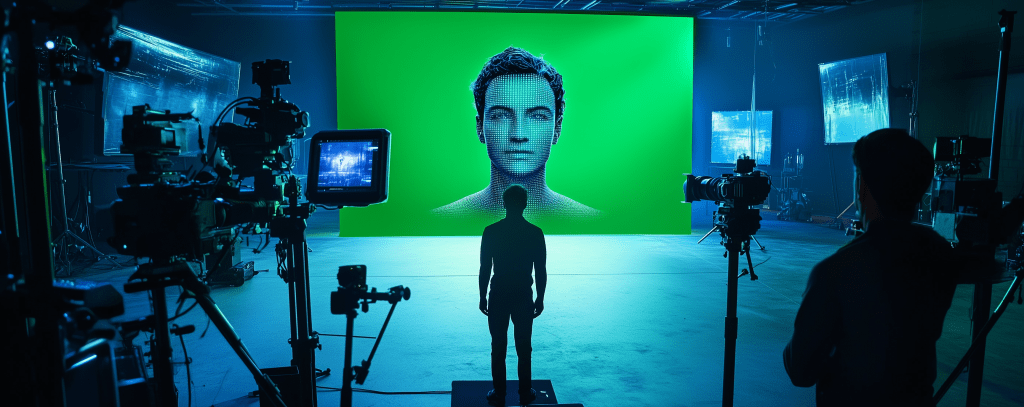
One of the most significant developments in this area is the use of AI to create digital doubles of actors. These digital doubles can be used to perform stunts, appear in scenes that are too dangerous or impractical for human actors, or even recreate the likeness of actors who are no longer living. For example, AI technology was famously used to bring Peter Cushing back to life as Grand Moff Tarkin in Rogue One: A Star Wars Story (2016), decades after the actor had passed away. This use of AI not only extends the capabilities of actors but also raises important questions about the ethics of digital resurrection.
AI-Generated Performances: A New Frontier
The evolution of AI technology has now reached a point where it can generate performances entirely from scratch. AI-generated characters, often referred to as “digital humans,” are becoming increasingly lifelike, with the ability to mimic human emotions, speech, and movements with astonishing accuracy. These digital humans can be used in various ways, from background characters to leading roles, potentially reducing the need for human actors in certain situations.
One notable example is the creation of AI-generated characters in video games and virtual reality experiences. These characters interact with players in real-time, responding to their actions and decisions in a way that feels natural and engaging. As AI continues to improve, it is conceivable that such characters could become indistinguishable from human actors in films and television shows, leading to a future where AI-generated performances are commonplace.
However, the rise of AI-generated performances also raises concerns about the future of human actors. If AI can create lifelike characters that can perform any role, what place will there be for human performers? This question is particularly relevant as AI-generated characters become more sophisticated and capable of delivering emotionally resonant performances.
The Ethical Implications of AI in Acting
The use of AI in acting brings with it a host of ethical considerations that must be carefully examined. One of the most pressing issues is the question of consent. When AI is used to create digital doubles or resurrect deceased actors, who has the right to control these digital likenesses? Should the actors themselves (or their estates) have the final say, or do the rights belong to the studios and filmmakers who created the original performances?
This issue came to the forefront with the controversy surrounding the use of AI to recreate the likeness of James Dean in a planned film decades after his death. Critics argued that using AI to “cast” Dean in a new film was disrespectful to his legacy and raised troubling questions about the potential for exploitation of deceased actors.
Another ethical concern is the impact of AI on the livelihoods of human actors. As AI-generated characters become more prevalent, there is a risk that opportunities for human performers will diminish. This could lead to a situation where only a small number of top-tier actors are able to secure work, while others find themselves replaced by digital counterparts. Additionally, the use of AI to create performances raises questions about the authenticity of those performances. Can an AI-generated character ever truly replicate the nuances and subtleties of a human performance, or will there always be something missing?
The Role of AI in Enhancing Human Performances
While there are legitimate concerns about the impact of AI on actors, it is important to recognize that AI also has the potential to enhance human performances in meaningful ways. One of the most promising applications of AI in this regard is the use of machine learning algorithms to assist actors in their craft.
For example, AI can be used to analyze an actor’s performance and provide real-time feedback on aspects such as tone, pacing, and emotion. This can help actors to refine their performances and deliver more compelling portrayals of their characters. Additionally, AI can be used to create virtual environments in which actors can rehearse their scenes, allowing them to experiment with different approaches and refine their performances before stepping on set.
AI is also being used to enhance post-production processes, allowing for greater flexibility and creativity in the editing and assembly of performances. For instance, AI can be used to seamlessly blend multiple takes of a scene, creating a final performance that incorporates the best elements of each take. This can result in a more polished and impactful performance, while also giving directors greater control over the final product.
AI and the Future of Casting
The impact of AI on casting is another area where the technology is poised to bring significant changes. Traditionally, casting directors have relied on their instincts and experience to match actors with roles. However, AI is beginning to play a role in this process as well. Machine learning algorithms can analyze a vast array of data, including an actor’s previous performances, demographic information, and even social media presence, to predict how well they might fit a particular role.
This data-driven approach to casting has the potential to reduce biases and open up opportunities for actors who might otherwise be overlooked. For example, AI could help to identify actors who are well-suited for a role based on their talent and abilities rather than relying solely on physical appearance or previous fame. However, there is also a risk that AI could reinforce existing biases if the data it is trained on reflects those biases.
Moreover, AI-driven casting could lead to a more homogenized entertainment industry, where actors are selected based on algorithms rather than creative intuition. This could result in a loss of diversity and originality in the types of performances and stories that are told.
The Blurring Line Between Human and AI Performers
As AI technology continues to evolve, the line between human and AI performers is becoming increasingly blurred. AI-generated characters are becoming more sophisticated, with the ability to deliver performances that are nearly indistinguishable from those of human actors. This raises important questions about the nature of performance itself. If an AI-generated character can evoke the same emotional response as a human actor, does it matter whether the performance is “real”?
This question is further complicated by the fact that AI can be used to enhance human performances in ways that might not be immediately apparent to the audience. For example, AI can be used to manipulate an actor’s facial expressions, voice, or movements in post-production, creating a performance that is a blend of human and machine. In this context, the concept of authorship becomes more complex, as it is no longer clear who is responsible for the final performance—the actor, the AI, or the filmmakers who directed and edited the performance.
The Impact on Actors’ Rights and Representation
As AI continues to play a larger role in the entertainment industry, it is essential to consider the implications for actors’ rights and representation. The use of AI to create digital doubles or resurrect deceased actors raises questions about intellectual property and the control that actors have over their own likenesses.
One potential solution is the development of new legal frameworks that recognize the rights of actors in the digital age. For example, actors could be granted more control over how their likenesses are used, including the right to approve or reject the use of AI-generated performances. Additionally, actors could be compensated for the use of their digital doubles or AI-generated likenesses, ensuring that they receive a fair share of the profits generated by their performances.
Another important consideration is the need for greater transparency in the use of AI in performances. Audiences should be informed when AI has been used to create or enhance a performance, allowing them to make informed decisions about the content they consume. This transparency could also help to build trust between actors, filmmakers, and audiences, ensuring that the use of AI in entertainment is ethical and respectful of the rights of all parties involved.
Conclusion: The Future of Acting in an AI-Driven World
The impact of AI on actors and performances is a complex and multifaceted issue that touches on a wide range of ethical, creative, and practical considerations. While AI has the potential to revolutionize the entertainment industry, it also poses significant challenges that must be carefully navigated.
As AI continues to evolve, it is likely that we will see a growing number of AI-generated performances and digital doubles in films and television shows. However, the unique qualities of human actors—their ability to convey deep emotion, to bring their own experiences and perspectives to their roles, and to connect with audiences on a personal level—will remain irreplaceable.
In the end, the future of acting in an AI-driven world will depend on how the industry chooses to integrate these new technologies. By embracing the potential of AI while also protecting the rights and livelihoods of human actors, the entertainment industry can create a future where technology enhances rather than diminishes the art of performance.
✍️ Whether you’re mastering the art of dialogue, structure, or character development, the power of AI can be a game-changer in your writing journey. My Free Ebook, ‘AI for Authors’ delves into how AI-powered prompts can provide a unique edge to your storytelling process. If you’re intrigued by the prospect of supercharging your fiction skills, download your free copy today and explore new horizons in creative writing.
 A.I. in Screen Trade