Introduction: Diving into a Dark Fantasy
Released in 1995, The City of Lost Children (La Cité des enfants perdus) stands as a vivid testament to the power of cinematic imagination. Directed by Marc Caro and Jean-Pierre Jeunet, this French film is a visual and narrative feast that pushes the boundaries of traditional storytelling. Set in a dystopian world where children are kidnapped for their dreams, the film blends dark fantasy, science fiction, and steampunk aesthetics, creating a unique cinematic experience.
From a screenwriting perspective, The City of Lost Children is a labyrinth of complexity. Its narrative is non-linear, its characters are eccentric, and its world-building is both intricate and bizarre. In this article, we’ll explore the elements that make the screenplay of The City of Lost Children a study in complex storytelling, examining its plot structure, character development, thematic depth, and visual storytelling.
Plot Structure: A Non-Linear Narrative
At the heart of The City of Lost Children is a non-linear narrative that challenges conventional storytelling. The film does not follow a straightforward plot but instead weaves together multiple storylines that converge in unexpected ways. This approach mirrors the chaotic, dreamlike world the film inhabits, where time and reality are fluid concepts.
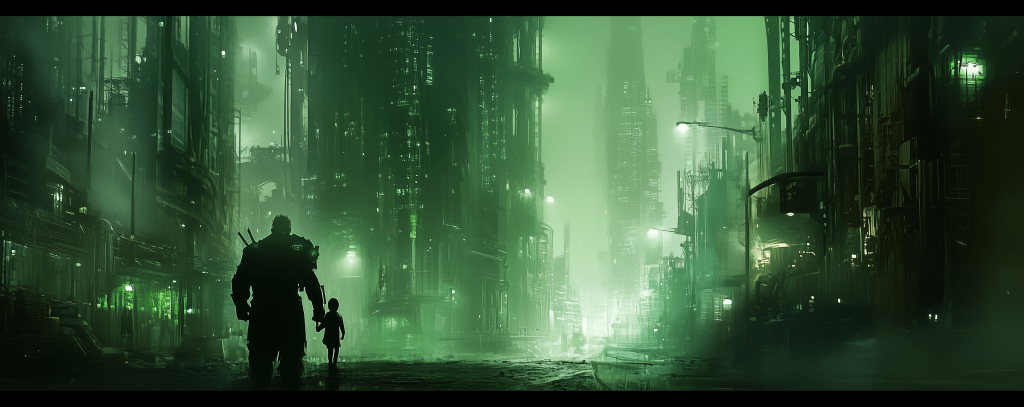
The central plot revolves around One, a strongman, who embarks on a quest to find his kidnapped brother, Denree. This quest leads him to a sinister scientist named Krank, who is unable to dream and thus kidnaps children to steal their dreams. The story is punctuated by surreal sequences, flashbacks, and dreamscapes, which blur the line between reality and fantasy.
From a screenwriting perspective, crafting such a narrative requires a deep understanding of pacing and structure. The film’s non-linear approach allows for the exploration of different characters and their backstories, while still maintaining a sense of urgency in One’s quest. The screenplay masterfully balances these elements, creating a narrative that is both disorienting and compelling.
Character Development: Eccentric and Complex Figures
The characters in The City of Lost Children are as bizarre as the world they inhabit. From the gentle giant One, played by Ron Perlman, to the villainous Krank, each character is richly developed and serves a specific narrative purpose.
One of the most striking aspects of the screenplay is how it uses these characters to explore themes of innocence, corruption, and the loss of childhood. One, despite his imposing physicality, is a symbol of purity and determination. His unwavering love for his brother drives the narrative forward, making him a relatable and sympathetic character.
On the other hand, Krank represents the corruption of innocence. His inability to dream, and his subsequent theft of children’s dreams, serves as a metaphor for the loss of childhood wonder and the destructive nature of adult desires. The film’s other characters, including a band of orphans, a brain in a vat, and a group of malevolent clones, further enrich the narrative, each adding layers of complexity to the story.
The screenplay’s ability to balance these diverse characters while maintaining narrative coherence is a testament to the writers’ skill. Each character’s motivations are clear, yet they are presented in a way that invites deeper analysis, making the film a rich text for exploring themes of identity, memory, and the human condition.
Thematic Depth: Exploring Dreams and Memory
Dreams and memory are central themes in The City of Lost Children. The film delves into the nature of consciousness, the fragility of memory, and the importance of dreams in shaping our identity. These themes are not just explored through dialogue but are deeply embedded in the film’s visual and narrative structure.
Krank’s inability to dream and his obsession with stealing the dreams of children is a powerful metaphor for the loss of innocence and the perils of unchecked ambition. The film suggests that dreams are not just a function of the subconscious but are essential to our humanity. Without them, we lose a vital part of ourselves.
From a screenwriting perspective, incorporating such abstract themes into a coherent narrative is a formidable challenge. The screenplay of The City of Lost Children handles this by intertwining these themes with the characters’ personal journeys. One’s quest to rescue his brother is not just a physical journey but a metaphorical one, representing the struggle to reclaim lost innocence and protect the purity of childhood.
Moreover, the film’s use of memory—particularly how memories can be manipulated or lost—adds another layer of complexity to the narrative. This is exemplified in the character of Miette, an orphan with a mysterious past, whose memories play a crucial role in the unfolding of the story. The screenplay deftly uses these elements to create a narrative that is both emotionally resonant and intellectually stimulating.
Visual Storytelling: A Dark and Richly Textured World
The City of Lost Children is a film where visual storytelling plays a crucial role in conveying the narrative. The world created by Caro and Jeunet is dark, industrial, and filled with grotesque yet fascinating details. The film’s visual style, heavily influenced by steampunk and surrealism, is not just a backdrop but an integral part of the story.
The screenplay makes full use of this visual richness, with scenes meticulously designed to enhance the narrative. The film’s opening sequence, where a young boy is haunted by a series of nightmarish Santa Clauses, sets the tone for the film, immediately immersing the audience in its surreal world. This sequence, like many others in the film, relies heavily on visual cues to communicate its themes and emotions, a technique that requires careful planning in the screenplay.
The use of color, lighting, and set design in the film is also noteworthy. The greenish, sickly hue that permeates many scenes adds to the sense of unease and otherworldliness. The screenplay’s description of these elements would have been essential in guiding the film’s visual direction, ensuring that the world of The City of Lost Children was as much a character in the story as the people who inhabit it.
The screenplay’s emphasis on visual storytelling is a reminder of the importance of the “show, don’t tell” principle in screenwriting. In a film where dialogue is often minimal, the visuals carry much of the narrative weight. The film’s complex themes and emotions are conveyed through its imagery, from the eerie laboratory where Krank conducts his experiments to the claustrophobic streets of the dystopian city.
The Role of Symbolism: Layers of Meaning
Symbolism is woven throughout the screenplay of The City of Lost Children, adding layers of meaning to the narrative. The use of clocks, for instance, is a recurring motif in the film, symbolizing the passage of time and the inevitability of aging—a poignant counterpoint to the film’s focus on childhood and dreams.
The character of the diver, who appears at key moments in the film, serves as a symbol of exploration and discovery. His descent into the depths mirrors One’s own journey into the dark recesses of the city, searching for his lost brother. These symbols are not just decorative but are integral to the film’s narrative and thematic structure.
The screenplay’s use of symbolism is a masterclass in subtlety. Rather than overtly explaining the significance of these symbols, the screenplay allows them to resonate naturally within the story, inviting the audience to engage with the film on a deeper level. This approach to symbolism is a powerful tool in screenwriting, adding depth and richness to the narrative without resorting to didacticism.
Conclusion: A Masterclass in Complex Screenwriting
The City of Lost Children is a film that defies easy categorization. Its blend of fantasy, science fiction, and horror, combined with its non-linear narrative and rich visual style, makes it a unique cinematic experience. From a screenwriting perspective, it is a masterclass in how to craft a complex, multi-layered narrative that engages both the intellect and the emotions.
The film’s screenplay is a testament to the power of imagination and the importance of pushing the boundaries of conventional storytelling. By embracing non-linearity, creating richly developed characters, and exploring deep thematic content through visual storytelling and symbolism, The City of Lost Children offers valuable lessons for screenwriters.
For those interested in screenwriting, the film serves as a reminder that complexity in storytelling is not about making things confusing, but about creating a narrative that is rich in meaning and open to multiple interpretations. It shows that with careful planning and a clear vision, even the most unconventional stories can be told in a way that resonates deeply with audiences.
In a world where many films follow a formulaic structure, The City of Lost Children stands out as a beacon of creativity, proving that there is still room in cinema for stories that challenge, inspire, and transport us to places we have never been before.
✍️ Whether you’re mastering the art of dialogue, structure, or character development, the power of AI can be a game-changer in your writing journey. My Free Ebook, ‘AI for Authors’ delves into how AI-powered prompts can provide a unique edge to your storytelling process. If you’re intrigued by the prospect of supercharging your fiction skills, download your free copy today and explore new horizons in creative writing.

