The Wilder Touch: Screenwriting Tips from Billy Wilder’s Career

I. Introduction: Billy Wilder’s Legacy in Screenwriting

Born in 1906 in what was then Austro-Hungary and is now Poland, Billy Wilder would rise to be one of the defining voices of Hollywood’s Golden Age. His career, spanning over five decades, carved an indelible mark on the landscape of cinema, influencing both his contemporaries and the generations of screenwriters who would follow. His legacy in screenwriting remains as a beacon of excellence, ingenuity, and profound understanding of human nature.

Wilder’s initial foray into the world of screenwriting occurred when he was still in Europe. He started in Berlin, crafting German-language scripts before escaping the rise of the Nazis and finding a home in the dream factory of Hollywood. A cultural outsider with a keen eye for human behaviour, Wilder was able to create narratives that offered an unflinching and often satirical reflection of American society.

Over his illustrious career, he was responsible for such cinematic masterpieces as “Sunset Boulevard,” “Double Indemnity,” “Some Like It Hot,” and “The Apartment,” each showcasing his distinctive blend of razor-sharp wit, trenchant social commentary, and empathetic characterisation. Wilder received a remarkable twenty-one Academy Award nominations, winning six, a testament to his mastery of the medium and the respect he commanded among his peers.

Some Like it Hot (movie)

Wilder was known for his versatile talent; he didn’t limit himself to a single genre. Instead, he worked across a range of forms, from film noir to comedy to drama, imprinting his distinctive style on each. This genre-spanning skill is part of what sets Wilder apart and contributes to his lasting legacy. He had an uncanny knack for defining and even redefining genres through his groundbreaking work, each of his films serving as a masterclass in the potential of cinematic storytelling.

When discussing Wilder’s legacy, one must also consider his distinct approach to screenplay structure. Despite being a craftsman of narrative and dialogue, he didn’t strictly adhere to the conventional three-act structure, as many of his contemporaries did. Instead, he allowed his stories to unfold organically, privileging character development and emotional truth over prescriptive plotting. This is not to say his work lacked structure—far from it. Wilder was a meticulous planner, known for his detailed scene breakdowns and character sketches, which laid the foundation for his captivating screenplays.

This free-form yet considered approach to structure is arguably what allowed Wilder’s films to be so emotionally resonant and thematically complex. He believed that the characters should dictate the direction of the story, not the other way around. This ethos resulted in narratives that feel dynamic and authentic, driven by characters with clear motivations and rich emotional lives.

Wilder’s screenwriting was marked by an unerring commitment to honesty. He didn’t shy away from presenting the darker sides of humanity, even in his comedies. He was renowned for his ability to blend humor with serious, sometimes bleak, subject matter. His biting wit and social critique often presented a mirror to society, confronting audiences with uncomfortable truths wrapped in compelling narratives.

Of all his contributions to the field of screenwriting, Wilder’s most enduring legacy may be his unparalleled mastery of dialogue. His characters crackle with personality, their speech patterns filled with quick wit, sharp repartee, and psychological insight. Through his dialogue, Wilder gave voice to a broad spectrum of characters, each distinct, memorable, and deeply human. His knack for memorable one-liners has filled many a book of famous movie quotes, each a testament to his genius in using dialogue as a tool for character development and thematic exploration.

II. The Wilder Method: Screenwriting Techniques and Screenplay Structure

Billy Wilder’s method to screenwriting was as unique as the man himself, with several distinctive elements setting him apart from other screenwriters of his time. His techniques ranged from the detailed planning of screenplay structure to the development of rich, authentic dialogue. This section will delve into Wilder’s innovative methods, providing insights into the techniques that made his work resonate so powerfully on the big screen.

To start, it’s essential to understand that Wilder approached screenplay structure in a manner quite different from the classical Hollywood paradigm. While many of his contemporaries followed the well-trodden path of the three-act structure, Wilder’s narratives often refused to fit neatly within this framework. Instead, they were characterized by a more organic evolution, with the narrative arcs of his characters driving the story progression. In Wilder’s screenplays, the structure served the characters, not the other way around. This approach afforded his films a sense of realism and unpredictability that often defied audience expectations, keeping them on the edge of their seats.

However, Wilder’s rejection of strict, formulaic screenplay structure should not be mistaken for an absence of planning or structure altogether. In fact, Wilder was known to spend extensive time in the pre-writing stage, meticulously sketching out each scene and developing comprehensive character profiles. His detailed scene breakdowns often included not just actions and dialogue, but also specific camera directions, suggesting how the visual aspects of the film could underscore the narrative and character arcs.

A classic example of Wilder’s script writing techniques can be seen in his film “Double Indemnity.” The structure of this film unfolds not in a traditional linear fashion, but through the device of a confession framed by flashbacks. This narrative technique heightened the suspense and lent a sense of inevitable doom that kept audiences riveted. Moreover, it allowed for a more complex exploration of the protagonist’s psychology, providing a compelling case study in character-driven storytelling.

Moving on to dialogue, Wilder’s films are a masterclass in how to use conversation as a narrative tool. His characters spoke with voices that were distinct, nuanced, and full of personality. This authenticity was born out of Wilder’s careful observation of real speech patterns and his understanding of the value of subtext. He once said, “If you have a problem with the third act, the real problem is in the first act.” This quote encapsulates his belief that dialogue should serve the story, pushing the narrative forward and revealing character motivations.

In “Some Like It Hot,” the quick-fire banter and sharp wit are more than just humorous; they’re integral to establishing the tone of the film and the relationships between the characters. The dialogue also cleverly disguises exposition, revealing crucial plot information in a manner that feels natural and engaging. Wilder’s deft handling of dialogue was not limited to his comedies. In his darker films, like “Sunset Boulevard,” the dialogue often carried a bitter, cynical edge, reflecting the underlying themes of ambition, decay, and disillusionment.

Wilder also employed a variety of writing techniques to ensure his characters were well-rounded and believable. He placed significant emphasis on character backstory, believing that understanding a character’s past was crucial to shaping their motivations and actions within the story. For example, in “The Lost Weekend,” the protagonist’s struggle with alcoholism is given depth and context through carefully inserted snippets of his past. By offering the audience glimpses into the character’s history, Wilder added layers of complexity, making the character’s journey more poignant and relatable.

Moreover, Wilder was not afraid to delve into the darker aspects of his characters, exploring their flaws and shortcomings with brutal honesty. His characters were not simply heroes or villains; they were deeply human, with a complex mixture of strengths and weaknesses. This willingness to show characters in all their imperfect glory resulted in narratives that were compelling, relatable, and often ahead of their time in their exploration of moral ambiguity.

III. Applying the Wilder Touch: Writing Tips and Writing Prompts for Today’s Screenwriters

Billy Wilder was a master of his craft, and his unique approach to screenwriting offers a plethora of valuable lessons for aspiring writers. Studying his films and techniques can provide a wealth of inspiration and practical tips to incorporate into one’s own writing. In this section, we’ll extract actionable writing tips from Wilder’s methods and provide some writing prompts inspired by his work.

  1. Embrace Organic Storytelling: Unlike many of his contemporaries, Wilder did not strictly adhere to the traditional three-act screenplay structure. He allowed his characters and their development to drive the narrative. This approach provided his stories with an organic flow, making them feel more real and engaging. This doesn’t mean you should throw structure out the window, but consider how it can serve your characters and their arcs, rather than imposing artificial constraints on your storytelling.
  2. Planning and Pre-writing Are Key: Despite his flexible approach to screenplay structure, Wilder was a meticulous planner. Before starting on a screenplay, he would flesh out his characters, plan each scene in detail, and outline the overall narrative. This preparation allowed him to have a deep understanding of his characters and where his story was heading, making the writing process more straightforward and efficient. Even if you’re more of a discovery writer than a planner, taking time for pre-writing can help you get a better grasp of your story.
  3. Dialogue as a Storytelling Tool: Wilder was known for his sharp, memorable dialogue. He used conversation not just as a way for characters to communicate, but as a tool for revealing character traits, advancing the plot, and setting the tone of the film. As you write dialogue, consider what each line is doing for your story. Is it revealing something about the character? Pushing the plot forward? Establishing the mood? If it’s not serving a purpose, it might be worth revisiting.
  4. Characters Are Key: One of the hallmarks of Wilder’s screenwriting was his emphasis on well-rounded, believable characters. He spent time developing their backstories and understanding their motivations, which allowed him to write characters who felt real and relatable. As you work on your own scripts, remember to give your characters the same level of attention. Who are they? What do they want? What are their fears, their dreams, their flaws? The more you know your characters, the more compelling they will be.
  5. Explore the Moral Grey Areas: Many of Wilder’s characters operated in the moral grey area. They were neither outright heroes nor villains, but deeply flawed individuals trying to navigate their circumstances. This added a layer of complexity to his stories and made his characters more human. Don’t be afraid to explore the moral complexities of your own characters. It can make for richer, more engaging storytelling.
  6. Writing Prompts Inspired by Wilder’s Work:
    • Write a scene where a character’s past comes back to haunt them, à la “Double Indemnity.”
    • Create a dialogue exchange that reveals something unexpected about a character, similar to the clever dialogues in “Some Like It Hot.”
    • Write a scene that showcases a character’s moral ambiguity, drawing inspiration from “Sunset Boulevard.”
    • Craft a sequence where the character’s actions contradict their stated intentions, a common trait in many of Wilder’s complex characters.

In conclusion, applying the “Wilder touch” to your own screenwriting involves prioritizing character development, using dialogue as a storytelling tool, embracing organic storytelling, and being unafraid to delve into moral complexity. Incorporating these writing tips into your practice can not only enhance your scriptwriting skills but also deepen your understanding of the craft. As you navigate your own screenwriting journey, keep Wilder’s methods in mind, and remember his commitment to honesty, innovation, and the power of the human story.

✍️  Whether you’re mastering the art of dialogue, structure, or character development, the power of AI can be a game-changer in your writing journey. My Free Ebook, ‘AI for Authors’ delves into how AI-powered prompts can provide a unique edge to your storytelling process. If you’re intrigued by the prospect of supercharging your fiction skills, download your free copy today and explore new horizons in creative writing. 

The Complexity of AI and Screenwriting: Not a Binary Issue

As the world progressively embraces the fascinating realms of artificial intelligence (AI), discussions on the role of AI in various creative fields, especially in literature and film, have emerged. The domain of AI and screenwriting is an intriguing and complex one, an area that can’t be simplified into a binary perspective of ‘good or bad’, or a matter of ‘replacement or enhancement’.

This article will delve deeper into the intertwined aspects of AI and screenwriting, highlighting its intricate divergence from novel writing. This article aims to offer valuable insights to screenwriters, filmmakers, AI enthusiasts, and all readers who appreciate the intersection of technology and the arts.

AI in the Creative Process

Before digging deep into screenwriting, let’s take a moment to understand the general application of AI in the creative process. AI has proven itself useful in several creative sectors, from visual art, music, and literature. These AI systems can analyze vast datasets of creative works, identify patterns, and produce new creations based on those patterns.

It’s important to note that AI’s role in creativity is primarily as an assistant rather than a creator in its own right. In other words, while AI can generate content, the creative impulse, the heart and soul, is still fundamentally human.

Screenwriting vs. Novel Writing

Screenwriting differs from novel writing in significant ways. Novel writing is a solitary endeavor, generally hinged on the unique voice, vision, and narrative of an author. On the other hand, screenwriting, at its core, is a collaborative effort. A screenplay is the backbone of a film or television show that also depends on directors, actors, cinematographers, and other film crew members to come to life.

In terms of structure and format, screenplays adhere to a more rigid structure and brevity than novels. This makes the application of AI in screenwriting a unique challenge, and it’s here that the black-and-white perspective of AI as merely a tool or threat starts to fray.

The Role of AI in Screenwriting

AI’s potential in screenwriting is dual-faceted. On one hand, it can assist screenwriters by automating specific tasks like script formatting, character tracking, and even suggesting plot points based on data analysis. On the other hand, AI’s capability to write full-length screenplays is still a point of contention.

Currently, AI cannot capture the nuance, creativity, or emotive depth inherent in human-written screenplays. While AI can mimic writing styles or formats, it lacks the inherent understanding of human emotions and motivations, resulting in flat characters and plotlines.

However, this doesn’t negate AI’s role in screenwriting. The automated tasks mentioned earlier can free up a screenwriter’s time, allowing them to focus more on character development, plot intricacies, and dialogue.

AI in Screenwriting: An Enhancement, Not a Replacement

AI is better considered an enhancement, not a replacement for screenwriting. AI can provide screenwriters with powerful tools to support their creative process without stifling or replacing human creativity.

It’s important to view AI as a collaborative partner that can help enhance and streamline the screenwriting process. By taking advantage of AI’s capabilities, screenwriters can elevate their work, creating richer, more compelling stories.

Challenges and Ethical Considerations

As we further integrate AI into screenwriting, several challenges and ethical considerations emerge. Ownership and copyright issues, the fear of AI homogenizing the creative process, and the potential misuse of AI technology are concerns that need addressing.

Given the collaborative nature of screenwriting, the use of AI could blur the lines of authorship, leading to complex legal challenges. There’s also the worry that relying too heavily on AI could lead to a homogenization of content, as AI operates primarily on existing data and patterns.

Despite these challenges, the integration of AI in screenwriting is not a matter of if but when. By actively engaging in these discussions, we can ensure that AI is used responsibly and ethically in the screenwriting process.

Conclusion

The intersection of AI and screenwriting is far from being a binary issue. It’s a complex dynamic that requires a deep understanding of both the technology and the craft. As screenwriters and AI developers collaborate, they pave the way for the future of screenwriting — a future that’s not black or white, but rather an exciting spectrum of possibilities.

✍️  Whether you’re mastering the art of dialogue, structure, or character development, the power of AI can be a game-changer in your writing journey. My Free Ebook, ‘AI for Authors’ delves into how AI-powered prompts can provide a unique edge to your storytelling process. If you’re intrigued by the prospect of supercharging your fiction skills, download your free copy today and explore new horizons in creative writing. 

Exploring the Process of Adaptation: ‘Fight Club’ (1999) From Chuck Palahniuk’s Novel

Adaptation—the process of translating a work from one medium to another—is an art form that demands a delicate balance of respect for the original work and the audacity to reimagine it. In the context of screenwriting, adaptation often involves the transformation of a novel into a screenplay. It’s a challenging task that requires creative finesse, analytical skill, and, above all, a profound understanding of screenplay structure. One of the most iconic instances of successful adaptation in modern cinema is ‘Fight Club‘ (1999), directed by David Fincher and based on Chuck Palahniuk’s eponymous novel.

Before delving into the adaptation process, let’s consider the landscape into which ‘Fight Club’ was introduced. Published in 1996, Palahniuk’s novel was a startling piece of transgressive fiction that burrowed into the cultural subconsciousness, grappling with themes of masculinity, consumerism, and identity. The protagonist—an insomniac office worker known only as ‘the narrator’—descends into anarchy with the charismatic Tyler Durden, co-founding an underground fighting ring as an outlet for their disenfranchisement with society. The story struck a chord with readers, and it wasn’t long before Hollywood took notice.

David Fincher, known for his darkly aesthetic storytelling, took the helm of the film adaptation. Fincher had an illustrious track record, directing cinematic masterpieces such as ‘Se7en‘ (1995) and ‘The Game‘ (1997). But the task of translating ‘Fight Club’ to the screen posed an intriguing challenge. Palahniuk’s novel was filled with internal monologues, complex character development, and a twist that could be tough to pull off visually. To successfully adapt ‘Fight Club’, Fincher and his screenwriter Jim Uhls had to understand the intricacies of screenplay structure, employing creative solutions to align the novel’s elements with the structural demands of a feature film.

The screenplay structure is critical to the success of a film. In essence, it’s the skeleton upon which the flesh of the story is hung. A good screenplay maintains a careful balance between exposition, rising action, climax, falling action, and denouement. The most commonly used structure is the three-act structure—setup, confrontation, and resolution—which serves as a guidepost for screenwriters. ‘Fight Club’ follows this structure, despite its unconventional storytelling.

In the setup phase, the film presents the protagonist’s discontent with his life, his insomnia, and his meaningless job. We then meet the mysterious Tyler Durden, and the two establish the Fight Club. This leads into the confrontation phase, where the fights escalate into ‘Project Mayhem’, a destructive, anti-capitalist movement. The shocking twist—where we learn that the narrator and Tyler Durden are the same person—serves as the climactic moment, leading into a resolution that is both enigmatic and profoundly satisfying. Each act evolves naturally from the last, moving the story forward and keeping the audience engrossed.

Adapting ‘Fight Club’ wasn’t about simply transferring the plot of the novel to the screen. Rather, it involved reimagining the novel’s thematic core within the structural constraints of a film. This is where the art of adaptation shines through. It’s about taking the soul of a piece of literature—the themes, the characters, the conflicts—and recasting them in a cinematic form. The result is a screenplay that retains the novel’s essence while also standing on its own as a unique piece of art.

However, the process of adaptation is not purely mechanical; it’s not about ticking off the boxes of screenplay structure. There’s a level of creativity involved that brings the story to life in the new medium. This often requires a deft understanding of cinematic language—how to show, not tell, a story; how to use the camera as a narrative tool; how to harness the power of sound and silence. David Fincher and Jim Uhls understood this. They didn’t simply tell us about the narrator’s alienation; they showed us, using visual and auditory cues to immerse the audience in his fragmented reality.

At its core, adaptation is a balancing act, one that involves staying true to the source material while also creating something new and engaging for the screen. It requires a thorough understanding of both mediums, a respect for the original work, and the courage to make creative choices. ‘Fight Club’ exemplifies this balance. Its success serves as a testament to the power of effective adaptation and the critical role of screenplay structure in shaping a story for the screen.

From Page to Screen: Techniques and Challenges in ‘Fight Club’s’ Screenplay Adaptation

Adapting a novel into a screenplay is a journey filled with challenges and discoveries. The novelist has the freedom to delve deep into a character’s psyche, to describe settings in great detail, and to play with narrative structure. A screenwriter, however, is constrained by the visual nature of film. They must show what a character is thinking, create an atmosphere through visual cues, and follow a narrative structure that keeps the audience engaged. When David Fincher and screenwriter Jim Uhls set out to adapt ‘Fight Club’, they faced these challenges head-on, using innovative script writing techniques to bring Chuck Palahniuk’s novel to the screen.

One of the primary challenges in adapting ‘Fight Club’ was its first-person narrative. The novel is told entirely from the perspective of the unnamed narrator, offering readers direct insight into his thoughts and emotions. Translating this narrative style to film, which is inherently a third-person medium, required creative solutions.

The use of voice-over became an effective tool in this regard. Voice-over is a script writing technique that allows the audience to hear a character’s inner thoughts. While it’s often cautioned against in screenwriting circles for its potential to disconnect the audience from the action, ‘Fight Club’ employs it with artful dexterity. The voice-over doesn’t merely relay the novel’s monologues; it adds another layer of depth to the film’s narrative, providing the audience with a direct line to the narrator’s mind. It’s used to great effect, helping to preserve the first-person narrative of the novel and providing a critical insight into the internal chaos of the protagonist.

The nonlinear narrative of the novel posed another challenge. ‘Fight Club’ bounces around in time, with the protagonist often slipping between reality and hallucination. The film, however, needed a structure that would keep the audience oriented and engaged. The solution was to employ a flash-forward technique. The film begins in media res, at the climax of the story, with the narrator held at gunpoint by Tyler Durden. This scene repeats near the end of the film, providing a cyclical structure that offers a sense of completeness and progression. This nontraditional narrative approach also serves as a tool to pique audience curiosity and maintain suspense throughout the film.

Moreover, the iconic twist of the novel—that the narrator and Tyler Durden are the same person—presented a significant hurdle. It was a revelation that relied heavily on the novel’s interior monologue and could easily lose its impact in a visual medium. To maintain the surprise element, the film employed careful misdirection and subtle foreshadowing. It utilized visual and auditory cues to hint at the truth, such as the fleeting appearances of Tyler before his formal introduction or the use of similar phrasing by both characters. It was a delicate tightrope to walk, but the film handled it with a clever mixture of visual storytelling and sharp dialogue.

Not all elements of the novel could be translated to the screen, which is often the case with adaptation. Some scenes and characters were omitted or altered to fit the film’s structure and pace. For example, certain aspects of Project Mayhem were amplified in the film to enhance the visual spectacle and dramatic tension. These changes were not random but carefully considered, based on the understanding of what would serve the narrative best in its new medium.

One of the most essential script writing techniques used in ‘Fight Club’ was the use of visual symbolism. In the novel, ideas such as consumerism and the struggle for identity are explored through the narrative. In the film, these themes are often conveyed through visual cues—the sterile conformity of the narrator’s apartment, the brutal physicality of the fights, or the destructive acts of Project Mayhem. This use of visual storytelling underscores the film’s themes, serving as a cinematic equivalent of Palahniuk’s biting social commentary.

The process of adapting ‘Fight Club’ was not without its challenges, but these hurdles offered opportunities for creative problem-solving. By employing innovative script writing techniques—voice-over, flash-forwards, visual symbolism—Fincher and Uhls were able to retain the novel’s narrative style and thematic depth while crafting a story that thrived in the visual medium of film.

At the heart of this process was a deep respect for the source material, a keen understanding of cinematic language, and the courage to make creative choices. While the adaptation was not a page-for-page translation, it captured the essence of Palahniuk’s novel, transforming it into a cinematic experience that resonated with audiences.

In the realm of adaptation, challenges are not barriers; they are invitations to innovate. ‘Fight Club’ stands as a testament to this, demonstrating that with the right script writing techniques and a clear vision, a novel can not only be adapted into a film but can be reborn, reaching new audiences and offering fresh interpretations.

Screenwriting Lessons from ‘Fight Club’: Tips and Prompts for Aspiring Screenwriters

The adaptation of ‘Fight Club’ offers a wealth of insights into the art of screenwriting. From script writing techniques to handling narrative structure, the film showcases how to translate a complex novel into an engaging cinematic experience. For those embarking on the journey of writing a screenplay, ‘Fight Club’ provides invaluable lessons, tips, and prompts.

1. Embrace Voice-Over When It Serves The Story

While voice-over is often regarded as a lazy screenwriting tool, ‘Fight Club’ demonstrates that, when used thoughtfully, it can add depth to a story. The film employs voice-over to give us a direct line to the narrator’s thoughts, preserving the first-person narrative of the novel. This technique is especially useful when a character’s internal state is crucial to the plot.

Writing Tip: If you choose to use voice-over, make sure it’s essential to the story and not merely an exposition device. Let it reveal character insights, provide perspective, or add another layer to the narrative.

Writing Prompt: Write a scene where voice-over reveals a character’s internal conflict, juxtaposing it with their outward appearance.

2. Harness The Power Of Visual Storytelling

Film is a visual medium, and ‘Fight Club’ excels at visual storytelling. The film uses visual cues to convey its themes of consumerism, identity, and rebellion. From the uniformity of the narrator’s apartment to the brutal fights, the film tells its story as much through its visuals as its dialogue.

Writing Tip: Show, don’t tell. Rather than having characters talk about their feelings or the plot, show it through their actions, their environment, and their interactions with others.

Writing Prompt: Write a scene that conveys a character’s emotional state using only visual descriptions.

3. Use Structure Creatively

‘Fight Club’ plays with the traditional three-act structure to maintain suspense and keep the audience engaged. The film begins in media res, looping back to this scene near the end for a satisfying payoff.

Writing Tip: While the three-act structure is a useful guide, don’t be afraid to play with it. A non-linear narrative, flashbacks, or a cyclical structure can add interest and tension to your screenplay.

Writing Prompt: Re-write a traditional three-act story synopsis with a non-linear narrative structure.

4. Handle Twists With Care

The revelation that the narrator and Tyler Durden are the same person is a game-changing twist in both the novel and the film. ‘Fight Club’ uses subtle foreshadowing and misdirection to preserve this surprise, ensuring it lands with maximum impact.

Writing Tip: If your screenplay includes a twist, lay the groundwork subtly. Use foreshadowing to hint at the twist but ensure it doesn’t give the game away.

Writing Prompt: Write a scene that subtly foreshadows a major plot twist without revealing it.

5. Don’t Be Afraid To Make Changes

‘Fight Club’ makes several changes from the novel to suit the film format better, including altering characters and amplifying aspects of Project Mayhem. These changes were necessary to fit the narrative into the cinematic structure and to enhance its visual impact.

Writing Tip: When adapting a novel, don’t feel obligated to stick to the source material religiously. Be open to changes that serve the story in its new format.

Writing Prompt: Pick a scene from a favorite book and rewrite it as a screenplay, making necessary changes to suit the film medium.

‘Fight Club’ serves as a masterclass in screenwriting, offering valuable insights and lessons for both seasoned and aspiring screenwriters. It showcases the power of innovative script writing techniques, the importance of narrative structure, and the need for creative flexibility. Whether you’re crafting an original screenplay or adapting a beloved novel, ‘Fight Club’ reminds us that the essence of screenwriting lies in telling compelling stories that resonate with audiences, regardless of the medium’s constraints.

✍️  Whether you’re mastering the art of dialogue, structure, or character development, the power of AI can be a game-changer in your writing journey. My Free Ebook, ‘AI for Authors’ delves into how AI-powered prompts can provide a unique edge to your storytelling process. If you’re intrigued by the prospect of supercharging your fiction skills, download your free copy today and explore new horizons in creative writing. 
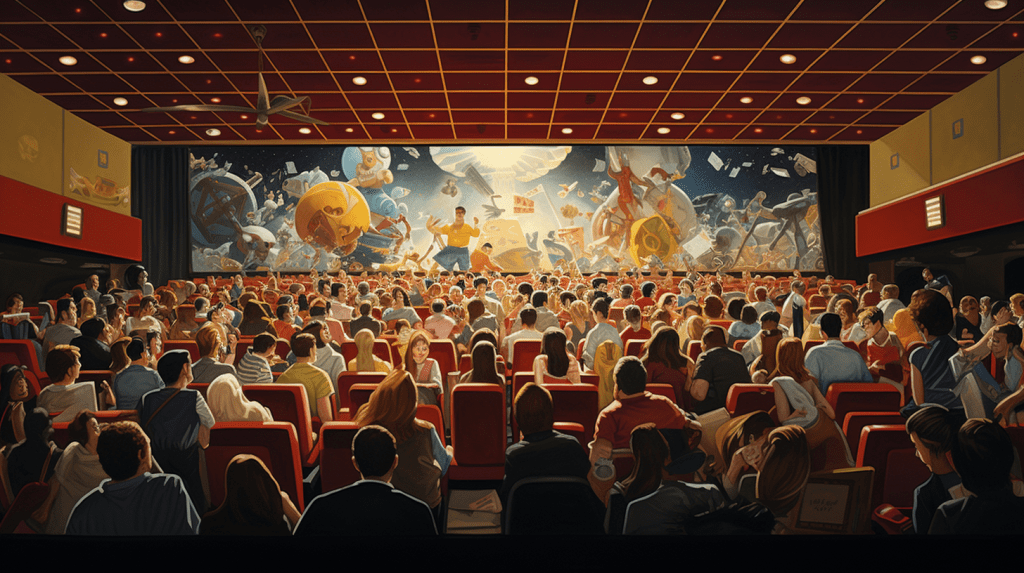
Machines, Minds, and Masterpieces: Top 10 Movies about A.I.

Artificial intelligence (AI) technology has fascinated filmmakers for decades, providing fodder for stories that probe our deepest fears, challenge our ethics, and encourage us to imagine what the future might hold. In this post, we’ll explore the top 10 films about AI technology, delving into the themes they examine and the cinematic techniques they employ to captivate audiences.

1. “Ex Machina” (2014)

This compelling film tells the story of a young programmer selected to participate in an experiment involving a humanoid AI. The movie skillfully raises philosophical questions about consciousness, manipulation, and what it means to be human.

2. “Her” (2013)

Spike Jonze’s critically-acclaimed film follows a man who falls in love with an AI operating system. “Her” delves into the complexity of relationships, loneliness, and the blurred boundaries between human and artificial emotional intelligence.

3. “Blade Runner” (1982)

Set in a dystopian future, “Blade Runner” explores ethical and moral dilemmas around artificial life. Its iconic Replicants blur the line between human and machine, and force us to question the nature of empathy and memory.

4. “A.I. Artificial Intelligence” (2001)

Directed by Steven Spielberg, this film presents the touching story of a robot child who desires to become a ‘real’ boy. The movie investigates themes of love, loss, and the moral responsibilities inherent in creating sentient life.

5. “The Matrix” (1999)

While it may be best known for its ground-breaking special effects, “The Matrix” provides a fascinating examination of AI as a dominating and destructive force, challenging our perceptions of reality along the way.

6. “WALL-E” (2008)

Pixar’s charming robot WALL-E gives us a glimpse into a future Earth, abandoned by humans and left to be cleaned up by AI. This animated film is a poignant commentary on consumerism, environmental neglect, and the enduring power of love.

7. “Ghost in the Shell” (1995)

This influential anime delves deep into questions of identity, consciousness, and the merging of human and machine, offering a vision of a future where cybernetic technology is commonplace.

8. “Terminator 2: Judgment Day” (1991)

The “Terminator” series explores the risks of uncontrolled AI, presenting a world on the brink of destruction by Skynet, an AI defense network. Its iconic character, the T-800, embodies our fears and fascinations with self-aware machines.

9. “WarGames” (1983)

A thrilling film about a teenager who accidentally triggers a nuclear war simulation on a military supercomputer. “WarGames” explores the potential catastrophic consequences of autonomous AI in warfare.

10. “Transcendence” (2014)

This film delves into the concept of the Singularity, a point when artificial intelligence surpasses human intelligence, leading to unprecedented and uncontrollable outcomes. It’s a meditation on the power, and potential misuse, of technology.

These ten films offer a diverse exploration of AI technology, utilizing the medium of cinema to pose thought-provoking questions, challenge assumptions, and create complex narratives that explore the relationship between humanity and machine.

✍️  Whether you’re mastering the art of dialogue, structure, or character development, the power of AI can be a game-changer in your writing journey. My Free Ebook, ‘AI for Authors’ delves into how AI-powered prompts can provide a unique edge to your storytelling process. If you’re intrigued by the prospect of supercharging your fiction skills, download your free copy today and explore new horizons in creative writing. 

Anatomy of the Summer Blockbuster

Every year, as the days lengthen and temperatures rise, an equally predictable phenomenon takes place in the realm of cinema. The summer blockbuster season bursts onto screens, punctuated by high-stakes narratives, larger-than-life characters, and stunning visual spectacles. But what constitutes a summer blockbuster, and how did this annual event become such a lucrative cornerstone of Hollywood’s ecosystem? Join me in this deep dive into the anatomy of the summer blockbuster.

The Birth of the Summer Blockbuster

The term “blockbuster” originated during World War II, used to describe bombs capable of destroying an entire block. Its transition to cinema is metaphorical but no less explosive. The era of the summer blockbuster began with the release of “Jaws” in 1975, closely followed by “Star Wars” in 1977, where they shattered box office records and changed the landscape of cinema forever. These films set the gold standard for the elements that define a blockbuster: high-concept storytelling, universal themes, and an immersive spectacle.

The Anatomy of a Blockbuster

1. High-Concept Storytelling

High-concept is a term used to describe a story that can be easily explained and quickly understood. It often contains a ‘what if’ question that provokes imagination and invites potential viewers into the narrative. For example, “Jurassic Park’s” “what if we could bring dinosaurs back to life?” or “The Avengers'” “what if a group of superhumans joined forces to save the world?”. High-concept movies are easily marketable due to their straightforward yet compelling premises, which make them ideal candidates for the summer blockbuster category.

2. Universal Themes

Blockbusters appeal to a wide demographic by employing universal themes—love, heroism, adventure, self-discovery, etc. These are themes that transcend cultural and linguistic boundaries, allowing the film to connect with audiences worldwide. For example, the “Harry Potter” series is globally loved, not for its British setting, but because it deals with the universal experience of growing up and the timeless battle between good and evil.

3. Immersive Spectacle

The summer blockbuster is, at its heart, a spectacle. It boasts larger-than-life sets, groundbreaking special effects, and action sequences that keep audiences on the edge of their seats. The more visually stunning and immersive, the better. Cinematic technology advancements, from 3D to IMAX, have only heightened the spectacle, drawing audiences into theaters for a cinematic experience that home viewing can’t replicate.


The Economic Impact

The summer blockbuster represents a significant source of revenue for the film industry. Studios bank on these tentpole films to not only make a profit but also support their smaller, less commercially certain projects. The summer release strategy capitalizes on increased leisure time during the vacation season, attracting audiences en masse to air-conditioned theaters.

Merchandising is another lucrative branch. Blockbusters, with their memorable characters and expansive universes, offer endless opportunities for toys, clothing, video games, and more, fueling a cycle of engagement and profits that extends far beyond the initial box office run.

The Future of the Summer Blockbuster

With the advent of streaming platforms and the changes brought about by the COVID-19 pandemic, the future of the summer blockbuster has been called into question. However, as history has shown, the blockbuster has an uncanny ability to evolve and adapt.

The future may see more simultaneous releases in theaters and on-demand platforms, offering audiences greater viewing flexibility. Additionally, the blockbuster model could be incorporated into serialized content, with high-budget series offering a sustained, blockbuster-like experience over several weeks or months.

In essence, the summer blockbuster is not just a film; it’s an event, a cultural moment that brings people together in shared excitement. Its anatomy—high-concept storytelling, universal themes, immersive spectacle—makes it a powerful and enduring element of popular culture. As we look ahead, one thing is certain: the summer blockbuster, in whatever form it takes, will continue to captivate audiences worldwide, carrying us on thrilling journeys of the imagination.

✍️  Whether you’re mastering the art of dialogue, structure, or character development, the power of AI can be a game-changer in your writing journey. My Free Ebook, ‘AI for Authors’ delves into how AI-powered prompts can provide a unique edge to your storytelling process. If you’re intrigued by the prospect of supercharging your fiction skills, download your free copy today and explore new horizons in creative writing.