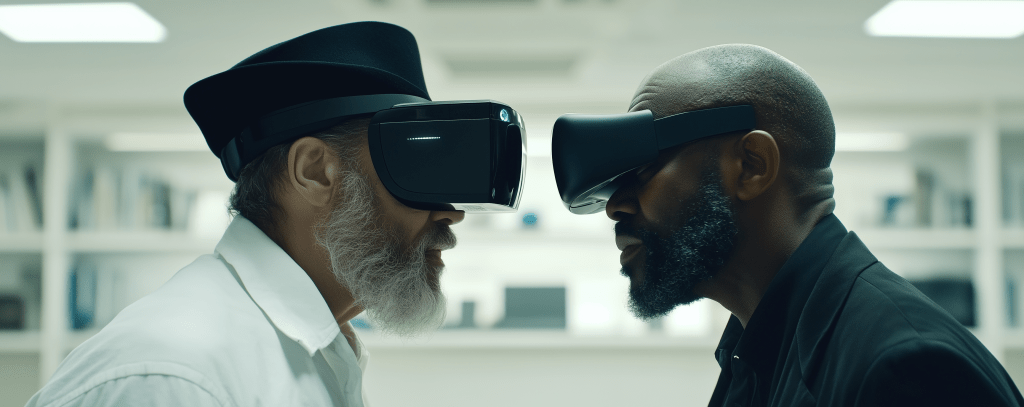
The Business of AI in Hollywood: Opportunities and Challenges

The entertainment industry has always been at the forefront of technological innovation, from the advent of sound in cinema to the rise of computer-generated imagery (CGI). Today, artificial intelligence (AI) is poised to become Hollywood’s next transformative force. As 2025 unfolds, AI is reshaping how films are written, produced, marketed, and distributed. However, with these opportunities come significant challenges that demand attention from creators, studios, and policymakers alike.
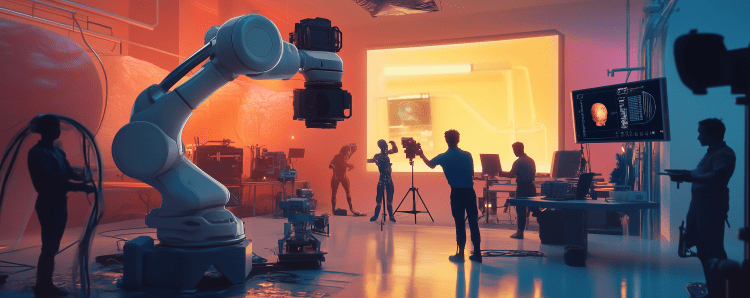
Opportunities: AI’s Expanding Role in Hollywood

AI in Scriptwriting and Story Development

AI is revolutionizing the scriptwriting process by offering tools that enhance creativity and efficiency. Platforms like ScripAI and RunwayML allow writers to input rough ideas or outlines and receive AI-generated drafts tailored to specific genres or demographics. These tools can analyze decades of film scripts to identify successful storytelling elements, helping studios refine narratives before production begins[1][3].

Moreover, AI enables personalized storytelling by analyzing audience preferences and cultural nuances. Studios can use this data to craft narratives that resonate with specific demographics or niche markets. For example, streaming platforms could produce regionally tailored content based on AI-generated insights. This personalization has the potential to diversify Hollywood’s output while maintaining commercial viability[1][3].

Virtual Actors and Digital Performances

Generative AI has introduced hyper-realistic digital actors capable of emoting, improvising, and performing complex scenes. Companies like DeepVox showcased these capabilities at CES 2025, highlighting how virtual actors could reduce talent costs and logistical challenges while preserving or recreating iconic performances from retired or deceased stars[1][5].

This technology also extends to de-aging actors or creating entirely new characters without the need for human performers. For example, recent films have used AI-driven special effects to de-age actors like Tom Hanks and Robin Wright in real time[5]. These advancements open up creative possibilities while addressing some of the financial constraints associated with traditional filmmaking.

Streamlined Production and Post-Production

AI is making production and post-production more efficient by automating time-intensive tasks. In visual effects (VFX), AI can generate photorealistic environments and characters faster than traditional methods, reducing costs and accelerating timelines. This is particularly valuable for high-budget blockbusters that rely heavily on VFX, such as Avatar: The Way of Water, where production costs for effects alone exceeded $100 million[1][3].

In post-production, AI tools can assist with editing, sound design, color grading, and even marketing campaigns. For instance, AI-driven analytics can predict audience reactions to trailers or promotional materials, allowing studios to optimize their marketing strategies for maximum impact[1][7].

Enhanced Marketing Strategies

AI is also transforming how films are marketed. By analyzing social media trends and viewer data, AI can help studios target specific audiences more effectively. This includes creating personalized advertising campaigns or using generative AI to produce promotional content at scale. Such innovations promise to make marketing efforts more cost-effective while increasing their reach[1][4].


Challenges: Ethical and Practical Concerns

Job Displacement and Labor Rights

One of the most contentious issues surrounding AI in Hollywood is its impact on employment. Writers, actors, and other creatives fear job displacement as studios increasingly turn to AI for tasks traditionally performed by humans. The Writers Guild of America (WGA) and SAG-AFTRA have called for stricter regulations to ensure that AI supplements human creativity rather than replacing it entirely[1][5].

The resolution of Hollywood’s 2023 guild strikes addressed some concerns but left many unresolved. For example, while AI can assist in scriptwriting or acting, its overuse risks diminishing the authenticity and nuance that human creators bring to their work[6][7].

Copyright and Ownership Issues

The legal status of AI-generated content remains a gray area. In January 2025, the U.S. Copyright Office updated its rules to clarify that fully AI-generated works without human intervention are not copyrightable. However, works that involve significant human input or creative modifications may qualify for copyright protection[1][6].

This ruling poses challenges for studios relying on AI-generated scripts or characters. Without clear ownership rights, disputes over intellectual property could become a significant hurdle for projects involving extensive use of generative AI.

Ethical Concerns: Authenticity and Consent

The rise of virtual actors raises ethical questions about consent and authenticity. For instance, using an actor’s likeness without explicit permission—whether for de-aging or creating a digital double—could lead to legal disputes and public backlash. Similarly, deepfake technology has sparked concerns about misuse in political disinformation or revenge pornography[4][6].

To address these issues, industry leaders are advocating for stricter guidelines on the use of generative AI in filmmaking. Transparency about when and how AI is used will be crucial for maintaining trust among audiences and creators alike.

Creative Limitations

While AI excels at analyzing patterns and generating content based on existing data, it struggles with originality and emotional depth—qualities essential for compelling storytelling. Over-reliance on AI could lead to formulaic narratives that prioritize marketability over artistic innovation[1][7].

Moreover, the collaborative nature of filmmaking relies on human intuition and spontaneity—elements that cannot be easily replicated by algorithms. Striking a balance between automation and human creativity will be key to ensuring that AI enhances rather than diminishes Hollywood’s artistic output.


The Road Ahead: Balancing Innovation with Responsibility

As Hollywood embraces AI-driven technologies, it must navigate a complex landscape of opportunities and challenges. On one hand, AI offers unprecedented efficiency, cost savings, and creative possibilities; on the other hand, it raises ethical dilemmas and risks undermining the industry’s human-centric foundation.

To strike this balance:

  1. Regulatory Frameworks: Governments and industry bodies must establish clear guidelines for the use of AI in filmmaking. This includes addressing copyright issues, ensuring fair compensation for creatives, and setting ethical standards for digital performances.
  2. Collaboration Over Replacement: Studios should view AI as a tool to augment human creativity rather than replace it entirely. By fostering collaboration between humans and machines, Hollywood can leverage the strengths of both.
  3. Transparency: Audiences have a right to know when AI is used in film production—whether it’s generating scripts or creating digital actors. Transparency will be essential for building trust in this new era of filmmaking.
  4. Investment in Human Talent: Despite its capabilities, AI cannot replicate the emotional depth or originality that human creators bring to their work. Investing in education and training programs will ensure that writers, directors, actors, and other professionals remain integral to Hollywood’s future.

Conclusion

The integration of artificial intelligence into Hollywood represents both an exciting opportunity and a formidable challenge. As the industry continues to evolve in 2025 and beyond, its success will depend on how well it balances technological innovation with ethical responsibility.

By embracing collaboration between humans and machines—and addressing concerns around labor rights, copyright law, and authenticity—Hollywood has the potential to usher in a new golden age of storytelling powered by both creativity and cutting-edge technology.


✍️  Whether you’re mastering the art of dialogue, structure, or character development, the power of AI can be a game-changer in your writing journey. My Free Ebook, ‘AI for Authors’ delves into how AI-powered prompts can provide a unique edge to your storytelling process. If you’re intrigued by the prospect of supercharging your fiction skills, download your free copy today and explore new horizons in creative writing. 

Citations:
[1] https://vocal.media/chapters/generative-ai-is-set-to-revolutionize-hollywood
[2] https://expectancy.co.uk/denise-and-her-blog?n=337
[3] https://www.youtube.com/watch?v=m-5rVr0QBg4
[4] https://www.digitalhollywood.com/ces-2025
[5] https://www.forbes.com/sites/robsalkowitz/2025/01/10/ces-2025-hollywood-unions-battle-to-contain-ai-disruptions-in-creative-industries/
[6] https://www.ces.tech/schedule/the-hollywood-trajectory-generative-ai-timeline-2025-2030/
[7] https://www.forbes.com/sites/robsalkowitz/2025/01/07/at-ces-2025-digital-hollywood-conference-ai-grabs-the-spotlight/
[8] https://www.ces.tech/videos/2025/january/ai-in-hollywood-the-tech-behind-the-hype/
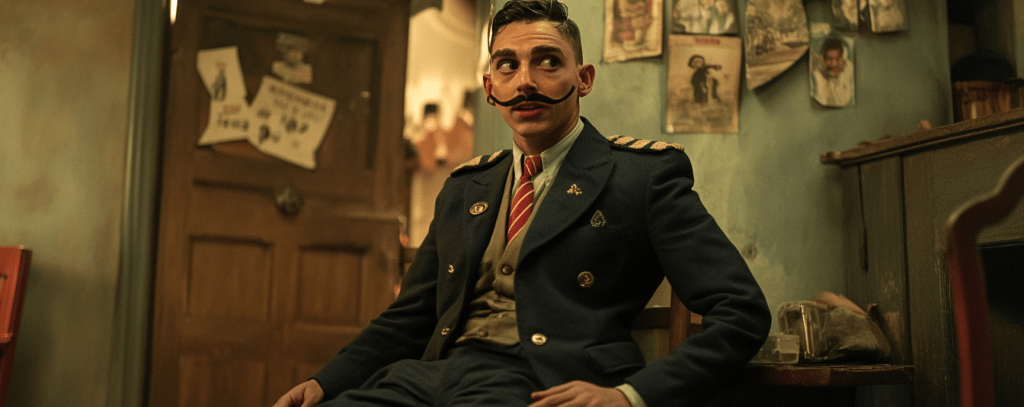

How ‘Jojo Rabbit’ Blends Comedy and Tragedy in Screenwriting

Taika Waititi’s Jojo Rabbit (2019) is a masterclass in balancing comedy and tragedy within a screenplay. Adapted from Christine Leunens’ novel Caging Skies, the film takes an audacious approach to one of history’s darkest periods—the final days of Nazi Germany—through the eyes of a 10-year-old boy. By blending sharp satire with deeply emotional moments, Jojo Rabbit demonstrates how screenwriters can use humor not to undermine tragedy, but to heighten its impact.

In this article, we’ll examine how Waititi’s script deftly navigates tone, uses character perspectives to bridge comedy and drama, and employs structure to sustain emotional weight while keeping the humor effective.


Finding Humor in the Absurd: The Satirical Approach

One of the most striking choices in Jojo Rabbit is its satirical portrayal of Nazi Germany, particularly through the character of Adolf, Jojo’s imaginary friend, played by Waititi himself. The film’s comedy is largely derived from absurdity—presenting the Third Reich through the naive lens of a child who idolizes Hitler. The exaggerated, buffoonish depictions of Nazi officers and Hitler Youth training camp sequences establish the world’s comedic tone early on.

This approach works because it mirrors the way a 10-year-old might interpret war—through a simplified, almost cartoonish understanding of heroism and national pride. By exaggerating these figures to the point of ridiculousness, the film exposes the irrationality and absurdity of their ideology.

For screenwriters, this highlights a key technique: using satire to deconstruct serious topics. The humor never minimizes the real horror of Nazi Germany but instead mocks the perpetrators, making them appear foolish rather than powerful. The script ensures that the satire is always punching up—ridiculing oppressors rather than making light of suffering.


Shifting Tone: When to Let Tragedy Take Center Stage

While Jojo Rabbit establishes itself as a comedy, it does not shy away from harsh realities. The film’s most devastating moment—Jojo discovering his mother’s hanging body—serves as a pivotal shift in tone. Up until that point, Jojo’s world has been largely insulated from direct violence. His understanding of war has been shaped by propaganda and the over-the-top caricatures around him. But this moment is stark and unflinching. There’s no comedic undercurrent, no witty retort to soften the impact.

Waititi’s screenplay allows this moment to breathe. Instead of showing the act itself, the audience experiences the realization through Jojo’s perspective. The choice to focus on his mother’s distinctive shoes, first introduced earlier in the film through lighthearted moments, makes the reveal even more gut-wrenching.

This moment exemplifies how a screenplay can handle tonal shifts effectively. Comedy and tragedy are not mutually exclusive; in fact, humor can make sorrow hit even harder by lulling the audience into a sense of comfort before pulling it away. The contrast between lighthearted scenes and devastating moments mirrors the unpredictability of real-life emotions, making the tragedy feel even more profound.


Character Dynamics: The Role of Perspective in Balancing Tone

Much of Jojo Rabbit’s tonal balance comes from character interactions, particularly between Jojo and Elsa, the Jewish girl hiding in his home. Their relationship begins with hostility—Jojo sees her as the monster Nazi propaganda has painted Jewish people to be. However, as the film progresses, their dynamic shifts, becoming the heart of the story.

Elsa serves as the film’s emotional anchor. While Jojo’s journey is framed through comedy, Elsa’s reality is never played for laughs. The script ensures that she is never the subject of ridicule; instead, humor often comes from Jojo’s misguided beliefs and how Elsa outsmarts him. Their conversations range from comedic (Jojo’s ridiculous questions about Jewish people) to deeply moving (Jojo forging a letter from Elsa’s deceased boyfriend).

This dynamic is crucial because it prevents the film from trivializing its historical context. Elsa’s perspective reminds both Jojo and the audience of the true stakes. When writing a screenplay that blends tones, it’s essential to establish which characters ground the story emotionally and which ones provide comedic contrast.


Structuring Comedy and Drama for Maximum Impact

Jojo Rabbit’s screenplay follows a three-act structure that allows comedy and tragedy to coexist without feeling disjointed:

  1. Act One: Establishing the Absurdity
  • The film introduces Jojo’s world through humor—his idolization of Hitler, his enthusiasm for the Hitler Youth, and his blind acceptance of propaganda.
  • The satire is dominant, setting up the exaggerated characters and comedic tone.
  1. Act Two: Emotional Complexity Emerges
  • Jojo discovers Elsa, introducing a more serious undercurrent.
  • The comedic elements remain, but the humor begins to shift. Instead of mocking Nazis in general, the comedy often stems from Jojo’s misunderstandings and growth.
  • Moments of sincerity, such as Jojo reading Elsa fake letters, create emotional depth.
  1. Act Three: The Reality of War Takes Over
  • Jojo’s mother’s death acts as the turning point where humor takes a backseat to raw emotion.
  • The final act, including the fall of Nazi Germany and Jojo’s ultimate rejection of his imaginary Hitler, is largely driven by character growth rather than satire.
  • The film ends on a bittersweet note—Jojo and Elsa’s uncertain future is met not with despair, but with a quiet, hopeful dance.

This structure ensures that humor never undermines tragedy but instead works in tandem with it. By gradually shifting the balance as the story progresses, the audience is eased from laughter into emotional weight without feeling jarred.


Lessons for Screenwriters: How to Balance Comedy and Tragedy

Waititi’s screenplay for Jojo Rabbit provides valuable lessons for writers looking to blend humor and heartbreak in their own work:

  • Humor can make heavy themes more accessible, but it should never trivialize real suffering.
  • The laughter should come at the expense of oppressors, not victims.
  • When it’s time for an emotional gut-punch, commit to it fully.
  • Avoid immediately undercutting sorrow with a joke—let the moment have weight.
  • Have characters who embody each side—those who deliver comedy and those who ground the drama.
  • Ensure that humor doesn’t compromise a character’s emotional integrity.
  • Early humor can set the stage for later emotional impact.
  • Gradually shifting the ratio of comedy to drama helps maintain cohesion.

Conclusion: Why Jojo Rabbit Works So Well

Blending comedy and tragedy in screenwriting is no easy feat, but Jojo Rabbit serves as a shining example of how to do it effectively. Through its satirical approach, well-timed tonal shifts, and carefully constructed character dynamics, the film delivers a story that is both hilarious and heartbreaking.

By embracing the absurdity of war from a child’s perspective while never losing sight of its horror, Waititi’s screenplay achieves a rare balance—one that makes us laugh while reminding us why we should never forget the realities of history.

For screenwriters, Jojo Rabbit is a testament to the power of contrast. When handled with care, humor and tragedy don’t cancel each other out; instead, they amplify one another, making the story’s emotional core all the more resonant.


  Whether you’re mastering the art of dialogue, structure, or character development, the power of AI can be a game-changer in your writing journey. My Free Ebook, ‘AI for Authors’ delves into how AI-powered prompts can provide a unique edge to your storytelling process. If you’re intrigued by the prospect of supercharging your fiction skills, download your free copy today and explore new horizons in creative writing. 

The Sound of Story: Writing for Music-Driven Films like ‘Whiplash’

Cinema is a fusion of sight and sound, but some films elevate the role of sound to a storytelling force as potent as dialogue or visuals. Music-driven films—where the soundtrack, score, or diegetic music play a central role in the narrative—demand a unique approach to screenwriting. Damien Chazelle’s Whiplash (2014) is a masterclass in this kind of storytelling. The film, which follows an ambitious jazz drummer pushed to his limits by a ruthless instructor, uses music not just as background but as the pulse of the story itself.

Writing for music-driven films like Whiplash requires more than just a keen ear—it demands an understanding of how sound and rhythm shape emotion, structure, and character. Let’s explore how screenwriters can craft compelling narratives where music becomes an active participant in the storytelling process.


1. Music as a Character

In Whiplash, music is not just part of the setting; it is a driving force that shapes the protagonist, Andrew Neiman. The film treats jazz—specifically the titular piece “Whiplash” and “Caravan”—as more than just songs. These pieces are obstacles, goals, battlegrounds, and emotional barometers for Andrew’s journey.

For screenwriters, this means approaching music with the same depth as a human character. Just as antagonists push protagonists toward transformation, music in Whiplash acts as an ever-present challenge. When writing a music-driven film, consider:

  • How does music influence the protagonist’s desires, fears, and conflicts?
  • Can specific compositions or musical motifs symbolize emotional shifts in the story?
  • Does the protagonist have a relationship with music that evolves over time?

By personifying music, writers can give it weight beyond ambiance, allowing it to shape the story’s stakes and character arcs.


2. Structuring a Story Around Rhythm

Music-driven films often have a built-in rhythm to their storytelling. Whiplash mirrors the structure of a musical composition, with crescendos of tension, syncopated surprises, and climactic payoffs that feel almost symphonic.

The film’s final sequence—where Andrew defies his instructor Terence Fletcher and delivers a breathtaking drum solo—is not just a resolution in narrative terms; it is a musical climax. Chazelle’s screenplay reflects this rhythm by building tension in waves, allowing moments of quiet before unleashing explosive conflict.

Screenwriters can incorporate musical structure into their scripts by:

  • Using the rise and fall of tension like musical dynamics (soft moments before explosive scenes).
  • Pacing scenes to mirror musical structures (verse-chorus-bridge dynamics).
  • Creating payoffs that feel like the resolution of a symphony.

By thinking of a screenplay as a composition, writers can craft a narrative that is as rhythmically compelling as the music that drives it.


3. Writing the Sound on the Page

One of the biggest challenges in music-driven films is conveying sound through a silent medium—the screenplay. Since scripts are primarily visual, how does a writer capture the energy, intensity, and emotion of music on the page?

Chazelle’s script for Whiplash is a fantastic example of this. He uses short, punchy sentences to replicate the rapid-fire intensity of drumming sequences. His descriptions are visceral:

“Andrew’s hands, gripping drumsticks, CLENCH TIGHTER. Sweat beads. Arms tense. The sticks seem to POUND the snare on their own now, moving faster and faster and faster…”

The best ways to bring sound to life in a script include:

  • Using specific, active language to describe music’s effect on characters and the environment.
  • Varying sentence length to mimic musical pacing—short bursts for fast beats, longer descriptions for swelling moments.
  • Utilizing onomatopoeia and rhythm in prose to immerse the reader in the musical world.

Screenwriters should ensure the music’s presence is felt even in the silent format of a screenplay, making the reader hear the film as they read.


4. Character Development Through Performance

In music-driven films, performances often serve as key emotional beats. In Whiplash, Andrew’s drumming is not just a skill—it is the vehicle for his obsession, his suffering, and his ultimate triumph. Every performance scene deepens his character arc, showing his evolution through physical exhaustion, pain, and perseverance.

When writing performance scenes, consider:

  • How does the character’s relationship with music change between performances?
  • What emotions should the audience experience through the music?
  • Can the character’s body language, mistakes, or mastery of music reflect their inner journey?

By making musical performance a storytelling tool rather than a mere showcase of talent, writers can create emotionally charged moments that define the film.


5. Conflict and Music as an Arena

One of the reasons Whiplash is so compelling is that it treats musical performance as an arena of combat. Terence Fletcher’s brutal teaching methods turn jazz into a battlefield, where every missed note or failed tempo is a sign of weakness.

This approach turns a practice room into a war zone, making the film as intense as any sports drama or action thriller. Screenwriters crafting music-driven films can learn from this by:

  • Using music as a source of external and internal conflict.
  • Treating practice and performance spaces as arenas where characters prove themselves.
  • Raising the stakes of failure—missing a note shouldn’t just be a mistake, it should be catastrophic for the character’s goals.

By making music a high-stakes endeavor, writers can craft scenes that feel as exhilarating as a climactic fight sequence.


6. The Sound of Silence

While music is the heartbeat of films like Whiplash, silence is just as crucial. Some of the most powerful moments in the film come not from drumming but from its absence—the stillness before an explosion of sound, the hush of an audience before a performance, the lingering silence after a mistake.

Screenwriters should embrace silence as a storytelling tool by:

  • Using it to build tension before major musical moments.
  • Letting characters react to silence, revealing emotions through body language.
  • Creating contrast between sound and silence to enhance impact.

Silence, when used strategically, can make the return of music even more powerful.


Conclusion: Writing with Your Ears

Writing a music-driven film is an exercise in listening. It’s about hearing not just the notes of a composition but the emotions, struggles, and triumphs embedded in every beat. Whiplash succeeds because it treats music as more than just a backdrop—it is the story itself, driving character, structure, and conflict.

For screenwriters tackling similar projects, the key is to think musically, write rhythmically, and let sound shape the narrative. Whether it’s jazz, rock, or orchestral scores, music-driven films thrive when their scripts sing just as powerfully as their soundtracks.

So next time you write, don’t just see the story—listen to it.


✍️  Whether you’re mastering the art of dialogue, structure, or character development, the power of AI can be a game-changer in your writing journey. My Free Ebook, ‘AI for Authors’ delves into how AI-powered prompts can provide a unique edge to your storytelling process. If you’re intrigued by the prospect of supercharging your fiction skills, download your free copy today and explore new horizons in creative writing. 

AI in Hollywood: Weekly News, February 14, 2025

The AI Revolution in Hollywood: Legal Battles, Ethical Dilemmas, and Creative Opportunities

Artificial intelligence (AI) has become a transformative force in Hollywood, reshaping how films are made, distributed, and consumed. Yet, as the technology advances, it is sparking heated debates about ethics, legality, and the future of creative industries. Recent developments in AI copyright lawsuits and the growing concerns among celebrities highlight the challenges and opportunities AI presents for screenwriters, filmmakers, and the entertainment industry at large.


AI and Copyright: The Landmark Ross Intelligence Case

One of the most significant legal battles concerning AI unfolded recently in the U.S. District Court of Delaware. The case involved Thomson Reuters suing Ross Intelligence, a now-defunct AI company, for copyright infringement. Ross had used Thomson Reuters’ Westlaw legal headnotes—summaries of judicial opinions—to train its AI-based legal research platform. Judge Stephanos Bibas ruled against Ross Intelligence, rejecting its claim of “fair use” and emphasizing that the headnotes were original works protected by copyright[1][2][3].

Why This Case Matters

  • Precedent for AI Training Data: This ruling is one of the first to address whether using copyrighted material to train AI models qualifies as fair use. The court’s decision could influence ongoing lawsuits against major AI players like OpenAI and Microsoft[1][4].
  • Fair Use Analysis: Judge Bibas highlighted that Ross’s use was not transformative and directly harmed the market for Thomson Reuters’ content. This finding underscores the importance of licensing agreements when using copyrighted works for AI training[5][6].
  • Implications for Hollywood: As generative AI tools become more prevalent in screenwriting and filmmaking, this case raises questions about whether training these tools on copyrighted scripts or other creative works could lead to similar legal challenges.

Hollywood’s Relationship with AI: Friend or Foe?

While legal battles rage on, Hollywood has been grappling with how to integrate AI into its creative processes. From voice dubbing to digital recreations of actors, AI is already making its mark—but not without controversy.

AI in Film Production

  1. Voice and Dubbing Enhancements:
  • In Emilia Pérez, AI was used to enhance Karla Sofía Gascón’s singing.
  • The Brutalist employed AI to improve actors’ pronunciation of Hungarian dialogue[3].
  • Indie distributor XYZ Films adopted Flawless’s “immersive dubbing” technology to synchronize lip movements with translated dialogue for international releases[3].
  1. Digital Recreation:
  • The Polish biopic Putin used AI to superimpose Vladimir Putin’s face onto an actor’s body. This creative application boosted international sales but also sparked ethical concerns[3].

Backlash from Artists

Despite these advancements, many in Hollywood view AI with skepticism:

  • Celebrities like Robert Downey Jr., Glenn Close, and Hank Azaria have taken strong stances against AI.
  • Some distributors have started labeling films with “no AI” disclaimers, akin to animal welfare statements[3].
  • Concerns about job losses in dubbing and localization have been raised by industry veterans like Debra Chin, who warns that cost-cutting measures could compromise artistic quality[3].

Scarlett Johansson Speaks Out on AI Misuse

Scarlett Johansson has emerged as a vocal critic of unregulated AI use. Her concerns stem from personal experiences with AI-generated content that misrepresents her likeness.

Key Points from Johansson’s Advocacy

  1. Call for Legislation:
    Johansson has urged U.S. lawmakers to prioritize passing laws that limit harmful uses of AI. She describes this as a bipartisan issue essential for preserving societal trust[2].
  2. AI-Generated Video Controversy:
    A viral video featuring an AI-generated version of Johansson alongside other celebrities called out antisemitic remarks by Kanye West. While Johansson supported the video’s message, she condemned the misuse of her likeness without consent[2].
  3. Broader Implications:
    Johansson warns that unchecked AI misuse could lead to a societal “loss of reality.” Her advocacy highlights the need for ethical guidelines around using celebrity likenesses in media[2].

Balancing Innovation and Ethics

Despite the controversies, some filmmakers see potential in using AI responsibly:

  • Scott Mann of Flawless advocates for “consent-driven” and “artist-focused” applications of AI.
  • Industry experts suggest that rather than vilifying AI outright, stakeholders should adopt a nuanced approach that balances innovation with respect for intellectual property and artistic integrity[3].

A Path Forward

To ensure that AI enhances creativity rather than undermining it:

  1. Licensing Agreements: Studios should establish clear agreements for using copyrighted works in training data.
  2. Ethical Guidelines: The industry must develop standards to prevent misuse of celebrity likenesses or other sensitive content.
  3. Collaboration Over Competition: Filmmakers and technologists should work together to explore how AI can expand storytelling possibilities without replacing human creativity.

Conclusion

As Hollywood navigates its relationship with artificial intelligence, it stands at a crossroads between innovation and ethical responsibility. The recent court ruling against Ross Intelligence underscores the importance of respecting intellectual property rights in an era where data drives creativity. Meanwhile, Scarlett Johansson’s advocacy serves as a reminder that technological progress must be tempered with humanity.

For screenwriters and filmmakers, these developments offer both cautionary tales and opportunities. By embracing responsible practices and fostering collaboration between artists and technologists, Hollywood can harness the power of AI to tell stories that resonate across cultures—without losing sight of its core values.


✍️  Whether you’re mastering the art of dialogue, structure, or character development, the power of AI can be a game-changer in your writing journey. My Free Ebook, ‘AI for Authors’ delves into how AI-powered prompts can provide a unique edge to your storytelling process. If you’re intrigued by the prospect of supercharging your fiction skills, download your free copy today and explore new horizons in creative writing. 

Citations:


[1] https://www.theverge.com/news/610721/thomson-reuters-ross-intelligence-ai-copyright-infringement
[2] https://natlawreview.com/article/thomson-reuters-wins-copyright-case-against-former-ai-competitor
[3] https://www.mayerbrown.com/en/insights/publications/2025/02/ross-ai-decision-gives-early-indication-of-strengths-and-weaknesses-of-fair-use-defense
[4] https://copyrightalliance.org/ai-copyright-infringement-cases-insights/
[5] https://www.jdsupra.com/legalnews/client-alert-court-decides-that-use-of-9412602/
[6] https://copyrightalliance.org/ai-training-not-fair-use/
[7] https://www.ipintelligencereport.com/blogs/surprise-move-judge-walks-back-ai-copyright-ruling-in-thomson-reuters-v-ross/
[8] https://www.venable.com/insights/publications/2025/02/judge-rejects-fair-use-defense-in-thompson-reuters
[9] https://copyrightblog.kluweriplaw.com/2024/02/29/is-generative-ai-fair-use-of-copyright-works-nyt-v-openai/
[10] https://www.goodwinlaw.com/en/insights/publications/2025/02/alerts-practices-ip-lit-court-rejects-fair-use-defense-in-ai-copyright-case
[11] https://apnews.com/article/ai-artificial-intelligence-reuters-4a127c5b7e8bb76c84499fe12ad643c8

The Perils of AI: Navigating the Risks in Storytelling

As we enter 2025, the landscape of storytelling is undergoing a seismic shift. Artificial Intelligence (AI) has emerged as a powerful tool in the creative process, offering new possibilities and challenges for writers across various mediums. While AI presents exciting opportunities, it also introduces significant risks that storytellers must navigate carefully. This article explores the potential pitfalls of AI in storytelling and how writers can adapt to this evolving landscape.

The AI Revolution in Storytelling

The integration of AI into the creative process has been rapid and far-reaching. By 2025, AI has become an integral part of scriptwriting, casting, and editing, with 48% of film professionals already utilizing AI tools in their work[4]. This technological revolution promises to reshape the entertainment and media industry, which is projected to grow to $2.6 trillion by the end of the year[4].

The Promise and Pitfalls of AI-Assisted Writing

Efficiency and Data-Driven Insights

AI-powered tools like ScripAI and RunwayML now offer writers the ability to generate drafts based on rough story ideas, tailored to specific genres and audience demographics[1]. These tools can analyze vast databases of screenplays, identifying recurring themes, character development patterns, and effective plot structures[4].

However, this efficiency comes at a cost. The risk of homogenization in storytelling increases as AI systems draw from existing works to generate new content. Writers must be cautious not to rely too heavily on AI-generated suggestions, lest their work become formulaic and predictable.

The Emotional Disconnect

One of the most significant challenges AI faces in storytelling is its inability to truly capture human emotion. As John Smith, a renowned screenwriting coach, points out, “AI can put together a draft, but infusing soul into a script…for that, it’s dreadfully inadequate…it’s about that indefinable human touch”[5].

This emotional disconnect poses a serious risk to the quality of storytelling. While AI can analyze patterns and structures, it struggles to create the nuanced, emotionally resonant narratives that audiences crave. Writers must be wary of relying too heavily on AI-generated content, as it may lack the depth and authenticity that make stories truly compelling.

The Ethical Quandary

Copyright and Originality Concerns

As AI systems become more sophisticated in generating content, questions of copyright and originality arise. Writers must grapple with the ethical implications of using AI-generated ideas and content. Where does inspiration end and plagiarism begin in the age of AI?

The Writers Guild of America (WGA) and SAG-AFTRA have called for stricter guidelines to ensure AI supplements human creativity rather than replacing it entirely[1]. As writers, we must be vigilant in maintaining the integrity of our work and ensuring that AI remains a tool rather than a replacement for human creativity.

The Threat of Job Displacement

The rise of AI in storytelling has raised concerns about job displacement in the creative industries. While AI can streamline certain aspects of the writing process, it also threatens to automate tasks traditionally performed by human writers.

This shift could lead to a restructuring of the industry, with fewer opportunities for entry-level writers and increased pressure on established professionals to adapt to AI-integrated workflows. Writers must be proactive in developing skills that complement AI capabilities rather than competing with them directly.

Navigating the AI Landscape

Embracing AI as a Collaborative Tool

Rather than viewing AI as a threat, writers can leverage it as a collaborative tool to enhance their creative process. AI can serve as a brainstorming partner, offering alternative plot structures, helping eliminate inconsistencies, and analyzing audience reception trends[1].

By using AI to handle more routine aspects of writing, such as research and initial drafting, writers can focus their energy on the uniquely human aspects of storytelling – emotional depth, nuanced character development, and innovative narrative structures.

Maintaining the Human Touch

As AI becomes more prevalent in storytelling, the value of the human touch in writing will only increase. Writers should focus on developing skills that AI cannot easily replicate, such as:

  • Creating complex, emotionally resonant characters
  • Crafting unique voices and perspectives
  • Developing innovative narrative structures
  • Incorporating cultural nuances and social commentary

By honing these skills, writers can ensure that their work remains distinct and valuable in an AI-dominated landscape.

The Future of AI in Storytelling

Personalized Narratives and Immersive Experiences

Looking ahead, AI is poised to enable more personalized and immersive storytelling experiences. AI models can analyze viewer preferences and market trends, helping studios craft narratives that resonate with specific demographics[1]. This could lead to more diverse and targeted content, but also raises questions about the potential fragmentation of shared cultural experiences.

AI-Generated Actors and Virtual Performances

The development of AI-generated actors, as showcased by companies like DeepVox, presents both opportunities and challenges for storytellers[1]. While these virtual performers could reduce production costs and overcome logistical hurdles, they also raise ethical concerns about the authenticity of performances and the potential displacement of human actors.

Real-Time Narrative Adaptation

As AI technology advances, we may see the emergence of stories that adapt in real-time based on audience reactions and preferences. This could create more engaging and interactive narratives but also risks diluting the author’s original vision and intent.

Conclusion: Striking a Balance

As we navigate the perils of AI in storytelling, it’s crucial to strike a balance between embracing technological advancements and preserving the essence of human creativity. AI offers powerful tools that can enhance the storytelling process, but it should not be seen as a replacement for human imagination and emotional intelligence.

Writers must remain vigilant, continuously adapting their skills and approach to storytelling in this evolving landscape. By doing so, we can harness the potential of AI while mitigating its risks, ensuring that the stories we tell continue to resonate with audiences on a deeply human level.

As Arjun Patel, a renowned tech analyst, aptly puts it: “As AI technology continues to evolve by leaps and bounds, the pertinent challenge is ensuring that it works in harmony with the innate spirit of storytelling, rather than opposing it. This fertile platform of creativity and AI essentially requires that delicate blend of imagination and algorithmic precision”[5].

In the end, the future of storytelling lies not in the hands of AI alone, but in the skilled and thoughtful integration of technology with human creativity. As writers, our task is to navigate these new waters with both enthusiasm and caution, always keeping the heart of storytelling – the human experience – at the forefront of our craft.


✍️  Whether you’re mastering the art of dialogue, structure, or character development, the power of AI can be a game-changer in your writing journey. My Free Ebook, ‘AI for Authors’ delves into how AI-powered prompts can provide a unique edge to your storytelling process. If you’re intrigued by the prospect of supercharging your fiction skills, download your free copy today and explore new horizons in creative writing. 

Citations:
[1] https://www.thebrighterside.news/post/generative-ai-is-set-to-revolutionize-hollywood/
[2] https://www.theiaconference.com/sessions/storytelling-in-2025-combining-ia-ai-and-data-to-reconnect-to-the-human-experience/
[3] https://blackbird.ai/blog/confronting-ai-narrative-manipulation/
[4] https://hackread.com/a-new-dawn-storytelling-intersection-of-ai-cinema/
[5] https://www.startmotionmedia.com/the-future-of-scriptwriting-with-ai-technology-it-doesnt-look-good-screenwriters-guild-call-for-originality-and-show-side-by-side-comparisons-of-how-good-screen-writers-are-and-how-bad-and-gener/
[6] https://www.reddit.com/r/productivity/comments/1gy7ee6/writers_vs_ai_is_creativity_at_risk_when_machines/
[7] https://news.stanford.edu/stories/2025/01/ai-brings-new-potential-to-the-art-of-theater
[8] https://www.weforum.org/stories/2025/01/storytelling-key-to-success-in-the-disruption-era/
[9] https://www.bladeempire.com/premium/theconversation/stories/your-next-favorite-story-wont-be-written-by-ai-but-it-could-be-someday,103872
[10] https://aiinscreentrade.com/2025/01/
[11] https://www.linkedin.com/pulse/opening-2025-year-ai-storytelling-revolution-barak-shavit-vce7e
[12] https://hai.stanford.edu/news/predictions-ai-2025-collaborative-agents-ai-skepticism-and-new-risks
[13] https://aiinscreentrade.com/2025/01/30/ai-in-hollywood-weekly-news-january-30-2025/
[14] https://www.forbes.com/councils/forbesagencycouncil/2025/01/22/why-storytelling-is-more-valuable-than-ever-to-your-company-in-2025/
[15] https://abcnews.go.com/Technology/wireStory/general-purpose-ai-lead-array-new-risks-experts-118213172
[16] https://deadline.com/2025/01/paul-schrader-chatgpt-ai-good-scripts-1236260963/
[17] https://www.linkedin.com/pulse/what-openais-12-days-shipmas-told-us-ai-storytelling-2025-s6joe
[18] https://www.writersdigest.com/be-inspired/think-ai-is-bad-for-authors-the-worst-is-yet-to-come
[19] https://sloanreview.mit.edu/article/the-enduring-power-of-data-storytelling-in-the-generative-ai-era/
[20] https://milstein-program.as.cornell.edu/news/new-spring-25-course-ai-storytelling