The Director’s Hand: Martin Scorsese’s Unique Approach to Screenwriting

The Maestro of Storytelling: Martin Scorsese’s Screenwriting Origin

There are few filmmakers as celebrated, as influential, and as unmistakably distinct as Martin Scorsese. His body of work spans across a half-century, offering a diverse range of genres yet underlining a signature style that marks him as a true cinematic auteur. But the magic that illuminates each frame of a Scorsese film begins much earlier, in the quiet, solitary realm of screenwriting. Understanding Scorsese’s approach to crafting a story—the genesis of his artistry—provides invaluable insights into his unique brand of filmmaking.

Born in 1942 in Queens, New York, Scorsese’s upbringing in a working-class Italian-American family colored his world perception and later his cinematic vision. Raised amidst the cacophony of New York’s tenement buildings, he spent much of his childhood indoors due to asthma. Young Scorsese found solace in films, frequently visiting movie theaters and immersing himself in a varied cinematic universe that was far removed from his day-to-day experiences.

Scorsese’s inclination toward the medium grew in intensity when he discovered the potential of storytelling through his education in a seminary and later at the NYU’s Tisch School of the Arts. He honed his skills by directing several student films, one of which—”Who’s That Knocking at My Door”—caught the attention of renowned producer Roger Corman. Recognizing the young filmmaker’s nascent talent, Corman helped Scorsese turn his student film into a feature debut, setting the stage for a career in cinema.

Scorsese’s early work—films like “Mean Streets” and “Taxi Driver”—exhibit a raw, unfiltered portrayal of New York City, heavily influenced by the social realism of the 1970s and the narratives he’d been marinated in during his formative years. Collaborating with frequent partner and screenwriter Paul Schrader, Scorsese found his narrative voice in the gritty urban drama and complex, morally ambiguous characters.

While his education provided him with a theoretical understanding of screenwriting, it was his personal experiences and unique perspective on life that shaped Scorsese’s distinctive narrative approach. This blend of the personal and professional, the subjective and objective, defines the Scorsese method of crafting a story.

His narratives often involve flawed, complicated characters struggling with their internal conflicts and the societal norms. From Travis Bickle’s chilling solitude in Taxi Driver to Jordan Belfort’s unchecked excesses in The Wolf of Wall Street, Scorsese’s characters are fully realized, deeply flawed human beings that live and breathe outside the confines of their respective films.

These complex characters find their roots in Scorsese’s understanding of the human condition, an understanding molded by his cultural heritage and personal life experiences. Growing up in a neighborhood marked by violence and crime, Scorsese saw humanity in all its flawed glory. His films echo this sentiment, not shying away from the ugliness but rather embracing it as part of the human experience.

Scorsese’s screenwriting and directing journey reflects his belief in the power of personal storytelling. For him, the act of writing a screenplay is not merely about plot mechanics but a tool for delving into the human psyche, exploring the socio-cultural landscape, and telling stories that resonate on a deeply human level.

His early experiences as a film buff, his educational journey, and his personal life experiences collectively shaped his approach to screenwriting, instilling in him a commitment to authenticity and character depth. His ability to craft multi-dimensional characters, combined with his unmatched storytelling prowess, has made him one of the most respected filmmakers in the industry.

What sets Scorsese apart from his contemporaries is his commitment to his artistic vision, which he cultivated early in his career. It’s this vision that dictates his approach to screenwriting and has shaped some of the most memorable films in cinematic history. He infuses his films with an authenticity that reflects his life experiences and his unique perspective on the world, making his stories deeply personal yet universally resonant.

Breaking the Mold: Scorsese’s Approach to Screenplay Structure and Script Writing Techniques

Martin Scorsese’s approach to screenwriting, much like his filmmaking, is unique. A master storyteller, his distinctive narrative style continually transcends conventional boundaries, rewriting the rules of screenplay structure and offering a fresh perspective on script writing techniques.

One of the hallmarks of Scorsese’s scriptwriting is his ability to manipulate conventional screenplay structure. Screenplays typically follow a three-act structure: setup, confrontation, and resolution. While Scorsese’s films acknowledge this classic structure, they also often subvert it in surprising ways, leading to narratives that feel both familiar and unpredictable. This ability to bend traditional structure while keeping the audience engaged is a testament to Scorsese’s command over storytelling.

Take, for example, his film Goodfellas. On the surface, it follows a traditional three-act structure: the rise of Henry Hill in the mafia (setup), his life and problems as a gangster (confrontation), and his eventual downfall (resolution). But within this framework, Scorsese cleverly subverts audience expectations. Instead of neatly resolving the plot at the end, he opts for a continuous rise-and-fall narrative that offers no clear resolution for Henry Hill. The audience is left to grapple with the implications of Henry’s choices, leaving a lasting impact long after the end credits roll.

Scorsese’s mastery over screenplay structure is also evident in The Departed. The film cleverly interweaves the lives of two protagonists, Billy Costigan and Colin Sullivan, as they navigate their undercover roles within the Boston police department and the Irish mob, respectively. Despite the complexity of the narrative, Scorsese maintains a clear, coherent structure, using cross-cutting techniques to juxtapose the lives of these two characters and heighten the film’s tension. This intricate narrative structure showcases Scorsese’s willingness to push the boundaries of traditional screenplay architecture.

Beyond structure, Scorsese’s approach to script writing techniques stands out in his emphasis on character development. Many of Scorsese’s most memorable characters are marked by their moral ambiguity, a departure from the clear-cut heroes and villains often seen in mainstream cinema.

His protagonists are often deeply flawed, challenging the audience to grapple with their contradictions. Take, for instance, Raging Bull’s Jake LaMotta, a boxing champion whose uncontrollable rage destroys his personal life. Despite his violent nature, LaMotta is not entirely unsympathetic – he’s a product of his environment, trapped in a cycle of self-destruction. This character depth is a product of Scorsese’s meticulous character-building, a script writing technique he employs to infuse his narratives with realism and complexity.

Scorsese’s screenwriting also demonstrates a unique balance between dialogue and visual storytelling. As a director, he understands that film is a visual medium. His scripts often contain detailed descriptions of visuals, suggesting camera movements and evoking moods. A great example is the famous Copa scene in Goodfellas, where Scorsese’s script details a lengthy Steadicam shot through the back entrance of the Copacabana nightclub, brilliantly establishing the world that Henry Hill inhabits.

However, Scorsese also understands the power of dialogue in revealing character and driving narrative. His scripts often include sharp, authentic dialogue that adds depth to his characters and immerses the audience in the film’s world. His long-term collaboration with screenwriter Paul Schrader has produced some of cinema’s most memorable lines, from Taxi Driver’s haunting “You talkin’ to me?” to The Last Temptation of Christ’s profound spiritual musings.

Lastly, Scorsese is not afraid to explore complex themes and ideas in his screenplays. His films often tackle subjects like guilt, redemption, and the human capacity for violence. These themes give his narratives a depth and richness that invite repeated viewing and critical analysis. Whether it’s the religious guilt that haunts the characters in Mean Streets or the corrosive effects of unchecked ambition in The Wolf of Wall Street, Scorsese’s scripts delve into the darker corners of the human psyche, exploring what it means to be human in a complex, often contradictory world.

Learning from the Master: Screenwriting Tips and Writing Prompts Inspired by Scorsese

With a career spanning over fifty years, Martin Scorsese has given us a treasure trove of cinematic masterpieces. His approach to screenwriting offers a wellspring of insights for both novices and seasoned scriptwriters. Here, we distill key screenwriting tips and writing prompts inspired by Scorsese’s distinctive storytelling style.

Screenwriting Tip #1: Embrace Your Unique Perspective

Scorsese’s films are infused with his unique worldview, a product of his personal experiences and cultural heritage. When writing a screenplay, draw from your own experiences, perspectives, and understandings. Don’t shy away from the things that make your perspective unique—embrace them. Your distinct voice can be a powerful tool in creating stories that are authentic and resonate with your audience.

Writing Prompt: Think about a personal experience or a cultural aspect that significantly shaped your worldview. Develop a character influenced by this perspective and draft a scene where this character confronts a situation that challenges their worldview.

Screenwriting Tip #2: Create Complex Characters

One of Scorsese’s most notable strengths is his ability to create complex, flawed characters that feel real. To accomplish this, consider your characters’ motivations, flaws, and personal histories. Make them multidimensional and full of contradictions, just like real people. Remember, your protagonist doesn’t have to be entirely likeable—they just need to be interesting.

Writing Prompt: Draft a character sketch of a deeply flawed character. Explore their background, desires, fears, and contradictions. Write a dialogue-heavy scene where this character’s flaws lead to conflict with another character.

Screenwriting Tip #3: Subvert Conventional Structure

Scorsese often subverts traditional three-act screenplay structure in unique and engaging ways. As a screenwriter, don’t be afraid to experiment with structure. Whether it’s a nonlinear timeline like in Casino, or an unconventional protagonist like in The King of Comedy, exploring non-traditional narrative structures can open up new avenues for storytelling.

Writing Prompt: Take a conventional story—maybe a fairy tale or a familiar movie plot—and rewrite it by subverting its narrative structure. Experiment with flashbacks, multiple perspectives, or an unreliable narrator to offer a fresh take on the story.

Screenwriting Tip #4: Use Dialogue and Visuals Effectively

Scorsese knows how to balance dialogue and visuals to create compelling narratives. Make your dialogue meaningful—each line should reveal something about the character or advance the plot. Simultaneously, remember that film is a visual medium. Use descriptive language in your action lines to suggest visuals, mood, and camera movements.

Writing Prompt: Choose a mundane situation, like a person waiting for a bus. First, write a scene focusing only on dialogue, then rewrite the same scene emphasizing visual storytelling.

Screenwriting Tip #5: Explore Big Themes

Scorsese’s films often tackle complex themes like guilt, redemption, and human violence. Don’t be afraid to explore big, challenging themes in your screenplays. Not only can they add depth to your story, but they can also make it more impactful and resonant.

Writing Prompt: Choose a theme—like betrayal, ambition, or forgiveness—and brainstorm a story idea around it. Write a short scene where this theme plays a significant role.

Learning from Martin Scorsese’s approach to screenwriting can provide invaluable guidance and inspiration for your scriptwriting journey. Remember that writing, like any other skill, improves with practice. Use these writing prompts as a starting point, experimenting and learning as you go. And most importantly, keep writing. Scorsese didn’t create masterpieces overnight—it took him years of dedication, experimentation, and learning from his successes and failures.


✍️  Whether you’re mastering the art of dialogue, structure, or character development, the power of AI can be a game-changer in your writing journey. My Free Ebook, ‘AI for Authors’ delves into how AI-powered prompts can provide a unique edge to your storytelling process. If you’re intrigued by the prospect of supercharging your fiction skills, download your free copy today and explore new horizons in creative writing. 

Fusing Folklore and Fantasy: The Unique Narratives of Naomi Novik

The Signature Style of Naomi Novik: Folklore Meets Fantasy

Naomi Novik, an acclaimed author best known for her novels in the fantasy genre, is a master weaver of narratives that blend the richness of folklore with the imaginative realms of fantasy. With her deep understanding of mythology, fairy tales, and cultural narratives, Novik uses the potent combination of folklore and fantasy to create enthralling worlds that capture readers’ hearts and minds.

Born in New York to Polish immigrant parents, Novik was steeped in a multicultural milieu from an early age, providing her with a deep well of diverse folklore and fairy tales from which to draw. This background heavily influenced Novik’s writing, imbuing it with a wealth of cultural narratives, and it is this infusion of folklore into her works that sets her apart.

Her breakthrough novel, “Temeraire,” showcases her remarkable ability to interweave historical events with fantasy elements. Novik reimagines the Napoleonic Wars with a stunning twist: the inclusion of dragons as members of the aerial combat units. The novel stands as a testament to Novik’s narrative skill, exemplifying her ability to seamlessly blend real-world history and folklore-inspired fantasy.

Novik’s unique blend of folklore and fantasy is further evident in her later works. For example, “Uprooted,” a standalone novel published in 2015, brings together elements of Eastern European folk tales with a richly realized fantasy world. Novik skillfully employs age-old motifs such as the enchanted forest, a powerful sorcerer, and a seemingly ordinary girl with extraordinary abilities, producing a narrative that feels at once familiar and strikingly fresh.

“Uprooted” received widespread critical acclaim, earning the prestigious Nebula Award for Best Novel in 2015, and further solidifying Novik’s position as an exceptional storyteller.

In her 2018 novel “Spinning Silver,” Novik crafts a captivating retelling of the Rumpelstiltskin fairy tale, infusing the classic narrative with her unique take on fantasy. Drawing from her Jewish heritage, Novik intertwines elements of Jewish folklore and Eastern European fairy tales into the tale, breathing new life into a familiar narrative. “Spinning Silver” was shortlisted for the 2019 Hugo Award for Best Novel, a further testament to the power of her narrative style.

What makes Novik’s fusion of folklore and fantasy so compelling is not merely her incorporation of folkloric elements but the way she reimagines them. In the hands of a less skilled author, such retellings might feel redundant or overly derivative, but Novik navigates these well-trodden paths with a deft hand, rendering them fresh and enchanting.

Novik subverts classic fairy tale tropes, allowing her characters greater depth and agency than often found in their original iterations. Her female characters, in particular, are empowered, complex figures who defy the ‘damsel in distress’ archetype, reflecting a conscious move away from the traditional narratives found in many folklore tales.

The settings in her novels are just as captivating as her characters. Novik’s use of folklore allows her to ground her fantastical worlds in a sense of realism and familiarity, enhancing their believability. Whether it’s a dragon-infested version of the Napoleonic era or a fairy tale kingdom beset by a malevolent force, Novik’s settings are richly detailed, demonstrating her exceptional world-building skills.

Finally, it is crucial to note that Novik’s use of folklore is not just a stylistic choice; it’s a thematic one. Her novels often delve into deeper issues such as the nature of power, the complexity of identity, and the importance of community, values deeply embedded in many folk narratives.

Writing Tips and Techniques from Naomi Novik’s Works

In the world of fantasy literature, few authors wield their pen with the same deftness and creativity as Naomi Novik. Her works, including the “Temeraire” series and standalone novels like “Uprooted” and “Spinning Silver,” offer a wealth of insight for those seeking to improve their writing skills. Novik’s creative writing style and techniques serve as valuable lessons for any writer, regardless of genre.

One of the most prominent aspects of Novik’s writing style is her ability to weave complex narratives that flawlessly blend elements of folklore and fantasy. This requires a deep understanding of both genres and a skillful touch when merging the two. Through her works, Novik offers the following writing tips and techniques that can be used by any writer.

A Deep Dive into World-building

Naomi Novik’s novels are renowned for their intricate and immersive world-building. In her “Temeraire” series, for instance, she meticulously recreates the historical setting of the Napoleonic Wars but with a twist—this version of the 19th-century world has dragons.

The world-building in Novik’s works often goes beyond the superficial layer of describing physical settings. Her worlds encompass intricate societal structures, cultural norms, politics, and even detailed economic systems, as seen in “His Majesty’s Dragon.” Her writing exhibits how establishing an immersive world is more than just providing geographical and chronological context—it’s about creating a vivid and believable reality in which the characters operate.

To improve writing skills, authors can take inspiration from Novik’s thorough approach to world-building. It involves detailed planning and meticulous research, whether that’s into historical events for a fantasy grounded in a specific era, or into different aspects of various cultures when creating a completely new universe.

Creating Engaging Characters

Novik’s novels demonstrate that compelling characters are as crucial as the world in which they exist. Her characters are well-fleshed out, with distinct personalities, strengths, weaknesses, and unique arcs. A great example is the character of Agnieszka from “Uprooted.” Agnieszka starts as a clumsy village girl but evolves into a strong, capable woman who takes control of her narrative, challenging the stereotypical depiction of female characters in traditional folklore.

To replicate Novik’s knack for character development, writers should focus on creating multi-dimensional characters with clear motivations and challenges. These characters should grow and change as the story progresses, offering readers a chance to empathize with and root for them.

The Art of Subverting Tropes

Naomi Novik is known for her unique approach to reinterpreting classic folklore and fairy tales, often subverting conventional tropes and expectations. For instance, in “Spinning Silver,” she transforms the antagonist of the classic Rumpelstiltskin tale into a sympathetic character while also presenting the ‘damsel in distress’ as a shrewd, ambitious young woman.

The practice of subverting tropes can serve as an effective writing tip for aspiring authors. By challenging the status quo and playing with reader expectations, writers can create refreshing narratives that surprise and engage readers.

Balancing Description with Action

Novik’s writing strikes a balance between detailed description and action. She sets up her world and characters with vivid descriptions that make readers feel as though they are part of the story. However, she also ensures her narratives are action-driven, maintaining an engaging pace that keeps readers turning the page.

An effective balance of description and action can significantly improve writing skills, providing readers with enough information to understand the world and characters while also keeping the story’s momentum.

The Use of Authentic Dialogue

Authentic and compelling dialogue is another hallmark of Novik’s writing. Her characters’ conversations reveal their personalities, relationships, and even cultural backgrounds. This is seen in her “Temeraire” series, where dialogue plays a key role in showcasing the bond between Captain Laurence and the dragon Temeraire.

Developing authentic dialogue is a vital aspect of creative writing. To achieve this, writers should ensure their characters’ conversations reflect their individual personalities and are consistent with the world in which they live.

Finding Inspiration from Folklore: Writing Prompts for Your Own Novel

Folklore, with its broad spectrum of myths, legends, and fairy tales, provides an abundant source of inspiration for novelists. As demonstrated by renowned author Naomi Novik, folklore can be used as a powerful tool to stimulate creative ideas for writing a novel. From providing unique settings to shaping dynamic characters and compelling plots, the possibilities offered by folklore are nearly limitless.

Drawing on Novik’s use of folklore, this section will explore some potential writing prompts that could aid aspiring authors in brainstorming and developing their narratives.

Prompt 1: Reimagining a Folk Tale

Naomi Novik demonstrated her prowess in this area with her novel “Spinning Silver,” a retelling of the Rumpelstiltskin fairy tale. Novik takes a well-known story and subverts its familiar tropes, adding depth to the characters and complexity to the plot.

As a writing prompt, consider choosing a folk tale or myth from a culture you are familiar with or interested in. How could you breathe new life into this narrative? What if the hero were the villain, or the damsel didn’t need rescuing?

Prompt 2: Incorporating Folklore Creatures

Novik’s “His Majesty’s Dragon” provides a superb example of the incorporation of mythical creatures into an otherwise historically grounded story. The existence of dragons completely changes the dynamics of the Napoleonic Wars.

For a writing prompt, consider what sort of impact the existence of a mythical creature could have on your chosen setting. How would the world adapt to a dragon, a phoenix, or a selkie? Exploring the effects of such a creature on your world’s culture, politics, or religion can make for a compelling narrative.

Prompt 3: Creating a Unique Setting Based on Folklore

Novik’s “Uprooted” brilliantly showcases the creation of a setting deeply influenced by Eastern European folklore. The enchanted forest, though a familiar trope, is presented in a unique, eerie, and menacing way that contributes significantly to the novel’s atmosphere.

Your writing prompt here could be to delve into the settings common to various folklores—enchanted forests, desolate moors, high castles—and reimagine them in your novel. How would such settings look, feel, and function in your world? Remember, your settings can be characters in their own right, influencing plot and character development.

Prompt 4: Using Folklore as a Metaphor

In her work, Novik often uses folklore to explore deeper issues. In “Spinning Silver,” the Staryk kingdom, a place of eternal winter, can be seen as a metaphor for the harsh, unrelenting circumstances that the main characters face in their lives.

For this writing prompt, think of a piece of folklore you can use as a metaphor for a larger issue. What deeper truths or realities can a folk tale or myth reveal about your characters, or the world they inhabit?

Prompt 5: Crafting Characters Based on Folklore Figures

Many of Novik’s characters are inspired by folklore figures, but she adds depth to them, moving away from the often one-dimensional portrayals seen in traditional tales. Her female characters, for instance, are not merely princesses or witches but complex individuals with their own strengths and flaws.

Consider creating characters based on folklore figures as your writing prompt. How can you add complexity to these traditional archetypes? How would a hero with flaws or a villain with a sympathetic backstory enhance your narrative?

In conclusion, folklore, as Naomi Novik’s work shows, offers a treasure trove of inspiration for writers. It provides an array of narrative elements—themes, characters, plot devices—that can be adapted, transformed, and subverted to create unique, compelling stories. By tapping into the power of folklore, you can add depth and richness to your narrative, crafting a novel that resonates with readers on multiple levels.

Whether you’re just starting to explore the world of creative writing or you’re a seasoned author looking for fresh inspiration, the prompts suggested above, derived from Novik’s approach to folklore in her novels, offer a starting point for your own exploration. The key is to approach folklore with an open mind and a willingness to play with tradition, just as Novik does in her memorable and beloved works.


✍️  Whether you’re mastering the art of dialogue, structure, or character development, the power of AI can be a game-changer in your writing journey. My Free Ebook, ‘AI for Authors’ delves into how AI-powered prompts can provide a unique edge to your storytelling process. If you’re intrigued by the prospect of supercharging your fiction skills, download your free copy today and explore new horizons in creative writing. 
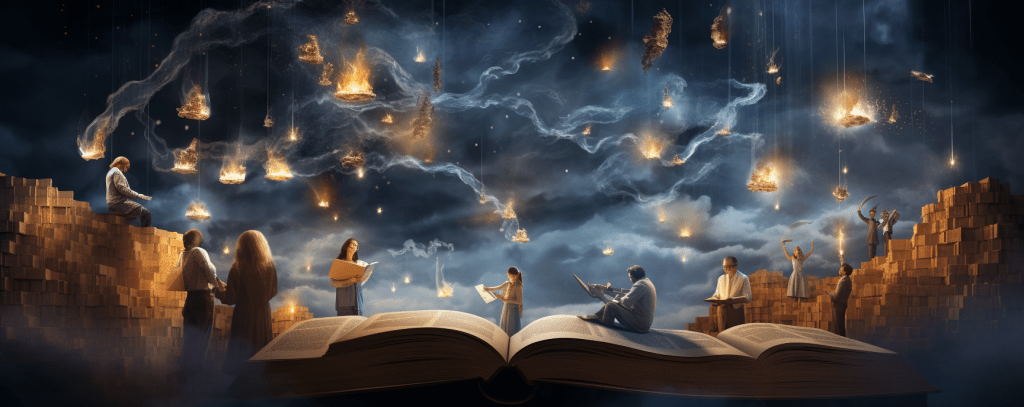
Breaking Conventions: Christopher Nolan on Screenwriting Techniques

Decoding Christopher Nolan: An Overview of His Unique Approach

Christopher Nolan is a name that has become synonymous with mind-bending narratives, non-linear storytelling, and thematically dense films. He has consistently and fearlessly challenged traditional screenplay structure, deconstructing and reshaping it to fit his grand narrative designs. This section will focus on Nolan’s unique screenwriting techniques, illustrating how his approach subverts the norm and provides fertile ground for innovative storytelling.

Nolan’s films, from “Memento” to “Inception” and “Tenet”, represent a masterclass in writing a screenplay that deviates from conventional paths. His approach is characterized by several key elements: temporal distortion, thematic complexity, and meticulous attention to detail.

Temporal distortion is perhaps Nolan’s most distinctive screenwriting tool. It shatters the linear approach to time that many screenwriters adhere to, instead adopting a fragmented, often cyclical structure. “Memento”, for instance, used a unique reverse narrative structure to underscore the protagonist’s memory loss. In “Dunkirk”, Nolan employed a triptych time structure, whereby three stories unfold over different lengths of time but converge at the climax.

Thematic complexity, another cornerstone of Nolan’s script writing techniques, presents grand, often philosophical, ideas that encourage viewers to delve deep and interpret the film on various levels. Whether it’s the exploration of dreams within dreams in “Inception”, the concept of time manipulation in “Interstellar”, or the examination of identity and perception in “Memento”, Nolan’s screenplays go beyond mere entertainment. They invite the audience to partake in an intellectual exercise that keeps them thinking long after the credits roll.

Attention to detail is another Nolan hallmark. Every element, every line of dialogue, and every prop in his films serves a purpose. Nothing is arbitrary. This level of detail adds layers of meaning to the narrative and creates a richly textured cinematic experience. His obsession with precision extends to the scriptwriting process. Unlike the fast-paced nature of some Hollywood productions, Nolan takes his time crafting the screenplay, ensuring every aspect aligns perfectly with his overall vision.

When considering Nolan’s unconventional style, it’s vital to understand that his techniques aren’t employed for the sake of being different. Rather, they serve the narrative, helping to create richer, more immersive stories. Take the case of “The Prestige”, where the film’s structure mimics the three parts of a magic trick, perfectly aligning the narrative style with the subject matter. The same goes for “Interstellar”, where complex theories of relativity and time dilation are intricately woven into the script, serving both the plot and the thematic development.

Nolan’s unorthodox approach to screenwriting demonstrates a willingness to take risks and break away from traditional narrative models. His bold, intricate screenplays have, over time, not only reshaped audience expectations but also broadened the scope of what is considered possible within mainstream cinema.

While Nolan’s techniques might not be for every writer, they highlight an important lesson for all storytellers: the rules of screenplay structure are not set in stone. They can be manipulated, subverted, and rearranged to serve the story you’re trying to tell. To those just embarking on the journey of writing a screenplay, Nolan’s filmography serves as a reminder that convention can be a launching pad for innovation, rather than a cage that restricts creativity.

Nolan’s Screenwriting Tips: Crafting Complex Narratives

In breaking the conventional mould of storytelling, Christopher Nolan has become a beacon of inspiration for screenwriters across the globe. His complex narratives, often laden with twists, turns, and philosophical quandaries, encourage us to expand our screenwriting toolbox and consider new methods of conveying our stories. Below are some Nolan-inspired screenwriting tips for crafting intricate narratives that resonate with audiences.

Challenge Chronology

Nolan’s work repeatedly shows that manipulating time can serve as a powerful narrative device. In “Memento,” the non-linear structure invites the audience to piece together the plot in reverse order, while “Dunkirk” incorporates three different time frames to portray a comprehensive picture of a singular historical event. By reordering the events in your script, you can build suspense, engage your audience, and explore character dynamics in a unique way.

Unearth Big Ideas

Nolan is well known for using his films as a platform for exploring ambitious, often philosophical, ideas. “Inception” delves into the architecture of dreams and the boundaries of the subconscious, while “Interstellar” uses the canvas of space travel to investigate human survival, love, and time. Unearthing big ideas allows you to make deeper connections with your audience. Think about the universal themes you want to explore and how they can intertwine with your plot. You’ll add depth to your narrative, make it more relatable, and encourage viewers to question and interpret your film’s meaning.

Establish an Intricate Plot

Nolan’s narratives are famous for their intricacies. His films, such as “The Prestige” and “Inception“, are known for their complex plot structures, full of twists and reveals that keep audiences on the edge of their seats. Developing a multi-layered plot involves intricate planning, outlining, and revising. Invest time in your pre-writing stage, plan your narrative arcs, consider plot twists, and anticipate how your audience might interpret different elements of your story. This process can result in a richer narrative that engages your audience more deeply.

Commit to Detail

Nolan’s films stand out for their extraordinary attention to detail. Every piece of dialogue, every prop, every camera movement is meticulously designed and placed with purpose. This commitment to detail extends from his script to the finished film, creating immersive worlds and believable characters. As a writer, your commitment to detail can enhance your storytelling. Pay attention to the way your characters speak, their motivations, the environments they inhabit, and the smaller moments that can illuminate larger truths.

Blend Genre Conventions

Although many of Nolan’s films could be broadly categorized as thrillers, they often blur the lines between genres, combining elements of science fiction, mystery, war, and even horror. “Inception” is a heist film set within the human mind, “The Dark Knight” is a crime drama within a superhero movie, and “Dunkirk” is a war film told from a purely survivalist perspective. By blending genres, Nolan expands the narrative possibilities and defies audience expectations. Don’t be afraid to blend elements from different genres to create a hybrid that can provide a unique narrative experience.

Write Visually

One of the reasons Nolan’s scripts are so cinematic lies in his ability to write visually. His screenplays are full of vivid descriptions that not only convey the action but also establish mood, character, and theme. From the vast landscapes of “Interstellar” to the intricate dreamscapes of “Inception“, Nolan’s scripts read like a dynamic storyboard. Cultivate your skills in writing visually. Strive to paint a picture with your words that will enable a director to visualize the film while reading your script.

Screenwriting, like any art form, is a process of continual learning and experimentation. Christopher Nolan’s unique approach provides us with valuable lessons in narrative construction, thematic exploration, and stylistic expression. While it’s essential to learn from masters like Nolan, remember that these tips should serve as guidance and inspiration, not rigid rules. The beauty of screenwriting lies in its flexibility, allowing you to break away from norms and develop your own distinctive style. Challenge your boundaries, dare to be different, and write the story you want to tell. After all, it’s through defying convention that some of the most memorable cinema has been made.

Lessons from Nolan: Writing Prompts Inspired by His Filmography

The brilliance of Christopher Nolan’s filmography isn’t just the complexity of his narratives, the depth of his themes, or the intricate details of his cinematic worlds. It’s also his ability to spark curiosity, incite debate, and encourage us to ponder the seemingly impossible. In this final section, we offer a series of writing prompts inspired by Nolan’s films, designed to challenge your creativity, broaden your narrative scope, and help you apply some of the screenwriting tips we’ve discussed.

Dive into the Depths of Memory

Inspired by “Memento“, consider writing a screenplay that explores the unreliability of memory. How does a character’s perception of the past influence their decisions in the present? Can they trust their own memories? And if they can’t, how does that affect their relationships and their quest for truth?

Manipulate Time

Drawing on “Inception” and “Dunkirk“, experiment with non-linear storytelling in your next script. How might different timelines intersect to create a multi-layered narrative? How can the manipulation of time build suspense, enrich character development, or shed new light on a familiar story?

Explore Multiple Realities

Using “Inception” as a reference, imagine a script that navigates multiple realities. What happens when characters can no longer distinguish the real from the surreal? How might these multiple layers of reality influence your plot structure and character dynamics?

Pose a Philosophical Question

In the vein of “Interstellar“, use your screenplay to pose a grand philosophical question. It could be about the nature of existence, the concept of time, or the limits of human knowledge. How does this question guide your narrative and affect your characters’ choices?

Incorporate a Major Twist

Like the shocking reveals in “The Prestige” and “The Dark Knight“, design a major twist that turns your narrative on its head. How can you lead your audience down one path, only to reveal that things are not as they seem?

Use Settings as a Character

Much like Gotham City in “The Dark Knight Trilogy“, consider making the setting of your story a character in its own right. How does it influence the actions of your characters? How does it shape the plot and themes of your screenplay?

These writing prompts aren’t merely exercises in mimicking Nolan’s style; they’re designed to challenge your thinking, stimulate your creativity, and help you explore new narrative territories. As you delve into these prompts, remember to incorporate the screenwriting tips we discussed earlier: challenge chronology, unearth big ideas, establish intricate plots, commit to detail, blend genre conventions, and write visually.

In conclusion, learning from a master like Christopher Nolan isn’t about copying his style or adhering strictly to his methods. Instead, it’s about understanding the philosophy behind his screenwriting choices and using that knowledge as a springboard for your own creativity. So, as you venture into the world of screenwriting, don’t be afraid to experiment, to take risks, and to push boundaries. After all, as Nolan’s career has shown us, storytelling is a vast and flexible medium, one that can be molded, stretched, and flipped on its head to create compelling, thought-provoking cinema.


✍️  Whether you’re mastering the art of dialogue, structure, or character development, the power of AI can be a game-changer in your writing journey. My Free Ebook, ‘AI for Authors’ delves into how AI-powered prompts can provide a unique edge to your storytelling process. If you’re intrigued by the prospect of supercharging your fiction skills, download your free copy today and explore new horizons in creative writing. 

The Powerful Pen of Toni Morrison: Celebrating Her Impact on American Literature

The Indelible Mark of Toni Morrison on American Literature

In the realm of American literature, very few names command as much respect as Toni Morrison. Her body of work, which spans a myriad of novels, essays, and other written expressions, has left an indelible mark on not just American letters, but on global literary discourse. Morrison, whose writing bravely delves into the most profound aspects of human experience, offers a literary compass pointing towards a more profound understanding of identity, race, gender, and history.

Toni Morrison was born as Chloe Ardelia Wofford on February 18, 1931, in Lorain, Ohio. An avid reader from a young age, she developed a keen sense of narrative, motivated by the stories told by her parents that often incorporated African-American folktales and oral history. It was this upbringing that kindled Morrison’s love for the written word, a love that would guide her to Howard University and then to Cornell University, where she earned her Master’s degree in English.

After a brief academic career, Morrison’s literary journey officially began in the late 1960s when she started working as an editor for Random House. It was here that she developed an acute sense of the gaping absence of Black voices in mainstream literature. Fueled by this realization, she authored her first novel, ‘The Bluest Eye‘, which was published in 1970. This pioneering work established many of the themes that would recur throughout her career: the quest for identity, the toll of racial prejudice, and the complex intersection of personal and cultural history.

Her subsequent novels, which include ‘Sula‘, ‘Song of Solomon‘, and ‘Beloved‘, further consolidated her status as one of the most influential writers of her time. Each of her novels reflects a deep commitment to presenting authentic African-American experiences, thus contributing to the rich tapestry of American literature.

Arguably, Morrison’s magnum opus, ‘Beloved’, earned her the Pulitzer Prize for Fiction in 1988. It is a haunting tale that grapples with the legacy of slavery and its long-lasting impact on African-American life. The novel’s impact was such that it was instrumental in Morrison being awarded the Nobel Prize in Literature in 1993, making her the first African-American woman to receive this honor.

Morrison’s work, with its relentless exploration of racial identity, has served to fundamentally shift the American literary landscape. Before her, the experiences of African-Americans were often presented through the lens of white writers. Morrison’s novels, however, offered an unflinching and authentic portrayal of Black life, told by someone who lived those experiences. In doing so, she not only challenged pre-existing literary norms but also carved out a space for Black voices in literature.

Equally significant is Morrison’s exploration of female identities and experiences in her work. Her novels often center on women navigating the complexities of their lives, fraught with societal and personal challenges. Through these narratives, Morrison has offered profound insights into the intersectionality of race and gender, establishing herself as a powerful feminist voice.

Furthermore, Morrison’s engagement with historical narratives, particularly those of African-Americans, set a new precedent in American literature. She focused on giving voice to the often silenced experiences of Black individuals in history, infusing her novels with a profound sense of historical consciousness.

Morrison’s writing style is characterized by its vivid lyrical quality and emotional intensity. Her prose is rich with metaphors and symbols, contributing to a unique narrative voice that is at once poetic and profound. This, along with her intricate character development and poignant exploration of themes, has contributed to her stature as a literary titan.

Breaking Down the Magic: Toni Morrison’s Writing Style

When exploring the wonder that is Toni Morrison’s writing, it becomes evident that her works transcend traditional literary norms. Her prose is an intricate dance of language, marked by a lyrical intensity that elevates the narrative to a realm of emotional and intellectual profundity. Morrison’s unique style can offer several valuable writing tips to those aiming to enhance their creative writing skills.

One of the most salient characteristics of Morrison’s writing is her use of figurative language. She masterfully employs metaphors, similes, and symbols to create a deeper, more nuanced understanding of her characters and themes. For instance, in ‘Beloved‘, the titular character serves as a symbol of the traumatic legacy of slavery that continues to haunt the characters. As an aspiring writer, the ability to use figurative language to add depth to your narrative is a skill worth cultivating. Not only does it enhance the richness of your prose, but it also allows for a more layered exploration of your themes.

Another significant aspect of Morrison’s writing is her complex character development. Her characters are not mere caricatures or archetypes; they are full-bodied, flawed individuals with their own histories, motivations, and dilemmas. Consider the character of Sethe in ‘Beloved’. She is a former slave who is haunted by her past yet strives to create a better future for her daughter. Her complexity evokes empathy from the readers, who despite the horrific act she commits, cannot help but see her humanity. As an aspiring writer, the ability to create nuanced, relatable characters is crucial. They serve as the backbone of your narrative, and their growth and evolution can drive your plot forward.

Morrison’s narratives often embody a non-linear structure, weaving past and present, reality and supernatural, in a way that disrupts traditional narrative flow. This technique allows Morrison to delve into the interplay between personal memory and historical context. In ‘Song of Solomon‘, for instance, she uses magical realism and shifts between different time periods to explore the protagonist’s quest for self-discovery. The ability to manipulate narrative structure effectively can be a valuable writing skill, allowing you to present your story in a unique, engaging manner.

Further, Morrison’s narratives often engage deeply with themes of race, gender, and history. She presents an unflinching portrayal of the African-American experience, highlighting the harsh realities of racism and discrimination. Her works are testament to the importance of embracing and exploring themes relevant to your own experiences or those you feel need more representation in literature. This can serve to give your work authenticity and relevance, thus making it more impactful.

Another compelling aspect of Morrison’s writing style is her use of language and dialogue. She embraces the vernacular of African-American communities, using it to lend authenticity to her characters and settings. In ‘Sula‘, for instance, the colloquial speech patterns of the Bottom community are vividly depicted, giving the reader a sense of the rhythms and cadences of their speech. The way your characters speak can say a lot about their background, their personality, and their perspective on the world. As a writer, honing your ability to craft authentic, engaging dialogue can be a powerful tool in bringing your characters and your story to life.

Morrison’s narrative voice often possesses a distinct lyrical quality. Her prose resonates with a rhythm that is almost musical, painting vivid imagery in the reader’s mind. This can be seen in passages from ‘The Bluest Eye‘, where the beauty and brutality of the novel’s world are brought to life through Morrison’s lyrical descriptions. Developing a distinctive narrative voice can significantly enhance your writing, making it stand out and linger in the reader’s mind.

Lastly, Morrison’s works often embody a strong sense of place, which adds a layer of realism to her stories. She vividly portrays the settings of her narratives, whether it’s the Bottom in ‘Sula’ or the 124 house in ‘Beloved’. The ability to create a convincing, immersive setting is a valuable skill in writing. It not only situates your story in a particular time and place but also can serve to reflect and reinforce your themes and character development.

Inspiration for the Aspiring Writer: Lessons from Morrison’s Novels

The brilliance of Toni Morrison’s novels lies not only in their literary craftsmanship but also in the valuable lessons they offer to both readers and aspiring writers. For those embarking on the journey of writing a novel, her work can serve as a treasure trove of inspiration and guidance. Here, we explore some of these lessons that can be gleaned from Morrison’s novels and how they can serve as writing prompts to kickstart your creative journey.

One of the fundamental lessons from Morrison’s work is the importance of exploring your personal experiences and cultural heritage. As seen in ‘Song of Solomon‘, Morrison delves into African American folklore and history to create a compelling narrative about identity and belonging. Such exploration of personal and cultural narratives can be an excellent writing prompt. It allows you to bring a unique, authentic perspective to your work, making your novel resonate with readers in a meaningful way.

Another vital lesson is the use of complex characters. Morrison’s characters are not merely good or evil; they are multifaceted individuals, each battling their inner conflicts and grappling with their circumstances. Take, for instance, Sethe from ‘Beloved‘. Despite committing an unthinkable act, she evokes sympathy due to her traumatic past and desperate circumstances. This complexity makes her character compelling and memorable. When writing a novel, creating well-rounded, relatable characters should be a priority. Consider their motivations, their strengths, their weaknesses, and how these can impact the plot.

Morrison’s exploration of heavy, significant themes such as racial prejudice, slavery, and gender discrimination offers another valuable lesson. It showcases the power of literature to spotlight societal issues and provoke thoughtful discussion. For example, in ‘The Bluest Eye‘, she explores the devastating impact of internalized racism and beauty standards on a young African American girl. When writing your novel, do not shy away from delving into significant themes that resonate with you. It not only adds depth to your story but can also make it more relevant and impactful.

Morrison’s mastery of language is also a source of inspiration. Her use of lyrical prose, vivid descriptions, and authentic dialogue serves to immerse the reader in the story’s world. For instance, the dialogues in ‘Sula‘ reflect the characters’ cultural background and personal histories. When writing, pay attention to how you can use language to enrich your story. From developing a distinctive narrative voice to crafting dialogue that reflects your characters’ personalities and backgrounds, language is a potent tool at your disposal.

The non-linear narrative structure in Morrison’s novels is another element to consider. She masterfully navigates between different timelines, weaving together past and present to create a tapestry of interconnected narratives. This is particularly evident in ‘Beloved’, where the past’s haunting specter seeps into the characters’ present, blurring the boundaries between the two. Experimenting with narrative structure can add a layer of intrigue to your story and provide you with innovative ways to unveil your plot and characters.

Lastly, the strong sense of place in Morrison’s novels demonstrates the importance of setting in a story. She meticulously crafts her settings, infusing them with historical and cultural details that make them come alive. The town of ‘Bottom’ in ‘Sula’, for instance, is not merely a backdrop but a living, breathing entity that influences the characters and their narratives. When you embark on writing your novel, consider how your setting can reflect and enhance your story’s themes and characters.

In conclusion, the lessons gleaned from Morrison’s novels can provide ample inspiration for those looking to improve their writing skills or embarking on writing a novel. From exploring personal and cultural narratives to crafting complex characters, delving into significant themes, mastering language, experimenting with narrative structure, and creating a vivid sense of place, there is much to learn from Morrison’s rich literary legacy.

However, it is essential to remember that these lessons should serve as guidance and not as rigid rules. Writing is a deeply personal journey, and what works for one might not work for another. Take the lessons that resonate with you and adapt them to your unique writing style and story. After all, as Toni Morrison herself once said, “If there’s a book that you want to read, but it hasn’t been written yet, then you must write it.”


✍️  Whether you’re mastering the art of dialogue, structure, or character development, the power of AI can be a game-changer in your writing journey. My Free Ebook, ‘AI for Authors’ delves into how AI-powered prompts can provide a unique edge to your storytelling process. If you’re intrigued by the prospect of supercharging your fiction skills, download your free copy today and explore new horizons in creative writing. 

The Art of Animation: Exploring the Screenplay of ‘Inside Out’ (2015)

The Story Behind the Story: Understanding the Screenplay of ‘Inside Out’

When it comes to animation, Pixar’s reputation precedes it. The studio has been instrumental in crafting rich, imaginative narratives that appeal to audiences of all ages. Among Pixar’s pantheon of classics, ‘Inside Out’ (2015) stands out as an exemplary testament to the power of effective screenwriting in animation.

‘Inside Out’ is a unique exploration of human emotion told through the eyes (or should we say ‘minds’) of Riley, an eleven-year-old girl, and the personified emotions that govern her day-to-day experiences: Joy, Sadness, Fear, Disgust, and Anger. The film’s clever plot and profound emotional depth, beautifully interwoven with humor and humanity, owe their success to the meticulously crafted screenplay.

What does it take to write a screenplay for a film like ‘Inside Out’? Let’s delve into some screenwriting tips derived from the film’s ingenious narrative approach.

Embrace complexity with simplicity

‘Inside Out’ tackles the complex world of human psychology and emotions, which could easily become an overwrought and confusing narrative. However, it balances this complexity with simple, relatable characters and a clear central narrative: Riley’s struggle with her family’s move to San Francisco. This balance allows the film to explore profound themes while keeping the story accessible for all ages. The lesson here is that no subject is too complex for a screenplay, provided it’s presented through a simple, engaging narrative.

Craft engaging, memorable characters

The characters in ‘Inside Out’ are brilliant examples of taking an abstract concept and personifying it into an engaging, relatable character. Each emotion has a distinct personality that matches their role, creating a dynamic cast that audiences can quickly understand and connect with. In screenwriting, it’s essential to have characters that audiences can empathize with, as this fosters a deeper engagement with the story.

Make the stakes high and personal

While the setting of ‘Inside Out’ is fantastical, the stakes are profoundly human and relatable. Riley’s emotional struggle resonates deeply with audiences, making us invested in the journey of her emotions. In any screenplay, ensuring the stakes are both high and personal can significantly increase audience engagement.

Use humor to balance the tone

‘Inside Out’ deals with weighty themes of emotional turmoil and change, but it never becomes oppressive, thanks to the clever use of humor throughout the screenplay. The comic interactions between Joy, Sadness, and the other emotions provide much-needed relief and balance the tone of the film. When dealing with serious or complex themes in screenwriting, humor can be an effective tool to maintain balance and keep audiences engaged.

Show, don’t tell

One of the hallmarks of great screenwriting, this principle is at the heart of ‘Inside Out’. The film shows us the impact of Riley’s emotions through the changes in her behavior and the physical landscape of her mind, rather than relying on dialogue to explain what’s happening. Screenwriters should remember this principle and let their audience deduce what’s happening through the characters’ actions and interactions.

The Architecture of Emotion: Dissecting the Screenplay Structure of ‘Inside Out’

In screenwriting, the structure is key. It’s the invisible framework that holds your narrative together and guides your audience through the story. And the screenplay of Pixar’s ‘Inside Out’ provides an excellent case study for understanding how an effective screenplay structure works. It follows a conventional three-act structure with a Pixar twist, where the acts align with the emotional journey of the main character, in this case, the personified emotion, Joy. So, let’s dive into how ‘Inside Out’ utilizes traditional screenplay structures in an innovative way.

Act One: Set up and Catalyst

In the first act of ‘Inside Out’, we’re introduced to Riley and her emotions. The screenplay efficiently establishes the rules of the world within Riley’s mind, how the emotions work, and how memories, particularly core memories, shape Riley’s personality. The ‘Normal World’ is Riley’s happy life in Minnesota, with Joy being the dominant emotion.

However, the ‘Catalyst’ arrives when Riley’s family moves to San Francisco. The move disrupts Riley’s joyous equilibrium and brings Sadness to the forefront, which is unusual according to Joy’s understanding. This setup effectively establishes the primary conflict within Riley’s mind, which will play out in the subsequent acts.

Act Two: Confrontation and Complication

The second act is where the main characters encounter obstacles, and the stakes get higher. In ‘Inside Out’, Joy and Sadness, along with Riley’s core memories, get accidentally ejected from the Headquarters, leaving only Fear, Disgust, and Anger to control Riley. Meanwhile, Joy and Sadness embark on a journey through various realms of Riley’s mind to get back to the Headquarters.

This act is filled with various adventures and setbacks, such as their encounters with Riley’s forgotten imaginary friend Bing Bong, the disintegration of ‘Goofball Island’, one of the pillars of Riley’s personality, and their journey through abstract thought. As they navigate through these, we see the relationship between Joy and Sadness evolve, and Joy’s understanding of Sadness’s role deepens, which is the central character arc in the story.

Act Three: Climax and Resolution

The third act of ‘Inside Out’ brings the escalating internal and external conflicts to a head. Riley, driven by her remaining emotions, decides to run away back to Minnesota, which represents the story’s climax. Meanwhile, Joy, after understanding the importance of Sadness, must make it back to the Headquarters to stop Riley.

The resolution comes when Joy and Sadness finally return. Sadness takes control, allowing Riley to express her unhappiness about the move to her parents, resolving the primary external conflict. Internally, Joy’s arc concludes when she understands that all emotions, including Sadness, are crucial for Riley’s emotional health.

The screenplay of ‘Inside Out’ is a masterclass in structure. It follows the classic three-act structure, but with a fresh spin that keeps the audience engaged. It uses the structure to align with the main character’s emotional journey, and the events of the plot are always connected to the emotional stakes of the characters.

The film also efficiently uses other screenwriting elements, like subplots (like Bing Bong’s story), and plot points (like the destruction of Personality Islands) that align with the structure to add more layers to the main story.

Writing a screenplay with such intricate detail is no small feat. But by understanding the architecture of emotion that ‘Inside Out’ builds through its screenplay, we can gain invaluable insights into how screenplay structure can enhance the emotional journey of our characters and captivate our audiences.

Channeling Creativity: Script Writing Techniques and Prompts Inspired by ‘Inside Out’

‘Inside Out’ stands as a testament to Pixar’s creative prowess and their innovative approach to screenwriting. The unique scriptwriting techniques employed in the film breathe life into abstract concepts, craft a vivid internal world, and spark an emotional journey that resonates with audiences of all ages. Let’s explore these techniques and how they can inspire your own creative process.

Personification as Characterization

The personification of emotions is at the heart of ‘Inside Out’. Each emotion is brought to life as a full-fledged character with distinct personalities, quirks, and roles. This personification serves the dual purpose of characterizing emotions and creating a tangible representation of an abstract concept. This technique is incredibly effective in exploring themes and ideas that may otherwise be challenging to visualize.

Writing Prompt: Consider an abstract concept or theme relevant to your story. How can you personify this concept into a character? What would their personality traits, appearance, and role in the story be?

Emotional Mapping of Characters

Each character in ‘Inside Out’ is an embodiment of the emotion they represent. This emotional mapping is a powerful tool to create distinct, memorable characters. While this is taken to a literal level in ‘Inside Out’, it can be subtly employed in any script. Mapping your characters’ primary emotional states can help create a unique voice and inform their decisions and reactions.

Writing Prompt: Identify the primary emotion of each of your main characters. How does this emotion influence their dialogue, behavior, and decisions?

Inner World Building

‘Inside Out’ excels in the world-building of Riley’s mind. From the central Headquarters to the Memory Banks, Imagination Land, Dream Production, and the Subconscious, each realm is intricately designed and serves a purpose in the story. This innovative inner world building is a powerful technique for adding depth to your story.

Writing Prompt: Imagine the inner world of your protagonist. What realms exist within their mind? How do these realms interact with the external world and influence the character’s journey?

Layered Conflicts

‘Inside Out’ creates layered conflicts, both internally (Joy’s misunderstanding of Sadness’s role) and externally (Riley’s struggle with her family’s move). This layering of conflicts adds depth to the narrative, heightens stakes, and keeps the audience engaged.

Writing Prompt: Identify an internal and external conflict for your protagonist. How do these conflicts intersect and influence each other?

Emotional Evolution

One of the standout aspects of ‘Inside Out’ is the emotional evolution of Joy. Her journey from misunderstanding Sadness to realizing her importance mirrors a human’s journey to understand that all emotions, even ones perceived as negative, are essential. This emotional evolution makes Joy a well-rounded character and strengthens the story’s emotional impact.

Writing Prompt: Chart an emotional evolution for your protagonist. What misconceptions do they hold at the beginning of the story, and how do they evolve by the end?

These scriptwriting techniques, and the prompts inspired by them, can serve as powerful tools to develop your screenplay. They not only offer ways to create engaging characters and narratives but also to explore complex themes and ideas. The creative process can be daunting, but with these writing tips at your disposal, you can channel your creativity, just like the creators of ‘Inside Out’, to craft compelling, emotive stories that resonate with audiences. Remember, all great stories start with a spark of inspiration and a blank page.


✍️  Whether you’re mastering the art of dialogue, structure, or character development, the power of AI can be a game-changer in your writing journey. My Free Ebook, ‘AI for Authors’ delves into how AI-powered prompts can provide a unique edge to your storytelling process. If you’re intrigued by the prospect of supercharging your fiction skills, download your free copy today and explore new horizons in creative writing.