Exploring the Underworld: A Review of ‘The Sopranos’

Context and Introduction – The Evolution of TV Screenwriting

“The Sopranos” isn’t just a TV series; it’s a masterclass in screenwriting. A production that hailed from the late 1990s to the mid-2000s, it emerged during what many regard as the ‘golden age’ of television. But what exactly made this series resonate so deeply with audiences, and how has it influenced the ever-evolving realm of TV screenwriting?

The Television Renaissance

It’s essential, first, to understand the broader television renaissance during which “The Sopranos” aired. This era saw television breaking its traditional bounds, exploring narratives and styles that were previously exclusive to cinema. TV was no longer just about episodic tales; it was about creating prolonged, intricate, and cinematic story arcs. Series such as “The Wire,” “Breaking Bad,” and of course, “The Sopranos,” led the charge, redefining what it meant to tell a story on the small screen.

The Genius of David Chase

Every memorable series has an artistic mind steering its direction. For “The Sopranos,” it was David Chase. Chase’s approach to screenwriting was unique. While many screenwriters focus intently on plotting every detail, Chase allowed for organic growth. This fluidity in writing a screenplay allowed characters to evolve, storylines to mature, and themes to resonate more deeply. His commitment to maintaining a series that felt genuine and unpredictable was evident in every episode. Yet, amidst the unpredictability, there was always purpose, a clear intention driving every scene.

Writing Tips Drawn from ‘The Sopranos’

For budding screenwriters, “The Sopranos” is a treasure trove of lessons. Here are a few writing tips one can glean from Chase’s magnum opus:

  • Embrace Authenticity: One of the standout features of “The Sopranos” was its commitment to authentic dialogue. Characters spoke like real New Jersey mobsters – not like Hollywood versions of them. Screenwriters should trust their research and insights to create dialogues that reflect genuine human interactions.
  • Complexity Over Cliché: The characters in “The Sopranos” were never black or white; they existed in shades of gray. Tony Soprano, the protagonist, was both a loving father and a ruthless mob boss. By avoiding clichéd character molds, Chase crafted figures that felt real and multifaceted.
  • The Power of Subtext: Often, what’s not said is more powerful than what’s verbalized. “The Sopranos” masterfully used subtext – characters’ unspoken feelings and intentions. This added layers to the narrative, allowing the audience to become active participants, deciphering underlying emotions and meanings.
  • Consistent Themes: While individual episodes had their arcs, the entire series revolved around key themes – family, power, morality, and the American Dream. Having a central theme can anchor your screenplay, giving it direction and depth.

Delving Deep – The Screenplay Structure of ‘The Sopranos’

The appeal of “The Sopranos” isn’t merely restricted to its compelling narrative and unforgettable characters; it’s rooted deep within the intricacies of its screenplay structure. This isn’t a series that followed the well-trodden path; it carved out its own route, setting a high benchmark for all television series that followed.

Narrative Arcs

Many series fall into the trap of either stretching a thin storyline over multiple episodes or cramming too many plot points into a short timeframe. “The Sopranos” avoided this pitfall by managing multiple storylines that intertwined with each other, all while maintaining coherence and a central focus.
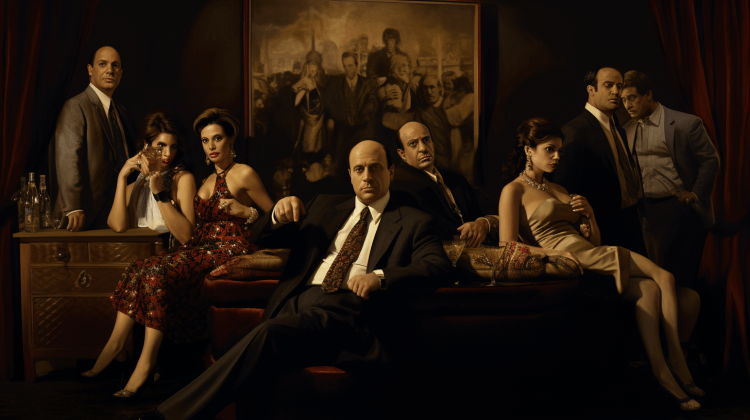
Every season brought forward a central conflict or set of conflicts that drove the overarching narrative. Yet, within each episode, there were smaller arcs, self-contained stories that reflected, contrasted, or added depth to the broader storyline. For instance, the ongoing tension between Tony and his mother, Livia, was a constant thread, yet each episode presented its unique set of challenges, from FBI investigations to personal dilemmas.

Character Complexity

Crafting a memorable character isn’t about giving them unique traits or eccentricities. It’s about developing multi-dimensional personalities that evolve, regress, conflict, and find resolution over time. Every character in “The Sopranos” was given this treatment, from the titular Tony Soprano to the often sidelined ‘B’ characters.

One can’t discuss “The Sopranos” without delving into Tony Soprano’s psyche. On the surface, he’s a mob boss, involved in every conceivable form of criminal enterprise. Dive a bit deeper, and you discover a man battling depression, grappling with his identity, seeking therapy, and trying to maintain balance between his personal and ‘professional’ lives. Such depth is a testament to impeccable character crafting.

But it wasn’t just Tony. Characters like Carmela, Dr. Melfi, and Christopher Moltisanti were all given story arcs that saw them change, evolve, and sometimes, tragically, meet their ends.

Setting and Atmosphere

New Jersey in “The Sopranos” isn’t just a backdrop; it’s a living, breathing entity that shapes the narrative. Its neighborhoods, the iconic Bada Bing club, the backroom deals in seedy motels, and the picturesque suburbs all contribute to the series’ atmosphere. Each location was chosen with purpose, adding layers to the narrative, enhancing the screenplay structure.

The atmosphere was further intensified by the choices in music, wardrobe, and cinematography. These elements, while not written into the screenplay, were heavily influenced by the writing. The choice of using Alabama 3’s ‘Woke Up This Morning’ as the opening theme wasn’t random. It set the tone for the series – gritty, unapologetic, and filled with foreboding.

Screenwriting Tips from ‘The Sopranos’

If “The Sopranos” teaches screenwriters anything, it’s that innovation and authenticity always triumph over formulaic writing. Here are some key takeaways for those crafting their own screenplays:

  • Embrace Multiple Storylines: Don’t shy away from complexity. As seen in “The Sopranos,” multiple threads can weave a rich tapestry. Just ensure they serve a purpose and converge meaningfully.
  • Character Depth is Key: Avoid creating characters that solely serve the plot. Give them desires, fears, conflicts, and growth. Let them be human, flawed, and relatable.
  • Utilize Setting Effectively: The environment can shape your story. From the murkiness of mob hangouts to the calm of Dr. Melfi’s office, use settings to amplify the emotional tone of your scenes.
  • Stay True to Your Vision: David Chase had a clear vision for “The Sopranos,” even if it meant subverting audience expectations. While feedback is essential, it’s vital to stay true to your narrative’s core.

How ‘The Sopranos’ Changed Television Storytelling Forever

“The Sopranos” didn’t merely entertain; it revolutionized. As a behemoth in the realm of television storytelling, this series shifted the narrative trajectory for an entire industry. If you’re in the craft of screenwriting, there’s much to glean from this monumental show. Here’s an exploration into its transformative influence.

Pushing the Protagonist Paradigm

Traditionally, television had a simple formula: protagonists were noble, antagonists were nefarious, and rarely did these lines blur. Tony Soprano burst onto our screens, subverting this trope entirely. A mob boss attending therapy, battling anxiety attacks, and showing genuine love for his family was groundbreaking. By making audiences empathize and, at times, despise the same character, “The Sopranos” blurred the lines between hero and villain.

Such complex character portrayal paved the way for other iconic figures. Think of Walter White from “Breaking Bad” or Frank Underwood from “House of Cards.” These characters owe their existence to the precedent set by Tony Soprano.

Serialized Storytelling

Before “The Sopranos,” TV shows often had episodic structures. Each episode was a self-contained narrative, with the status quo restored by the end. This series bucked the trend. Though each episode had its arc, the narrative threads often spanned an entire season or even across multiple seasons.

This encouraged viewers to invest deeply, anticipating and speculating future plot developments. Shows like “Game of Thrones” or “Westworld” thrive on this serialized format, rewarding dedicated viewership with intricate story webs.

Embracing Dark Themes

Television often steered clear of profound psychological explorations or morally ambiguous plots. “The Sopranos,” with its intense focus on Tony’s therapy sessions, his moral quandaries, and the psyche of those surrounding him, embraced the darkness.

This focus on the human psyche’s murkier sides paved the way for series like “Mindhunter” which delved into the minds of serial killers, or “BoJack Horseman,” which, despite being an animated comedy, poignantly examines addiction, depression, and the pitfalls of fame.

A Nod to Realism

“The Sopranos” is notable for its refusal to glamorize the mafia lifestyle. The mob life wasn’t portrayed as endlessly lavish parties and grandiose power plays but as real, often mundane, and fraught with everyday challenges. The detail to which the show stuck to realism, from the intricacies of mob politics to the financial strains and family drama, was a breath of fresh air.

This raw, unfiltered gaze into life’s mundanities can be seen in shows like “Better Call Saul,” where a significant subplot involves the protagonist’s struggles with elder law and establishing a solo practice.

Screenwriting Lessons from “The Sopranos”

Emerging screenwriters, pay heed! “The Sopranos” offers a plethora of insights for those hoping to write their own compelling narratives:

  • Challenge Conventions: Don’t be confined by traditional character archetypes. Let your protagonists be flawed, let your antagonists have redeeming qualities, and above all, keep them human.
  • Commit to Continuity: If you’re writing for television, consider the serialized format. Engage your audience over extended arcs, ensuring continuity and development with every episode.
  • Delve into Darkness: Don’t shy away from exploring profound themes. Whether it’s a character’s internal struggles or societal critiques, be bold in your narrative choices.
  • Keep it Real: Remember, even in the most fantastical of settings, elements of realism can anchor your story, making it relatable and genuine.

Conclusion

“The Sopranos” has left an indelible mark on television storytelling. Not only did it provide audiences with gripping content, but it also reshaped the way narratives were approached, character dynamics were built, and themes were explored. It’s not just a masterclass in screenwriting; it’s a testament to the transformative power of well-crafted stories.


✍️  Whether you’re mastering the art of dialogue, structure, or character development, the power of AI can be a game-changer in your writing journey. My Free Ebook, ‘AI for Authors’ delves into how AI-powered prompts can provide a unique edge to your storytelling process. If you’re intrigued by the prospect of supercharging your fiction skills, download your free copy today and explore new horizons in creative writing. 

Breaking Boundaries: Exploring the Fantasies of R.F. Kuang

Introduction: The Creative Genius of R.F. Kuang

In the ever-evolving landscape of modern literature, few authors capture the essence of transformative storytelling quite like R.F. Kuang. Her tales, drenched in rich history, cultural resonance, and profound character development, represent the pinnacle of what it means to venture beyond conventional boundaries in creative writing. The very manner in which Kuang pens her narratives is testament to a masterclass in bridging historical accuracy with fantastical invention. For budding authors or even seasoned writers seeking fresh perspectives, studying the literary craftsmanship of Kuang offers a wealth of insights.

One of the most striking elements of Kuang’s work is her commitment to authenticity. As an own-voices writer, she intricately interweaves personal experiences and cultural familiarity into her stories. Yet, she doesn’t merely recount history; she reimagines it, lending her own unique voice to the annals of time. This blend of realism and imagination is what sets her work apart in the realm of speculative fiction. Often, when writers lean heavily on historical elements, there’s a danger of their narratives becoming mired in a rigid interpretation of the past. Kuang’s approach defies this limitation. Her stories remain grounded, yet they soar to fantastical heights, demonstrating the potential of truly liberated creative writing.

The importance of breaking traditional boundaries in literature cannot be understated. Throughout history, genre lines have acted as both guidelines and restrictions, funneling creativity into pre-defined avenues. While these categorizations can offer structure and familiar terrain for readers, they can also impose limitations on the narrative possibilities an author might envision. But R.F. Kuang, like a literary alchemist, transforms the base metals of these genre constraints into golden tales that defy easy classification.

There’s a lesson in Kuang’s method for every writer, whether their focus lies in crafting short stories, penning essays, or dedicating themselves to a full-length novel. The lesson is clear: challenge the norms. Do not merely accept the ‘way things are done’ as the only path available. Whether it’s through choice of subject matter, narrative style, or character development, Kuang exemplifies what it means to tread new ground. Consider, for example, her breakout novel, The Poppy War. On the surface, it may be classified as a military fantasy, but delve deeper, and you’ll uncover layers of historical analysis, philosophical discourse, and sociopolitical commentary.

For writers seeking to elevate their craft, understanding the multi-dimensional approach Kuang employs can be immensely beneficial. It serves as a reminder that every narrative, no matter how steeped in reality or fantastical its premise, can benefit from a diverse toolkit of techniques and perspectives. The real magic of storytelling lies in its ability to transport readers—to make them feel, think, and question. Kuang’s works act as portals, inviting readers into realms where the lines between reality and fantasy blur, where characters grapple with issues that resonate deeply with our contemporary world.

But how does one begin to emulate, or even approach, such prowess? To start, one might consider the building blocks of story. At its core, every narrative—be it a short story, an essay, or a novel—is propelled by characters. Kuang’s characters are not mere archetypes; they are complex, multifaceted beings whose desires, fears, and ambitions drive the plot forward. For writers aiming to improve their skills, focusing on character development is a pivotal step. Dive into the psyche of your protagonists, antagonists, and side characters. Understand their worldviews, their motivations, and the circumstances that shaped them.

Furthermore, it’s beneficial to recognize that the setting, in the hands of a writer like Kuang, becomes a character in its own right. Whether it’s a sprawling metropolis, a remote village, or a mystical realm, the environment in which your story unfolds holds the power to influence character actions, decisions, and emotional responses. As such, it requires careful crafting and attention to detail.

Dissecting Kuang’s Masterpieces: The Novel’s New Frontier

The journey of writing a novel is one filled with both challenge and discovery. It demands a symphony of components – plot, character, setting, theme, and voice – to meld harmoniously. Delving into the depths of R.F. Kuang’s works, we encounter an author who not only understands this symphony but commands it with an almost uncanny proficiency. Through a meticulous analysis of her novels, we uncover the tools and techniques that define her success, offering invaluable writing tips for aspiring novelists.

At the core of Kuang’s literary accomplishments lies her commitment to intricate world-building. In her renowned The Poppy War series, the world of Nikan becomes more than a backdrop; it morphs into a living entity that breathes, evolves, and interacts with its characters. The geographical layouts, the political landscapes, the societal norms, and even the nuances of its mythologies are fleshed out with precision. Kuang’s detailed maps and appendices further immerse the reader, creating a sense of tangible reality within the confines of fiction.

For writers grappling with the challenge of crafting their own fictional universe, Kuang’s meticulous approach offers a guiding light. Start with a foundation: geography, climate, major cities, and landmarks. Then layer this with political systems, cultural practices, religions, and societal norms. Such detailed world-building not only enriches the reader’s experience but also provides a robust framework for the narrative to unfold. It ensures consistency, which is paramount in maintaining the suspension of disbelief, especially in speculative fiction.

Characterization, another hallmark of Kuang’s novels, stands as a testament to her deep understanding of human nature. Her characters aren’t just black and white; they reside in the many shades of gray in between. They are shaped by their circumstances, motivated by personal goals, and are capable of both good and evil. Rin, the protagonist of The Poppy War, encapsulates this complexity. Her journey from an orphan to a powerful figure is marred with moral dilemmas, challenging decisions, and intense personal struggles. Kuang doesn’t shy away from showcasing Rin’s flaws, making her all the more relatable.

Such nuanced character development offers a crucial lesson for budding novelists. Characters should evolve, grow, regress, and transform. They should surprise readers, yet remain authentic to their core nature. One of the essential writing tips when crafting multi-dimensional characters is to understand their motivations. What drives them? What are their deepest fears? Answering these questions not only lends depth to characters but also aids in plotting their trajectory in the story.

The narrative structure in Kuang’s works showcases a masterful blend of pacing, tension, and climax. There’s a rhythm to her storytelling, a balance between slower, introspective moments and high-octane action sequences. Consider the battle scenes in The Dragon Republic. Kuang’s descriptions are vivid, immersing readers into the heart of the conflict, making them feel the adrenaline, the fear, and the chaos. Yet, she also gives readers respite, allowing them to catch their breath, delve into character introspection, or explore the political machinations at play.

A vital tip here for writers is the understanding of pacing. Every scene in a novel should serve a purpose, either propelling the plot forward, revealing character traits, or setting the stage for upcoming events. By mastering the ebb and flow of narrative pacing, writers can effectively hook readers, maintain their interest, and lead them through an emotional roller coaster.

Additionally, Kuang’s impeccable research underscores the depth and authenticity of her novels. Drawing heavily from 20th-century Chinese history, she seamlessly integrates factual events with fictional elements. This not only grounds her stories in a semblance of reality but also provides them with a depth that resonates with historically inclined readers.

For writers, this underscores the importance of research, even in speculative fiction. Whether it’s understanding the dynamics of medieval politics, the intricacies of a particular culture, or the physics behind a fictional technology, thorough research lends credibility to a narrative. It enhances immersion, ensuring readers remain invested in the world you’ve crafted.

Lastly, Kuang’s prose itself is a study in elegance and effectiveness. She employs a blend of descriptive passages, engaging dialogue, and introspective monologues. The choice of words, the rhythm of sentences, and the employment of literary devices are all meticulously orchestrated to evoke specific emotions, imagery, or atmospheres. Her ability to paint vivid pictures with words, to make readers feel a character’s despair or the weight of a decision, is truly commendable.

Drawing Inspiration from R.F. Kuang: Tips for Your Own Fantasies

If artistry is a tapestry of inspiration and innovation, then R.F. Kuang’s works serve as vibrant threads that can enhance any writer’s canvas. Her stories aren’t merely tales to be enjoyed; they are reservoirs of knowledge and stimuli waiting to be tapped by budding writers. By analyzing the elements that make her novels resonate and linger in the reader’s psyche, we can formulate actionable insights and writing prompts to ignite one’s creative journey.

Character-Centric Exploration

Kuang’s characters, such as Rin from The Poppy War, challenge readers’ perceptions, oscillating between heroism and darkness. For writers looking to delve deep into their characters, consider these prompts:

  1. Origin Story: Craft a narrative that traces the childhood of your protagonist, detailing an event that became the linchpin for their future decisions. What molded them? What personal tragedies or triumphs propelled them on their journey?
  2. Moral Dilemma: Confront your character with an ethically ambiguous situation. How do they navigate it? Does it align with their previously established beliefs, or does it push them into new territory?

Building Worlds with Depth

In the vein of Kuang’s profound world-building techniques, consider scenarios that allow for intricate setting development:

  1. Historical Fusion: Merge two disparate historical eras, such as Ancient Egypt and Victorian England. How would their societal structures coexist? What technological advancements might emerge?
  2. Environmental Impact: Craft a world where the environment drastically influences societal norms and behaviors. A land where it rains perpetually or where night lasts for months. How have its inhabitants adapted? What unique customs or celebrations have arisen?

Challenging Conventions

Kuang often upends expectations, weaving intricate plots that defy predictability. To challenge your own narrative boundaries:

  1. Role Reversal: Take traditional roles or tropes and invert them. What if the knight in shining armor was the one in need of rescue? How would a narrative change if the mentor figure was younger than the hero?
  2. Time Twists: Play with narrative timelines. Perhaps your story starts at the end and works its way backward, revealing key events in reverse. How does this alter the revelation of motives, secrets, or character developments?

Drawing from Personal and Cultural Reservoirs

Emulating Kuang’s embrace of personal and cultural narratives can lead to deeply resonant tales. Consider:

  1. Cultural Mashup: Combine elements from two distinct cultures to craft a unique setting or societal structure. How do their cuisines, art forms, or religions merge?
  2. Ancestral Narratives: Draw inspiration from a personal family story or legend. Reimagine it in a fantastical setting, embellishing or altering details to fit your narrative.

Honoring and Integrating Research

As showcased in Kuang’s commitment to integrating historical facets seamlessly into her fiction, research becomes a tool of empowerment. Prompts to delve into include:

  1. Historical Dive: Select a lesser-known historical event. Craft a narrative around it, infusing it with fantastical elements.
  2. Technological Evolution: Explore the evolution of a particular technology, be it printing, weaponry, or transport. How does its advancement or alteration shape your world?

Harnessing the Power of Prose

Kuang’s eloquent prose captivates her readers, marrying content with style. To hone this aspect of writing:

  1. Emotive Descriptions: Describe a setting or character using only emotions. How does a forest feel on a foggy morning? What emotions emanate from a king who has lost his crown?
  2. Dialogue Challenge: Craft a story using only dialogue. Convey setting, emotions, and plot progressions solely through character interactions.

The journey to improve writing skills is perpetual, with every story, character, or world serving as a stepping stone towards mastery. And while each writer’s path is uniquely their own, gleaning insights from maestros like R.F. Kuang can significantly inform and enrich that odyssey.

Drawing inspiration from established authors isn’t about mimicry; it’s about understanding the underlying principles that make their work shine and integrating those lessons into one’s own narrative fabric. Through tailored writing prompts, an analytical mindset, and a commitment to continual growth, every writer can craft tales that not only entertain but also linger in readers’ minds long after the last page is turned.


✍️  Whether you’re mastering the art of dialogue, structure, or character development, the power of AI can be a game-changer in your writing journey. My Free Ebook, ‘AI for Authors’ delves into how AI-powered prompts can provide a unique edge to your storytelling process. If you’re intrigued by the prospect of supercharging your fiction skills, download your free copy today and explore new horizons in creative writing. 

Voicing the Marginalized: Celebrating the Work of Zora Neale Hurston

The Life and Times of Zora Neale Hurston

Zora Neale Hurston, often hailed as the luminary of African American literature, held a pen that carved stories from the depths of racial and gender struggle, painting a vivid picture of early 20th-century Black America. Her roots in the close-knit, all-Black town of Eatonville, Florida, not only offered her a unique vantage point but also ingrained in her the stories, dialects, and rhythms that she would later infuse into her writings.

Born on January 7, 1891, Zora’s early life was enveloped in the vibrant oral traditions of the South, listening to tales spun on southern porches, witnessing folklore come alive in community gatherings, and imbibing the potent narratives of struggle and triumph. The death of her mother when Zora was merely thirteen and her father’s subsequent remarriage marked a turning point in her life, nudging her towards independence, wanderlust, and an undying thirst for knowledge.

Zora’s journey to becoming an acclaimed writer wasn’t a straight path. She meandered through various jobs, including as a waitress and a manicurist, before setting her sights on Howard University, where she began her formal writing career. It was at Howard that she kickstarted her writing with short stories, plays, and articles, steadily charting her journey into the world of letters.

But Hurston’s voice truly found its resonance when she arrived in New York during the Harlem Renaissance, a cultural movement where Black art, literature, and music burgeoned, challenging the racial stereotypes of the time. Hurston, with her distinct approach to storytelling, became a central figure in this artistic revolution. Notably, her use of authentic Black southern dialect in her work was both audacious and groundbreaking, giving her narratives an unfiltered rawness and power.

The fusion of Zora’s cultural background with her education equipped her with a unique perspective, turning her into a chronicler of Black experiences. She used creative writing not just as a form of expression but as a potent tool to articulate the joy, sorrow, aspirations, and realities of Black Americans, especially Black women, in a society heavily marred by racism and sexism.

A significant aspect of her work was her commitment to realism. Instead of presenting an idealized, homogenized, or “palatable” version of Black life to appeal to white audiences, she embraced the richness and complexity of Black culture and language. This was particularly evident in her most acclaimed work, “Their Eyes Were Watching God”, where she explored the journey of a Black woman towards self-realization in the face of societal constraints. The novel was not just a testament to her storytelling prowess but also an embodiment of her belief in the inherent strength and beauty of Black culture.

Apart from novels, Hurston’s commitment to voicing the marginalized extended to her anthropological pursuits. As an anthropologist, she traveled extensively through the American South and the Caribbean, collecting folklore, conducting interviews, and diving deep into the cultural roots of the African diaspora. Works like “Mules and Men” showcased her genuine interest in capturing the essence of Black communities, presenting them not as subjects for study but as living, breathing, and dynamic entities.

However, her dedication to realism and authenticity was not always met with universal acclaim. Critics, even from within the Black community, sometimes found her portrayal of Black life problematic, arguing that it might reinforce racial stereotypes. Despite these controversies, Hurston remained undeterred, believing that her primary allegiance was to the truth and authenticity of her subjects, rather than conforming to external expectations.

Unfortunately, despite her immense contributions, Hurston’s later years were marked by financial struggles and declining health. She passed away in obscurity in 1960, with many of her works out of print. However, thanks to the efforts of writers like Alice Walker who rediscovered and championed her work, Zora Neale Hurston was posthumously recognized as one of the most influential figures in American literature.

Decoding Hurston’s Mastery: Techniques and Writing Tips

Zora Neale Hurston’s oeuvre remains an enduring testament to her mastery of the craft. Her works are not mere narratives but intricate tapestries woven with techniques that both budding and seasoned writers can learn from. This section will delve into the mechanics of her prose, offering writing tips derived from her artistic vision, shedding light on her approach to writing a novel, and understanding the prompts she might have derived from her life and surroundings.

Authentic Dialogue and Dialect: One of the hallmarks of Hurston’s writing is her authentic representation of dialect. In “Their Eyes Were Watching God“, for instance, the dialogues resonate with the genuine voices of the Black community of the American South. By faithfully replicating their speech patterns, idioms, and rhythms, she transported readers into the heart of her characters’ worlds. For writers, the lesson here is clear: authenticity in dialogue can breathe life into characters, grounding them in their specific cultural, geographical, or historical contexts.

Tip: Listen to the voices around you. Pay attention to unique speech patterns, local idioms, and specific cultural references. Infusing these authentic elements into your dialogue can lend your characters depth and realism.

Rich Sensory Descriptions: Hurston’s prose is replete with sensory details that pull readers into the narrative. Consider this passage from “Their Eyes Were Watching God”: “So the beginning of this was a woman and she had come back from burying the dead. Not the dead of sick and ailing with friends at the pillow and the feet.” The tactile sensation of a burial, the looming aura of death, and the palpable grief are evoked potently, placing readers squarely within the protagonist’s emotional landscape.

Tip: When crafting descriptions, tap into all five senses. Consider the sights, sounds, smells, tastes, and tactile sensations that can enrich your narrative.

Deep Character Insights: One of the most compelling aspects of Hurston’s work is her profound understanding of her characters. Their dreams, desires, fears, and foibles are laid bare, endearing them to readers. For example, Janie, the protagonist of “Their Eyes Were Watching God,” is portrayed with such depth and nuance that her journey becomes universally relatable, despite the specificities of her life.

Tip: Spend time understanding your characters. Dive deep into their pasts, explore their motivations, and challenge them with conflicts. A well-rounded character can drive your narrative forward and resonate with readers on a deep emotional level.

Narrative Structure and Pacing: Hurston’s approach to writing a novel often involved playing with narrative structures. She beautifully interwove linear plots with flashbacks, internal monologues, and allegories, striking a balance that kept readers engaged without overwhelming them. Pacing is essential in storytelling, and Hurston was adept at modulating narrative speed, creating tension and relief as required.

Tip: Vary your narrative techniques. Consider flashbacks for backstory, internal monologues for character insights, and varied pacing to keep readers engaged. Analyze your story’s natural rhythm and adjust the pace accordingly.

Drawing from Personal Experience: It’s widely acknowledged that writers should “write what they know,” and Hurston exemplified this. Whether she was drawing from her childhood experiences in Eatonville, her anthropological travels, or the broader socio-cultural milieu of the Harlem Renaissance, her works were deeply rooted in her personal experiences. This grounding in reality lent her stories a genuine authenticity.

Tip: Use your own experiences as writing prompts. Reflect on your past, your travels, the people you’ve met, and the cultural movements you’ve witnessed. Personal insights can offer a unique and authentic voice to your narrative.

The Power of Symbolism: Hurston often employed powerful symbols in her works to drive home deeper meanings. For instance, the horizon in “Their Eyes Were Watching God” symbolizes Janie’s dreams and aspirations. Such symbols add layers of meaning, enriching the narrative and encouraging readers to delve deeper into the story’s themes.

Tip: Think of symbols that can encapsulate your story’s core themes or your characters’ aspirations. A well-chosen symbol can become a recurring motif, amplifying your narrative’s depth and resonance.

In examining Hurston’s mastery, one can’t help but admire the meticulousness with which she crafted her narratives. Every word, every sentence, every character was imbued with intent, purpose, and an unwavering commitment to truth. Whether it was the complex play of dialects, the rich tapestry of sensory descriptions, or the profound insights into the human soul, Hurston’s techniques offer invaluable lessons for any writer.

Her legacy, from an artistic perspective, isn’t just about the stories she told but also about how she chose to tell them. And in this lies a treasure trove of insights, techniques, and writing tips that can inspire and guide writers across generations.

Legacy and Impact: How Hurston Can Help You Improve Writing Skills

Zora Neale Hurston’s legacy in American literature is undeniable. She championed the voices of the marginalized, and through her intricate craft, illuminated the lives, hopes, and dreams of Black Americans. But beyond the narratives, Hurston’s work is a veritable treasure trove of techniques and insights that can significantly improve writing skills for aspiring authors and veterans alike.

The Pursuit of Authenticity: Hurston never shied away from portraying the raw and unvarnished truths of Black life. Whether it was the genuine use of dialect in her characters’ dialogues or her intricate descriptions of settings, her commitment to authenticity made her work stand out. This insistence on genuine representation is a reminder that readers value sincerity. In the current landscape of literature, where diverse voices are gaining prominence, the quest for authenticity remains paramount.

Tip: Immerse yourself in the culture, setting, or period you’re writing about. Authenticity can’t be feigned, and readers can discern when a narrative feels contrived. To improve your writing skills, strive for genuine portrayals, be it in character dialogue or in setting descriptions.

Embrace Your Unique Voice: Zora was a trailblazer in many ways, not least of which was her unabashed use of the Black southern dialect. While it may have been controversial in its time, it’s now celebrated as a testament to her unique voice. Every writer has a unique perspective, a unique voice. Hurston’s legacy is an affirmation of the power that lies in embracing one’s individuality.

Tip: Resist the urge to conform to popular trends or mimic successful authors. Find and hone your voice. Whether it’s a unique writing style, a particular narrative structure, or a distinct tone, let your individuality shine through.

Depth Over Breadth: One of Hurston’s standout qualities was her ability to delve deep into her characters’ psyches. Janie from “Their Eyes Were Watching God” or Joe from “Jonah’s Gourd Vine” are not just characters; they’re living, breathing entities with whom readers form a deep emotional bond. This depth of character development is something every writer can aspire to.

Tip: Invest time in character development. Craft detailed character backstories, explore their motivations, and place them in challenging situations. Depth in character portrayal can elevate your narrative, making it resonate deeply with readers.

Harness the Power of Research: Hurston’s anthropological pursuits were not separate from her literary endeavors; they fed into her stories, enriching them. Her intensive research, whether it was collecting folklore or conducting interviews, showcased her dedication to understanding her subjects.

Tip: Incorporate research into your writing process. Whether you’re crafting a historical fiction, a sci-fi epic, or a contemporary romance, thorough research can add layers of authenticity and detail to your narrative.

Continuous Learning and Growth: Despite facing significant challenges, both personally and professionally, Hurston was dedicated to her growth as a writer and anthropologist. She was a voracious learner, always seeking to broaden her horizons, be it through academic pursuits or real-world experiences.

Tip: To improve your writing skills, commit to continuous learning. Attend writing workshops, read widely, join writers’ groups, and most importantly, write regularly. Remember, every experience, be it success or failure, offers a lesson.

Resilience in the Face of Adversity: Hurston’s later life was not without challenges. Financial struggles, health issues, and a decline in her literary reputation could have deterred any writer. Yet, her resilience ensured that her voice, even if momentarily silenced, would be rediscovered and celebrated by future generations.

Tip: Every writer faces rejection and criticism. What defines you is not the setbacks but how you respond to them. Be persistent, believe in your voice, and remember why you started writing in the first place.

Zora Neale Hurston’s impact on literature goes beyond her books. She embodied the spirit of a true artist: passionate, committed, innovative, and fearless. Her legacy serves as a beacon, illuminating the path for writers everywhere. By imbibing the lessons from her life and work, one can not only improve their writing skills but also learn to navigate the often tumultuous journey of a writer with grace, resilience, and an unwavering commitment to truth.


✍️  Whether you’re mastering the art of dialogue, structure, or character development, the power of AI can be a game-changer in your writing journey. My Free Ebook, ‘AI for Authors’ delves into how AI-powered prompts can provide a unique edge to your storytelling process. If you’re intrigued by the prospect of supercharging your fiction skills, download your free copy today and explore new horizons in creative writing. 

Reframing Dialogue: Quentin Tarantino’s Impact on Screenwriting

Introduction to Quentin Tarantino’s Unique Screenwriting Style

Quentin Tarantino, a name that resonates across the echelons of Hollywood, is a beacon of creativity and a benchmark of innovative screenplay writing. Bursting onto the scene with his 1992 hit Reservoir Dogs, Tarantino introduced a screenplay structure that many had not seen before, leaving audiences and critics intrigued and a touch disoriented.

Born in 1963 in Knoxville, Tennessee, Quentin Jerome Tarantino found an early love for films. Immersing himself in the world of movies, he went on to work at the Video Archives store in Manhattan Beach, California. This experience shaped his encyclopedic knowledge of films from every era and genre. The fusion of countless cinematic influences painted the canvas of his unique style.

When discussing Tarantino’s approach to writing a screenplay, one cannot sidestep the iconic non-linear narrative. Most screenplays employ a classic three-act structure, complete with a clear beginning, middle, and end. Tarantino, however, defies this. His fondness for jumbling timelines, as evident in Pulp Fiction, gave viewers a puzzle of interconnected stories. It’s not just about telling a story; it’s about how the story unfolds, leaving audiences to piece together the narrative in their heads.

Another notable feature of Tarantino’s style is the rich texture of his characters. While the screenplay structure might dictate introducing characters with clear motivations and arcs, Tarantino’s protagonists and antagonists often blur the line. This ambiguity, married to a deep sense of humanity, paints a vivid tableau where heroes can be deeply flawed, and villains oddly relatable. Take Mr. Orange from Reservoir Dogs or Jules from Pulp Fiction. These are not typical cut-and-dried characters but living, breathing complexities that push the boundaries of what mainstream cinema had previously defined as ‘character.’

Tarantino’s approach to writing tips often revolves around drawing inspiration from real life. His conversations at Video Archives, chats in diners, or overheard snippets from strangers, all meld into his scripts. This deep-seated realism is precisely why a conversation about cheeseburgers in Pulp Fiction feels so intriguingly genuine.

But what truly separates Tarantino’s screenplay style from others is his masterful blend of genres. Tarantino doesn’t fit into a box. While Kill Bill can be seen as a nod to martial arts cinema and Django Unchained to spaghetti westerns, it’s not so straightforward. Tarantino mingles genres, pulls from niche foreign films, and stitches them together with his narrative prowess. It’s a global homage, seamlessly intertwining with his idiosyncratic vision.

No discourse on Tarantino’s screenwriting can ignore the dialogue – a hallmark of his style. Long, winding, and often seemingly mundane, his conversations between characters are anything but filler. Instead, they reveal depths of character, push the plot in subtle ways, and most importantly, they entertain. The words flow with a rhythmic quality, echoing the heartbeats of the characters uttering them. It’s jazz in written form, each line bouncing and weaving around the next.

The Art of Tarantino Dialogue: More Than Just Talk

Quentin Tarantino’s screenplays are a masterclass in dialogue. To some, it might seem as if his characters are indulging in mere chit-chat, but a closer look reveals a depth and intricacy that serve multiple purposes, from plot propulsion to profound character insights.

Take, for instance, the renowned opening scene from Reservoir Dogs, where a group of soon-to-be bank robbers discuss the hidden meanings of Madonna’s “Like a Virgin.” On the surface, it might appear as a group of men merely bantering. However, this conversation subtly establishes the dynamics of the group. We understand Mr. Pink’s pragmatic personality when he refuses to tip, Mr. Orange’s inclination to mediate, and Joe’s authoritative nature as he settles the debate. All of this, from a conversation about a pop song and tipping etiquette.

Similarly, in Pulp Fiction, Jules and Vincent discuss the differences between Europe and America, fixating on Amsterdam’s hash bars and the “Royale with Cheese.” This conversation serves as more than just humorous banter. It illustrates the men’s comfort and camaraderie while juxtaposing the mundanity of their conversation with their violent profession.

But what makes Tarantino’s dialogue truly stand out? And how can aspiring screenwriters harness some of this magic in their own works?

Firstly, Tarantino’s dialogues are authentic. When he sets characters into motion, they converse as real people do. Their language isn’t always polished, their conversations can meander, and they might discuss things that seem incongruous to the situation at hand. This uncanny realism derives from his penchant for eavesdropping, as he confessed in interviews. Eavesdropping, a technique many writers swear by, can offer a goldmine of authentic dialogues.

While many screenwriting tips suggest keeping dialogues concise and directly relevant to the plot, Tarantino often does the opposite. He stretches conversations, diving into tangents, like the soliloquy about Sicilians in True Romance or the tension-dripping exchange about foot massages in Pulp Fiction. Yet, every line, no matter how tangential, serves a purpose. It could be for character development, to build tension, or to give insights into the film’s themes.

One key to Tarantino’s successful dialogue is the underpinning tension. Even the most mundane conversation has an underlying pulse, a sense that something is about to happen. The breakfast scene in Pulp Fiction, where Jules confronts Brett and his associates, is a masterstroke in tension-building. Jules’s seemingly calm demeanor, punctuated by his quoting of the Bible, contrasts starkly with the violent culmination of the scene.

For writers looking to harness the power of dialogue, here’s a practical writing tip inspired by Tarantino: juxtapose the content of a conversation with the situation at hand. A mobster discussing pop culture before committing a crime, a hitman deliberating over his life choices in a diner, or two assassins casually chatting about party etiquettes – these juxtapositions make dialogues intriguing.

Another fascinating aspect of Tarantino’s dialogues is the rhythm. Like a maestro, he understands the beats, the pauses, the crescendos, and the diminuendos. This rhythmic quality is evident in Inglourious Basterds during the intense tavern scene. The dialogue flows like a dance, with each participant taking their turn, building to a nerve-wracking climax.

One of the essential screenwriting tips for dialogue is to understand the characters deeply. Tarantino once mentioned that he lets his characters “speak to him.” Instead of forcefully putting words into their mouths, he envisions himself as a chronicler of their conversations. The product? Dialogues that resonate with authenticity, even in the most surreal of situations.

For those looking for writing prompts to improve their dialogue-writing skills, consider the following Tarantino-inspired exercises:

  1. Character Opposition: Write a dialogue between two characters with opposing views on a seemingly trivial topic. Allow their personalities to shine through their opinions and word choices.
  2. Tension Through Dialogue: Craft a conversation that starts casually but has an underlying sense of foreboding. As the conversation progresses, let the tension bubble to the surface.
  3. Juxtaposition: Create a scene where characters discuss something mundane in an intense situation, or vice versa. This can be a challenging exercise, but it’s an excellent way to practice creating layered dialogues.

Incorporating Tarantino-esque Elements in Your Own Scripts

Harnessing the power and distinctiveness of Quentin Tarantino’s screenwriting style is no small feat. The allure is evident: dialogue that dances, non-linear narratives that captivate, and character depths that resonate. But how does one incorporate these elements without merely imitating? How can one be inspired by Tarantino without merely replicating his genius?

1. Deep Dive into Dialogue

Tarantino’s dialogues are a testament to his commitment to realism and rhythm. To infuse a similar authenticity into your dialogues:

  • Eavesdrop and Observe: As Tarantino does, become a silent observer of conversations around you. Whether you’re in a cafe, a bus, or at a family gathering, there’s a universe of dialogues unfolding. Eavesdrop on these, not with the intent of intrusion but to capture the nuances and cadences of real conversations.
  • Character Interviews: Dive deep into your characters by ‘interviewing’ them. Ask them questions, understand their backstories, their fears, and their desires. By understanding their psyche, you can craft dialogues that feel genuine to the character.

2. Juggle with Structure

Breaking away from the traditional three-act structure, as Tarantino often does, can be a daunting endeavor. But it can also be liberating.

  • Play with Timelines: One of Tarantino’s hallmark techniques is the non-linear narrative. Consider experimenting with timelines in your script. But ensure there’s a purpose to this narrative choice. It shouldn’t just be for the sake of being different; it should enhance the story.
  • Segmented Storytelling: Tarantino’s films, such as Pulp Fiction or Kill Bill, are broken into segments or chapters. Each segment is a story in its own right but contributes to the overall narrative. If this style appeals to you, break down your narrative into segments and explore how they interconnect.

3. Blend the Genres

Tarantino is known for blending genres seamlessly. While Django Unchained has elements of a western, it’s also a love story, a revenge tale, and a commentary on racism.

  • Genre Fusion: Think about the primary genre of your screenplay. Now, experiment by introducing elements from a completely different genre. This could be as simple as adding a romantic subplot to a thriller or as complex as melding horror with comedy.
  • Homage with Originality: While Tarantino frequently pays homage to his favorite films, he never merely replicates. As you blend genres or pay tribute to your favorite movies, always add a personal touch. It’s essential to be inspired but not derivative.

4. Screenwriting Tips Inspired by Tarantino

  • Character-driven Narratives: Tarantino often lets his characters lead the story. Instead of imposing a plot on them, he allows them to unfold it. This results in organic, unpredictable narratives.
  • Balancing Dialogue and Action: While Tarantino is renowned for his dialogue, he also masterfully choreographs action, as seen in Kill Bill or Django Unchained. Strive for a balance. Let conversations have their moments, but also allow for action or silence when the narrative demands it.

5. Writing Prompts to Jumpstart Your Creativity

  • Dialogue Duel: Craft a scene where two characters have opposing views. They are only allowed to communicate through indirect references, like songs, movies, or books. This prompt can help you play with subtext, a powerful dialogue tool.
  • Genre Mashup: Take a classic story or fairy tale and reimagine it in a completely different genre. For instance, envision Cinderella as a gritty crime thriller or Romeo and Juliet as a sci-fi epic. Such prompts can help you think outside the box and experiment with narrative styles.
  • Character Monologues: Write a monologue from the perspective of a character who’s just committed a crime, mirroring the introspective dialogues Tarantino often employs. This can be a great exercise in character exploration and tone.

In conclusion, while Quentin Tarantino’s screenwriting techniques are iconic and distinct, they aren’t a secret formula. They are the result of an in-depth understanding of cinema, character, and narrative combined with a fearless approach to storytelling. By absorbing these insights and coupling them with your unique voice, you can craft screenplays that pay homage to Tarantino’s genius while carving a niche of their own. Remember, the key lies not in imitation but in inspired innovation. Let the world of Tarantino guide you, but let your stories be unapologetically yours.


✍️  Whether you’re mastering the art of dialogue, structure, or character development, the power of AI can be a game-changer in your writing journey. My Free Ebook, ‘AI for Authors’ delves into how AI-powered prompts can provide a unique edge to your storytelling process. If you’re intrigued by the prospect of supercharging your fiction skills, download your free copy today and explore new horizons in creative writing. 

Sci-Fi Masterpiece: A Look at the Adaptation Process of ‘Blade Runner’

The Source Material and Its Influence on Screenwriting:

One cannot delve into the world of ‘Blade Runner’ without acknowledging its roots in Philip K. Dick’s seminal novel, “Do Androids Dream of Electric Sheep?”. Published in 1968, this work not only stands as a cornerstone in science fiction literature but also offers a glimpse into the potential of translating introspective prose into cinematic splendor.

Adapting a Novel Versus Writing a Screenplay From Scratch

The world of screenwriting is vast and varied. Sometimes, an original idea takes root in a writer’s mind, growing and developing until it’s ready to be transformed onto the silver screen. Writing a screenplay from scratch offers a level of freedom that is both exhilarating and daunting. Every decision, every plot point, every character nuance rests solely on the shoulders of the screenwriter.

However, the process of adapting a novel into a screenplay presents its own unique set of challenges. The story, characters, and major plot points are predefined, yet the adapter must condense, reshape, and occasionally reinvent elements to ensure they’re compatible with the visual medium of film.

Philip K. Dick’s novel is a sprawling exploration of identity, empathy, and humanity set in a post-apocalyptic landscape. These deep, philosophical queries form the backbone of the narrative, offering a rich tapestry of ideas for a screenwriter to draw from. Yet, the sheer depth and introspection of the novel don’t easily translate to the screen. This is where screenwriting tips specific to adaptation come into play.

  • Selectivity is Key: In an adaptation, it’s essential to pinpoint the central themes and narratives of the source material. Not everything within a novel will make it to the screen; choices must be made regarding which subplots and characters are integral to the core message and which can be trimmed or altered for the sake of runtime and clarity.
  • Visual Reinvention: Novels often dive deep into a character’s psyche, offering pages of inner monologue. A screenplay, being a visual medium, must find ways to externalize these introspections. The haunting visuals of ‘Blade Runner,’ from its sprawling cityscapes to the intricacies of the replicants, serve as the external manifestation of the novel’s internal dilemmas.
  • Maintaining the Essence: Despite the inevitable changes that come with adaptation, it’s crucial to respect and retain the essence of the source material. ‘Blade Runner’ remains faithful to the philosophical inquiries of Dick’s work, ensuring that, while scenes and sequences might differ, the heart of the story remains intact.

Screenwriting Tips from ‘Blade Runner’s’ Adaptation Process

Looking at ‘Blade Runner,’ one can glean several essential tips for aspiring screenwriters, especially those keen on adapting novels:

  1. Understanding the Source: Before attempting any adaptation, a thorough understanding of the source material is vital. Dive deep into the novel, understanding not just the plot, but also the themes, character arcs, and nuances. Ridley Scott, the director of ‘Blade Runner,’ and screenwriters Hampton Fancher and David Peoples, had to become intimately familiar with Dick’s universe to successfully bring it to life.
  2. Embrace Collaboration: An adaptation, by nature, is a collaborative effort. Between the original author’s vision, the screenwriter’s interpretation, and the director’s perspective, numerous viewpoints shape the final product. While working on ‘Blade Runner,’ Fancher and Peoples had their individual takes, with Scott providing his own directorial vision. Embracing this collaborative spirit can lead to a richer, more nuanced screenplay.
  3. Show, Don’t Tell: One of the cardinal writing tips across all forms of narrative is “show, don’t tell.” In the realm of screenwriting, this becomes even more pertinent. For instance, the novel delves deep into the psyche of Rick Deckard, the protagonist. The film, however, can’t offer pages of inner dialogue. Instead, it uses visual cues, actor performances, and mise-en-scène to convey the same depth of emotion and introspection.

Analyzing ‘Blade Runner’s’ Screenplay Structure:

As any seasoned screenwriter will tell you, screenplay structure is paramount to crafting a compelling narrative for the big screen. It is the framework upon which the story’s skeleton hangs, creating a rhythmic cadence that carries the viewer through the story’s highs and lows. ‘Blade Runner,’ with its intricate plot and character development, is a masterclass in this structural balance. By analyzing the movie’s structure, we can gain valuable insights into how the adaptation process can be both a transformative and faithful experience.

The Importance of Screenplay Structure in Adapting a Complex Novel

For an adaptation to succeed, especially from a work as layered and thought-provoking as “Do Androids Dream of Electric Sheep?”, maintaining the novel’s essence is key. Yet, the pacing required for a 2-hour film vastly differs from that of a 200-page novel. Here, the screenplay structure is an essential tool in pacing and plot development, ensuring that while some events may be shortened, omitted, or reordered, the emotional and thematic arcs remain intact.

Film narratives, especially in the Hollywood mold, often adhere to a three-act structure: the Setup, Confrontation, and Resolution. Understanding and employing this screenplay structure is a linchpin in ensuring that the screen narrative retains a cohesive flow, even as it may diverge from the chronological or thematic layout of the novel.

Acts and Pivotal Moments in ‘Blade Runner’

  1. Setup:
    In the opening moments of ‘Blade Runner,’ we’re introduced to a futuristic Los Angeles, 2019. The city, drenched in rain and neon lights, is an entity in itself. We meet Rick Deckard (Harrison Ford), a retired blade runner, who’s reluctantly pulled back into service. His mission? Hunt down and ‘retire’ rogue replicants—bioengineered beings nearly indistinguishable from humans. This sets the stage for the central conflict: the line between humanity and artificiality.
  2. Confrontation:
    This is the bulk of the film. As Deckard pursues the replicants, we witness a series of set pieces and confrontations that not only advance the plot but deepen the philosophical and moral inquiries of the narrative. A standout moment is Deckard’s encounter with Rachael (Sean Young), a replicant who believes herself to be human. Their evolving relationship brings into sharp focus the film’s thematic concerns of identity, memory, and humanity. Meanwhile, the leader of the rogue replicants, Roy Batty (Rutger Hauer), embarks on a quest of his own: a search for more life from his creator. This dual narrative, following both hunter and hunted, serves to elevate the tension and stakes, pushing towards an inevitable climax.
  3. Resolution:
    The film reaches its crescendo in a dramatic showdown between Deckard and Batty. But unlike many cinematic climaxes, this is not a mere physical battle. It is imbued with the weight of the story’s philosophical explorations. Batty’s tear in rain monologue is iconic, revealing the transient nature of memories and life itself. The resolution doesn’t provide easy answers. Instead, it deepens the mysteries and leaves audiences with lingering questions about the nature of humanity.

Writing Tips Gleaned from ‘Blade Runner’s’ Structure

  1. Pacing is Crucial:
    ‘Blade Runner’ shows that pacing is more than just moving the story forward—it’s about letting the story breathe. Scenes like Deckard’s piano reverie or the silent, menacing approach of the replicant Pris give the audience a moment of reflection amidst the tension.
  2. Character Arcs Should Parallel Plot Arcs:
    Deckard’s journey from a detached blade runner to a man grappling with his own humanity parallels the plot’s progression. As he hunts replicants, his encounters serve to challenge and reshape his own perceptions, making the character development an integral part of the screenplay structure.
  3. Themes are the Backbone:
    While plot points and character arcs are vital, it’s the underlying themes that give a story depth. ‘Blade Runner’s’ structure continually circles back to its central themes, ensuring they are not lost amidst the action and drama.

Drawing Inspiration for Your Own Work:

The lasting impact of ‘Blade Runner’ on the cinematic landscape is undeniable. Its deep philosophical quandaries, atmospheric visuals, and intricate narrative have left an indelible mark on audiences and filmmakers alike. For screenwriters, be they seasoned or novices, ‘Blade Runner’ is a veritable treasure trove of inspiration, offering valuable lessons and insights into the craft of storytelling.

How ‘Blade Runner’ Can Inspire Modern Screenwriters

  1. Dive Deep into Themes:
    ‘Blade Runner’ is more than just a science fiction film about rogue androids—it’s a profound meditation on identity, memory, mortality, and the essence of humanity. These overarching themes add layers of depth to the narrative, ensuring the story resonates on multiple levels. Aspiring screenwriters should strive to infuse their works with themes that extend beyond the surface-level plot, fostering deeper audience engagement.
  2. Harness the Power of Visual Storytelling:
    The dystopian landscape of 2019 Los Angeles in ‘Blade Runner’ is unforgettable. The towering skyscrapers, neon-lit streets, and incessant rain all contribute to a mood that is simultaneously oppressive and mesmerizing. This visual richness elevates the narrative, offering insights into the world and its characters without the need for extensive exposition. Screenwriters should remember that film is a visual medium, and as such, it’s crucial to envision and craft scenes that can communicate both plot and emotion through visuals alone.
  3. Character Complexity is Key:
    The characters in ‘Blade Runner’ are multifaceted and morally ambiguous, ensuring they remain compelling throughout. From Deckard’s internal struggles with his role as a blade runner to Roy Batty’s tragic quest for more life, each character is rendered with depth and nuance. This complexity ensures they’re not mere archetypes, but fully realized individuals. Modern screenwriters should strive to craft characters that are both relatable and unpredictable, ensuring audience investment in their journeys.

Writing Prompts Derived from the Movie’s Central Themes

Drawing inspiration directly from a film’s narrative can be a helpful starting point. But another way to engage with ‘Blade Runner’s’ rich tapestry is to consider writing prompts that stem from its core themes:

  1. Identity in a Digital Age:
    In a world where people can upload their consciousness to the cloud, how does one define their identity? Consider a protagonist who discovers multiple versions of themselves online and embarks on a quest to find the “real” them.
  2. The Morality of Creation:
    Drawing from the relationship between the replicants and their creator, Tyrell, ponder a future where humans have created sentient AI. When one AI questions its purpose and demands rights equivalent to its human creators, how does society react?
  3. Memory and Reality:
    Taking a cue from Rachael’s implanted memories, think about a scenario where memories can be bought, sold, or traded. What happens when a character receives a memory that suggests a different life than the one they’ve known?
  4. Empathy as a Measure of Humanity:
    ‘Blade Runner’ constantly returns to the question of what it means to be human. Imagine a future where empathy is the only emotion left in a world numbed by technology. How does society change, and what challenges arise?

Embracing the Essence of Sci-Fi and the Importance of Staying True to a Story’s Soul

Science fiction, as a genre, has always served as a mirror to society, reflecting our hopes, fears, and aspirations. ‘Blade Runner’ exemplifies this, offering a future that is both a cautionary tale and a reflection of contemporary concerns. For screenwriters, the lesson here is to respect the essence of their chosen genre. Whether crafting a heartfelt romance, a pulse-pounding thriller, or an introspective sci-fi, it’s crucial to understand and embrace the core tenets of the genre.

Moreover, while adaptation and interpretation are inherent parts of the screenwriting process, it’s equally essential to stay true to the soul of the story. ‘Blade Runner’ manages to carve its own identity while honoring the spirit of “Do Androids Dream of Electric Sheep?”. It’s a reminder that while the medium might change, the core message and themes should remain sacrosanct.

In conclusion, ‘Blade Runner’ stands not just as an iconic piece of cinema but as an inspiration for all who engage in the craft of storytelling. By understanding its depths, nuances, and narrative choices, screenwriters can glean invaluable insights to inform and elevate their own works, ensuring that their stories, too, stand the test of time.


✍️  Whether you’re mastering the art of dialogue, structure, or character development, the power of AI can be a game-changer in your writing journey. My Free Ebook, ‘AI for Authors’ delves into how AI-powered prompts can provide a unique edge to your storytelling process. If you’re intrigued by the prospect of supercharging your fiction skills, download your free copy today and explore new horizons in creative writing.