Vivid Imagery: A Study of the ‘Interstellar’ Screenplay

Crafting Cosmic Imagery: How ‘Interstellar’ Defies Screenwriting Norms

When Christopher Nolan’s “Interstellar” hit the screens in 2014, audiences were captivated not just by its mind-bending concepts and theoretical physics, but also by its awe-inspiring visuals. For any budding screenwriter, the movie is a study in crafting vivid imagery through words—a feat not easy to achieve in a screenplay, where brevity is typically revered. We’ve all heard the screenwriting tip: “Show, don’t tell.” However, “Interstellar” elegantly defies this norm by creating a universe so expansive that it requires its imagery to be told and then shown.

You might be wondering, why does the role of descriptive writing matter so much in screenwriting, especially when the final product is a visual medium? Well, think about it. If you’re crafting a world that has not been seen before, your descriptions act as a blueprint for the entire crew. Without a well-articulated world within the script, cinematographers, production designers, and even visual effects artists are left playing a guessing game.
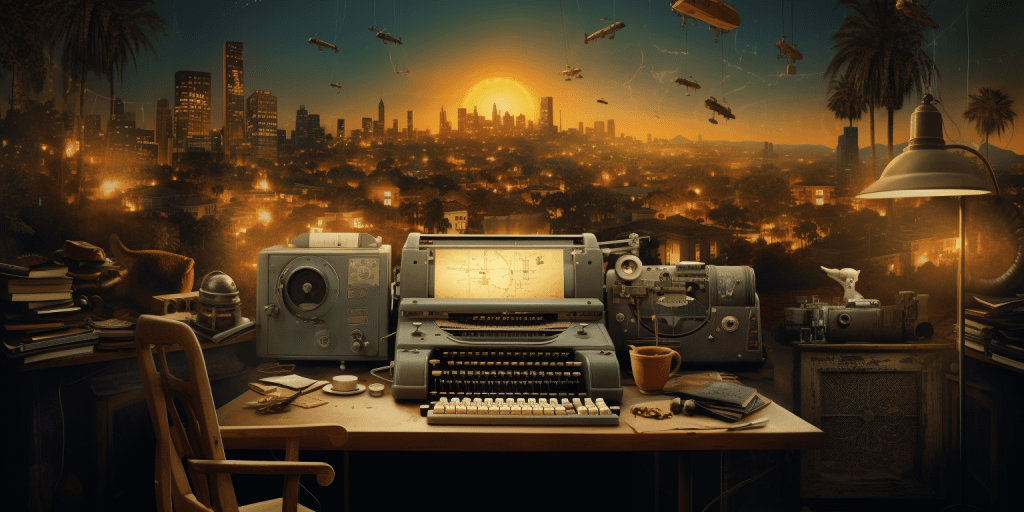
Take the “docking scene” as an example. Before we witnessed the breathtaking visuals of a spinning space station in a high-stakes, time-sensitive mission, the imagery had to be constructed in the screenplay first. The script couldn’t just say, “Cooper docks the spaceship.” Imagine the various interpretations of such a vague statement! Instead, the screenplay elucidated the tension, the spinning modules, and even the stress on the spacecraft’s metal—all contributing to a clearer understanding of the scene’s gravity (no pun intended).

In contrast, take a look at the “Star Wars” universe. While it’s an indisputable cornerstone in the realm of science fiction, its “opening crawl” sets the political climate of the galaxy far, far away but doesn’t delve deep into describing worlds. That job is left to storyboard artists and concept designers, based on brief pointers from the screenplay. But Nolan, who co-wrote “Interstellar” with his brother Jonathan, took it upon himself to intricately detail the cosmos, the spacecraft, and the celestial phenomena that the crew encounters. Their choice of words molded the imagery, which was then realized on the screen by an army of creatives.

If you’re keen on writing a screenplay that not only tells a compelling story but also paints a vivid picture, here are some writing tips to help you emulate the descriptive prowess seen in “Interstellar.”

  1. Be Specific: Instead of writing, “They enter a cave,” you might say, “They enter a phosphorescent cave, walls pulsing like a living organ.” By being specific, you’re leaving less room for misinterpretation.
  2. Use Analogies and Metaphors: These can be instrumental in describing the indescribable. “Interstellar” uses this to great effect, likening the shape of the wormhole near Saturn to a “droplet,” instantly giving the reader an image to grasp.
  3. Engage the Senses: A well-crafted description engages more than just the sense of sight. “Interstellar” delves into how things sound, like the thunderous noise of engines or the eerie silence of space, and how things feel, like the G-forces pressing on the astronauts’ bodies.
  4. Be Mindful of Pace: Detailed descriptions can slow down the pace, but that’s not always a bad thing. Used judiciously, they can heighten the tension, as seen in the docking scene where every element adds to the suspense.

You might think that excessive description could be counterintuitive based on traditional screenwriting tips, but “Interstellar” proves that rules are set only to be broken by those who understand them thoroughly. This doesn’t mean every script should be chock-full of adjectives and flowery prose. The vivid descriptions in “Interstellar” serve a purpose; they build a universe where the story unfolds—a universe so meticulously crafted that it’s almost another character in the story.

The Labyrinth of Time: Mastering Non-linear Storytelling in ‘Interstellar’

For many who watched “Interstellar,” one of the most compelling aspects was its intricate plot, with time acting as both an ally and an antagonist. For screenwriters and storytellers alike, the movie offers a masterclass in non-linear storytelling—a technique that can captivate audiences when done right, but can also leave them scratching their heads when done poorly. So how did “Interstellar” manage to pull it off?

Non-linear storytelling isn’t new; Quentin Tarantino’s “Pulp Fiction” and Christopher Nolan’s own “Memento” are classics in this realm. However, “Interstellar” uses this method within the context of space-time, adding another layer of complexity. It weaves a tale that skips across different dimensions and timescales—from Earth’s dying days to the relativistic effects near a black hole. Screenplay structure here isn’t just a storytelling device; it mimics the complex theories of time dilation and the fourth dimension.

When you’re writing a screenplay, it’s often encouraged to follow a three-act structure, akin to a skeleton that holds the story together. But what happens when your plot involves time travel, space dimensions, and human emotions that span years within minutes? You adapt. Instead of a straight line, your screenplay structure might look like a spiral, looping back on itself at critical moments but always pushing forward.

In “Interstellar,” crucial information is often presented out of chronological order. For instance, the appearance of the mysterious “ghost” in Murph’s bedroom is not fully explained until the movie progresses into its climactic moments inside a tesseract, a four-dimensional space. This narrative technique is particularly effective in drawing the audience into the mystery, much like how a compelling novel makes it hard to stop turning the pages. It’s a good example of how to keep viewers hooked without resorting to cheap cliffhangers or unsatisfying twists.

If you’re aiming to tackle non-linear storytelling in your own projects, here are some screenwriting tips that could be useful:

  1. Know Your Anchor Points: In “Interstellar,” the emotional anchor is the relationship between Cooper and Murph. No matter how twisted the timeline gets, this emotional core remains constant. An anchor point gives the audience something to hold onto when the plot navigates choppy waters.
  2. Create Logical Connections: Non-linear doesn’t mean non-logical. If you’re jumping between timelines or dimensions, make sure there’s a reason that enriches the story. The multiple timelines in “Interstellar” are not just a gimmick; they serve to heighten the stakes and deepen emotional impacts.
  3. Foreshadowing is Key: Plant clues early on that pay off later. The concept of relativity is subtly introduced during the Earth scenes, making its drastic effects in the latter part of the story easier to digest.
  4. Reveal Information Sparingly: Keep your cards close to your chest. One of the reasons the climax of “Interstellar” is so impactful is because it successfully unravels the mysterious elements introduced early in the script.
  5. Consult the Experts: If your screenplay involves specialized knowledge, as “Interstellar” does with theoretical physics, don’t shy away from expert consultation. Kip Thorne, a Nobel laureate in Physics, was a consultant and executive producer on the movie, ensuring the complex theories were accurately, if not always simply, portrayed.

By successfully juggling these elements, “Interstellar” presents a multi-layered narrative that demands attention but rewards with a rich, fulfilling experience. A key takeaway is that complex storytelling techniques can be incredibly effective when they serve the story and the emotional journey of the characters. Overcomplicating things for the sake of seeming clever usually backfires. As Einstein once said, “Everything should be made as simple as possible, but not simpler.”

The Power of Emotional Resonance in ‘Interstellar’

One of the most unexpected and unforgettable elements of “Interstellar” is its emotional core. Despite the grandeur of its cosmic setting and the complexity of its scientific principles, the film resonates so deeply with audiences because it places love—between parent and child, among colleagues, even for humankind itself—at its very center. Aspiring screenwriters, take note: no matter how fantastical or complicated your plot might get, don’t underestimate the power of human emotion to make your screenplay unforgettable.

It’s often said that a story’s characters are its heart. In the case of “Interstellar,” it’s quite literal. Cooper’s love for Murph drives him to undertake a perilous journey, and Murph’s own love for her father drives her toward solving the gravitational equation that ultimately saves humanity. These aren’t just plot points; they are the emotional stakes that make every black hole and time dilation not just awe-inspiring but gut-wrenching. This serves as a great lesson in how to create characters with emotional depth, a critical skill for anyone writing a screenplay.

The film’s treatment of love as a nearly palpable, universal force echoes some of the greatest works of literature. For example, the works of Jane Austen and the Brontë sisters explore love’s intricate relationship with social constraints, much as “Interstellar” explores love’s interaction with the constraints of time and space. Even the Bard himself, William Shakespeare, centered many of his plays around love’s power to drive people to madness, greatness, or both—take “Romeo and Juliet” as a case in point.

But how do you translate this into actionable writing tips? Consider these strategies:

  1. Make Love Active: In “Interstellar,” love isn’t passive. It’s the motivation for actions, sacrifices, and decisions. Love should push your characters to act outside their comfort zones.
  2. Diversify Emotional Connections: Different kinds of love—romantic, platonic, familial—can enrich your narrative. Cooper’s affection for Amelia Brand adds another layer to his character without detracting from his relationship with Murph.
  3. Raise the Stakes: Emotional stakes should escalate in tandem with plot stakes. As the mission in “Interstellar” becomes increasingly perilous, so too does the strain on Cooper and Murph’s relationship.
  4. Show, Don’t Just Tell: Actions speak louder than words. Cooper’s decision to leave Earth and Murph’s relentless pursuit of the gravitational equation show their love far more than any dialogue could.

Screenplay structure and screenwriting tips often emphasize elements like plot arcs and dialogue, but tapping into raw, universal emotions is key to creating a memorable story. In fact, if you’re struggling with how to structure your narrative, why not start by outlining your characters’ emotional arcs? Sometimes, focusing on the emotional journey can help clarify the physical one.

Here’s a technique I’ve found useful, especially when tackling emotionally layered scripts: emotional beat sheets. Unlike traditional beat sheets that map out the screenplay’s major plot points, an emotional beat sheet tracks the internal shifts within your characters. For each scene or sequence, jot down what your character wants, what obstacles they face in achieving it, and how these challenges affect them emotionally. This exercise will help you craft a layered, dynamic story where plot and emotion are tightly interwoven.

The power of love to transcend time and space isn’t just poetic; it’s rooted in the complexities of human psychology. In his book “Man’s Search for Meaning,” Viktor Frankl argues that love is the ultimate force that sustains people through the most horrific conditions because it ties us to something—someone—greater than ourselves. Similarly, in “Interstellar,” love isn’t merely a sentimental add-on; it’s presented as the glue that holds the universe together.

“Interstellar” also illustrates the power of universal themes to connect with an audience. Love, sacrifice, survival—these are experiences and feelings that resonate with almost everyone. When crafting your screenplay, think big. Aspire to tackle themes that are as expansive as the universe your characters might explore, whether that universe is a distant galaxy or a small, snow-covered town in the Midwest. Use writing prompts to explore these universal themes and how they could fit into different genres or settings. The goal is to make your story relatable and meaningful to a broad audience, much like “Interstellar” does.

In a world where audiences are bombarded with formulaic plots and predictable arcs, tapping into the raw, complex power of emotion will set your work apart. In the end, it’s the emotional connection that turns a good screenplay into a great one, and a great film into an unforgettable experience. Take a cue from “Interstellar” and don’t be afraid to let your story’s heart beat loudly, even if it has to echo across the vast corridors of time and space.


✍️  Whether you’re mastering the art of dialogue, structure, or character development, the power of AI can be a game-changer in your writing journey. My Free Ebook, ‘AI for Authors’ delves into how AI-powered prompts can provide a unique edge to your storytelling process. If you’re intrigued by the prospect of supercharging your fiction skills, download your free copy today and explore new horizons in creative writing. 

Dissecting the Transformation: ‘Gone Girl’ from Page to Screen

The Novel’s Genius: Narrative Structure and Complex Characters

Any discussion about the beauty of “Gone Girl” must begin with the original novel. Written by Gillian Flynn, the book burst onto the scene in 2012, becoming a global sensation. Not only did it rule bestseller lists, but it also spawned a spate of think pieces and analysis. One of the most intricate elements that led to its success is the novel’s innovative narrative structure.

The book uses a dual narrative structure, switching viewpoints between husband Nick Dunne and his missing wife, Amy. This constant shift offers a Rashomon-like multiple perspective experience. But it’s not just a gimmick; it serves to deepen the complexity of the characters and their individual experiences within the plot. Both are unreliable narrators, full of contradictions and misdirection. It’s a feast for any fan of psychological thrillers, with each chapter presenting a new facet of the story and forcing the reader to constantly reassess their judgments. Imagine, then, the mountainous task of transforming this intricate literary device into a screenplay structure that would hold its own on screen. But we’ll talk more about that later.

Amy’s character, especially, is a labyrinthine marvel. She’s not your average crime novel damsel; she’s multi-dimensional, brilliant but manipulative, charming but chilling. She’s the epitome of the “Cool Girl” trope, yet she undermines it, tears it apart, and reconstructs it, leaving the reader both intrigued and horrified. She’s a challenging character to bring to life through acting and, more importantly, through writing a screenplay that would retain her complex layers. This kind of nuanced character writing is what aspiring authors should strive for. It’s easy to be wowed by her, and just as easy to be terrified of her.

Nick, on the other hand, is equally enigmatic but in a different way. He’s less flamboyant, more of an ‘everyman,’ but his complexities lie in his secrets, his unvoiced frustrations, and his moral quandaries. He’s a character study in how societal pressures can shape, misshape, and even trap us. If you’re looking for writing tips to create multi-dimensional characters in your stories, take notes from Nick Dunne. He’s not a hero or a villain; he’s a human being, flawed and real.

Now, let’s dig into the challenges that arise from this sort of character complexity. If you’ve ever dabbled in creative writing, you’ll know that the more complicated your characters, the harder they are to pin down in a limited cinematic time frame. The book had the luxury of pages; each additional layer could be peeled back slowly, savoring the complexities like a well-aged wine. But in a movie? You’ve got about two hours to make your audience care, understand, and stay hooked.

And then there’s the plot itself, rife with twists and turns. Flynn mastered the art of pacing, with each revelation perfectly timed to both illuminate and mystify. The narrative techniques used—like diary entries, flashbacks, and internal monologues—provide a textured landscape that’s a creative writer’s dream. These elements present another challenge for adaptation. How do you maintain the suspense, the shifting sands of trust and doubt, in a different medium?

The use of the dual narrative also adds depth to the theme. Themes of media influence, marital discord, and societal roles seep through the cracks of this multifaceted narrative structure. A book allows for the exploration of these themes over time, letting them grow organically. This is where writing prompts that push you to explore themes in your stories can be particularly useful.

So, what we have here is a novel that’s a structural and thematic dynamo, coupled with characters who are not just pawns in a plot but rich, complicated beings. It’s a narrative jigsaw puzzle that asks its audience to actively engage, to piece together these multifaceted components. This makes “Gone Girl” not just a thrilling read but also a challenging proposition for any screenwriter daring enough to adapt it. And, let me tell you, as someone who adores both the written word and the visual storytelling of cinema, the challenge of adapting such a labyrinthine tale is one that would give even the most seasoned writer pause. But it’s precisely these complexities that make the story so compelling, and so ripe for discussion, especially for those of us fascinated by the craft of storytelling in all its forms.

The Cinematic Vision: Adaptation and Screenplay Structure

Adapting a novel into a screenplay is a bit like cooking a complex recipe with a new set of ingredients. You want to retain the flavor and essence but need to be conscious of the medium’s limitations and strengths. So, how did “Gone Girl” transition from page to screen while maintaining its intricate narrative and complex characters? The answer lies in the screenplay structure and the careful choices made during the adaptation process.

Let’s talk about the screenplay, which was, interestingly enough, written by Gillian Flynn herself. This is noteworthy because authors don’t always pen the screenplays of their books. The move proved beneficial in retaining the story’s core while modifying elements to suit the cinematic medium. Her approach to writing a screenplay is a lesson in balancing fidelity to the original work with the visual and temporal demands of film. In other words, Flynn didn’t just copy-paste her book into Final Draft; she reshaped it.

One of the most striking changes was the paring down of the narrative’s dual perspectives. While both Nick and Amy’s viewpoints are crucial, the screenplay made a conscious choice to trim down internal monologues. This was a smart move. Cinema is a show-don’t-tell medium, and lingering too long on introspective moments can make a film drag. Instead, the screen adaptation used visual cues, like the haunting score by Trent Reznor and Atticus Ross and nuanced performances, to convey internal conflict and turmoil.

Another big question was how to handle the plot’s twists and turns within a two-hour runtime. Flynn and director David Fincher cracked this with pacing, arguably one of the most important elements of screenplay structure. In the book, you can afford to build tension slowly. On the screen, you’ve got to get to the point while still allowing moments for the audience to catch their breath. Notably, they left out some subplots and characters to focus on the central conflict. While some purists might cry foul, this is often necessary to avoid overwhelming the audience.

Amy’s “Cool Girl” monologue is one example where the adaptation was especially ingenious. In the book, this section is a lengthy internal monologue. However, the movie repurposes it as a voice-over set against a backdrop of Amy’s calculated actions and manipulative strategies, effectively giving audiences a view into her mind while maintaining a visual narrative. If you’re working on writing tips to enhance your character-building, consider this tactic. It’s an innovative way to retain internal dialogues without breaking the visual storytelling.

Now, about those writing prompts; one of the key exercises aspiring screenwriters undertake is converting long monologues into visual scenes. Flynn shows us how it’s done. Each visual sequence is packed with narrative information without a single spoken word. For example, consider the way clues in Amy’s treasure hunt for Nick are presented. While the book can take its time laying out each puzzle, the movie has to convey it in seconds, often through quick shots and sharp edits.

When we talk about screenwriting tips, one golden rule is, “What can you show, not say?” Gone Girl nails this principle. Rather than explicitly stating Nick or Amy’s emotional state, the film shows it—Nick’s shaky hand holding a glass, Amy’s sly smile in the rearview mirror, or the hostile atmosphere during police interrogations. This is a lesson for those grappling with the challenge of showing complex psychological states within the constraints of screenplay structure.

Lastly, the screenplay made judicious use of flashbacks to create a non-linear narrative. A technique often frowned upon if misused, but in “Gone Girl,” it works perfectly to maintain the suspense and complexity of the original narrative. Used sparingly and effectively, the flashbacks not only serve the structure but also help to provide necessary context or add layers to the characters. If you’re trying to improve your writing skills, particularly in screenwriting, consider how non-linear elements can serve your story, but use them judiciously.

By making these calculated structural changes, the “Gone Girl” adaptation didn’t just replicate the book’s success; it created a separate but equally compelling work of art. In doing so, it proved that the key to a successful adaptation lies in understanding the strengths and limitations of both mediums—something that Flynn, as both novelist and screenwriter, seemed to grasp intuitively. For those in the realm of screenwriting or even just creative writing in general, “Gone Girl” serves as a masterclass in adaptation and structure, one that teaches us to respect the source material while daring to reimagine it for a new medium.

Unveiling the Magic: Directing, Cinematography, and Final Impact

The journey from script to screen is often fraught with challenges, but it’s also an opportunity for creative collaboration. In the case of “Gone Girl,” the synergy between director David Fincher, cinematographer Jeff Cronenweth, and writer Gillian Flynn set the stage for a cinematic experience that was as electrifying as its source material.

Let’s kick things off by talking about David Fincher, a director whose meticulous attention to detail is almost legendary. If you’ve ever wanted to pick up practical screenwriting tips on pacing, mood, or tension, just watch any Fincher film. His style complements “Gone Girl” perfectly because the story demands a director capable of weaving complex narratives without losing the audience. Whether it’s the steady build-up of tension in the opening scenes or the chaotic crescendo of the climax, Fincher knows precisely when to pull back and when to dive in. He ensures that the screenplay’s structure, no matter how intricate, is translated into a digestible, engaging film. For instance, Fincher uses color grading to create a subdued, almost clinical atmosphere, mirroring the story’s dark themes.

Directors often say that half of their job is casting, and “Gone Girl” is a prime example of this truism. Rosamund Pike’s Amy is both enchanting and chilling, a complexity that is captured not just in her performance but also in how she is framed by the camera. Ben Affleck’s casting as Nick was initially met with some skepticism, but he brings a nuanced layer to a character who is inherently flawed yet sympathetic. If you’re writing a screenplay and wondering how to craft characters who can be both captivating and true to their source, consider how casting can also add another layer of complexity to your characters.

Ah, cinematography, the unsung hero of many a great film. Jeff Cronenweth, a frequent Fincher collaborator, used his lens to create a visual tone that was as important as any line of dialogue. Utilizing a mix of handheld shots for more intimate scenes and steady tracking shots for broader sequences, the cinematography keeps viewers engaged but also slightly uncomfortable, reflecting the story’s unsettling undercurrent. If your writing prompts often steer you towards atmospheres or specific visual moments, understanding basic cinematography can significantly inform your screenplay writing process. It teaches you to think not just in terms of dialogue and action but also in how these elements will visually unfold.

So you’ve written a killer script, but you’re stuck on how to end it? “Gone Girl” offers an invaluable lesson here. The ending of the film is less about resolving the story’s conflicts and more about leaving the audience in a state of contemplation. It’s a gamble, especially for a Hollywood film, but one that pays off due to the strength of the preceding narrative. Open or ambiguous endings are risky; they can frustrate viewers or seem like a cop-out. However, when done right, they extend the film’s impact beyond the rolling credits, igniting discussions and repeat viewings. If you’re looking to improve your writing skills, particularly in creating compelling conclusions, pay attention to stories that dare to be ambiguous but are grounded in strong narrative logic.

Let’s not forget the impact of sound. The aforementioned score by Trent Reznor and Atticus Ross is the final piece of this intricate puzzle, adding an aural landscape that elevates the tension and emotion without overwhelming the narrative. Sound and music in film can be as critical as any visual component; if you’re writing a screenplay, consider not just what audiences will see but what they’ll hear. It might not be your job to compose the score, but a few well-placed musical cues in the screenplay can guide the film’s emotional trajectory.

In dissecting the transformation of “Gone Girl” from page to screen, we find a masterclass in adaptation, character complexity, and storytelling that uses all the tools of the cinematic medium. It’s a roadmap for anyone invested in the realms of screenwriting or storytelling more broadly. Whether you’re jotting down writing tips or knee-deep in the third act of your latest project, remember that great storytelling is not confined to one medium. The principles remain the same: compelling characters, tight structure, and a narrative that keeps your audience hooked until the very end. And “Gone Girl,” both as a novel and a film, delivers this in spades.


✍️  Whether you’re mastering the art of dialogue, structure, or character development, the power of AI can be a game-changer in your writing journey. My Free Ebook, ‘AI for Authors’ delves into how AI-powered prompts can provide a unique edge to your storytelling process. If you’re intrigued by the prospect of supercharging your fiction skills, download your free copy today and explore new horizons in creative writing. 
Top 10 Classical Hollywood Screenplays and What Today’s Writers Can Learn from Them

Introduction and The Importance of Classical Hollywood Screenwriting

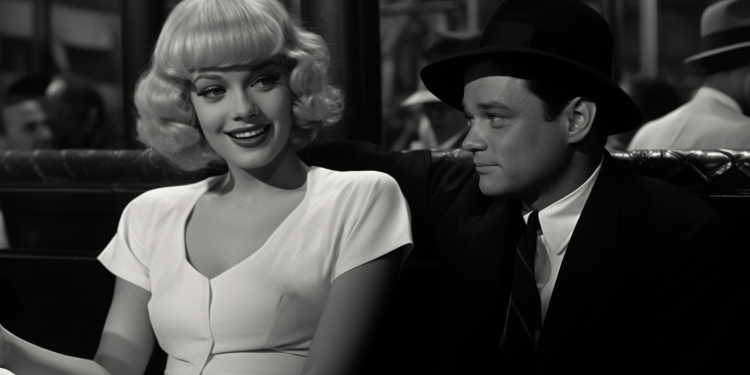
For those with a passion for both cinema and the written word, Classical Hollywood represents a zenith of narrative finesse and character complexity. Whether you’re working on writing a screenplay or merely looking to improve your writing skills, there’s a goldmine of wisdom to be excavated from these time-honored tales.

First off, what exactly do we mean by “Classical Hollywood cinema”? We’re talking about American films made roughly between the 1910s and the 1960s—a period characterized by a unique blend of stylistic continuity, narrative coherence, and above all, some of the most enduring stories ever told on celluloid. Stars like Audrey Hepburn, James Stewart, and Humphrey Bogart became iconic figures during this era, but let’s not overlook the screenwriters—the unsung heroes who gave these stars their words, their essence, their soul.

And why, you may wonder, should contemporary writers care about these “old” movies? Picture this: you’re a musician keen on composing symphonies. Would you pass up the chance to study Mozart or Beethoven? The same holds for writers of all stripes. From mastering the screenplay structure to honing dialogue, the scripts from this period serve as a Masterclass in storytelling fundamentals. So, if you’re aiming for captivating narratives and unforgettable characters, the classics offer a roadmap.

That brings us to the role of the screenplay in the movie-making process. For those newer to the craft, you might wonder, “Isn’t the director the one who makes the film what it is?” Well, yes and no. You can think of a film as a building, and the screenplay is its architectural blueprint. Without a robust plan, even the best craftsmen—our directors, actors, and cinematographers—are lost. If you’re working on writing a screenplay, always remember: your words form the bedrock of the entire cinematic experience.

Now let’s talk about what makes these Classical Hollywood screenplays such perfect models for study. First and foremost is structure. Remember, the three-act structure isn’t just a formula; it’s a foundation upon which to build captivating arcs and complex characters. Take the evergreen “Casablanca”—it’s the epitome of structural mastery. It has an evident beginning, middle, and end, yet within those confines, the characters grapple with intricate dilemmas that transcend the plot.

Then there’s dialogue. Ah, the unforgettable lines! From “Here’s looking at you, kid,” to “After all, tomorrow is another day,” the dialogue from these classics has penetrated the global vernacular. But the magic lies not just in the catchiness of these lines but in their ability to reveal character depth and drive the story forward. If you’re looking for writing tips to spice up your dialogue, the classics never disappoint.

While we’re on the subject of dialogue, let’s not forget subtext—the unsaid that speaks volumes. Writers like Ernest Lehman and Ben Hecht were masters at crafting dialogue where what’s unsaid matters just as much as what’s spoken. Learning to write subtext is like learning to add seasoning to a dish. It can elevate your writing from good to unforgettable.

Lastly, the characters. The protagonists in these films are complex, multi-dimensional beings who want something, fear something, and face obstacles. Their quests, whether it’s love, justice, or personal redemption, are universal. It’s the pursuit that makes the story. Classical Hollywood provides a spectrum of such quests. So, if you’re ever stuck with writer’s block, flipping through a screenplay like “Gone With the Wind” or “The Maltese Falcon” could be the writing prompt you didn’t know you needed.

The Top 10 Screenplays: A Deep Dive

Whether you’re into screenwriting or simply looking for writing tips to sharpen your craft, these gems offer a masterclass in narrative brilliance. So, pull out your notepads, folks; school is in session!

  1. “Casablanca” (1942) – Screenplay by Julius J. Epstein, Philip G. Epstein, and Howard Koch
    • Structure: This film is a triumph in economical storytelling. Everything you need to know about the plot and characters is revealed at the right time, keeping you glued to the screen.
    • Dialogue: We’ve all heard the line “Here’s looking at you, kid.” This dialogue epitomizes the essence of the characters and their complex relationships.
    • Tip: Use dialogue as a double agent that both propels the plot and deepens character.
  2. “Gone with the Wind” (1939) – Screenplay by Sidney Howard
    • Structure: Notice how the setting, the Civil War, parallels Scarlett O’Hara’s personal turmoil, making the backdrop a character in its own right.
    • Dialogue: Scarlett’s dialogue reveals her transformation over time, and her last line in the film is a lesson in character arc completion.
    • Tip: Utilize your setting as an active element that complements character development.
  3. “Sunset Boulevard” (1950) – Screenplay by Charles Brackett, Billy Wilder, and D.M. Marshman Jr.
    • Structure: This screenplay employs the flashback technique flawlessly, keeping the audience in suspense.
    • Dialogue: The dialogue is laced with irony and wit, capturing the disillusionment of Hollywood.
    • Tip: Don’t shy away from using non-linear structures if it enhances your story.
  4. “It’s a Wonderful Life” (1946) – Screenplay by Frances Goodrich, Albert Hackett, and Frank Capra
    • Structure: The plot hinges on a “what if” scenario, a powerful device for character exploration.
    • Dialogue: The conversations are genuine, making the characters relatable and human.
    • Tip: Sometimes, simplicity in dialogue delivers the most emotional punch.
  5. “All About Eve” (1950) – Screenplay by Joseph L. Mankiewicz
    • Structure: The narrative employs parallel storylines to offer different perspectives.
    • Dialogue: It’s snappy and full of subtext, revealing hidden character motives.
    • Tip: Use dialogue to show, not tell. Let characters reveal themselves through what they say, or don’t say.
  6. “On the Waterfront” (1954) – Screenplay by Budd Schulberg
    • Structure: The story builds up to a satisfying climax that resolves both the plot and character arcs.
    • Dialogue: Who could forget Marlon Brando’s “I coulda been a contender”? It encapsulates the character’s internal struggle.
    • Tip: Let your dialogue serve as a window into your characters’ inner conflicts.
  7. “To Kill a Mockingbird” (1962) – Screenplay by Horton Foote
    • Structure: The film brilliantly weaves multiple plotlines into a coherent narrative.
    • Dialogue: It’s filled with ethical undercurrents, making the characters morally complex.
    • Tip: Inject ethical or philosophical questions into dialogue to deepen thematic resonance.
  8. “The Maltese Falcon” (1941) – Screenplay by John Huston
    • Structure: The mystery unfolds at a perfect pace, keeping the audience engaged.
    • Dialogue: Snappy and mysterious, each line leaves you wanting more.
    • Tip: Keep your audience guessing but deliver on the promise by the end.
  9. “Rebecca” (1940) – Screenplay by Robert E. Sherwood and Joan Harrison
    • Structure: A fine example of how suspense should be built gradually.
    • Dialogue: It contributes to the gothic atmosphere, evoking a sense of dread.
    • Tip: Use dialogue to set the tone and atmosphere of your story.
  10. “The Wizard of Oz” (1939) – Screenplay by Noel Langley, Florence Ryerson, and Edgar Allan Woolf
    • Structure: A hero’s journey that’s meticulously structured.
    • Dialogue: Iconic lines like “There’s no place like home,” capture the essence of the story.
    • Tip: Don’t underestimate the power of a well-placed line; it can become the voice of the entire screenplay.

So, what are we picking up from these screenwriting titans? A killer screenplay structure, dialogue that does more than just fill space, and character development that could serve as a psychology case study. Your turn now—roll up those sleeves and start writing a screenplay that future generations might study. Time to make your mark, my friends.

Taking Inspiration: Applying Classical Lessons to Modern Screenwriting

You’ve pored over the classics. You’ve analyzed dialogue, deconstructed structure, and dissected characters down to their bones. Now, let’s talk about how you can apply these principles to your own work. A blend of old-school wisdom and new-school flair can be the secret sauce that sets your screenplay apart in today’s competitive landscape.

Dialogue as a Storytelling Device

It’s easy to think of dialogue merely as a way for characters to communicate. But as we’ve seen in classics like Casablanca, dialogue serves a higher purpose. In a way, it’s a form of action, driving the plot forward while simultaneously delving into a character’s psyche. So, how do you craft lines that echo through the annals of cinema? A useful screenwriting tip here is to allow your characters to speak in contradictions, revealing layers of complexity. Think of Scarlett O’Hara’s numerous conflicting emotions. Her dialogue isn’t just filler; it’s a mirror to her soul.

The Art of Screenplay Structure

A tight, well-crafted structure can elevate your screenplay from a simple narrative to an emotional experience. Whether you choose a straightforward three-act structure or opt for something more avant-garde à la Sunset Boulevard, the key is to maintain pacing and build tension. One approach is to put your characters in worsening situations until they have no choice but to confront their biggest fears, a method employed by the writers of On the Waterfront. Modern software like Final Draft and Celtx have built-in tools for this, but the classics teach us that the core of effective screenplay structure is in understanding human emotions.

Character Arcs That Resonate

How does George Bailey in “It’s a Wonderful Life” move from despair to hope? Why do we care? A well-executed character arc is the backbone of any memorable story. Here’s a writing tip that doubles as a life lesson: people are complicated. The classics don’t shy away from this. Characters go through a range of experiences and emotions that mold them into fuller beings by the end. Whether you’re writing a screenplay or any form of story, the evolution of your characters should be your polestar. For example, consider adding internal and external conflicts that your characters can confront and learn from, mirroring real human growth.

Theme: The Silent Narrative Force

A powerful, underpinning theme can tie your narrative together in a way that makes it more than just a sequence of events. To Kill a Mockingbird isn’t just about a court case; it’s about morality, integrity, and the loss of innocence. When crafting your screenplay, think about the bigger message you want to convey. Then, express this theme through character dialogue, actions, and even the setting. Writing prompts can be particularly useful here. Try scribbling down some broad themes and find creative ways to integrate them into your narrative.

Adapt, Don’t Copy

Now, I’m not saying you should take a carbon copy of “Gone with the Wind” and just change the names. No, the aim is to adapt the enduring elements that make these classical screenplays timeless. It’s about capturing the spirit, the essence, and channeling that into something uniquely yours. Adapt the old rules for a new age. Blend these seasoned techniques with modern storytelling elements like non-linear timelines, unreliable narrators, or whatever your creative heart desires.

Draft, Revise, Repeat

The first draft is just that—a draft. Even the classics underwent multiple revisions. Take a page from their book (or script, in this case), and don’t be afraid to make major changes. There’s no “one-size-fits-all” method for this. Some writers prefer to get everything down in a rough draft before going back to make revisions, while others like to revise as they go along. Whatever your method, the key to successful screenwriting—or any form of writing, for that matter—is persistence and a willingness to improve.

Let’s wrap it up. We’ve journeyed through the annals of cinematic history, studied the masters, and emerged with a toolkit of skills that are as relevant today as they were in the Golden Age of Hollywood. So, get out there and write the next great screenplay that does justice to the classics while breaking new ground. The world is waiting for your story, and who knows? Maybe someday, some aspiring writer will be analyzing your work for golden nuggets of wisdom. Happy writing!


✍️  Whether you’re mastering the art of dialogue, structure, or character development, the power of AI can be a game-changer in your writing journey. My Free Ebook, ‘AI for Authors’ delves into how AI-powered prompts can provide a unique edge to your storytelling process. If you’re intrigued by the prospect of supercharging your fiction skills, download your free copy today and explore new horizons in creative writing. 

Mastery of Magical Realism: Celebrating the Legacy of Gabriel García Márquez

Introduction to Magical Realism and Gabriel García Márquez

“Reality is not always probable, or likely,” once said Jorge Luis Borges, a writer who paved the way for what we commonly call Magical Realism today. Now, if you’re an aspiring novelist wanting to improve your writing skills, or perhaps, you’re an established writer looking to experiment with genres, Magical Realism offers a sandbox where the gritty grains of reality mix effortlessly with the ethereal stardust of the imaginary. This genre, sitting comfortably at the intersection of art and life, allows you to reimagine the ordinary in extraordinary ways.

And when we talk about Magical Realism, one name inevitably towers above the rest: Gabriel García Márquez. If Borges laid the genre’s groundwork, it was García Márquez who built skyscrapers on it. Born in Colombia in 1927, he was the lighthouse guiding us through the misty coasts of Magical Realism with works like “One Hundred Years of Solitude” and “Love in the Time of Cholera.” This literary icon left an indelible imprint not just on literature but on how we perceive the boundaries between reality and fiction.

What is Magical Realism?

For those who are less acquainted with the genre, Magical Realism is a literary style where reality and the supernatural co-exist. It’s not fantasy; we’re not in Middle-earth or Westeros. We’re usually somewhere more familiar—perhaps a small town in Latin America—and yet, something is peculiar. A girl ascends to heaven while doing laundry, or a man with enormous wings crashes into the backyard. The magic is woven seamlessly into the fabric of reality, so it doesn’t feel “magical” but rather a commonplace part of life.

What makes this genre spectacular, especially if you are looking to enhance your creative writing, is its allowance for one to question, deconstruct, and redefine everyday experiences. Magical Realism compels you to look twice at what you take for granted and imbue it with a sense of wonder. How often in our writing, and in our lives, do we let miracles pass by unnoticed?

Brief Biography of Gabriel García Márquez

Gabriel García Márquez, affectionately known as Gabo, was born in a small Colombian town called Aracataca. The locale would serve as an inspiration for Macondo, the fictional village featured in many of his works. Raised by his grandparents, Gabo soaked in his grandmother’s tales of ghosts and premonitions as if they were daily occurrences. These narratives, alongside the political and cultural landscape of Colombia, ripened into the stories that would fascinate the world.

In 1982, Gabo was honored with the Nobel Prize in Literature, sealing his status as a literary juggernaut. His writing was not merely storytelling; it was a revolutionary act that delved into the political, the cultural, and the deeply human. Through the turbulent Latin American backdrop, Gabo explored complex social dynamics, familial bonds, and the absurdities of existence. The layering of mundane lives with magical events became an allegory for the larger-than-life myths that every culture, society, and family conjure.

Significance in Literature

García Márquez’s gift was his ability to take what some might consider folklore or superstition and elevate it into a narrative that resonates universally. When you read “One Hundred Years of Solitude,” you’re not just reading a novel; you’re experiencing a monumental artwork that has inspired countless other writers, books, and even revolutions. A true maestro, he took what might be considered a regional, niche genre and turned it into a global phenomenon.

The influence of García Márquez extends far beyond the borders of Magical Realism. His storytelling methods have left a lasting impact on how narratives are framed, how characters are developed, and how plotlines can be layered with multiple meanings. His works are studied across a range of academic disciplines, from literary studies to sociology, from psychology to politics.

The Techniques of García Márquez: How to Infuse Magical Realism into Your Writing

If Gabriel García Márquez was the maestro orchestrating the symphony of Magical Realism, then his techniques were the instruments that turned prose into magic. Sure, not everyone aspires to be a Magical Realist, but you can learn valuable lessons from Gabo’s toolbox to enrich your creative writing. After all, writing is about transcending genres and borrowing the gems that resonate with you. So let’s delve into how Gabo employed certain techniques that you can adopt to elevate your own writing.

Pacing and Rhythm

Anyone who’s ever dabbled in writing tips knows how crucial pacing is. In Magical Realism, and particularly in Gabo’s stories, pacing serves as the heartbeat that controls the reader’s emotional response. His use of long, flowing sentences, often filled with multiple clauses, slows the reader down, compelling them to absorb every word. The slower pace gives the magical elements time to seep into the reader’s subconscious, making them part of the narrative’s reality.

But it’s not just about slow pacing; it’s about rhythm. Take, for example, his masterpiece, “Chronicle of a Death Foretold.” The repetition of events and dialogue turns the story into a haunting loop, capturing the fatalism often associated with Latin American culture.

Language and Dialogue

If you’re looking to improve your writing skills, don’t underestimate the power of language. Gabo was known for his poetic language, where each word was carefully chosen to evoke particular feelings or images. The result? A tapestry of expressions and metaphors that made the ordinary seem extraordinary.

The dialogues in Gabo’s works are also refreshingly genuine, reflecting the vernacular of the characters while maintaining a poetic undertone. Often, these dialogues serve as the reader’s guide to navigating the blurred lines between the real and the magical, just as they do in “Love in the Time of Cholera.”

Characters and Relatability

Characters are the heart and soul of any narrative, and Gabo’s were nothing short of memorable. Whether it’s the passionate Fermina Daza or the ever-resilient Aureliano Buendía, these characters, despite their entanglement in magical circumstances, are profoundly human. They laugh, they cry, they love, and they make mistakes, making them relatable on a universal level.

Creating relatable characters is essential for anyone aiming to master writing a novel. But Gabo’s technique didn’t just stop at relatability; he explored the complexities and contradictions inherent in human nature, offering readers a mirror to their own souls.

The Magic is in the Detail

For budding writers scribbling down writing prompts, you might be wondering how to incorporate magic without veering into fantasy territory. The trick lies in subtlety and detail. Gabo’s magic was never “loud”; it was a soft whisper that said, “What if?”

The magical elements in Gabo’s stories are offered without explanation, seamlessly integrated into the daily lives of the characters. Take the levitating priest in “One Hundred Years of Solitude” or the prophetic dreams in “Chronicle of a Death Foretold”—these elements serve to augment the story’s emotional depth rather than as mere gimmicks.

Embrace Complexity

Gabo’s works often feature intricate plot structures, where timelines might be nonlinear and storylines converge. If you’re a student of screenplay structure, you’ll recognize that narrative complexity can also be incredibly compelling in visual storytelling. Gabo wasn’t afraid to challenge the reader to keep up; he treated them as a co-conspirator in unraveling the intricate tapestry of his tales.

The Role of Social and Political Contexts

If you’re writing with an eye on societal issues, you’ll find a kindred spirit in García Márquez. His works often comment on broader themes like social inequality, political corruption, and the complexities of love and desire in conservative societies. The magic, then, serves as a metaphor, a lens through which these weighty topics can be examined in new light.

The Legacy of García Márquez: How to Honor and Adapt Magical Realism in the 21st Century

We’ve journeyed through the landscapes crafted by Gabriel García Márquez, where the rivers of reality and magic converge. But the true genius of Gabo lies in his enduring influence on literature and storytelling at large. The question that becks us as writers now is, how do we honor this legacy in our works? How can we, in this age of information overload and fleeting attention spans, continue the tradition of Magical Realism while adding our unique voice?

The Evolving Landscape of Storytelling

Storytelling has evolved, especially with the advent of digital media, VR, and interactive platforms. These changes offer new possibilities for writers, whether you’re focusing on creative writing, screenwriting, or even game design. Gabo’s techniques, originally crafted for the page, can leap off it and find a home in various storytelling forms. For instance, could the non-linear timelines of “One Hundred Years of Solitude” work brilliantly as an interactive narrative?

Amplifying Voice through Diversity

While Gabo brought the Colombian and Latin American reality to the global stage, it’s crucial to consider the broader palette of voices in today’s interconnected world. If you’re an emerging writer from a less-represented culture or background, consider how Magical Realism could serve to amplify your voice. Just as Gabo used the genre to reflect on Latin American politics and society, you too can use Magical Realism to provide unique insights into your own cultural milieu.

Modernizing Magic

Magical elements don’t have to be traditional or rooted in folklore; they can be modern and tech-savvy too. The nuances of the digital age can certainly serve as the ‘magic’ in contemporary Magical Realism. Imagine a tale where social media profiles have a life of their own or where AI and humans coexist in an emotionally complex relationship. Essentially, the ‘magic’ needs to be an organic part of the story’s environment, even if that environment is a high-tech dystopia.

The Importance of Subtext

Whether it’s creative writing or screenplay writing, one writing tip that’s universal is the power of subtext. Gabo was a master at it. His stories, rich with symbolic and metaphorical layers, resonate because they operate on multiple dimensions. As you embark on your journey to improve your writing skills, think about how you can infuse layers of meaning into your work. In a world saturated with literalism and over-explanation, the allure of subtext becomes even more potent.

Ecological and Social Consciousness

Gabo was a humanitarian at his core, weaving social and political commentaries into his stories. In our times, ecological concerns are as pressing as social ones. Could Magical Realism be a vehicle to explore climate change, for example? Consider how the magical elements could serve to amplify the impact of environmental degradation or social inequality, much like how the magical torrential rain in “One Hundred Years of Solitude” reflected a world out of balance.

The Power of Online Communities

One might argue that Magical Realism, being deeply rooted in tradition and culture, might be at odds with the digital age. But consider the plethora of online platforms that serve as communities for aspiring writers. Websites like Reddit’s Writing Prompts or Scribophile could be platforms where you can experiment with short Magical Realist stories, get instant feedback, and even find collaborators for larger projects. This immediate access to an audience can serve as a valuable litmus test for your adaptations of Magical Realism.

Making Magical Realism Your Own

But the most important takeaway is that while we learn from Gabo, we shouldn’t seek to copy him. Adapt these techniques to your style, your stories, and your truths. Gabo didn’t gain fame by mimicking his predecessors; he did it by taking the tools of the craft and making something uniquely his own.

Your task, then, is to take these lessons and bend them to your will. As you brainstorm, outline, or even just daydream, consider how Gabo’s legacy could inform your storytelling. The magical elements you choose to incorporate should not only serve the story but also be deeply tied to its thematic underpinnings. The characters you create should speak to the human condition, reflecting our flaws, our hopes, and our endless complexities. And your narrative should not be afraid to grapple with the social and existential questions that define our times.


✍️  Whether you’re mastering the art of dialogue, structure, or character development, the power of AI can be a game-changer in your writing journey. My Free Ebook, ‘AI for Authors’ delves into how AI-powered prompts can provide a unique edge to your storytelling process. If you’re intrigued by the prospect of supercharging your fiction skills, download your free copy today and explore new horizons in creative writing. 

Crafting Surrealism: A Screenwriting Analysis of ‘The Lobster’

Surrealism in Cinema: Setting the Stage for ‘The Lobster’

When you think of surrealism in cinema, a host of innovative filmmakers might come to mind—think David Lynch with his mind-bending narratives or Luis Buñuel with his iconic, eyeball-slashing sequence in “Un Chien Andalou”. Yet, in the contemporary landscape, one film stands out as a masterclass in crafting surreal worlds—Yorgos Lanthimos’s “The Lobster“.

Surrealism in film, as a genre and aesthetic, often defies the conventional rules of time, space, and logic. It dares to challenge our perceptions of reality, engaging the audience in a manner that typical storytelling modes fail to capture. Whether you’re an aspiring filmmaker or a student of the craft, understanding the surreal elements that shape the screenplay structure of ‘The Lobster’ can offer invaluable writing tips. It demonstrates the power of bending conventional rules to create memorable moments in cinema.

Introduction to Surrealism in Film

Let’s begin with a brief primer on surrealism. Originating as an artistic and literary movement in the 1920s, surrealism aims to express the unconscious mind’s workings. It’s a cocktail of the bizarre, the dream-like, and the downright absurd. When this aesthetic bleeds into cinema, the result is a storyline replete with twisted logic and settings that defy the boundaries of reality. Think Salvador Dalí landscapes but in moving images, unsettling yet utterly captivating.

In the context of screenwriting, surrealism provides a playground for experimentation. Traditional screenplay structure often leans on the Aristotelian three-act paradigm—setup, confrontation, and resolution. However, a surrealist narrative can twist this framework into a Moebius strip, looping back on itself in ways that both confuse and captivate the audience.

Brief Overview of ‘The Lobster’

For those unacquainted with ‘The Lobster,’ it’s a film that exists in a dystopian world where being single is illegal. Singles are sent to a hotel and given 45 days to find a romantic partner; otherwise, they are transformed into an animal of their choosing. The film’s protagonist, David, opts for a lobster, valuing its life span and fertility. Suffice it to say; this isn’t your typical rom-com.

The trailer alone sets the tone: the juxtaposition of a haunting score with deadpan dialogue, bizarre scenarios with somber characters. ‘The Lobster’ seamlessly weaves comedy, tragedy, and outright absurdity into a tapestry that defies genre classification. This unique blend ensures it’s more than just a strange tale—it’s an exploration of loneliness, societal norms, and the human condition.

How Surrealism Impacts Screenplay Structure

For screenwriters, the lure of surrealism lies in its flexibility. When writing a screenplay that employs surreal elements, the rules can be bent—sometimes to the point of breaking. The traditional three-act structure can give way to something more fluid. In ‘The Lobster,’ for instance, the absence of a conventional ‘happy ending’ allows for an open interpretation, eliciting audience engagement long after the credits roll.

It’s worth noting that writing such a screenplay demands more than just a knack for oddball scenarios. It requires a precise understanding of pacing, character motivation, and the emotional beats that resonate with viewers. Writing tips often emphasize the importance of a coherent narrative, but in the realm of surrealism, coherence takes on a different form. It’s not about neatly tying up loose ends; it’s about leaving threads that provoke thought and linger in the mind.

This nuanced balance between the traditional and the avant-garde is what makes ‘The Lobster’ a gem for screenwriters. Its screenplay structure doesn’t merely serve the plot; it serves as a character in itself, shaping the film’s tone, pacing, and thematic depth. As the story unfolds, its surreal elements become the lens through which we view an all-too-familiar reality, thus questioning the societal norms we often take for granted.

Dialogue and Absurdity: The Spoken Word as a Surrealist Element

When you’re writing a screenplay, dialogue often serves as a key instrument to reveal character depth, advance the plot, and build tension. In conventional narratives, dialogue generally adheres to realistic exchanges, operating within the realm of believability. But what happens when you untether the spoken word from the anchors of reality and logic? Enter ‘The Lobster.’

The Power of Deadpan Dialogue

One of the most striking elements in ‘The Lobster‘ is its deadpan dialogue. Characters in the film speak in monotone, emotionless tones, delivering lines as if they’re reading an instruction manual. This distinct dialogue style generates an unsettling mood that amplifies the film’s surreal atmosphere. It also puts the audience in a position where they’re forced to question the sincerity and motive behind each line.

Yorgos Lanthimos uses this dialogic style to elicit a range of emotions, from discomfort to hilarity. The characters, speaking so monotonously about such bizarre circumstances, create a paradox that is engaging, leaving the audience pondering the oddity of it all.

Anti-Clichés and Surprises

When working on writing tips for dialogue, one common advice is to avoid clichés like the plague. Now, imagine a world where clichés are so distorted they become innovative. ‘The Lobster’ does precisely this, turning typical romantic lines into awkward exchanges that make you question the authenticity of societal norms surrounding love and relationships.

For instance, characters validate compatibility through superficial commonalities like shared nosebleeds or limps. This absurd approach to defining ‘soulmates’ is more than just an odd quirk; it’s a commentary on the arbitrary standards society often sets for romantic connections. This can be a lesson in writing a screenplay—sometimes, inverting clichés can not only generate interest but also offer fresh perspectives on worn-out themes.

Implementing Surrealist Dialogue: A Screenwriting Tip

For aspiring screenwriters interested in surrealism, Lanthimos’s dialogue techniques in ‘The Lobster’ can serve as an unconventional but valuable lesson. The typical ‘show, don’t tell’ advice may not fully apply here. Instead, the dialogue itself becomes the vehicle for showing the surreal, precisely because of how it tells. Characters state their emotions and intentions with blunt, unnerving honesty, adding layers of meaning that prompt viewers to dig deeper.

Here’s where your screenwriting tips need a little tweaking. While maintaining strong dialogue that propels the plot is important, how about manipulating dialogue to also serve as a thematic reflection of the world your characters inhabit? This nuanced crafting can make your screenplay stand out and give audiences something more to chew on than mere plot progression.

Dialogue as Writing Prompts

If you’re looking for a way to kick-start a surrealist script, consider using lines of dialogue as writing prompts. For example, take a simple line like, “I love you,” and reimagine it in a context that’s strange, absurd, or outright surreal. How would that line sound in a world where expressing love requires a government permit? Or what if it’s spoken by a character who’s an AI, unaware of the emotional weight the line carries? By tweaking common lines and placing them in unusual settings, you can generate a multitude of ideas for a screenplay that bends the norms.

The Dissonance Between Dialogue and Action

‘The Lobster’ also creates an engrossing narrative through the disparity between what is said and what is done. Characters may articulate a sense of normalcy, discussing mundane topics like room service or biscuit preferences, all while participating in outlandish activities such as hunting humans turned into animals. This dissonance creates an unsettling feeling, increasing the emotional stakes and drawing the audience further into the film’s surreal world.

The spoken word in ‘The Lobster’ isn’t just a tool for conveying information; it’s an art form, a calculated element that molds the film’s identity. And this is where it serves as an excellent example for those on the lookout for screenwriting tips: dialogue can be as much a part of your world-building as your settings and characters. It can elevate a story from not just being heard, but felt and pondered upon, making it resonate long after the end credits roll. So next time you find yourself stuck at a dialogue scene, consider what a pinch of the surreal could add. You might just discover a new layer of storytelling, waiting to be unfurled.

Beyond The Lobster: Crafting Your Own Surrealist Screenplay

If you’ve made it this far, you’re not only intrigued by the idiosyncratic genius of ‘The Lobster,’ but you’re probably also wondering how to infuse your own work with a touch of the surreal. If the off-kilter reality of Lanthimos’s world fascinated you, why not try your hand at it? From screenplay structure to dialing in that just-right line of dialogue, let’s break down how to channel this inspiration into your own creative ventures.

Setting as a Character

The Hotel in ‘The Lobster’ isn’t just a backdrop; it’s a character in its own right. It’s oppressive, it’s Kafkaesque, and it sets the tone for the surreal escapades that unfold. The lesson here is to not neglect your setting when you’re contemplating your screenplay structure. Imagine how different ‘Alice in Wonderland’ would be if Wonderland were just a regular garden. The setting contributes to the story’s surreal texture, and it should do the same in your screenplay.

Subverting Tropes for Emotional Resonance

Most genres have their own set of established tropes and expectations. Romantic comedies often end with a grand gesture, and action movies typically have a climactic showdown. But what happens when you subvert these expectations?

In ‘The Lobster,’ the expectation of finding a romantic partner is not just subverted but contorted into something almost grotesque. This surprise element keeps the audience on its toes and forces them to engage on a deeper level. Subverting tropes isn’t just a gimmick; it’s a powerful tool to evoke emotion and provoke thought. This is the kind of creative writing approach that keeps your audience pondering long after they’ve left the theater.

The Art of Pacing in a Surrealist Work

If you’ve paid attention to the pacing in ‘The Lobster,’ you’ll notice it’s intentionally inconsistent. Some scenes unfold with agonizing slowness, while others rush by in a flurry. This fluctuating rhythm disorients the audience, making them more receptive to the surreal elements you introduce.

In your own screenplay, consider playing with pacing as a stylistic and thematic tool. Use slow scenes to build tension and fast scenes to convey urgency or chaos. A well-thought-out screenplay structure can serve as an emotional guide for your audience, leading them through the highs and lows of your narrative landscape.

Character Flaws and Quirks

Characters in ‘The Lobster’ aren’t just flawed; they’re downright bizarre. Whether it’s a limp, a lisp, or a proclivity for nosebleeds, these quirks aren’t merely surface-level details. They’re intricately tied to the plot, shaping the characters’ decisions, relationships, and ultimate fates.

This serves as a fantastic tip for writing a screenplay: your characters’ flaws can be more than just speed bumps on their journey; they can be integral elements that drive the story forward. This ensures that even the quirkiest of character traits serve a narrative function, making your story more cohesive and engaging.

Revising with Purpose: Your New Writing Tips

Once you’ve penned down your surreal story, you’ll want to go back and revise—multiple times probably. But here, the usual writing tips might not be sufficient. While revising, don’t just look for grammatical errors or plot holes. Ask yourself if every scene, line, and character contributes to the surreal atmosphere you’re trying to evoke.

For example, if you’ve set up a world where trees can talk and rivers run upside-down, a scene involving a straightforward police investigation may feel jarring. Make sure that each aspect of your screenplay complements your thematic vision. If a line or a scene feels inconsistent with the overall mood or message, it’s probably a cue to rewrite or remove it.

Writing Prompts for Surreal Ideas

If you’re looking for a starting point, consider using writing prompts focused on surreal scenarios or dialogue. This exercise can spark ideas that you can later expand upon, integrating them into a complex, multi-layered story that challenges traditional narrative forms.

The act of crafting a surreal screenplay is liberating but also requires a delicate touch. With ‘The Lobster’ as your muse, you’re well-equipped to venture into this unpredictable genre. So go ahead, dismantle norms, distort realities, and bring your wildest imaginings to life on the silver screen. And who knows? Your work might just be the next masterpiece that leaves audiences bewildered, entranced, and hungry for more.


✍️  Whether you’re mastering the art of dialogue, structure, or character development, the power of AI can be a game-changer in your writing journey. My Free Ebook, ‘AI for Authors’ delves into how AI-powered prompts can provide a unique edge to your storytelling process. If you’re intrigued by the prospect of supercharging your fiction skills, download your free copy today and explore new horizons in creative writing.