Writing for Modern Westerns: Lessons from ‘No Country for Old Men’

The Western genre has long been associated with rugged landscapes, lone gunslingers, and moral battles between good and evil. But in recent decades, the genre has evolved into something darker, more introspective, and more unsettling. One of the most compelling examples of this evolution is No Country for Old Men (2007), written and directed by Joel and Ethan Coen, adapted from Cormac McCarthy’s novel of the same name.
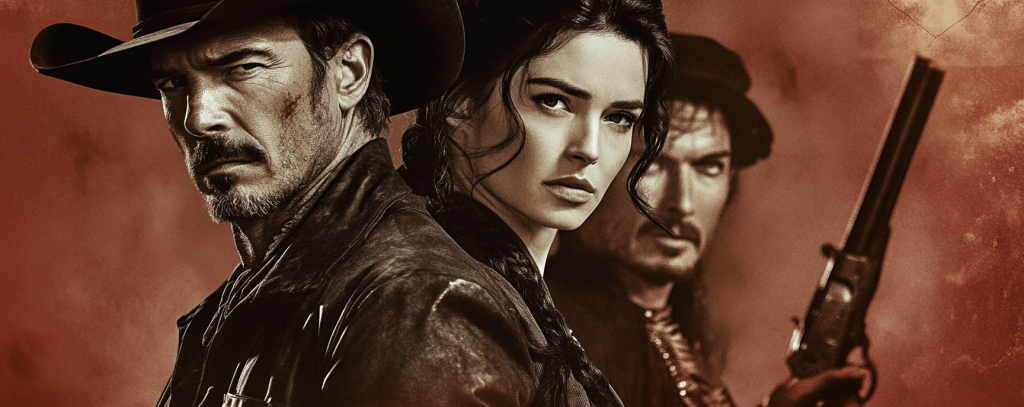
This film (and its source material) serves as a masterclass in modern Western storytelling—subverting tropes, embracing existential themes, and using lean, precise writing to build tension. Whether you’re writing for the screen or crafting a novel, No Country for Old Men offers valuable lessons on structure, character, and tone that can elevate your own modern Western narratives.


1. Stripping Down Dialogue: Less is More

One of the defining characteristics of McCarthy’s writing—and by extension, the Coen brothers’ adaptation—is its economy of dialogue. No Country for Old Men resists over-explanation, opting instead for sparse, clipped exchanges that reveal character without exposition.

Consider Anton Chigurh’s infamous coin-toss scene. The tension doesn’t come from long-winded speeches or obvious threats. Instead, it stems from the precise, almost mundane back-and-forth between Chigurh and the gas station clerk. The threat is implied, not spoken outright, making the scene even more chilling.

For writers, this is a crucial lesson: resist the temptation to over-explain. Trust in subtext. Allow your audience to read between the lines. A character’s silence or hesitation can speak volumes.


2. Subverting the Classic Western Hero

Traditional Westerns revolve around clear-cut heroes—often lawmen or outlaws with a strong moral code. No Country for Old Men throws this convention out the window. Its supposed protagonist, Llewelyn Moss, isn’t an archetypal cowboy hero; he’s an ordinary man who stumbles upon a briefcase full of drug money and makes a desperate, ultimately doomed attempt to escape with it.

Meanwhile, Sheriff Ed Tom Bell, who might have been the moral center of a classic Western, is instead a tired, aging lawman grappling with his own sense of helplessness in an increasingly brutal world.

For modern Western writers, this presents an opportunity: rather than relying on the classic hero-villain dynamic, consider exploring flawed, morally ambiguous characters who reflect the complexities of contemporary life.


3. Embracing Existential Themes

Unlike the clear moral narratives of traditional Westerns, No Country for Old Men leans into existentialism. Fate, chance, and the randomness of violence dominate the story. Anton Chigurh, with his philosophical musings and deterministic mindset, acts as a force of nature rather than a traditional villain.

The film’s ending—abrupt, unresolved, and deeply unsettling—reinforces this existential outlook. Sheriff Bell’s final monologue isn’t about justice or closure, but about his dreams and the inevitability of time catching up to all men.

This lesson is vital for writers: modern Westerns don’t need to deliver neat resolutions. Instead, they can explore ambiguity, forcing audiences to confront uncomfortable truths about fate, morality, and mortality.


4. Using Landscape as a Character

The setting of No Country for Old Men—the barren, sun-scorched plains of Texas—plays as much of a role as any human character. The vast emptiness serves to heighten tension, emphasizing the isolation of the characters and the stark brutality of their choices.

This is a crucial technique for modern Western writers. The landscape should not merely be a backdrop; it should reflect and intensify the themes of the story. A desolate highway, an abandoned gas station, or a silent, wind-swept desert can speak to themes of loneliness, lawlessness, and the inevitability of death.

When writing a modern Western, ask yourself: How does the setting reinforce the tone and themes of the story? How does it shape the characters’ decisions?


5. Writing Tension Through Action, Not Words

No Country for Old Men is a masterclass in suspenseful storytelling without relying on excessive action or dialogue. One of the most gripping sequences—Moss being pursued through the desert at night—works because of its careful buildup, its use of shadows, silence, and breathless pacing.

Tension in modern Westerns doesn’t always require shootouts or over-the-top violence. Instead, slow-burn suspense, drawn-out chases, and the constant threat of unseen danger can be just as effective.

For writers, this means thinking about how to stretch moments of suspense. Instead of jumping straight into a confrontation, build up to it. Let the reader or viewer feel the weight of anticipation.


6. Crafting an Unconventional Villain

Anton Chigurh is one of the most memorable antagonists in modern cinema, largely because he defies easy categorization. He’s not a gunslinger, a sheriff, or a vengeful outlaw—he’s something much more terrifying: a relentless, enigmatic force of chaos.

Chigurh operates by his own twisted logic, making his character all the more unsettling. His coin flips symbolize a belief in fate and chance, stripping away personal accountability.

For writers looking to craft compelling villains, Chigurh offers a template:

  • Give your antagonist a unique, unwavering philosophy.
  • Make their menace understated rather than overt.
  • Allow them to operate by a set of rules that seem logical (to them) but terrifying to others.

A villain like Chigurh lingers in the audience’s mind long after the story ends.


7. The Power of an Unconventional Ending

In a traditional Western, the story would conclude with justice served, the villain defeated, and the hero victorious. No Country for Old Men shatters this expectation. The final confrontation between Chigurh and Moss doesn’t even happen on-screen. Instead, the film subverts expectations, leaving Moss’s fate off-camera and closing on Sheriff Bell’s quiet resignation.

This is a powerful lesson: modern Westerns don’t need to wrap everything up neatly. Sometimes, an unresolved ending—one that leaves the audience unsettled and thoughtful—can be far more impactful.

For writers, consider whether your story needs a conventional resolution, or if leaving certain threads open-ended might better serve the narrative’s themes.


Final Thoughts: Redefining the Western for a New Generation

No Country for Old Men redefined what a Western could be. By stripping away traditional tropes, embracing moral ambiguity, and focusing on character-driven tension, it crafted a story that felt both timeless and unsettlingly modern.

For today’s writers—whether in screenwriting or fiction—there’s a lot to learn from its approach. Modern Westerns can be grim, introspective, and existential. They can defy audience expectations while still delivering gripping, unforgettable narratives.

If you’re writing in this genre, don’t be afraid to subvert conventions. Let your characters wrestle with fate. Use the landscape to deepen the story’s mood. And, above all, trust your audience to find meaning in what’s left unsaid.

The Western isn’t dead—it’s just evolving. And No Country for Old Men proves that the best stories are the ones that challenge everything we think we know about the genre.


✍️  Whether you’re mastering the art of dialogue, structure, or character development, the power of AI can be a game-changer in your writing journey. My Free Ebook, ‘AI for Authors’ delves into how AI-powered prompts can provide a unique edge to your storytelling process. If you’re intrigued by the prospect of supercharging your fiction skills, download your free copy today and explore new horizons in creative writing. 

Exploring Love in Adversity: Themes in ‘The Fault in Our Stars’

Few stories capture the raw, bittersweet reality of love in adversity quite like The Fault in Our Stars. Originally penned by John Green and later adapted into a film, this emotionally charged narrative explores the deep connections formed between Hazel Grace Lancaster and Augustus Waters—two teenagers who meet at a cancer support group and embark on a life-altering journey together.

While the story is often categorized as a young adult romance, its themes transcend genre conventions, offering profound insights into love, mortality, and human resilience. For writers and screenwriters alike, The Fault in Our Stars provides a masterclass in crafting compelling characters, emotional depth, and realistic dialogue.

In this article, we’ll dissect the key themes of love in adversity as portrayed in the novel and film adaptation, examining how these elements create a story that continues to resonate with audiences worldwide.

The Fragility and Beauty of Life

One of the most striking aspects of The Fault in Our Stars is its unflinching portrayal of mortality. Hazel and Augustus, despite their youth, are acutely aware that their time is limited. This awareness doesn’t just shape their relationship—it defines it.

For screenwriters, the tension between life’s fragility and its beauty is a powerful storytelling tool. Rather than shying away from the characters’ suffering, the story leans into it, using humor and philosophical reflections to balance the heaviness of the subject matter. Writers can learn from this approach by allowing their characters to grapple with existential questions while maintaining a sense of levity and authenticity.

The novel and film remind us that love is often most profound when it exists in defiance of impermanence. Augustus’ famous line—“You gave me a forever within the numbered days”—encapsulates this sentiment beautifully. This theme is especially compelling in storytelling because it challenges audiences to confront uncomfortable truths about life and love.

Love as a Defiant Act

Hazel and Augustus’ love story is not a conventional romance. It is a love that exists in direct opposition to their circumstances, a love that persists despite the looming presence of illness. Their relationship thrives not because they ignore their reality but because they embrace it.

This theme can be particularly useful for writers looking to craft relationships that feel genuine. Too often, fictional romances rely on external conflicts—misunderstandings, betrayals, or dramatic plot twists—to create tension. The Fault in Our Stars, however, derives its tension from something more profound: the knowledge that time is finite.

This type of love—the kind that flourishes in the face of adversity—resonates deeply because it reflects real-life relationships. People don’t fall in love in perfect circumstances; they fall in love amid chaos, uncertainty, and hardship. Writers and screenwriters can take a cue from Green’s storytelling by allowing love to emerge not in spite of adversity but because of it.

Realistic Dialogue and Emotional Authenticity

One of the most lauded aspects of both the book and film adaptation is the dialogue. Hazel and Augustus speak with a level of wit and intelligence that, while slightly heightened for dramatic effect, still feels natural. Their conversations are filled with humor, literary references, and philosophical musings, making their love story feel more intimate and unique.

For screenwriters, dialogue is one of the most critical tools for character development. The way characters speak to each other reveals not just their personalities but their emotional landscapes. The dialogue in The Fault in Our Stars is a perfect example of how to craft conversations that are both engaging and deeply revealing.

Take, for example, Augustus’ metaphor of the unlit cigarette: “You put the killing thing right between your teeth, but you don’t give it the power to do its killing.” This line is more than just an interesting quirk—it encapsulates Augustus’ approach to life, his desire to control the narrative of his own existence.

For writers looking to create emotionally authentic characters, The Fault in Our Stars offers a valuable lesson: Let your characters speak in ways that reflect their inner turmoil, hopes, and philosophies.

The Power of Storytelling Within the Story

A fascinating meta-element in The Fault in Our Stars is its exploration of storytelling itself. Hazel’s favorite book, An Imperial Affliction, serves as a symbol of unresolved questions, the search for meaning, and the comfort that stories can provide. Her journey to meet the book’s reclusive author, Peter Van Houten, is not just about seeking answers—it’s about understanding the role that narratives play in shaping our perceptions of life and death.

For writers, this is a crucial takeaway. Stories are not just about entertaining an audience; they serve as vessels for deeper exploration of human experiences. Augustus and Hazel’s own love story becomes a narrative that, much like An Imperial Affliction, does not end neatly or happily, yet it leaves an indelible impact.

This meta-commentary on storytelling challenges writers to consider the purpose of their narratives. Are we offering escapism, or are we providing a reflection of reality? Can a story’s unresolved questions be just as powerful as its resolutions?

The Imperfect Yet Unforgettable Ending

Perhaps one of the most emotionally striking aspects of The Fault in Our Stars is its ending. Augustus, who initially seems like the more invincible of the two, succumbs to his illness, leaving Hazel to grapple with the loss. This subversion of expectations—given that Hazel is introduced as the one with a more dire prognosis—reinforces the story’s core message: life is unpredictable, and love does not always get the happy ending we wish for.

For screenwriters, the takeaway here is that endings don’t have to be traditionally satisfying to be meaningful. Not all stories need a neat resolution. Sometimes, the most impactful conclusions are the ones that reflect life’s unpredictability. The ending of The Fault in Our Stars stays with audiences because it mirrors real loss and grief, offering no easy answers but plenty of emotional resonance.

Lessons for Writers and Screenwriters

So, what can writers take away from The Fault in Our Stars?

  1. Embrace emotional honesty. Don’t shy away from difficult themes—lean into them with authenticity.
  2. Let love exist in adversity. Romance is most compelling when it arises from real struggles rather than contrived conflicts.
  3. Craft meaningful dialogue. Give characters a unique voice that reflects their experiences and philosophies.
  4. Explore storytelling within your story. Consider how your characters interact with narratives and what that says about their worldview.
  5. Don’t fear imperfect endings. Sometimes, a bittersweet resolution leaves a deeper emotional impact than a traditionally happy one.

The Fault in Our Stars endures as a masterful example of how to write love and loss with sincerity. For writers, it serves as a poignant reminder that the most powerful stories are the ones that reflect the complexities of human emotion, leaving an impression long after the final page is turned or the credits roll.


✍️  Whether you’re mastering the art of dialogue, structure, or character development, the power of AI can be a game-changer in your writing journey. My Free Ebook, ‘AI for Authors’ delves into how AI-powered prompts can provide a unique edge to your storytelling process. If you’re intrigued by the prospect of supercharging your fiction skills, download your free copy today and explore new horizons in creative writing. 
Enhancing Efficiency: AI’s Role in Film Production Processes

In recent years, the film and television industry has witnessed a significant transformation with the integration of artificial intelligence (AI) into various aspects of production. As we approach the end of February 2025, it’s clear that AI has become an integral part of the filmmaking process, revolutionizing how movies and TV shows are created from pre-production to post-production. This article explores the current state of AI in film production, focusing on its impact on efficiency and creativity.

Script Analysis and Development

One of the most notable applications of AI in film production is in the realm of scriptwriting and analysis. AI-powered tools are now capable of analyzing scripts to identify plot holes, suggest improvements, and even generate new story ideas12. These tools use natural language processing (NLP) and machine learning algorithms to process vast amounts of data, providing insights into narrative structure, character development, and dialogue1.

For instance, AI can now assist writers in overcoming creative blocks by suggesting plot twists or alternative dialogue options7. This collaboration between human creativity and AI assistance has the potential to enhance the quality of scripts while reducing the time spent on initial drafts.

Optimizing Production Planning

AI is also making significant strides in production planning. By analyzing various factors such as weather conditions, actor availability, and location constraints, AI algorithms can create optimized shooting schedules6. This not only increases efficiency but also helps minimize the risk of costly delays and reshoots.

Additionally, AI-powered tools can assist in breaking down scripts, identifying key elements such as locations, props, and characters. This process, which traditionally took considerable time and effort, can now be completed in a matter of minutes6.

AI-Powered Cameras and Visual Effects

The integration of AI on film sets is becoming increasingly common. AI-powered camera systems can now monitor various aspects of a shoot, including lighting conditions, camera angles, and actor performances6. This real-time feedback allows directors and cinematographers to make critical decisions quickly, improving the overall quality of the footage.

Moreover, AI is revolutionizing visual effects by enabling the creation of realistic scenes and characters more efficiently2. This allows VFX artists to focus more on creative aspects rather than tedious technical work.

Voice Enhancement and Accent Modification

Recent developments have shown that AI can be used to enhance actors’ performances in post-production. For instance, AI cloning software has been used to improve actors’ accents, as seen in the Oscar-nominated films “The Brutalist” and “Emilia Pérez”3. While this raises questions about the authenticity of performances, it demonstrates AI’s potential to solve complex production challenges.

Automated Editing and Color Grading

In post-production, AI is significantly reducing the time and effort required for editing and color grading. AI-powered editing tools can identify key moments in footage, streamline workflows, and even suggest cuts based on the narrative structure26. This not only speeds up the editing process but also allows editors to focus more on creative decisions.

Color grading, a traditionally time-consuming process, is also benefiting from AI. Machine learning algorithms can now analyze and apply color presets, making the process more efficient while maintaining artistic integrity6.

Sound Design and Audio Enhancement

AI is proving to be a valuable asset in sound editing as well. Advanced algorithms can isolate and enhance audio, remove background noise, and even sync soundtracks more effectively6. This level of precision and efficiency was previously unattainable without significant time investment.

Personalized Content Recommendations

Streaming platforms are leveraging AI to analyze viewer preferences and personalize content recommendations. This not only enhances the user experience but also provides valuable insights to filmmakers and studios about audience preferences5.

Trailer Creation and Marketing

AI is now being used to create movie trailers more efficiently. By analyzing full-length features, AI can select key moments and suggest edits, significantly reducing the time required to produce a trailer5. This technology allows marketing teams to create multiple versions of trailers tailored to different audiences quickly.

The Impact on Independent Filmmakers

The integration of AI into film production is not limited to major studios. Independent filmmakers are also benefiting from these technological advancements. AI-powered tools are making high-quality production more accessible to smaller teams with limited resources4. This democratization of technology could lead to a more diverse range of stories and perspectives in the film industry.

Challenges and Considerations

While AI offers numerous benefits to the film production process, it also raises important questions about creativity, authenticity, and the role of human input in filmmaking. As AI becomes more prevalent, the industry will need to grapple with issues such as:

  • The balance between AI assistance and human creativity in scriptwriting
  • The authenticity of performances enhanced or modified by AI
  • The potential impact on jobs in the film industry
  • Ethical considerations surrounding the use of AI in content creation

Looking Ahead: The Future of AI in Film Production

As we move further into 2025, it’s clear that AI will continue to play an increasingly significant role in film production. From generating initial story ideas to streamlining post-production workflows, AI is enhancing efficiency across the board. However, it’s important to note that AI is not replacing human creativity but rather augmenting it.

The future of filmmaking lies in the effective collaboration between human ingenuity and AI capabilities. As the technology continues to evolve, we can expect to see even more innovative applications that push the boundaries of what’s possible in film production.

In conclusion, AI is transforming the film industry by enhancing efficiency, reducing costs, and opening up new creative possibilities. As writers and filmmakers, it’s crucial to stay informed about these developments and consider how they can be leveraged to tell more compelling stories. The key will be to embrace AI as a tool that complements human creativity rather than replaces it, ensuring that the art of storytelling remains at the heart of filmmaking.


✍️  Whether you’re mastering the art of dialogue, structure, or character development, the power of AI can be a game-changer in your writing journey. My Free Ebook, ‘AI for Authors’ delves into how AI-powered prompts can provide a unique edge to your storytelling process. If you’re intrigued by the prospect of supercharging your fiction skills, download your free copy today and explore new horizons in creative writing. 

How ‘The Truman Show’ Captures Existentialism in Screenwriting

Introduction

Few films capture the philosophical weight of existentialism within their narrative structure as effectively as The Truman Show (1998). A masterclass in screenwriting, Andrew Niccol’s script constructs a world where reality, identity, and free will are constantly questioned—hallmarks of existentialist thought. The film, directed by Peter Weir and starring Jim Carrey, presents a man unknowingly trapped in an artificial world, gradually awakening to the truth of his existence.

Through its story, character development, and thematic depth, The Truman Show embodies existentialist principles, forcing both its protagonist and audience to grapple with the nature of reality, personal agency, and the pursuit of authentic existence. This article will explore how the film integrates existentialism into its screenplay, making it a thought-provoking and enduring cinematic experience.


The Existentialist Themes in The Truman Show

1. The Illusion of Reality: Truman as an Absurd Hero

Existentialist philosophy often deals with the idea that reality is either absurd or incomprehensible. The Truman Show builds its entire premise around this notion—Truman Burbank’s world is a meticulously constructed television set, his relationships are scripted, and his choices are subtly manipulated. Yet, he is blissfully unaware, living what he believes to be an ordinary life.

This setup mirrors the existentialist idea of the absurd, championed by philosophers like Albert Camus. Camus’ Myth of Sisyphus posits that individuals seek meaning in a world that is indifferent to their existence. Truman, much like Sisyphus, repeats daily patterns without knowing the deeper truth of his circumstances. The screenplay amplifies this absurdity through subtle inconsistencies in Truman’s environment—actors forgetting their lines, set malfunctions, and the infamous stage light that falls from the “sky.” These cracks in the illusion push him toward existential discovery.


2. The Role of Free Will and Determinism

A key question in existentialist philosophy is whether we have true autonomy or if our choices are preordained. Truman’s life is dictated by Christof (a fittingly named god-like figure), who orchestrates every aspect of the show. Truman is a puppet, living in a controlled environment where his actions are guided by unseen hands.

The screenplay cleverly contrasts Truman’s perceived freedom with the constraints placed upon him. Every time he attempts to exercise free will—whether through his childhood desire to explore the world or his love for Sylvia (the woman who tries to expose the truth)—he is met with obstacles. His fear of water is engineered, his job is mundane, and his best friend constantly reinforces the status quo.

Yet, as existentialist thinkers like Jean-Paul Sartre argue, true freedom comes from recognizing the constraints imposed upon us and choosing to transcend them. Truman’s journey becomes one of self-awareness and rebellion. The script masterfully escalates his awakening, leading to a climactic decision that cements his status as an existential hero.


3. Authenticity vs. Inauthenticity

Sartre and Heidegger both explored the concept of “authentic existence”—the idea that individuals must break free from societal constructs to live truthfully. The Truman Show embodies this struggle, portraying a protagonist who is unknowingly trapped in inauthenticity.

Truman’s relationships, job, and even memories are fabrications designed to keep him docile. The script uses irony to highlight this: his best friend Marlon repeatedly assures him of their “real” friendship, yet we see Marlon being fed lines through an earpiece. Truman’s wife, Meryl, delivers product placements mid-conversation, reducing their marriage to a corporate sponsorship.

This inauthenticity contrasts with the moments where Truman exhibits genuine emotion—his longing for Sylvia, his desire to travel, his spontaneous actions. These moments of rebellion are where Truman begins to embody existentialist authenticity, seeking meaning beyond the roles assigned to him.


4. The Search for Truth and the Courage to Escape

One of the most powerful aspects of The Truman Show’s screenplay is its handling of Truman’s search for truth. His journey mirrors Plato’s Allegory of the Cave, where a prisoner escapes a fabricated reality to experience the real world. The more Truman questions his surroundings, the more resistance he faces—from staged accidents preventing him from leaving, to outright gaslighting by Christof and his team.

However, existentialism teaches that enlightenment requires struggle. In a pivotal moment, Truman overcomes his greatest fear—the water that has symbolically and physically trapped him—and sails toward the unknown. His confrontation with the literal edge of his world (the painted sky concealing a stage door) is a metaphor for breaking free from illusion.

Christof, acting as the “god” of Truman’s world, tries to dissuade him, even claiming that he knows Truman better than Truman knows himself. Yet, in true existentialist fashion, Truman asserts his agency. His final words, “In case I don’t see ya—good afternoon, good evening, and good night!” serve as both a farewell to his constructed life and a declaration of his independence.


Screenwriting Techniques That Reinforce Existentialism

Beyond its thematic depth, The Truman Show excels in embedding existentialist ideas through its structure and writing.

1. The Slow-Burn Revelation

The screenplay doesn’t rush Truman’s realization. Instead, it plants subtle anomalies that accumulate, making his awakening feel organic. This mirrors how existentialist thinkers describe self-awareness—as a gradual peeling away of illusions rather than a sudden epiphany.

2. Dual Perspectives: Truman vs. The Audience

By showing both Truman’s limited perspective and the omniscient view of the production team, the script emphasizes existentialist concerns about perception and control. The audience knows Truman’s world is a lie, making his struggle more poignant while forcing viewers to reflect on their own realities.

3. Minimal Exposition, Maximum Subtext

Instead of heavy-handed dialogue, the screenplay uses visual storytelling to reinforce existential themes. The set’s artificial perfection, the omnipresent cameras, and the eerily cheerful background music all contribute to the sense that something is “off.” This approach allows Truman’s gradual enlightenment to feel earned rather than forced.

4. The Cathartic Yet Open-Ended Conclusion

Truman’s escape is triumphant, but the film deliberately withholds what comes next. The screenplay ends on an existentialist note—freedom is not a guarantee of happiness, only the beginning of true self-determination. The ambiguity forces the audience to consider the weight of Truman’s decision, much like existentialist thinkers challenge individuals to take responsibility for their own fate.


Conclusion: Why The Truman Show Endures as an Existentialist Masterpiece

More than two decades after its release, The Truman Show remains one of the most profound explorations of existentialism in modern screenwriting. Through its carefully crafted protagonist, thought-provoking themes, and innovative storytelling techniques, the film challenges viewers to question their own realities, embrace authenticity, and confront the unknown.

Truman’s journey is ultimately one of self-liberation, embodying Sartre’s idea that “existence precedes essence.” His choice to step into the unknown reminds us that, while the world may try to define us, true freedom lies in defining ourselves.

For screenwriters, The Truman Show serves as a masterclass in blending philosophical depth with compelling storytelling—proof that a script can entertain while provoking profound existential questions.


✍️  Whether you’re mastering the art of dialogue, structure, or character development, the power of AI can be a game-changer in your writing journey. My Free Ebook, ‘AI for Authors’ delves into how AI-powered prompts can provide a unique edge to your storytelling process. If you’re intrigued by the prospect of supercharging your fiction skills, download your free copy today and explore new horizons in creative writing. 

Writing Grief and Healing in ‘Manchester by the Sea’

Kenneth Lonergan’s Manchester by the Sea (2016) is one of the most profound cinematic explorations of grief in recent years. The film follows Lee Chandler (Casey Affleck), a withdrawn janitor living in Quincy, Massachusetts, who is forced to return to his hometown after his brother’s death. There, he must confront his painful past while becoming the reluctant guardian of his teenage nephew, Patrick (Lucas Hedges).

From a screenwriting perspective, Manchester by the Sea offers an exceptional case study in how to write grief authentically. The film’s narrative structure, use of subtext, and emotionally charged yet restrained dialogue make it a masterclass in crafting a story about loss and healing without falling into melodrama.

Subverting Traditional Grief Narratives

Most films about grief follow a familiar arc: a character suffers a loss, endures emotional turmoil, and eventually finds some form of closure or redemption. Manchester by the Sea subverts this expectation by presenting a protagonist who remains fundamentally unchanged by the end of the film.

Lee does not experience a dramatic emotional breakthrough. He does not come to terms with his past in a way that allows him to start fresh. Instead, the film acknowledges that some wounds never fully heal. His grief is not something to be “overcome” but rather something he must learn to live with, much like real-life loss.

For screenwriters, this approach is a powerful reminder that emotional arcs do not need to be neatly resolved. Instead, they should reflect the complex and often unresolved nature of human emotions.

The Power of Flashbacks

One of the most striking narrative choices in Manchester by the Sea is its use of flashbacks. Rather than using them as mere exposition, Lonergan weaves these moments seamlessly into the present timeline, mirroring the way traumatic memories intrude upon everyday life.

Lee’s past is revealed in fragments, forcing the audience to piece together the reasons for his withdrawn and self-destructive nature. The moment we discover the full extent of his trauma—his unintentional role in the fire that killed his children—hits with devastating force because it is withheld until we have already become deeply invested in his character.

For writers, this serves as a lesson in the art of withholding. Instead of front-loading exposition, consider revealing key backstory elements at moments of maximum emotional impact. Let the audience experience the story as the character does, allowing past and present to intertwine naturally.

Authentic Dialogue and Subtext

Dialogue in Manchester by the Sea is often indirect, filled with hesitation, awkwardness, and unspoken pain. Instead of delivering overt emotional declarations, characters communicate through subtext, silences, and deflections.

For example, in the scene where Lee and his ex-wife Randi (Michelle Williams) encounter each other on the street, their words are simple, almost mundane. But beneath their brief exchange lies an ocean of pain, regret, and love. Randi’s repeated “I should go” and Lee’s inability to engage in prolonged conversation speak volumes more than any dramatic monologue could.

As a writer, studying Lonergan’s dialogue teaches an essential screenwriting lesson: real emotion is often found in what is not said. Grief is rarely expressed in perfect, poetic soliloquies; more often, it manifests in broken conversations, avoidance, and everyday moments laced with unbearable weight.

Character-Driven Storytelling

One of the film’s greatest strengths is its unwavering commitment to character over plot. The story does not hinge on dramatic twists or external conflicts but rather on the internal struggles of its protagonist.

Lee’s grief shapes every aspect of his life—his reluctance to form new connections, his self-imposed isolation, his inability to return to Manchester permanently. Even his interactions with Patrick are colored by his pain. Rather than becoming an idealized father figure, Lee remains emotionally stunted, unable to provide the warmth Patrick craves.

For screenwriters, this is a reminder that compelling drama does not always come from action-packed plots. Instead, deep, character-driven storytelling—where emotional stakes are prioritized over external events—can be just as, if not more, impactful.

Finding Moments of Light in Darkness

Despite its heavy themes, Manchester by the Sea is not an entirely bleak film. Lonergan skillfully integrates moments of humor and warmth, particularly in Lee and Patrick’s interactions. Their awkward, sometimes comedic dynamic adds a layer of realism and prevents the film from becoming emotionally oppressive.

For instance, Patrick’s juggling of multiple girlfriends and his teenage stubbornness create moments of levity, even as he grapples with his father’s death. These touches of humor make the grief more bearable—not just for the characters, but for the audience.

This balance of tragedy and humor is something all writers should take note of. Grief, in reality, is not a singular emotion; it exists alongside laughter, frustration, and absurdity. Including these nuances in writing makes characters feel more human and their pain more authentic.

The Unfinished Nature of Healing

By the end of Manchester by the Sea, Lee makes a small step toward healing—he arranges for Patrick to stay with another family member rather than cutting ties entirely. However, he remains unable to live in Manchester and fully embrace his role as a guardian.

This conclusion is far from the typical cathartic resolution seen in many films, but it is deeply truthful. Some griefs are not meant to be “resolved.” Instead, they become a part of the person who carries them.

For writers, this is an important takeaway: not every story needs a perfect ending. Sometimes, the most powerful narratives acknowledge that healing is a slow, ongoing process, not a singular event.

Final Thoughts

Manchester by the Sea is a masterclass in writing grief, offering invaluable lessons in subtext, character-driven storytelling, and the complexity of healing. Kenneth Lonergan’s script avoids clichés and instead presents loss in its raw, unvarnished form—messy, unresolved, and deeply human.

For any writer looking to craft a story about grief, Manchester by the Sea is an essential case study. It reminds us that true emotional resonance comes not from grand gestures or neatly wrapped endings, but from the quiet, painful, and sometimes even humorous moments that define the human experience.


✍️  Whether you’re mastering the art of dialogue, structure, or character development, the power of AI can be a game-changer in your writing journey. My Free Ebook, ‘AI for Authors’ delves into how AI-powered prompts can provide a unique edge to your storytelling process. If you’re intrigued by the prospect of supercharging your fiction skills, download your free copy today and explore new horizons in creative writing.