The Alchemy of Imagination: How to Spark Ideas for Your Next Novel

The Blank Canvas: Understanding the Challenges and Joys of Writing a Novel

The blank page: it’s both a writer’s nemesis and most ardent suitor. Before it becomes a labyrinth of sentences, subplots, and emotional arcs, it exists in a state of infinite potential. It’s easy to underestimate just how daunting this canvas can be, particularly when you’re embarking on the adventure of writing a novel. In contrast to a short story or a screenplay, a novel is a marathon, not a sprint. But let’s get one thing straight—this stretch of emptiness is not an obstacle. It’s an opportunity.

Let’s talk about the ‘blank canvas syndrome.’ You stare at your computer screen, the cursor blinking as if taunting you. In this moment, the white abyss embodies every fear you’ve ever had about your creative abilities. Sounds melodramatic, but it’s something even celebrated authors like Stephen King have admitted to grappling with. In his must-read, “On Writing,” King touches on the universal vulnerability that comes with writing—whether you’re a newbie or a seasoned vet.
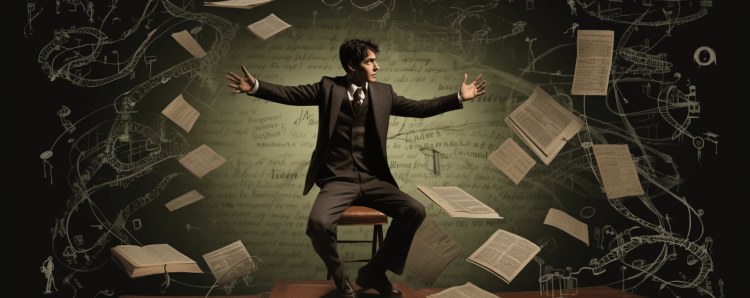
The emotional rollercoaster of writing a novel is another beast altogether. Imagine being the screenwriter, director, and leading actor of your own epic saga. The highs are mesmerizing—you’re crafting worlds, birthing characters, and sometimes even surprising yourself with plot twists. The lows, however, can make you question why you ever thought writing a novel was a good idea. Rejections, writer’s block, and the persistent feeling that your work isn’t “good enough” can take a toll.

At this point, it’s crucial to realize that every writer has been where you are now. J.K. Rowling was famously rejected numerous times before Harry Potter could wave his wand in the literary world. George Orwell had to grapple with initial indifference towards classics like “1984.” The road to crafting a memorable novel is filled with ups and downs, and understanding this is your first step towards being patient with yourself.

So, how do you go from seeing the blank page as an intimidating challenge to an inviting canvas? One word: perspective.

Think of it as your very own Tabula Rasa, a philosophical concept that suggests the human mind starts as a blank slate. Your story is your mind’s offspring. It’s still unformed, awaiting your wisdom, experiences, and imagination to shape it. Not so intimidating when you consider that every classic novel from “To Kill a Mockingbird” to “One Hundred Years of Solitude” started precisely where you are—faced with a white void.

If you’ve been keeping up with writing tips from industry veterans, you’ve probably heard the advice, “Write what you know.” Well, here’s a twist: Write what you feel. Emotional authenticity is a ticket to writing a novel that resonates with readers. The page is blank because it’s waiting for something only you can give it: a piece of your world, reflected through your unique lens.

You might already have a toolkit for your writing—maybe a writing prompt or two, some outlines, perhaps a pile of scribbled notes. The importance of such toolkits can’t be overstated, but they come later. First comes the willingness to leap into the unknown. So the next time you confront the blank page, remember this: It’s not a barrier. It’s a doorway. And on the other side is a world only you can create.

The blank canvas, then, is an invite—a dare, if you will. It’s daring you to jot down the first sentence, to mess up, to rewrite, to pull your hair out, and then to find that one idea, that one phrase that makes you nod and say, “Yes, this is it.” When you find it, you’ll realize that all those writing tips and all that advice about improving your writing skills weren’t just platitudes. They’re a compass guiding you through the enthralling yet demanding terrain of novel writing. That blank canvas? It’s your universe waiting to be penned, one word at a time.

The Idea Factory: Where Does the Magic Happen?

When it comes to generating ideas for your novel, we often get stuck in this notion that inspiration has to strike us like a bolt of lightning from the heavens. But here’s the truth: Lightning rarely strikes if you’re not standing out in the rain, right? The act of brainstorming for your novel doesn’t have to be a passive, wait-and-see process. Instead, let’s shift the paradigm and envision your mind as an ‘Idea Factory’—a proactive space where creativity is manufactured through intention and effort.

One of the most reliable gears in your Idea Factory is your own life experience. Look, I’m not saying you have to go through some earth-shattering event to be able to write about it. Just remember that every relationship, every job, and even the most mundane conversation you’ve ever had is a potential seed for a storyline or a character. Think Jack Kerouac and “On the Road,” a seminal work inspired by road trips and a close circle of friends. Real-life experiences infuse your writing with an authenticity that can’t be easily fabricated.

Speaking of fabrication, let’s touch upon the world of “what if?” This is where your imagination can run wild. What if a young orphan discovered he was a wizard? That question alone gave rise to the Harry Potter series. Asking yourself “what if” questions could lead to the discovery of untapped stories lingering in the corners of your mind. This is a valuable writing tip that can help jumpstart your novel when you’re lacking a clear direction.

Now, if you’re still feeling a bit adrift, writing prompts can act as lifeboats. Consider them catalysts that can spark a reaction when your Idea Factory seems to be running low on raw materials. Many writers swear by writing prompts to kick-start their creativity or even overcome writer’s block. But it’s not just about responding to the prompt; it’s about letting it simmer in your mind until it evolves into something unique to you. Sometimes, a single prompt can open floodgates of interconnected ideas, themes, and characters.

Another gear in your Idea Factory is your creative writing circle. Whether it’s a formal writers’ group, a class, or a couple of friends you trust with your early drafts, this circle can offer constructive criticism that opens new avenues for your story. Perhaps you’ve introduced a character who’s more compelling than your protagonist, but you’re too close to your work to see it. Or maybe your plot lacks a certain emotional weight that a different perspective could pinpoint. The social aspect of writing should never be underestimated; it can significantly improve your writing skills.

And, of course, let’s not forget the all-consuming act of reading. If you want to get really good at writing, you need to get really good at reading. This doesn’t mean you should imitate other authors; it means understanding why a particular piece of writing resonates with you or why it doesn’t. What did you like about the structure of “Gone Girl” by Gillian Flynn? What made the characters in “The Great Gatsby” so memorable? Analyzing the works of others can provide a valuable roadmap for your own journey in writing a novel.

However, don’t let your admiration for other writers intimidate you into inertia. Remember, even the most celebrated authors had to start somewhere. A wonderful example is Ernest Hemingway’s iceberg theory. Hemingway posited that the substance of a story should remain below the surface, implying that what’s left unsaid often holds more weight. It’s a theory he developed over time, through trial and error, and it might inspire you to develop your own distinct style.

Let’s be honest: The Idea Factory is never really closed. It’s always there, in the background, processing your experiences, questions, and daydreams into potential stories. But it does need fuel, and that’s where your active participation comes in. Dive into the pool of your own experiences, explore the landscape of ‘what if,’ use writing prompts as stepping stones, be open to feedback, and read voraciously.

Unleashing Creativity: The Road from Idea to Manuscript

You’ve got this brilliant idea, an intricate plot, and multi-dimensional characters just itching to leap off the page. Your Idea Factory has been busy, and you’re armed with nuggets that promise an exciting novel. Now what? How do you go from this conceptual stage to actually writing a novel that does justice to the brilliance in your head?

First, let’s talk structure. No, structure isn’t the enemy of creativity; it’s the scaffold that allows your creativity to flourish. Whether you’re an outliner who needs to have every detail mapped out or a pantser who prefers to wing it, some form of structure is essential. Think of the classic three-act structure as your foundational framework. It’s proven, it’s reliable, and it’s why movies like Star Wars and books like To Kill a Mockingbird are timeless classics. Now, I’m not saying you can’t deviate from this, but it’s a solid starting point.

Once you have a skeleton, you need to flesh it out. This is where you employ your writing tips and techniques, translating your ideas into scenes, dialogue, and action. And how you do that can either elevate your story or flatten it. Take dialogue, for example. It should serve multiple functions: advancing the plot, revealing character, or providing necessary information. Consider the sharp, memorable dialogue in Aaron Sorkin’s The Social Network; it not only pushes the story forward but also reveals character depth.

Now, let’s confront a dreaded foe many writers face: writer’s block. Yes, even with the best-laid plans and a bustling Idea Factory, you might hit a wall. When that happens, don’t despair; it’s an opportunity to step back and reassess. Sometimes, the best writing prompts are questions directed at your plot or characters. Ask yourself what motivates a character at this point in the story, or how can a plot twist organically arise from the story’s circumstances? These targeted questions can serve as internal prompts, breaking down the monolith of writer’s block into more manageable pieces.

Then there’s the much-feted writing environment. Where you write can dramatically impact how you write. Whether you need the buzzing energy of a coffee shop or the serenity of your home office, make sure your surroundings foster productivity. Pay attention to ergonomics too; comfort can substantially improve writing skills by reducing physical strains that can impede the creative process.

Here’s a nifty trick: Try the Pomodoro Technique. Essentially, you write in bursts of 25 minutes, separated by 5-minute breaks. This can help combat fatigue and keeps your mind fresh. Several apps can help you keep track of your time. But remember, it’s not just about filling time; it’s about making the time count. Aim for quality over quantity.

Feedback is a crucial part of the writing process. Constructive criticism from trusted sources can offer invaluable insights. In many cases, you might be too close to your project to see its flaws or its potential. So, when you do receive feedback, be open but also discerning. Not all advice is good advice. At the end of the day, it’s your story, and it should align with your vision.

As your novel progresses, don’t forget to revisit and possibly revise your initial outline or structure. The story often evolves during the writing process, and being too rigid can stifle creativity. Take Stephen King’s approach, for instance. He’s known for his “situation” method where he places characters in a situation and lets the story unfold. This can lead to unexpected but rewarding twists in the narrative.

Finally, let’s talk about the importance of drafting and revision. Your first draft is just that—a draft. It’s your thoughts put down on paper, not the final product. Don’t fall into the trap of endless editing during the initial stages. It’s easy to get caught up in perfecting every sentence, but this can hamper progress. You can always go back and polish; what you need initially is a complete draft.

Embrace the revision process as an opportunity to refine, to dig deeper, and to elevate your story to the masterpiece you envisioned. Look at J.K. Rowling’s early drafts for Harry Potter, and you’ll realize how significantly a story can evolve from its first iteration. The key is to keep writing and keep refining. It’s not just about how to start writing a novel; it’s also about how to finish it—and finish it well.

In summary, writing a novel is a marathon, not a sprint. It’s a complex interplay of ideas, structure, technique, and relentless effort. By systematically and creatively approaching each of these elements, you’re not just writing a novel; you’re crafting an experience, a journey for your readers. So, get those fingers dancing on the keyboard and bring that incredible story to life. After all, the world is waiting to read your masterpiece.


✍️  Whether you’re mastering the art of dialogue, structure, or character development, the power of AI can be a game-changer in your writing journey. My Free Ebook, ‘AI for Authors’ delves into how AI-powered prompts can provide a unique edge to your storytelling process. If you’re intrigued by the prospect of supercharging your fiction skills, download your free copy today and explore new horizons in creative writing. 

The Complexities of Adaptation: A Look at ‘American Psycho’

Setting the Stage: Understanding the Source Material

“American Psycho”—the novel that sparked controversies, debates, and an irresistible urge to discuss materialism, moral vacuity, and good old-fashioned insanity. If you’ve ever read Bret Easton Ellis’s magnum opus, you know that it’s a twisted journey into the psyche of Patrick Bateman, a Wall Street investment banker who is also a serial killer. Published in 1991, the novel captured the zeitgeist of late 20th-century American consumer culture, and reading it feels like getting a Ph.D. in nihilism.

Why does this novel merit such attention when discussing the complexities of adaptation? First, its narrative style is overwhelmingly unique. The novel is a first-person account, filled with intricate details that span from Bateman’s luxurious designer clothes to his homicidal tendencies. This point-of-view choice lends a chilling intimacy to the narrative—Bateman is your friend, your tour guide, and your monster all rolled into one.

Ellis’s novel defies conventional storytelling. The plot, if we can call it that, is episodic rather than linear. You might get a chapter detailing Bateman’s night of clubbing, followed by a gruesome account of murder, and then, perhaps jarringly, a whole section dedicated to a review of a Phil Collins album. The absence of a standard structure allows Ellis to present a raw, untamed vision of his protagonist’s world. This would be, to put it lightly, a challenge for anyone thinking about writing a screenplay based on the book. Conventional screenplay structure often demands a more linear, cause-and-effect narrative.

Then there’s the visceral content. The novel goes to extremes in depicting violence and hedonism. A major reason for the book’s initial controversy was its graphic nature. In fact, the book was so controversial that it was released as a paperback original because the initial publisher dropped it, citing its graphic violence. This poses a unique set of problems for adaptation. How do you remain faithful to a book that’s been called everything from a masterpiece to a monstrosity?

You see, Patrick Bateman’s inner monologue—a cocktail of neurosis, material obsession, and chilling detachment—provides an understanding of the character that’s hard to translate onto the screen. Internal monologues are tricky beasts in screenplays. In literature, they’re windows into a character’s soul; in cinema, they can easily become cumbersome voice-overs that yank the viewer out of the narrative.

Adapting a work like “American Psycho” calls for an adept balancing act between visual storytelling and textual faithfulness. Unlike simpler works that offer a straightforward path from text to screen, “American Psycho” is fraught with peril at every narrative bend. It begs the question: How do you adapt a story that seems built to defy adaptation?

The novel’s unique narrative voice is another Everest to climb. In the book, Bateman’s internal dialogues and monologues are not just ornamental; they are essential to our understanding of his fractured identity. The trickiness lies in making the audience comprehend Bateman’s psyche without getting the advantage of hundreds of pages of first-person narration.

The Art of Adaptation: Mary Harron’s Ingenious Choices

One of the most daunting tasks any screenwriter faces is adapting a beloved, complex novel into a cinematic narrative. So, when director and co-screenwriter Mary Harron took on the formidable task of bringing “American Psycho” to the silver screen, it was inevitable that she’d have to make some ingenious choices. It’s like playing 3D chess with an audience that knows how to checkmate you in two moves. You’ve got to be steps ahead, with your endgame clearly in sight.

First off, Harron made the bold decision to keep much of Patrick Bateman’s internal monologue—but she found a more cinematic way to present it. By using voice-over narration, she kept the audience inside Bateman’s head without it feeling like a cheap device. This tactic helped maintain the intimacy of the novel while adapting it into a medium that relies more on show than tell. Think of Harrison Ford’s character in “Blade Runner”, whose voice-over (in the original cut) helps ground the film’s philosophical musings.

Harron’s approach to the source material’s graphic violence was another masterstroke. While Ellis’s novel delves into gruesome details, Harron chose to pull back. The violence becomes more suggested than shown, which often made it even more unsettling. This helped the film sidestep the kind of controversy that could eclipse its thematic core, while still staying true to the dark, violent world Ellis had created.

For anyone offering screenwriting tips, this is a lesson in restraint and purposeful omission. Understanding what to keep and what to leave out is the key to a successful adaptation. Harron’s subtle approach allowed the film’s satire and social commentary to shine, unlike the novel where those elements could be overshadowed by the explicit content.

Let’s talk about pacing and screenplay structure. The episodic nature of the novel was replaced with a more streamlined narrative. If the novel was a sprawling suburb, the film is a high-rise building—each scene, a purposefully designed floor leading inexorably to the climax. This adaptation to a Three-Act Structure made the story more digestible for a cinematic audience without losing its complex flavor.

One of Harron’s most potent strategies was to crank up the satire. If Ellis’s novel was a serrated knife cutting through the excesses of the ’80s, Harron’s film was a scalpel—precise, and even more deadly because of it. Her adaptation underscored the absurdity of Bateman’s world, using biting humor as a counterpoint to the horror. The “business card scene,” for example, is a masterclass in building tension through subtext, almost like a less-lethal version of the famous Mexican standoff in Quentin Tarantino’s “Reservoir Dogs”.

For those pondering writing prompts or in the conceptual phase of writing a screenplay, consider how tweaking the tone can give the same material a completely different effect. Harron utilized the tone brilliantly to take the edge off some of the more graphic elements of the story, making it palpable but not diluting its intensity.

Let’s not forget about the clever use of music in the film. The soundtrack was an eclectic blend that mirrored Bateman’s dual nature—sometimes classical and refined, at other times dark and violent. The score by John Cale worked in perfect harmony with the visual elements, providing another layer to the narrative.

Equally noteworthy is the casting of Christian Bale as Patrick Bateman. The actor’s transformative performance added an essential layer of believability to the character. Bale’s Bateman was less an overt monster and more a product of his environment, which aligns with the film’s critique of 1980s Wall Street culture. This was Harron’s vision at its finest—showing that casting could be as much a narrative decision as a visual one.

Lessons and Takeaways: The Universality of ‘American Psycho’s’ Adaptation Challenges

If you’ve ever tried to adapt a work of literature into a screenplay, you know it can feel like trying to fit a square peg into a round hole. But as we’ve seen with Mary Harron’s adaptation of “American Psycho,” these challenges can be deftly overcome with creativity, thematic focus, and an understanding of the mediums involved.

One of the first things to remember is to not lose sight of the story’s soul. In “American Psycho,” the core idea is a scathing indictment of yuppie culture and unchecked materialism. Harron never loses sight of this, even while making crucial changes to the story’s presentation. For those looking for screenwriting tips, one of the best you can get is to know the soul of your story and let every choice you make serve it. It’s much like what Peter Jackson did while adapting the mammoth “Lord of the Rings” trilogy. He stayed true to Tolkien’s core themes even while making necessary changes to fit a cinematic narrative.

Subtlety is another tool in the screenwriter’s kit that Harron wields with great skill. When writing a screenplay, it’s essential to remember that film is primarily a visual medium. You don’t have the luxury of pages and pages of internal monologue, as a novelist does. Hence, Harron’s choice of relying on visual storytelling—like Bateman’s meticulous morning routine or his seemingly perfect apartment—tells us more about the character than a monologue ever could. Much can be said without words; think of how the first 10 minutes of Pixar’s “Up” conveyed a lifetime of love and loss without a single line of dialogue.

Here’s another helpful writing tip: Dialogue can be a powerful way to adapt a literary work’s lengthy monologues or interior dialogues. “American Psycho” uses Patrick Bateman’s dialogues, both with others and himself, to substitute for the extensive internal narratives in the book. Each dialogue serves as a mini-arc, driving home the character’s dichotomies and the story’s themes. Take notes from Aaron Sorkin, the master of dialogue in films like “The Social Network”, who understands that what characters say can be as important as what they do.

Adaptations also offer the chance to update a story for a new audience or context. Harron modernized “American Psycho” by upping the satirical elements and subtly altering the story’s gender dynamics. She let the story breathe and evolve while staying true to its original intent. When you’re faced with an adaptation challenge, don’t be afraid to bring something new to the table. Look at what Baz Luhrmann did with “Romeo + Juliet” or what Steven Spielberg did with his update of “West Side Story”; they recontextualized timeless stories for a new generation without losing their essence.

Don’t underestimate the power of structure, either. A novel can meander, explore subplots, and delve into backstories, but a screenplay needs to be a tightly wound clock. Harron knew this and streamlined the story into a more traditional screenplay structure. Writing prompts can be a useful tool here, as they can help you think about how to condense or reorganize your story. Start with the major turning points and then fill in the gaps, ensuring each scene serves multiple functions.

Finally, remember that adaptations are a form of collaboration between the original author and the adapting writer. It’s a dialogue across mediums, each one enriching the other. Bret Easton Ellis himself has spoken positively about Harron’s adaptation, and the film has, in turn, led many to explore the novel. A well-crafted adaptation can serve as an entry point or a companion piece to the original, broadening its reach and impact.

So, as you venture into your own adaptations, keep these lessons from “American Psycho” in mind. Whether you’re a seasoned screenwriter or a newbie looking for writing tips, the challenges of adaptation offer a fertile ground for creativity and innovation. Embrace these challenges, and you just might create something as enduring and impactful as the original.


✍️  Whether you’re mastering the art of dialogue, structure, or character development, the power of AI can be a game-changer in your writing journey. My Free Ebook, ‘AI for Authors’ delves into how AI-powered prompts can provide a unique edge to your storytelling process. If you’re intrigued by the prospect of supercharging your fiction skills, download your free copy today and explore new horizons in creative writing. 
Scripting the Silver Screen: The Role of the Screenplay in Classical Hollywood

A Blueprint of Dreams: Understanding the Screenplay’s Role in Classical Hollywood

There’s something ineffably magical about classical Hollywood, isn’t there? Think back to films like “Gone with the Wind,” “Casablanca,” or “The Wizard of Oz.” These stories were vividly realized through impeccable performances, groundbreaking cinematography, and captivating plots. But the unsung hero behind these masterpieces is often the screenplay, the very backbone of the cinematic experience.

Now, you may ask, why focus on classical Hollywood? To put it simply, studying the golden age of cinema offers a rich playground for understanding narrative rules and tools. It’s like Chekhov’s gun; if a screenplay element is introduced, you can bet it’ll be used by the final act, and classical Hollywood screenplays are quintessential examples of this dramatic principle.

A Brief Soiree into History

So what exactly defines this era we call classical Hollywood? Generally, this term refers to American cinema between the 1910s and the 1960s. The era was characterized by a set of narrative and visual conventions that seemed almost formulaic but had a sweeping impact on storytelling across the globe. We’re talking about an industry driven by studios like MGM, Warner Bros., and 20th Century Fox, which churned out films that appealed to the broadest possible audience.

The Screenplay as the Foundation

During the classical Hollywood era, the screenplay was treated much like an architectural blueprint. It was meticulously crafted, detailing each scene, character interaction, and dialogue exchange with an almost obsessive precision. Without this scriptural skeleton, the film’s flesh and bones—being the directorial vision and the actors’ performances—had nothing to latch onto. This isn’t too different from writing a screenplay today; although technology and styles have changed, the foundational importance of the script remains the same.

You’ve probably heard of the term three-act structure, right? This was the pillar of screenplays back then and remains incredibly influential today. The structure typically involved a setup, confrontation, and resolution, designed to take the audience on an emotional rollercoaster, encapsulating them in a narrative bubble from which they wouldn’t want to break free.

Invisible Storytelling: Less is More

Now, here’s something intriguing about classical Hollywood storytelling: the concept of “invisible storytelling.” Invisible storytelling involved making the structure and mechanics of the screenplay as seamless as possible so the audience could immerse themselves fully in the film’s world. Elements of the plot, character arcs, and even visual cues were so well-integrated that viewers felt they were not merely spectators but participants in a living, breathing world.

This ‘invisibility’ didn’t just happen. Screenwriters like Ben Hecht, Frances Marion, and Herman J. Mankiewicz were masters of their craft, adeptly layering themes, dialogue, and symbolism to construct multi-dimensional films. Let’s not forget the role of story editors, who served as the gatekeepers and sculptors of these narratives, ensuring they aligned with studio expectations while retaining their artistic integrity.

For any budding screenwriter or even a seasoned professional, there are crucial writing tips to be unearthed in studying this era. For example, it’s invaluable to see how classical screenplays were capable of ‘showing’ rather than ‘telling’—a skill that is paramount in writing a screenplay that speaks to audiences on a visceral level.

The Art of Screenwriting: Lessons from Classical Hollywood

Screenwriting in the golden era was an exercise in innovation within constraints. Many of the writing tips and screenplay structure norms we adhere to today can be traced back to the ingenuity of the artists of this time. Remember, back then, they didn’t have the plethora of screenwriting software or writing prompts available to today’s writers. Yet, their works remain timeless.

Mastering the Three-Act Structure

If there’s a Bible in the screenwriting world, it’s likely Syd Field’s “Screenplay,” a book that articulates the value of the three-act structure, a cornerstone in the architecture of film. The three-act structure is as old as Aristotle, but classical Hollywood refined it to an art form. The setup, confrontation, and resolution were carefully designed to engage audiences and make the two-hour experience worth every penny spent on the ticket.

Let’s take “Casablanca” as a case study. The opening act places us in a world steeped in tension—wartime Morocco. Rick, our protagonist, is introduced, along with the central conflict of love and duty. Act Two is a cauldron of escalating conflicts, and Act Three provides a satisfying, albeit complex, resolution. This is not merely by happenstance but a function of skillful screenwriting, demonstrating how a well-crafted three-act structure serves as the scaffolding upon which the entire narrative is built.

Dialogue: The Soul of the Screenplay

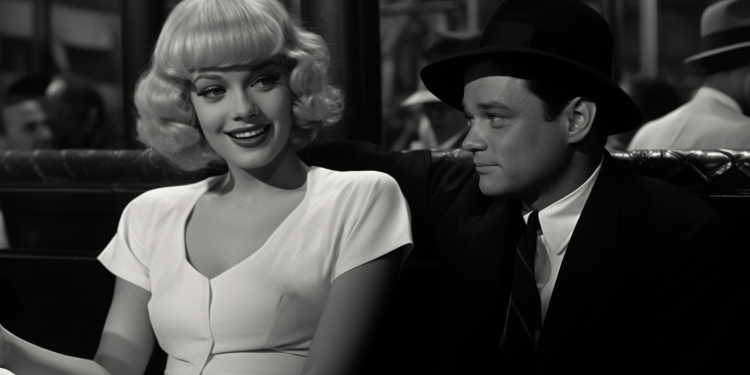
Ah, dialogue. Who can forget those immortal lines from “Gone with the Wind” or “The Maltese Falcon“? In classical Hollywood, dialogue wasn’t just speech; it was music, a lyrical progression that gave voice to a film’s emotional and thematic undercurrents. “Double Indemnity” serves as a fabulous example. The exchanges between Walter and Phyllis are replete with subtext, sexual tension, and a foreboding sense of doom—all wrapped in seemingly simple conversations.

For screenwriters looking for writing tips, studying the dialogue of these classical works can be incredibly enlightening. Look at how the dialogue serves multiple functions—advancing the plot, revealing character, and often, disguising the true intentions or feelings of the characters. It’s a lesson in economical writing; every word serves a purpose.

The Principle of Unity

Classical Hollywood films are studies in unity, where each element serves the larger story. Think of it as a form of thematic resonance. For instance, in “To Kill a Mockingbird,” the overarching theme of racial injustice is not just confined to the central courtroom drama but echoed in subplots and character arcs. Even the title itself is a metaphor for the unjust killing of innocence, which encapsulates the essence of the film.

In practical terms, this focus on unity suggests that when you’re writing a screenplay, you might consider how each subplot, each secondary character, or even each line of dialogue can be used to reinforce the central themes or emotional truths you’re exploring. This enhances the cohesiveness of the story, making it more compelling and resonant.

The Studio System and Its Impact on Writing

Now, let’s take a brief detour to talk about the unique environment that influenced screenwriting during this era: the studio system. Unlike the more decentralized landscape of today, classical Hollywood was dominated by a handful of major studios, each producing a conveyor belt of films to meet the insatiable demand for entertainment. Screenwriters often worked in-house, sometimes even in pairs or groups, churning out scripts under tight deadlines.

In this high-pressure ecosystem, the screenplay couldn’t be a meandering work of art; it had to be tight, engaging, and most importantly, sellable. That’s why screenwriters of that era were masters of trimming the fat, focusing only on elements that served the story or the characters. This is a key take-away for modern screenwriters: Be ruthless in your editing. If a scene, dialogue, or even a character doesn’t serve the narrative purpose or thematic goals, it’s worth reconsidering its place in your screenplay.

Applying the Craft: How to Integrate Classical Techniques into Modern Screenwriting

In the digital age, where screenwriting software can auto-format your script and platforms like Final Draft or Celtx offer a multitude of writing prompts, one may wonder, how relevant are the storytelling techniques from Classical Hollywood? The answer is resoundingly clear: incredibly relevant. The time-tested methods can not only add finesse to your screenplay but also offer you robust screenwriting tips for mastering the art of storytelling.

Narrative Economy and Focus

The first lesson to apply is narrative economy, a concept that classical Hollywood screenwriters excelled at. They had to; they were operating under the studio system that prized efficiency. Take “All About Eve,” for instance. The entire character arc of Eve Harrington unfolds meticulously within the boundaries of the theater world. No scene is superfluous; every line of dialogue serves a purpose.

To integrate this into your own writing, consider creating an outline where you scrutinize each scene for its utility. Does it move the plot forward, develop a character, or enrich the thematic texture of the screenplay? If not, out it goes. Tools like Scrivener can be exceptionally useful for rearranging scenes and examining the pacing of your story without getting lost in the text itself.

Multi-Dimensional Characters

Classical Hollywood was a treasure trove of rich, multi-dimensional characters. Remember Scarlett O’Hara or Atticus Finch? They were complex and flawed, but also deeply human. When writing a screenplay, take the time to flesh out your characters. Go beyond the surface-level traits and dig into their motivations, fears, and contradictions.

A useful exercise is to write character bios or conduct interviews with your characters. There are numerous writing tips to develop depth in your characters, but the key is to understand them as fully realized individuals, not just pegs to move your plot forward.

The Value of Subtext

Classical Hollywood teaches us the value of saying something without saying it directly—yes, the art of subtext. Dialogue laden with subtext not only adds layers to your characters but also enhances the emotional resonance of your script. Consider “Sunset Boulevard.” The dialogue between Norma Desmond and Joe Gillis is always about more than the words being spoken.

For instance, you could write a scene where a character says, “I love you,” or you could show them doing something that conveys love without saying the words. This is a crucial aspect of screenplay structure—ensuring that actions often speak louder than words.

Leverage the Three-Act Structure

Even in today’s fragmented narrative landscape, the three-act structure still has immense value. This framework, fine-tuned by classical Hollywood, provides a solid foundation for your story. Many of the writing prompts you might use can be adjusted to fit within this structure, creating a roadmap that guides your storytelling.

Here’s an actionable tip: After completing your first draft, identify the inciting incident, the midpoint, and the climax. Now see if these critical moments align with the transitions between your acts. If not, you might have to do some structural readjusting. This might sound basic, but you’d be surprised how many screenplays miss these key structural signposts.

Keep the Audience in Mind

Last but not least, let’s talk about the audience. Classical Hollywood was brilliant at balancing artistic intent with audience engagement. They knew how to entertain, evoke emotions, and sometimes even challenge societal norms—all while keeping the viewer hooked. When writing a screenplay, never lose sight of the experience you’re crafting for the audience.

Is your script engaging from the first page to the last? Does it have moments of levity, tension, and emotional payoff? Use screenwriting software to track pacing and emotional beats to ensure that you’re offering an engaging audience experience.

The beauty of screenwriting lies in its collaborative nature. We build upon the work of those who came before us. By understanding and applying the narrative techniques honed during Hollywood’s Golden Age, we can craft stories that are not only well-structured but deeply emotive. So, as you type away at your next screenplay, remember that you’re part of a rich, dynamic tradition—a lineage of storytellers who understood the irreplaceable power of a well-told tale.


✍️  Whether you’re mastering the art of dialogue, structure, or character development, the power of AI can be a game-changer in your writing journey. My Free Ebook, ‘AI for Authors’ delves into how AI-powered prompts can provide a unique edge to your storytelling process. If you’re intrigued by the prospect of supercharging your fiction skills, download your free copy today and explore new horizons in creative writing. 
Exploring the Complexity of ‘Lost’ (2004-2010)

The Unorthodox Narrative: A Look at ‘Lost’s’ Multilayered Storytelling

If you ever find yourself craving an example of storytelling that laughs in the face of conventional wisdom, look no further than “Lost.” Created by J.J. Abrams, Damon Lindelof, and Carlton Cuse, this genre-defying series was nothing short of a masterclass in narrative complexity.

Take, for example, the show’s revolutionary use of flashbacks. “Lost” didn’t just sprinkle them into the story; they were the story. Or at least, one layer of it. Each episode usually focused on a particular character and used flashbacks to delve into their backstory. Think about the episode “Walkabout,” where we discover, in a gut-punch of a reveal, that John Locke was paralyzed before crashing onto the island. These flashbacks didn’t serve merely as character development; they directly influenced the events happening in the present narrative. They were essential. And for anyone working on writing a screenplay, the takeaway here is clear: if you’re going to use a storytelling device, commit to it. Make it indispensable to your narrative, not just a decorative flourish.

The same holds true for the show’s later adoption of flash-forwards and flash-sideways, which added even more layers to an already intricate tapestry. Flash-forwards broke the temporal bounds, offering glimpses into future events, while flash-sideways explored alternative timelines or realities. Such bold narrative choices could easily have sunk a lesser show, but “Lost” managed to navigate these turbulent storytelling waters with aplomb.

This show wasn’t content with linear narrative. No, it toyed with temporality like a cat with a ball of yarn, except this yarn was woven with elements of science fiction, supernatural events, and deeply flawed, relatable characters. This is one of the most crucial screenwriting tips for writers keen on non-linear storytelling: Know your characters inside and out. Your audience will forgive a convoluted plot if they care about the people navigating it.

However, the innovative storytelling methods didn’t stop there. “Lost” also leveraged its episode and season arcs to build a larger, interconnected narrative. The individual stories served as pieces of a much larger puzzle, and figuring out how they all fit together was half the fun. This is a key point when considering screenplay structure in your own works. Make sure that your smaller arcs feed into the larger narrative. This doesn’t mean every subplot needs to contribute to the ‘main quest,’ but they should enrich the world you’re building, adding layers of complexity that reward viewers for paying attention.

The show’s experimental narrative didn’t come without risks. It’s not uncommon to hear critiques about how the show lost its way, or bit off more than it could chew. But whether you loved the series or hated it, you can’t deny its impact. “Lost” proved that audiences are not only capable of handling complex narratives but also hungry for them. As we discuss writing tips, it’s essential to note that taking risks can pay off in unexpected ways. Whether it’s the introduction of a surprise character or a plot twist that turns everything on its head, unexpected elements can elevate your screenplay from good to unforgettable.

Here’s where it becomes a lesson for budding screenwriters: “Lost” thrived on its complexities rather than shying away from them. And that’s a critical lesson in writing a screenplay. Often, we’re told to simplify, to streamline, to make our stories ‘accessible.’ While there’s value in clarity and coherence, “Lost” is a testament to the beauty of embracing complexity. If you make the narrative layers integral to your story, your audience will accept—no, relish—the challenge of untangling them.

Character Complexity: The Beating Heart of ‘Lost’

What made “Lost” so captivating wasn’t just its intricate plotlines and innovative structure; it was the characters who populated the mysterious island. In a manner that’s still studied in screenwriting workshops today, the show created multi-dimensional characters who were as complex as the world around them. Their internal struggles often mirrored the larger, external mysteries, making the character arcs indispensable to the overall narrative. And if you’re into writing tips, well, this is a golden one: your characters should be inextricably linked to your plot, each pushing the other toward a shared climax.

Let’s take, for instance, Jack Shephard, the de facto leader of the crash survivors. In a lesser show, Jack might have been a one-note hero, all nobility and courage. But “Lost” was never about simple characterizations. Jack was also deeply flawed—haunted by daddy issues, plagued by self-doubt, and, at times, his own worst enemy. His journey from a man of science to a man of faith is one of the most compelling arcs on the show.

Similar depth is found in Kate Austen, who is both a fugitive and a kind-hearted person seeking redemption. Or take Sawyer, the charming con-man with a tragic past. These aren’t just archetypes; they’re fully realized people. Their complexities make them relatable, even when they’re making infuriating decisions or shocking mistakes. That’s a lesson in writing a screenplay that’s not often highlighted but crucial: allow your characters to be flawed, let them make mistakes, and then let them face the consequences of their actions.

And oh, the consequences! “Lost” excels at what we might call “emotional payoff.” Think about the moment when Sun and Jin, two characters who’d been through hell and back both in their marriage and on the island, finally reunite. Their love story, filled with ups and downs, becomes a significant focal point, encapsulating the overarching themes of redemption and transformation. If you want a great writing prompt, consider this: Write a scene where two characters reconcile after a long separation, and let the moment be earned, filled with the weight of their shared history.

What set “Lost” apart was its ensemble cast, where every character had a role to play, and every role was essential. Just look at the so-called ‘tailies’ introduced in the second season. Characters like Ana Lucia, Libby, and Mr. Eko started as strangers, even antagonists, but soon became an integral part of the story. This is a crucial aspect of screenplay structure: your secondary characters should not be afterthoughts. They must serve a purpose, whether it’s to aid or obstruct your protagonist, reveal hidden truths, or add layers to your story’s world.

The character arcs in “Lost” also did a magnificent job of intersecting and diverging at crucial moments. The evolving relationship between Jack and Locke, for example, was a fascinating study of opposites. While Jack was a man of science, Locke was a man of faith. Yet, both were essential to the unfolding events on the island, and their interactions created some of the series’ most memorable moments. In your own work, consider how different character arcs can intersect, collide, or even mirror each other to create a richer narrative tapestry.

The takeaway here for aspiring screenwriters is profound yet simple: respect your characters. They are the lifeblood of your story. Spend time crafting their backstories, their personalities, and their flaws. Let them evolve, let them fail, and let them grow. And make sure that growth is reflected in the story you’re telling. Screenwriting tips often emphasize plot, dialogue, and structure, but it’s characters that provide the emotional core. When you get the audience to care deeply about the people in your story, you’ve won half the battle.

The Intertwined Threads of Theme and Mystery: Unraveling the Layers of “Lost”

“Lost” was not just a survival drama or a character study; it was also a mosaic of themes and mysteries that challenged viewers on multiple levels. The show deftly employed motifs ranging from religious iconography to philosophical questions, weaving them into the fabric of its island tapestry. But here’s the trick—the writers managed to connect the thematic elements to the character arcs and plot twists. There’s something to learn here for anyone who is interested in screenwriting tips: a theme isn’t just a topic, it’s an ongoing conversation between your story and your audience.

One of the most poignant themes of “Lost” is the concept of fate versus free will. While Jack Shephard fights to assert control, John Locke believes he’s been chosen for a higher purpose. These contrasting philosophies don’t just make for great character drama; they also directly impact the story’s events. The tension between control and destiny can be seen in the narrative choices the characters make—from decisions about leadership and alliances to the eternal question of whether to leave the island or stay.

Any discussion about theme would be incomplete without a mention of the iconic numbers 4, 8, 15, 16, 23, 42. These numbers recur throughout the series in uncanny ways, from the settings on a cursed lottery ticket to the serial numbers on a doomed aircraft. While they provide an intriguing puzzle for the audience, they also serve a deeper thematic purpose, representing the unpredictability of life and the ambiguity of luck. As a writing prompt, consider introducing an abstract concept, like a set of numbers or a recurring symbol, and then explore its thematic ramifications throughout your story. Trust me, your audience will love trying to decipher its meaning.

So, let’s talk about the elephant in the room: the show’s approach to resolving its mysteries. While “Lost” kept audiences hooked with its labyrinthine plot and enigmatic questions, it also faced criticism for leaving certain threads dangling. However, it’s essential to recognize that not every mystery requires an answer. Sometimes the question itself, or the journey to a possible solution, serves the narrative more effectively than a straightforward resolution. Take the “Hatch,” for instance. While its ultimate significance evolves throughout the series, the initial mystery of what lies within and who built it serves as a gripping focal point for the first couple of seasons. If you’re writing a screenplay, remember that pacing and suspense are crucial elements of screenplay structure; you don’t have to reveal all your cards at once.

One of the show’s boldest moves was its use of alternate realities in the final season, described as the “Flash Sideways.” These segments explored what life might have been like for the characters under different circumstances. This narrative device allowed the writers to delve into existential questions about identity, purpose, and the afterlife. If you’re looking for innovative writing tips, the use of alternate timelines or realities offers an excellent opportunity to explore “what if” scenarios that can shed light on your characters and themes.

The central question that “Lost” poses is perhaps the simplest yet most complex of all: what does it mean to be lost? Is it a physical state, an emotional maze, or a spiritual crossroads? The brilliance of the show lies in its refusal to provide easy answers. Through its complex characters, intricate plotlines, and layered themes, it invites the audience to get lost in order to find meaning.

Consider incorporating these layered elements into your own work. Puzzles and mysteries can provide the kind of intellectual engagement that complements emotional investment in characters. Themes allow for a more profound, even philosophical, engagement with your story. When combined effectively, these elements elevate your screenplay from mere entertainment to art.

And that’s the ultimate goal, isn’t it? To not just create a compelling story but to offer something that lingers, that provokes thought and emotional resonance long after the screen fades to black. Whether it’s through crafting intricate character arcs, embedding tantalizing mysteries, or weaving thought-provoking themes, aim to write a story that does more than just pass the time. Aim to write a story that enriches, challenges, and perhaps even transforms those who experience it.

The legacy of “Lost” serves as both inspiration and cautionary tale for aspiring screenwriters. If you’re ready to take your writing to the next level, delve deep. Ask big questions and dare to offer complicated answers. Create characters who live and breathe, who love and lose, who seek and discover. Bind them in a narrative that’s as complex as they are, and don’t shy away from the intellectual and emotional depth that can make your story unforgettable. Because in the end, what makes “Lost” a cultural phenomenon isn’t the answers it provides, but the questions it dares to ask. And isn’t that what great storytelling is all about?


✍️  Whether you’re mastering the art of dialogue, structure, or character development, the power of AI can be a game-changer in your writing journey. My Free Ebook, ‘AI for Authors’ delves into how AI-powered prompts can provide a unique edge to your storytelling process. If you’re intrigued by the prospect of supercharging your fiction skills, download your free copy today and explore new horizons in creative writing. 
Understanding Metacinema Through ‘Birdman’

Understanding Metacinema Through ‘Birdman’

“Birdman,” directed by Alejandro González Iñárritu, is a cinematic gem and nothing short of a masterclass in metacinema. Wait, did I lose you at “metacinema”? Let’s take it from the top.

What is Metacinema?

In the simplest terms, metacinema is a form of self-reflexivity in film where the movie is aware of its own existence as a cinematic work. This is like your script winking at the audience, saying, “Yeah, I know I’m a movie; what about it?” Films like Federico Fellini’s “8½” and Charlie Kaufman’s “Adaptation” are classic examples. This self-awareness allows the film to comment on the film industry, storytelling conventions, and sometimes even the audience itself. But, how does this concept tie into screenwriting? Well, if you’ve ever toyed with the idea of adding a meta-narrative to your screenplay, understanding how “Birdman” does it might just offer you some valuable writing tips.

How “Birdman” Encapsulates the Essence of Metacinema

“Birdman” takes metacinema to an almost absurd extent, but therein lies its brilliance. The movie is an exploration into the psyche of Riggan Thomson, a washed-up Hollywood actor known for a superhero role, attempting a comeback through a Broadway play. Sounds simple, right? But the way this film takes you on a roller-coaster through the mind of its protagonist while simultaneously questioning the nature of art, fame, and cinema itself is nothing short of magical.

The film employs various diegetic elements, such as an intrusive drum score that’s part of the environment, to underline its meta aspects. You hear the drums because Riggan hears them. We are as much inside the movie as the movie is inside its own world. That’s metacinema at its peak. This technique could be an exciting exercise for those interested in enriching their understanding of screenplay structure through experimental methods.

If you’re keen on writing a screenplay that dips its toes into metacinema, “Birdman” shows how essential it is to commit to your concept fully. The film never breaks character. Even when it’s openly critical about the Marvel-dominated blockbuster culture in Hollywood, it stays within its universe’s boundaries, making it an organic part of the story rather than a mere gimmick.

The Film’s Take on the Movie Industry, Fame, and Artistry

What really sets “Birdman” apart, making it an essential case study for those interested in creative writing and screenwriting tips, is its unabashed look at the contrast between Hollywood and Broadway, between spectacle and art. Riggan Thomson is a character in crisis, not just personally, but also as a symbol of the anxiety many creators feel in the modern age. In a world where tweets can define your career, and comic book heroes are the pinnacle of success, what room is there for ‘true art’?

This is where the metacinematic aspect shines: it adds depth to the screenplay, serving as a lens through which we view not just Riggan, but the state of the modern entertainment industry. Iñárritu uses this film to explore the disconnect between celebrity and talent, between recognition and self-worth. These are universal themes that any writer can tap into, offering a well of inspiration and writing prompts for your own projects.

“Birdman” also dares to ask uncomfortable questions about the compromises artists make for fame. Are you still an “artist” if you’re more concerned with social media metrics than the art itself? This film makes us confront these uneasy realities, making it more than just a story, but a commentary on storytelling itself.

Crafting Multi-Dimensional Characters in a Meta-World

Alright, we’ve dived into the concept of metacinema and how “Birdman” masters it. Now let’s talk about something equally fascinating and challenging: creating characters that resonate in a meta-world. And who better to study than Riggan Thomson and his entourage?

Layering Your Protagonist: The Many Facets of Riggan Thomson

If you’re going to pull a “Birdman,” i.e., write a screenplay steeped in metacinema, then your characters can’t be mere placeholders; they have to embody the very meta essence of your narrative. Riggan Thomson, played masterfully by Michael Keaton, is a fantastic starting point. The guy is an actor, struggling to adapt a Raymond Carver story into a play, while haunted by his past as Birdman, a fictional superhero he once portrayed. Sound convoluted? It’s actually layers, each adding more complexity, mirroring issues that real actors and artists often face. It’s about as meta as character development gets, and it offers essential screenwriting tips for crafting layered characters.

The Dialogue: Real Words in a Surreal World

Ah, the dialogue in “Birdman”—it’s another gem. Screenplays often suffer from the ‘too perfect’ syndrome. You know, characters uttering lines that sound brilliant but are entirely too polished to be believable? “Birdman” avoids this pitfall. The dialogue is naturalistic, filled with interruptions and half-spoken thoughts, just like how people speak in the real world. Yet, these conversations unfold in a surreal, dream-like environment, emphasizing the disconnect between Riggan and his world.

Take, for instance, the scene where Riggan confronts the critic who has the power to make or break his play. His tirade against her represents the frustrations many creators face today—being judged by people who have never stood in their shoes. The dialogue isn’t just a conversation; it’s a microcosm of the entire film industry, encapsulated in a single heated exchange. If you want to master writing a screenplay that deals with industry-specific issues, this movie teaches you how to do it in a way that doesn’t alienate your audience.

The Supporting Characters: Mirrors and Foils

In “Birdman,” each supporting character serves as either a mirror or a foil to Riggan, thereby enhancing the screenplay structure in subtle ways. Let’s talk about Sam, Riggan’s daughter, played by Emma Stone. She reflects Riggan’s insecurities and fears but from the perspective of a younger generation cynical about fame and the sacrifices made for it.

Then there’s Mike Shiner, played by Edward Norton, who is the antithesis of Riggan in many ways. He’s all about the craft and has little regard for fame, a jarring counterpoint to Riggan’s own insecurities about relevance and legacy. When writing characters in your screenplay, think about how each one can reflect or contrast with your protagonist. This technique gives your story more depth and provides the audience with different lenses to view the main character.

Complexity Through Simplicity: Keep it Real

You don’t have to make your characters philosophers or poets to impart wisdom. Sometimes, the most straightforward dialogues and actions can convey complex ideas. Remember the scene where Riggan attempts to float in his dressing room, showing his yearning for significance and control? It’s a simple scene but packed with subtext and unspoken thoughts. If you’re searching for writing prompts to craft such moments, think about what your characters want deep down and how those desires manifest in small, seemingly inconsequential ways.

Playing with Form and Function: The Technical Brilliance of ‘Birdman’

Alright, storytelling and character development aside, we have to talk about how “Birdman” is a masterclass in the technical aspects of filmmaking and, most crucially, screenwriting. The movie isn’t just a narrative; it’s an experience, and that is achieved through clever technical choices that you can also incorporate into your own scripts.

The “One-Shot” Illusion: Crafting a Fluid Narrative

In “Birdman,” the technique of simulated ‘one-shot’ is a game-changer. This visual choice was, no doubt, a directorial decision by Alejandro González Iñárritu, but it reflects the fluidity that you can bring to screenplay structure. While a typical script is broken down into scenes, acts, and sequences, consider how the pacing and flow between these elements can serve your story. In the case of “Birdman,” the one-shot illusion amplifies the claustrophobic, inescapable world Riggan is trapped in, keeping the viewer invested and disoriented, just like the characters.

The Sound of a Crumbling Psyche: Jazz Drums

Sound design isn’t something you’d usually consider when writing a screenplay, but remember, you’re crafting an experience, not just writing words on a page. In “Birdman,” the jazz drum score by Antonio Sánchez is an essential element. It’s erratic, unpredictable, and it deepens the sense of urgency and confusion throughout the movie. How can you script this in? Simple. Use occasional notes in your screenplay to suggest a type of music or sound that captures the essence of the scene. For instance, writing tips often suggest using parentheticals or dedicated lines to suggest moods; why not use them for soundscapes too?

Meta-Elements and Breaking the Fourth Wall

In “Birdman,” the camera isn’t just a silent observer; it’s an active participant. Similarly, the characters aren’t confined by the invisible ‘fourth wall.’ Riggan, at times, directly addresses the audience or seems to be aware of the camera’s gaze. Breaking the fourth wall can be a powerful tool in scriptwriting when used judiciously. It’s a way to comment on the story within the story, a meta-acknowledgment that can enrich your narrative. This technique isn’t new (remember “Ferris Bueller’s Day Off”?) but in the context of a meta-cinematic work, it gains another layer of complexity.

Balancing Substance with Style

Technical brilliance shouldn’t overshadow substance. “Birdman” doesn’t just rely on its unique presentation to impress; the screenplay is dense with subtext and themes that resonate. When you’re working on your screenplay, using clever formatting or unconventional structure can give it flair, but never let style become the story. The unique presentation should serve to accentuate your core message, not replace it.

Writing Prompts to Boost Creativity

Now, let’s get practical. If you’re intrigued by the potential of using advanced techniques in your screenplay, here are some writing prompts to consider:

  1. Fluid Narrative: Write a scene where the transition to the next is seamless, either through match cuts or thematic elements.
  2. Soundscapes: Pick a scene in your script and write a detailed note on what the background score or ambient noise should convey emotionally.
  3. Breaking Boundaries: Script a moment where a character briefly acknowledges the audience or becomes aware of their fictional nature.

In summary, “Birdman” is more than just a movie; it’s a lesson in the capabilities of screenwriting to transcend traditional storytelling. Its seamless blend of content and form, narrative and meta-narrative, makes it a benchmark for aspiring screenwriters. The film teaches us to be bold, to experiment, but most importantly, to imbue every element of our script with meaning and intent. The style isn’t just style; it’s substance too, echoing the complexities of the world it mirrors. That’s not just effective screenwriting—that’s art.


✍️  Whether you’re mastering the art of dialogue, structure, or character development, the power of AI can be a game-changer in your writing journey. My Free Ebook, ‘AI for Authors’ delves into how AI-powered prompts can provide a unique edge to your storytelling process. If you’re intrigued by the prospect of supercharging your fiction skills, download your free copy today and explore new horizons in creative writing.