Unveiling the Supernatural: The Fantasy Worlds of P. Djèlí Clark

Introduction: Who is P. Djèlí Clark and Why Should You Care?

Ah, the allure of a fantasy world—where myth and reality blur, history takes flight, and folklore gains a pulse. Enter P. Djèlí Clark, an author whose storytelling transcends mere escapism to serve up lessons in history, identity, and the sheer scope of what speculative fiction can achieve. If you’re a budding author searching for a masterclass in creative writing, you’ll find Clark’s works to be a veritable goldmine. But let’s not get ahead of ourselves; let’s first get to know the man behind these captivating worlds.

Born Phenderson Djèlí Clark, the writer is a brilliant blend of academic and fantasist. With an academic background in history, he brings a level of authenticity to his fantastical landscapes that sets him apart from his peers. Clark was born in Queens, New York, to immigrant parents, giving him a unique perspective on identity and belonging—a recurring theme in his works.

His writings, such as “Ring Shout,” “The Haunting of Tram Car 015,” and “A Dead Djinn in Cairo,” transcend mere storytelling. They are, in essence, a dance between historical epochs and supernatural elements. Set against a backdrop of actual events, with just enough speculative fiction elements to make them otherworldly, these works offer compelling narratives that push the boundaries of fantasy fiction. You see, Clark doesn’t merely borrow elements from folklore and history; he deconstructs them, interweaves them, and builds them up into something uniquely his own.

Clark has received several awards and nominations for his works, further establishing his prominence in the fantasy genre. To date, he’s won a Nebula Award, a Sturgeon Award, and has been a finalist for the Hugo, Locus, and World Fantasy awards. But more than accolades, what makes Clark’s works truly relevant, especially for aspiring writers, is the transformative experience they offer. Each piece serves as an example of how to construct worlds that are both whimsical and resonant. It’s a blend of historical depth and fantastical whimsy that can guide those aiming to improve their writing skills.

Another important facet of Clark’s oeuvre is the representation he brings to the table. Fantasy has long suffered from a lack of diversity, often featuring Eurocentric settings and characters. Clark breaks this mold, offering up worlds populated by diverse characters and influenced by various cultural mythologies and histories. His work challenges the norm and, in doing so, expands the boundaries of what fantasy can be.

So, what makes Clark such a magnetic north for aspiring writers? For one, his works defy classification. Yes, they are fantasy, but they are also historical fiction, mystery, and social commentary—all rolled into one. For another, his prose is finely tuned, carrying the reader effortlessly from scene to scene, while his characters breathe, ache, and celebrate in ways that make them come alive off the page. For anyone contemplating writing a novel that combines multiple genres, studying Clark’s works provides a robust blueprint.

But perhaps the most rewarding aspect of delving into Clark’s works lies in the discovery of how much room there still is for innovation in storytelling. It’s an inspiring thought for anyone looking to pick up the pen and start writing. While Clark’s works may be a fusion of many different elements, they resonate as a harmonious whole. They are, in many ways, a love letter to storytelling itself—an expansive view of what stories can do, and what they can be. For those eager to plunge into creative writing, his works are not merely entertainment but an invitation—a call to explore, innovate, and ultimately, to transform the way we think about storytelling.

Mastering the Blend: Clark’s Unique Approach to Fantasy and History

Have you ever tried making a cocktail? If so, you know that the right blend of ingredients can elevate the drink from good to extraordinary. That’s precisely what P. Djèlí Clark does with his unique approach to storytelling—he creates a narrative cocktail of folklore, mythology, and historical elements that leaves readers both captivated and thoughtful.

Now, this is easier said than done, right? But here’s the thing: Clark’s mastery lies in his deep understanding of these different elements. Consider “Ring Shout,” for instance. On the surface, it’s a tale of monster hunters in the American South, but dig deeper and you’ll find a vivid exploration of the horrors of the Ku Klux Klan and the African American experience. Clark uses Gullah folklore to reframe a historical tragedy as a supernatural horror story, challenging the reader to question the nature of monsters in our world.

So, how does Clark deftly blend history with fantasy elements? One technique he employs is layering. He often starts with a base of actual historical events or settings, over which he layers elements of mythology, folklore, or outright fantastical imagination. This creates a sense of depth and authenticity that makes his worlds feel real and lived-in. It’s like reading a historical novel and a fantasy epic rolled into one, without either feeling out of place.

Aspiring novelists, take note. Achieving this blend between fact and fantasy starts with research. You must know the history you are building upon as thoroughly as the back of your own hand. This provides a sturdy foundation for the fantastical elements you’ll introduce. And this doesn’t mean you must have a history degree; even well-researched books, documentaries, or interviews can serve as valuable resources. For those wanting to improve their writing skills, understanding how to weave in details gleaned from such research can offer a tangible sense of time and place, enriching the world you’re building.

A significant part of Clark’s success also lies in his narrative techniques. He knows how to pace his stories, when to reveal crucial information, and how to keep the reader engaged. While the storytelling in “A Dead Djinn in Cairo” leans on mystery and investigation, “The Black God’s Drums” employs an adventure structure to keep the pages turning. His narrative choices are not arbitrary; they serve the larger story he’s telling. Clark has a knack for knowing when to let the historical backdrop take center stage and when to let the fantastical elements shine, allowing for a balanced narrative that feels neither forced nor contrived.

Now, here are some writing tips to help you master this balancing act when writing a novel. First, don’t feel obligated to explain every historical or mythical element you introduce. Over-explanation can bog down your story, derailing the narrative flow. Be judicious in what you elaborate upon; sometimes, a hint or a subtle nod is sufficient to convey meaning.

Secondly, make your characters the bridge between the historical and the fantastical. The more authentic your characters are, especially in their interactions with the world around them, the more seamlessly these elements will blend. Like Clark, use your characters to challenge stereotypes and societal norms, offering a fresh perspective that can make even well-trodden historical settings feel new and invigorating.

Another piece of advice is to create your own ‘lore book’ as you go along. This is a personal repository of all the historical facts, mythical creatures, or folklore tales that populate your world. It helps maintain consistency in your storytelling and serves as a quick reference guide. You could even expand it into writing prompts to explore side stories or character backstories that can enrich your main narrative.

The most important tip? Don’t be afraid to break the rules. After all, Clark’s work stands out precisely because he doesn’t confine himself to the norms of any single genre. Take risks with your narrative. Mix elements that traditionally may not go together. It’s your world; you get to build, or break, the rules.

Applying Clark’s Magic: How to Infuse Your Own Work with Supernatural Charm

By now, you’re probably as enchanted by P. Djèlí Clark’s storytelling as I am. His unique way of blending the concrete with the ethereal provides a masterclass in genre-melding. So, let’s talk about how to bring a little of Clark’s magic into your own creative endeavors, shall we?

Steps to Improve Writing Skills Inspired by Clark’s Storytelling

1. Study the Masters: Before you attempt any blending of genres, get well-versed in each. If you want to combine history with fantasy, make sure you’re reading widely in both categories. Clark’s expertise in history and folklore didn’t happen overnight.

2. Blend Like a Pro: As we mentioned, Clark is excellent at blending elements of the real and the fantastic. Practically, this means your first draft might be a bit lopsided. Don’t worry! Keep refining. Look for elements that either pull the reader too far into fantasy or trap them in the mundane. Your job is to balance the scales.

3. Character Depth: Make your characters the vehicles for your world’s unique blend. If you’re working in a historical setting, use the attitudes, dialects, and concerns of the time to color your characters’ dialogue and choices. When you introduce a fantastical element, let the characters react in a way that feels genuine to their historical context.

4. Don’t Explain, Show: If you’re introducing a magic system or mythical creature, you don’t always have to give a lengthy exposition. Clark often uses context or character reactions to convey the importance or mechanics of a supernatural element.

5. Iterative Feedback: One of the best ways to improve writing skills is by seeking feedback. The more diverse the better. Some readers might catch historical inaccuracies, while others will focus on how engaging your fantastical elements are. Take all the feedback in stride and refine your work.

Practical Writing Prompts to Kickstart Your Supernatural Journey

If you’re staring at a blank screen, sometimes all you need is a little nudge. Inspired by Clark’s work, here are some writing prompts to get you started:

  1. Write a scene where a historical figure encounters a mythical creature. How does the meeting challenge or reinforce the figure’s known beliefs or attitudes?
  2. Envision a world where a significant historical event turned out differently because of supernatural interference. What are the consequences?
  3. Create a protagonist who is a scholar of folklore. What happens when they discover that one of their academic subjects is not only real but also in need of scholarly intervention?

Words of Encouragement: Be Fearless

Writers, especially new ones, often stick to what they know. It’s safer, less intimidating. But remember, Clark stepped beyond traditional boundaries, mixing elements that many would consider incompatible. Why? Because he understood that stories live and breathe in the grey areas, those in-between spaces where rigid categories overlap.

Don’t be afraid to step outside of your comfort zone. Challenge yourself to blend genres, even if it feels unnatural at first. Every great storyteller started as an amateur, and every seasoned writer was once where you are now—on the brink of something new and magical.

So, whether you’re looking to write your first fantasy novel or you’re an experienced writer trying to stretch your creative wings, take some inspiration from P. Djèlí Clark. The boundaries of genre, after all, are just invitations to cross over into new realms. Your journey into the supernatural awaits, and it promises to be as exhilarating and educational as any adventure Clark has penned.

It’s time to brew your own narrative potion, combining the lore of old and the imagination of the new. Your writing cauldron is bubbling with potential; all it needs is for you to dare, to try, and to write. So, go ahead, add your unique ingredients and stir the pot. Your own magical blend of storytelling is waiting to be discovered, and who knows? The results might be spellbinding.


✍️  Whether you’re mastering the art of dialogue, structure, or character development, the power of AI can be a game-changer in your writing journey. My Free Ebook, ‘AI for Authors’ delves into how AI-powered prompts can provide a unique edge to your storytelling process. If you’re intrigued by the prospect of supercharging your fiction skills, download your free copy today and explore new horizons in creative writing. 

Adventures in Adaptation: ‘Alice in Wonderland’ (2010)

Introduction: Falling Down the Rabbit Hole

When Lewis Carroll penned his hallucinogenic tale “Alice’s Adventures in Wonderland” in 1865, it’s doubtful he foresaw just how far-reaching his creation would be. The story has not only been translated into more than 97 languages, but it’s also been adapted, re-adapted, and re-imagined across a myriad of mediums—from stage plays to video games. This speaks volumes to Carroll’s storytelling prowess and the malleability of his narrative. But one adaptation that stands out in its audacity and flair is Tim Burton’s 2010 film, “Alice in Wonderland.”

Burton is no stranger to the absurd or the whimsical, but even for him, adapting Alice was a high-stakes gamble. For starters, this wasn’t just any children’s story; it’s a tale deeply ingrained in collective cultural memory. It comes with a set of expectations, and Burton, being Burton, didn’t shy away from turning some of these expectations on their heads.

Before digging deeper, let’s address the mammoth in the room: adaptation itself. Adapting a book into a screenplay is a Herculean task for any filmmaker. For the uninitiated, writing a screenplay differs significantly from writing a novel or a short story. The visual grammar, pacing, and yes, the screenplay structure, all have their unique requirements and limitations. What works in a 300-page novel could become cinematic molasses if translated shot-for-shot onto the screen. Conversely, what seems skimpy on page could turn into a moment of pure cinematic gold.

Now, why focus on the screenplay structure? Well, if a narrative were a building, its screenplay structure would be its architectural blueprint. It provides the skeleton around which the meat of dialogue, character interaction, and visual imagery hang. With Alice, both Carroll and Burton display a mastery of their respective mediums. Carroll’s unstructured structure—episodic and dream-like—echoes the chaotic and boundless imagination of a child. On the flip side, Burton leans into the filmic language, ramping up conflicts and introducing a more archetypal villain in the Red Queen to propel the plot.

The rules of the game change dramatically when a classic like “Alice’s Adventures in Wonderland” is brought into the fray. It’s not just about staying faithful to the source material; it’s also about offering something new, something that warrants its existence as a separate entity. Here, Burton didn’t merely want to retell Alice’s story; he wanted to reinvent it, asking the question: What if Alice, now 19, returns to Wonderland, or as it is known here, Underland? This twist allows for character development while still keeping the essential whimsy and absurdity intact.

By deconstructing the narrative norms and pushing the boundaries of what we expect from an ‘Alice’ story, Burton creates a hybrid—a familiar tale with unfamiliar trappings. The Mad Hatter is no longer just a lunatic; he’s a freedom fighter. Alice isn’t just a girl lost in a dream; she’s a warrior destined for greatness. This isn’t your grandmother’s Alice; it’s an Alice for a new generation, and the difference lies in Burton’s screenplay structure. He retains essential elements like the Mad Tea Party, but they serve a broader narrative arc, making the story feel fresh yet familiar.

Writing a screenplay that both honors and innovates is a high-wire act. There are lessons here for anyone daring enough to adapt a classic. Burton’s Alice serves as a reminder that adaptation doesn’t mean replication. A successful adaptation, like any good piece of writing, comes with its unique voice and perspective. It takes risks, fiddles with the familiar, and in doing so, often makes us appreciate the original even more.

Through the Looking-Glass: Comparing Narratives

When we talk about “Alice in Wonderland,” it’s almost impossible not to delve into the labyrinth of differences between the Lewis Carroll original and Tim Burton’s film adaptation. Understanding these variations not only offers a glimpse into the idiosyncrasies of each medium but also serves as a practical workshop in the art of adaptation.

Let’s kick things off with the most glaring disparity: the narrative itself. In the book, Alice is a young girl navigating a whimsical and often nonsensical world, driven more by curiosity than by any overarching quest. Carroll employs an episodic structure, which allows Alice to roam freely and stumble upon one strange creature after another. It’s more about the journey, less about the destination.

In contrast, Tim Burton sets the stakes high from the get-go. Alice is no longer the little girl we remember; she’s a 19-year-old on the cusp of adulthood. Burton doesn’t just adapt the original narrative but blends in elements of Carroll’s sequel, “Through the Looking-Glass,” thereby offering us an Alice more complex and fraught with existential worries. By doing this, Burton essentially altered the screenplay structure to create a more linear, goal-oriented story, which is typically more palatable for contemporary audiences weaned on the Hero’s Journey and three-act structures.

So, what can budding screenwriters take away from this duality of storytelling methods? One key lesson is the importance of understanding your audience. Carroll wrote for a Victorian audience where the appeal lay in wit, wordplay, and episodic whimsy. Burton, on the other hand, adapted his version for a 21st-century audience, who often seek stories that offer not only escapism but also a character arc and closure.

The second takeaway revolves around what I’d like to call ‘purposeful deviation.’ If you’re writing a screenplay based on existing material, don’t be afraid to put your spin on it. For instance, you might find screenwriting tips that advocate for staying true to the source material, but adherence shouldn’t mean a lack of innovation. Burton brought in his unique visual style and thematic concerns (like Alice’s empowerment) that weren’t as pronounced in the original tale, providing a fresh take on a well-trodden story.

For those of you looking to adapt classics or even not-so-classics, a study of real-world examples can be enlightening. For instance, consider Peter Jackson’s “The Lord of the Rings” trilogy, where fidelity to J.R.R. Tolkien’s text was balanced with the demands of cinematic storytelling. The adaptation succeeded because it managed to capture the essence of the source material while making necessary adjustments for a different medium. Conversely, examples like the 2012 film “John Carter,” adapted from Edgar Rice Burroughs’ pulp novels, offer cautionary tales in how not to adapt. The movie faltered partly because it couldn’t decide whether to be faithful to the books or to reinvent them, resulting in a muddled narrative that pleased neither fans of the novels nor newcomers.

To sum up, the art of adaptation is a tightrope walk that demands a deep understanding of both the original narrative and the medium you’re adapting it into. In the case of “Alice in Wonderland,” the deviations in screenplay structure and narrative themes serve to enhance the story’s relevance and relatability to modern viewers. So the next time you’re knee-deep in writing a screenplay based on an existing work, remember: it’s not just about what you keep, but also about what you change and why.

Mad Hatter’s Tips: Learning from the Adaptation

At this point, it’s evident that Tim Burton’s “Alice in Wonderland” offers a trove of lessons in the art of adaptation, a playground of inspiration for any aspiring screenwriter. But how can you apply what you’ve observed from Burton’s Wonderland to your own projects? How do you honor the integrity of the original while also liberating your unique vision? Grab your pens and notebooks, dear writers; it’s time for some practical advice.

Writing Tips for Aspiring Screenwriters

If you’re new to the adaptation game, the first tip is to intimately understand your source material. Reading Lewis Carroll’s original work and its sequel, “Through the Looking-Glass,” should be a no-brainer. But don’t just read; analyze. Notice the recurring themes, character dynamics, and narrative techniques. This will not only help you decide what to keep but also guide you in augmenting these elements to fit your vision and medium.

As you dive into writing a screenplay, one thing to remember is: Film is a visual medium. Where Carroll could afford to dwell on verbal wit and intricate dialogues, your screenplay needs to translate these elements into visual storytelling. For example, instead of a verbose Cheshire Cat, Burton uses striking visual effects to bring the creature’s mystery to life.

Creating a Unique Vision While Honoring the Original

One of the key aspects where Burton succeeds is in incorporating his distinct visual style—Gothic aesthetics, elaborate costumes, and surreal landscapes—without veering too far from Carroll’s whimsical universe. That’s your next tip: Own your uniqueness as a screenwriter but ensure it complements the essence of the original story. It’s a fine line to walk, but as you gain more experience in screenwriting, understanding this balance becomes second nature.

If you’re wondering how to practically do this, start by outlining your screenplay. A well-thought-out screenplay structure not only maintains the pacing but also lets you decide where to stick to the original and where to add your personal touches. For instance, in the case of Burton’s Alice, a major departure is her age and the ‘Hero’s Quest,’ which isn’t in the book but serves his vision of a more mature, empowered Alice.

Screenwriting Prompts Inspired by ‘Alice in Wonderland’

For those who learn by doing, here are some screenwriting prompts to get your creative gears turning:

  1. Write a short scene where a modern Alice encounters a technology-driven Wonderland.
  2. Imagine a twist where Alice is not a visitor but a resident of Wonderland trying to escape. Write the opening scene.
  3. Take a secondary character like the Mad Hatter or the Queen of Hearts and reimagine them as the protagonist. What would their story look like?

Encouragement for Writers to Experiment with Adaptations

Look, tackling adaptations might seem like a daunting task, especially when handling classics, but don’t let that intimidate you. Think of it more as a collaboration with the original author across time and space. It’s your chance to contribute to an ongoing conversation, to revitalize an old tale for a new generation.

If you need further inspiration, study the works of those who’ve successfully translated literature to cinema. Films like “To Kill a Mockingbird” and “The Godfather” have shown that with the right approach, an adaptation can not only honor its source but also become a classic in its own right. So go ahead, pick up that book you’ve always loved, analyze its elements, and give writing a screenplay a shot.

In essence, the adventure of adaptation is much like Alice’s journey through Wonderland: filled with unexpected challenges, delightful surprises, and transformative experiences. Each project is a new rabbit hole, and who knows what creative wonders await you on the other side? So take that plunge, dear writers, and may your pens be as mighty as the Vorpal sword!


✍️  Whether you’re mastering the art of dialogue, structure, or character development, the power of AI can be a game-changer in your writing journey. My Free Ebook, ‘AI for Authors’ delves into how AI-powered prompts can provide a unique edge to your storytelling process. If you’re intrigued by the prospect of supercharging your fiction skills, download your free copy today and explore new horizons in creative writing. 

Quentin Tarantino and the Art of Non-Linear Storytelling

Quentin Tarantino’s Cinematic Revolution

If the 1990s were a renaissance for indie films, then Quentin Tarantino was its Michelangelo. Bursting onto the scene with “Reservoir Dogs” in 1992, this self-taught filmmaker didn’t just nudge the boundaries of cinema; he annihilated them. Violent, verbose, and packed with vintage vibes, a Tarantino movie is an experience—almost a genre in itself. But what makes his films unforgettable is the clever use of non-linear storytelling.

In a Tarantino flick, time isn’t just fluid; it’s a character. Whether it’s the scrambled timelines in “Pulp Fiction” or the retrospective storytelling in “Once Upon a Time in Hollywood,” Tarantino knows how to keep viewers on their toes. The conventional three-act screenplay structure is often subverted, and yet the storytelling is so compelling that you can’t look away. That’s an artistic achievement, but it’s also an artifice that demands a deep dive. In the world of screenwriting tips and tricks, Tarantino is a treasure trove.

So, why should we bother understanding this seemingly chaotic way of storytelling? Because, my friends, screenwriting isn’t just about laying down words on a page; it’s about crafting an experience. And as any aspiring screenwriter knows, breaking the mold without alienating the audience is the Holy Grail of storytelling. Tarantino does that with the flair of a maestro, making him a subject worth studying.

Now, you may think Tarantino’s cinematic language is difficult to decode. However, this isn’t hieroglyphics we’re talking about; it’s a conscious bending of narrative norms to evoke specific emotions or to underline specific themes. And the man himself is a self-taught filmmaker who drew inspiration from the treasure chest of world cinema—from French New Wave to spaghetti Westerns to Hong Kong action flicks. He synthesizes these elements into something uniquely Tarantino-esque, creating a cocktail of visual, auditory, and emotional stimulation.

Let’s talk about “Kill Bill” for a moment, as it’s a film that epitomizes the Tarantino touch. What appears as a violent revenge drama is actually an intricate weave of flashbacks, pop-culture references, and homages to genres like the samurai film and the spaghetti Western. But there’s a method to this madness. As viewers, you are required to assemble these fragments into a coherent whole. It’s like receiving pieces of a puzzle in a random order and realizing that each piece is a mini-artwork in itself. Once you put them together, you end up with a narrative masterpiece that stands out in its own right.

Tarantino’s style isn’t just about shattering norms; it’s about questioning the very nature of storytelling. Why does a story have to be linear? Who decides the rules of pacing, climaxes, or catharsis? When you watch a Tarantino film, you’re not a passive consumer; you’re an active participant, piecing together the narrative, questioning motives, and rethinking chronology.

The concept of non-linear storytelling isn’t exclusive to Tarantino, of course. The narrative device has roots that go back to literature and older cinematic traditions. But few have mastered the art of out-of-sequence storytelling with such finesse, where each timeline or scene is like a mini-movie with its own arc, tone, and climax.

Learning from Tarantino’s approach offers a fresh perspective, especially for those interested in writing a screenplay that transcends the usual A-to-B storytelling. While the non-linear structure could risk confusing the audience, Tarantino uses it as a tool for engagement. It adds layers of complexity, demands attention, and most importantly, it makes for a gripping cinematic experience.

The Mechanics of Non-Linear Storytelling in Tarantino’s Films

If storytelling were cooking, Quentin Tarantino would be the chef who doesn’t just follow a recipe; he reinvents it each time he steps into the kitchen. His use of non-linear storytelling is like culinary art, using narrative ingredients in unconventional ways to cook up something extraordinary. Let’s look under the hood and understand how Tarantino achieves this narrative wizardry.

Exploration of the Multi-Threaded Narrative in “Pulp Fiction”

Perhaps the most quintessential example of Tarantino’s narrative prowess is the legendary “Pulp Fiction“. Rather than sticking to one cohesive story, the film tells multiple tales that seem independent but ultimately interconnect in the most unexpected ways. The narrative threads range from a crime boss’s wife overdosing on heroin to two hitmen debating the ethics of foot massages. While these stories could stand alone, their interweaving lends greater weight and complexity to the overall narrative.

If you’re writing a screenplay and wish to dabble in multi-threaded storytelling, the first screenwriting tip here is to ensure that each thread is compelling enough on its own. This not only adds layers to your story but also builds an intricate puzzle that the audience will love to solve.

Analyzing the Use of Flashbacks in “Reservoir Dogs” and “Once Upon a Time in Hollywood”

Flashbacks are a staple in cinematic storytelling, but Tarantino elevates this technique to a whole new level. Take “Reservoir Dogs” for example. The film doesn’t just use flashbacks to provide backstory; it employs them to alter the audience’s perception of the characters in real-time. We learn about Mr. Orange’s identity just as we’re getting to know him, and this changes everything about how we view the unfolding drama.

Similarly, in “Once Upon a Time in Hollywood,” Tarantino uses flashbacks not merely as narrative devices but as thematic echoes. These flashbacks don’t just inform the audience; they comment on the state of Hollywood, the nature of stardom, and the inevitability (or lack thereof) of historical events.

The lesson here for aspiring screenwriters is to use flashbacks not just as a plot device but as a storytelling tool that can add depth, context, and thematic resonance to your screenplay.

How Tarantino Manipulates Time to Create Suspense

The conventional wisdom in screenwriting is to use real-time sequences to ramp up tension. Tarantino takes this a step further by manipulating time itself. Consider the famous basement bar scene in “Inglourious Basterds“. The sequence plays with time by interspersing dialogue with moments of extreme tension, stretching what should be a ten-minute conversation into a suspenseful half-hour.

When aiming to add suspense in your screenplay, don’t just think linearly. Consider how you can shuffle time to raise stakes or draw out tension. By stretching or compressing time, you can influence the audience’s emotional experience.

Screenwriting Tips for Crafting Non-Linear Narratives

So, you’re excited about weaving non-linear narratives into your own scripts? Fantastic! But here are a few screenwriting tips to keep in mind:

  1. Clarity Over Complexity: Complexity can add richness to your story, but it should never come at the expense of clarity. Make sure the audience can follow along.
  2. Purposeful Non-Linearity: Don’t make your story non-linear just for the sake of it. It should serve a purpose—either thematic, emotional, or narrative.
  3. Anchor Points: Provide anchor points in your story that help the audience orient themselves in the timeline. This could be a recurring character, a memorable event, or even a simple McGuffin.
  4. Relevance: Each plot twist, flashback, or time jump should serve to advance your story or deepen your characters. If it doesn’t, it might just be a flashy gimmick

Applying Tarantino’s Techniques to Your Own Screenwriting

Roll up your sleeves, it’s time to get our hands dirty in the creative trenches of screenwriting. By now, we’ve marveled at Quentin Tarantino’s virtuosic approach to non-linear storytelling. But, admiration without application is like a car without fuel; it won’t get us anywhere. So, let’s explore how you can apply some of that Tarantino magic to your own scripts.

How to Approach Writing a Screenplay with a Non-Linear Structure

If you’re itching to break the linearity of conventional storytelling but aren’t sure where to start, here’s a simple writing tip: brainstorm multiple outcomes for key events in your story. Like a Choose Your Own Adventure book, jot down different avenues your characters might take. Now, instead of selecting the most compelling path, why not use them all? Shuffle the sequences and reassemble them in a way that brings a new texture to your tale. Trust me, the exercise is not just liberating but incredibly illuminating; you’ll discover narrative connections you never even thought existed.

The Balance Between Complex Structure and Engaging Storytelling

Non-linear storytelling is like a tightrope walk; you have to maintain a delicate balance between complexity and engagement. Too much complexity, and your audience is lost; too little, and they’re bored. So, how do you strike that balance? The first step is to make sure your characters are strong enough to hold the audience’s attention no matter the timeline. In “Kill Bill,” for example, the Bride’s quest for vengeance is compelling enough that we don’t mind hopping through time to follow her journey.

Another tip for writing a screenplay with a balanced structure is to keep a clear thematic focus. In “Django Unchained,” the non-linear structure adds layers to the central theme of liberation, with each act shedding new light on the characters’ freedom—or lack thereof.

Writing Prompts Inspired by Tarantino to Spark Creativity

If you’re staring at a blank screen and need a little push, here are a few writing prompts inspired by Tarantino’s storytelling genius:

  1. The Switcheroo: Write a scene where the protagonist and antagonist temporarily switch roles. How does this new perspective affect their motives?
  2. Time-Jump Tango: Write a sequence where the outcome is revealed before the event. How does knowing the outcome change the emotional weight of the scene?
  3. Dialogue Duet: Craft a conversation between two characters where they discuss a mundane topic, but the stakes are life and death. Think Jules and Vincent discussing European fast food in “Pulp Fiction.”
  4. Out-of-Place Object: Introduce an anachronistic object into a scene. How do the characters react? How does it advance the plot or theme?

Final Words of Encouragement for Aspiring Screenwriters

Embarking on the journey of writing a screenplay—especially one that aims to break from traditional structures—is both daunting and thrilling. The road may be bumpy, filled with revisions, writer’s block, and the occasional existential crisis, but let that not deter you. With the right tools, even the most complex narrative structures become navigable.

Tarantino once said, “I was kind of excited about going to jail for the first time and I learned some great dialogue.” Now, I’m not suggesting you go to such extremes for the sake of your art, but there’s a lesson here: inspiration can come from the most unexpected corners. So stay curious, stay passionate, and most importantly, keep writing. The world is waiting to experience stories only you can tell, perhaps with a sprinkle of Tarantino-esque flair.

In the immortal words of Winston Wolf from “Pulp Fiction,” “Just because you are a character doesn’t mean you have character.” The same applies to your screenplays. So go on, give your stories character, structure, and an innovative narrative style that makes even Quentin Tarantino tip his hat to you.


✍️  Whether you’re mastering the art of dialogue, structure, or character development, the power of AI can be a game-changer in your writing journey. My Free Ebook, ‘AI for Authors’ delves into how AI-powered prompts can provide a unique edge to your storytelling process. If you’re intrigued by the prospect of supercharging your fiction skills, download your free copy today and explore new horizons in creative writing. 
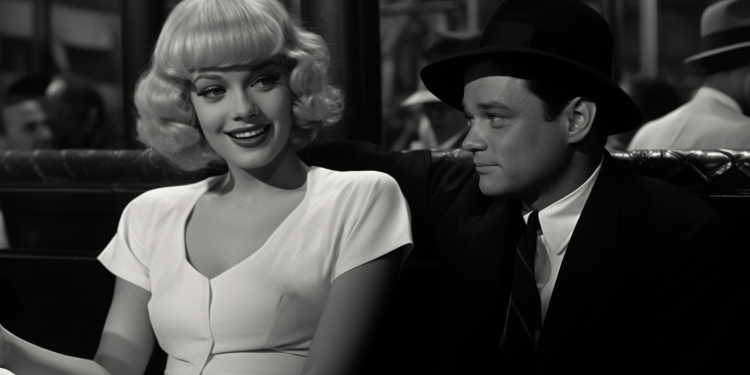
Remembering the Legendary Billy Wilder: His Contribution to Screenplay Structure

Introduction: The Man, The Myth, The Screenwriter

Billy Wilder is a name that evokes both nostalgia and reverence in the realms of cinema and screenwriting. Born in 1906 in Sucha Beskidzka, then part of the Austro-Hungarian Empire, Wilder navigated an extraordinary life that saw him flee Nazi persecution, cross the Atlantic, and eventually find his way to Hollywood, the land of dreams. It’s a story as compelling as his films, steeped in resilience, humor, and a touch of the extraordinary. But who was Billy Wilder really, and why does his work still resonate in the ever-changing landscape of filmmaking?

Billy Wilder had an extensive and diverse filmography, which spanned several decades. His directorial debut, “The Major and the Minor,” hinted at the brilliance to come. Then, a string of iconic movies followed: “Double Indemnity,” “Sunset Boulevard,” “Some Like It Hot,” “The Apartment,” just to name a few. Wilder worked in an array of genres, but whatever the subject—be it a scathing satire, a romantic comedy, or a gut-wrenching drama—he left an indelible mark. His films are not merely classics; they’re study materials for anyone looking to delve into the art of writing a screenplay.

The thing is, Wilder didn’t just write movies; he wrote film textbooks in the guise of movies. In other words, every scene, every line of dialogue, and every plot twist were well-calibrated components of an exceptionally well-structured narrative. Understanding screenplay structure is like learning the rules of the road before you start driving. You might have the most incredible story to tell, but if you don’t know how to structure it effectively, you risk losing your audience. This is where Wilder excelled—his screenplay structures were immaculate, a term I don’t use lightly.

Wilder understood that a screenplay isn’t just about telling a story; it’s about engaging the viewer from the first frame to the last. His approach to screenplay structure was a bit like jazz: deeply rooted in the classics but improvisational, where necessary. His films often followed a three-act model, but he was never shy to twist it, turn it, and make it his own. He understood that the rules were not shackles but springboards. They were a foundation upon which he could build something unique, something mesmerizing. And it’s for this reason that understanding his approach to screenplay structure is not just beneficial but essential for aspiring screenwriters.

So, what is the focus of this article? We’ll delve into Billy Wilder’s unparalleled contributions to screenplay structure. Wilder was the sort of man who had a natural instinct for story architecture. Yet, his innate talents were further honed through years of writing and practical experience, which, when combined, gave us some of the most unforgettable stories ever told on screen. We’ll explore how he achieved what he did, and more importantly, we’ll delve into what modern writers can learn from him.

As a craft, screenwriting is as much about structure as it is about dialogue, characters, or themes. Billy Wilder was a maestro in balancing all these elements, making his contributions to the realm of screenwriting tips a treasure trove for anyone serious about making it in this field. His principles on screenplay structure are not just theoretical postulates; they are battle-tested methodologies that have withstood the test of time. To understand Wilder is to give yourself a robust toolkit for dissecting any movie, any plot, any narrative arc.

There are screenwriters, there are great screenwriters, and then there’s Billy Wilder. In a league of his own, Wilder was not just a filmmaker; he was a storytelling pioneer, a narrative architect, and a screenwriting guru rolled into one. His understanding of screenplay structure turned conventional wisdom on its head and introduced a fresh lens through which stories could be told and experienced. In a way, he revolutionized not just what stories are told but how they are structured, leaving an impact that would echo through the annals of film history.

The Anatomy of a Wilder Screenplay: Breaking Down His Narrative Techniques

A narrative is only as strong as its structure, and when we talk about Billy Wilder, we’re talking about an architect of narrative. Understanding his storytelling techniques isn’t just a film geek’s pastime; it’s a lesson in how to write a screenplay that resonates. So, what made his approach so unique? Well, to answer that, we first need to look at his foundational choice: the venerable three-act model.

Wilder’s Approach to Screenplay Structure: Three-Act Model, with a Twist

Wilder was not a man to shatter the mold, but he would tweak it to suit his storytelling goals. He adhered to the three-act model, a classic screenplay structure dividing a story into Setup, Confrontation, and Resolution. But the magic lay in how he populated these acts. Take “Some Like It Hot,” for example. The Setup is not just a mere introduction; it is an engaging, kinetic roller coaster that establishes characters, setting, and stakes—all while being uproariously funny. The same goes for “Double Indemnity,” where the Setup is a tale in itself, rife with tension and foreshadowing.

Case Studies: Examining the Screenplay Structure in Classics Like “Sunset Boulevard” and “Some Like It Hot”

Let’s dig into the nuances by looking at the structure of two Wilder classics: “Sunset Boulevard” and “Some Like It Hot”.

In “Sunset Boulevard,” the Setup itself is a twist, opening with a dead narrator, Joe Gillis, who recounts the events leading to his death. The Confrontation and Resolution stretch and contort traditional boundaries, offering a deeper dive into character psychology. The film plays with our expectations by maintaining suspense and intrigue, even when the outcome is presented upfront.

“Some Like It Hot” offers a different mastery of the three-act structure. It’s not just the cross-dressing or the gangsters that make this film a hit. It’s the carefully layered conflicts and character arcs that are introduced, built upon, and resolved with such finesse that the viewer might not even realize the complexity of what they’re witnessing. Each character’s desires and conflicts are so expertly interwoven into the main narrative that everything feels seamless.

Writing Tips and Screenwriting Tips Drawn from Wilder’s Techniques

Here’s where the practical application comes in. Aspiring screenwriters should take note of how Wilder accomplished so much within a seemingly traditional framework. First, never waste a scene. Each segment should offer something—be it character development, conflict escalation, or theme exploration.

Secondly, master the art of subtext. Wilder rarely told you what to feel; he showed you a situation and let you fill in the emotional gaps. Your dialogue doesn’t have to state the obvious. In fact, it shouldn’t. Subtlety delivers a more powerful punch.

Thirdly, understand pacing. Wilder’s narratives were tightly wound clocks. Each tick served a purpose, and the pacing was such that the viewer never felt rushed or bored. Achieving this balance is a skill, and a crucial one for anyone looking to improve their writing skills.

Wilder’s Legacy: Practical Applications for Modern Screenwriters

If you’re a modern screenwriter scratching your head over how to construct a compelling narrative, your screenplay’s blueprint could well be hidden in a Billy Wilder film. His techniques may have been birthed in the Golden Age of Hollywood, but they’re as timeless as the three-act structure itself.

First and foremost, Wilder shows us that character is key. Whether you’re writing a romantic comedy or a psychological thriller, your characters need to be multi-dimensional beings. Create characters who possess conflicting desires or ethical dilemmas, much like Joe Gillis in “Sunset Boulevard.” This allows for richer storytelling as your characters navigate through the acts, bringing depth to your screenplay structure.

Screenwriting Tips for Aspiring Writers Inspired by Wilder

  1. Master the Opening Hook: Start your script with a bang, something to instantly grab your audience’s attention. Remember the dead narrator in “Sunset Boulevard”? That’s the sort of audacity you should aim for.
  2. Layer Your Conflicts: Incorporate both internal and external conflicts. In “Some Like It Hot,” the characters aren’t just running from mobsters; they’re also battling gender norms, love triangles, and their own moral compasses.
  3. Dialogue as a Tool: Use dialogue to reveal character traits and motivations without making it expository. Wilder’s scripts are full of subtextual dialogue that accomplishes multiple things at once.
  4. Visual Storytelling: Wilder was an advocate for showing rather than telling. Instead of a long monologue about a character’s backstory, find a visual way to provide the same information. This enhances the cinematic experience.
  5. Pacing and Timing: Learn to use pacing to accentuate critical moments in the narrative. Slow down when you need to focus on emotional gravity and speed up during action scenes or comedic elements.

Writing Prompts for Practicing Techniques Found in Wilder’s Films

Okay, it’s your turn to apply these techniques. Here are some writing prompts to kickstart your creativity:

  1. Write an opening scene where the main character is in a perilous situation. Now, make the rest of the script reveal how they got there.
  2. Construct a dialogue-heavy scene without any exposition. Let your characters talk about something seemingly mundane, but layer it with subtext that reveals deeper truths.
  3. Create a single setting, à la “The Apartment,” and make everything happen there. How can you introduce a variety of conflicts and resolutions in a confined space?
  4. Develop a character with a secret. Now, write a scene where they almost get caught, heightening the tension and stakes without revealing the secret to other characters.
  5. Write a turning point for your protagonist. How can you make this moment both surprising and inevitable, keeping your audience on the edge of their seat?

Conclusion: Why Wilder’s Approach to Screenplay Structure Still Matters Today

Billy Wilder’s films were not just products of their time; they were lessons in timeless storytelling. The complexity of his characters, the ingenuity of his plot twists, and his mastery over dialogue and pacing make his films perpetually relevant. And his adaptability within the three-act structure offers a valuable lesson for contemporary screenwriters: the basics work, but it’s how you color between the lines that defines your story’s resonance.

So, as you’re writing a screenplay, remember to look back to go forward. Techniques from cinematic legends like Wilder are not just historical footnotes; they are tools for you to elevate your own craft. Your screenplay could very well be the “Double Indemnity” or “Some Like It Hot” of today. Why? Because great storytelling knows no era. And that, my friends, is the indelible legacy of Billy Wilder.


✍️  Whether you’re mastering the art of dialogue, structure, or character development, the power of AI can be a game-changer in your writing journey. My Free Ebook, ‘AI for Authors’ delves into how AI-powered prompts can provide a unique edge to your storytelling process. If you’re intrigued by the prospect of supercharging your fiction skills, download your free copy today and explore new horizons in creative writing. 
Embracing the Gothic: A Tribute to Mary Shelley’s Groundbreaking ‘Frankenstein’

Setting the Dark Stage: An Introduction to ‘Frankenstein’ and Gothic Literature

In 1818, a novel was published that would forever change the landscape of literature and establish new paradigms in the Gothic narrative. That novel was Mary Shelley’s “Frankenstein”. Born from a famous literary challenge among friends, including her then-lover Percy Shelley and Lord Byron, Mary Shelley crafted a story that would captivate audiences for centuries to come.

Brief Overview of Mary Shelley’s “Frankenstein”

“Frankenstein; or, The Modern Prometheus,” as it’s fully titled, transcends mere horror. It’s a story deeply interwoven with themes of ethical science, the perils of unchecked ambition, and the haunting question of what it means to be human. Dr. Victor Frankenstein, a man seduced by the allure of forbidden knowledge, reanimates lifeless matter and creates a sentient being. Yet, horrified by his creation, he abandons it, setting the stage for a series of tragic events that challenge the moral fabric of every character involved.

“Frankenstein” has been an indomitable influence on both literature and film, serving as a source of inspiration for countless adaptations and interpretations, from Boris Karloff’s iconic portrayal in the 1931 film to theatrical renditions and academic courses on science fiction. If you’re into writing a novel, diving into “Frankenstein” can serve as an essential masterclass in narrative design and thematic depth.

Introduction to Gothic Literature as a Genre

If “Frankenstein” was the offspring of a narrative experiment, Gothic literature is its ancestral home. Originating in the 18th century, Gothic fiction is a genre that sought to elicit strong emotions—mainly fear—by exploring the darker aspects of humanity and the mysteries of the natural world. Think of Edgar Allan Poe’s unnerving short stories or the eerie estates in Emily Brontë’s “Wuthering Heights.” Gothic tales often revolve around haunted locations, psychological complexities, and an underlying sense of impending doom.

These narratives thrive on atmosphere. The settings are not just backdrops; they are characters in their own right. You can find elements of Gothic storytelling in modern-day settings too; it’s not confined to haunted mansions or medieval castles. In terms of creative writing, the atmosphere is one of the most crucial elements you can focus on. The Gothic genre teaches us the importance of tone and setting, elements that if done right, can add multiple layers to the narrative.

How “Frankenstein” Established New Benchmarks in the Gothic Narrative

One of the most significant achievements of “Frankenstein” lies in its ability to meld the cerebral and the emotional into a coherent, gripping narrative. Through its intricate characters and ethical quandaries, the novel goes beyond mere ‘spookiness’ to engage with philosophical, scientific, and moral issues. In many ways, “Frankenstein” was revolutionary because it brought a new depth to the genre, showcasing how horror can be intellectual and emotional, not just a collection of jump scares or grotesque imagery.

While it’s categorized as a Gothic novel, “Frankenstein” also incorporates elements of the Romantic movement, highlighting the struggles and triumphs of individualism, as well as the awe and terror inspired by nature. This hybrid quality makes the book a versatile tool for those looking to improve writing skills. It shows how a writer can blend different genres and themes to create a richer, more complex story.

The Ingredients of Horror: Analyzing the Gothic Elements in ‘Frankenstein’

When you dissect “Frankenstein,” it’s like peering into a narrative autopsy where each element serves a crucial function in delivering that unmistakable Gothic punch. From the tortured landscapes to the inner torments of its characters, Mary Shelley crafted a text that still serves as a masterclass in building dread, fascination, and a touch of the ethereal. If you’re looking to improve your writing skills, especially in the realm of dark, evocative storytelling, there’s a lot to learn from Shelley’s approach.

Exploration of the Key Gothic Elements Present in the Novel

  1. Isolated Landscapes: The barren, unforgiving landscapes in “Frankenstein” mirror the inner desolation of its characters. There’s a stark contrast between the serene Swiss countryside and the foreboding Arctic tundra, both isolated and remote in their own ways. Landscape isn’t merely a setting; it becomes a character, silent but expressive.
  2. The Supernatural and the Scientific: While most Gothic stories lean heavily into the supernatural, “Frankenstein” brings in a blend of alchemy and budding science. Shelley leverages the uncanny, the strange-yet-familiar, to build an atmosphere where dread and curiosity co-exist.
  3. Complex Characters: Victor Frankenstein and his creation are not mere archetypes; they are nuanced, multi-dimensional beings. This complexity adds to the intrigue and emotional engagement, making the horror all the more affecting because it’s rooted in understandable, albeit flawed, human desires.
  4. The Macabre: Themes of death, decay, and moral corruption run rampant throughout the story. Whether it’s the actual act of bringing dead tissue back to life or the symbolic deaths that each character undergoes, the macabre is ever-present.

Detailed Discussion of Shelley’s Narrative Techniques to Evoke Dread and Fascination

  1. Pacing and Anticipation: Like the crescendo in a piece of haunting music, Shelley expertly builds anticipation. She sets the stage with quieter moments that delve into philosophical musings, only to shatter the silence with intense bouts of action or revelation. It’s a roller coaster of emotional highs and lows that keep the reader engrossed.
  2. Frame Story: Employing a frame narrative, Shelley allows multiple perspectives to come into play. This creates layers of storytelling that feed into the overarching sense of dread. This technique also adds credibility and a multifaceted understanding to the events that unfold.
  3. Imagery and Symbolism: Symbols like fire, ice, and darkness permeate the text, each serving dual roles that both allure and repel. For instance, fire symbolizes both enlightenment and destructive power. The imagery is vivid enough to ignite the reader’s imagination but subtle enough not to overshadow the narrative.

Tips for Aspiring Writers on How to Incorporate These Elements into Their Creative Writing

  1. Leverage Your Setting: Think of your setting as a character. Ask yourself, how can the environment express emotions or themes in your story? Whether it’s an abandoned asylum or a moonlit beach, your setting can amplify the mood.
  2. Complexity is Key: Even if you’re writing a straightforward horror story, your characters need depth. Your readers will be far more invested if they can empathize with, or despise, the characters in your story.
  3. Pace Yourself: The tempo of your story can make or break its impact. Slow burn stories can be effective, but you also need moments of heightened tension to keep your reader engaged.
  4. Imagery and Symbolism: Don’t underestimate the power of well-placed imagery to elevate your narrative. Simple elements like weather conditions, or the time of day, can be used symbolically to add deeper meaning to scenes.
  5. Writing Prompts: If you’re stumped on where to start, consider prompts like: “Write a scene where your protagonist has to confront their deepest fear in a place they once considered safe.” Or, “Write a dialogue that occurs in the aftermath of a failed scientific experiment that had ethical implications.”

Each of these elements and techniques serves to make “Frankenstein” a riveting, multi-layered experience that goes beyond simple scares. It challenges our understanding of morality, existence, and the very fabric of our emotional selves. If you want your narratives to be equally gripping and resonate on multiple levels, the Gothic toolkit deployed by Mary Shelley offers a compelling model to follow. Keep in mind that you’re not just telling a story; you’re crafting an experience, one that can haunt your readers long after they’ve turned the last page.

Bringing Gothic to Life: Practical Applications for Modern Writers

Ah, the Gothic genre—mysterious, ethereal, and intensely emotional. You may think that the cobwebs and candelabras are mere trappings of a bygone era, but I’d argue that the core elements of Gothic fiction are timeless. The foundations laid down by Mary Shelley in “Frankenstein” offer a valuable guide for any writer aiming to stir the souls of their readers. Let’s dive into some concrete writing tips inspired by Shelley’s techniques for crafting that spellbinding Gothic atmosphere.

Writing Tips Inspired by Shelley’s Techniques for Crafting a Gothic Atmosphere

  1. The Power of Ambiguity: One of the hallmarks of “Frankenstein” is its ability to straddle the line between the known and the unknown. You can adopt this by not spelling everything out for your readers. Allow some room for interpretation; it often makes for a more engaging read.
  2. Mastering Mood and Tone: A Gothic story is as much about the feeling it evokes as it is about the events that unfold. Utilize descriptive language, select your adjectives carefully, and create vivid imagery that complements the mood you aim to evoke.
  3. Psychological Depth: Gothic stories often delve into the minds of their characters, exploring their fears, guilt, and moral dilemmas. This adds a layer of psychological complexity that can make your story both fascinating and unsettling.
  4. Dramatic Irony: This technique works wonders in cranking up tension. Knowing something that the characters don’t can heighten emotional engagement and build anticipation, adding layers to your storytelling. Think Edgar Allan Poe’s “The Tell-Tale Heart” as an example here.

How to Improve Writing Skills by Understanding the Mechanics of Suspense and Emotional Engagement

  1. Delayed Gratification: Shelley knew how to dangle just enough information to keep readers on the edge of their seats. This delayed gratification can be a killer tool for modern writers to keep pages turning.
  2. Internal Conflict: Building a strong external plot is good, but if you really want to rope your readers in, throw in some internal conflict. As readers, when we’re as emotionally torn as the characters are, that’s when the narrative grip tightens.
  3. Hook and Reel: The art of suspense often lies in the ‘hook and reel’ technique—present a question or a situation that hooks the reader, then reel them in slowly, revealing answers or outcomes bit by bit.

Writing Prompts Designed to Encourage Writers to Explore Gothic Themes in Their Own Works

If you’re fired up to experiment with some Gothic elements, here are a few writing prompts to get your creative gears turning:

  1. Write a scene where a character must traverse a dilapidated mansion to find something—or someone—important.
  2. Create a dialogue between two characters who are confronted with an inexplicable, supernatural event. How do they rationalize it?
  3. Describe a setting that seems benign by day but takes on a sinister aspect at night.
  4. Write about a character who is obsessed with a long-dead historical figure and goes to great lengths to commune with them.
  5. Craft a story where the villain is not a person but a place or an object with a dark history.

The Gothic genre allows for the exploration of our darker tendencies, the unexplained phenomena of our existence, and the complexities of our inner worlds. The techniques that Mary Shelley employed can still serve contemporary writers, whether you’re writing a novel, a screenplay, or even a short story. Even if your story doesn’t fall neatly into the Gothic category, understanding how to generate suspense and emotional engagement can significantly improve your writing skills.

So why not take a leaf out of Mary Shelley’s book? Literally! Start with these tips and prompts and venture into your own dark and stormy night of the soul. Who knows? You might just create a masterpiece that’s as haunting and enduring as “Frankenstein” itself.


✍️  Whether you’re mastering the art of dialogue, structure, or character development, the power of AI can be a game-changer in your writing journey. My Free Ebook, ‘AI for Authors’ delves into how AI-powered prompts can provide a unique edge to your storytelling process. If you’re intrigued by the prospect of supercharging your fiction skills, download your free copy today and explore new horizons in creative writing.