Creating Timeless Comedy: The Genius of ‘Some Like It Hot’

The Storytelling Brilliance of “Some Like It Hot”

In the pantheon of classic cinema, “Some Like It Hot,” directed by Billy Wilder and released in 1959, occupies a throne of its own. Its storytelling prowess is underscored by a tantalizing plot, multidimensional characters, and an innovative narrative approach that were ahead of its time. The film’s premise—a pair of musicians disguising themselves as women to escape mafia retribution—provides a fertile ground for exploring themes of identity, love, and desperation, all wrapped in a comedic package that has endured for over six decades.

The narrative of “Some Like It Hot” unfolds during the prohibition era, introducing us to Joe (Tony Curtis) and Jerry (Jack Lemmon), two struggling musicians who inadvertently witness the Saint Valentine’s Day Massacre. Their only escape from the mob’s vendetta is to join an all-female band headed to Florida, thus birthing their alter egos, Josephine and Daphne. This initial setup catapults the audience into a whirlwind of comedic situations, but at its heart, the film navigates through the complexities of the human experience, exploring themes of friendship, love, and the quest for freedom.

Character development is a critical pillar that upholds the comedic and narrative structure of “Some Like It Hot.” Joe and Jerry, beyond their humorous antics and cross-dressing escapades, are portrayed as fully realized characters with desires, fears, and vulnerabilities. Joe, as Josephine, finds himself falling for the enchanting Sugar (Marilyn Monroe), the band’s ukulele player and vocalist, whose dreams of finding a millionaire suitor mask her own insecurities and longing for love. Jerry, on the other hand, becomes the object of an elderly millionaire’s affection, providing a subplot that is as hilariously improbable as it is a fascinating study in the fluidity of attraction and identity. Through these characters, Wilder delves into the constructs of gender and societal expectations with a deftness and subtlety that were revolutionary for its time.

The narrative techniques employed by Wilder and co-screenwriter I.A.L. Diamond are a testament to their ingenuity and understanding of comedy’s mechanics. The film’s pacing is a marvel; it briskly moves from one scenario to the next, never losing momentum even as it layers complexity upon its plot and characters. This is evident in scenes where Joe and Jerry must navigate their new identities, dodging both the mafia and romantic advances, all while maintaining their covers. The cross-dressing element serves not merely as a source of humor but as a narrative device that challenges and lampoons the rigid gender norms of the era. Wilder uses this to create a series of misunderstandings and close calls that drive the plot forward, all the while allowing for moments of genuine character growth and introspection.
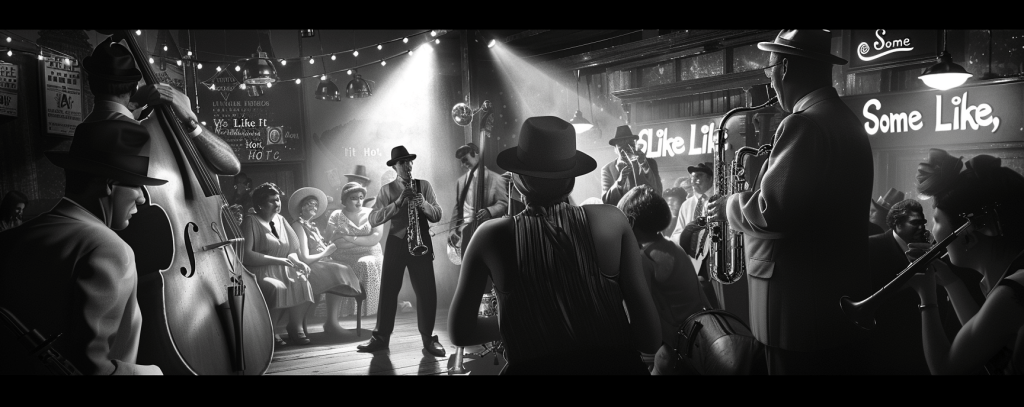
“Some Like It Hot” is also notable for its commentary on gender roles and societal expectations. Through its protagonists’ journey, the film subtly critiques the constraints society places on individual identity and expression. The characters of Joe and Jerry, when viewed through the lens of their alter egos, Josephine and Daphne, become vehicles for exploring themes of empathy, vulnerability, and the performance of gender. These themes are handled with a lightness of touch that belies their depth, a balancing act that Wilder masters with apparent ease. The film’s enduring relevance can be attributed, in part, to its willingness to engage with these issues in a manner that is both respectful and revelatory.

Perhaps the most striking aspect of “Some Like It Hot”’s storytelling is its ability to blend comedy with moments of poignancy and genuine emotion. Sugar’s vulnerability, Joe’s conflicted feelings, and Jerry’s unexpected enjoyment of his disguise all serve to humanize the film beyond its comedic trappings. This is complemented by the film’s ending, which has entered cinematic lore for its humor, openness, and underlying message of acceptance. The famous final line, “Well, nobody’s perfect,” delivered with impeccable timing by Joe E. Brown’s Osgood Fielding III, encapsulates the film’s heart and philosophy. It is a fitting conclusion to a narrative that celebrates the complexity of the human spirit with warmth, wit, and an unjudgmental embrace of life’s absurdities.

The Comedic Elements That Define “Some Like It Hot”

The comedic genius of “Some Like It Hot” lies in its masterful blend of slapstick, verbal wit, and situational comedy, executed so brilliantly by its cast and creators that it resonates with audiences even decades after its release. Billy Wilder’s direction and the screenplay’s sharp dialogue, combined with the actors’ impeccable comedic timing, create a symphony of laughs that has stood the test of time.

Slapstick and Verbal Wit

Wilder’s film is a treasure trove of comedic styles, but two of its most potent weapons are slapstick humor and razor-sharp wit. The physical comedy, especially the antics of Jack Lemmon and Tony Curtis in drag, offers a visual humor that transcends language and cultural barriers. Their exaggerated femininity, clumsy attempts at seduction, and the inevitable complications arising from their disguises provide a constant source of laughter. One particularly memorable scene involves Jerry’s (Lemmon) high-heeled mishaps and Joe’s (Curtis) attempts to navigate the intricacies of a ladies’ bathroom. These moments of slapstick genius do not merely serve as comic relief but as critical components of the film’s exploration of gender norms and identity.

However, “Some Like It Hot” does not rely solely on visual gags. The film is equally renowned for its verbal wit, with dialogue that sparkles with innuendo, double entendres, and clever repartees. Lines like Joe’s assertion that he is indeed “the manager of the band and not in that way” when Jerry fears for their moral safety among women, or Osgood’s unwavering acceptance of Daphne’s revelation, showcase Wilder’s skill in weaving humor through words. The screenplay’s verbal wit is sophisticated yet accessible, ensuring the jokes resonate on multiple levels and contribute to the film’s enduring appeal.

Situational Comedy

The situational comedy in “Some Like It Hot” is rooted in the film’s premise and the predicaments Joe and Jerry face. Their desperate bid for safety thrusts them into a world where they are perpetually on the brink of discovery, leading to a series of misadventures that are both absurd and hilarious. This comedy of errors is heightened by the romantic entanglements that ensue, particularly Joe’s infatuation with Sugar and Jerry’s unexpected engagement to Osgood. The situations the protagonists find themselves in, from navigating love interests in drag to dodging mafia hitmen, exploit the comedic potential of their dilemma to its fullest.

Moreover, the film’s setting— a beach resort in Florida—provides the perfect backdrop for these comedic escapades. The contrast between the sunny, leisurely atmosphere of the hotel and the protagonists’ internal panic adds a delicious irony to the mix. The situational comedy is further enriched by the supporting characters, whose interactions with Joe/Josephine and Jerry/Daphne add layers to the humor and complexity to the plot.

Timelessness of Humor

What makes the humor in “Some Like It Hot” timeless? At its core, the film taps into universal themes of love, desire, and the quest for freedom—elements that transcend the specific cultural context of 1959 America. The comedic situations, while often outrageous, are grounded in the characters’ genuine emotions and relationships, allowing audiences from any era to connect with the film on a personal level. The humor, therefore, does not feel dated but instead reflects the enduring absurdity of the human condition.

Additionally, the film’s approach to gender roles and identity was remarkably progressive for its time and remains relevant today. The humor derived from Joe and Jerry’s experiences in drag does not mock their femininity but rather uses it to challenge and satirize societal norms. This nuanced approach ensures that the comedy feels inclusive and empathetic, rather than alienating.

The execution of the film’s gags, from the timing to the delivery, is meticulous. Wilder’s direction ensures that each joke lands with precision, while the cast’s performances imbue the humor with warmth and vitality. The ensemble’s chemistry—particularly the dynamic between Curtis, Lemmon, and Monroe—elevates the comedy, making the interactions feel spontaneous and genuine.

Legacy and Influence of “Some Like It Hot”

Upon its release in 1959, “Some Like It Hot” immediately captured the imagination of audiences and critics alike. Directed by Billy Wilder and featuring the magnetic trio of Marilyn Monroe, Tony Curtis, and Jack Lemmon, the film was heralded for its innovative storytelling, masterful comedy, and daring exploration of themes that were considered ahead of their time. Its blend of slapstick, wit, and situational comedy set a new standard for the genre, earning it critical acclaim and a place in cinematic history.

Critical Reception and Awards

“Some Like It Hot” was not just a commercial success; it was a critical darling that garnered significant accolades. The film received six Academy Award nominations, including Best Director and Best Actor, and won for Best Costume Design, a testament to its visual flair and attention to detail. It also secured a spot on the American Film Institute’s lists of top 100 movies, further cementing its status as a classic. Critics praised Wilder’s direction, the sharp screenplay, and the performances, particularly Monroe’s portrayal of Sugar, which many consider to be one of her best roles. The film’s ability to seamlessly blend comedy with deeper themes of identity and desire was recognized as a groundbreaking achievement in storytelling.

Influence on Future Comedies

The legacy of “Some Like It Hot” extends far beyond its immediate success. It has influenced countless comedies, setting the benchmark for character-driven humor and complex narrative structures. The film demonstrated that comedy could tackle serious themes without losing its entertainment value, a principle that has been adopted by numerous filmmakers and screenwriters in the decades since. From the cross-dressing antics in “Tootsie” to the gender role explorations in “Mrs. Doubtfire,” echoes of “Some Like It Hot” can be seen across various comedic works that challenge societal norms with humor and heart.

The film’s structure, which expertly balances the development of its characters with escalating comedic scenarios, has become a blueprint for effective comedic storytelling. It proved that the audience’s investment in the characters’ journeys enhances the comedy, making every laugh resonate more deeply. This character-centric approach has influenced television comedies as well, where character development is essential to sustaining interest over multiple seasons.

Enduring Appeal

The enduring appeal of “Some Like It Hot” can be attributed to several factors, starting with its progressive themes. The film’s exploration of gender identity and societal expectations was pioneering for its time and remains relevant today. Its humorous yet empathetic treatment of Joe and Jerry’s experiences in drag resonates with contemporary discussions around gender fluidity and acceptance, making the film feel remarkably modern.

Moreover, the performances in “Some Like It Hot” are unforgettable. Marilyn Monroe’s portrayal of Sugar combines vulnerability with comedic brilliance, capturing the complexity of her character with depth and charm. Tony Curtis and Jack Lemmon’s dynamic as Joe and Jerry showcases their versatility as actors, navigating the demands of their dual roles with a blend of humor and sincerity. The chemistry among the leads, coupled with the ensemble cast’s contributions, creates a vibrant world that viewers love to return to.

The film also challenged the norms of its era, both in content and execution. Its risqué subject matter and Wilder’s refusal to conform to the Hays Code, which governed moral censorship in Hollywood at the time, set a precedent for creative freedom in filmmaking. This defiance not only marked “Some Like It Hot” as a trailblazer but also inspired future generations of filmmakers to push boundaries in their storytelling.

Finally, “Some Like It Hot” possesses a timeless quality that endears it to viewers of all ages. Its humor, while rooted in the specificities of its time, taps into universal themes of love, identity, and the pursuit of happiness. The film’s closing line, “Nobody’s perfect,” encapsulates this universality, serving as a poignant reminder of the shared imperfections that make us human. This blend of timeless humor with progressive themes ensures that “Some Like It Hot” continues to be celebrated and studied as a masterclass in filmmaking.

In conclusion, “Some Like It Hot” is more than just a comedy; it is a cultural touchstone that has left an indelible mark on the landscape of cinema. Its critical reception and awards heralded the arrival of a film that was not afraid to challenge societal conventions with wit and warmth. Its influence on subsequent generations of comedies, both in film and television, underscores its pivotal role in the evolution of the genre. The film’s enduring appeal, fueled by its progressive themes, memorable performances, and timeless humor, ensures that it remains a beloved classic. Through “Some Like It Hot,” Billy Wilder and his cast delivered a cinematic experience that entertains, challenges, and resonates, proving that great storytelling can indeed be timeless.


✍️  Whether you’re mastering the art of dialogue, structure, or character development, the power of AI can be a game-changer in your writing journey. My Free Ebook, ‘AI for Authors’ delves into how AI-powered prompts can provide a unique edge to your storytelling process. If you’re intrigued by the prospect of supercharging your fiction skills, download your free copy today and explore new horizons in creative writing. 

Adapting Epic Poetry: The Screenwriting of ‘Troy’

Epic poetry stands as one of the oldest forms of literary expression, deeply rooted in the cultural and historical tapestry of ancient civilizations. These long, narrative poems were more than mere stories; they were oral histories, moral compasses, and profound reflections on the human condition, encapsulating the values, struggles, and aspirations of the societies from which they emerged. Central to the pantheon of epic poetry is Homer’s ‘The Iliad,’ a masterpiece that has not only withstood the vicissitudes of time but has also profoundly influenced the course of Western literature and storytelling.

‘The Iliad,’ believed to have been composed in the 8th century BCE, chronicles a brief but pivotal period in the final year of the Trojan War, a legendary conflict between the kingdoms of Troy and Mycenaean Greece. Homer’s narrative is far from a mere military saga; it is a complex tapestry of human emotions, divine interventions, and the inexorable fate that binds mortals and gods alike. At its core, ‘The Iliad’ explores themes of glory and shame, honor and betrayal, love and loss, weaving them into the personal stories of its characters, who range from valiant warriors and noble kings to capricious gods and long-suffering civilians.

The epic begins with a dispute between Achilles, the greatest warrior of the Greeks, and Agamemnon, the commander of the Greek forces, over a captive woman. This quarrel leads to Achilles’ withdrawal from the battle, altering the course of the war and setting in motion a series of events that underscore the fragility of human pride and the devastating cost of conflict. The narrative unfolds on a grand scale, depicting fierce battles, heroic deeds, and divine machinations, yet it is the intimate moments of grief, compassion, and reconciliation that lend ‘The Iliad’ its enduring power.

Homer’s portrayal of his characters is remarkably nuanced. Achilles, for instance, is not merely a paragon of martial prowess but a deeply conflicted hero, torn between his thirst for glory and the knowledge of his impending doom. Hector, the champion of Troy, embodies the virtues of courage and loyalty, yet he is tragically bound to a fate he cannot escape. Even the gods, with their petty rivalries and interventions, reflect the complexities of human nature, blurring the lines between the divine and the mortal.

Adapting such a rich and multifaceted work into a screenplay presents a formidable challenge. The screenwriter must distill the essence of ‘The Iliad’ into a narrative that resonates with modern audiences while navigating the constraints of cinematic form and the expectations of contemporary storytelling. This task involves critical decisions about which elements of the epic to highlight and which to omit, how to interpret the characters and their motivations, and how to convey the epic’s themes in a manner that is both faithful to the source material and accessible to viewers unfamiliar with the ancient text.

One of the key challenges in adapting ‘The Iliad’ is its narrative structure. Unlike a modern novel or screenplay, which typically follows a linear progression, ‘The Iliad’ is episodic, moving fluidly between different locations, characters, and points in time. The epic’s narrative is further complicated by frequent interventions by the gods, whose actions and motivations are often inscrutable to mortal characters and readers alike. A screenwriter must find creative ways to streamline this sprawling narrative, ensuring coherence and continuity while retaining the epic’s grandeur and depth.

Another challenge lies in the portrayal of the epic’s vast array of characters. ‘The Iliad’ features a diverse cast, each with their own intricate backstories, relationships, and arcs. Translating these characters to the screen requires a careful balancing act, giving each enough depth and development to be compelling while maintaining focus on the central narrative. The screenwriter must also navigate the epic’s portrayal of heroism and honor, concepts that have evolved significantly since Homer’s time. What constituted the height of heroism in ancient Greece might not resonate in the same way with a modern audience, requiring a nuanced approach to character motivation and morality.

Screenwriting ‘Troy’: Adapting Narrative and Character

Adapting Homer’s ‘The Iliad’ into the screenplay for ‘Troy’ was an ambitious endeavor that required a delicate balance between fidelity to the ancient text and the necessities of modern cinematic storytelling. The transition from epic poem to blockbuster film necessitated significant alterations in narrative structure, character development, and thematic focus, raising intriguing questions about the nature of adaptation and the ways in which timeless tales can be reshaped for new audiences.

The narrative structure of ‘The Iliad,’ with its episodic format and non-linear timeline, poses a unique challenge for screen adaptation. In contrast, the screenplay for ‘Troy’ adopts a more streamlined narrative, condensing the decade-long Trojan War into a matter of weeks. This compression not only facilitates a more cohesive and digestible plot for moviegoers but also heightens the drama and urgency of the conflict. By focusing on key events and relationships, the screenplay forges a clear narrative path through the complex web of stories and characters found in Homer’s original.

One of the most notable creative liberties taken in the adaptation is the amalgamation and omission of characters. ‘The Iliad’ boasts a vast ensemble cast, each with their own intricate storylines and allegiances. In the interest of narrative economy, the screenplay combines certain characters and omits others entirely. For instance, the character of Patroclus, while deeply significant in ‘The Iliad,’ is presented in ‘Troy’ with a shifted relationship to Achilles, altering the motivational dynamics and emotional resonance of their story. Such changes are emblematic of the adaptation’s approach to streamlining the epic’s narrative, focusing on a core set of characters to drive the plot forward.

The adaptation also selectively emphasizes certain themes over others, tailoring the story to the tastes and sensibilities of contemporary audiences. While ‘The Iliad’ delves deeply into questions of fate, glory, and the divine will, ‘Troy’ places greater emphasis on the human aspects of the story, such as love, loyalty, and the tragedy of war. This shift in thematic focus is reflected in the portrayal of the film’s central characters, who are rendered with a complexity and emotional depth that resonates with modern viewers.

Achilles, portrayed in ‘Troy’ by Brad Pitt, embodies this approach to character adaptation. While the Achilles of ‘The Iliad’ is driven by honor and the pursuit of eternal glory, the film’s version of the character is more introspective, wrestling with the meaning of his life and the futility of war. This nuanced portrayal highlights the screenplay’s focus on the internal struggles of its characters, making them more relatable to a contemporary audience. Similarly, Hector, played by Eric Bana, is depicted as a noble and dutiful warrior who is deeply committed to his family and city, mirroring his characterization in ‘The Iliad’ while also emphasizing his role as a tragic hero caught in the inexorable tide of destiny.

Helen of Troy, the “face that launched a thousand ships,” is another character whose portrayal in the film diverges from the epic poem. While ‘The Iliad’ offers a more ambiguous view of Helen, attributing her abduction to a mix of divine intervention and personal choice, ‘Troy’ presents her more sympathetically, focusing on her desire for freedom and love over the political machinations that lead to the war. This interpretation of Helen’s character aligns with the screenplay’s broader emphasis on personal agency and the human cost of conflict.

The adaptation of ‘The Iliad’ into ‘Troy’ is thus characterized by a series of calculated choices about which elements of the epic to preserve, which to alter, and which to omit. These decisions reflect not only the practical constraints of film as a medium but also the desire to make Homer’s story accessible and meaningful to a 21st-century audience. By streamlining the narrative, focusing on a core group of characters, and emphasizing the human rather than the divine aspects of the story, the screenplay for ‘Troy’ seeks to capture the essence of ‘The Iliad’ while also offering a fresh perspective on its timeless themes.

In doing so, the adaptation raises important questions about the nature of storytelling and the ways in which ancient tales can be reimagined for new generations. The creative liberties taken in ‘Troy’ highlight the adaptive process as a form of dialogue between the past and the present, a negotiation between the demands of historical fidelity and the creative imperatives of contemporary filmmaking. This dialogue is not without its tensions and controversies, as purists may decry deviations from the source material, while others may celebrate the ways in which ‘Troy’ brings Homer’s epic to life for a global audience.

Cinematic Techniques and Their Effectiveness in Retelling an Epic

The adaptation of Homer’s ‘The Iliad’ into the screenplay for ‘Troy’ necessitated not only a transformation of narrative and character but also a thoughtful application of cinematic techniques to translate the epic’s grandeur and emotional intensity onto the screen. This section examines how ‘Troy’ employs visual effects, set design, cinematography, music, dialogue, and performance to recreate the world of ancient Greece and bring its timeless story to life for a contemporary audience.

Visual Effects and Set Design

‘Troy’ leverages state-of-the-art visual effects to depict the monumental scale of the Trojan War, from the vast fleets of Greek ships approaching the shores of Troy to the towering walls of the city itself. These visual effects are complemented by meticulously designed sets that recreate the architectural splendor of ancient Troy and the Greek encampments. The combination of CGI and physical sets allows the film to achieve a sense of realism and immediacy, placing viewers in the midst of the historical and mythological world of ‘The Iliad’.

The set design is not merely about historical accuracy; it also serves to underscore the thematic contrasts between the Trojan and Greek cultures. The opulence of Troy, with its grand palaces and temples, contrasts starkly with the pragmatic, martial aesthetic of the Greek camps, highlighting the cultural and ideological differences at the heart of the conflict. This visual dichotomy enriches the narrative, providing a backdrop against which the personal dramas and moral dilemmas of the characters unfold.

Cinematography

The cinematography in ‘Troy’ plays a crucial role in conveying the epic scope and emotional depth of the story. Wide panoramic shots capture the vastness of the battlefield and the mass movements of armies, while intimate close-ups focus on the characters’ faces, revealing their internal struggles and emotions. The use of lighting and color palette further enhances the film’s thematic and emotional impact. The warm, golden hues of Troy’s interiors contrast with the harsh, desaturated tones of the battlefield, symbolizing the transition from peace to war and the loss of innocence.

Dynamic camera movements and framing are employed to heighten the tension and drama of key scenes, such as duels and speeches, drawing viewers into the action and emphasizing the stakes of the conflict. The cinematography not only serves the narrative but also evokes the epic’s lyrical quality, translating Homer’s poetic imagery into visual form.

Music, Dialogue, and Performance

The score of ‘Troy,’ composed by James Horner, plays an indispensable role in evoking the epic’s emotional landscape. The music blends traditional orchestral elements with regional instruments, creating a sound that is both timeless and evocative of the ancient Mediterranean world. The score underscores the film’s key themes—honor, love, loss, and destiny—enriching the narrative with an emotional resonance that words alone cannot convey.

Dialogue in ‘Troy’ is crafted to balance the poetic quality of the source material with the demands of modern cinematic storytelling. The script incorporates lines that echo the epic’s grandeur and rhetorical style, while ensuring that the characters’ speech remains accessible and relatable to contemporary audiences. This balance allows the film to honor its literary origins while also engaging viewers in the characters’ personal journeys and moral dilemmas.

The performances of the cast bring depth and nuance to the characters of ‘The Iliad.’ The actors navigate the challenge of embodying legendary figures with a combination of gravitas and vulnerability, making them compelling and relatable. Brad Pitt’s Achilles, for example, captures the warrior’s prowess and pride but also his introspection and sorrow, offering a multifaceted portrayal of a hero torn between glory and doom.

Reflection on the Film’s Reception and Its Place in the Tradition of Adapting Epic Stories for the Screen

‘Troy’s reception upon its release was mixed, with critics and audiences divided over its fidelity to ‘The Iliad’ and its effectiveness as a standalone cinematic work. Some praised the film for its visual spectacle, emotional depth, and performances, while others critiqued its deviations from the source material and the simplification of its themes. Despite these controversies, ‘Troy’ achieved significant commercial success and has since garnered a dedicated fan base, attesting to its appeal as an epic tale of love, war, and heroism.

The film’s legacy lies in its ambitious attempt to adapt one of the most revered works of literature into a cinematic epic. ‘Troy’ joins a long tradition of films that seek to bring ancient stories to life for new generations, from ‘Ben-Hur’ and ‘Spartacus’ to ‘Gladiator’ and ‘300.’ These adaptations serve as a bridge between the past and present, reimagining timeless tales in ways that resonate with contemporary values and sensibilities.

In conclusion, ‘Troy’ represents a significant undertaking in the realm of cinematic adaptation, employing a range of techniques to translate ‘The Iliad’s epic scale, complex characters, and profound themes onto the screen. Through its visual effects, set design, cinematography, music, dialogue, and performances, the film strives to capture the essence of Homer’s masterpiece, offering a version of the Trojan War that is both a homage to the ancient epic and a reflection of modern cinematic artistry. Its place in the tradition of adapting epic stories for the screen underscores the enduring power of these narratives to inspire, challenge, and move us, bridging centuries and cultures with their universal exploration of the human experience.


✍️  Whether you’re mastering the art of dialogue, structure, or character development, the power of AI can be a game-changer in your writing journey. My Free Ebook, ‘AI for Authors’ delves into how AI-powered prompts can provide a unique edge to your storytelling process. If you’re intrigued by the prospect of supercharging your fiction skills, download your free copy today and explore new horizons in creative writing. 

The Narrative Craft in Orson Welles’ ‘Citizen Kane’

Introduction to “Citizen Kane”: A Cinematic Milestone

Orson Welles’ “Citizen Kane” stands as a colossus in the annals of cinema, not merely for its narrative ingenuity or technical prowess, but for its audacious challenge to the storytelling norms of its time. Released in 1941, the film was a bold experiment in narrative structure, visual composition, and sound design, reshaping the landscape of filmmaking and setting a precedent that would influence generations of filmmakers. At the heart of “Citizen Kane” lies a deceptively simple quest – the search for the meaning behind the enigmatic last word of Charles Foster Kane, a wealthy media magnate: “Rosebud.” This pursuit serves as the backbone for a narrative that is as complex and multifaceted as Kane himself, offering a profound exploration of ambition, loss, and the elusive nature of truth.

The historical context within which “Citizen Kane” emerged is crucial to understanding its groundbreaking nature. The late 1930s and early 1940s were a period of transition for Hollywood, with the industry beginning to explore more sophisticated storytelling techniques and themes. However, most films of the era still adhered to relatively straightforward narrative structures and character archetypes. In this environment, “Citizen Kane” was a revelation. Welles, along with co-screenwriter Herman J. Mankiewicz, crafted a story that eschewed linear narrative in favor of a complex, non-chronological approach that was both innovative and disorienting for contemporary audiences.

From its opening moments, “Citizen Kane” distinguished itself from other films of its time. The newsreel that recounts Kane’s life and death serves as a masterful exposition device, setting up the film’s central mystery while simultaneously parodying the cultural ubiquity of the newsreel format. This opening sequence, with its rapid montage and overlapping voices, immediately signals to the audience that they are entering a narrative realm far removed from the conventional cinema of the period.

The film’s structure, which unfolds through a series of flashbacks triggered by interviews conducted by a journalist seeking the meaning of “Rosebud,” was revolutionary. Each flashback offers a different perspective on Kane’s life, provided by those who knew him personally. This narrative strategy not only deepens the mystery of Kane’s character but also reflects the film’s thematic concern with the fragmentary nature of truth and the impossibility of fully understanding another person. By presenting Kane through the eyes of others, Welles and Mankiewicz challenge the audience to piece together the puzzle of his identity, much like the journalist who serves as the audience’s surrogate.

Technically, “Citizen Kane” was equally pioneering. Welles’ use of deep focus photography, which allowed objects in both the foreground and background of a scene to remain in sharp focus simultaneously, expanded the visual possibilities of film as a medium. This technique, combined with innovative lighting and composition, created a visual style that was as integral to the storytelling as the script itself. The film’s audacious use of visual metaphor – from the looming, castle-like Xanadu to the jigsaw puzzle spreading across the floor of Susan Alexander’s nightclub – further underscores its narrative complexity.

The sound design of “Citizen Kane” also broke new ground. Welles, drawing on his experience in radio, used layered soundtracks and overlapping dialogue (a technique known as “lightning mixes”) to create a sense of realism and immediacy. This approach not only enhanced the film’s narrative but also demonstrated the potential of sound as a narrative tool in its own right.

“Citizen Kane’s” impact on cinema is difficult to overstate. In the immediate aftermath of its release, the film was both a critical darling and a source of controversy, largely due to its thinly veiled portrayal of newspaper magnate William Randolph Hearst. Despite facing backlash and limited distribution as a result of Hearst’s wrath, “Citizen Kane” gradually cemented its reputation as a masterpiece of film art. Over the decades, its influence can be seen in the work of countless filmmakers, from the narrative ambiguity of French New Wave directors like François Truffaut and Jean-Luc Godard, to the technical innovations of Stanley Kubrick and the Coen brothers.

Narrative Structure and Techniques

Orson Welles’ “Citizen Kane” is not just a film; it’s a narrative puzzle meticulously crafted to engage, perplex, and enlighten its audience. Through its groundbreaking use of non-linear storytelling, the intricate “Rosebud” motif, and a deep thematic exploration of truth, the film achieves a level of narrative complexity that was unprecedented at the time of its release and remains unrivaled in many respects.

Non-linear Storytelling

At the heart of “Citizen Kane’s” narrative innovation is its non-linear approach to storytelling. Unlike the straightforward chronological narratives that characterized most films of the early 20th century, “Citizen Kane” begins at the end, with the death of its protagonist, Charles Foster Kane. From there, the narrative unfolds in a series of flashbacks, each prompted by the investigations of a journalist seeking to unravel the meaning behind Kane’s final word: “Rosebud.”

This narrative choice does more than merely structure the film; it fundamentally alters the way in which the story is told and received. Each flashback offers a different perspective on Kane’s life, coming from those who knew him personally – his business manager, a friend, his estranged wife, and his mistress. This multiplicity of viewpoints challenges the viewer to piece together the puzzle of Kane’s character from subjective, often conflicting, accounts. It’s a narrative technique that anticipates the fragmented, multifaceted storytelling seen in many modern films and television series, underscoring the influence of “Citizen Kane” on subsequent generations of filmmakers.

The use of flashbacks also serves to deepen the film’s exploration of memory and identity. By presenting Kane’s life through the recollections of others, the film emphasizes the ways in which individuals are remembered and understood by those around them. This approach reflects a deeply human truth: that a person’s identity is not a singular, fixed entity, but something multifaceted and ever-changing, shaped by the perceptions and interpretations of others.

The “Rosebud” Motif

Central to the narrative structure of “Citizen Kane” is the mystery of “Rosebud” – Kane’s enigmatic final word. The search for its meaning drives the film’s plot, yet its significance remains elusive until the film’s final moments. The “Rosebud” motif is a masterstroke of narrative design, serving multiple functions within the story.

On one level, “Rosebud” is a literal mystery, a narrative device that propels the plot and engages the viewer’s curiosity. Yet, on a deeper level, it symbolizes the themes at the heart of the film: the loss of innocence, the corrupting influence of power and wealth, and the fundamental unknowability of another person’s inner life. The reveal of “Rosebud” as Kane’s childhood sled offers a poignant resolution to the mystery, suggesting that for all his wealth and power, what Kane most longed for was the simplicity and happiness of his youth.

This narrative device also invites the viewer to reflect on the nature of memory and the ways in which the past shapes the present. “Rosebud” becomes a symbol not just of Kane’s lost innocence, but of the universal human experience of nostalgia and regret. In this way, the motif transcends its function within the plot to become a thematic linchpin of the film.

Thematic Exploration of Truth

The narrative structure of “Citizen Kane” is inextricably linked to its thematic exploration of truth. The film’s use of multiple perspectives to recount Kane’s life serves as a commentary on the subjective nature of truth and the impossibility of fully understanding another person. Each character’s account offers a piece of the puzzle, but these pieces do not fit together neatly. Instead, they reflect the characters’ own biases, experiences, and emotions, highlighting the ways in which truth is mediated by personal perspective.

This thematic concern is further underscored by the film’s framing device – the newsreel that opens the film. By presenting Kane’s life through the lens of a supposedly objective news source before dismantling that objectivity through the subjective flashbacks that follow, “Citizen Kane” critiques the notion of objective truth in storytelling. This critique extends beyond the film itself to encompass the media landscape of Welles’ time, presaging contemporary concerns about the reliability of media narratives.

Moreover, the film’s conclusion – that the meaning of “Rosebud” is ultimately inaccessible to anyone but Kane himself – serves as a final statement on the elusiveness of truth. It suggests that certain truths, especially those pertaining to individual identity and experience, remain forever subjective, known only to the individual. This philosophical reflection on the nature of truth and memory lends “Citizen Kane” a timeless relevance, ensuring its place not only in the canon of cinematic history but in the broader discourse on human experience.

Character Development and Themes

The narrative labyrinth of Orson Welles’ “Citizen Kane” is navigated through the complex character arc of Charles Foster Kane and the exploration of enduring themes such as power, isolation, and the search for meaning. These elements are not only central to the film’s narrative but also to its lasting relevance and impact. Through the meticulous development of Kane’s character and the thematic depth of the story, “Citizen Kane” offers a profound meditation on the human condition that continues to resonate with audiences today.

Charles Foster Kane’s Character Arc

Charles Foster Kane’s evolution is the backbone of “Citizen Kane,” providing a narrative framework that supports the film’s exploration of thematic concerns. Kane begins his life with ideals of social justice and a desire to use his inherited wealth for the public good. However, as he gains control over his media empire, those ideals gradually give way to a relentless pursuit of power and control. This transformation is depicted not as a sudden shift but as a gradual erosion of Kane’s earlier ideals, a nuanced portrayal that reflects the complexity of human nature.

Kane’s character arc is deeply intertwined with the film’s thematic exploration of power and its corrupting influence. As Kane amasses more power, he becomes increasingly isolated, alienating those closest to him through his attempts to control their lives. This isolation is poignantly depicted in the film’s mise-en-scène, with Kane often framed alone in vast, empty spaces, symbolizing the emotional and spiritual void at the heart of his existence. The paradox of Kane’s life is that in seeking to conquer the world, he loses touch with the very things that give life meaning: love, connection, and a sense of belonging.

The search for “Rosebud” serves as a metaphor for Kane’s own search for meaning in a life dominated by material success and public acclaim. The revelation that “Rosebud” is his childhood sled is a poignant commentary on the loss of innocence and the human yearning for simpler, happier times. This narrative device underscores the film’s exploration of nostalgia and regret, themes that are universally relatable and contribute to the film’s enduring appeal.

Themes of Power, Isolation, and the Search for Meaning

“Citizen Kane” delves into the themes of power, isolation, and the search for meaning with remarkable depth and complexity. The film’s portrayal of Kane’s rise to power and subsequent isolation reflects a critical examination of the American Dream, questioning the value of wealth and success in the absence of genuine human connection. Kane’s life story serves as a cautionary tale about the limitations of external achievements in providing true fulfillment and happiness.

The theme of isolation is further explored through Kane’s relationships with those around him. Despite his wealth and influence, Kane is unable to forge authentic connections, instead attempting to control and manipulate others as he does with his media empire. This ultimately leads to his downfall, as one by one, those closest to him leave, unable to bear the weight of his ego and the emptiness of his affections. The film suggests that true power lies not in dominion over others but in the capacity for empathy and genuine human connection.

The search for meaning, as encapsulated in the quest to understand “Rosebud,” is perhaps the film’s most universal theme. “Citizen Kane” posits that meaning is not to be found in material success or public acclaim but in the personal and often intangible moments that define our humanity. The film invites viewers to reflect on their own lives and the places where they seek meaning, making Kane’s journey not just a personal tragedy but a reflection of the human experience.

Relevance of Kane’s Journey to Modern Audiences

The enduring impact of “Citizen Kane” lies in its profound relevance to modern audiences. In a world increasingly defined by the pursuit of wealth, fame, and influence, the film’s critical examination of these values remains as pertinent as ever. Kane’s story is a reminder of the enduring human need for connection, belonging, and a sense of purpose beyond the material.

Furthermore, the film’s exploration of media’s role in shaping public perception and truth is remarkably prescient. In today’s digital age, where information is abundant and truth is often contested, “Citizen Kane’s” skepticism of media power and its potential to manipulate public opinion is more relevant than ever. The film encourages a critical engagement with media narratives, underscoring the importance of seeking out multiple perspectives and questioning the integrity of the sources.

Finally, “Citizen Kane’s” narrative technique, particularly its use of non-linear storytelling and multiple viewpoints, has influenced countless filmmakers and continues to inspire innovations in narrative cinema. The film’s stylistic and thematic depth offers a rich tapestry for analysis and interpretation, ensuring its place in the pantheon of cinematic masterpieces.

In conclusion, “Citizen Kane” transcends its historical context to offer a timeless exploration of themes that continue to resonate with audiences today. Through the complex character arc of Charles Foster Kane and the film’s nuanced exploration of power, isolation, and the search for meaning, Orson Welles crafted a cinematic landmark that challenges, provokes, and enlightens. “Citizen Kane” is not just a film; it is a profound meditation on the human condition, as relevant now as it was over eighty years ago.


✍️  Whether you’re mastering the art of dialogue, structure, or character development, the power of AI can be a game-changer in your writing journey. My Free Ebook, ‘AI for Authors’ delves into how AI-powered prompts can provide a unique edge to your storytelling process. If you’re intrigued by the prospect of supercharging your fiction skills, download your free copy today and explore new horizons in creative writing. 
Character Study: The Complexity of ‘Raging Bull’

Introduction to Jake LaMotta: The Man Behind the Myth

In the pantheon of cinematic sports figures, Jake LaMotta, as portrayed in Martin Scorsese’s 1980 masterpiece, “Raging Bull,” occupies a unique and complex niche. Based on the real-life story of the middleweight boxer Jake LaMotta, the film offers a raw and unfiltered look into the life of an athlete whose legacy within the ring is as tumultuous as his life outside of it. Unlike typical sports narratives that often celebrate the triumphant rise of their protagonists, “Raging Bull” delves into the darker, more nuanced aspects of LaMotta’s character, presenting a multifaceted view of a man battling with his own nature, society’s expectations, and the consequences of his actions.

Born in 1922 on the Lower East Side of Manhattan to Italian immigrants, the real Jake LaMotta’s life was marked by hardship from an early age. His upbringing in a poor neighborhood, characterized by its toughness and propensity for violence, shaped LaMotta into a fighter both literally and metaphorically. These early experiences, defined by struggles with poverty, anger, and a relentless drive to prove himself, laid the foundation for a career that would be as celebrated as it was controversial. LaMotta’s prowess in the boxing ring earned him the nickname “The Bronx Bull,” a moniker that symbolized his aggressive fighting style and indomitable spirit. However, it was this very aggression that, while serving him well in combat, also became a source of turmoil in his personal life.

“Raging Bull” opens with an aging LaMotta, portrayed with haunting intensity by Robert De Niro, reciting a monologue from the stage. This opening scene sets the tone for the film, indicating that the story to unfold is not just about boxing but about the man himself. The film then takes us through key moments in LaMotta’s life, starting from his early days as a promising young fighter, through the peak of his career, and into his eventual decline, both professionally and personally. It is through these vignettes that the film crafts a deeply human portrait of LaMotta, eschewing a linear narrative for a more thematic exploration of his life.

Central to “Raging Bull” and to understanding Jake LaMotta is the duality of his character. In the ring, LaMotta was unstoppable, known for his ability to endure and dish out punishment in equal measure. His bouts were not merely fights; they were spectacles of human will, with LaMotta often standing as the last man when others would have fallen. This resilience made him a champion, earning him the middleweight title in a legendary fight against Marcel Cerdan in 1949. Yet, the same ferocity that made him a champion also made him a volatile and often destructive force outside the ring. His life was fraught with episodes of violence, both in his personal relationships and in run-ins with the law, revealing a man struggling to contain the same rage that made him a star in the boxing world.

The complexity of LaMotta’s character is further highlighted by his relationships with the people closest to him. His brother Joey, played by Joe Pesci, serves both as his manager and as a foil to Jake’s volatile nature. Joey’s attempts to steer Jake away from self-destructive behaviors often fall on deaf ears, highlighting the depth of LaMotta’s inner turmoil. Similarly, LaMotta’s relationship with his wife Vickie, portrayed by Cathy Moriarty, oscillates between passionate love and destructive jealousy, offering a glimpse into the boxer’s troubled psyche. These relationships are not mere backdrops to the sports narrative but are integral to understanding LaMotta’s character. They reflect the inherent contradiction of a man who can exhibit great tenderness and brutal violence in equal measure.

“Raging Bull” does not shy away from depicting the uglier aspects of LaMotta’s life, including his bouts of domestic violence, his infidelities, and the deep-seated insecurities that drive much of his behavior. The film’s black and white cinematography, a choice made by Scorsese to evoke the feel of classic film noir, serves to underscore the starkness and brutality of LaMotta’s life, both inside and outside the ring. This aesthetic choice, coupled with the film’s attention to historical detail and its immersive portrayal of mid-20th century America, creates a rich tapestry against which LaMotta’s life unfolds.

Perhaps most striking about “Raging Bull” and its portrayal of Jake LaMotta is the film’s refusal to offer simple answers or redemption narratives. Unlike many sports films that culminate in a triumphant victory or moral resolution, “Raging Bull” presents a more ambiguous conclusion to LaMotta’s story. The film ends with a middle-aged LaMotta, overweight and long retired from boxing, reflecting on his life and career. This final image of LaMotta, alone with his thoughts and the ghosts of his past, invites the audience to ponder the cost of his rage, the price of his pride, and the elusive nature of redemption. In doing so, “Raging Bull” transcends the sports genre to offer a poignant study of a man who could conquer his opponents in the ring but struggled to master his own demons.

The Battle Within: LaMotta’s Inner Demons and Relationships

In Martin Scorsese’s “Raging Bull,” Jake LaMotta is portrayed as a man constantly at war, not just with his opponents in the ring but also with his own inner demons and the people closest to him. This section delves into the psychological battles LaMotta faces, his relationships that both define and are scarred by these battles, and how his personal story reflects broader themes of masculinity and vulnerability.

LaMotta’s struggle with jealousy, insecurity, and rage forms the backbone of his character’s complexity. These traits are not isolated; they are deeply interwoven into his identity, both as a man and as a boxer. The film masterfully portrays LaMotta’s jealousy as not merely a personal flaw but as a manifestation of deeper insecurities and a pervasive sense of inadequacy. His rage, though it fuels his success in the boxing world, also becomes his Achilles’ heel, leading to violent outbursts and a persistent dissatisfaction with life. LaMotta’s inability to control or understand these aspects of himself leads to a life marked by turmoil and self-destruction.

The dynamics of LaMotta’s relationships with his brother Joey and wife Vickie provide a lens through which to view his internal struggles. Joey, who acts as Jake’s manager and confidant, often finds himself trying to mitigate the consequences of Jake’s actions. Their relationship is characterized by a mix of deep familial love and conflict, with Joey’s efforts to protect his brother from his worst impulses only sometimes successful. The tension between the brothers is palpable, with Joey serving as a stark reminder of what Jake could have been had he not been consumed by his demons. This relationship intricately showcases the struggle between loyalty and frustration, love and disappointment, that defines much of Jake’s interactions with those around him.

Vickie LaMotta, Jake’s wife, becomes another focal point of his tumultuous emotional landscape. Their relationship is marred by Jake’s intense jealousy and insecurity, with scenes of domestic violence casting a long shadow over their marriage. Vickie, portrayed as both a victim of Jake’s rage and a symbol of his desire for control, mirrors his inner conflict between the need for love and the impulse towards violence. The film does not shy away from depicting the dark, destructive side of their relationship, highlighting how LaMotta’s personal insecurities manifest in his treatment of Vickie. Through this, “Raging Bull” offers a nuanced exploration of how toxic masculinity and vulnerability intertwine, leading to cycles of abuse and regret.

LaMotta’s self-destructive behavior, both in and out of the ring, acts as a physical manifestation of his internal battles. His penchant for punishment, his willingness to absorb tremendous amounts of pain, and his relentless aggression are not just strategies for winning fights; they are symptomatic of a deeper self-loathing and an inability to express vulnerability in any form other than violence. The film suggests that LaMotta’s masochism and rage are not merely personal failings but are also reflective of societal expectations of masculinity. In this way, LaMotta’s life story serves as a critique of the ways in which men are conditioned to equate toughness with invulnerability, and vulnerability with weakness.

Redemption and Downfall: The Path to Self-Realization

The narrative arc of Jake LaMotta in “Raging Bull” is a compelling study of the human capacity for both greatness and self-destruction. As the film unfolds, the latter years of LaMotta’s career and his life post-boxing emerge as a period marked by a significant shift in character and circumstance. This final chapter in LaMotta’s story is as much about his struggles outside the ring as it is about his attempts at redemption and self-realization.

Following his retirement, LaMotta’s life takes a divergent path from the glory and adrenaline of his boxing days. His departure from boxing is not followed by a peaceful transition into a life of contentment but rather leads to a series of personal and professional misadventures. LaMotta ventures into nightclub ownership, stand-up comedy, and even a stint in prison for introducing minors to a nightclub. These endeavors highlight a man grappling with his identity in the absence of the violence that once defined him. The consequences of his earlier actions—his temper, domestic abuse, and the relentless pursuit of pride—culminate in a series of failed relationships, alienation from his family, and a tarnished reputation.

Amid these trials, LaMotta’s journey towards self-realization and peace becomes a central theme. The film masterfully portrays LaMotta’s internal battles as he confronts the repercussions of his past behaviors. His search for redemption is depicted not as a quest for external validation but as an inward journey marked by introspection and the struggle to understand and forgive himself. LaMotta’s interactions with his brother Joey, his ex-wife Vickie, and his children are imbued with a sense of regret and a desire for atonement. However, the film leaves open the question of whether LaMotta truly finds the redemption he seeks. It portrays a man who has come to recognize the faults in his character and actions, yet it is ambiguous about whether this recognition leads to genuine change or understanding.

The portrayal of LaMotta’s quest for redemption is further complicated by the film’s depiction of his legacy. “Raging Bull” does not offer a neat resolution to LaMotta’s story; instead, it presents a nuanced view of redemption, one that is inherently personal and fraught with complexity. The film suggests that redemption is not a single act or a moment of epiphany but a continuous process that involves confronting one’s demons, making amends, and striving to be better. LaMotta’s legacy, as depicted in the film, is thus a reflection of the human condition—flawed, contradictory, and perpetually in search of meaning.

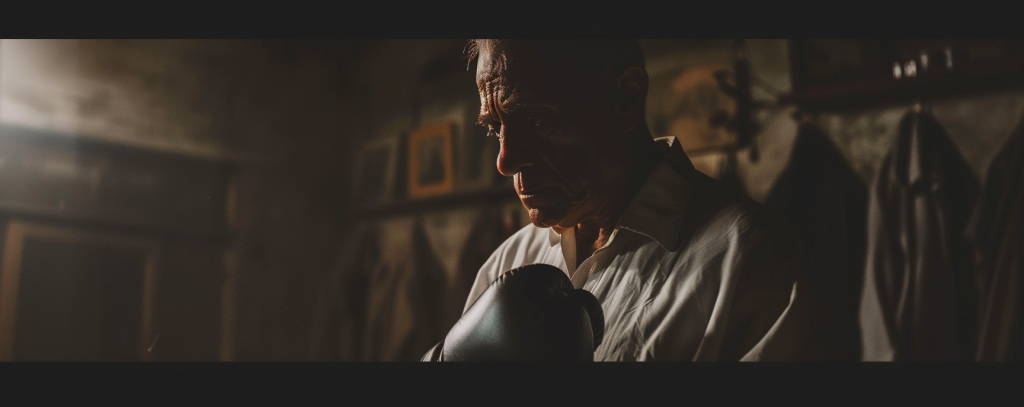
The film concludes with an older LaMotta, shadowboxing in the dressing room of a nightclub where he is about to perform a stand-up routine. This scene serves as a powerful metaphor for LaMotta’s life—the fight continues, but now it is against the shadows of his past, in a ring where the stakes are personal redemption and self-understanding. The final shot, a biblical quote from the Gospel of John, underscores the theme of redemption and the possibility of finding light in the darkness of one’s own making.

“Raging Bull” thus leaves its audience with a profound meditation on the nature of redemption and the complexities of the human spirit. It challenges conventional narratives of downfall and redemption by presenting a character whose path to self-realization is as tumultuous and uncertain as his life. In doing so, the film offers a deeply human portrayal of Jake LaMotta, a man whose legacy is defined not just by his victories and defeats in the boxing ring but by his enduring battle with himself.


✍️  Whether you’re mastering the art of dialogue, structure, or character development, the power of AI can be a game-changer in your writing journey. My Free Ebook, ‘AI for Authors’ delves into how AI-powered prompts can provide a unique edge to your storytelling process. If you’re intrigued by the prospect of supercharging your fiction skills, download your free copy today and explore new horizons in creative writing. 

The Mastery of Mood in ‘Vertigo’: Building Suspense in Storytelling

Introduction to ‘Vertigo’ and Its Cinematic Importance

“Vertigo,” directed by Alfred Hitchcock in 1958, stands as a monumental achievement in the landscape of cinema, revered not only for its intricate plot and compelling characters but also for its unparalleled mastery in creating an immersive mood that engrosses the audience in a web of suspense and mystery. This psychological thriller, adapted from the novel “D’entre les morts” by Boileau-Narcejac, unfolds the story of John “Scottie” Ferguson (James Stewart), a retired San Francisco detective suffering from acrophobia, who is hired to follow the enigmatic Madeleine Elster (Kim Novak), leading to a complex tale of obsession, identity, and illusion.

“Vertigo” is often celebrated as Hitchcock’s most personal and emotionally revealing work, diving deep into themes of human psychology, obsession, and the fallibility of perception. Despite receiving mixed reviews upon its release, the film has undergone a remarkable reevaluation over the decades, now heralded as one of the greatest films ever made. Its significance within Hitchcock’s oeuvre and its enduring influence on the thriller genre cannot be overstated, serving as a testament to Hitchcock’s ingenuity and his deft manipulation of cinematic elements to craft suspense.

Alfred Hitchcock, known as the master of suspense, had a unique talent for engaging audiences in his narrative world, making every shot, every scene, and every moment count towards the overarching tension and intrigue of his films. “Vertigo” encapsulates this talent, showcasing Hitchcock’s ability to weave mood intricately with storytelling, where the atmosphere is not merely a backdrop but a vital character in its own right. The film’s use of groundbreaking camera techniques, such as the dolly zoom effect—often referred to as the “Vertigo effect”—to visually represent Scottie’s fear of heights, exemplifies Hitchcock’s innovative approach to filmmaking.

Hitchcock’s meticulous attention to detail is evident in every aspect of “Vertigo,” from the casting and performances to the set design and locations. San Francisco, with its iconic landmarks and vertiginous landscapes, provides the perfect setting for a tale of dizzying obsession. The city’s natural beauty and architectural marvels are captured through Hitchcock’s lens, creating a visually stunning backdrop that enhances the film’s mood and thematic depth.

The director’s choice of color in “Vertigo” further demonstrates his skill in mood manipulation. The use of vibrant and specific color palettes throughout the film not only adds to its visual appeal but also serves as a narrative device, reflecting the psychological states and transformations of the characters. The recurring motifs of green and red, in particular, are laden with symbolism, contributing to the film’s enigmatic atmosphere and suspenseful build-up.

Moreover, Hitchcock’s collaboration with composer Bernard Herrmann resulted in one of the most memorable and haunting film scores in history. Herrmann’s music for “Vertigo” is intricately tied to the film’s emotional and psychological undercurrents, playing a crucial role in establishing its mood. The score’s swirling melodies and lush orchestration evoke Scottie’s spiraling obsession, enveloping the audience in a sense of unease and anticipation.

“Vertigo” also explores the theme of voyeurism, a recurrent motif in Hitchcock’s work, where the act of watching serves as a gateway into the characters’ minds and the film’s deeper mysteries. Through Scottie’s eyes, the audience becomes an active participant in the narrative, drawn into the director’s meticulously crafted mood of suspense and ambiguity. This immersive experience is a hallmark of Hitchcock’s filmmaking, demonstrating his understanding of cinema as a medium that engages directly with the viewer’s emotions and perceptions.

The psychological complexity of “Vertigo” is matched by its narrative structure, which defies conventional storytelling with its twists and turns, keeping the audience guessing until the very end. Hitchcock’s mastery over the art of suspense is evident in his handling of narrative pacing, where information is revealed gradually, maintaining tension and interest throughout the film. This technique, combined with the director’s use of visual storytelling and thematic depth, elevates “Vertigo” beyond a traditional thriller, making it a profound exploration of human psyche and emotion.

In examining “Vertigo” and its cinematic importance, one cannot ignore the film’s contribution to the language of cinema. Hitchcock’s innovative use of camera techniques, color, music, and narrative structure in “Vertigo” has influenced countless filmmakers and remains a subject of study and admiration within film circles. The film’s enduring legacy is a testament to Hitchcock’s vision and creativity, cementing “Vertigo” as a masterpiece that continues to captivate and inspire audiences and filmmakers alike.

“Vertigo” is not just a milestone in Alfred Hitchcock’s career but a pivotal moment in film history, showcasing the director’s unparalleled ability to merge technical mastery with deep psychological insight. The film’s meticulous construction, from its atmospheric setting and visual symbolism to its haunting score and complex characterizations, creates a mood of suspense and intrigue that is quintessentially Hitchcockian. As a cinematic exploration of obsession, identity, and the elusive nature of reality, “Vertigo” transcends its genre, offering a rich tapestry of themes that resonate with viewers long after the credits roll. In the pantheon of great films, “Vertigo” stands as a towering achievement, a testament to the artistry and vision of one of cinema’s greatest auteurs.

Dissecting the Mood: Atmosphere, Color, and Sound

Alfred Hitchcock’s “Vertigo” is a masterclass in the use of cinematic techniques to create and maintain a mood that is as unsettling as it is mesmerizing. The director’s meticulous crafting of atmosphere, color, and sound works in concert to immerse the viewer in a world where nothing is as it seems, and the line between obsession and reality blurs. This section delves into the integral role these elements play in “Vertigo,” highlighting Hitchcock’s unparalleled ability to weave them into the fabric of the film’s suspenseful narrative.

The setting of “Vertigo” is San Francisco, a city known for its iconic landscapes and architectural marvels. Hitchcock exploits the city’s natural and man-made topography to underscore the film’s themes of vertigo and disorientation. The winding streets, steep hills, and towering bridges become metaphors for Scottie’s psychological descent. The use of actual locations, such as the Mission San Juan Bautista, adds a layer of authenticity to the film, grounding its more fantastical elements in a recognizable reality. This choice of setting, combined with Hitchcock’s innovative cinematography, creates a palpable sense of unease. The “Vertigo effect,” achieved by simultaneously zooming in and dollying out, visually represents Scottie’s acrophobia and disorientation, directly transmitting his fear to the audience. This technique, along with low-angle shots and swirling camera movements, contributes to the film’s disquieting atmosphere, making the viewer’s experience as destabilized as Scottie’s psyche.

Color in “Vertigo” is not merely decorative; it is loaded with symbolic meaning and used deliberately to reflect the inner lives of its characters. The most striking use of color is the recurring motif of green, often associated with Madeleine. From her car to her clothes, green envelops her, symbolizing both allure and mystery. In a pivotal scene at Ernie’s restaurant, Madeleine is bathed in a ghostly green light, an effect achieved through colored gels on the lights. This choice not only sets her apart from the crowd but also casts her in an almost ethereal glow, enhancing her otherworldly allure to Scottie and the audience. Similarly, the color red is used to signify danger and passion, most notably in the red interior of the Empire Hotel where Madeleine stays. These deliberate color choices amplify the film’s emotional intensity, using visual cues to signal shifts in mood and foreshadow pivotal plot developments.

The soundtrack of “Vertigo,” composed by Bernard Herrmann, is as integral to the film’s mood as its visual elements. Herrmann’s score, with its haunting motifs and lush orchestration, mirrors the film’s spiraling narrative and psychological complexity. The main theme, with its repeating circular melody, evokes a sense of endless falling, directly tying the music to the film’s central motif of vertigo. Music cues are used strategically throughout the film to heighten tension and underscore emotional beats. In the scene where Scottie follows Madeleine to the cemetery, the music swells as he watches her from afar, its eerie tonality enhancing the scene’s voyeuristic tension and the mystery of Madeleine’s actions. Sound design, too, plays a crucial role in building suspense. Hitchcock’s use of silence is as effective as his use of sound. In moments of high tension, the absence of music or diegetic sound focuses the audience’s attention on the visual, making the eventual return of sound all the more impactful. The scene at the bell tower is a prime example, where the buildup to Madeleine’s fall is marked by a crescendo of sound that abruptly cuts to silence, leaving the viewer in shocked disbelief.

Hitchcock’s control over the film’s atmosphere extends to the careful orchestration of sound and silence, manipulating the audience’s emotional response. This control is evident in the meticulous synchronization of sound with visual elements, creating a seamless cinematic experience that immerses the viewer fully in the mood of the film. The use of leitmotifs, recurring musical themes associated with specific characters or ideas, reinforces the film’s underlying themes and connects the narrative’s disparate elements into a cohesive whole.

“Vertigo” stands as a testament to Alfred Hitchcock’s mastery of the cinematic medium, demonstrating his unparalleled ability to use atmosphere, color, and sound not just as embellishments but as essential components of storytelling. Through the deliberate manipulation of these elements, Hitchcock crafts a mood of suspense and psychological intrigue that envelops the viewer from the first frame to the last. The film’s use of San Francisco’s vertiginous landscape, its symbolic color scheme, and its hauntingly beautiful score work in harmony to create a cinematic experience that is as emotionally resonant as it is visually and aurally striking. In “Vertigo,” mood is everything—it is the vehicle through which the film’s complex narrative and thematic concerns are conveyed, making it not only a milestone in the thriller genre but also a masterful study in the art of cinematic mood creation.

The Psychological Aspect: Fear, Obsession, and Viewer Empathy

Alfred Hitchcock’s “Vertigo” is a profound psychological exploration that delves into the depths of fear, obsession, and the human psyche, presented through a narrative that seamlessly marries suspense with emotional depth. The film, beyond its surface-level intrigue and mystery, is a meticulous study of its protagonist’s psyche, portrayed with an intensity that draws the viewer into a vortex of empathy and psychological identification with Scottie Ferguson’s ordeal. This section examines how “Vertigo” uses its mood to amplify these psychological themes and manipulate viewer empathy, crafting a narrative that is as emotionally engaging as it is intellectually stimulating.

The theme of fear in “Vertigo” is multifaceted, extending beyond Scottie’s acrophobia to encompass deeper fears of loss, obsession, and identity. Hitchcock masterfully uses mood to externalize these internal fears, creating a palpable sense of dread that permeates the film. The visual representation of Scottie’s acrophobia, through the use of the dolly zoom effect, not only illustrates his fear of heights but also metaphorically represents his psychological descent into obsession. This technique, coupled with the haunting mood established through the film’s color palette and score, externalizes Scottie’s inner turmoil, allowing the audience to viscerally experience his fear and disorientation. The mood of “Vertigo” serves as a bridge between Scottie’s psychological state and the viewer’s emotional response, fostering a deep empathy for his character that is essential for the film’s suspenseful narrative to resonate fully.

Obsession is the core around which “Vertigo” revolves, depicted through Scottie’s fixation on Madeleine and later Judy. This obsession, while initially rooted in intrigue and desire, spirals into a dark compulsion that consumes him. The film’s mood accentuates this descent, using atmospheric tension and visual cues to mirror Scottie’s growing fixation. The recurring use of specific colors to represent Madeleine and the haunting repetition of musical themes serve to underscore Scottie’s obsession, enveloping the viewer in the same mood of enchantment and desperation. Hitchcock’s genius lies in his ability to make the viewer complicit in Scottie’s obsession; the mood of the film, with its hypnotic allure and underlying dread, draws the audience into a shared psychological space with the protagonist. This shared experience is heightened by the film’s pacing and narrative structure, which meticulously align the revelation of information with Scottie’s (and thereby the viewer’s) growing obsession, making the audience an active participant in the unraveling mystery.

The manipulation of viewer empathy in “Vertigo” is a testament to Hitchcock’s mastery of mood as a storytelling tool. By inviting the audience to share in Scottie’s psychological state, Hitchcock creates a sense of anticipation and emotional investment that is crucial for the suspense to be effective. The mood of the film, with its shifts from romantic allure to unsettling dread, guides the viewer’s emotional response, shaping their empathy towards Scottie and other characters. This manipulation is subtle yet profound, as it relies on the cumulative effect of the film’s mood to build a psychological connection that is both empathetic and critical. The viewer is drawn to empathize with Scottie’s plight, yet the mood of the film also encourages a critical reflection on the nature of his obsession and the consequences it entails.

Hitchcock’s use of mood to draw the audience deeper into the narrative’s suspenseful and psychological complexities is exemplified in the film’s climax, where the culmination of fear, obsession, and revelation converges. The mood here is charged with a tension that is both emotional and psychological, as the truth of Madeleine’s identity and Scottie’s role in the tragic denouement is revealed. The interplay of light, shadow, and color in this sequence, coupled with the crescendo of Herrmann’s score, creates a mood of impending doom that reflects Scottie’s realization of his obsession’s futility. This mood not only heightens the suspense but also deepens the viewer’s empathy for Scottie, culminating in a shared moment of catharsis and revelation.

In conclusion, “Vertigo” stands as a monumental work in the annals of cinema, not only for its narrative ingenuity and technical brilliance but also for its deep psychological insight. The film’s exploration of fear, obsession, and viewer empathy, amplified by its masterful manipulation of mood, showcases Alfred Hitchcock’s unparalleled ability to engage the viewer on both an emotional and intellectual level. Through its atmospheric tension, symbolic use of color, and haunting musical score, “Vertigo” creates a mood that is integral to its suspenseful narrative, drawing the viewer into a shared psychological journey with its protagonist. This immersive mood serves as the backbone of the film, guiding the viewer through a labyrinth of psychological intrigue and emotional depth that resonates long after the final credits roll. In “Vertigo,” Hitchcock not only crafted a cinematic masterpiece but also provided a masterclass in the use of mood to enhance and deepen the psychological dimensions of storytelling, affirming the film’s enduring legacy as a pinnacle of psychological suspense.


✍️  Whether you’re mastering the art of dialogue, structure, or character development, the power of AI can be a game-changer in your writing journey. My Free Ebook, ‘AI for Authors’ delves into how AI-powered prompts can provide a unique edge to your storytelling process. If you’re intrigued by the prospect of supercharging your fiction skills, download your free copy today and explore new horizons in creative writing.