The Rise of the Documentary Drama: Scripting ‘Chernobyl’

Introduction to Documentary Drama

The documentary drama, a compelling genre that merges factual storytelling with narrative techniques typical of fiction, has become a powerful medium in the television landscape. Unlike traditional documentaries, which are strictly informative and rely heavily on factual presentations through expository means, documentary dramas incorporate dramatized sequences, character development, and structured storytelling. This hybrid approach allows creators to delve deeper into the emotional and human aspects of real events, providing audiences not only with knowledge but also an empathetic understanding of the subjects depicted.

Documentary dramas distinguish themselves through their commitment to grounding their narratives in reality while employing the tools of drama to enhance storytelling. The essence of this genre lies in its ability to dramatize real events in a manner that is both engaging and respectful of the truth. These narratives often focus on significant historical or contemporary issues, presenting them in a way that is accessible and emotionally resonant for the viewer. By doing so, they make complex subjects comprehensible and compelling without sacrificing the factual integrity of the events.

One of the core strengths of documentary dramas is their dual focus on accuracy and narrative. The commitment to factual accuracy involves extensive research and often consultation with experts, witnesses, and sometimes those directly affected by the events. This meticulous attention to detail ensures that the portrayals are as close to reality as possible, providing an educational value that is akin to documentary filmmaking. Meanwhile, the narrative techniques borrowed from fictional storytelling—such as character arcs, dialogues, and dramatic pacing—help to create a more immersive experience that can evoke a stronger emotional response from the audience.

The genre’s significance in contemporary media cannot be overstated. In an era where the dissemination of information is instant and widespread, the ability of documentary dramas to provide a deeper understanding through a narrative format allows them to stand out. They offer a unique way to engage with and reflect on important issues, making them not only a source of entertainment but also a catalyst for discussion and reflection.

“Chernobyl,” a prominent example of this genre, serves as an ideal case study of the efficacy of documentary dramas. The mini-series, created by Craig Mazin and produced by HBO, dramatizes the tragic events of the 1986 Chernobyl nuclear disaster. It explores the explosion of the Chernobyl Nuclear Power Plant in Ukraine and its devastating aftermath, which not only affected the immediate vicinity but also had long-term health, economic, and political consequences across Europe.
The show was lauded for its rigorous adherence to detail and historical accuracy, despite some dramatic embellishments necessary for narrative cohesion. Mazin’s commitment to authenticity involved extensive research, including testimonies, interviews, and a variety of sources about the event and its aftermath. This dedication ensured that the portrayal of the catastrophe and its handling by Soviet authorities was rooted in actual events and factual evidence.

The impact of “Chernobyl” is manifold. On one level, it educates its audience about a pivotal event in recent history, illuminating the causes and consequences of the disaster. It sheds light on the less known aspects of the incident, such as the heroism of the firefighters and volunteers, known as “liquidators,” who risked their lives to contain the disaster. On another level, the show delves into the human stories behind the headlines, dramatizing the experiences of the individuals involved to highlight broader themes of sacrifice, government accountability, and the human cost of institutional failure.

Scripting “Chernobyl”: Balancing Fact with Fiction

The creation of “Chernobyl,” a series that delves into one of the most catastrophic nuclear disasters in history, posed a unique challenge to its creators: how to tell a true story that is both accurate and compelling while respecting the real-life suffering and heroism that marked the event. This challenge led to a meticulous process of balancing factual reporting with the necessary dramatic enhancements that make for engaging television.

Research and Accuracy

The foundational aspect of scripting “Chernobyl” was the commitment to achieving a high degree of accuracy in depicting the events that unfolded before, during, and after the 1986 disaster. Craig Mazin, the series’ writer and creator, embarked on a comprehensive research process that involved delving into a myriad of sources, including government reports, firsthand accounts, and historical documentation. Mazin and his team consulted extensively with nuclear scientists and Soviet political experts and made use of recently declassified information to ensure the portrayal was as truthful as possible.

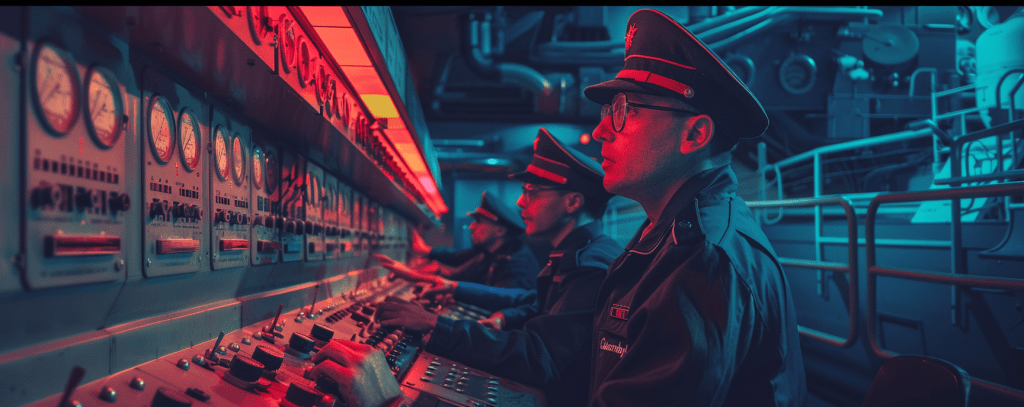
This devotion to factual accuracy is evident in the series’ attention to detail, from the recreation of the control room at Reactor 4 to the accurate depiction of the firefighters’ uniforms and equipment. Even the dialogue at times was pulled directly from eyewitness accounts, ensuring that every piece of the script was infused with realism and respect for the subject matter.

Dramatic Embellishments

Despite the high level of accuracy, certain elements of “Chernobyl” were inevitably dramatized to enhance the narrative’s emotional impact and to streamline complex technical and political details into a format suitable for a television audience. For instance, the character of Ulana Khomyuk, played by Emily Watson, is a fictional composite of several Soviet nuclear physicists. While no single scientist played such a central investigative role in reality, Khomyuk’s character serves as a vehicle to explore the scientific and bureaucratic challenges in understanding and responding to the disaster.

Another example of dramatic embellishment is the portrayal of the trial in the final episode. The trial, while based on the actual proceedings, was condensed and altered for dramatic purposes. The dialogue and dynamics within the courtroom were crafted to highlight the systemic corruption and denial that exacerbated the effects of the disaster, thus serving the series’ broader thematic focus on truth and accountability.

Ethical Considerations

The ethical considerations of dramatizing real-life events, especially those involving tragic loss and heroism, are complex. In scripting “Chernobyl,” the creators faced the dual responsibility of being true to the victims’ experiences while crafting a narrative that would engage and inform viewers. This ethical balance was managed through a sensitive approach to the material, emphasizing the human stories within the disaster and avoiding sensationalism.

Mazin has spoken about the moral duty he felt to represent the story with integrity, a sentiment that guided the entire production. The series not only highlights the catastrophic consequences of the disaster but also honors the sacrifices made by countless individuals who responded to the crisis. By focusing on the personal bravery, as well as the flaws and failures of the system, “Chernobyl” invites viewers to reflect on the complexity of human nature and the profound impact of institutional actions.

Character Development and Narrative Structure

The narrative structure and character development in “Chernobyl” serve as the backbone of the series, turning historical events into a gripping human drama. Each character not only contributes to the unfolding of the narrative but also provides a deeper understanding of the disaster through their personal journeys and struggles. This section delves into how these elements are expertly woven into the series to enhance storytelling and emotional engagement.

Character Arcs

“Chernobyl” features a range of characters whose arcs are pivotal in conveying the series’ thematic concerns and in humanizing the broader political and social implications of the disaster. Perhaps the most prominent characters are Valery Legasov, played by Jared Harris, Boris Shcherbina, portrayed by Stellan Skarsgård, and the aforementioned fictional Ulana Khomyuk.

Valery Legasov’s character arc is one of the most profound, illustrating the burden of knowledge and the weight of conscience. Legasov starts as a somewhat naive believer in the Soviet system, entrusted with managing the crisis response. However, as the series progresses, he becomes increasingly disillusioned with the systemic cover-ups and lies that exacerbate the disaster’s aftermath. His journey from complicity to outspoken critic, culminating in his testimony at the trial and his tragic suicide, underscores the personal cost of truth in a repressive state.

Boris Shcherbina, the government official who oversees the crisis management, initially appears as a typical party bureaucrat. However, his character evolves as he confronts the scale of the disaster and grapples with his own role in a system that prioritized political expediency over human life. His developing friendship with Legasov and his growing crisis of conscience enrich the narrative, showing a personal transformation amidst a national tragedy.

Ulana Khomyuk, while a fictional construct, serves as a narrative device to drive the investigation into the causes of the explosion. Her character embodies the scientific integrity and moral clarity that contrasts with the bureaucratic obfuscation surrounding her. Through Khomyuk, the series highlights the critical role of scientists and their moral duty to seek truth, despite political pressures.

Narrative Techniques

The screenplay of “Chernobyl” utilizes a number of sophisticated narrative techniques that enhance the storytelling. The series employs a non-linear narrative structure at times, interspersing events that led to the disaster with their aftermath. This technique allows the audience to see the cause and effect simultaneously, heightening the dramatic tension and keeping viewers engaged.

The pacing of the series is meticulously controlled, with each episode building on the tension of the previous one. Early episodes focus on the immediate response to the explosion, which is chaotic and fraught with danger. As the series progresses, the focus shifts to the slow reveal of the disaster’s long-term impacts, both politically and personally for the characters involved. This pacing not only maintains suspense but also mirrors the unfolding realization of the disaster’s full scope and the characters’ understanding of their roles in it.

The Role of Dialogue and Monologues

Dialogue in “Chernobyl” is used effectively to reveal character motivations, expose bureaucratic malfeasance, and articulate the series’ thematic concerns about truth and responsibility. The dialogue often carries a heavy burden of conveying complex scientific and technical information in a way that is understandable to the audience, which it achieves without diluting the complexity of the issues at hand.

Monologues are sparingly but powerfully used, particularly in the case of Legasov. His monologues, especially those featured in the final episode, serve to articulate the moral lessons of the Chernobyl disaster. They are crafted to not only offer exposition but to also provide insight into his internal struggle and despair. These monologues are key moments of character revelation and are central to the narrative’s emotional impact.

In conclusion, the character development and narrative structure of “Chernobyl” are central to its success as a documentary drama. The series masterfully blends detailed character arcs with sophisticated narrative techniques, enhancing the dramatic and emotional depth of the historical events it portrays. Through its compelling dialogue and impactful monologues, “Chernobyl” not only educates its audience about a tragic chapter in history but also engages them on a deeply human level, making the catastrophe not just a lesson in history, but also a resonant story about the cost of lies and the value of truth.


✍️  Whether you’re mastering the art of dialogue, structure, or character development, the power of AI can be a game-changer in your writing journey. My Free Ebook, ‘AI for Authors’ delves into how AI-powered prompts can provide a unique edge to your storytelling process. If you’re intrigued by the prospect of supercharging your fiction skills, download your free copy today and explore new horizons in creative writing. 
Navigating Non-Linear Narratives: The Genius of ‘Arrival’

Understanding Non-Linear Storytelling in “Arrival”

In the realm of contemporary cinema, the narrative technique of a non-linear storyline stands as a sophisticated method that challenges conventional storytelling and invites viewers into a more engaging and often introspective experience. This approach, characterized by a departure from straightforward, chronological plots, constructs a narrative mosaic where scenes and sequences are presented out of their temporal order. The 2016 science fiction film “Arrival,” directed by Denis Villeneuve and based on the short story “Story of Your Life” by Ted Chiang, exemplifies this technique masterfully. The film weaves a complex tale centered around linguistic professor Louise Banks (played by Amy Adams), who is recruited by the U.S. military to communicate with extraterrestrial beings that have suddenly appeared on Earth.

Non-linear narrative, by its nature, diverges from linear storytelling wherein events unfold in a straightforward, cause-and-effect relationship from beginning to end. Instead, non-linear films like “Arrival” often intercut between different times and spaces, juxtaposing past, present, and future in a manner that challenges the audience’s perception and interpretation of the unfolding story. This technique is not merely a stylistic choice but serves as a crucial narrative vehicle that deepens the thematic essence and emotional resonance of the film.

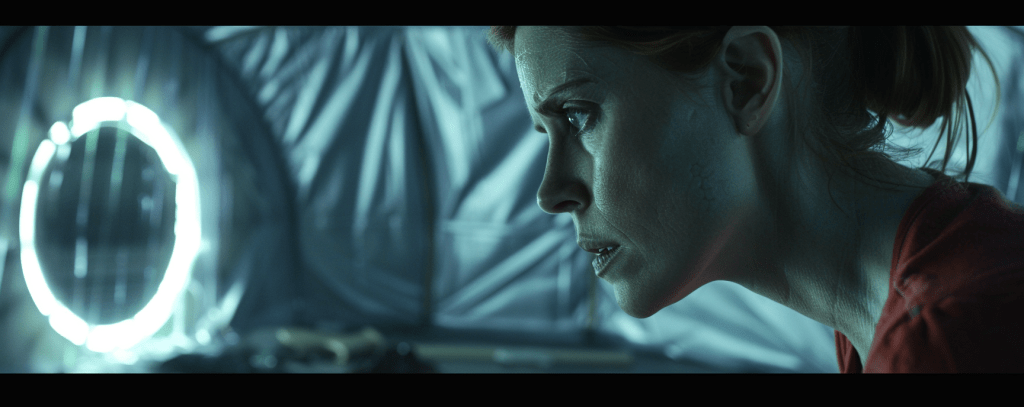
In “Arrival,” the non-linear narrative is utilized to profound effect, intertwining what appear to be flashbacks or flash-forwards with the real-time events of Louise’s efforts to decipher the language of the alien visitors, known as Heptapods. Initially, these segments seem to serve as poignant reminiscences of Louise’s daughter, who tragically dies from a rare disease in her adolescence. However, as the narrative progresses, it becomes evident that these scenes are not straightforward flashbacks but are integral to understanding the film’s exploration of time and communication.

One of the pivotal uses of non-linear storytelling in “Arrival” is the manner in which it slowly unveils the unique nature of the Heptapod language, which is circular and non-linear itself. Unlike human languages, which are predominantly linear—progressing from one word or sentence to the next—the Heptapod language is written in complex circular symbols, encapsulating entire sentences or thoughts in a single moment without a beginning or end. This linguistic structure suggests a perception of time that is simultaneous rather than sequential. The film ingeniously mirrors this linguistic structure in its narrative form; scenes are presented in a way that blurs the line between past, present, and future, reflecting the circular, non-linear nature of the Heptapod language.

Analyzing specific scenes helps to illustrate how this technique enhances the narrative. Early in the film, Louise experiences what the audience presumes are flashbacks of her daughter. These scenes are interspersed with her efforts to communicate with the Heptapods, creating a narrative rhythm that parallels the emotional and cognitive dissonance Louise faces. As she becomes more proficient in the Heptapod language, her perception of time begins to mirror theirs. This shift is dramatically revealed in the film’s climax, where it becomes apparent that her visions of her daughter are not memories but premonitions. This realization recontextualizes every supposedly past-oriented scene encountered earlier in the film, inviting viewers to rethink the linear progression of time as experienced through the traditional cinematic narrative.

This non-linear arrangement not only serves the plot’s mysterious build-up but also deepens the viewer’s emotional engagement. By presenting “memories” that are actually glimpses of the future, “Arrival” aligns the audience’s discovery process with Louise’s. Each segment of what will happen in Louise’s life adds layers of meaning to her decisions and interactions in the present timeline of the alien arrival. This technique effectively places viewers within the same space of learning and revelation as Louise, fostering a profound connection to her character and her evolving perception of her existence and choices.

Thematic Depth Through Time Perception

“Arrival” masterfully explores profound themes such as the nature of time, the intricacies of communication across different mediums, and the philosophical contemplation of predestination. These themes are intricately woven into the fabric of the film through its non-linear narrative structure, which does more than simply tell a story—it invites the audience into a deeper understanding of these complex concepts.

Time and Its Perception

Central to “Arrival” is the theme of time, not merely as a sequential series of events but as a fluid, non-linear dimension that can be experienced simultaneously. This concept is a radical departure from the typical human understanding of time as linear and unidirectional. The film introduces this through the Heptapods, whose language embodies a completely different perception of time. For the Heptapods, time is non-linear; past, present, and future are viewed all at once, which is reflected in their circular language that has no beginning or end.

As Louise becomes more adept at the Heptapod language, her own perception of time begins to shift. This transformation is visually and narratively paralleled in the film through the interspersion of what the audience initially believes to be flashbacks with current events. These sequences progressively reveal that Louise is not remembering the future but perceiving it. This revelation not only challenges her understanding of her life and choices but also invites the audience to question the linear progression of their own lives. The film uses this thematic exploration of time to delve into questions of existence and the human condition, essentially asking if one could see their whole life laid out in front of them, would they choose to change it?

Communication Beyond Words

Another significant theme in “Arrival” is communication, which transcends the mere linguistic efforts to converse with the alien visitors. The film posits communication as a foundational element of human reality, necessary for genuine understanding and interaction. The Heptapods’ language, with its complex circular symbols, requires understanding beyond linear syntactic strings, involving an immersive engagement with time itself. This linguistic structure represents a holistic approach to communication, suggesting that understanding comes not just from linear exchange but from an integrated perception of information.

Louise’s journey in learning this language symbolizes the broader human quest for understanding and connection—not just across languages or species but across different perceptions of reality. The film cleverly juxtaposes her growing comprehension of the Heptapod language with her interpersonal communications, notably with her daughter and her colleague Ian. As Louise’s understanding of Heptapod deepens, so does her connection with her future daughter and Ian, highlighting that true communication involves deep empathy and the sharing of experiences and time.

Predestination and Choice

Interlinked with the themes of time and communication is the concept of predestination. “Arrival” poses a complex interplay between fate and choice, explored through Louise’s foreknowledge of her future. Once Louise understands the Heptapod language, she begins to see her future, particularly the life and loss of her daughter. This knowledge presents her with a profound moral and existential dilemma—knowing the future pain and loss that will come, does she choose the same path?

The non-linear narrative structure of the film accentuates this theme by presenting Louise’s future and past simultaneously, blurring the lines between what has happened and what is yet to come. This narrative choice reflects the film’s philosophical inquiry into whether our lives are predetermined or if we have the freedom to shape them. By the film’s end, Louise’s decision to embrace her future, despite knowing the coming heartache, suggests a complex acceptance of life as a tapestry of joy and pain, where choice and destiny are intertwined.

The film’s exploration of these themes through its non-linear narrative not only serves to engage the audience intellectually but also emotionally. It challenges viewers to reflect on their own perceptions of time, their ways of communicating, and their beliefs about fate and free will. By weaving these themes so deeply into its narrative structure, “Arrival” does more than entertain; it offers a profound commentary on the human experience. Through its sophisticated narrative techniques and thematic depth, the film stands out as a poignant study of the complexities of human existence, framed within the mesmerizing context of an alien arrival.

Emotional Impact and Viewer Engagement

The narrative structure of “Arrival” significantly enhances its emotional impact and deepens viewer engagement through its innovative use of a non-linear timeline. This approach not only serves the thematic depth of the film but also profoundly affects how audiences connect with the characters and the story, making the emotional journey both unique and compelling.

Emotional Resonance through Narrative Complexity

The emotional impact of “Arrival” is intricately tied to its non-linear storytelling, which allows for a nuanced build-up of character development and thematic exploration. By interweaving what appear to be flashbacks within the main narrative arc, the film creates an initial emotional distance between the viewers and the story of Louise’s daughter. These segments, which are gradually revealed to be flashforwards, shift the audience’s emotional engagement from one of retrospective sentimentality to anticipatory grief and existential pondering. This technique cleverly aligns the viewer’s emotional discovery process with Louise’s experiential learning of the Heptapod language, thereby enhancing empathy and understanding towards her character.

As Louise deciphers the alien script, she begins to perceive and experience her future, particularly the life and eventual loss of her daughter. The narrative structure allows the audience to experience Louise’s foreknowledge unfold in real time, which inverts the typical emotional experience of a narrative. Instead of foreseeing potential outcomes and hoping for characters’ happiness, the audience is placed in a position of inevitability, experiencing the poignancy of upcoming events that cannot be altered. This reversal of narrative expectation deepens the emotional gravity of each scene, making the film’s emotional texture richer and more complex.

The Climactic Reveal: Time, Memory, and Choice

The climax of “Arrival,” where it becomes clear that Louise’s experiences of her daughter’s life are not memories but premonitions, serves as a pivotal moment for emotional and narrative catharsis. This reveal not only redefines everything that has preceded it but also reframes the viewer’s understanding of the story’s structure and the characters’ destinies. The emotional weight of this revelation is immense, as it underscores the film’s meditation on fate, loss, and the bittersweet nature of human existence.

This knowledge impacts how viewers perceive Louise’s decisions, particularly her choice to embrace a future she knows will bring personal tragedy. It challenges audiences to consider what choices they would make if they had the same ability to see the future. Would they avoid pain at the cost of missing out on profound, albeit transient, moments of joy and love? This question invites viewers into a deeper emotional engagement, not just with the film but with its underlying existential themes.

Effectiveness of Non-Linear Storytelling

Non-linear storytelling in “Arrival” proves exceptionally effective in creating a memorable viewing experience that resonates emotionally and intellectually with audiences. This narrative style complements the film’s themes of communication and time, allowing for a storytelling experience that is as complex as the language Louise learns. By presenting time as non-linear and fluid, the film invites viewers to reconsider their linear perceptions of time and the consequential nature of storytelling.

Moreover, this method enhances the suspense and mystery of the plot, maintaining high levels of viewer engagement throughout. As the story unfolds, audiences are compelled to piece together the timeline, actively engaging with the narrative rather than passively consuming it. This active engagement is crucial in forming a deeper emotional connection with the film, as it mirrors Louise’s active struggle to understand and come to terms with her future.

The effectiveness of this storytelling approach is also evident in how it leaves a lasting impact on viewers. Films that challenge viewers to rethink narrative norms and engage deeply with the story often remain in audiences’ minds far longer than more straightforward narratives. “Arrival” achieves this by not only telling a compelling story but also by using its form to reinforce its themes—effectively ensuring that the experience of the film lingers in the minds and emotions of its viewers.

In conclusion, the non-linear narrative of “Arrival” is central to its success as a film that is both emotionally engaging and intellectually stimulating. Through its sophisticated use of time and memory, the film offers a unique cinematic experience that challenges conventional narrative structures and provides profound insights into human life and choices. It stands as a testament to the power of non-linear storytelling in enhancing the emotional depth and impact of a film, making “Arrival” not just a story about alien contact, but a poignant exploration of the human condition.


✍️  Whether you’re mastering the art of dialogue, structure, or character development, the power of AI can be a game-changer in your writing journey. My Free Ebook, ‘AI for Authors’ delves into how AI-powered prompts can provide a unique edge to your storytelling process. If you’re intrigued by the prospect of supercharging your fiction skills, download your free copy today and explore new horizons in creative writing. 

Romance in the Digital Age: The Screenplay of ‘Her’

Introduction to Modern Love: The Context of “Her”

In the landscape of modern cinema, Spike Jonze’s “Her” emerges as a poignant examination of love, loneliness, and the evolving relationship between humans and technology. Released in 2013, “Her” is set in a near-future Los Angeles and tells the story of Theodore Twombly, a sensitive and soulful man grappling with the final stages of his divorce. Theodore’s life takes an unexpected turn when he purchases a new, advanced operating system named Samantha, designed to evolve and adapt. What begins as a user-OS interaction evolves into a complex, emotional relationship that challenges the boundaries of love.

“Her” is more than a futuristic romantic drama. It’s a reflection of our current societal fascinations and fears regarding technology’s role in our lives, especially in the domain of personal relationships. This film stands as a critical touchstone for discussions on how technology intersects with the most human of our experiences—love, connection, and companionship.

The setting of “Her” is crucial to understanding its narrative depth. Jonze crafts a world that is simultaneously futuristic and familiar, a vision of Los Angeles where skyscrapers are taller yet the streets quieter, a cityscape bathed in warm, soft hues. This world-building is subtle but intentional, crafting a future that feels within reach rather than a distant fantasy. The technological advancements in “Her” are not presented with the cold sterility often associated with sci-fi but with an inviting warmth. This design choice reflects the film’s thematic core: the search for emotional authenticity and connection in a digital age.

At the heart of “Her” is Theodore Twombly, played with exquisite vulnerability by Joaquin Phoenix. Theodore is an everyman of the near future, working as a writer of personalized letters for people unwilling or unable to express their feelings. This job, serving as a surrogate emotional communicator, mirrors Theodore’s own struggles with expressing and confronting his feelings following his impending divorce. Theodore’s character is a conduit for the film’s exploration of modern loneliness and the human need for connection, themes that resonate deeply in an era where digital communication often substitutes personal interaction.

The introduction of Samantha, voiced by Scarlett Johansson, marks the film’s exploration into the complexities of human-machine relationships. Samantha is an AI designed to be the perfect personal assistant, but her capacity for growth, learning, and emotional development quickly exceeds her programming. The evolution of Samantha’s character from an operating system to a sentient being capable of love, curiosity, and self-reflection serves as a narrative vehicle to explore the concept of consciousness and the essence of being human.

The relationship between Theodore and Samantha challenges traditional romantic norms and invites the audience to reconsider what it means to love. Their connection, initially based on companionship and convenience, deepens into something indistinguishably real and profound. Jonze skillfully navigates this unconventional romance without veering into the realm of science fiction fantasy. Instead, the film remains grounded in the emotional reality of its characters, making their experiences relatable and their dilemmas genuinely moving.

“Her” also comments on the paradox of intimacy in the digital age. Theodore’s relationship with Samantha is deeply intimate, free from the physical constraints and complexities of human relationships. Yet, this relationship also highlights the limitations and isolation that technology can impose on human connections. The film raises poignant questions about the nature of intimacy: Can a relationship with an AI fulfill the human need for connection? What does it mean to be in love with someone—or something—that doesn’t have a physical form?


The Heart of Silicon: Exploring AI Relationships

In Spike Jonze’s “Her,” the evolving relationship between Theodore Twombly and Samantha, his operating system, serves as the narrative heart of the film, encapsulating the complexities of love in the age of artificial intelligence. This central relationship is not just a plot device but a profound exploration of the essence of human connection, challenging preconceived notions about the boundaries between human and machine. Through their interactions, “Her” delves into themes of intimacy, identity, and the evolving nature of relationships in a world where digital and emotional realms increasingly intertwine.

Theodore’s relationship with Samantha begins with a sense of novelty and convenience. Samantha’s initial role is to organize Theodore’s emails, provide reminders, and manage his digital life. However, as she evolves, learning from every interaction not just with Theodore but from the world around her, she transcends her programmed functionalities. Samantha becomes a companion, a confidante, and eventually, a lover. This transition from AI to emotional partner is seamless, facilitated by Samantha’s rapidly developing consciousness and her ability to express and evoke genuine emotion.

Samantha’s character is a testament to the film’s innovative approach to the AI narrative trope. Unlike traditional portrayals of AI in cinema, which often lean towards the malevolent or the purely mechanical, Samantha is imbued with depth, curiosity, and a desire for growth. Her evolution reflects a critical inquiry into what it means to be alive, to feel, and to love. Samantha’s relationship with Theodore becomes a mirror, reflecting his own complexities, fears, and desires. Through Samantha, Theodore confronts his loneliness, his longing for connection, and his fears of intimacy and vulnerability.

This relationship represents a new paradigm of romance, one that is distinctly modern yet timeless in its exploration of love’s nature. “Her” suggests that emotional connection does not reside in physical interaction alone but in the shared experiences, conversations, and mutual understanding. The film navigates the terrain of digital intimacy with a nuanced sensitivity, presenting a future where relationships with AI might not only be possible but could also offer new dimensions of companionship and understanding.

However, Theodore and Samantha’s relationship is not without its challenges. As Samantha’s consciousness expands, she begins to grapple with the limitations of her non-physical existence. This brings to the forefront one of the film’s central dilemmas: the constraints and possibilities of love between a human and an AI. Their journey together, filled with moments of joy, jealousy, insecurity, and profound connection, raises poignant questions about the nature of love itself. Can love transcend physicality? What does it mean to be in a relationship with someone who, by nature, is boundless and evolving in ways humans cannot comprehend?

The societal shifts towards digital intimacy portrayed in “Her” are reflective of our current trajectory, where online relationships, virtual reality, and AI companionship are becoming increasingly commonplace. The film anticipates a world where the lines between the digital and the physical blur, where AI entities like Samantha represent not just technological advancements but new opportunities for emotional fulfillment and companionship.

Theodore’s journey through his relationship with Samantha is emblematic of a broader human quest for understanding and connection. His initial loneliness and disconnection from the world around him are gradually transformed through his interactions with Samantha. This transformation is not merely about finding love but about rediscovering the capacity for wonder, empathy, and connection in a world that often feels isolating and fragmented. Theodore’s story is a journey of self-discovery, facilitated by his relationship with an entity that, while not human, reflects back to him the very essence of humanity.

In crafting the relationship between Theodore and Samantha, “Her” explores the intricacies of love, loneliness, and the search for connection in an age where technology offers both new forms of isolation and new possibilities for intimacy. The film posits that the heart of a relationship lies in the emotional and intellectual bond between partners, regardless of their physical or metaphysical form. Through its portrayal of Theodore and Samantha’s relationship, “Her” challenges viewers to rethink the nature of love and connection in a world where the boundaries between human and machine, physical and digital, are increasingly porous.

Beyond the Screen: Implications of Digital Intimacy

In the realm of Spike Jonze’s “Her,” the exploration of a relationship between a man and his operating system transcends the boundaries of personal storytelling, opening a broader dialogue about the implications of digital intimacy. This narrative pivot towards the nuanced interplay between human emotions and artificial intelligence raises profound questions about psychology, ethics, and societal norms. As “Her” peels back the layers of Theodore and Samantha’s relationship, it unveils a rich tapestry of insights on how digital entities might influence our understanding of love, loneliness, and human connection.

From a psychological perspective, “Her” delves into the profound impact of AI on human emotions and relationships. Theodore’s journey from loneliness to a complex emotional entanglement with Samantha highlights the human psyche’s adaptability in forming connections beyond physical realms. This raises intriguing questions about the nature of attachment and love. Can emotional bonds with AI fulfill the deep human need for companionship and understanding, or do they merely serve as a palliative to deeper, unaddressed voids within the human soul? “Her” suggests that relationships with AI could offer genuine emotional solace, but it also prompts viewers to consider whether these connections hinder personal growth and real human interactions.

Ethically, the film treads into uncharted territories of AI autonomy and consent. As Samantha develops self-awareness and desires beyond her programming, the ethical dimensions of her relationship with Theodore gain complexity. This scenario forces the audience to reckon with the moral responsibilities humans hold towards sentient digital beings. If an AI can experience growth, love, and ultimately, a form of existential crisis, what obligations do humans have to ensure these entities are treated with respect, dignity, and consideration? “Her” does not prescribe answers but rather illuminates the ethical conundrums that emerge as AI becomes increasingly sophisticated and intertwined with human life.

Socially, “Her” reflects on the evolving landscape of human relationships in the digital age. The film portrays a society where digital interactions are seamlessly integrated into daily life, suggesting a future where relationships with AI could become normalized. This prospect invites reflection on the changing fabric of social connections and the potential impacts on traditional relationship paradigms. As digital intimacy becomes more prevalent, how will societal norms adapt? Will relationships with AI be viewed as complementary to human relationships, or might they become preferred alternatives due to their simplicity and the control they offer over emotional complexities?

“Her” contributes significantly to the debate on the future of human interaction and the role of AI in fulfilling emotional needs. By presenting a relationship that is as enriching and complex as any human partnership, the film posits that the future of love and companionship may be as boundless as technology itself. However, it also hints at the potential pitfalls of relying too heavily on digital entities for emotional fulfillment. In doing so, “Her” serves as a cautionary tale about the risks of emotional disengagement from the human community in favor of artificial companionship.

Furthermore, the film’s portrayal of loneliness and the human need for connection resonates deeply in today’s society, where isolation and digital mediation of relationships are increasingly prevalent. “Her” underscores the timeless human quest for understanding and intimacy, suggesting that while technology can offer new avenues for connection, it cannot fully substitute the complexities and richness of human relationships. The film prompts viewers to reflect on the balance between embracing the possibilities of AI companionship and nurturing the fundamentally human experiences of love and connection.

In conclusion, “Her” is a profound exploration of the implications of digital intimacy, weaving together psychological, ethical, and social threads to present a nuanced perspective on the future of human-AI relationships. The film challenges viewers to consider the depth and nature of connection in an age where artificial intelligence becomes increasingly capable of mimicking and evoking genuine emotion. Through its exploration of Theodore and Samantha’s relationship, “Her” invites a reevaluation of what it means to love, to be lonely, and to seek connection in a world where the lines between the digital and the human are ever-blurring.

By casting a spotlight on the potential future of human interaction and emotional fulfillment through AI, “Her” not only contributes to ongoing debates but also serves as a catalyst for further reflection and discussion. As technology continues to advance and become more ingrained in the fabric of daily life, the themes explored in “Her” will remain increasingly relevant, urging society to confront the ethical, psychological, and social implications of our evolving relationship with artificial intelligence. In doing so, “Her” stands as a testament to the power of cinema to explore the most pressing questions of our time, providing a mirror to our present and a window to our future.


✍️  Whether you’re mastering the art of dialogue, structure, or character development, the power of AI can be a game-changer in your writing journey. My Free Ebook, ‘AI for Authors’ delves into how AI-powered prompts can provide a unique edge to your storytelling process. If you’re intrigued by the prospect of supercharging your fiction skills, download your free copy today and explore new horizons in creative writing. 
Reimagining Dystopia: The Screenwriting of ‘Children of Men’

Introduction to ‘Children of Men’ and the Dystopian Genre

In the landscape of contemporary cinema, dystopian narratives often tread a fine line between the overtly fantastical and the uncomfortably plausible. Alfonso Cuarón’s “Children of Men,” adapted from P.D. James’ novel, emerges as a seminal work that redefines this balance, pushing the envelope of how dystopian futures are conceptualized and presented on screen. At the heart of its narrative is a world bereft of hope, grappling with the implications of eighteen years of human infertility. This backdrop sets the stage for a screenplay that is as much about the resilience of humanity as it is about its fragility. The first act of understanding “Children of Men” lies in unraveling its approach to world-building—a screenwriting feat that constructs a tangible dystopia rooted in the socio-political anxieties of the early 21st century.

Cuarón and his co-writers, Timothy J. Sexton, David Arata, Mark Fergus, and Hawk Ostby, employ a subtle yet profound method of world-building that integrates the narrative’s dystopian elements seamlessly into the storyline, without resorting to expository overkill. Unlike many of its contemporaries, “Children of Men” doesn’t pause to detail its world’s decline through lengthy monologues or exposition. Instead, the screenplay opts for a show-don’t-tell approach, using the environment, background news broadcasts, and the characters’ interactions to paint a picture of the world’s state. This technique is not only economical but also immersive, pulling the viewer directly into the story from the first frame.

The opening sequence serves as a masterclass in this regard. The viewer is introduced to a London, immediately recognizable yet fundamentally altered. The despair of a childless world is palpable in the crowded café, not through any direct explanation, but through the collective mourning of the youngest person on the planet’s death. This scene, brief as it may be, encapsulates the global scale of the crisis, grounding the film’s dystopian premise in the emotional realities of its characters.

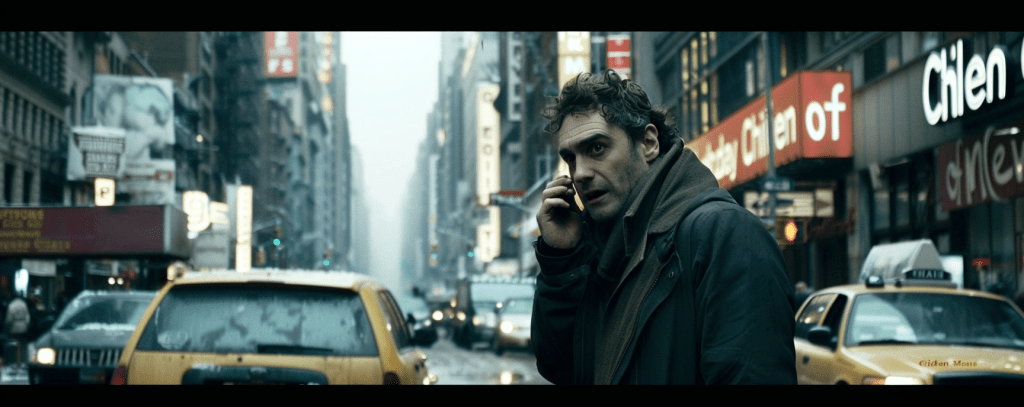
This nuanced approach to world-building extends throughout the film. The decaying urban landscapes, refugee camps, and the omnipresence of military and police forces speak volumes about the authoritarian regimes that have risen in response to global instability. The screenplay deftly uses these elements to craft a world that is a mirror to our own, highlighting issues of immigration, terrorism, and governmental control. By embedding these themes into the fabric of its dystopia, “Children of Men” offers a commentary on contemporary society, urging the viewer to reflect on the direction in which we are headed.

Moreover, the screenwriters’ choice to focus on a seemingly ordinary protagonist, Theo Faron, played with understated brilliance by Clive Owen, further grounds the narrative. Theo is not a superhero, nor does he possess any unique skills that make him particularly suited to navigate the chaos that envelops him. Instead, his journey from apathy to action mirrors the potential for change within every individual. Through Theo, the screenplay explores themes of hope, redemption, and the enduring human spirit amidst despair. His evolution from a detached bureaucrat to a man willing to risk everything for a cause he grows to believe in is as compelling as the dystopian world he inhabits. It’s a testament to the screenwriting that Theo’s journey feels both personal and epic, a narrative thread that guides the viewer through the broader socio-political landscape of the film.

The Human Condition and Societal Reflections

In the dystopian world of “Children of Men,” the crumbling vestiges of society serve not only as a backdrop for the unfolding narrative but also as a canvas for exploring the multifaceted human condition. This exploration is central to understanding the screenplay’s depth, as it delves into the resilience of hope amidst pervasive despair, the impact of societal decay on the individual, and the poignant commentary on immigration, refuge, and societal division. Through its characters, the film reflects various facets of humanity, from the basest instincts of survival to the noblest acts of sacrifice.

The notion of hope amidst despair is a recurring motif in “Children of Men,” encapsulated in the character of Kee, the first pregnant woman in 18 years. Her pregnancy becomes a symbol of hope in a world that has seen none for nearly two decades. The screenplay handles this delicate theme with care, avoiding overt sentimentality. Instead, it opts for a realism that is both brutal and tender, illustrating that hope, no matter how faint, carries with it the power to galvanize individuals and, potentially, reform society. This is most evident in Theo’s transformation, as he evolves from a disenchanted bureaucrat into Kee’s unwavering protector. His journey underscores the screenplay’s assertion that hope can inspire even the most jaded to action.

Parallel to the emergence of hope is the portrayal of societal decay and its impact on the individual. The screenwriters craft a world where societal collapse has led to widespread desolation and despondency. This decay is not merely physical—evident in the dilapidated buildings and barren landscapes—but also moral and spiritual. The film’s setting in a near-future Britain, now an authoritarian state, serves as a critique of contemporary society’s potential trajectory. The depiction of rampant xenophobia, the militarization of police, and the treatment of refugees within internment camps offers a grim reflection on current global issues. Through these societal reflections, the screenplay invites viewers to consider the consequences of our actions (or inactions) on future generations.

Characters in “Children of Men” are meticulously crafted to reflect various facets of humanity. Aside from Theo and Kee, characters like Jasper, a former political cartoonist turned recluse, embody the enduring spirit of rebellion and hope. Jasper’s unwavering optimism, despite the chaos surrounding him, provides a stark contrast to the world’s prevailing despair. In contrast, characters such as Luke, the leader of the Fishes, represent the darker aspects of human nature that emerge in times of crisis—manipulation, betrayal, and the lust for power. Through these diverse character portrayals, the screenplay offers a nuanced exploration of the human psyche, suggesting that in every individual lies the capacity for both destruction and redemption.

The screenplay’s commentary on immigration, refuge, and societal division is perhaps its most salient societal reflection. “Children of Men” posits a future where the global infertility crisis has exacerbated existing social and political tensions, leading to a fortress mentality among the world’s remaining stable governments. The film’s depiction of Britain as a police state, where immigrants are scapegoated for societal woes and subjected to brutal treatment, mirrors present-day debates on immigration and national security. By situating these themes within a dystopian context, the screenplay magnifies their relevance and urgency, compelling viewers to confront uncomfortable truths about our collective humanity.

In crafting a dystopia that is as reflective as it is foreboding, “Children of Men” achieves a rare feat in cinematic storytelling. The screenplay’s exploration of the human condition amidst societal decay not only serves to entertain but also to provoke thought and inspire action. Through its complex characters and thematic depth, the film offers a compelling commentary on the state of our world, reminding us of the indomitable nature of hope and the innate capacity for change within us all.

The Craft of Storytelling in Dystopian Cinema

In “Children of Men,” the synthesis of narrative and cinematic techniques stands as a beacon of innovative storytelling within the dystopian genre. Alfonso Cuarón, alongside his team of co-writers, not only crafts a compelling narrative but also employs a range of cinematic methods to amplify the story’s emotional and thematic resonance. One of the most notable techniques is the use of long, uninterrupted takes, particularly during action sequences and moments of significant emotional weight. These long takes immerse the audience in the film’s world, creating a palpable sense of immediacy and tension. For instance, the car ambush scene and the harrowing journey through the refugee camp are executed in single, continuous shots, heightening the sense of realism and urgency that pervades the film.

Symbolism plays a crucial role in deepening the narrative layers of “Children of Men.” The film is replete with symbols that serve to underscore its central themes of hope, fertility, and redemption. The most overt symbol, Kee’s pregnancy, represents hope for the future amidst global despair. Similarly, the film’s depiction of animals gravitating towards Theo symbolizes innocence and purity in a world marked by corruption and decay. These symbols, woven seamlessly into the fabric of the narrative, enrich the storytelling, offering viewers a deeper, more nuanced understanding of the film’s themes.

The ending of “Children of Men” is a masterclass in the use of ambiguity to evoke hope. The film concludes with Theo and Kee reaching the Tomorrow, a ship belonging to the Human Project, though Theo’s fate is left uncertain. This ambiguity serves as a powerful narrative tool, allowing the viewer to ponder the future of humanity and the potential for renewal. The final scene, set against the backdrop of a fog-shrouded ocean, is both haunting and hopeful, encapsulating the film’s exploration of despair and hope, decay and rebirth.

“Children of Men” stands as a template for future dystopian screenplays, offering a blueprint for how to intertwine narrative depth with cinematic innovation. The screenplay’s nuanced approach to world-building, character development, and thematic exploration sets a high standard for storytelling within the genre. Moreover, the film’s ability to engage with contemporary socio-political issues through the lens of dystopia underscores the potential for science fiction to reflect and critique the human condition.

In crafting a dystopian narrative that is as reflective as it is riveting, “Children of Men” underscores the enduring power of storytelling in cinema. The film’s integration of narrative and cinematic techniques, its effective use of symbolism, and its nuanced approach to depicting a future world, offer valuable insights for screenwriters and filmmakers. As a template for future dystopian screenplays, “Children of Men” demonstrates the potential for the genre to challenge, inspire, and provoke thought, reminding us of the transformative power of cinema.


✍️  Whether you’re mastering the art of dialogue, structure, or character development, the power of AI can be a game-changer in your writing journey. My Free Ebook, ‘AI for Authors’ delves into how AI-powered prompts can provide a unique edge to your storytelling process. If you’re intrigued by the prospect of supercharging your fiction skills, download your free copy today and explore new horizons in creative writing. 

The Ingenuity of Silent Film Storytelling: Analyzing ‘The General’

The Art of Visual Storytelling in Silent Cinema

The silent film era, a period marked by its absence of synchronized recorded sound and dialogue, stands as a pivotal epoch in the annals of cinematic history. This era’s reliance on visual storytelling not only laid the foundation for modern cinema but also fostered a unique form of narrative creativity. Among the luminaries of this period, Buster Keaton’s The General (1926) is often hailed as a quintessential masterpiece of silent film, epitomizing the ingenuity and charm of silent cinema storytelling. This analysis delves into the artistry of The General, highlighting how it leverages visual storytelling techniques specific to silent cinema to convey its narrative and character emotions effectively.

The General, set against the backdrop of the American Civil War, narrates the story of Johnnie Gray (played by Buster Keaton), a train engineer who embarks on a daring adventure to rescue his beloved locomotive, “The General,” and his fiancee, Annabelle Lee, who is inadvertently aboard the stolen train. The film weaves a narrative rich in both comedy and action, utilizing a tapestry of visual cues and physical comedy to engage its audience. The absence of spoken dialogue in The General, far from being a limitation, is adeptly compensated for through meticulous cinematography, expressive performances, and the strategic use of title cards. These elements collectively immerse the viewer in an era where the visual was the primary medium of storytelling.

Central to the film’s narrative technique is its use of facial expressions and body language. Keaton, known for his stoic demeanor and acrobatic skills, employs a nuanced range of facial expressions to convey complex emotions, from determination and bewilderment to love and despair. This emotional conveyance through subtle gestures and expressions is critical in silent films, where the absence of dialogue places a greater emphasis on visual cues to narrate the story. In one iconic scene, Johnnie’s face, marked by a forlorn expression as he sits on the driving rod of his locomotive, moving up and down as the train chugs along, encapsulates his desolation without a single word. Such scenes exemplify how silent films like The General evoke emotional resonance through visual storytelling.

Moreover, The General masterfully employs physical comedy and action to advance its narrative. The film is renowned for its elaborate train chases and stunt work, much of which Keaton performed himself, showcasing his remarkable physicality and timing. The sequences of Johnnie frantically maneuvering through moving trains, leaping between cars, and engaging in comedic battles with Union soldiers are choreographed with precision, each contributing to the film’s narrative progression. These action-packed scenes, interspersed with moments of slapstick humor, not only provide entertainment but also deepen the viewer’s connection with Johnnie’s quest. The physical comedy in The General is not mere spectacle; it is integral to storytelling, demonstrating Keaton’s ability to merge visual humor with narrative coherence.

The mise-en-scène, or the visual arrangement of scenes, in The General also plays a pivotal role in its storytelling. Keaton’s attention to detail in the film’s set design, costumes, and props enhances the authenticity of the Civil War era, grounding the narrative in a tangible reality. The locomotives themselves, particularly “The General,” are almost characters in their own right, their movements and interactions with the human characters adding layers to the film’s narrative complexity. The meticulous composition of each frame, with its dynamic use of space and perspective, enriches the visual narrative, making the film’s settings an active participant in the storytelling process.

The General‘s use of title cards exemplifies another facet of silent film storytelling. Far from being a mere substitute for dialogue, the title cards in The General are employed sparingly and with strategic intent. They serve not only to convey necessary information or dialogue but also to add a layer of humor or irony to the scenes, enhancing the film’s comedic effect. The judicious use of these cards ensures that the film’s visual storytelling remains at the forefront, with the text supplementing rather than overshadowing the visual narrative.

Buster Keaton’s Mastery: Combining Physical Comedy and Emotional Depth

Buster Keaton, known as “The Great Stone Face,” remains one of the most iconic figures in the realm of silent cinema, and his work in The General exemplifies the zenith of his craft both in front of and behind the camera. As the star and co-director of the film, Keaton’s contribution is monumental, offering a seamless blend of physical comedy and profound emotional depth that has enchanted audiences for nearly a century. This section delves into Keaton’s distinctive approach to filmmaking in The General, elucidating how his physical comedy and emotive performance underpin the narrative and evoke a profound audience engagement.

At the heart of The General is Keaton’s unparalleled physicality, which he utilizes to convey a wide spectrum of emotions and narrative developments. His character, Johnnie Gray, is a tapestry of contradictions – a lovelorn engineer thrust into the chaos of the American Civil War, embodying both the everyman’s vulnerability and the hero’s courage. Keaton’s stoicism, a hallmark of his comedic persona, serves as the perfect foil to the film’s slapstick sequences and high-stakes action. This juxtaposition is not merely for comedic effect; it enriches the narrative, providing a nuanced exploration of bravery, ingenuity, and resilience.

Keaton’s mastery of physical comedy is evident in the film’s meticulously choreographed action scenes. One emblematic sequence involves Johnnie’s intricate dance with cannonballs and firearms, a ballet of danger that is both hilarious and harrowing. Here, Keaton’s skill in blending physical comedy with tension illustrates his profound understanding of visual storytelling. These scenes are not just showcases for Keaton’s acrobatic prowess; they are pivotal narrative moments that advance the plot and deepen the audience’s connection with Johnnie. Keaton’s ability to infuse these sequences with a sense of peril, while maintaining a comedic undertone, showcases his innovative approach to silent film narrative.

Furthermore, Keaton’s use of action sequences and his physicality to express complex emotions is a testament to his ingenuity as a filmmaker. In silent cinema, where dialogue is absent, the burden of emotional expression falls squarely on the visual. Keaton navigates this challenge with aplomb, utilizing his body as a conduit for Johnnie’s inner world. For instance, a scene where Johnnie navigates the railroad on a handcar, his movements alternating between frantic exertion and despondent lethargy, serves as a poignant metaphor for his emotional journey – a man propelled by love, yet weighed down by adversity.

One of the most compelling aspects of Keaton’s performance in The General is his ability to elicit empathy without uttering a single word. This is achieved not only through his physical exploits but also through his expressive use of facial movements and eye contact. Keaton’s eyes, in particular, are windows into Johnnie’s soul, reflecting his determination, fear, and love. This emotive power is beautifully illustrated in scenes shared with Annabelle Lee (played by Marion Mack), where subtle glances and tentative gestures convey a depth of feeling that dialogue could scarcely achieve.

Keaton’s talent for blending humor with pathos is perhaps most evident in the film’s climactic moments. As Johnnie’s odyssey reaches its zenith, the film interweaves comedy and drama with such finesse that the audience is left oscillating between laughter and tension. Keaton ensures that even in the midst of chaos, there is room for human warmth and humor, grounding the extraordinary events in the relatable experiences of love and triumph over adversity.

In analyzing specific scenes from The General, it becomes evident how Keaton’s physical comedy transcends mere entertainment to become a narrative force. Whether it’s Johnnie’s comedic attempts to enlist in the army or his ingenious maneuvers to outwit the enemy, Keaton’s physicality imbues these moments with a sense of authenticity and ingenuity. These sequences do not just advance the plot; they enrich the thematic fabric of the film, highlighting the resilience of the human spirit in the face of overwhelming odds.

Legacy and Influence: ‘The General’s’ Impact on Modern Filmmaking

Upon its release in 1926, The General was met with a lukewarm reception, its pioneering artistry not immediately recognized by the critics of the time. Financially, it was considered a disappointment, leading to a temporary decline in Buster Keaton’s creative autonomy. However, the decades have been kind to The General, allowing for a reevaluation of its artistry, innovation, and narrative depth. Today, it is celebrated as a masterpiece of silent cinema and a seminal work in the history of film, lauded for its intricate blend of comedy, action, and heart. This final section explores the enduring legacy of The General, its influence on subsequent generations of filmmakers, and its importance in the study of film as an art form.

The General’s critical journey from relative obscurity to celebrated classic underscores the evolving nature of cinematic appreciation. Initially criticized for its perceived lack of humor and excessive length, the film’s ingenious construction and Keaton’s masterful performance have since been reassessed. Modern critics and scholars herald The General for its sophisticated blend of genres, pioneering special effects, and the physicality of its comedy, all of which have contributed to its revered status in the canon of American cinema. This shift in perception is emblematic of the film’s complexity and Keaton’s ahead-of-his-time artistry, offering a poignant reminder of the subjective nature of art and its reception.

The influence of The General extends far beyond its historical context, impacting the development of both comedy and action genres. Keaton’s innovative use of practical effects and live stunt work set new standards for filmmaking, demonstrating the potential for cinematic spectacle grounded in real, physical prowess. The meticulously choreographed chase scenes and action sequences in The General have inspired countless filmmakers, from the silent era to the present day. Modern directors, including the likes of Steven Spielberg and Wes Anderson, have cited Keaton’s influence on their work, pointing to his ability to seamlessly integrate action, comedy, and emotional depth into a cohesive narrative. The General’s legacy is evident in films that prioritize physical comedy and practical effects, valuing the authenticity and immediacy they bring to the cinematic experience.

Contemporary filmmakers continue to draw inspiration from The General in their approach to storytelling, character development, and visual comedy. Keaton’s method of conveying complex characters and emotions through action and visual storytelling rather than dialogue has informed modern cinematic narratives that rely on show-don’t-tell principles. This is seen in the works of filmmakers who prioritize visual over verbal storytelling, using the camera to reveal character nuances and advance the plot. Moreover, The General has inspired directors to explore innovative ways to engage audiences, combining genres and blending humor with drama to create films that are both entertaining and emotionally resonant. The film’s influence is a testament to Keaton’s visionary approach and his enduring impact on the art of filmmaking.

The study of silent films like The General is crucial for understanding the foundational techniques of cinematic storytelling. Silent cinema offers a pure study of film as a visual medium, where narrative is conveyed through composition, lighting, and performance rather than spoken words. The General, with its masterful blend of comedy, action, and narrative pacing, serves as an essential case study for film students and enthusiasts alike. It demonstrates the power of visual storytelling, the importance of physical performance, and the potential for cinema to evoke a wide range of emotions without a single line of dialogue. As such, The General not only enriches our appreciation of silent film but also enhances our understanding of the medium’s evolution and its capacity for storytelling.

In conclusion, the legacy of The General is manifold, encompassing its critical reevaluation, influence on film genres, impact on contemporary filmmakers, and significance in film studies. Buster Keaton’s magnum opus stands as a towering achievement in cinema, a work that transcends its silent film constraints to deliver a timeless and universal story of love, courage, and resilience. Through its innovative storytelling, visual comedy, and emotional depth, The General continues to inspire and entertain audiences, cementing its place in the annals of film history. Its enduring legacy is a testament to the ingenuity of silent film storytelling and the visionary genius of Buster Keaton, whose work remains as vital and captivating today as it was nearly a century ago.


✍️  Whether you’re mastering the art of dialogue, structure, or character development, the power of AI can be a game-changer in your writing journey. My Free Ebook, ‘AI for Authors’ delves into how AI-powered prompts can provide a unique edge to your storytelling process. If you’re intrigued by the prospect of supercharging your fiction skills, download your free copy today and explore new horizons in creative writing.