The Craft Behind Cringe Comedy: Analyzing ‘The Office’

The Anatomy of Cringe Comedy

Cringe comedy, a subgenre that revels in the discomfort of its audience, finds its humor in awkwardness, social faux pas, and the inability of characters to recognize their own inappropriate behavior. This style of comedy, often characterized by prolonged, uncomfortable scenes that challenge the traditional boundaries of the comedic form, has been perfected in popular television shows such as “The Office.” To understand the mechanics and allure of cringe comedy, it is essential to dissect its core elements and the psychological engagement it demands from viewers.

Defining Cringe Comedy

At its core, cringe comedy is built around the concept of vicarious embarrassment. Viewers are compelled to engage with scenarios that most would find mortifying or intensely uncomfortable in real life. This genre capitalizes on the tension between what is socially acceptable and the blatant disregard for these norms by its characters. In “The Office,” this is exemplified by the character of Michael Scott, whose lack of self-awareness and desperate need for approval lead to a myriad of cringeworthy moments. Unlike traditional comedies, where characters may be in on the joke, cringe comedy often leaves its characters oblivious to the absurdity of their actions, amplifying the viewer’s sense of discomfort.

Psychological Engagement

Cringe comedy’s effectiveness hinges on the psychological phenomenon of empathetic embarrassment. When viewers see a character like Michael Scott obliviously cross boundaries, they react not only to the humor intended by the creators but also to their own empathetic responses to the social discomfort being portrayed. This dual-layered engagement is unique to cringe comedy. It’s not merely about observing a character in a ridiculous situation; it’s about feeling a part of that situation in a vicariously uncomfortable way.
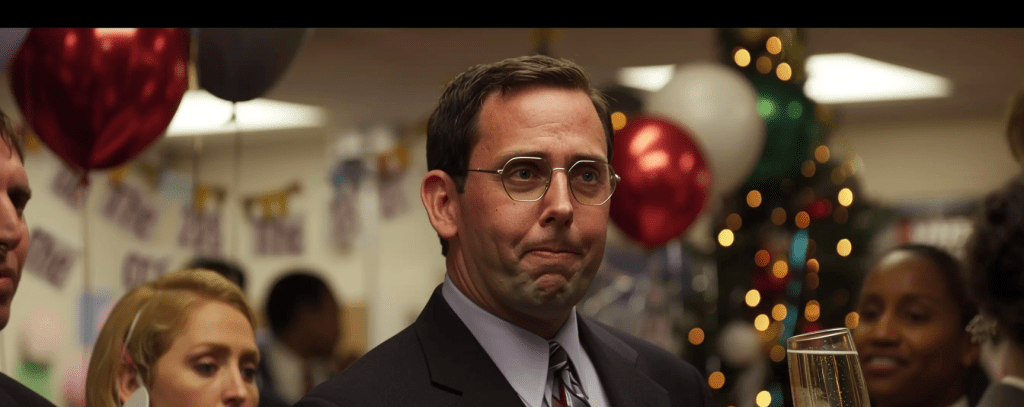
Research in psychology suggests that people who have a higher propensity for empathy might experience these kinds of comedies as more painful than humorous. This introduces a fascinating dynamic where the audience’s tolerance for embarrassment can influence their enjoyment of the show. Such engagement makes cringe comedy a polarizing yet intriguing field of study for understanding humor’s impact on human emotions.

Elements of Cringe in “The Office”

“The Office” employs several key elements that are quintessential to cringe comedy. Firstly, the mockumentary format of the show allows for an intimate examination of characters’ facial expressions and non-verbal cues, which are often laden with discomfort and awkwardness. The camera work, with its quick zooms and prolonged stares, acts almost as a character in its own right, highlighting and sometimes exaggerating the awkwardness of interactions.

Secondly, the mundane setting of a typical American office magnifies the absurdity of the characters’ behavior. The relatability of the office environment makes the abnormal behavior of characters like Michael, Dwight, or Andy all the more jarring. This juxtaposition of the ordinary with the absurd invites the audience to examine their own office experiences through a comedic, albeit cringey, lens.

Dialogue in “The Office” also plays a crucial role. Conversations often begin on a normal note but quickly devolve into awkward tangents or inappropriate ramblings, particularly in Michael Scott’s dialogues. These interactions are rarely resolved in a satisfying manner, leaving the audience to linger in the discomfort. The humor derived from these exchanges does not come from witty punchlines but from the growing realization of the conversation’s inappropriateness and the other characters’ reactions to it.

Historical Context and Influences

The roots of cringe comedy can be traced back to earlier shows and performers who embraced elements of awkwardness and social faux pas. Shows like “Fawlty Towers” and characters like Larry David in “Curb Your Enthusiasm” set the groundwork for this style by focusing on characters whose lack of social grace leads to increasingly uncomfortable situations. However, it was “The Office,” originally created by Ricky Gervais and Stephen Merchant for UK television, that mainstreamed cringe comedy and explored its depths in the context of an everyday workplace.

The influence of British humor, particularly its penchant for underplayed and awkward social interactions, is evident in the show’s comedic style. The original UK version of “The Office” introduced a brand of humor that was at once painfully awkward and subtly brilliant, challenging audiences to find amusement in the discomfort. When adapted for an American audience, the show retained much of its awkward humor while tailoring the characters and settings to resonate with a broader base.

Understanding Viewer Reception

The reception of cringe comedy, particularly of a show like “The Office,” varies widely among audiences. For some, the awkward situations and secondhand embarrassment are hilariously entertaining. For others, the same scenarios might be too uncomfortable to watch. This split is indicative of cringe comedy’s unique place in the comedy genre—it is as much about pushing boundaries as it is about eliciting laughs.


Character Development and Dynamics in “The Office”

In “The Office,” the rich tapestry of character development and interpersonal dynamics not only drives the narrative but also serves as the foundation for its cringe comedy. Each character, from the bumbling yet endearing Michael Scott to the eccentric Dwight Schrute, plays a crucial role in creating moments of discomfort and hilarity. This section explores how these characters embody the elements of cringe comedy through their development and interactions, using specific examples from the show.

Michael Scott: The King of Cringe

Michael Scott, portrayed by Steve Carell, is a quintessential example of a cringe-inducing character. His desperate need for approval, combined with a profound lack of awareness, sets the stage for many of the show’s most awkward moments. Michael’s attempts at humor, often involving inappropriate jokes or misguided attempts at relatability, typically end in silence or discomfort from his colleagues. This character trait is vividly displayed in the episode “Diversity Day,” where Michael’s attempt to teach the office about diversity ends up offending every person in the room. His inability to recognize the inappropriateness of his actions, despite the evident discomfort of his audience, perfectly encapsulates the essence of cringe comedy.

Dwight Schrute: Absurdity and Earnestness

Dwight Schrute, played by Rainn Wilson, is another pivotal character in fostering the show’s atmosphere of cringe. His intense seriousness about his job as a paper salesman and self-appointed office enforcer, coupled with bizarre behavior and beliefs (such as his obsession with survival tactics and beet farming), frequently puts him at odds with the rest of the office. Dwight’s interactions often lead to cringe-worthy moments due to his lack of social cues and extreme reactions. For instance, his fire safety demonstration in the episode “Stress Relief” causes sheer panic, demonstrating how his good intentions are often executed in the most absurdly inappropriate ways.

Jim and Pam: The Relatable Counterpart

Contrasting with Michael and Dwight are Jim Halpert and Pam Beesly, whose budding relationship offers a more relatable and less cringe-inducing subplot. However, their pranks on Dwight and their reactions to Michael’s antics often serve as a conduit for the audience’s own feelings of secondhand embarrassment. Jim, in particular, frequently breaks the fourth wall with his knowing glances into the camera, acknowledging the absurdity of the situations in a way that invites the audience to share in the cringe. This dynamic is clearly seen in episodes like “Classy Christmas,” where Jim’s fear of Dwight’s revenge encapsulates the anticipation and dread that underpin much of cringe comedy.

The Role of Supporting Characters

Supporting characters like Angela, Kevin, and Oscar each contribute to the cringe comedy environment in their unique ways. Angela’s stern moralism and obsession with cats often clash hilariously with her colleagues’ more relaxed attitudes, while Kevin’s perpetual cluelessness and simplistic thinking create awkward moments that are both endearing and cringe-worthy. Oscar’s rational and often sardonic viewpoint provides a grounded perspective on the chaos, which often highlights the absurdity of situations for comedic effect.

Character Interactions and Cringe Humor

The interactions between these characters are central to “The Office’s” success in cringe comedy. The chemistry—or often the deliberate lack thereof—between characters like Michael and Toby, whom Michael irrationally hates, adds layers to the comedic texture of the show. Episodes like “The Deposition” illustrate how Michael’s irrational dislike for Toby exacerbates already tense situations, making them even more uncomfortable and thereby funnier for the audience.

Each character’s development throughout the series also deepens the comedic potential. As characters grow, change, or reveal more about their backgrounds, their interactions evolve. This evolution allows the show to explore new dimensions of cringe comedy without losing the freshness of its humor. For example, Michael’s relationship arc, from a bumbling boss to a more self-aware and caring figure, while still maintaining his cringe-inducing qualities, showcases a sophisticated balance of character growth with comedic consistency.

Impact and Legacy of “The Office” on Modern Comedy

“The Office” not only entertained with its awkward humor and unforgettable characters but also left a significant mark on television comedy. This section examines how the show’s innovative approach to cringe comedy has influenced other series and altered audience expectations for the genre, exploring its broader cultural significance and reasons for its enduring popularity.

Redefining Situational Comedy

Before “The Office,” situational comedies largely depended on laugh tracks and studio audiences to cue viewer reactions. By eschewing these traditional elements in favor of a single-camera setup and a mockumentary style, “The Office” introduced audiences to a new, more intimate way of experiencing comedy. This approach allowed for a subtler, more organic development of comedic situations, which often stemmed from character interactions and personality quirks rather than scripted jokes. The show’s realistic setting and relatable scenarios—amplified by the cringe-worthy behavior of its characters—created a form of humor that resonated deeply with viewers, influencing subsequent comedies like “Parks and Recreation,” “Modern Family,” and “Brooklyn Nine-Nine,” which adopted similar stylistic elements.

Influence on Audience Expectations

“The Office” also shifted audience expectations regarding the depth and complexity of comedic television. Viewers came to appreciate character-driven humor and stories that developed over time, valuing emotional depth alongside laughs. The series demonstrated that comedy could be both hilarious and heartwarming, leading audiences to expect more from sitcoms than just a series of gags. This emotional engagement is evident in how fans rooted for Jim and Pam’s relationship or felt genuine sadness during Michael Scott’s departure—episodes that blended humor with poignant storytelling, setting a new standard for how sitcoms could impact their audience.

Legacy of Character Archetypes

The character archetypes introduced by “The Office” have become blueprints for modern comedy. Michael Scott, the well-meaning but hopelessly inept manager, has influenced numerous characters in television comedy, where his legacy can be seen in the likes of Leslie Knope from “Parks and Recreation” and Jake Peralta from “Brooklyn Nine-Nine.” Each of these characters embodies some aspect of Michael’s blend of foolishness and sincerity, proving that characters with good intentions but flawed methods can be both loveable and hilarious. Similarly, the dynamic of rational and irrational colleagues found in Jim and Dwight’s relationship has been mirrored in many shows, highlighting the comedic potential of clashing personalities in close working environments.

Cultural Significance and Social Impact

“The Office” has permeated popular culture to an extent few other series have. Its phrases and scenes have become part of the lexicon of everyday life, referenced in everything from casual conversation to professional presentations. The show has also been credited with presenting a satirical yet accurate depiction of office life that many find therapeutic. It offers a way to laugh at the absurdities of modern work environments, serving as both a mirror and a relief for the frustrations of office-bound employees everywhere. Moreover, “The Office” has inspired numerous adaptations around the world, each reflecting and reforming the show’s themes to fit different cultural contexts, further testament to its universal appeal and relevance.

Enduring Popularity and Relevance

Decades after its premiere, “The Office” continues to be discovered by new generations of viewers, thanks to streaming platforms. Its continued relevance speaks to the timeless nature of its humor and the universal truths about workplace dynamics and human behavior it explores. The show’s ability to blend cringe-worthy moments with genuine human connection allows it to maintain a lasting presence in the cultural zeitgeist, continually attracting fans who find both comfort and comedy in its episodes.

Moreover, the show’s format has inspired corporate training videos, team-building exercises, and even academic courses that explore its portrayal of management styles and workplace ethics. By turning the mundane into the extraordinary, “The Office” has set itself apart as more than just a source of entertainment—it has become a tool for education and reflection on the nature of work and relationships in the corporate world.

In conclusion, the impact and legacy of “The Office” on modern comedy and broader culture are profound. It has reshaped how comedies are made and what audiences expect from them, enduring as a beloved classic that continues to engage and influence. Its unique blend of humor, heart, and a touch of discomfort has not only set new standards for the genre but has also established the show as a pivotal point in the evolution of television comedy.


✍️  Whether you’re mastering the art of dialogue, structure, or character development, the power of AI can be a game-changer in your writing journey. My Free Ebook, ‘AI for Authors’ delves into how AI-powered prompts can provide a unique edge to your storytelling process. If you’re intrigued by the prospect of supercharging your fiction skills, download your free copy today and explore new horizons in creative writing. 

From Page to Palette: Visual Storytelling in ‘Sin City’

Introduction to ‘Sin City’ and Its Unique Visual Style

Released in 2005, Sin City is a pivotal film that masterfully blurs the lines between graphic novels and cinema, reshaping the landscape of film adaptation and visual storytelling. Directed by Robert Rodriguez and Frank Miller, with “special guest director” Quentin Tarantino, the film is adapted from Miller’s graphic novel series of the same name. Its plot is a tapestry of intertwining stories set in the fictional Basin City, a place seething with crime, corruption, and moral ambiguity. The characters, ranging from hard-boiled detectives to downtrodden private citizens, navigate their dark paths in the violent, corrupt world of Sin City.

One of the film’s most remarkable aspects is its faithful adherence to the source material’s visual style. Frank Miller’s graphic novels are known for their stark black-and-white aesthetics, a style that the film adopts to create a visually distinctive look that sets it apart from other adaptations. This choice was not merely a stylistic gimmick but a deliberate effort to preserve the graphic novels’ tone and atmosphere. The result is a film that feels like a living comic book, with visuals that play a crucial role in narrative delivery.

The visual style of Sin City is characterized by its high-contrast, black-and-white visuals, punctuated by sporadic bursts of color. This technique not only draws viewers into a graphic novel come to life but also serves to focus attention and amplify the narrative’s emotional dynamics. The choice to employ black and white imagery with selective color usage is deeply rooted in the noir tradition, which the graphic novels exemplify. Noir’s classic features—shadowy figures, rain-drenched streets, and a pervasive sense of doom—are all present and accounted for, but with a modern twist that uses color to both enhance and subvert traditional noir motifs.

Rodriguez and Miller’s approach to the film’s cinematography and visual effects was groundbreaking. They used high-definition digital cameras and green screen technology almost exclusively in the production, allowing them to control every visual element precisely. This method enabled a direct translation of the comic panels to the screen, maintaining the books’ original composition and framing. For instance, scenes often feature strong horizontal and vertical lines with stark lighting, creating silhouettes and shadows that add depth and intensity to the visual narrative. This technique not only faithfully recreates the look of the comic but also enhances the storytelling by focusing on visual cues that convey parts of the story indirectly.

The selective use of color in Sin City is one of its most striking visual features. Color is used sparingly, highlighting specific elements such as a character’s eyes, a car, or blood, which often appears in a vivid, almost glowing red. This technique draws the viewer’s attention to particular details or signifies something crucial about a character or element within the story. For example, the yellow hue of a character’s face not only sets him apart visually but also marks him as uniquely sinister and otherworldly within the context of the film’s black-and-white universe. This use of color symbolism extends beyond mere aesthetics, contributing to the film’s narrative and emotional depth.

The lighting and shadow play in Sin City also deserve particular attention. Inspired by the hard-boiled detective films and noir cinema of the 1940s and 1950s, the film utilizes shadows not just for dramatic effect but as storytelling tools. Characters are often seen with half of their face in shadow, reflecting the dual nature of their morality or the hidden secrets they carry. The interplay of light and dark visually represents the struggle between good and evil, a central theme in both the film and the graphic novels.

Moreover, the film’s setting and environments are rendered almost entirely in black and white, creating a backdrop that feels both timeless and oppressive. The use of monochrome landscapes punctuated by stark lighting mimics the style of classic film noir, enhancing the plot’s underlying tension and the narrative’s gritty atmosphere. The city itself becomes a character in this visual interplay, its architecture and shadows forming a labyrinth that ensnares its inhabitants in a web of crime and retribution.

The unique visual style of Sin City not only respects the source material but also enriches it, bringing the stark, inked pages of Frank Miller’s artwork to vibrant, albeit often grim, life. This adherence to the original visual aesthetic is rare in film adaptations, particularly those based on graphic novels, making Sin City a landmark in cinematic technique. The film’s ability to maintain the graphic novel’s visual integrity while using advanced cinematography creates a seamless bridge between the static images of the comic and the dynamic capabilities of film, setting a high bar for future adaptations.

Techniques of Visual Storytelling in ‘Sin City’

In the world of film adaptations, maintaining the integrity of the original material while creating something uniquely cinematic poses a significant challenge. Sin City not only rises to this challenge but establishes a new benchmark for visual storytelling by employing innovative techniques that bridge the gap between static comic panels and dynamic film sequences. This section explores the sophisticated visual storytelling techniques used in Sin City, focusing on the adaptation process, the strategic use of color, and the manipulation of light and shadows.

Direct Comic-to-Film Adaptation

Sin City is notable for its direct translation of comic book panels into film frames, a technique that preserves the distinct style of Frank Miller’s original graphic novels. Robert Rodriguez, who co-directed the film with Miller, utilized green screen technology extensively to replicate the comic’s visuals. This approach allowed for an extraordinary level of detail in mirroring the exact composition and perspective of the original artwork.

The filmmakers’ method involved using the graphic novels as storyboards, a rare approach in film adaptation. Each frame of the film was meticulously crafted to match Miller’s panels, from the angle of a character’s grimace to the sprawling urban landscapes of Basin City. This replication extends to the staging of action sequences, where even the motion trajectories of characters and objects adhere closely to the comic’s dynamic illustrations. Such fidelity not only honors the source material but also enhances the visual impact, as viewers see the static images of the comics infused with life.

Use of Color for Emotional Impact and Symbolism

While the majority of Sin City is rendered in stark black and white, its selective use of color is not merely a stylistic choice but a narrative one. The sparing application of color within the film’s predominantly monochromatic scheme highlights elements of emotional significance and serves as a symbolic tool that deepens the narrative. For example, the color red is used to denote violence or passion, drawing viewers’ attention immediately to the bloodshed or to a character’s red dress, which symbolizes danger and seduction.

This selective coloration is used not just for objects but also significantly for character traits. Goldie, a key character, appears with golden hair, which shines almost ethereally, emphasizing her importance and purity to the protagonist, Marv. In contrast, the Yellow Bastard, one of the film’s antagonists, is depicted with an unsettling bright yellow hue that reflects his corrupt and perverse nature. This use of color to denote character traits allows for an immediate, visceral understanding of the narrative dynamics at play, reinforcing the graphic nature of the source material while enhancing the film’s emotional depth.

Role of Shadows and Light

The manipulation of light and shadow in Sin City is pivotal in crafting the film’s mood and atmosphere, drawing directly from film noir roots to enhance the narrative’s dark themes. Shadows are used extensively to create an atmosphere of mystery and foreboding, often concealing characters’ faces or intentions, which parallels the murky moral landscape they navigate. This technique is particularly effective in scenes where characters’ moral ambiguities are central, with shadows often literally and metaphorically clouding their decisions.

Moreover, the interplay of light and shadows is crucial in developing characters visually. Marv, with his rugged features and scarred face, is often shown with part of his face obscured by shadow, symbolizing the internal conflict and pain that define his character. Similarly, the stark lighting contrasts sharply with the deep shadows, highlighting the brutal nature of the city and the stark choices its inhabitants must make. This contrast not only builds tension but also visually cues the viewer into the film’s dramatic high points.

Furthermore, the chiaroscuro effect—strong contrasts between light and dark—is used not just for dramatic emphasis but also to guide the viewer’s focus within scenes. It directs attention to specific actions and expressions, effectively guiding the viewer through the complex narrative without overwhelming them with visual information. This technique ensures that despite the complex plotlines and numerous characters, the viewer’s attention is always drawn to the narrative’s key elements.

Through these techniques, Sin City exemplifies how visual storytelling can be both a homage to traditional forms and an innovation in cinematic expression. The film’s direct adaptation of comic panels ensures fidelity to the source material, while the strategic use of color and mastery of lighting elevate the narrative, providing a multi-layered sensory experience. These visual strategies not only serve the story but also enhance the viewer’s engagement, making Sin City a standout example of graphic novel adaptations in cinema.

Impact and Influence of Visual Choices

The unique visual style of Sin City not only marked a milestone in film adaptation but also had a profound impact on both its immediate audience and the broader landscape of visual media. This section explores the effects of the film’s visual strategies on audience reception, its influence on subsequent media productions, and its lasting legacy in the realms of cinema and graphic novels.

Audience Reception and Critical Acclaim

Upon its release, Sin City was met with both acclaim and criticism, largely centered around its groundbreaking visual style. Audiences were captivated by the film’s stark, high-contrast visuals that faithfully recreated the look and feel of Frank Miller’s graphic novels. The use of black-and-white photography accented with splashes of color not only distinguished the film stylistically but also enhanced its emotional depth, making it a visceral experience for viewers. Critics praised the film for its visual innovation and its ability to stay true to the source material, heralding it as a triumph of neo-noir cinema and a bold exploration of visual storytelling techniques.

However, the same stylistic choices also led to some criticism. Some viewers found the intense, graphic content, amplified by the film’s stark visual style, to be overwhelming. Despite these divided opinions, the film’s style was widely recognized for its artistic value and was credited with bringing graphic novel adaptations into a new era of cinematic respectability. Sin City‘s reception highlighted the potential for visual styles to transcend traditional boundaries between different artistic mediums and demonstrated that audiences were receptive to novel cinematic experiences that challenged conventional norms.

Influence on Future Films and Media

The influence of Sin City extends well beyond its immediate impact. The film’s success paved the way for a new wave of adaptations that sought to closely mirror the visual style of their source graphic novels and comics. Directors and cinematographers began to see the value in preserving the unique aesthetic of original artworks, leading to films that are more faithful to the visual and thematic elements of their inspirations. This approach can be seen in subsequent adaptations like 300, also by Frank Miller, which employed a similar visual style featuring high-contrast visuals and a strong interplay between light and shadow to evoke the feel of the original comic book.

Moreover, Sin City influenced not just adaptations but also original works in film and television, which borrowed its techniques of using color to highlight key elements or convey specific themes. The integration of these visual techniques has encouraged a more experimental approach in mainstream media productions, allowing for more creative storytelling methods that blend graphic art with motion picture.

Legacy and Continuations

The legacy of Sin City is evident in its continued relevance in discussions about film and graphic novel adaptations. Its success encouraged the production of a sequel, Sin City: A Dame to Kill For, which attempted to capitalize on the original’s visual and narrative style. While not as critically acclaimed as its predecessor, the sequel reinforced the distinct visual aesthetic that had become synonymous with the Sin City brand and pushed the boundaries of visual effects technologies further.

Additionally, the film has had a lasting impact on how filmmakers and audiences perceive the potential of graphic novels as a source for cinematic adaptation. It has inspired filmmakers to explore more complex and visually engaging adaptations, leading to a greater appreciation and understanding of graphic novels and their unique narrative styles.

Sin City‘s aesthetic continues to be referenced in various forms of media, from video games to music videos, where its influence on lighting, color use, and framing is evident. These references not only underscore the film’s impact on popular culture but also attest to its role in shaping contemporary visual storytelling techniques.

In conclusion, the impact of Sin City‘s visual choices extends across the cinematic and artistic landscapes, proving influential in both practical filmmaking techniques and broader conceptual approaches to narrative construction. The film not only set new standards for the adaptation of graphic novels but also demonstrated the powerful role of visual style in enhancing narrative depth and audience engagement. Its legacy continues to influence new generations of filmmakers and artists, ensuring that its innovative approach to visual storytelling will resonate for years to come.


✍️  Whether you’re mastering the art of dialogue, structure, or character development, the power of AI can be a game-changer in your writing journey. My Free Ebook, ‘AI for Authors’ delves into how AI-powered prompts can provide a unique edge to your storytelling process. If you’re intrigued by the prospect of supercharging your fiction skills, download your free copy today and explore new horizons in creative writing. 

The Thrill of the Chase: Structuring Action in ‘Mad Max: Fury Road’

Introduction to High-Octane Action

In the landscape of contemporary cinema, where the spectacle of action sequences can define the box office viability and critical reception of a film, George Miller’s ‘Mad Max: Fury Road’ stands out as a paragon of the genre. Released in 2015, this relentless, high-octane movie not only revitalized the ‘Mad Max’ franchise but also redefined expectations for what action cinema can achieve both aesthetically and narratively. The film is a vivid, almost operatic portrayal of a dystopian wasteland where the roar of engines and the ballet of vehicular combat are woven seamlessly into the fabric of the story.

At the core of ‘Mad Max: Fury Road’ is its unyielding pace and kinetic energy. Unlike many modern action films, which often rely heavily on quick cuts and CGI, ‘Fury Road’ distinguishes itself through a reliance on practical effects, real stunts, and meticulously choreographed sequences that unfold across the desolate desert landscape. The film’s action is not merely about the spectacle of chaos and destruction but is integral to the unfolding of its narrative and the development of its characters.

The film’s narrative thrust is established through its action sequences. From the opening chase to the climactic battle, each set piece is crafted to intensify the viewer’s experience, creating a visceral engagement that few films can match. This approach aligns with George Miller’s vision of a film that is almost entirely in motion. Indeed, Miller has described the film as a “visual symphony,” a concept that becomes evident as one witnesses the harmonious interplay between movement, sound, and visual storytelling.

The action sequences in ‘Fury Road’ are not just impressive for their sheer scale and execution; they are pivotal in establishing the film’s dystopian setting—a world bereft of humanity’s softer sides, where survival hinges on relentless forward motion. This setting is vividly realized through the War Rig—a massive, armored truck that becomes the film’s central vehicle—commandeered by Imperator Furiosa. As Furiosa steers the War Rig across the desert, pursued by the tyrannical Immortan Joe and his war boys, the vehicle itself becomes a symbol of hope and rebellion, its every maneuver a defiance against the oppressive barrenness of the wasteland.

Technical excellence is a hallmark of the film’s action. Cinematographer John Seale, who came out of retirement to shoot the film, employed an array of techniques to capture the sprawling chaos of the chase sequences. The camera work is notable for its dynamic movement, often sweeping across the action in fluid, wide arcs, then diving into the heart of the chaos with claustrophobic immediacy. This method not only captures the vast, unforgiving landscape but also plunges the audience into the thick of conflict, blurring the line between spectator and participant.

One of the most striking aspects of ‘Fury Road’ is its minimal reliance on dialogue. The film tells its story through action—each chase, each combat, each narrow escape is imbued with narrative significance. This approach reflects a form of visual storytelling that harks back to the silent film era, where imagery and action conveyed complex plots and emotions. In ‘Fury Road,’ the characters’ motives, fears, and hopes are expressed through their interactions with the hostile environment and each other, often at breakneck speeds. For instance, the evolving alliance and trust between Furiosa and Max are portrayed through their combined efforts during action sequences, rather than through lengthy dialogue exchanges.

The sound design and score of ‘Fury Road’ also play integral roles in enhancing the impact of its action sequences. Composer Junkie XL’s pulsating score melds electronic music with orchestral arrangements, mirroring the film’s blend of futuristic dystopia and primitive savagery. The music rises and falls with the action, accentuating the sense of perpetual motion that drives the narrative forward. Additionally, the diegetic sound of revving engines, crunching metal, and explosive collisions contributes to an immersive auditory experience that complements the visual spectacle.

Dissecting the Action Sequences

“Mad Max: Fury Road” stands as a paragon of action filmmaking, a testament to George Miller’s visionary direction and his team’s masterful execution. Each action sequence is meticulously crafted, not just to thrill the audience but to enhance the film’s narrative and emotional intensity. This analysis will delve into the construction of these sequences, exploring their contribution to the film’s pace and storyline, and dissecting the technical prowess displayed.

Opening Chase Sequence: Introduction to Chaos

The film opens with a high-speed chase that sets the tone for the entire movie. Max, captured by the War Boys, attempts to escape their clutches, leading to a frantic pursuit through the desolate wasteland. This sequence is critical as it introduces the audience to the post-apocalyptic world of Mad Max. The action is relentless, with rapid cuts and tight close-ups that emphasize Max’s desperation and the ferocity of his captors. The choreography here is tightly synced with the editing; each cut aligns with a beat in the action, whether it’s a collision, an explosion, or a sharp turn, thus maintaining a rhythm that is both exhilarating and disorienting, mimicking Max’s frantic mental state.

The Fury Road: A Symphony of Destruction

The centerpiece of the film, the Fury Road sequence, where Furiosa diverts from her route to escape Immortan Joe’s tyranny, is an extended chase that blends speed, choreography, and visual spectacle into a ballet of violence. The sequence’s structure is a layered escalation of tension, starting from the initial suspicion and pursuit to the full-blown chase involving multiple vehicles, each uniquely designed with its own set of weaponry and characteristics.

The choreography of this sequence is akin to a complex dance. Each vehicle moves in sync with others, creating patterns that are visually mesmerizing but also strategically functional, as Furiosa and her allies maneuver through enemy lines. Camera work plays a crucial role here; the use of tracking shots alongside the vehicles immerses viewers in the chaos, while wide shots provide a breather and help to appreciate the scale and complexity of the chase. Sound design adds another layer of texture, with the roar of engines, the crunch of metal, and the fiery explosions providing an auditory adrenaline rush that complements the visual fury.

The Sandstorm: Nature’s Fury Meets Man’s Anguish

Perhaps the most visually stunning sequence is the chase into the massive sandstorm, a pivotal moment that combines practical effects and CGI to create a spectacle of apocalyptic proportions. This sequence is not just a showcase of visual effects but also a critical narrative device. As the storm engulfs the characters, it also represents the turmoil within Max and Furiosa, both struggling against their pasts and the bleakness of their existence. The structure of this sequence, with its rapid pace slowing into the eye of the storm, mirrors the emotional arcs of the characters, providing a momentary introspection amidst chaos.

The camera work in this sequence uses the swirling sands and limited visibility to heighten the sense of claustrophobia and unpredictability. Quick cuts and shaky cam techniques are employed to convey disorientation, plunging the audience into the heart of the storm. This is complemented by the sound design, where the howling wind and thunderous echoes of the storm blend with the score to create a crescendo that matches the visual intensity.

The Final Battle: Culmination of a Journey

The film’s climax, a return battle to the Citadel, is a masterclass in action choreography and pacing. This sequence encapsulates the entire journey’s emotional and narrative stakes, as each character faces their ultimate test. The action here is relentless yet varied, with hand-to-hand combat interspersed with high-speed chases and strategic maneuvers. The sequence’s pacing is meticulously managed, with peaks of intense action followed by brief moments of emotional exchange, allowing the audience to catch their breath and connect with the characters’ vulnerabilities.

Technical aspects like camera work are crucial in this final sequence. The use of slow-motion during critical moments serves to accentuate the emotional weight of the scenes, contrasting sharply with the high-speed chases that dominate much of the sequence. Editing here is used not just to maintain the rhythm but to weave together the multiple strands of action occurring simultaneously, ensuring the sequence is coherent and the spatial relationships between characters and their goals are clear.

Philosophy and Psychology Behind the Action

“Mad Max: Fury Road” transcends typical action film boundaries, embedding profound philosophical and psychological underpinnings within its exhilarating action sequences. This final section will delve into the thematic layers that infuse the film’s relentless pursuits and battles, exploring how these elements articulate the narrative’s deeper messages about human nature, society, and existential survival.

Survival Beyond the Physical

At its core, “Fury Road” is a stark narrative about survival in a post-apocalyptic world where civilization has collapsed into chaos. However, the film expands the concept of survival from mere physical existence to include the preservation of humanity and dignity against overwhelming odds. The action sequences, intense and brutal, are not gratuitous but serve as a canvas to highlight the resilience of the human spirit.

For instance, the relentless chase scenes are not only about escaping the clutches of tyrants but also symbolize the characters’ inner struggles to break free from the past traumas that haunt them. Max’s evolution from a solitary survivor haunted by visions of deceased loved ones to a man who regains his sense of solidarity exemplifies this theme. Each fight and frantic escape is a step towards not just literal but emotional and psychological liberation.

Redemption Through Chaos

Action in “Fury Road” is also a vehicle for redemption, particularly through the character of Imperator Furiosa. Her journey to deliver the Five Wives from Immortan Joe to the mythical Green Place is fraught with violence, yet each battle brings her closer to atonement for her past complicity in Joe’s regime. The film cleverly uses the physical journey through the wasteland as a metaphor for Furiosa’s quest for redemption, with each action set-piece elevating the stakes not just physically but morally and ethically.

The stark, relentless environment of the chase sequences mirrors the inner turmoil of Furiosa and the Wives, as they confront and overcome their fears. The battles are choreographed not only to dazzle the senses but to highlight moments of choice and sacrifice that define their paths to redemption. These moments are crucial in transforming the narrative from a simple escape saga to a profound exploration of seeking forgiveness and finding new meaning in a broken world.

Humanity Amidst Anarchy

George Miller’s direction ensures that the action sequences speak volumes about human values and societal structures. The stark contrast between the tyrannical rule of Immortan Joe and the cooperative, compassionate leadership offered by Furiosa and eventually Max, suggests a critique of authoritarianism and a celebration of egalitarian principles. This is vividly portrayed in the final battle, where the fall of Immortan Joe signifies not just a literal overthrow but a metaphorical shift from despotic power to communal governance.

The action sequences are imbued with symbolic elements that reflect the film’s philosophical questioning of what constitutes true humanity. The film proposes that amid the external chaos of the wasteland, internal human decency can prevail. This is shown through the characters’ protective actions towards each other, their respect for life amidst death, and their quest for a home that is more than just a safe haven, but a place where human dignity and freedom are possible.

Action as a Reflection of Inner States

“Mad Max: Fury Road” also utilizes action to mirror the psychological states of its characters. The frenetic pace and intensity of the sequences mirror Max’s mental fragmentation and his journey towards cohesion and purpose. Similarly, Furiosa’s combat scenes, particularly her duel with Max, serve as an external manifestation of her internal conflict between her loyalty to her past and her hope for a different future.

Each action beat is purposefully designed to reflect these internal battles, with the physical conflicts acting as catalysts for character development and narrative progression. The choreography, editing, and sound design are all meticulously crafted not just to thrill but to enhance the storytelling, making each sequence a narrative in its own right.

In conclusion, the action in “Mad Max: Fury Road” is not merely about physical battles but is deeply interwoven with the film’s thematic core and character arcs. It challenges conventional action cinema paradigms by integrating philosophical depth and psychological complexity into its narrative framework. This integration elevates the film from a visual spectacle to a profound commentary on survival, redemption, and humanity. Through its groundbreaking approach, “Fury Road” not only captivates but also engages viewers in a deeper contemplation of the resilience and potential for nobility in the human condition.


✍️  Whether you’re mastering the art of dialogue, structure, or character development, the power of AI can be a game-changer in your writing journey. My Free Ebook, ‘AI for Authors’ delves into how AI-powered prompts can provide a unique edge to your storytelling process. If you’re intrigued by the prospect of supercharging your fiction skills, download your free copy today and explore new horizons in creative writing. 

Crafting the Historical Epic: Lessons from ‘Braveheart’

Introduction to Historical Epics

The allure of historical epics in cinema is undeniable. These films, grand in scope and ambition, delve into the past, inviting audiences to traverse time and experience monumental events from human history. A historical epic typically combines impressive settings, sweeping narratives, and larger-than-life characters to offer not just entertainment but a vivid portrayal of human trials and triumphs. This genre, often marked by battles, dramatic monologues, and a quest for honor or freedom, has captivated filmmakers and audiences alike for decades.

At the heart of these cinematic journeys is the blend of historical authenticity with the art of storytelling, where accuracy often meets the filmmaker’s creative liberties. The balance between these elements defines the epic’s impact and its ability to resonate with viewers. Historical films have the power to shape our understanding of cultures, significant events, and influential figures, making the accuracy of their portrayal an important consideration. However, it is the narrative’s emotional truth, achieved through artistic interpretation, that leaves a lasting impression.

One of the most iconic examples of a historical epic is Mel Gibson’s “Braveheart,” a film that remains etched in the annals of cinema not only for its portrayal of the Scottish quest for independence but for its compelling storytelling and dramatic depth. Released in 1995, “Braveheart” dramatizes the life of William Wallace, a 13th-century Scottish hero who led his countrymen in a rebellion against King Edward I of England. The film won five Academy Awards, including Best Picture and Best Director, underscoring its monumental achievement in film.

“Braveheart” begins with the personal tragedy of young William Wallace, which sets the stage for his later rebellion against English rule. The film then follows Wallace as he leads a grassroots uprising, seeking to liberate Scotland from English oppression. Throughout the narrative, “Braveheart” weaves historical facts with fiction, creating a tapestry that is both educational and exhilarating. The depiction of legendary events like the Battle of Stirling Bridge and the Battle of Falkirk, though historically embellished, serves to underscore the themes of freedom and resistance that are central to the film.

The historical epic genre often requires dealing with vast periods, and “Braveheart” is no exception. It covers significant swathes of Wallace’s life and the broader socio-political landscape of medieval Scotland. The challenge for filmmakers lies in condensing years of history into a few hours of screen time while ensuring that the essence of the era and its figures remains intact. “Braveheart,” through its selective use of historical events, exemplifies how filmmakers can navigate these waters. While it prioritizes narrative drive and character development over strict adherence to historical record, it also respects the spirit of the age it depicts.

In crafting “Braveheart,” Mel Gibson and screenwriter Randall Wallace had to make numerous decisions about which historical elements to include, alter, or omit. This process highlights a fundamental aspect of creating historical epics: the necessity of artistic choice in the portrayal of historical figures and events. William Wallace, as portrayed by Gibson, is both warrior and martyr, a man driven by both personal vendetta and patriotic duty. This characterization, while not entirely accurate in its historical details, captures the essence of Wallace’s legendary status in Scottish history.

The film’s impact is also due in part to its emotional resonance, achieved through the careful construction of its protagonist’s journey. From personal loss to love and eventual betrayal, each element is crafted to engender a deep emotional response from the audience. The historical epic thrives on such connections, weaving personal stories with the larger fabric of historical events to create a narrative that is both relatable and inspiring.

“Braveheart” also demonstrates the genre’s ability to comment on contemporary issues through historical lenses. The themes of tyranny, freedom, and national identity are not only relevant to the past but continue to resonate today. By connecting historical struggles with modern values, “Braveheart” invites viewers to reflect on the ongoing fight for freedom and justice in various forms around the world. This thematic depth is characteristic of the best historical epics, which offer both a window into the past and a mirror reflecting our present circumstances.

Deep Dive into the Storytelling Techniques of ‘Braveheart’

The cinematic brilliance of “Braveheart” can be attributed in large part to its sophisticated use of storytelling techniques that amplify the emotional and historical resonance of the film. Mel Gibson’s direction and Randall Wallace’s screenplay combine to create a narrative that is both epic in scope and intimate in detail, making “Braveheart” a standout example of the historical epic genre.

Analysis of the Plot Structure and Pacing

“Braveheart” employs a classic three-act structure, which is essential in organizing the film’s complex historical content and expansive timeline into a coherent and engaging narrative. The first act introduces William Wallace as a young boy witnessing his father and brother’s deaths at the hands of English soldiers, an event that plants the seeds of rebellion and revenge. This act sets up the emotional and historical stakes of the story, establishing Wallace’s personal motivation and the broader Scottish fight for independence.

As the story transitions into the second act, Wallace returns to his homeland as a man determined to live a life of peace, only to find himself swept up in the cause for freedom after personal tragedy strikes once more with the murder of his wife, Murron, by English soldiers. This incident marks a pivotal turning point in the film, thrusting Wallace into the leadership role he was destined to fill. The narrative pace accelerates here, as Wallace leads a series of guerrilla attacks against English forces, culminating in the pivotal Battle of Stirling Bridge. The strategic pacing of these sequences, interspersed with quieter moments of planning and alliance-building, helps maintain a gripping momentum while also allowing room for character development and thematic exploration.

The third act deepens the political intrigue and personal betrayals, as Wallace faces not only the external enemy in the form of the English king but also internal betrayal by the Scottish nobility. The pacing here is critical, as it mirrors Wallace’s increasing desperation and the escalating stakes of his mission. The final battle scenes are both chaotic and meticulously choreographed, reflecting the turmoil and the climax of Wallace’s campaign for freedom.

Character Development: The Transformation of William Wallace

Central to “Braveheart” is the compelling character arc of William Wallace, whose transformation from a man of peace to a legendary warrior and leader forms the emotional core of the film. This transformation is carefully crafted through the script and Gibson’s nuanced performance, which together paint a portrait of a complex hero driven by both personal vengeance and a deeper, altruistic patriotism.

Wallace’s journey is marked by significant emotional milestones, each depicted with profound depth: his romance with Murron, which embodies his initial desire for a simple life; her brutal death, which rekindles his suppressed rage and sense of injustice; and his rallying of Scottish forces, which shows his strategic genius and charismatic leadership. This evolution is not just a tale of heroism but a deeply human story of loss, rage, and redemption, making Wallace a relatable and timeless figure.

Themes and Messages: Freedom and Resistance

At its core, “Braveheart” is a narrative about freedom and resistance, themes that resonate through every frame of the film. The repeated cry of “Freedom!” by Wallace in key moments of the film encapsulates the struggle not only of Scotland but of any oppressed people fighting for their right to self-determination. This thematic thread is woven into the dialogue, the plot development, and the symbolic imagery throughout the film, reinforcing the message that freedom is a universal right worth fighting for.

Moreover, the theme of resistance is portrayed not just in the battlefield scenes but also in the quieter moments of defiance against the English rule. The strategic use of landscape in the film also plays into this theme, with the rugged Scottish highlands serving as a symbol of the untamable spirit of its people. This connection between land and identity is a recurring motif in historical epics, and “Braveheart” exploits this to full effect, using the natural environment to underscore the themes of freedom and resistance.

The film also delves into the moral complexities of rebellion. Wallace is depicted not only as a heroic figure but also as a man who grapples with the heavy costs of war. This nuanced portrayal adds a layer of ethical pondering to the narrative, inviting the audience to reflect on the price of freedom and the moral dimensions of leadership and rebellion.

Screenwriting Lessons from ‘Braveheart’

“Braveheart,” as a seminal work in the historical epic genre, offers invaluable lessons for screenwriters aiming to tackle historical subjects or any narrative requiring a delicate balance between factual fidelity and dramatic storytelling. The film’s screenplay, penned by Randall Wallace, deftly navigates these challenges, presenting a template from which to draw both inspiration and practical guidance.

Crafting Impactful Dialogue That Resonates Historically and Emotionally

The dialogue in “Braveheart” is crafted to carry weight, both historically and emotionally, achieving a timeless quality that transcends the specific period it depicts. Memorable lines such as “They may take our lives, but they’ll never take our freedom!” have echoed through cinema history, offering a study in how dialogue can encapsulate the essence of a film’s theme. This line is not just a call to battle; it’s a declaration of the fundamental human right to freedom, encapsulating the spirit of the Scottish rebellion.

In writing historical dialogue, the challenge lies in making the language accessible to contemporary audiences while still evoking the time period. “Braveheart” strikes this balance by employing a stylized version of English that is neither overly modern nor distractingly archaic. This approach allows the characters to express profound emotional truths and philosophical ideas in a way that viewers can relate to, without sacrificing the film’s historical ambiance.

Furthermore, the dialogue often serves a dual purpose of character development and thematic reinforcement. For instance, Wallace’s speeches not only rally his troops but also deepen our understanding of his motivations and moral convictions. This layering of dialogue enhances the narrative density and emotional impact, making each line serve multiple purposes within the screenplay.

Building Tension and Drama in Historical Contexts

“Braveheart” excels in building tension and drama, utilizing a range of screenwriting techniques that are particularly effective in historical contexts. One of the most notable methods is the strategic use of pacing. The film alternates between intense battle scenes and quieter moments of emotional depth or political intrigue, creating a rhythm that keeps the audience engaged and builds suspense.

The screenplay constructs tension through the anticipation of conflict, not just through the conflicts themselves. For example, before the Battle of Stirling Bridge, there is a significant buildup where strategies are debated, alliances are formed, and Wallace’s leadership is tested. This buildup not only heightens the tension leading into the battle but also enriches the audience’s investment in the outcome.

Moreover, “Braveheart” uses visual storytelling to amplify tension. The vast, open landscapes juxtaposed with tight, crowded battle scenes visually represent the themes of freedom versus oppression. These choices in framing and composition are guided by the screenplay, which describes not just the actions but the emotional and thematic undertones of each scene, directing the visual emphasis.

Balancing Historical Accuracy with Dramatic Needs

One of the most significant lessons from “Braveheart” is how to balance historical accuracy with the needs of dramatic storytelling. While the film has been critiqued for its historical inaccuracies, these liberties often serve to enhance the narrative’s emotional and thematic resonance. The embellishment of certain events or characteristics of Wallace’s persona amplifies his heroic status and deepens the audience’s emotional connection to his journey.

This balancing act is crucial in historical screenwriting. Absolute fidelity to historical details can sometimes hinder the dramatic structure or pacing necessary for a compelling film. “Braveheart” demonstrates that screenwriters must sometimes distill or modify historical complexities into more straightforward narratives that audiences can easily follow and emotionally invest in.

The film strategically simplifies and dramatizes historical events to craft a clear narrative arc, focused on the central theme of freedom. This approach ensures that the story remains engaging and accessible, even at the cost of strict historical accuracy. The key is to remain true to the spirit of the historical narrative, capturing the essence of the era and its figures while still telling a compelling story.

In conclusion, “Braveheart” provides a masterclass in historical screenwriting, offering insights into crafting dialogue that resonates across time, building tension within a historical framework, and balancing the demands of historical accuracy with effective storytelling. These lessons are invaluable for screenwriters who aspire to tackle historical or epic narratives, providing a roadmap for weaving together the threads of historical fidelity, dramatic impact, and emotional depth. The film’s enduring legacy in the realm of historical epics underscores the power of a well-told story to inspire, educate, and move audiences, bridging the gap between past and present.


✍️  Whether you’re mastering the art of dialogue, structure, or character development, the power of AI can be a game-changer in your writing journey. My Free Ebook, ‘AI for Authors’ delves into how AI-powered prompts can provide a unique edge to your storytelling process. If you’re intrigued by the prospect of supercharging your fiction skills, download your free copy today and explore new horizons in creative writing. 

Constructing the Con: The Layers of ‘The Sting’

Setting Up the Big Con

“The Sting,” directed by George Roy Hill and released in 1973, stands as one of the most iconic con movies ever made. It not only captured the imaginations of audiences but also set a high standard for the genre. At its core, the film is a meticulous orchestration of deception, driven by a clever screenplay by David S. Ward and memorable performances by Paul Newman and Robert Redford.

The narrative of “The Sting” revolves around a complex con pulled off by a pair of professional grifters, Henry Gondorff and Johnny Hooker. These characters, portrayed by Newman and Redford respectively, are crafted with depth and charisma, making their elaborate scam believable and engaging. The film is set in 1936, a time when America was reeling from the Great Depression, a setting that adds a layer of desperation and grit to the storyline.

Character Introductions and Establishing Motives

Johnny Hooker, a small-time grifter, sets the plot in motion following a murder that thrusts him into a dangerous game against a ruthless crime boss, Doyle Lonnegan. Hooker’s introduction is carefully framed to showcase his youthful bravado and impulsiveness, traits that define his character throughout the film. After his partner is killed by Lonnegan’s men as retribution for a previous con, Hooker seeks out Henry Gondorff, a seasoned and somewhat retired con man, to help him take down Lonnegan through a high-stakes scam.

Henry Gondorff, on the other hand, is introduced as a character who has fallen from grace but still retains a sharp mind for the game. Gondorff’s expertise in the art of the con makes him the perfect mentor and partner for Hooker. His introduction, emerging from a haze of alcohol-induced obscurity, marks the beginning of a transformation both for him and for the plot. Gondorff’s decision to join forces with Hooker and go after Lonnegan is not driven solely by financial gain but also by a personal code of honor among thieves—a nuanced aspect that Newman portrays with a mixture of weariness and sly charm.

Crafting the Plot of the Con

The initial setup of the con is a masterclass in screenwriting. David S. Ward structures the con itself as a series of carefully arranged stages, each designed to hook Lonnegan and his associates deeper into the scam. The screenplay cleverly introduces the concept of the “wire,” a fake betting parlor where Lonnegan is meant to lose a substantial amount of money on a horse racing gamble. This setup serves as the backbone of the film’s plot, around which all actions and reactions revolve.

One of the key elements in the setup phase is the recruitment of a team capable of pulling off such an ambitious scam. This includes a motley crew of grifters who specialize in various aspects of the con game—from the forger who creates the fake betting sheets to the inside man who plays the role of the bookie. Each character is given a moment to shine, establishing their skills and personalities, which not only enriches the narrative but also adds a layer of authenticity to the con.

Use of Props and Setting in the Con

The setting of the film in the 1930s is exploited to its full extent, with period-appropriate props and locations that immerse the audience in the era. The opulence of the train where Hooker and Gondorff first con Lonnegan contrasts sharply with the grimy backstreets where Hooker lives. This contrast not only heightens the stakes of the con but also visually represents the socio-economic themes of the era—themes of desperation, disparity, and the lengths to which people will go to claw their way out of poverty.

Props like the telegram and the switchboard play crucial roles in the con, serving as tools through which the grifters communicate and manipulate information. The use of such period-specific technologies not only adds to the authenticity of the setting but also cleverly integrates these elements into the mechanics of the con, showing how even the simplest objects can become instruments of deception in the hands of skilled con artists.

The Art of Misdirection

In “The Sting,” misdirection is not merely a narrative technique, but a thematic underpinning that permeates every aspect of the film. The success of the con, and thus the film itself, relies heavily on the ability to mislead, to dazzle, and to confuse both the mark within the story and the audience watching it. Director George Roy Hill and screenwriter David S. Ward masterfully employ a range of cinematic and narrative tools to create a web of deception that is as entertaining as it is bewildering.

Cinematic Techniques of Misdirection

One of the most effective tools in the film’s arsenal is its use of the cinematic technique of cross-cutting, which is used to superb effect to orchestrate the rhythm of the con. By cutting between different scenes and actions, the filmmakers keep the audience guessing about the characters’ true intentions and the con’s next steps. This technique is evident in the sequence where Hooker and Gondorff set up the fake betting parlor. The audience sees the setup in fragments: a leased bank space, telegraph lines being installed, and actors rehearsing their roles as staff. Each piece is shown in isolation, preventing the audience from seeing the full picture until the moment is ripe, thereby enhancing the impact of the reveal.

Another significant example of misdirection is the use of the double bluff involving Billie and Lonnegan. The audience is led to believe that Lonnegan might be catching on to the scam, especially when he has Billie investigated. However, the twist comes when it is revealed that Billie is in fact part of the con, playing her role to further mislead Lonnegan. This not only surprises the audience but also reconfigures their understanding of the plot, emphasizing the theme that in the world of con artists, appearances are seldom what they seem.

Narrative Misdirection in Key Scenes

Narrative misdirection is also critical to the film’s plot. A key scene that showcases this is when Hooker, pretending to be a washed-up alcoholic, lures Lonnegan into the betting parlor. The audience, aware of Hooker’s true sober state, is privy to the deception but is still left in suspense about whether Lonnegan will fall for the act. Here, the film plays on the audience’s dual awareness of the reality of the con and the fiction being presented to Lonnegan, creating a tension-filled viewing experience.

Another pivotal moment of narrative misdirection occurs during the setup of the final bet. Gondorff, playing the role of Shaw, a high-stakes gambler, pretends to challenge Lonnegan out of a brash impulse at a poker game. To the audience, Gondorff’s impulsivity might seem out of character, leading them to question his motives. It’s only later revealed that this behavior was a calculated move to bait Lonnegan into the larger game, illustrating how the film continually manipulates viewer expectations to maintain suspense and engagement.

Role of Supporting Characters and Setting

Supporting characters play crucial roles in enhancing the illusion of the con. Characters like Kid Twist, J.J. Singleton, and Erie Kid are integral not just for their tasks within the con, but for how they help sustain the illusion of a fully operational betting parlor. Each character’s performance is designed to project authenticity, persuading both Lonnegan and the film’s audience of the setup’s legitimacy.

The settings themselves serve as characters in their right, aiding the misdirection. The lavish train car, the shabby betting parlor, the opulent hotel rooms—all these spaces are stages upon which the con is performed. They provide a visual contrast that underscores the narrative’s oscillation between high society and the underworld, between the facade and the reality, enhancing the film’s thematic depth.

The Con’s Climax and Resolution

The climax of “The Sting” represents the pinnacle of cinematic con artistry, a moment where all threads of the narrative converge in a masterful display of plot and character interplay. The film builds to this crescendo through a series of carefully laid plans that are as risky as they are rewarding. In the climax, every element of the con devised by Gondorff and Hooker is put to the test when Lonnegan places his bet based on the bogus tip he believes he has intercepted.

This sequence is a showcase of tension and precision. The audience, having been led through the maze of the grifters’ preparations, now witnesses the culmination of all these efforts. As Lonnegan commits his money, the uncertainty of the outcome hangs palpably in the air. This tension is not just narrative but emotional, drawing the viewer deeply into the stakes of the game. The sequence is choreographed like a dance, with each character playing their part flawlessly, the camera work and editing heightening the suspense by cutting between the anxious faces and the mechanical operations of the betting parlor.

The trickery reaches its apex when Hooker, posing as a bagman, appears to betray Gondorff by taking off with Lonnegan’s money. The twist serves as a double bluff, with the audience momentarily led to believe that Hooker has gone rogue. This moment of doubt is crucial, as it tests the viewer’s faith in the characters and the narrative itself. The resolution of this twist, revealing that Hooker’s actions were part of the plan, not only relieves tension but also delivers a satisfying payoff to the audience, who are in on the con at last.

Resolution: Unfolding of the Outcome

The resolution of “The Sting” is both surprising and inevitable, a hallmark of great storytelling. After the high tension of the climax, the film allows for a moment of release when it is revealed that everything went according to plan. Lonnegan, outsmarted and furious, leaves without realizing that he was duped by a room full of actors and con artists. The resolution is not just a closure of the plot but a reaffirmation of the themes of loyalty and ingenuity.

The final scenes between Gondorff and Hooker underscore the success of their partnership and the personal growth they have undergone. The mutual respect they share is evident as they part ways, a decision that speaks to the transient nature of their profession and the inevitable dissolution that follows such high-stakes endeavors. This parting is poignant and reflective, adding depth to the characters and providing a more nuanced conclusion to the adrenaline-fueled preceding events.

Moreover, the film concludes on a note that emphasizes the artistry of the con. The characters do not revel in their victory but simply acknowledge their success with a nod, a smile, and a quiet exit. This understatement is powerful, leaving the audience to reflect on the intricacies of the plot and the precision of the execution.

Legacy: Influence on Cinema and Cultural Impact

“The Sting” has left an indelible mark on the landscape of cinema, particularly in the genre of con films. Its influence can be seen in the works that followed, from “Ocean’s Eleven” to “Catch Me If You Can,” where the clever, charismatic con artist is celebrated through complex plots and engaging narratives. The film’s structure, characterized by its layered storytelling and the compelling dynamic between characters, has been emulated by numerous filmmakers seeking to capture its charm and cleverness.

The film’s cultural impact extends beyond its immediate narrative. “The Sting” helped to revitalize interest in the ragtime music of Scott Joplin, with its soundtrack playing a pivotal role in setting the tone and period of the film. The adaptability of these melodies into the fabric of the film’s storytelling shows the power of music in cinema, further solidifying the film’s status as a cultural artifact.

In the broader context, “The Sting” represents a high point in the New Hollywood era, reflecting the period’s innovation and willingness to experiment with genre and narrative form. The film’s success at the Academy Awards, where it won seven Oscars including Best Picture, underscored its achievement in crafting a film that was both a commercial and critical darling.

Reflecting on “The Sting,” its legacy is defined by its sophisticated plot, memorable characters, and the way it captures the viewer’s imagination through the art of the con. It stands as a testament to the enduring appeal of films that not only entertain but also cleverly challenge their audiences. As such, “The Sting” remains a cornerstone of American cinema, continually influencing filmmakers and captivating new generations of viewers who appreciate the craft of a well-told story.


✍️  Whether you’re mastering the art of dialogue, structure, or character development, the power of AI can be a game-changer in your writing journey. My Free Ebook, ‘AI for Authors’ delves into how AI-powered prompts can provide a unique edge to your storytelling process. If you’re intrigued by the prospect of supercharging your fiction skills, download your free copy today and explore new horizons in creative writing.