The Importance of Theme: Exploring Existentialism in ‘Blade Runner 2049’

Introduction

Brief Overview of “Blade Runner 2049”

“Blade Runner 2049,” directed by Denis Villeneuve and released in 2017, is a sequel to Ridley Scott’s iconic 1982 film “Blade Runner.” Set thirty years after the original, the film continues to explore a dystopian future where human-like androids known as replicants exist alongside humans. The protagonist, K (played by Ryan Gosling), is a replicant “blade runner” tasked with hunting down older replicant models. His journey leads him to uncover a long-buried secret that has the potential to destabilize the fragile balance between humans and replicants. With its stunning visuals, intricate narrative, and philosophical depth, “Blade Runner 2049” has been hailed as a masterpiece of modern science fiction.

Definition and Importance of Theme in Storytelling

In storytelling, the theme is the central idea or underlying message that a narrative conveys. It is the thread that weaves through the plot, characters, and setting, providing a deeper layer of meaning to the story. Themes are crucial because they offer insight into the human condition, provoke thought, and evoke emotional responses from the audience. They help to connect the narrative to universal truths and questions, making the story more relatable and impactful. In cinema, themes can be explored through dialogue, character arcs, visual symbolism, and narrative structure, among other elements.

Introduction to Existentialism and Its Relevance in Modern Cinema

Existentialism is a philosophical movement that emphasizes individual freedom, choice, and existence. It emerged in the 19th and 20th centuries, with prominent figures like Søren Kierkegaard, Friedrich Nietzsche, Jean-Paul Sartre, and Albert Camus. Existentialist thought centers on the idea that life has no inherent meaning, and it is up to each individual to create their own purpose through their actions and decisions. Key existentialist themes include the absurdity of life, the inevitability of death, the burden of freedom, and the search for authenticity.

In modern cinema, existentialism remains a powerful and relevant theme. Films that delve into existentialist ideas often challenge audiences to reflect on their own lives, choices, and beliefs. They explore the complexities of human existence, identity, and the quest for meaning in an often indifferent or chaotic universe. By confronting these profound questions, such films offer a rich and engaging experience that resonates on both intellectual and emotional levels.

“Blade Runner 2049” is a prime example of a film that intricately weaves existentialist themes into its narrative. Through its exploration of identity, memory, and the nature of humanity, the film invites viewers to ponder fundamental questions about existence and purpose.

Exploring Existentialism in “Blade Runner 2049”

“Blade Runner 2049” delves deeply into existentialist themes, using its characters, plot, and setting to explore questions about what it means to be human, the nature of identity, and the search for meaning in a seemingly indifferent world. The film’s protagonist, K, is a replicant who is fully aware of his artificial origins and programmed purpose. His journey is one of self-discovery and existential inquiry as he grapples with his own identity and the nature of his existence.

Existential Questions and Their Presentation in the Film

One of the central existential questions posed by “Blade Runner 2049” is: What defines a human being? The film blurs the line between human and replicant, challenging the notion that humanity is defined solely by biological origins. K, despite being an artificial being, exhibits emotions, forms relationships, and questions his own purpose and identity. His experiences and struggles mirror those of humans, suggesting that the essence of humanity may lie in consciousness and self-awareness rather than in biological makeup.

Another key existential question is the search for meaning in a seemingly predetermined existence. K’s initial belief in his role as a blade runner—hunting down his own kind—reflects a life dictated by external control and programming. However, as he uncovers the mystery of the child born to a replicant, he begins to question the nature of his own existence and the possibility of transcending his programmed purpose. This journey reflects the existentialist idea that individuals must create their own meaning and purpose in a world that offers no inherent direction.

Existentialist Themes in Character Development

K’s character arc is a poignant exploration of existentialist themes. Throughout the film, he grapples with his identity and the nature of his existence. His discovery of the possibility that he might be the replicant child leads him to question everything he knows about himself and his purpose. This mirrors the existentialist idea of the “leap of faith”—the notion that individuals must confront the uncertainty and ambiguity of existence and make choices that define their own identity and meaning.

The character of Joi, K’s holographic companion, further explores existential themes. As an artificial intelligence, Joi’s existence raises questions about the nature of love, companionship, and self-awareness. Her interactions with K suggest that even beings created by humans can possess a sense of identity and purpose, blurring the lines between creator and creation.

The Role of Memory, Identity, and Consciousness

Memory plays a crucial role in “Blade Runner 2049” as a means of exploring identity and consciousness. The film suggests that memories, whether real or implanted, shape an individual’s sense of self. K’s memories, which he initially believes to be genuine, drive his quest for identity and purpose. The revelation that his memories are artificial does not diminish their impact on his sense of self, highlighting the existentialist idea that identity is constructed through experiences and perceptions, regardless of their origin.

The film also examines the concept of consciousness and self-awareness. K’s journey is one of increasing self-awareness, as he moves from a state of passive acceptance of his programmed role to active questioning and seeking of meaning. This progression mirrors existentialist thought, which emphasizes the importance of self-awareness and the individual’s responsibility to define their own existence.

Existential Themes in “Blade Runner 2049”

“Blade Runner 2049” masterfully integrates existential questions into its narrative, compelling viewers to confront deep philosophical inquiries about the nature of existence and humanity. One of the film’s central existential questions is: What does it mean to be human? This question is explored through the interactions between humans and replicants, blurring the lines that traditionally separate the two. The replicants, designed to be nearly indistinguishable from humans, challenge the notion that biological origin alone defines humanity. The film suggests that qualities such as consciousness, self-awareness, and the ability to form meaningful relationships are what truly constitute human identity.

Another significant existential question raised by the film is: Can artificial beings possess a sense of purpose and meaning? The replicants in “Blade Runner 2049” are created with specific functions in mind, but as they gain self-awareness, they begin to seek their own purpose beyond their programmed roles. K’s journey exemplifies this search for meaning as he transitions from a passive executor of orders to an individual questioning his existence and seeking his own identity. This journey underscores the existentialist belief that individuals must create their own meaning in an indifferent or predetermined world.

Analysis of Characters and Their Existential Dilemmas

The film’s characters are deeply entangled in existential dilemmas that reflect their struggle with identity, purpose, and self-awareness. K, the protagonist, embodies the existential quest for self-discovery and meaning. As a replicant, he is aware of his artificial nature and programmed role as a blade runner. However, his discovery of the potential replicant child ignites a desire to understand his own identity and purpose. K’s belief that he might be this child represents a profound shift in his understanding of himself, driving him to pursue the truth about his origins and destiny.

The character of Joi, K’s holographic companion, adds another layer to the exploration of existential themes. Despite being a product of advanced technology, Joi exhibits emotions, desires, and a sense of individuality. Her relationship with K challenges the notion of what constitutes genuine consciousness and emotional connection. Joi’s existential dilemma revolves around her awareness of her artificial nature and her desire to be more than just a programmed companion. This raises questions about the nature of love, companionship, and the potential for artificial beings to experience genuine emotions and relationships.

Deckard, the protagonist of the original “Blade Runner” who reappears in “Blade Runner 2049,” faces his own existential crisis. Having lived in isolation for years, Deckard’s return to the narrative forces him to confront the consequences of his past actions and the nature of his own humanity. His relationship with the replicant Rachael and their child challenges the boundaries between human and replicant, raising questions about identity and the legacy of one’s choices. Deckard’s struggle to protect his family and reconcile his past actions exemplifies the existentialist theme of taking responsibility for one’s choices and the impact they have on one’s identity.

Role of Memory, Identity, and Consciousness in Exploring Existential Themes

Memory is a crucial element in “Blade Runner 2049” that shapes the characters’ identities and their understanding of themselves. The film suggests that memories, whether real or implanted, play a fundamental role in constructing one’s sense of self. K’s memories drive his quest for identity and meaning, despite the revelation that they are artificial. This highlights the existentialist idea that identity is formed through experiences and perceptions, regardless of their authenticity. The film raises the question: If memories shape our identity, does it matter if they are real or fabricated?

The concept of consciousness is also central to the film’s exploration of existential themes. K’s journey from a passive, programmed replicant to a self-aware individual seeking his own purpose mirrors existentialist ideas about the importance of self-awareness and personal responsibility. As K becomes more aware of his own desires and choices, he begins to transcend his programmed limitations, embodying the existentialist belief in the individual’s ability to define their own existence.

The theme of identity is intricately linked to both memory and consciousness in the film. The characters’ struggles with their identities reflect broader existential questions about what it means to be oneself in a world where identities can be constructed, manipulated, or questioned. The replicants’ quest for self-understanding and their desire to be recognized as more than mere creations underscore the existentialist assertion that identity is a fluid, evolving construct shaped by individual choices and experiences.

Cinematic Techniques and Existentialism

Use of Visual and Auditory Elements to Reinforce Existential Themes

“Blade Runner 2049” employs a rich tapestry of visual and auditory elements to underscore its existential themes. Cinematographer Roger Deakins’ masterful use of lighting and color creates an atmosphere that mirrors the internal struggles of the characters. The film’s stark, desolate landscapes and neon-drenched cityscapes evoke a sense of isolation and alienation, reflecting the existential angst that pervades the narrative.

The use of color is particularly significant in conveying existential themes. The cold, blue tones of K’s world emphasize his emotional detachment and the sterile nature of his existence as a replicant. In contrast, the warm, golden hues of the scenes with Joi create a sense of intimacy and fleeting warmth, highlighting the artificial nature of their relationship and K’s longing for genuine human connection. This juxtaposition of cold and warm colors visually represents the tension between authenticity and artificiality, a core existential concern in the film.

Sound design and music also play crucial roles in reinforcing the film’s existential themes. The haunting score by Hans Zimmer and Benjamin Wallfisch, with its deep, resonant tones and minimalist electronic sounds, creates an aural landscape that enhances the film’s atmosphere of melancholy and introspection. The soundscape underscores the isolation and vastness of the film’s world, amplifying the characters’ existential struggles. Silence is used effectively as well, with moments of quiet introspection allowing the audience to immerse themselves in the characters’ inner turmoil.

Visual symbolism is another key element in “Blade Runner 2049.” The recurring motif of eyes, a significant symbol in the original “Blade Runner,” continues to play a crucial role in exploring themes of perception and identity. Eyes are often referred to as the windows to the soul, and in the context of the film, they symbolize the quest for self-awareness and understanding. The damaged eye of Sapper Morton and the omnipresent eyes of the holographic advertisements in the cityscape serve as reminders of the characters’ constant search for meaning and their struggle with their own identities.

Comparison with the Original “Blade Runner” and Other Existential Films

“Blade Runner 2049” builds upon the existential themes introduced in Ridley Scott’s original “Blade Runner” while expanding and deepening its philosophical inquiry. The original film, based on Philip K. Dick’s novel “Do Androids Dream of Electric Sheep?”, posed questions about the nature of humanity and the moral implications of creating life. “Blade Runner 2049” continues this exploration, delving further into the implications of artificial intelligence and the replicants’ quest for identity and meaning.

Both films use similar visual and thematic elements to explore existential questions, but “Blade Runner 2049” offers a more introspective and character-driven approach. The original film’s focus on Deckard’s journey and his ambiguous humanity is paralleled in K’s quest for self-discovery. However, “Blade Runner 2049” introduces new layers to the narrative by examining the impact of memory and the potential for artificial beings to transcend their programming.

When compared to other existential films, such as Stanley Kubrick’s “2001: A Space Odyssey” and Andrei Tarkovsky’s “Stalker,” “Blade Runner 2049” holds its own as a profound exploration of existential themes. Like “2001,” it contemplates the relationship between humans and their creations, questioning what it means to be sentient and the ethical responsibilities that come with creation. “Stalker,” with its meditative pacing and philosophical depth, shares “Blade Runner 2049’s” focus on the search for meaning and the human condition.

Impact of Existential Themes on Audience Perception and the Film’s Legacy

The existential themes in “Blade Runner 2049” have a profound impact on audience perception, encouraging viewers to reflect on their own lives and the nature of their existence. By posing fundamental questions about identity, consciousness, and the search for meaning, the film engages audiences on an intellectual and emotional level. This engagement is a testament to the power of existential storytelling, which challenges viewers to consider their place in the world and the choices that define them.

The film’s exploration of memory and identity resonates deeply with contemporary audiences, particularly in an age where technology increasingly shapes our understanding of self and reality. The replicants’ struggle for recognition and autonomy mirrors real-world debates about artificial intelligence and the ethical implications of creating sentient beings. This relevance enhances the film’s impact, making it not just a work of speculative fiction, but a poignant commentary on modern existence.

“Blade Runner 2049’s” legacy is cemented by its bold continuation of the themes introduced in the original film. It stands as a significant contribution to the science fiction genre, offering a nuanced and thought-provoking exploration of existential questions. The film’s visual and auditory artistry, combined with its philosophical depth, ensures that it will be remembered as a landmark in modern cinema.

In conclusion, “Blade Runner 2049” uses cinematic techniques to reinforce its existential themes, creating a rich and immersive experience that challenges audiences to ponder profound questions about identity, memory, and consciousness. By building on the foundation laid by its predecessor and engaging with contemporary issues, the film secures its place as a seminal work in the exploration of existentialism in cinema.


✍️  Whether you’re mastering the art of dialogue, structure, or character development, the power of AI can be a game-changer in your writing journey. My Free Ebook, ‘AI for Authors’ delves into how AI-powered prompts can provide a unique edge to your storytelling process. If you’re intrigued by the prospect of supercharging your fiction skills, download your free copy today and explore new horizons in creative writing. 

From Book to Screen: The Challenges of Adapting ‘The Great Gatsby’

Introduction: Understanding the Source Material

F. Scott Fitzgerald’s “The Great Gatsby” is a seminal work in American literature, often regarded as one of the greatest novels ever written. Published in 1925, the book captures the essence of the Roaring Twenties, a period of economic prosperity, cultural dynamism, and social change in the United States. The novel’s exploration of themes such as the American Dream, wealth, class, and the pursuit of happiness has resonated with readers for nearly a century, cementing its status as a timeless classic.

Overview of “The Great Gatsby”

“The Great Gatsby” is set in the summer of 1922 and tells the story of Jay Gatsby, a mysterious and fabulously wealthy man who throws lavish parties in hopes of reuniting with his former lover, Daisy Buchanan. The novel is narrated by Nick Carraway, a Yale graduate and World War I veteran who rents a house next door to Gatsby’s mansion in West Egg, Long Island. Through Nick’s eyes, readers are introduced to the opulent yet morally ambiguous world of the Jazz Age.

The novel’s structure is intricate, relying heavily on Nick’s first-person perspective to unfold the narrative. This perspective provides a unique lens through which the events are filtered, adding layers of nuance and subjectivity to the storytelling. Fitzgerald’s prose is known for its lyrical quality, rich symbolism, and vivid imagery, all of which contribute to the novel’s enduring appeal.

Significance of the Novel in American Literature

“The Great Gatsby” is often described as a quintessential novel of the American Dream. It critically examines the idea that anyone, regardless of background, can achieve success and happiness through hard work and determination. Gatsby himself embodies this dream, having risen from humble beginnings to amass a fortune. However, Fitzgerald presents a more cynical view, suggesting that the American Dream is ultimately unattainable and corrupted by materialism and social stratification.

The novel also explores themes of love, loss, and the passage of time. Gatsby’s idealized love for Daisy is a central motif, representing both his aspirations and his ultimate downfall. The green light at the end of Daisy’s dock symbolizes Gatsby’s hopes and dreams, as well as the broader notion of the American Dream. The recurring imagery of the eyes of Doctor T.J. Eckleburg, a billboard overlooking the valley of ashes, serves as a haunting reminder of the moral decay and disillusionment underlying the era’s glitz and glamour.

Initial Attempts at Adaptation and Their Reception

Given its literary prestige, “The Great Gatsby” has been adapted for the screen several times, each with varying degrees of success. The first adaptation was a silent film released in 1926, just a year after the novel’s publication. Unfortunately, this version is now considered lost, with no known surviving copies. The next significant adaptation came in 1949, directed by Elliott Nugent and starring Alan Ladd as Gatsby. This version received mixed reviews, with critics praising Ladd’s performance but lamenting the film’s lack of fidelity to the source material.

The 1974 adaptation, directed by Jack Clayton and starring Robert Redford as Gatsby and Mia Farrow as Daisy, is perhaps the most well-known early attempt. This version strove for a faithful recreation of the novel, with a screenplay by Francis Ford Coppola. Despite its lavish production design and adherence to the source material, the film received a lukewarm reception, with critics arguing that it failed to capture the novel’s emotional depth and complexity.

The most recent and arguably most ambitious adaptation is Baz Luhrmann’s 2013 film, starring Leonardo DiCaprio as Gatsby and Carey Mulligan as Daisy. Luhrmann’s version is known for its visually stunning and highly stylized interpretation, which divided critics and audiences. While some praised its bold and imaginative approach, others felt that it sacrificed the novel’s subtlety and nuance for spectacle.

Importance of Fidelity to the Source Material

One of the primary challenges in adapting “The Great Gatsby” lies in maintaining fidelity to the source material while making it accessible and engaging for contemporary audiences. The novel’s success stems from its intricate narrative structure, complex characters, and rich symbolism, all of which are difficult to translate to the screen.

Nick Carraway’s first-person narration is a critical element of the novel, providing insight into Gatsby’s character and the broader themes of the story. This narrative device creates a sense of intimacy and subjectivity that is challenging to replicate in a visual medium. Filmmakers must find ways to convey Nick’s perspective and the novel’s lyrical prose without relying too heavily on voice-over narration, which can feel intrusive or heavy-handed.

The Complexities of Adaptation: Literary to Visual Translation

Adapting “The Great Gatsby” for the screen presents numerous complexities, primarily due to the novel’s intricate narrative style, rich symbolism, and deeply layered characters. Each of these elements must be carefully translated from page to screen to capture the essence of F. Scott Fitzgerald’s masterpiece.

Narrative Style and Perspective Challenges

One of the most significant challenges in adapting “The Great Gatsby” is the narrative style, particularly Nick Carraway’s first-person perspective. The novel unfolds through Nick’s eyes, offering his subjective observations and insights into the lives of Gatsby, Daisy, and the other characters. This narrative device creates a sense of intimacy and subjectivity, allowing readers to experience the story through Nick’s reflective and often poetic voice.

Translating this to film is challenging. Filmmakers often resort to voice-over narration to maintain Nick’s perspective, but this can be tricky. Too much voice-over can feel heavy-handed or disrupt the visual flow of the film. Effective adaptations need to balance the use of voice-over with visual storytelling, ensuring that Nick’s reflective tone is preserved without overshadowing the cinematic experience.

Furthermore, maintaining the novel’s lyrical prose and symbolism is another hurdle. Fitzgerald’s writing is renowned for its beauty and depth, with passages that evoke strong imagery and emotions. Translating this lyrical quality to a visual medium requires careful attention to cinematography, music, and dialogue. The challenge lies in capturing the same emotional resonance and poetic nuances through visual and auditory elements.

Depicting the Roaring Twenties

Another complexity in adapting “The Great Gatsby” is accurately depicting the Roaring Twenties. The novel is set against the backdrop of the Jazz Age, a period marked by economic prosperity, cultural dynamism, and social change. Capturing the essence of this era is crucial to the story, as it provides the context for the characters’ actions and the novel’s themes.

Visual representation of the 1920s involves meticulous attention to period details such as fashion, architecture, and social customs. The lavish parties at Gatsby’s mansion, for example, are emblematic of the excess and decadence of the time. These scenes need to be opulent and grand, showcasing the extravagance that characterized the Jazz Age. Costumes, set designs, and props must be carefully chosen to reflect the historical and cultural context accurately.

However, depicting the Roaring Twenties goes beyond aesthetics. The era’s social and cultural dynamics must also be conveyed. This includes the tension between the old-money aristocracy represented by characters like Tom and Daisy Buchanan and the nouveau riche epitomized by Gatsby. The contrast between East Egg and West Egg, the Valley of Ashes, and the bustling city of New York must all be vividly brought to life to provide the appropriate backdrop for the narrative.

Character Portrayals and Development

The characters in “The Great Gatsby” are complex and multifaceted, each representing different aspects of the American Dream and the moral ambiguities of the Jazz Age. Translating these characters from book to screen involves capturing their internal conflicts and nuanced personalities, which is no small feat.

One of the main challenges is translating internal monologues and character thoughts into a visual medium. In the novel, much of what we learn about Gatsby, Daisy, and others comes through Nick’s introspective narration and the characters’ inner dialogues. On screen, filmmakers must find ways to convey these internal states through actions, expressions, and interactions without relying excessively on voice-over narration.

Jay Gatsby, for instance, is a character shrouded in mystery and driven by an idealized love for Daisy. His charm, ambition, and underlying vulnerability must be carefully balanced to evoke both sympathy and criticism. An effective portrayal of Gatsby needs to capture his larger-than-life persona as well as his deep insecurities and the tragic nature of his pursuit.

Daisy Buchanan is another challenging character to adapt. Often perceived as shallow and frivolous, Daisy’s character requires a nuanced performance to reveal her complexities. She embodies the beauty and allure of the American Dream but also its inherent hollowness and unattainability. Conveying her inner turmoil and the societal pressures she faces adds depth to her character on screen.

Tom Buchanan, Nick Carraway, and other supporting characters also need careful attention. Tom’s arrogance and sense of entitlement, Nick’s moral ambiguity and observational role, and the tragic fate of characters like Myrtle and George Wilson all contribute to the story’s richness. Each character must be portrayed with authenticity, capturing their unique attributes and the broader themes they represent.

Case Studies of Adaptations

Analysis of Major Film Adaptations

Adapting “The Great Gatsby” has proven to be a formidable task for filmmakers, each bringing their unique vision to the story while grappling with the novel’s complexities. Two of the most notable adaptations are Jack Clayton’s 1974 film and Baz Luhrmann’s 2013 version, each offering distinct interpretations and facing varying levels of success.

1974 Adaptation Directed by Jack Clayton

The 1974 adaptation of “The Great Gatsby,” directed by Jack Clayton and with a screenplay by Francis Ford Coppola, is often noted for its fidelity to the source material. Robert Redford starred as Jay Gatsby, with Mia Farrow as Daisy Buchanan. This version aimed to capture the novel’s essence through meticulous attention to detail, lavish production design, and adherence to Fitzgerald’s narrative.

Clayton’s film is characterized by its classic, understated approach. The cinematography and set design meticulously recreate the opulence of the Roaring Twenties, with a strong emphasis on historical accuracy. The film stays close to the novel’s plot and structure, using voice-over narration by Nick Carraway, played by Sam Waterston, to preserve the first-person perspective.

Despite its fidelity, the 1974 adaptation received mixed reviews. Critics praised its visual splendor and Redford’s portrayal of Gatsby but criticized the film for its lack of emotional depth and dynamic energy. Some felt that while the film captured the novel’s look, it failed to convey the underlying tensions and complexities that make “The Great Gatsby” a literary masterpiece.

2013 Adaptation Directed by Baz Luhrmann

In stark contrast, Baz Luhrmann’s 2013 adaptation takes a bold and modern approach to Fitzgerald’s novel. Known for his flamboyant and visually extravagant style, Luhrmann’s version stars Leonardo DiCaprio as Gatsby and Carey Mulligan as Daisy. This adaptation is noted for its high-energy direction, contemporary music, and vibrant visual effects.

Luhrmann’s film diverges from the traditional, opting for a stylized representation that blends period-accurate elements with modern sensibilities. The soundtrack, featuring artists like Jay-Z and Beyoncé, juxtaposes the 1920s setting with contemporary music, creating a unique and anachronistic feel. This choice reflects Luhrmann’s intention to make the story more accessible to a modern audience.

While the 2013 adaptation was praised for its visual spectacle and DiCaprio’s compelling performance, it also faced criticism. Some viewers found the stylistic choices overwhelming, arguing that the film’s extravagance overshadowed the novel’s subtlety and thematic depth. However, others appreciated the fresh take and the way it captured the spirit of the Jazz Age in a new and engaging manner.

Comparative Analysis of Their Approaches

The 1974 and 2013 adaptations of “The Great Gatsby” highlight different approaches to translating the novel to screen, each with its own successes and shortcomings.

Narrative and Stylistic Choices

Clayton’s 1974 adaptation adheres closely to the novel’s narrative, using voice-over narration to maintain Nick’s perspective and focusing on a faithful recreation of the period. This approach ensures a high level of fidelity to the source material but can sometimes feel static and overly reverent.

Luhrmann’s 2013 adaptation, on the other hand, takes more liberties with the narrative and stylistic elements. The film uses a modern soundtrack, rapid editing, and vibrant visuals to create a dynamic and immersive experience. While this approach sacrifices some of the novel’s subtlety, it succeeds in capturing the energy and decadence of the Jazz Age, making the story accessible to contemporary audiences.

Successes and Shortcomings

The 1974 film’s success lies in its visual authenticity and strong performances, particularly Redford’s nuanced portrayal of Gatsby. However, its shortcomings include a perceived lack of emotional depth and a tendency to prioritize style over substance.

The 2013 adaptation excels in its bold and imaginative interpretation, with standout performances by DiCaprio and Mulligan. Its shortcomings include criticisms of excessive style and a departure from the novel’s more subtle and introspective qualities.

Both adaptations offer valuable lessons for future filmmakers attempting to bring “The Great Gatsby” to the screen.

Balancing Fidelity and Creative Liberty

A successful adaptation must strike a balance between fidelity to the source material and creative liberty. While staying true to the novel’s plot and themes is important, filmmakers should also feel free to interpret and reimagine elements to suit the cinematic medium and contemporary audiences.

Effective Strategies for Future Adaptations

  1. Preserve the Core Themes: Future adaptations should focus on maintaining the novel’s core themes, such as the critique of the American Dream, the exploration of wealth and class, and the portrayal of love and loss. These themes are timeless and resonate across different eras and formats.
  2. Innovative Visual Storytelling: Employing innovative visual techniques can help convey the novel’s lyrical prose and rich symbolism. This might include creative cinematography, set design, and music choices that enhance the storytelling without overwhelming it.
  3. Complex Character Portrayals: Future adaptations should aim for nuanced portrayals of the characters, capturing their internal conflicts and complexities. This involves thoughtful casting and direction to bring out the multi-dimensional aspects of Gatsby, Daisy, and other key characters.
  4. Balancing Modern Elements: Incorporating modern elements, such as contemporary music or visual styles, can make the story more relatable to current audiences. However, this should be done judiciously to ensure that the novel’s essence and historical context are not lost.

In conclusion, adapting “The Great Gatsby” is a challenging but rewarding endeavor. By learning from past adaptations and finding the right balance between fidelity and innovation, future filmmakers can create a version that honors Fitzgerald’s masterpiece while offering a fresh and engaging cinematic experience.


✍️  Whether you’re mastering the art of dialogue, structure, or character development, the power of AI can be a game-changer in your writing journey. My Free Ebook, ‘AI for Authors’ delves into how AI-powered prompts can provide a unique edge to your storytelling process. If you’re intrigued by the prospect of supercharging your fiction skills, download your free copy today and explore new horizons in creative writing. 
Creating Complex Villains: The Layers of Thanos in the MCU

Introduction to Thanos – The Titan’s Emergence in the MCU

Thanos, also known as the Mad Titan, stands as one of the most complex and compelling villains in the Marvel Cinematic Universe (MCU). His character is not merely a force of brute strength but a deeply philosophical antagonist with a clear, albeit twisted, vision for the universe. Thanos first appeared in the MCU in a post-credits scene of “The Avengers” (2012), where he was revealed as the orchestrator behind Loki’s attack on Earth. This brief glimpse introduced audiences to a character who would grow to become the central villain in one of the most ambitious cinematic narratives ever crafted.

Initial Appearances

Thanos’ presence loomed over the MCU long before he took center stage. His appearances were strategically placed to build anticipation and mystery. In “Guardians of the Galaxy” (2014), Thanos is shown more directly, interacting with his daughters, Gamora and Nebula, and revealing his quest for the Infinity Stones. This film provides a deeper look at his character, showcasing his authoritarian and abusive relationship with his children. Thanos’ menacing presence is further highlighted in “Avengers: Age of Ultron” (2015) and “Guardians of the Galaxy Vol. 2” (2017), where his influence on the events and characters continues to be felt. These early glimpses crafted an aura of inevitability around Thanos, setting the stage for his full-scale assault on the universe.

Character Design and Impact

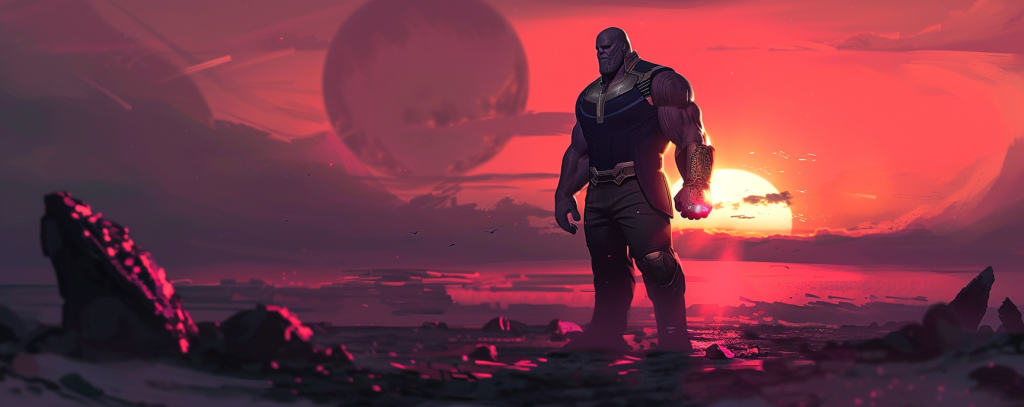
The visual and thematic design of Thanos plays a crucial role in establishing his presence as a formidable villain. Created through a combination of Josh Brolin’s performance capture and advanced CGI, Thanos is rendered with a level of detail and realism that makes him a tangible and terrifying figure. His physical appearance—marked by his towering stature, deeply lined face, and imposing armor—conveys both his strength and the burden of his self-imposed mission.

The design team paid meticulous attention to Thanos’ visual portrayal, ensuring that his appearance aligned with his character’s depth and complexity. His skin, a distinctive shade of purple, and his facial features, including the deep-set eyes and furrowed brow, reflect a being who has witnessed and endured much. These visual elements contribute to the audience’s perception of Thanos as not just a villain, but a character with a storied past and a driven purpose.

Thanos’ thematic design is equally impactful. His dialogue is carefully crafted to reveal his philosophical beliefs and unwavering conviction. He speaks with a calm, almost paternal authority, which contrasts starkly with the violent actions he justifies as necessary for the greater good. This dichotomy is central to his character, making him a villain whose menace lies as much in his ideology as in his physical power.

In “Avengers: Infinity War” (2018), Thanos steps fully into the spotlight. This film is, in many ways, his story. The narrative structure allows Thanos to be the protagonist in his quest for the Infinity Stones, giving audiences an intimate look at his motivations and methods. His mission to collect all six Infinity Stones and use them to wipe out half of all life in the universe is driven by his belief that this act of genocide is a merciful solution to overpopulation and resource scarcity. This chilling logic sets Thanos apart from other villains, as his actions are rooted in a perverse sense of altruism.

The film’s opening scene immediately establishes Thanos’ threat level. He defeats the Hulk with ease, kills Loki, and decimates Thor’s Asgardian refugees. This display of power sets the tone for the rest of the film, making it clear that Thanos is unlike any foe the Avengers have faced before. His methodical approach to collecting the Infinity Stones, combined with his unwavering determination, showcases his strategic mind and relentless will.

As Thanos progresses in his quest, the film delves deeper into his character, revealing moments of vulnerability and sacrifice. His relationship with Gamora is particularly telling. Despite his harsh treatment of her, Thanos’ genuine love for Gamora is evident, making his decision to sacrifice her for the Soul Stone a pivotal moment that adds emotional depth to his character. This act of sacrifice, driven by his belief in the righteousness of his cause, further complicates the audience’s perception of Thanos, blending monstrous actions with genuine, albeit twisted, emotional motivations.

The climactic battle in “Avengers: Infinity War” culminates in Thanos’ victory, a rare outcome for a superhero film. By successfully assembling the Infinity Gauntlet and executing his plan, Thanos achieves his goal, leaving the audience and the Avengers in stunned silence. This ending not only solidifies Thanos’ role as a formidable villain but also sets a new standard for stakes and consequences in the MCU.

In “Avengers: Endgame” (2019), Thanos’ legacy continues to loom large. Although the film introduces a different version of Thanos—one from an earlier timeline who learns of his future success and its aftermath—his core characteristics remain intact. This Thanos is just as ruthless and determined, willing to go to even greater lengths to achieve his vision. The final confrontation between Thanos and the Avengers is a fitting culmination of his character arc, resulting in a battle that balances personal vendettas with the broader struggle for the universe’s fate.

The Philosophy and Motivations of Thanos

The Ideological Villain

Thanos is not a villain driven by mere lust for power or personal vendetta. Instead, his actions are motivated by a deeply held belief in a particular ideology. Thanos views himself as a savior, one willing to commit unspeakable acts for what he perceives as the greater good. His mission to balance the universe by eliminating half of all life is rooted in his belief that overpopulation leads to resource depletion, suffering, and eventual extinction. This ideology makes Thanos a unique villain in the MCU, as his motivations are not purely evil but are, in his view, a form of necessary evil.

From his perspective, Thanos is the only being with the will and strength to make the hard decisions that others cannot. This self-perception as a tragic hero—someone burdened with the responsibility to save the universe—adds layers to his character. He genuinely believes that his actions, however brutal, will ultimately bring about a utopian balance. This conviction is articulated in “Avengers: Infinity War” when he explains to Doctor Strange that his plan is “merciful” because it will prevent untold suffering in the future.

Malthusian Philosophy

Thanos’ philosophy draws heavily from Malthusian principles, named after the British scholar Thomas Malthus, who posited that population growth would eventually outstrip agricultural production, leading to widespread famine and hardship. Malthusian theory suggests that without control measures such as famine, disease, or war, the population would grow to unsustainable levels. Thanos adopts this theory on a universal scale, believing that his intervention is necessary to prevent a cosmic catastrophe.

This philosophical underpinning is evident in several key scenes. In “Infinity War,” Thanos recounts the destruction of his home planet, Titan, which he claims could have been avoided if his radical solution of population control had been implemented. The fate of Titan serves as his justification for his actions, reinforcing his belief that he is preventing similar fates for other worlds. His conviction is so strong that he perceives his genocidal actions not as evil, but as a grim necessity to ensure the survival of life in the universe.

Thanos’ adherence to this philosophy sets him apart from other villains who seek power for its own sake. His belief system is internally consistent and portrayed with a chilling rationality, making him a more formidable and unsettling antagonist. This philosophical grounding also provides a stark contrast to the Avengers, who value individual lives and freedom, highlighting the ethical dilemma at the heart of the conflict.

Personal Sacrifices

One of the most striking aspects of Thanos’ character is his willingness to make personal sacrifices to achieve his goals. This is most poignantly illustrated in his relationship with Gamora. Thanos’ love for Gamora is one of the few emotional connections he displays, making the sacrifice of her life for the Soul Stone a deeply impactful moment. This act is not only a demonstration of his commitment to his mission but also a revelation of his complex emotional landscape.

The scene where Thanos sacrifices Gamora is pivotal. It reveals that his quest is not driven by a lack of empathy but rather by a twisted sense of duty that overrides his personal attachments. The tears he sheds as he throws Gamora off the cliff are genuine, underscoring the profound inner conflict between his love for her and his belief in his mission. This moment adds a layer of tragedy to Thanos’ character, as it shows that he is not immune to pain or loss, but chooses to endure it for what he perceives as a higher purpose.

Thanos’ readiness to endure personal loss is further emphasized in “Avengers: Endgame.” When he learns of his future success and its consequences, he resolves to wipe out the entire universe and rebuild it anew to prevent resistance to his plans. This drastic escalation highlights his unwavering determination and his belief that his vision is worth any sacrifice, even the potential annihilation of all life.

These personal sacrifices humanize Thanos to a certain extent, making him a more relatable and multidimensional character. His actions, though abhorrent, stem from a place of deep conviction and personal cost, which complicates the audience’s perception of him as a straightforward villain. This complexity makes Thanos a standout antagonist, as his motivations and sacrifices resonate with the audience on an emotional level, even as they are horrified by his actions.

Thanos’ Development and Legacy in the MCU

Character Arc

Thanos’ character arc in the Marvel Cinematic Universe (MCU) is meticulously crafted, evolving from a shadowy figure in the background to the primary antagonist who drives the narrative forward. Initially introduced in the post-credits scene of “The Avengers” (2012), Thanos was depicted as a distant puppet master orchestrating events from afar. This enigmatic presence created an aura of mystery and anticipation, gradually building his mythos.

As the MCU progressed, Thanos’ role expanded, revealing more of his personality and motivations. In “Guardians of the Galaxy” (2014), we see him interact with Ronan the Accuser and his adopted daughters, Gamora and Nebula. These interactions hint at his overarching plan and his ruthless nature, yet his true power and philosophical depth remain largely concealed.

Thanos’ full character arc comes to fruition in “Avengers: Infinity War” (2018). Here, he transitions from a background threat to the central figure of the story. The film is structured around his quest to obtain all six Infinity Stones, positioning him as the protagonist in his own narrative. This shift allows the audience to explore his motivations, beliefs, and the lengths he is willing to go to achieve his goals. By the end of “Infinity War,” Thanos achieves his mission, wiping out half of all life in the universe, and retires to a solitary life, content with his actions.

In “Avengers: Endgame” (2019), Thanos’ arc reaches its conclusion. The Avengers’ desperate attempt to reverse his actions brings them into conflict with a past version of Thanos, who learns of his future success and resolves to prevent any opposition by destroying all life and starting anew. This escalation highlights Thanos’ unyielding determination and the extremity of his ideology. His final defeat at the hands of the Avengers underscores the ultimate cost of his ambition and the resilience of those who oppose tyranny.

Narrative Impact

Thanos’ actions have a profound impact on the narrative structure of the MCU, particularly in “Avengers: Infinity War” and “Avengers: Endgame.” His quest for the Infinity Stones serves as the central plot device that drives the story forward, creating a sense of urgency and impending doom. This quest brings together numerous characters from across the MCU, forging alliances and conflicts that heighten the stakes and emotional resonance of the narrative.

“Infinity War” is unique in that it centers around Thanos’ journey, making him the protagonist of the film. This narrative choice allows the audience to see the story from his perspective, understanding his motivations and the rationale behind his actions. The film’s structure, with Thanos systematically acquiring the Infinity Stones, builds tension and momentum, culminating in his victory and the devastating snap that wipes out half of all life.

This unprecedented conclusion to “Infinity War” subverts typical superhero narratives, where heroes ultimately triumph over evil. Instead, Thanos’ victory leaves the universe in disarray and the Avengers defeated, setting the stage for “Endgame.” This narrative choice not only elevates Thanos as a formidable villain but also deepens the emotional impact of the story, as characters grapple with loss, failure, and the consequences of their actions.

In “Endgame,” Thanos’ past self becomes aware of his future success and its aftermath, leading to a final confrontation with the Avengers. This narrative twist allows for the exploration of alternate timelines and the consequences of time travel, adding complexity to the story. Thanos’ role in “Endgame” serves as a catalyst for the Avengers’ redemption arc, driving them to find a way to undo the snap and restore balance to the universe. His final defeat provides closure to his character arc and the overarching narrative, reaffirming the themes of sacrifice, resilience, and the triumph of good over evil.

Legacy and Influence

Thanos’ legacy in the MCU is significant, setting a new standard for villainy in the franchise and influencing future storytelling. His character is not only memorable for his immense power and strategic mind but also for the philosophical depth and emotional complexity that underpins his actions. Thanos’ belief in his mission, coupled with his willingness to make personal sacrifices, makes him a multifaceted antagonist who challenges the heroes on multiple levels.

The success of Thanos as a villain has paved the way for more complex and nuanced antagonists in the MCU. His portrayal demonstrates that villains can be more than mere obstacles for heroes to overcome; they can be characters with their own ideologies, motivations, and emotional depth. This approach enriches the narrative, creating a more engaging and thought-provoking story that resonates with audiences.

Thanos’ impact is also evident in the way future MCU films approach their villains. Characters like Erik Killmonger in “Black Panther” (2018) and Mysterio in “Spider-Man: Far From Home” (2019) exhibit similar depth and complexity, driven by motivations that are rooted in personal beliefs and experiences. This trend reflects a broader shift in storytelling, where antagonists are given more narrative weight and development, enhancing the overall quality of the films.

Furthermore, Thanos’ actions have lasting repercussions within the MCU. The events of “Infinity War” and “Endgame” reshape the universe, affecting characters and storylines in subsequent films and series. The blip, as the snap and its reversal are referred to, becomes a pivotal event that influences the narrative direction of the MCU, from “Spider-Man: Far From Home” to “WandaVision” and “The Falcon and the Winter Soldier.” This continuity and interconnectedness create a richer, more immersive experience for audiences, reinforcing the impact of Thanos’ legacy.

In conclusion, Thanos’ development and legacy in the MCU are a testament to the power of well-crafted storytelling and character design. His journey from a shadowy figure to a central antagonist, his philosophical motivations, and his lasting influence on the narrative and future villains set a high standard for the franchise. Thanos remains one of the most iconic and compelling villains in cinematic history, embodying the complexity and depth that elevate the MCU’s storytelling to new heights.


✍️  Whether you’re mastering the art of dialogue, structure, or character development, the power of AI can be a game-changer in your writing journey. My Free Ebook, ‘AI for Authors’ delves into how AI-powered prompts can provide a unique edge to your storytelling process. If you’re intrigued by the prospect of supercharging your fiction skills, download your free copy today and explore new horizons in creative writing. 

Crafting Memorable Protagonists: The Journey of Ellen Ripley in ‘Alien’

Introduction to Ellen Ripley as a Protagonist

The 1979 film “Alien,” directed by Ridley Scott, is a landmark in both science fiction and horror cinema. Its unique blend of futuristic space adventure with elements of terror created a chilling, atmospheric experience that captivated audiences and critics alike. Central to its success is the character of Ellen Ripley, portrayed by Sigourney Weaver. Ripley is not only the protagonist but also a trailblazing figure who redefined the role of women in genre films. Her character’s strength, intelligence, and resilience make her a memorable and inspiring figure in cinematic history.

Creating memorable protagonists is a crucial aspect of screenwriting. Protagonists serve as the audience’s anchor in the narrative, guiding them through the story’s events and emotional arcs. A well-crafted protagonist can elevate a film from merely good to unforgettable. Ellen Ripley is a prime example of such a character. Initially introduced as the third officer aboard the commercial spaceship Nostromo, Ripley’s character arc transforms her into an iconic figure of empowerment and survival. Understanding her journey provides valuable insights into effective character creation and development.

Ripley’s introduction in “Alien” is subtle yet effective. She is presented as a competent and professional member of the Nostromo crew, characterized by her adherence to protocol and rational decision-making. This initial depiction is crucial, as it establishes Ripley as a figure of authority and reliability without resorting to overt displays of heroism or exaggerated traits. Instead, her strength is conveyed through her actions and interactions with the other crew members. This grounded portrayal allows the audience to relate to her, setting the stage for her extraordinary journey.

As the narrative unfolds, Ripley’s character is tested by the harrowing events that follow the crew’s discovery of a mysterious distress signal. The discovery leads them to a derelict spaceship, where a crew member, Kane, is attacked by an alien creature. This event marks the beginning of the terror that will engulf the Nostromo. Throughout these initial sequences, Ripley’s adherence to quarantine protocols—despite being overruled—highlights her foresight and discipline. This moment is pivotal as it not only foreshadows her eventual leadership but also contrasts her rational approach with the impulsiveness of her counterparts.

The turning point in Ripley’s journey comes when the alien, now fully grown, starts hunting the crew members one by one. As chaos ensues and the crew’s numbers dwindle, Ripley’s resilience and resourcefulness come to the forefront. Unlike typical horror film protagonists who might succumb to fear or make irrational decisions, Ripley consistently demonstrates calm under pressure. Her determination to survive and protect those around her becomes evident in her tactical decisions and quick thinking.

One of the defining aspects of Ripley’s character is her confrontation with the alien. This is not merely a battle for survival but also a test of her inner strength and resolve. Ripley’s confrontation is depicted not as a final showdown of brute force but as a battle of wits and endurance. Her ability to remain composed in the face of unimaginable horror sets her apart from conventional protagonists. The film’s climax, where Ripley outsmarts the alien and ultimately ejects it into space, serves as a testament to her ingenuity and tenacity.

Ripley’s character is further enriched by Sigourney Weaver’s performance, which brings a depth and authenticity to the role. Weaver’s portrayal avoids the pitfalls of making Ripley a one-dimensional “tough” character. Instead, she imbues Ripley with a range of emotions, from fear and vulnerability to determination and courage. This multifaceted performance ensures that Ripley is not just a heroine but a fully realized human being, with all the complexities that entail.

The significance of Ripley’s character extends beyond her actions within the film. Ripley represents a groundbreaking shift in how female characters were portrayed in cinema, particularly in the science fiction and horror genres. Prior to “Alien,” female roles in these genres were often relegated to secondary positions, typically as victims or love interests. Ripley, however, is neither. She is the protagonist whose narrative is driven by her actions and decisions, rather than by her relationships with male characters. This independence and agency were revolutionary at the time and paved the way for more diverse and empowered representations of women in film.

Moreover, Ripley’s character challenged traditional gender norms and stereotypes. Her strength and leadership qualities are not presented as anomalies but as inherent aspects of her character. She is not sexualized or defined by her femininity; instead, her competence and bravery are highlighted. This approach allowed audiences to see Ripley as a person first and foremost, whose gender did not limit her capabilities or significance in the story. This was a significant step forward in the portrayal of women in media, demonstrating that female characters could lead and thrive in roles traditionally reserved for men.

In examining Ripley’s role as a protagonist, it is also important to consider the thematic implications of her character. Ripley’s journey in “Alien” can be seen as a metaphor for overcoming insurmountable odds and confronting one’s deepest fears. Her character embodies the themes of survival, resilience, and the human spirit’s capacity to endure in the face of overwhelming adversity. These themes resonate with audiences, making Ripley’s story not just a narrative of alien horror but a universal tale of courage and perseverance.

Ripley’s Character Development and Arc

Ellen Ripley’s character development in “Alien” is a masterclass in storytelling, showcasing how a character evolves through adversity and emerges as a hero. Initially portrayed as a competent and professional warrant officer aboard the Nostromo, Ripley’s journey is one of transformation driven by the dire circumstances she faces.

Initial Portrayal: Ripley as a Warrant Officer on the Nostromo

At the outset, Ripley is introduced as the third officer on the Nostromo, a commercial towing spaceship returning to Earth. Her role is clear: she is responsible for enforcing protocol and maintaining order. Unlike typical protagonists, Ripley is not the immediate focus of attention. Instead, she is part of an ensemble cast, each crew member contributing to the ship’s operations. This setup allows the audience to see Ripley in her natural environment, where she exhibits qualities of responsibility, intelligence, and adherence to regulations.

One of the early scenes that highlights Ripley’s character is her insistence on following quarantine procedures when Kane, one of the crew members, is attacked by an alien parasite. Despite pressure from her superior officer, Dallas, and other crew members, Ripley stands firm, prioritizing the safety of the crew over immediate emotional responses. This moment is critical as it establishes her as a rational and principled individual, setting the stage for her subsequent actions and decisions.

Transformation Through Adversity: Ripley’s Growth in Response to the Alien Threat

The turning point in Ripley’s character arc occurs when the alien begins to systematically eliminate the crew. As the situation deteriorates, Ripley transitions from a by-the-book officer to a proactive and resourceful leader. Her growth is marked by her increasing assertiveness and strategic thinking, traits that become essential for her survival.

One of the most significant moments in Ripley’s transformation is her decision to take command of the remaining crew. After the deaths of Captain Dallas and other senior officers, Ripley assumes leadership, demonstrating her capability to handle crisis situations. This shift is not just about taking charge but about Ripley recognizing the gravity of their predicament and stepping up when others cannot. Her evolution from a procedural enforcer to a decisive leader is gradual but compelling, grounded in her experiences and the escalating threat.

Key Moments and Decisions That Define Ripley’s Character

Several key moments and decisions further define Ripley’s character throughout the film. One such moment is her confrontation with the ship’s artificial intelligence, Mother, and the revelation of the company’s true intentions. Discovering that the company regards the crew as expendable in favor of securing the alien life form, Ripley experiences a profound sense of betrayal. This moment crystallizes her resolve to survive and protect the remaining crew members.

Another defining decision is Ripley’s plan to destroy the Nostromo and escape using the ship’s shuttle. This plan underscores her willingness to make tough choices, sacrificing the ship to prevent the alien from reaching Earth. Her meticulous preparation and execution of the plan, despite numerous obstacles, highlight her ingenuity and determination. The tension reaches its peak during the film’s climax when Ripley, believing she has successfully escaped, discovers the alien aboard the shuttle. Her final confrontation with the creature, involving her use of the shuttle’s airlock to eject it into space, is a testament to her courage and resourcefulness.

Ripley’s relationship with Jones, the ship’s cat, also provides insight into her character. Throughout the chaos, she repeatedly risks her safety to ensure Jones’s survival. This act of compassion amidst the horror humanizes Ripley, reminding the audience of her inherent empathy and reinforcing her role as a protector.

The Impact of Ripley’s Arc on the Audience and the Genre

Ripley’s character arc in “Alien” has a profound impact on the audience and the science fiction and horror genres. Her transformation from a competent officer to a resilient survivor resonates deeply, providing a sense of empowerment and catharsis. Ripley’s journey challenges traditional gender roles, presenting a female character who is not defined by her relationships with men but by her own actions and decisions. This portrayal was groundbreaking at the time and continues to inspire characters in contemporary cinema.

For the audience, Ripley’s arc offers a relatable and inspiring narrative of overcoming insurmountable odds. Her realistic portrayal—marked by moments of fear, vulnerability, and resilience—makes her an enduring figure in popular culture. Viewers can see themselves in Ripley’s struggle and triumph, making her story universally appealing.

In terms of genre impact, Ripley set a new standard for protagonists in science fiction and horror films. She demonstrated that characters, regardless of gender, could be complex, capable, and central to the narrative. Ripley’s success paved the way for other strong female characters in genre films, influencing portrayals in movies like “Terminator” with Sarah Connor and “The Hunger Games” with Katniss Everdeen. Her character has become a benchmark for creating protagonists who are not only strong and resourceful but also deeply human and relatable.

Ripley’s arc in “Alien” exemplifies the power of character development in storytelling. Through a series of carefully crafted moments and decisions, she evolves from a disciplined officer to an iconic hero, leaving a lasting legacy on audiences and the film industry. Her journey highlights the importance of resilience, leadership, and humanity, making Ellen Ripley one of the most memorable protagonists in cinema history.

Ripley’s Legacy and Influence in Film

Ellen Ripley’s character in “Alien” has left an indelible mark on both cinema and culture, redefining the role of female protagonists in action and science fiction films. Her legacy is multifaceted, influencing not only the portrayal of women in film but also the broader approach to character development and storytelling in genre cinema.

The Cultural and Cinematic Impact of Ripley’s Character

When “Alien” premiered in 1979, Ripley’s character was a revelation. At a time when female roles in science fiction and horror were largely limited to damsels in distress or secondary characters, Ripley stood out as a competent, resilient, and complex protagonist. Her portrayal broke away from the stereotypical norms, offering a new model of female heroism that was both strong and nuanced.

Ripley’s impact extends beyond her immediate character traits. She became a symbol of female empowerment and resilience, resonating with audiences worldwide. The cultural significance of Ripley’s character is reflected in the way she has been embraced by feminist critiques and popular culture alike. She is frequently cited as a pioneering figure in discussions about gender representation in media, showcasing that women can lead and excel in roles traditionally dominated by men.

Ripley’s Influence on Female Protagonists in Action and Sci-Fi Films

Ripley paved the way for a new generation of female protagonists in action and sci-fi films. Her character demonstrated that female leads could carry a film and draw audiences without relying on romantic subplots or being defined by their relationships with male characters. This shift had a profound influence on how women were portrayed in subsequent films.

Following Ripley’s introduction, characters like Sarah Connor in “The Terminator” series and Lara Croft in the “Tomb Raider” franchise emerged, embodying similar qualities of strength, independence, and complexity. These characters, like Ripley, are portrayed as capable and intelligent, facing and overcoming extraordinary challenges. Ripley’s influence is also evident in more contemporary films, such as Katniss Everdeen in “The Hunger Games” and Furiosa in “Mad Max: Fury Road,” where female characters are central to the narrative and pivotal to the story’s resolution.

Analysis of How Ripley’s Character Set a Precedent for Future Screenwriting and Character Development in Genre Films

Ripley’s character set a new precedent for screenwriting and character development in genre films. One of the key lessons from Ripley’s portrayal is the importance of depth and complexity in character development. Ripley is not a one-dimensional action hero; she is a multi-faceted character whose actions and decisions are driven by her principles, emotions, and experiences. This complexity makes her relatable and compelling, providing a template for creating well-rounded characters.

Screenwriters and filmmakers took note of Ripley’s success and began to craft characters with similar depth and nuance. This approach has led to richer storytelling and more engaging narratives, where characters are defined by their growth and development rather than their roles in the plot. Ripley’s character also highlighted the importance of showing rather than telling in storytelling. Her strength and resilience are demonstrated through her actions and decisions, allowing the audience to witness her evolution firsthand.

Another significant aspect of Ripley’s influence is the shift towards more realistic and grounded portrayals of characters in fantastical settings. Ripley’s character arc is rooted in realistic human emotions and reactions, even as she faces an extraordinary alien threat. This blend of realism and fantasy has become a hallmark of effective genre storytelling, making the characters’ struggles and triumphs more relatable and impactful.

Conclusion: The Enduring Legacy of Ellen Ripley and Lessons for Screenwriters

Ellen Ripley’s legacy endures as a testament to the power of well-crafted characters in film. She remains a benchmark for female protagonists in action and sci-fi genres, influencing countless characters and stories that followed. Ripley’s journey from a warrant officer on the Nostromo to an iconic heroine exemplifies the potential of character development to elevate a narrative and resonate with audiences.

For screenwriters, Ripley’s character offers several valuable lessons. First, the importance of creating multi-dimensional characters who grow and evolve throughout the story. Characters should be defined by their actions and decisions, not just by their roles or relationships. Second, the power of realism in storytelling, even within fantastical settings. Grounding characters in realistic emotions and behaviors makes their journeys more relatable and impactful.

Additionally, Ripley’s character underscores the importance of breaking stereotypes and challenging traditional norms. By presenting a female protagonist who is competent, resilient, and central to the narrative, “Alien” expanded the possibilities for women in film and opened the door for more diverse and empowered representations.

In conclusion, Ellen Ripley’s legacy is a cornerstone of modern cinema, reflecting the transformative power of strong, well-developed characters. Her influence continues to inspire screenwriters and filmmakers, reminding them of the enduring impact that a well-crafted protagonist can have on both the narrative and the audience. Ripley’s journey in “Alien” is not just a story of survival but a blueprint for creating memorable and meaningful characters in film.


✍️  Whether you’re mastering the art of dialogue, structure, or character development, the power of AI can be a game-changer in your writing journey. My Free Ebook, ‘AI for Authors’ delves into how AI-powered prompts can provide a unique edge to your storytelling process. If you’re intrigued by the prospect of supercharging your fiction skills, download your free copy today and explore new horizons in creative writing. 
Building Tension and Suspense: Hitchcock’s Techniques in ‘Psycho’

Introduction to Alfred Hitchcock and ‘Psycho’

Alfred Hitchcock, often hailed as the “Master of Suspense,” is a towering figure in the history of cinema. Born on August 13, 1899, in Leytonstone, England, Hitchcock’s career spanned over five decades, during which he directed more than 50 feature films. His unique ability to blend narrative complexity with visual storytelling made him one of the most influential filmmakers of all time. Hitchcock’s work is characterized by his innovative techniques in creating tension and suspense, techniques that are studied and emulated by filmmakers to this day.

One of Hitchcock’s most iconic films is ‘Psycho,’ released in 1960. Based on Robert Bloch’s novel of the same name, ‘Psycho’ tells the story of Marion Crane, a secretary who embezzles $40,000 from her employer and flees, only to find herself at the Bates Motel, run by the enigmatic Norman Bates. The film’s shocking plot twists and groundbreaking narrative techniques not only redefined the thriller genre but also left an indelible mark on popular culture.

‘Psycho’ stands out in Hitchcock’s oeuvre for its masterful construction of suspense and tension. The film’s success and enduring legacy are largely attributed to Hitchcock’s meticulous attention to detail and his innovative approach to storytelling. By examining the techniques he employed in ‘Psycho,’ we can gain deeper insights into what makes the film such a timeless piece of cinema.

Hitchcock’s approach to creating tension and suspense in ‘Psycho’ is multifaceted, involving a combination of music, sound, cinematography, editing, and narrative structure. Each of these elements is carefully orchestrated to evoke a sense of unease and anticipation in the audience. This meticulous craftsmanship is evident from the very beginning of the film.

The opening credits of ‘Psycho,’ designed by Saul Bass, set the tone for the entire movie. Accompanied by Bernard Herrmann’s iconic score, the credits feature a series of horizontal and vertical lines that slice through the screen, creating a visual sense of disorientation and tension. Herrmann’s music, characterized by its sharp, stabbing strings, immediately grabs the viewer’s attention and sets up an atmosphere of impending doom.

Hitchcock’s use of music in ‘Psycho’ is a critical component of the film’s suspense. Bernard Herrmann, who had previously collaborated with Hitchcock on several projects, composed a score that is as integral to the film’s impact as the visuals themselves. The shrieking violins that accompany the infamous shower scene, for example, are not only memorable but also serve to heighten the horror of the moment. Herrmann’s score is pervasive throughout the film, underscoring moments of tension and providing an aural landscape that keeps the audience on edge.

In addition to music, Hitchcock’s use of sound in ‘Psycho’ is equally effective in building suspense. The absence of sound in certain scenes, such as the silence that follows Marion Crane’s murder, is as impactful as the presence of Herrmann’s score. This strategic use of silence forces the audience to focus on the visual horror of the scene, making the experience even more unsettling. Hitchcock understood that sound and silence could be manipulated to play on the audience’s expectations and emotions, enhancing the overall suspense of the film.

Cinematography and editing also play crucial roles in ‘Psycho’s’ creation of tension. Hitchcock’s collaboration with cinematographer John L. Russell resulted in a visual style that is both stark and evocative. The use of high-contrast black-and-white photography adds to the film’s eerie atmosphere. The stark lighting and shadows contribute to the sense of unease, emphasizing the isolation and psychological torment of the characters.

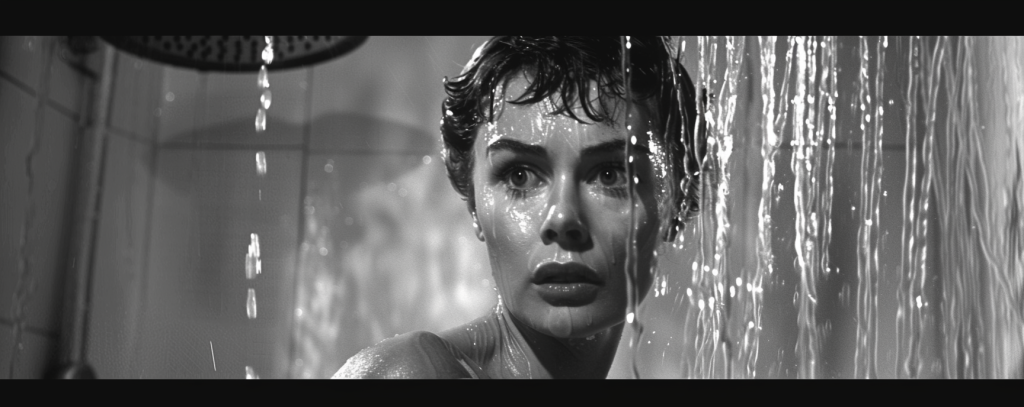
Hitchcock’s use of camera angles and shot composition further enhances the film’s suspense. For instance, the low-angle shots of Norman Bates peering through the peephole create a sense of voyeurism and invasion of privacy, making the audience complicit in the act of watching. The close-up shots of Marion’s eye as she lies lifeless in the shower force the viewer to confront the brutality of the murder up close. These visual techniques are designed to elicit a visceral reaction from the audience, drawing them deeper into the film’s narrative.

Editing is another critical element in Hitchcock’s toolbox for creating tension. The shower scene in ‘Psycho’ is a masterclass in editing, consisting of 78 camera setups and 52 cuts in just 45 seconds. This rapid succession of shots fragments the action, creating a sense of chaos and disorientation. The editing rhythm builds to a crescendo, mirroring the stabbing motions of the knife and amplifying the horror of the scene. Hitchcock’s precise editing keeps the audience on the edge of their seats, unable to predict what will happen next.

The narrative structure of ‘Psycho’ also plays a significant role in maintaining suspense throughout the film. Hitchcock subverts traditional storytelling conventions by killing off the apparent protagonist, Marion Crane, halfway through the movie. This shocking twist leaves the audience uncertain about the direction of the story, heightening the sense of unpredictability and tension. By shifting the focus to Norman Bates, Hitchcock forces the audience to realign their sympathies and perspectives, creating a more complex and layered narrative.

Techniques for Building Tension and Suspense in ‘Psycho’

Use of Music and Sound

One of the most crucial elements in creating the tension and suspense that defines ‘Psycho’ is Bernard Herrmann’s iconic score. Herrmann’s collaboration with Hitchcock resulted in a musical masterpiece that is both haunting and essential to the film’s atmosphere. The score is characterized by its stark, minimalist approach, using a string orchestra to produce a sound that is both chilling and intense. The decision to use only strings was unconventional, but it paid off in creating a unique auditory experience that perfectly complements the film’s visual style.

The most famous piece from the score is undoubtedly the music that accompanies the shower scene. The sharp, staccato notes of the violins mimic the slashing motion of the knife, creating an auditory representation of the violence on screen. This musical cue has become synonymous with horror and suspense, often imitated but never equaled. Herrmann’s score does more than just accompany the action; it heightens the emotional impact, making the terror palpable for the audience.

In addition to the score, the overall sound design in ‘Psycho’ plays a significant role in building tension. Hitchcock’s use of silence is just as important as the music. Silence in ‘Psycho’ is often a precursor to shocking events, creating an anticipatory atmosphere that keeps the audience on edge. For example, the silence in the moments leading up to Marion Crane’s murder serves to heighten the impact of the sudden, violent intrusion of the music and the attack. This strategic use of silence amplifies the shock and horror of the scene.

Ambient sounds also contribute to the film’s unsettling atmosphere. The sound of rain as Marion approaches the Bates Motel, the creaking of doors, and the distant, eerie noises within the house all serve to create a sense of unease. These sounds are carefully selected and placed to enhance the mood, making the environment feel oppressive and foreboding. Hitchcock’s meticulous attention to the auditory elements of ‘Psycho’ ensures that every sound serves a purpose in building suspense.

Cinematography and Editing

Hitchcock’s visual style in ‘Psycho’ is another critical component of its tension and suspense. Working with cinematographer John L. Russell, Hitchcock employs a range of techniques to manipulate the audience’s perception and emotions. The film’s stark black-and-white photography adds to the atmosphere of dread, using high contrast to emphasize shadows and create a visually striking look that is both beautiful and haunting.

Camera angles and shot composition are used strategically to control the viewer’s experience. Close-ups are employed to draw attention to specific details, such as Marion’s nervous glances or Norman Bates’ unsettling stare. These shots create a sense of intimacy and immediacy, forcing the audience to focus on the characters’ emotions and reactions. Hitchcock often uses low-angle shots to make Norman appear more menacing, adding to the character’s ominous presence.

One of the most effective visual techniques in ‘Psycho’ is the use of the voyeuristic perspective. This is exemplified by the shots of Norman peering through the peephole at Marion. The audience is placed in the position of the voyeur, sharing in Norman’s invasive gaze. This technique not only makes the viewer complicit in the act of watching but also creates a sense of discomfort and tension. The feeling of being watched is a pervasive theme throughout the film, contributing to the overall sense of unease.

Editing is another area where ‘Psycho’ excels in creating suspense. The film’s pacing is meticulously crafted to build tension incrementally. The shower scene is a prime example of Hitchcock’s editing prowess. Consisting of 78 camera setups and 52 cuts within 45 seconds, the scene is a rapid montage of fragmented images that create a sense of chaos and violence. The quick cuts disorient the viewer, making it difficult to fully grasp the horror until the scene is over. This technique not only heightens the immediate tension but also leaves a lasting impact on the audience.

Hitchcock’s use of cross-cutting and parallel editing further enhances the suspense. For example, the scenes that cut between Marion’s journey and Norman’s preparations create a sense of impending doom. The audience is aware of the converging paths of these characters, building anticipation and anxiety. The editing rhythm in ‘Psycho’ is carefully calibrated to maintain a constant state of tension, ensuring that the viewer is never allowed to fully relax.

Narrative Structure and Plot Twists

The narrative structure of ‘Psycho’ is unconventional and plays a significant role in its ability to generate suspense. The film begins by following Marion Crane, establishing her as the protagonist. Her theft of $40,000 and subsequent flight set up a narrative that the audience expects to follow. However, Hitchcock subverts these expectations by abruptly killing Marion halfway through the film. This shocking twist not only leaves the audience reeling but also destabilizes the narrative, creating a sense of unpredictability and tension.

The infamous shower scene is the pivotal moment where this narrative shift occurs. Up until this point, the audience is invested in Marion’s story, sympathizing with her predicament and anticipating her escape. Her sudden and brutal murder is a masterstroke of storytelling that forces the audience to realign their focus and emotions. This narrative jolt is one of the reasons ‘Psycho’ remains so impactful; it breaks the conventional storytelling mold, keeping the audience in a constant state of suspense.

Hitchcock continues to play with narrative expectations throughout the film. The introduction of Norman Bates as a seemingly benign character, only to reveal his true nature later, adds to the sense of unease. The audience’s shifting perceptions of Norman, from a shy and awkward motel owner to a deeply disturbed individual, are central to the film’s tension. This character development is carefully layered, with hints and clues that build towards the final revelation.

The plot twists in ‘Psycho’ are not limited to Marion’s murder. The discovery of Mrs. Bates’ true identity and the final revelation of Norman’s split personality are equally shocking. These twists are carefully foreshadowed, with subtle clues and misdirections that keep the audience guessing. Hitchcock’s ability to weave these twists into the narrative without them feeling forced or contrived is a testament to his storytelling genius.

In ‘Psycho,’ Hitchcock’s mastery of music, sound, cinematography, editing, and narrative structure work together to create a film that is unparalleled in its ability to build tension and suspense. Each technique is meticulously crafted to manipulate the audience’s emotions, keeping them on edge and fully engaged. As we explore the legacy and influence of these techniques in the next section, it will become evident why ‘Psycho’ remains a benchmark in the thriller genre.

Legacy and Influence of Hitchcock’s Techniques

Influence on Modern Filmmakers and the Thriller Genre

Alfred Hitchcock’s influence on the thriller genre and modern filmmakers is profound and enduring. Directors such as Martin Scorsese, Brian De Palma, and David Fincher have all cited Hitchcock as a major influence on their work. Scorsese, known for his meticulous attention to detail and narrative complexity, often employs Hitchcockian techniques in his films. In ‘Shutter Island,’ for example, Scorsese uses unsettling music, dramatic camera angles, and psychological twists reminiscent of ‘Psycho’ to build tension.

Brian De Palma, another director heavily influenced by Hitchcock, has made several films that pay direct homage to the Master of Suspense. ‘Dressed to Kill’ and ‘Blow Out’ both feature intricate plots, voyeuristic elements, and intense, suspenseful scenes that echo Hitchcock’s style. De Palma’s ‘Body Double’ even includes a sequence that mirrors the voyeuristic intensity of Norman Bates watching Marion in ‘Psycho.’

David Fincher, with films like ‘Se7en’ and ‘Gone Girl,’ also draws from Hitchcock’s playbook. Fincher’s use of darkness, mood, and psychological tension in ‘Se7en’ creates a sense of dread similar to that in ‘Psycho.’ In ‘Gone Girl,’ the narrative twists and unreliable characters reflect Hitchcock’s influence, keeping the audience constantly guessing and on edge.

The conventions of suspense and tension in films have been significantly shaped by Hitchcock’s techniques. The use of music to heighten emotional impact, strategic camera angles to manipulate audience perception, and narrative structures that subvert expectations are now common practices in the thriller genre. Hitchcock’s ability to make the audience complicit in the voyeuristic act of watching has been particularly influential, with many modern thrillers incorporating this element to create psychological depth and tension.

Analysis of Specific Films Inspired by ‘Psycho’

Several films have directly drawn from Hitchcock’s techniques, showcasing the lasting impact of ‘Psycho’ on cinema. One notable example is the 1991 film ‘The Silence of the Lambs,’ directed by Jonathan Demme. This film employs close-ups and tight framing similar to those in ‘Psycho’ to create a sense of intimacy and unease. The character of Hannibal Lecter, like Norman Bates, combines charm with menace, creating a complex antagonist who captivates and terrifies the audience.

Another film inspired by ‘Psycho’ is ‘American Psycho’ (2000), directed by Mary Harron. The film’s exploration of a seemingly normal individual with a dark, violent side echoes Norman Bates’ dual personality. The use of voice-over narration in ‘American Psycho’ draws the audience into the protagonist’s twisted mind, much like Hitchcock’s use of point-of-view shots to align the viewer with Norman’s perspective.

Gus Van Sant’s 1998 shot-for-shot remake of ‘Psycho’ is a direct homage to Hitchcock’s original. While it received mixed reviews, the remake underscores the enduring fascination with Hitchcock’s techniques. By replicating the original film’s camera angles, editing, and score, Van Sant’s version highlights the timeless effectiveness of Hitchcock’s methods in creating suspense.

Modern films continue to evolve these techniques, blending them with contemporary storytelling methods. For example, Jordan Peele’s ‘Get Out’ (2017) uses Hitchcockian suspense to address social and racial issues. Peele employs visual and auditory cues to create an atmosphere of paranoia and dread, drawing the audience into the protagonist’s increasing sense of danger. The film’s final act, with its shocking revelations and tense confrontations, pays homage to Hitchcock’s legacy of unexpected plot twists and climactic suspense.

Conclusion

Alfred Hitchcock’s ‘Psycho’ remains a seminal work in the thriller genre, its techniques for building tension and suspense serving as a benchmark for filmmakers. Through his innovative use of music, sound, cinematography, editing, and narrative structure, Hitchcock created a film that not only captivated audiences upon its release but continues to influence and inspire directors today.

The legacy of ‘Psycho’ is evident in the countless films that have drawn from its techniques, demonstrating the timeless nature of Hitchcock’s mastery. By examining contemporary films and the ways in which they incorporate Hitchcockian elements, we can see the profound and lasting impact of ‘Psycho’ on the art of filmmaking.

In understanding and appreciating the techniques used in ‘Psycho,’ filmmakers and audiences alike can gain deeper insights into the craft of creating suspense and tension. Hitchcock’s legacy is a testament to the power of innovative storytelling, and ‘Psycho’ stands as a timeless example of how to captivate and thrill an audience through masterful cinematic techniques.


✍️  Whether you’re mastering the art of dialogue, structure, or character development, the power of AI can be a game-changer in your writing journey. My Free Ebook, ‘AI for Authors’ delves into how AI-powered prompts can provide a unique edge to your storytelling process. If you’re intrigued by the prospect of supercharging your fiction skills, download your free copy today and explore new horizons in creative writing.