“The Reflecting Skin”: A Gothic Allegory in Screenwriting

Introduction

“The Reflecting Skin” (1990), directed by Philip Ridley, is a film that eludes simple categorization. At first glance, it appears to be a disturbing psychological drama set against the desolate backdrop of rural 1950s America. However, a deeper exploration reveals a rich tapestry of Gothic allegory, where themes of innocence, evil, and decay are woven together in a story that challenges traditional narrative structures and defies genre conventions. In this article, we will dissect the film’s screenplay to uncover how Ridley uses Gothic elements to create a haunting allegory that resonates with deeper, universal truths.

Setting the Gothic Stage: The Role of Environment in “The Reflecting Skin”

The setting of “The Reflecting Skin” is crucial to its Gothic atmosphere. The barren, sun-drenched plains of Idaho are more than just a backdrop; they are a character in their own right. Ridley’s choice of location is a stark departure from the typical Gothic environments of dark forests or decaying mansions. Instead, the endless, unforgiving landscape mirrors the emotional desolation of the characters, particularly the young protagonist, Seth Dove.

The screenplay uses this setting to amplify the sense of isolation and dread that permeates the film. The vastness of the plains, with their oppressive silence, creates a sense of claustrophobia that contrasts sharply with their physical openness. This paradoxical use of space is a key Gothic element, reflecting the internal turmoil of the characters. The emptiness of the landscape also serves as a visual metaphor for the spiritual and moral decay at the heart of the story.

In the Gothic tradition, the environment often reflects the psychological state of the characters. In “The Reflecting Skin,” the scorched earth and dying crops symbolize the loss of innocence and the pervasive corruption that infects the small community. The screenplay’s detailed descriptions of the environment emphasize the bleakness and desolation, setting the tone for the horrors that unfold.

Characters as Gothic Archetypes: Innocence and Corruption

Ridley’s screenplay is populated with characters that embody classic Gothic archetypes, yet they are reimagined in ways that subvert audience expectations. At the center of the narrative is Seth Dove, an eight-year-old boy who, in many ways, represents the quintessential innocent protagonist often found in Gothic tales. However, Seth’s innocence is tainted by the world around him—a world filled with violence, madness, and death.

Seth’s mother, Ruth Dove, is a Gothic figure in her own right. Her severe, almost puritanical demeanor and obsession with cleanliness—symbolized by her constant scrubbing of the home—hides a deep psychological disturbance. Ruth’s actions are driven by a fear of contamination, not just physical but moral and spiritual. This obsession leads her to neglect and emotionally abuse Seth, contributing to his warped understanding of the world.

The most striking Gothic character in the film is Dolphin Blue, the enigmatic widow who lives near the Dove family. Dolphin’s pale skin and otherworldly demeanor lead Seth to believe she is a vampire, an interpretation fueled by the local folklore he has absorbed. The screenplay carefully crafts Dolphin as a figure of both attraction and repulsion—a common trait in Gothic literature. She embodies the fear of the unknown and the seductive allure of forbidden knowledge.

Through these characters, the screenplay explores themes of innocence corrupted by external evil, a hallmark of Gothic fiction. Seth’s journey from innocence to experience is marked by his interactions with these flawed, tormented figures, each of whom contributes to his growing understanding of the dark forces that govern his world.

Gothic Allegory: The Descent into Darkness

The narrative structure of “The Reflecting Skin” can be seen as a Gothic descent into darkness, both literally and metaphorically. The screenplay is structured around Seth’s gradual realization of the evil that surrounds him, culminating in a devastating loss of innocence. This descent is mirrored in the film’s visual and thematic motifs, which draw heavily on Gothic symbolism.

One of the most potent symbols in the screenplay is that of the dead fetus found by Seth and his friends. This grotesque discovery sets the tone for the rest of the film, serving as a physical manifestation of the corruption that underlies the seemingly idyllic rural setting. The image of the fetus, with its connotations of aborted innocence and unnatural death, recurs throughout the film, reinforcing the theme of lost innocence.

Another key allegorical element is the recurring motif of the sun. Unlike the life-giving sun of traditional symbolism, in “The Reflecting Skin,” the sun is a destructive force, bleaching the landscape and sapping the vitality from the characters. This inversion of a common symbol is a classic Gothic technique, used to subvert expectations and create a sense of unease. The screenplay’s detailed descriptions of the sun’s oppressive presence contribute to the film’s atmosphere of inexorable doom.

The Gothic descent in “The Reflecting Skin” is also psychological, as Seth’s mind becomes increasingly warped by the horrors he witnesses. The screenplay effectively uses Seth’s perspective to blur the line between reality and fantasy, a common device in Gothic literature. His belief that Dolphin is a vampire, for example, reflects his desperate need to make sense of the senseless violence around him. This blend of the supernatural with the psychological is a hallmark of the Gothic, and Ridley’s screenplay handles it with subtlety and skill.

The Role of Violence: Gothic Horror and the Loss of Innocence

Violence in “The Reflecting Skin” is pervasive and brutal, yet it is not gratuitous. Instead, it serves to underscore the film’s Gothic themes of innocence lost and the omnipresence of evil. The screenplay depicts violence not just as a physical act, but as a psychological and moral force that shapes the lives of the characters.

The murder of Seth’s brother, Cameron, is the most significant act of violence in the film. Cameron, who has returned from World War II, embodies the trauma and disillusionment of a generation. His death, set against the backdrop of an atomic bomb test—a potent symbol of humanity’s capacity for self-destruction—marks the final collapse of Seth’s world. The screenplay uses this act of violence as a turning point, signaling the end of Seth’s childhood and his final, irrevocable descent into the Gothic nightmare that his life has become.

Ridley’s depiction of violence is closely tied to the film’s exploration of evil. In true Gothic fashion, the evil in “The Reflecting Skin” is both external and internal. The screenplay presents the characters as victims of their environment, but also as complicit in their own downfall. This duality is central to the film’s Gothic allegory, which suggests that evil is an inherent part of the human condition, inescapable and ultimately destructive.

Visual and Auditory Gothic: Cinematic Techniques in the Screenplay

While “The Reflecting Skin” is a film, its screenplay lays the foundation for the visual and auditory elements that contribute to its Gothic atmosphere. Ridley’s background as a visual artist is evident in the screenplay’s attention to detail and its use of imagery to evoke a sense of dread and unease.

The use of color in the film is particularly striking. The screenplay describes the stark contrasts between the bright, washed-out daylight scenes and the deep, inky blacks of the night. This use of chiaroscuro is a classic Gothic technique, creating a visual representation of the film’s central themes of light and dark, innocence and corruption.

Sound is another crucial element in the film’s Gothic atmosphere. The screenplay includes detailed notes on the use of sound to enhance the horror of certain scenes. The buzz of insects, the distant roar of jet engines, and the eerie silence of the plains are all used to create a sense of impending doom. These auditory cues are as important as the visual elements in building the film’s oppressive atmosphere.

Ridley’s screenplay also makes effective use of silence, a powerful tool in Gothic storytelling. The moments of silence in “The Reflecting Skin” are loaded with tension, allowing the audience to feel the full weight of the characters’ fear and despair. This use of silence is particularly effective in scenes where Seth is alone, reinforcing his isolation and vulnerability.

Subverting Gothic Conventions: The Ending of “The Reflecting Skin”

The ending of “The Reflecting Skin” is both shocking and ambiguous, in keeping with the film’s Gothic sensibilities. Unlike traditional narratives that offer closure, the screenplay leaves many questions unanswered, allowing the horror to linger in the minds of the audience.

In the final scene, Seth is left alone in the vast, empty landscape, having lost everything that mattered to him. The screenplay’s refusal to provide a clear resolution is a deliberate subversion of narrative expectations, a hallmark of the Gothic genre. By leaving Seth’s fate open-ended, Ridley forces the audience to confront the existential dread that lies at the heart of the story.

This ambiguity is one of the film’s most powerful aspects, challenging the audience to grapple with the themes of loss, innocence, and evil without the comfort of a tidy conclusion. The screenplay’s ending, with its haunting imagery and unresolved tensions, is a masterful example of how Gothic storytelling can leave a lasting impact.

Conclusion

“The Reflecting Skin” is a film that uses the tools of Gothic allegory to explore profound and disturbing themes. Ridley’s screenplay is a testament to the power of the Gothic tradition, with its rich symbolism, complex characters, and unsettling atmosphere. By examining the film through the lens of Gothic screenwriting, we can appreciate how it creates a narrative that is both deeply personal and universally resonant.

In “The Reflecting Skin,” Ridley has crafted a Gothic allegory that transcends its setting and time period, offering a meditation on the nature of evil, the loss of innocence, and the inescapable decay that lies at the heart of human existence. For screenwriters and film enthusiasts alike, the film serves as a powerful example of how the Gothic tradition can be used to tell stories that are as thought-provoking as they are terrifying.


✍️  Whether you’re mastering the art of dialogue, structure, or character development, the power of AI can be a game-changer in your writing journey. My Free Ebook, ‘AI for Authors’ delves into how AI-powered prompts can provide a unique edge to your storytelling process. If you’re intrigued by the prospect of supercharging your fiction skills, download your free copy today and explore new horizons in creative writing. 

AI in Hollywood: Weekly News, August 22, 2024

Artificial intelligence (AI) is increasingly becoming a pivotal force in many industries, and Hollywood is no exception. From animation to voice acting and even scriptwriting, AI is transforming the creative landscape. This article examines AI’s integration into screenwriting and the broader entertainment industry, focusing on recent developments in the animation sector, the SAG-AFTRA strike, and Hollywood’s evolving stance on AI. By understanding these shifts, writers, producers, and other creative professionals can better navigate the changing environment.

The Evolution of AI in Animation and Screenwriting

The animation industry has long been at the forefront of integrating new technologies. Over the past decade, CGI, motion capture, and now AI have dramatically altered how animation is produced. One of the most significant developments occurred when Kartoon Studios unveiled two AI-driven educational series created largely through artificial intelligence, utilizing tools like ChatGPT for scriptwriting and AI-driven animation for production. These series, despite the technological advancements, failed to gain much traction, with underwhelming viewership numbers, signaling that AI still has considerable hurdles to overcome in winning over audiences.

Yet, AI’s role in the animation industry is expanding, not just in animation, but in storytelling as well. Studios like Toonstar are leveraging AI to streamline production, claiming that AI has made processes up to 80% faster. This efficiency boost represents an opportunity for smaller production houses that might not have the financial backing of larger studios like Pixar or DreamWorks. Still, the push toward AI has been met with substantial resistance from industry professionals.

The Threat of AI: Job Displacement and Outsourcing

The primary concern regarding AI’s proliferation is job displacement. Predictions suggest that AI could eliminate up to 90% of animation artist positions, a frightening prospect for many in the field. For screenwriters, voice actors, and animators alike, AI threatens to replace roles that rely on creativity and emotional depth—an area where AI still struggles.

The Animation Guild, under the leadership of Jeanette Moreno King, is vocal about these concerns. Representing over 5,000 animation professionals, the union is currently embroiled in contract negotiations with major studios like Netflix and Pixar. AI, along with the outsourcing of animation to non-union foreign studios, such as Disney’s Vancouver studio, poses a direct challenge to job security.

The outsourcing issue is not new to the union. Historically, The Animation Guild secured protections against outsourcing in 1979, only to lose them by 1982. Today, without any significant protections in place, animators and artists are fighting an uphill battle. With the rise of AI, the guild is pushing for more robust contractual protections that prevent studios from replacing skilled labor with algorithms.

AI’s Impact on Hollywood Unions

The growing influence of AI has reached beyond animation. In the world of video game performance, SAG-AFTRA, a labor union representing actors, is also grappling with AI. Video game companies like Activision Blizzard and Electronic Arts have proposed partial protections for performers against AI, but these were dismissed by the union as “dangerously incomplete,” particularly for motion capture and stunt performers. The concern? AI could one day replicate human performances without proper compensation or consent. Jasiri Booker and Seth Allyn Austin, both union performers, have expressed anxiety over the future of their craft if AI continues to evolve unchecked.

SAG-AFTRA‘s fight mirrors concerns raised by animation professionals. While studios argue that AI could simply be a tool for enhancement, many performers fear a more dystopian outcome where AI-rendered characters replace live actors altogether. During the ongoing strike against major video game companies, solidarity from other industry unions, including the Writers Guild of America (WGA), demonstrates the widespread anxiety that AI poses across different creative fields.

AI in Screenwriting: An Opportunity or a Challenge?

The introduction of AI in screenwriting represents a double-edged sword. On one hand, AI tools like ChatGPT can assist with brainstorming, dialogue generation, and even structural analysis of scripts. For example, Kartoon Studios‘ use of ChatGPT to write educational scripts was lauded as a way to cut production costs and speed up content delivery. However, the resulting product received little fanfare, suggesting that AI’s creative outputs still lack the nuance and emotional depth that human writers bring to the table.

For screenwriters, the use of AI raises existential questions: Will AI replace human creativity, or will it serve as an assistive tool? The nuanced writing seen in films like Ex Machina or Breaking Bad illustrates that great storytelling often comes from deeply human experiences. Ex Machina, for instance, isn’t just a story about AI; it is a philosophical exploration of what it means to be human. These layers of complexity, driven by character development and emotional arcs, are difficult to replicate with algorithms.

While AI might be able to assist in the more mechanical aspects of writing—plot structure, character names, or dialogue—it’s unlikely to ever fully replace the human touch needed to craft emotionally resonant narratives. As seen in Breaking Bad, writing is not just about advancing the plot but about creating layered, morally complex characters. AI, in its current form, lacks the ability to tap into the full range of human emotions, which remains crucial in film and television.

Industry Response to AI: Hesitation and Legal Challenges

Hollywood’s reaction to AI in storytelling and production has been mixed. Major figures like Ted Sarandos, co-CEO of Netflix, and Richard Hickey from Moonbug Entertainment, have both expressed caution. Their hesitancy stems from the belief that storytelling should prioritize quality, not just efficiency. Sarandos, for example, underscored the importance of “authenticity” in storytelling, a concept that AI might struggle to fully grasp.

On the legal front, AI-generated content faces significant challenges, especially when it comes to intellectual property. In the U.S., the Copyright Office currently does not grant copyrights to machine-generated works. This legal gray area has made many studios wary of fully embracing AI-driven content. Without clear guidelines on who owns AI-generated works, studios risk potential lawsuits or other legal disputes.

For example, The New York Times and other major publications have already taken legal action against OpenAI for allegedly using their content to train its language models without proper permission. Such disputes raise broader questions about the ethical and legal implications of using AI in the creative process, a conversation that Hollywood cannot afford to ignore as AI becomes more entrenched in the industry.

The Future of AI in Hollywood: Balancing Innovation with Ethics

As AI technology continues to evolve, Hollywood faces a crucial crossroads. While AI can streamline certain production tasks, reduce costs, and open up new creative possibilities, its rapid advancement also presents ethical challenges. The threat of job displacement looms large, and the outsourcing of labor to non-union foreign studios only exacerbates the problem. AI, if left unchecked, could lead to a world where creativity becomes secondary to efficiency.

However, there is a way forward. Unions like The Animation Guild and SAG-AFTRA are advocating for stronger protections against the unchecked use of AI. These negotiations could set important precedents for other sectors in Hollywood, ensuring that AI is used as a tool to assist creators, not replace them. As seen with the Kartoon Studios experiment, the success of AI in storytelling will depend largely on how well it is integrated with human creativity and emotional insight.

In the end, AI’s role in screenwriting and Hollywood will likely be one of augmentation rather than replacement. The best stories are those that reflect the complexity of the human experience—something that AI, for all its technical prowess, has yet to master. The future of storytelling will belong to those who can successfully blend technological innovation with the timeless elements of narrative craft.


✍️  Whether you’re mastering the art of dialogue, structure, or character development, the power of AI can be a game-changer in your writing journey. My Free Ebook, ‘AI for Authors’ delves into how AI-powered prompts can provide a unique edge to your storytelling process. If you’re intrigued by the prospect of supercharging your fiction skills, download your free copy today and explore new horizons in creative writing. 

Ethical Considerations in Using AI for Character Development

As artificial intelligence (AI) continues to permeate various aspects of the entertainment industry, its role in character development has become a topic of significant discussion. From crafting multidimensional characters in screenplays to designing avatars in video games, AI offers powerful tools that can enhance creativity and streamline the production process. However, with these advancements come ethical challenges that creators, developers, and audiences must carefully consider. This article will explore these ethical considerations, focusing on the implications for originality, bias, ownership, and the broader cultural impact.

The Role of AI in Character Development

AI technologies have increasingly been employed in the creative processes behind character development, offering writers and developers new ways to conceptualize and refine characters. AI-driven tools can analyze vast amounts of data to suggest character traits, backgrounds, and story arcs that align with particular narrative goals. These tools can also generate dialogue, suggest character interactions, and even create visual representations of characters, all based on user input or pre-existing data sets.

While AI can undoubtedly assist in creating complex, engaging characters, it also raises important questions about the nature of creativity and the human role in the creative process. Are AI-generated characters truly original, or are they merely the product of algorithmic recombinations of existing ideas? This leads to the first significant ethical concern: originality.

Originality and Creativity

One of the foundational questions in using AI for character development revolves around originality. Traditional character creation is a deeply human endeavor, driven by personal experiences, emotions, and cultural influences. AI, on the other hand, generates characters based on patterns it identifies in the data it processes, which can include existing characters from films, books, and other media.

The ethical issue here is whether AI-generated characters can be considered original creations or if they are derivative works. If AI is merely reconfiguring existing character traits and narratives, does this diminish the value of the creative process? Moreover, what does it mean for a creator to rely on AI to generate characters? Is it a form of creative assistance or a shortcut that undermines the integrity of the creative process?

These questions challenge our understanding of creativity and the uniqueness of human-generated art. They also raise concerns about the potential homogenization of characters and stories, as AI tends to replicate patterns that have proven successful in the past, potentially stifling innovation.

Bias in AI-Generated Characters

Another significant ethical consideration is the potential for bias in AI-generated characters. AI systems are trained on large datasets, which inevitably reflect the biases present in the source material. These biases can manifest in various ways, from reinforcing stereotypes to marginalizing certain groups or perspectives.

For instance, if an AI system is trained predominantly on media that portrays certain racial, gender, or cultural groups in stereotypical ways, it may replicate these stereotypes in the characters it generates. This can lead to the perpetuation of harmful narratives and the exclusion of diverse voices and experiences.

To mitigate these risks, it is essential for developers and creators to actively address bias in the datasets used to train AI systems. This includes diversifying the data sources, implementing checks for biased outputs, and involving diverse teams in the development process. However, even with these measures, the risk of bias cannot be entirely eliminated, raising ongoing ethical concerns about the fairness and inclusivity of AI-generated characters.

Intellectual Property and Ownership

The question of ownership is another critical ethical issue in the use of AI for character development. Traditionally, characters created by writers, artists, and designers are protected by intellectual property laws, which grant creators rights to their work. However, the situation becomes more complex when AI is involved in the creative process.

If an AI system generates a character based on prompts or inputs from a human user, who owns the rights to that character? Is it the person who provided the input, the developer of the AI, or perhaps the entity that owns the data the AI was trained on? These questions are particularly pressing in collaborative environments, such as video game development or film production, where multiple parties may contribute to the creation of a character.

The lack of clear legal frameworks governing AI-generated content exacerbates these challenges. Without established guidelines, disputes over ownership and intellectual property rights are likely to increase, potentially leading to legal battles and complications in the commercialization of AI-generated characters.

The Impact on Employment and the Creative Industry

The integration of AI into character development also has significant implications for employment within the creative industries. As AI tools become more sophisticated, they may reduce the demand for certain creative roles, such as scriptwriters, character designers, or even voice actors. This could lead to job displacement and a shift in the skill sets required within the industry.

However, it is also possible that AI will create new opportunities for collaboration between humans and machines. For instance, AI could handle more routine or time-consuming aspects of character development, allowing human creators to focus on higher-level creative decisions and innovation. The key ethical question here is how to balance the benefits of AI with the potential for job loss and the need to preserve the value of human creativity.

It is crucial for the industry to consider these impacts and develop strategies to support workers who may be affected by the increasing use of AI. This could include retraining programs, promoting interdisciplinary skills that combine creativity with technical expertise, and ensuring that AI is used to complement rather than replace human talent.

Cultural Implications and Societal Impact

Finally, the use of AI in character development has broader cultural and societal implications. Characters in media play a crucial role in shaping public perceptions, values, and beliefs. They can influence how audiences understand complex issues, relate to different cultures, and even form their identities.

If AI-generated characters become commonplace, there is a risk that they could contribute to the homogenization of culture. AI tends to optimize for what is familiar and popular, which could lead to the repetition of certain themes, archetypes, and narratives. This could undermine the diversity of stories and characters that are essential for a vibrant and inclusive media landscape.

Moreover, there is a concern that AI-generated characters might lack the depth and nuance that human-created characters can provide. Characters that resonate deeply with audiences often reflect the lived experiences, emotions, and insights of their creators. AI, lacking human consciousness, may struggle to replicate this level of emotional depth, potentially leading to shallower, less impactful characters.

Conclusion

The use of AI in character development offers exciting possibilities for enhancing creativity and streamlining the creative process. However, it also raises significant ethical considerations that must be carefully navigated. Issues of originality, bias, ownership, employment, and cultural impact are all central to the discussion of AI in character development.

As AI continues to evolve, it is crucial for creators, developers, and policymakers to engage in ongoing dialogue about these ethical challenges. By doing so, they can work towards a future where AI is used responsibly, supporting and enriching the creative process rather than undermining it. Ultimately, the goal should be to harness the power of AI in a way that respects the value of human creativity, promotes diversity, and contributes to a more inclusive and dynamic media landscape.


✍️  Whether you’re mastering the art of dialogue, structure, or character development, the power of AI can be a game-changer in your writing journey. My Free Ebook, ‘AI for Authors’ delves into how AI-powered prompts can provide a unique edge to your storytelling process. If you’re intrigued by the prospect of supercharging your fiction skills, download your free copy today and explore new horizons in creative writing. 
Psychological Horror in ‘Session 9’: A Study in Screenwriting

The 2001 film Session 9, directed by Brad Anderson, is often lauded as a masterclass in psychological horror. The film, set in an abandoned mental asylum, plays on the fears embedded in both the environment and the characters’ psyches. Unlike more overtly supernatural horror films, Session 9 delves into the mind, using ambiguity and the crumbling, haunted setting as tools to craft a deeply unsettling narrative. This article explores how Session 9 achieves its psychological horror through its screenplay, examining the narrative structure, character development, and thematic depth that make it a standout in the genre.

Setting as a Character: The Danvers State Hospital

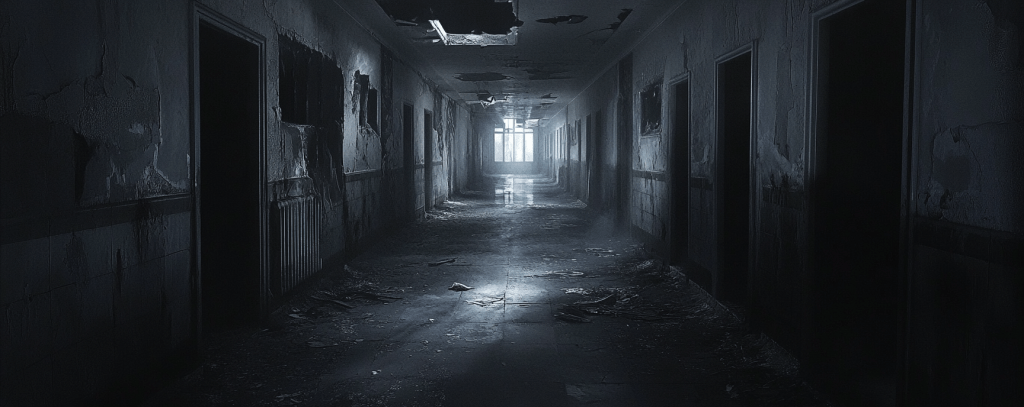
One of the most striking elements of Session 9 is its setting, the Danvers State Hospital, which looms large not just as a backdrop but as a central character in the film. The hospital, with its decaying walls, dark corridors, and eerie silence, becomes a reflection of the characters’ inner turmoil. The screenplay expertly uses the setting to build an atmosphere of dread, where the environment itself seems to be imbued with a malevolent force.

The decision to film on location at the actual Danvers State Hospital adds a layer of authenticity that is rare in horror films. The screenplay capitalizes on the building’s history and architecture, allowing the physical space to influence the narrative. The hospital’s past—echoed through the lingering presence of former patients and the remnants of their lives—becomes intertwined with the present, blurring the lines between reality and imagination.

In many ways, the hospital represents the characters’ fractured mental states. As they navigate its halls, their grip on reality weakens, mirroring the crumbling structure around them. The screenplay’s subtle integration of the setting into the story’s fabric demonstrates how a location can elevate the horror genre, turning a mere backdrop into an active participant in the narrative.

The Power of Ambiguity

Session 9 thrives on ambiguity, a narrative technique that is both challenging and rewarding when executed well. The screenplay leaves much to the audience’s imagination, allowing the horror to manifest not just on screen but in the mind of the viewer. This ambiguity is central to the film’s psychological impact, as it forces the audience to engage with the story on a deeper level, questioning what is real and what is imagined.

The film’s plot revolves around a group of asbestos removers working in the abandoned hospital. As the characters delve deeper into the building, their own psychological issues begin to surface, exacerbated by the oppressive atmosphere. The screenplay carefully balances these elements, never fully revealing whether the horrors experienced are supernatural or the result of mental breakdowns.

This deliberate ambiguity is a powerful tool in psychological horror, as it taps into the fear of the unknown. The screenplay’s restraint in providing clear answers amplifies the tension, creating a sense of unease that lingers long after the film ends. This approach is reminiscent of other psychological horror films like The Shining and Repulsion, where the horror is more implied than shown, leaving the audience to fill in the terrifying blanks.

Character Descent into Madness

At the heart of Session 9 is the exploration of the characters’ descent into madness, a common theme in psychological horror. The screenplay meticulously constructs this descent, using the characters’ interactions with the hospital and each other to peel back layers of their psyches.

The protagonist, Gordon (played by Peter Mullan), is a man already on the edge, struggling with personal and financial pressures. As the film progresses, the screenplay subtly hints at Gordon’s unraveling, using his growing detachment and the increasingly erratic behavior of the other characters to build suspense. The film’s pacing is crucial here, as it allows the audience to gradually witness Gordon’s mental deterioration, creating a slow-burn effect that is both compelling and disturbing.

The screenplay’s use of sound plays a significant role in illustrating this descent. The recurring sound of a woman’s voice, heard on an old reel-to-reel tape that one of the characters finds, serves as a haunting motif throughout the film. These tapes, which document the sessions of a patient with dissociative identity disorder, mirror Gordon’s own psychological fragmentation, drawing a parallel between the past horrors of the hospital and the present.

By the film’s climax, the screenplay leaves the audience questioning the nature of Gordon’s actions—are they the result of possession, the influence of the hospital, or simply the manifestation of his own buried guilt and stress? This ambiguity in character motivation is another strength of the screenplay, forcing the viewer to confront the unsettling reality that the horror might be entirely human in origin.

Narrative Structure: Building Tension through Nonlinear Storytelling

Session 9 employs a nonlinear narrative structure that enhances its psychological horror. The screenplay’s fragmented timeline, combined with the gradual revelation of key plot points, mirrors the disjointed mental states of the characters. This structure allows the film to build tension incrementally, leading to a climax that feels both inevitable and shocking.

The screenplay uses flashbacks and audio recordings to introduce the hospital’s dark history, weaving these elements into the present-day narrative. This technique creates a sense of temporal dislocation, where past and present seem to bleed into each other, contributing to the film’s overall atmosphere of confusion and dread.

A crucial aspect of the narrative structure is its pacing. The screenplay carefully doles out information, keeping the audience in a constant state of anticipation. The slow reveal of Gordon’s secret, for instance, is a masterclass in suspenseful storytelling. The audience is given just enough information to sense that something is wrong, but the full extent of Gordon’s actions is only unveiled in the final moments, delivering a powerful emotional and psychological punch.

Themes of Guilt and Repression

Guilt and repression are central themes in Session 9, explored through both the setting and the characters. The screenplay delves into these themes with a subtlety that allows them to permeate the entire film, influencing the characters’ actions and the unfolding of the plot.

Gordon’s storyline is particularly steeped in guilt. His actions, driven by a desperate attempt to maintain his crumbling life, are tinged with repressed emotions and unspoken fears. The screenplay hints at his internal struggle through his interactions with his crew and the hospital, with the latter acting as a catalyst for his breakdown. The hospital, once a place where society’s unwanted were hidden away, becomes a metaphor for Gordon’s own buried guilt and the secrets he keeps even from himself.

The film’s exploration of repression is also evident in the other characters, each of whom brings their own baggage to the job. Phil (David Caruso), Mike (Stephen Gevedon), Hank (Josh Lucas), and Jeff (Brendan Sexton III) are all haunted by their pasts in different ways, and the screenplay uses their time in the hospital to bring these repressed memories and emotions to the surface. This collective unraveling not only serves to heighten the tension but also reinforces the idea that the hospital itself is a repository for the darkest aspects of the human mind.

The Unreliable Narrator: A Tool for Psychological Horror

One of the most intriguing aspects of Session 9 is its use of an unreliable narrator, a common device in psychological horror. The screenplay cleverly manipulates the audience’s perspective, making it difficult to discern the truth of what is happening. This is particularly effective in creating a sense of unease and distrust, both in the characters and in the narrative itself.

Gordon’s perspective is the primary lens through which the audience experiences the film, but as his mental state deteriorates, so too does the reliability of his narration. The screenplay blurs the line between reality and delusion, using Gordon’s increasingly fractured psyche to challenge the viewer’s understanding of the events unfolding on screen. This technique draws the audience deeper into Gordon’s madness, making his eventual breakdown all the more impactful.

The use of the unreliable narrator is a hallmark of psychological horror, seen in classics like Psycho and The Shining. In Session 9, it serves to amplify the film’s themes of guilt, repression, and the fragility of the human mind. By placing the audience in Gordon’s unstable shoes, the screenplay ensures that the horror is not just something observed, but something felt on a deeply personal level.

Conclusion: Session 9 as a Blueprint for Psychological Horror

Session 9 stands as a prime example of how psychological horror can be effectively conveyed through screenwriting. The film’s use of setting, ambiguity, character development, and narrative structure all contribute to its unsettling atmosphere and lasting impact. By focusing on the internal horrors of the mind, rather than relying on external monsters, Session 9 taps into universal fears, making it a timeless piece of cinema.

For screenwriters looking to craft their own psychological horror, Session 9 offers invaluable lessons. The film demonstrates the power of suggestion over explicitness, the importance of setting in creating atmosphere, and the effectiveness of character-driven horror. Above all, it shows that the most terrifying stories are often those that explore the darkest corners of the human psyche, where the boundaries between reality and madness are perilously thin.


✍️  Whether you’re mastering the art of dialogue, structure, or character development, the power of AI can be a game-changer in your writing journey. My Free Ebook, ‘AI for Authors’ delves into how AI-powered prompts can provide a unique edge to your storytelling process. If you’re intrigued by the prospect of supercharging your fiction skills, download your free copy today and explore new horizons in creative writing. 
Revisiting ‘My Dinner with Andre’: Crafting Compelling Dialogue

“My Dinner with Andre” is a cinematic gem that defies conventional storytelling. Directed by Louis Malle and written by its stars, Wallace Shawn and Andre Gregory, this 1981 film is essentially a 110-minute conversation between two friends at a restaurant. What makes this seemingly mundane setup so captivating is the masterful dialogue that unfolds, offering a profound exploration of life, art, and human connection. In this article, we will delve into the elements that make the dialogue in “My Dinner with Andre” so compelling, examining its structure, thematic depth, character development, and the art of crafting meaningful conversation in screenwriting.

Setting the Stage: A Simple Yet Profound Setup

The Power of a Single Setting

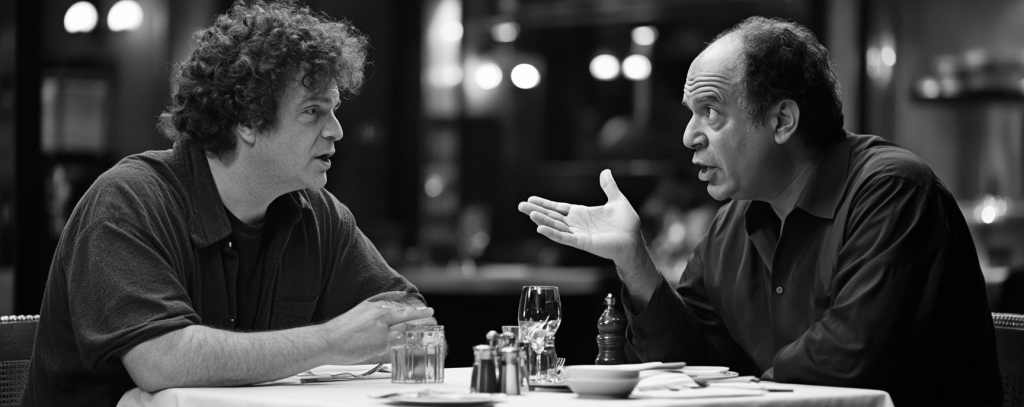
“My Dinner with Andre” takes place almost entirely in a single location: a cozy New York City restaurant. This choice of setting is critical as it strips away external distractions, focusing the audience’s attention solely on the dialogue. The single setting creates an intimate atmosphere, making viewers feel like they are eavesdropping on a private conversation. This intimacy is crucial for the depth of dialogue to resonate.

Establishing the Premise

The film begins with Wallace Shawn, playing a semi-fictional version of himself, reluctantly agreeing to meet his old friend Andre Gregory for dinner. Shawn is apprehensive about the meeting, as he has heard that Gregory has been through a series of unusual and possibly unsettling experiences. This premise sets up the anticipation and curiosity that drive the narrative forward. From the moment the conversation begins, the audience is hooked, eager to uncover the details of Gregory’s adventures and philosophical musings.

Character Dynamics: A Study in Contrast

Wallace Shawn: The Skeptical Everyman

Wallace Shawn’s character serves as the audience’s surrogate, representing the skeptical, rational, and somewhat cynical viewpoint. His initial reluctance to engage with Gregory’s outlandish stories mirrors the audience’s potential skepticism. As the conversation progresses, Shawn’s questions and doubts guide the discussion, ensuring that Gregory’s ideas are thoroughly examined and grounded.

Andre Gregory: The Philosophical Wanderer

In contrast, Andre Gregory embodies the role of the philosophical wanderer, brimming with tales of his spiritual and existential explorations. Gregory’s character is charismatic, articulate, and passionate, often delving into abstract and profound concepts. His enthusiasm and conviction provide a counterbalance to Shawn’s skepticism, creating a dynamic interplay that keeps the conversation engaging.

The Interplay of Perspectives

The strength of the dialogue in “My Dinner with Andre” lies in the interplay between these two contrasting perspectives. Shawn’s grounded, practical outlook clashes with Gregory’s idealistic and often mystical worldview. This clash creates a tension that drives the conversation, forcing both characters to articulate their thoughts and beliefs more clearly. The dialogue becomes a dance of ideas, with each character challenging and refining the other’s perspective.

Thematic Depth: Exploring Life’s Big Questions

The Search for Meaning

A central theme in “My Dinner with Andre” is the search for meaning in life. Gregory recounts his various experiences, from participating in experimental theater in Poland to exploring communal living in the Scottish Highlands, all in a quest to find deeper significance in existence. His stories raise fundamental questions about the nature of reality, the purpose of life, and the human condition.

The Nature of Reality

Throughout the conversation, Gregory challenges conventional notions of reality, suggesting that most people live in a state of unconsciousness, disconnected from true experience. He argues that modern society’s routines and material pursuits create a kind of waking sleep, preventing individuals from truly living. This theme resonates with audiences, prompting them to reflect on their own lives and the extent to which they are truly engaged with their experiences.

Connection and Isolation

Another key theme is the tension between connection and isolation. Gregory’s stories often highlight moments of profound connection with others, whether through shared artistic endeavors or communal living. However, these moments are juxtaposed with feelings of alienation and disconnection, both in his own life and in society at large. The dialogue explores how genuine human connection can be both elusive and transformative.

Crafting Dialogue: Lessons from ‘My Dinner with Andre’

Authenticity and Honesty

One of the most striking features of the dialogue in “My Dinner with Andre” is its authenticity. The characters speak with honesty and vulnerability, sharing personal anecdotes and insights without pretense. This authenticity is crucial for creating dialogue that resonates with audiences. Writers can learn from this by ensuring that their characters speak from a place of truth, reflecting genuine emotions and experiences.

Rhythm and Pacing

Despite its conversational nature, the dialogue in “My Dinner with Andre” is carefully structured to maintain a natural rhythm and pacing. The conversation ebbs and flows, with moments of intense philosophical debate balanced by lighter, more personal exchanges. This variation in tone keeps the audience engaged, preventing the dialogue from becoming monotonous. Writers should pay attention to the rhythm of their dialogue, varying the intensity and tone to maintain interest.

The Art of Listening

An often overlooked aspect of dialogue is the importance of listening. In “My Dinner with Andre,” both characters actively listen to each other, responding thoughtfully and allowing the conversation to evolve organically. This mutual respect and attentiveness create a dynamic and meaningful exchange. Writers can enhance their dialogue by ensuring that characters genuinely listen to and engage with each other, rather than simply delivering monologues.

Subtext and Implication

Much of the power of the dialogue in “My Dinner with Andre” comes from what is implied rather than explicitly stated. The characters often speak in metaphors or share anecdotes that carry deeper meanings. This use of subtext adds layers of complexity to the conversation, inviting the audience to read between the lines and uncover the underlying themes. Writers can enrich their dialogue by incorporating subtext, allowing characters to communicate on multiple levels.

Developing a Distinct Voice

Each character in “My Dinner with Andre” has a distinct voice, shaped by their experiences, beliefs, and personalities. Gregory’s speech is often poetic and expansive, reflecting his philosophical outlook, while Shawn’s is more grounded and practical. This distinction in voice helps to clearly define the characters and makes their dialogue more engaging. Writers should strive to develop unique voices for their characters, ensuring that each one speaks in a way that reflects their individual traits and perspectives.

The Impact of ‘My Dinner with Andre’ on Screenwriting

Challenging Traditional Narrative Structures

“My Dinner with Andre” challenges traditional narrative structures, demonstrating that compelling storytelling can be achieved through dialogue alone. The film’s success shows that a strong script, centered around rich, engaging dialogue, can captivate audiences without the need for elaborate plots or action sequences. This opens up new possibilities for screenwriters, encouraging them to experiment with unconventional storytelling techniques.

Emphasizing Intellectual and Emotional Depth

The film also emphasizes the importance of intellectual and emotional depth in dialogue. By tackling profound philosophical questions and exploring complex emotions, “My Dinner with Andre” elevates the conversation to a form of art. Screenwriters can learn from this by striving to infuse their dialogue with depth and meaning, making every conversation count.

Inspiring a Generation of Writers

Since its release, “My Dinner with Andre” has inspired countless writers and filmmakers. Its unique approach to dialogue-driven storytelling serves as a testament to the power of words and ideas in cinema. The film encourages writers to push the boundaries of what dialogue can achieve, inspiring them to create conversations that are not only engaging but also thought-provoking and transformative.

Conclusion: The Timeless Art of Conversation

“My Dinner with Andre” remains a timeless example of the art of conversation in film. Its compelling dialogue, rich with philosophical insights and emotional depth, captivates audiences and invites them to reflect on their own lives. For screenwriters, the film offers invaluable lessons in crafting meaningful dialogue, developing distinct character voices, and exploring profound themes. By revisiting “My Dinner with Andre,” we can appreciate the enduring power of a well-crafted conversation and its ability to resonate deeply with audiences.

In the realm of screenwriting, dialogue is more than just words on a page; it is a tool for exploring the human experience, challenging our perceptions, and connecting us to the characters on screen. “My Dinner with Andre” exemplifies this potential, reminding us that sometimes, the most compelling stories are found in the simplest of conversations.


✍️  Whether you’re mastering the art of dialogue, structure, or character development, the power of AI can be a game-changer in your writing journey. My Free Ebook, ‘AI for Authors’ delves into how AI-powered prompts can provide a unique edge to your storytelling process. If you’re intrigued by the prospect of supercharging your fiction skills, download your free copy today and explore new horizons in creative writing.