‘The Adventures of Baron Munchausen’: Fantasy Screenwriting Unleashed

Fantasy screenwriting has always been a delicate balance between the imaginative and the structured, with some films excelling in world-building and others in narrative coherence. The Adventures of Baron Munchausen (1988), directed by Terry Gilliam, is a unique blend of whimsical fantasy and surreal storytelling that defies traditional cinematic boundaries. Adapted from the tall tales of Baron Munchausen, the film is an exhilarating journey through bizarre landscapes, mythological creatures, and outlandish adventures, while also reflecting on storytelling itself. For screenwriters, the movie serves as both an inspiration and a masterclass in crafting narrative freedom within a structured format.

In this article, we will dive into how The Adventures of Baron Munchausen exemplifies fantasy screenwriting at its most unrestrained. From the film’s approach to character development, narrative structure, and visual storytelling, to the broader lessons it offers for screenwriters, we will explore how this cinematic marvel unleashes the full potential of fantasy on screen.

Origins of the Munchausen Tales: Adapting the Unadaptable

Before delving into the film itself, it’s important to understand the source material: the tall tales of Baron Munchausen. The stories, first published in the late 18th century, depict the fictionalized exploits of a German nobleman who embarks on extraordinary adventures, traveling to the moon, escaping from the belly of a sea monster, and more. These stories are, by their very nature, absurd and episodic, filled with exaggeration and humor.

Terry Gilliam faced the monumental challenge of adapting these loosely connected, fantastical tales into a cohesive screenplay. Much like Mary Harron’s adaptation of American Psycho, where restraint and careful selection were key, Gilliam had to decide which elements to keep and how to unify them. His solution was to frame the film around a larger narrative — the Baron (played by John Neville) must save a besieged city, recounting his adventures as he recruits his old comrades. This structure allowed Gilliam to maintain the episodic nature of the original tales while grounding them in a central goal, providing an anchor for the viewer amid the wild flights of fantasy.

For screenwriters, this approach offers a lesson in adaptation: how to retain the spirit of a fragmented source while finding a way to connect the dots. In Munchausen, the Baron’s narration serves as the unifying device, allowing the audience to embrace the chaotic world while still following a clear objective. This technique mirrors the importance of narrative framing in other fantasy epics like The Princess Bride (1987), where the storytelling device (a grandfather reading a book to his grandson) lends structure to the unfolding adventures.

Character as Myth: The Larger-than-Life Baron

At the heart of The Adventures of Baron Munchausen is its titular character, a figure who embodies the very spirit of exaggeration and myth. The Baron is a classic unreliable narrator, constantly embellishing his exploits and challenging the audience’s suspension of disbelief. From a screenwriting perspective, this creates an interesting dynamic: the protagonist is both the hero and the storyteller, which blurs the line between reality and fiction within the narrative.

Baron Munchausen is not a character driven by a conventional arc of growth or transformation. Instead, he is static in his confidence, charisma, and eccentricity — traits that make him a symbol rather than a traditional character. His journey is not about personal change but rather the affirmation of his legendary status. This aligns with Joseph Campbell’s archetype of the Hero in mythology, where the hero’s journey is more about overcoming external challenges than internal conflict. Munchausen’s adventures, whether battling the Ottoman army or dancing with Venus, are grandiose because they are a reflection of his larger-than-life persona.

This type of character presents both opportunities and challenges for screenwriters. On one hand, the lack of a conventional character arc can feel liberating, allowing the writer to focus on the spectacle and the story world. On the other hand, it risks creating a disconnect with the audience, who may struggle to relate to such a fantastical figure. In Munchausen, this issue is mitigated by the presence of secondary characters, particularly Sally Salt (Sarah Polley), a young girl who accompanies the Baron on his journey. Sally serves as a grounding force, a character through whom the audience can experience the Baron’s world with wonder and skepticism in equal measure.

The Episodic Structure: A Dreamlike Journey

One of the most distinctive features of The Adventures of Baron Munchausen is its episodic structure, which mirrors the episodic nature of the original tall tales. Each segment of the film — from the moon sequence with Robin Williams’ King of the Moon to the volcanic dance with Uma Thurman’s Venus — feels like a standalone adventure. Yet, they are all linked by the overarching narrative of the Baron’s mission to save the city.

This episodic format breaks the traditional three-act structure of screenwriting, offering a more fluid, dreamlike approach to storytelling. In some ways, the film shares structural similarities with Stanley Kubrick’s 2001: A Space Odyssey (1968), where each chapter presents a different stage of human evolution and exploration. While Munchausen is much more whimsical in tone, it employs a similar technique of using each episode to explore a new facet of the fantastical world.

For screenwriters, this illustrates the flexibility of structure in fantasy films. While many screenplays benefit from the discipline of a tight, three-act structure, fantasy often thrives when given room to meander. Like the sci-fi gem Ex Machina, which successfully employed the three-act structure to focus on philosophical dilemmas rather than action, Munchausen uses its episodes to explore different themes: from the limits of human knowledge (in the Moon sequence) to the nature of time (in the encounter with Vulcan).

The episodic structure, however, must be handled with care. Without a central narrative thread, the film could easily become disjointed, a collection of scenes without momentum. Gilliam avoids this pitfall by ensuring that each episode serves the larger story of the Baron’s quest. The episodic format may allow for more creative freedom, but it still requires narrative cohesion.

Visual Storytelling: Gilliam’s Cinematic Imagination

Perhaps more than anything else, The Adventures of Baron Munchausen is a triumph of visual storytelling. Terry Gilliam, known for his distinctive style that blends the surreal with the grotesque, uses every frame of the film to immerse the audience in the Baron’s fantastical world. From the elaborate sets to the imaginative costumes and groundbreaking special effects, the film is a visual feast that matches the outlandish nature of the story itself.

For screenwriters, Gilliam’s approach is a reminder that fantasy films rely heavily on the power of visual spectacle. Descriptions of fantastical elements in a screenplay must leave room for directorial interpretation, but they should also provide enough detail to convey the scope of the world. In Munchausen, Gilliam’s use of color and lighting helps distinguish between the “real” world (the besieged city) and the world of the Baron’s imagination. The transitions between these worlds are seamless, inviting the audience to question what is real and what is fantasy — a theme that runs throughout the film.

The film’s design also plays with the concept of scale, from the massive figure of the god Vulcan (Oliver Reed) to the miniature world of the Moon. These shifts in scale create a sense of wonder and disorientation, emphasizing the boundless nature of the Baron’s adventures. This technique is akin to the use of scale in modern fantasy films like The Lord of the Rings trilogy, where the small, humble hobbits are constantly dwarfed by the vast landscapes and towering enemies they face.

For screenwriters, understanding how visual elements can complement narrative themes is crucial, especially in fantasy. The world of the story should not just be a backdrop but a reflection of the characters and their journey. In Munchausen, the visual elements are as much a part of the storytelling as the dialogue or plot.

Thematic Exploration: The Power of Imagination

At its core, The Adventures of Baron Munchausen is a celebration of imagination and storytelling. The film constantly blurs the lines between reality and fantasy, asking the audience to question the nature of truth in storytelling. The Baron’s tales are clearly exaggerated, yet they carry a deeper truth about the human spirit, particularly the power of belief and wonder in the face of adversity.

This meta-narrative — the idea that storytelling itself is a form of magic — is central to the film’s charm. It resonates with the concept of the unreliable narrator, as seen in other films like Big Fish (2003), where tall tales serve as a means of understanding life’s mysteries. In Munchausen, the Baron’s adventures may or may not be “true,” but they inspire those around him to hope, to believe in the impossible.

For screenwriters, the theme of storytelling within a story offers rich opportunities for exploration. By making the act of storytelling a central element, Munchausen invites the audience to engage with the narrative on multiple levels. It also reinforces the idea that fantasy, at its best, is not an escape from reality but a way of reframing it, offering new perspectives on human experience.

Conclusion: Lessons for the Fantasy Screenwriter

The Adventures of Baron Munchausen stands as a testament to the boundless possibilities of fantasy screenwriting. It challenges conventional narrative structures, embraces visual extravagance, and explores deep thematic questions about the nature of reality and imagination. For screenwriters, the film offers several key takeaways:

  1. Embrace the episodic structure: While traditional three-act structures work well for many genres, fantasy can benefit from a more flexible, episodic approach that allows for exploration of different themes and worlds.
  2. Create larger-than-life characters: Characters like Baron Munchausen, who embody myth and legend, can drive a story without needing a traditional character arc, provided they are balanced by more relatable figures.
  3. Use visual storytelling to enhance the narrative: In fantasy, the world itself should be a character, with every visual element serving to deepen the audience’s immersion in the story.
  4. Celebrate the power of storytelling: Fantasy often revolves around the act of storytelling itself, and Munchausen shows how this meta-narrative can add layers of meaning to a film.

In the end, The Adventures of Baron Munchausen is not just a film about fantastical adventures — it is a film about the magic of storytelling. For screenwriters, it serves as both inspiration and a guide to unleashing the full potential of fantasy on screen.


✍️  Whether you’re mastering the art of dialogue, structure, or character development, the power of AI can be a game-changer in your writing journey. My Free Ebook, ‘AI for Authors’ delves into how AI-powered prompts can provide a unique edge to your storytelling process. If you’re intrigued by the prospect of supercharging your fiction skills, download your free copy today and explore new horizons in creative writing. 

Screenwriting and Surrealism: ‘The Forbidden Zone’

Surrealism has long been a potent force in the world of cinema, and when it crosses paths with screenwriting, the results can be both disorienting and exhilarating. A vivid case in point is The Forbidden Zone, a 1980 cult film directed by Richard Elfman. A bizarre and often chaotic exploration of absurdity, The Forbidden Zone stands as a beacon of surrealist cinema, utilizing strange imagery, illogical storylines, and jarring music to transport viewers into a world that defies conventional narrative norms.

In this article, we’ll delve into the relationship between surrealism and screenwriting, using The Forbidden Zone as a case study. We’ll explore how the film pushes the boundaries of storytelling, and what screenwriters can learn from its chaotic yet coherent style.


Surrealism and Cinema: A Brief Overview

To understand the significance of The Forbidden Zone, it’s important first to grasp the surrealist movement and its influence on film. Surrealism emerged in the early 20th century as an artistic movement that sought to tap into the unconscious mind, challenging logic, reason, and traditional narrative forms. Inspired by psychoanalysis, surrealists like Salvador Dalí, Luis Buñuel, and André Breton sought to subvert reality by portraying dreamlike, irrational worlds.

In film, this movement took hold in various forms, from the early works of Buñuel (Un Chien Andalou, L’Age d’Or) to the more modern visions of David Lynch (Eraserhead, Mulholland Drive) and Terry Gilliam (Brazil). These films abandon the linearity of traditional storytelling, opting instead for disjointed plots, enigmatic characters, and unsettling imagery.

In the case of The Forbidden Zone, Elfman follows in the surrealist tradition by crafting a film that upends narrative expectations, using absurdist humor, dreamlike visuals, and bizarre characterizations to create an experience that feels like a plunge into the subconscious.


The Surrealist Blueprint: Plot as Absurdist Journey

The narrative of The Forbidden Zone is deceptively simple on the surface. The film follows the Hercules family as they stumble upon a door in their basement that leads to the “Sixth Dimension,” a realm ruled by a sexually frustrated queen, a diminutive king, and a host of strange, grotesque characters. However, the plot is little more than a framework for a series of disjointed, episodic scenes filled with bizarre encounters and nonsensical dialogues.

This refusal to adhere to traditional story structure is a hallmark of surrealist cinema. In The Forbidden Zone, the plot unfolds like a fever dream, where cause and effect are secondary to creating an experience that is unpredictable and absurd. For screenwriters, this raises an intriguing question: Can a screenplay function without a traditional narrative arc?

Elfman’s film suggests that while surrealism often rejects clear storytelling conventions, it does not abandon structure entirely. Instead, it embraces a kind of anti-structure where scenes flow based on thematic resonance or visual motifs rather than character development or logical progression. Much like Luis Buñuel’s The Discreet Charm of the Bourgeoisie (1972), where characters repeatedly attempt but fail to sit down for a meal, The Forbidden Zone builds its tension through absurd repetition and narrative loops.

For screenwriters interested in surrealism, it’s important to recognize that structure need not be completely discarded. Instead, it can be redefined, as Elfman does, to serve a different function—one that reflects the chaotic and fragmented nature of the human mind.


Characters as Archetypes and Caricatures

In conventional screenwriting, characters evolve and grow, shaped by the events of the story. But in The Forbidden Zone, characters are more like archetypes—representations of concepts or ideas rather than fully developed individuals. Frenchy Hercules, the protagonist, isn’t driven by any particular goals or desires. She, like the other characters, is more of a pawn in the film’s bizarre game of absurdity.

The King (played by Hervé Villechaize), Queen Doris (Susan Tyrrell), and other inhabitants of the Sixth Dimension act as exaggerated caricatures, drawing from a tradition of surrealist exaggeration where characters represent extremes of human behavior, emotion, or ideology. Much like Dalí’s melting clocks or Magritte’s faceless businessmen, these characters aren’t intended to feel real but rather to challenge viewers’ expectations of what a character should be.

For screenwriters, this can be a liberating concept. Surrealism allows for characters that are less bound by psychological realism and more by symbolic or thematic purposes. When developing characters in a surrealist screenplay, think less about arcs and more about how their absurdity can serve the film’s larger themes. In The Forbidden Zone, each character adds to the overarching sense of chaos and disorder, amplifying the film’s surreal atmosphere.


Dialogue: Absurdity as a Narrative Tool

Dialogue in The Forbidden Zone is as unpredictable and illogical as the story itself. Characters often speak in non-sequiturs or repeat phrases for comedic effect, with the conversations serving less as vehicles for advancing the plot and more as opportunities to amplify the film’s absurd tone.

One scene exemplifies this approach: the queen, in a fit of jealousy, engages in a nonsensical argument with her diminutive husband, throwing insults that veer wildly off-topic. The dialogue here doesn’t progress the story in a traditional sense; instead, it builds the anarchic atmosphere, pushing the viewer further into the film’s strange reality.

This kind of dialogue can be particularly effective in surrealist screenwriting, as it distances the audience from the expectation that every line of dialogue needs to serve a clear purpose. Surrealist dialogue instead works to create a sense of dislocation or confusion, enhancing the film’s dreamlike quality.

Screenwriters can use this technique to break free from conventional dialogue rules. Rather than focusing on how dialogue serves plot or character motivation, consider how it can destabilize reality or create moments of comic absurdity. In The Forbidden Zone, the dialogue’s lack of coherence serves to heighten the film’s surreal effect, keeping the audience off-balance and engaged in the strangeness of the world.


Visuals and Set Design: A Feast for the Subconscious

If the script for The Forbidden Zone is surreal, its visual presentation takes that to another level. The film’s black-and-white cinematography, inspired by 1930s and 1940s cartoons, is intentionally primitive and theatrical. The exaggerated sets, hand-drawn backdrops, and deliberately crude special effects all contribute to the film’s sense of playful absurdity. It’s as if the world itself is an extension of the unconscious mind, where reality bends and warps with every turn.

Visuals play a critical role in surrealist screenwriting because they offer another layer of meaning beyond dialogue and plot. In surrealist cinema, the visual world often represents the inner workings of the subconscious. Much like David Lynch’s disturbing dream sequences in Eraserhead (1977), the world of The Forbidden Zone reflects an unreality where the rules of the natural world no longer apply.

For screenwriters, this underscores the importance of considering how visuals interact with narrative in surrealist films. While not every screenwriter can control the set design or cinematography, it’s worth thinking about how the imagery in your screenplay can enhance the surreal tone. Descriptions in the script should emphasize the absurdity of the visual world, allowing directors and designers to expand on those ideas.


Music and Sound: Breaking the Mold

The Forbidden Zone is not just surreal in its visuals and story; it also uses music in ways that defy expectations. The film is punctuated by musical numbers that range from jazz and cabaret to operatic renditions of nonsensical lyrics. The absurdity of the film’s score, composed by Danny Elfman, who also appears as Satan, adds another layer of strangeness to the narrative, making the music integral to the surreal experience.

The use of sound in surrealist screenwriting offers another avenue for breaking free of traditional forms. In The Forbidden Zone, music is not just background noise or mood-setter; it’s an active participant in the absurdity of the world. This opens up possibilities for screenwriters to think about how sound and music can interact with the narrative in unconventional ways.

Incorporating musical elements into a screenplay can be tricky, but in surrealist film, it can add another layer of disorientation and humor. Consider how music and sound can break the fourth wall or serve as non-diegetic commentary on the action. In Elfman’s film, the surreal music serves as a constant reminder that the world we are witnessing is far from reality.


Lessons for Screenwriters

While The Forbidden Zone may seem like an exercise in chaos, it offers several valuable lessons for screenwriters interested in exploring surrealism. First, it challenges the idea that narrative must be linear or character-driven to be engaging. Instead, it shows how absurdity, repetition, and disjointed scenes can create a compelling experience if the tone is carefully controlled.

Second, it illustrates how characters can function as symbols rather than realistic individuals, freeing writers from the constraints of traditional character arcs. Finally, it emphasizes the importance of visual and auditory elements in crafting a surrealist screenplay, with the set design, cinematography, and music all contributing to the film’s strange atmosphere.

In short, The Forbidden Zone provides a template for screenwriters to break free from the constraints of conventional narrative and embrace the limitless possibilities of the surreal. Whether you’re aiming to write a full-blown surrealist film or simply incorporate elements of the absurd into your screenplay, the lessons from The Forbidden Zone can inspire a more imaginative and experimental approach to storytelling.


By embracing the irrational

, screenwriters can tap into a deeper well of creativity, allowing the subconscious to dictate the direction of the narrative. The Forbidden Zone, with all its chaotic splendor, serves as a reminder that cinema is not bound by logic or convention. It’s a playground where anything is possible.


✍️  Whether you’re mastering the art of dialogue, structure, or character development, the power of AI can be a game-changer in your writing journey. My Free Ebook, ‘AI for Authors’ delves into how AI-powered prompts can provide a unique edge to your storytelling process. If you’re intrigued by the prospect of supercharging your fiction skills, download your free copy today and explore new horizons in creative writing. 

AI in Hollywood: Weekly News, August 29, 2024

AI in Hollywood: Navigating the Intersection of Creativity, Technology, and Legislation

As artificial intelligence (AI) continues to integrate into various aspects of life, its impact on the entertainment industry has become a topic of growing concern. Hollywood, a world where creativity, intellectual property, and celebrity converge, now finds itself at the center of debates surrounding the ethical use of AI, particularly in relation to digital replicas of performers. Recent legislative efforts, spearheaded by California’s Assembly Bill 2602, aim to address these concerns, reflecting the industry’s increasing need to protect performers’ rights in an era dominated by technological advancements. This article will explore the implications of this legislation, examine the role of AI in Hollywood, and consider the broader consequences for screenwriters, filmmakers, and the industry at large.

The Rise of AI in Hollywood

AI’s presence in Hollywood is not entirely new. From special effects to predictive algorithms used in marketing and distribution, AI has gradually become a vital tool in the filmmaking process. However, its role has expanded significantly in recent years, particularly in areas like digital effects and content creation. One of the most controversial uses of AI involves the creation of digital replicas of actors and other performers. These replicas can be used to generate voice, likeness, or even entire performances without the physical presence of the actor.

AI’s ability to create highly realistic digital replicas has raised significant concerns, especially regarding the potential for misuse. As seen in the recent controversy surrounding the trailer for Megalopolis, where AI-generated quotes were falsely attributed to renowned critics, the line between creative use and ethical boundaries can easily be crossed. This incident, which led to the dismissal of a marketing consultant and public backlash, underscores the necessity for clear guidelines and accountability in the use of AI in marketing and content creation.

California’s Legislative Response: Assembly Bill 2602

In response to the growing concerns over AI’s role in the entertainment industry, California has taken legislative action through Assembly Bill 2602. This bill, passed by the California State Senate, requires studios, streaming platforms, and other employers to obtain explicit permission from performers before creating digital replicas of their voice or likeness. The legislation is particularly significant as it seeks to safeguard performers’ rights in an increasingly digital landscape where their likeness can be replicated and used without their involvement.

SAG-AFTRA’s Role and Support
The Screen Actors Guild‐American Federation of Television and Radio Artists (SAG-AFTRA) has been a strong advocate for this bill, recognizing the profound impact AI could have on performers’ careers and livelihoods. SAG-AFTRA’s involvement highlights the union’s commitment to protecting its members from the potential exploitation that AI-driven technologies could enable. The union’s push for both state and federal legislation, including the No Fakes Act in Congress, is part of a broader effort to ensure that performers maintain control over their digital likenesses.

Defining Digital Replicas
One of the crucial aspects of AB 2602 is its clear definition of what constitutes a digital replica. According to the bill, a digital replica is a “computer-generated, highly realistic electronic representation” of a person’s voice or visual likeness, identifiable in various media formats. This definition is essential for setting boundaries on how and when these replicas can be used, ensuring that performers’ consent is a prerequisite for their creation and use.

Exclusions and Industry Concerns
The bill does include specific exclusions, such as the use of samples in remixes, mastering, or digital remastering of sound recordings or audiovisual works authorized by the copyright holder. These exclusions address industry concerns, particularly from groups like the Motion Picture Association (MPA), which initially opposed the bill due to fears it might interfere with standard post-production practices. After amendments were made, the MPA adopted a neutral stance, reflecting the bill’s balance between protecting performers and allowing creative freedom in the industry.

The Broader Impact of AI Legislation

The passage of AB 2602 represents a significant step in addressing the ethical challenges posed by AI in Hollywood. However, its implications extend beyond the immediate protection of performers’ rights. This legislation sets a precedent for how AI technologies should be regulated across the entertainment industry and beyond.

Comparisons to Federal Efforts
California’s approach mirrors broader national efforts to regulate AI, as seen in the No Fakes Act and executive orders issued by President Joe Biden and Vice President Kamala Harris. These federal initiatives emphasize the need for trustworthy and responsible AI innovation, reflecting a growing consensus that AI’s rapid advancement must be met with appropriate legal and ethical frameworks. The alignment between state and federal efforts suggests that similar legislation could soon become the norm across the United States, potentially leading to a standardized approach to AI regulation in the entertainment industry.

Implications for Performers and Content Creators
For performers, the enforcement of AB 2602 will mean greater control over their digital likenesses and the ability to negotiate terms for their use in various media. This could lead to new contractual norms in the industry, where rights to digital replicas are explicitly addressed, and performers are compensated accordingly. For content creators and studios, the legislation will necessitate a reevaluation of how AI is used in production and marketing, encouraging more ethical practices and potentially fostering innovation in how AI can enhance, rather than exploit, human creativity.

The Scarlett Johansson Case
A recent example illustrating the importance of such legislation is Scarlett Johansson’s dispute with OpenAI CEO Sam Altman over the use of a voice similar to hers in ChatGPT 4.0. Johansson’s public outcry over the unauthorized use of her voice highlights the personal and professional stakes involved in AI’s use of digital replicas. This case underscores the need for clear legal protections like those offered by AB 2602, ensuring that performers can defend their rights against unauthorized AI-driven reproductions.

The Future of AI in Screenwriting and Hollywood

As AI continues to evolve, its impact on screenwriting and the broader entertainment industry will likely intensify. While AI offers exciting possibilities, such as assisting in script development or enhancing visual effects, it also poses significant challenges, particularly regarding authorship, originality, and ethical use.

AI in Screenwriting: A Tool or a Threat?
In screenwriting, AI has been touted as a potential tool to streamline the creative process, offering suggestions for dialogue, plot development, and character arcs. However, the use of AI in this context raises questions about the nature of creativity and the role of the screenwriter. If AI can generate scripts or dialogue, who owns the final product? And how do we ensure that AI-driven content maintains the originality and emotional depth that human writers bring to their work?

These concerns are not just theoretical. The possibility of AI-generated scripts becoming commonplace could lead to a devaluation of the screenwriting profession, where human creativity is seen as secondary to machine efficiency. This is why it’s crucial for screenwriters and the industry at large to advocate for clear guidelines on how AI can be ethically integrated into the creative process, ensuring that it serves as an aid rather than a replacement for human ingenuity.

Ethical Storytelling in the Age of AI
The ethical implications of AI in storytelling extend beyond screenwriting to the entire narrative process. AI’s ability to analyze vast amounts of data could lead to stories that are tailored to specific audience preferences, potentially at the expense of originality and diversity. This data-driven approach to storytelling could result in a homogenization of content, where only the most commercially viable stories are produced, stifling creative risk-taking and innovation.

To counter this, the industry must prioritize ethical storytelling practices that emphasize the value of diverse voices and original narratives. This includes ensuring that AI is used to enhance, rather than dictate, the creative process, allowing for a broader range of stories to be told.

Lessons from the Past: Adapting to New Technologies
Hollywood has a long history of adapting to new technologies, from the transition to sound in the 1920s to the rise of digital effects in the 1990s. Each technological shift brought about fears of obsolescence and concerns over the impact on artistic integrity. However, these changes also opened up new possibilities for creative expression, ultimately enriching the industry.

The current debate over AI in Hollywood echoes these past transitions. While there are legitimate concerns about AI’s potential to disrupt traditional practices, there is also the opportunity for the industry to harness AI’s capabilities in ways that enhance storytelling, production, and distribution. The key will be finding a balance between embracing innovation and preserving the core values of creativity and ethical responsibility.

Conclusion: The Path Forward

As AI continues to reshape Hollywood, the industry faces a critical juncture. Legislation like California’s AB 2602 represents an important step in addressing the ethical challenges posed by AI, particularly in protecting performers’ rights. However, the conversation must extend beyond legal frameworks to encompass the broader implications of AI on creativity, authorship, and the future of storytelling.

For screenwriters, filmmakers, and all those involved in the entertainment industry, the challenge will be to navigate this evolving landscape in a way that leverages AI’s potential while safeguarding the human elements that make storytelling a powerful and transformative art form. By embracing responsible innovation and advocating for ethical practices, Hollywood can ensure that AI serves as a tool for creative empowerment rather than a threat to artistic integrity.


✍️  Whether you’re mastering the art of dialogue, structure, or character development, the power of AI can be a game-changer in your writing journey. My Free Ebook, ‘AI for Authors’ delves into how AI-powered prompts can provide a unique edge to your storytelling process. If you’re intrigued by the prospect of supercharging your fiction skills, download your free copy today and explore new horizons in creative writing. 
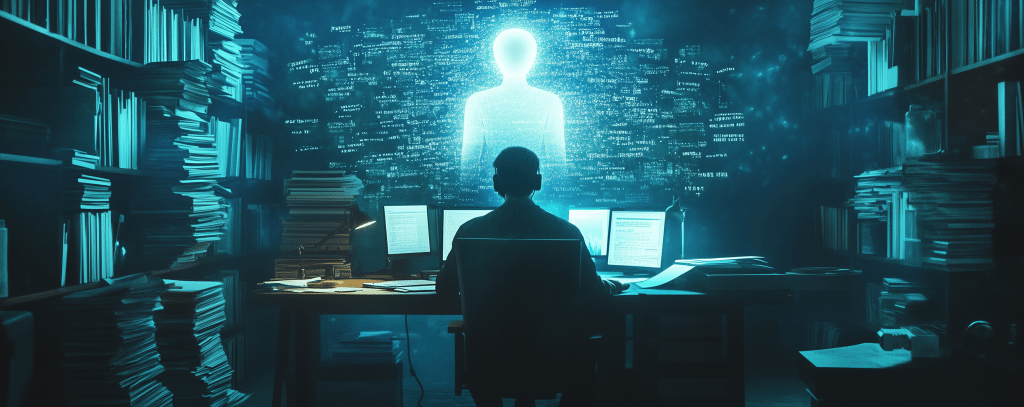
Preserving Authenticity: Balancing AI’s Contributions with Human Artistry

The integration of Artificial Intelligence (AI) into creative industries has sparked a significant conversation about its impact, particularly in screenwriting. As AI tools become more sophisticated and increasingly adopted in Hollywood, concerns about preserving human artistry have emerged. Is AI merely an assistive tool, or is it poised to reshape the entire screenwriting landscape? This blog will explore the delicate balance between the technological innovations brought by AI and the irreplaceable human elements that make screenwriting an art form.

The Role of AI in Screenwriting: A Tool, Not a Creator

AI’s contributions to screenwriting lie in its ability to process vast amounts of data, identify patterns, and generate suggestions. For instance, AI tools can assist with everything from analyzing existing scripts to identifying character archetypes, helping writers develop dialogue or plot structures. This can help screenwriters streamline the more mechanical aspects of their work, leaving more time for creative ideation.

AI, when used appropriately, enhances productivity. It can generate ideas, provide alternatives, and even offer variations on existing scenes. However, despite these contributions, AI is still limited by its reliance on existing data sets, making it incapable of producing original or emotionally resonant content on its own. In essence, AI acts as a “co-pilot,” capable of aiding the process but lacking the depth to navigate the emotional and thematic complexities of storytelling independently.

Example: AI-Assisted Genre Analysis

One area where AI excels is genre analysis. By analyzing thousands of films in a specific genre, AI can identify common tropes, pacing structures, and audience preferences. For instance, AI might analyze successful science fiction films like Ex Machina and 2001: A Space Odyssey to identify recurring motifs, such as ethical dilemmas about AI and humanity. However, while AI can highlight these patterns, it cannot create a novel approach to these dilemmas as a human screenwriter can. The role of AI, therefore, is to offer insights but not dictate creative decisions.

Human Artistry: The Heart of Screenwriting

At the core of every great screenplay lies the human experience—emotions, relationships, and complex moral questions. These are the elements that AI, with all its computational power, cannot replicate. Screenwriting is fundamentally an act of human storytelling, requiring a deep understanding of human behavior, emotional nuance, and cultural context.

Writers bring their personal experiences, values, and perspectives to the scripts they create. For example, the intense moral ambiguity in Breaking Bad was not born from formulaic structures but from Vince Gilligan’s exploration of human nature. Walter White’s transformation from a well-meaning teacher into a ruthless drug lord was meticulously crafted to reflect not only his circumstances but also deeper questions about pride, morality, and power.

Example: Emotion and Character Depth in “Breaking Bad”

Take the scene from Breaking Bad where Walter White, consumed by power, proclaims, “I am the one who knocks.” This moment is powerful not because of its adherence to a formula but because it taps into the character’s deep-seated insecurities and desire for control. AI might help identify that similar characters often face moments of self-realization, but it would struggle to craft the nuances that make this moment resonate with such emotional weight.

Human artistry in screenwriting is also about understanding subtext and crafting dialogue that reveals more than it says. In Ex Machina, the dialogue between Caleb and Ava is fraught with layers of meaning that AI would struggle to replicate. Their conversations about freedom, control, and identity are not just mechanical exchanges; they reflect a deep philosophical engagement that goes beyond the surface.

The Limits of AI in Creativity

AI’s limitations become particularly apparent when delving into the unpredictable nature of creativity. Storytelling is not just about adhering to established structures or formulas but also about breaking them in innovative ways. Creativity often involves risk, intuition, and spontaneity—qualities that AI, as it stands, cannot emulate.

For example, the adaptation of American Psycho by Mary Harron is a masterclass in balancing faithfulness to the source material with innovative cinematic techniques. Harron’s decision to reduce the graphic violence of the novel in favor of psychological tension was a creative choice that went beyond the capabilities of a formula-driven AI system. Her adaptation focused on creating an unsettling atmosphere through subtlety, an approach AI could not predict by simply analyzing the text.

AI and Predictive Algorithms

Predictive algorithms, a cornerstone of AI, often focus on generating content that adheres to proven patterns. This can be useful in optimizing script structure or ensuring that a screenplay aligns with genre expectations. However, one of the most enduring aspects of storytelling is its unpredictability. Audiences often resonate most with stories that defy expectations—something that AI’s pattern-based approach struggles with. The surprise twists in Ex Machina or the slow-burn narrative of Breaking Bad were successful precisely because they subverted conventional storytelling methods.

Collaboration Between AI and Writers

Instead of viewing AI as a threat, many screenwriters see it as a collaborative tool—one that helps enhance but not replace the creative process. The successful integration of AI into Hollywood could take the form of AI assisting writers with brainstorming sessions, offering structural insights, or even helping with research. The key is to ensure that AI remains a tool in the writer’s arsenal rather than a substitute for human creativity.

AI for Script Formatting and Efficiency

For many writers, AI’s most practical applications lie in automating repetitive tasks such as formatting, proofreading, and editing. Script formatting can be tedious, and AI tools can save screenwriters valuable time by ensuring adherence to industry standards. Similarly, AI can assist in fine-tuning pacing or identifying plot holes, but these are technical contributions rather than creative ones.

By allowing AI to handle the more mechanical aspects of screenwriting, writers can focus on what truly matters—crafting compelling characters, developing emotional depth, and ensuring that the narrative remains authentic to the human experience.

Example: AI’s Potential for Industry Research

AI can be particularly useful for understanding market trends or audience reactions. For instance, AI can analyze box office data, audience reviews, and social media feedback to help writers and studios better understand what resonates with viewers. However, while this data can be informative, it should not be the sole determinant of creative decisions. The success of films like Ex Machina lies in their willingness to challenge the audience, presenting complex ethical questions rather than catering solely to popular preferences.

Ethical Considerations: The Future of AI in Screenwriting

As AI continues to evolve, ethical questions arise regarding its role in creative industries. Who owns the intellectual property of an AI-generated script? Should AI-generated content be credited alongside human writers? More importantly, should we rely on AI to produce creative work, or does this risk diluting the authenticity of the storytelling process?

While AI offers many benefits, the danger lies in over-reliance. Creativity thrives on diversity of thought, emotional engagement, and personal experiences—qualities that are inherently human. The risk of delegating too much creative power to AI is that we may end up with stories that feel hollow, lacking the soul and complexity that only a human can provide.

Ensuring Human Oversight

To preserve authenticity, it is crucial that AI remains a tool rather than a creator. The final decisions—those that shape the story, define characters, and infuse the script with emotion—must come from human writers. Human oversight ensures that the soul of storytelling remains intact, even as technology becomes an integral part of the process.

Conclusion: A Symbiotic Relationship

The future of AI in screenwriting is not about choosing between human artistry and technological innovation. Instead, the goal should be to find a balance where AI can enhance human creativity without overshadowing it. Screenwriting will always require the human touch—the ability to empathize, to imagine, and to challenge the status quo. AI can offer valuable assistance, but it is the human screenwriter who breathes life into stories, ensuring that they remain authentic, emotionally resonant, and deeply impactful.

By embracing the strengths of both AI and human artistry, Hollywood can foster a creative ecosystem where innovation and authenticity coexist.


✍️  Whether you’re mastering the art of dialogue, structure, or character development, the power of AI can be a game-changer in your writing journey. My Free Ebook, ‘AI for Authors’ delves into how AI-powered prompts can provide a unique edge to your storytelling process. If you’re intrigued by the prospect of supercharging your fiction skills, download your free copy today and explore new horizons in creative writing. 
‘The Ninth Configuration’: Exploring Madness Through Script

Introduction

In 1980, The Ninth Configuration, directed by William Peter Blatty, emerged as an unconventional psychological drama that questioned the very nature of reality and sanity. The film, which has gained a cult following over the years, is an adaptation of Blatty’s own novel Twinkle, Twinkle, “Killer” Kane, and it serves as a spiritual sequel to The Exorcist. Though the two films differ greatly in tone and content, both probe the human condition—particularly the conflict between faith and despair. Where The Exorcist concerned itself with the battle between good and evil in a literal sense, The Ninth Configuration places its characters inside the battleground of their own minds.

The film’s script is a daring exploration of madness, trauma, and the line between reality and delusion. Through a combination of black comedy, philosophical musings, and raw emotional depth, Blatty created a narrative that challenges both its characters and audience to question the nature of truth. In this blog, we will examine how the script of The Ninth Configuration uses dialogue, character development, and visual storytelling to craft a powerful depiction of madness.


Setting the Stage: The Perfect Backdrop for Madness

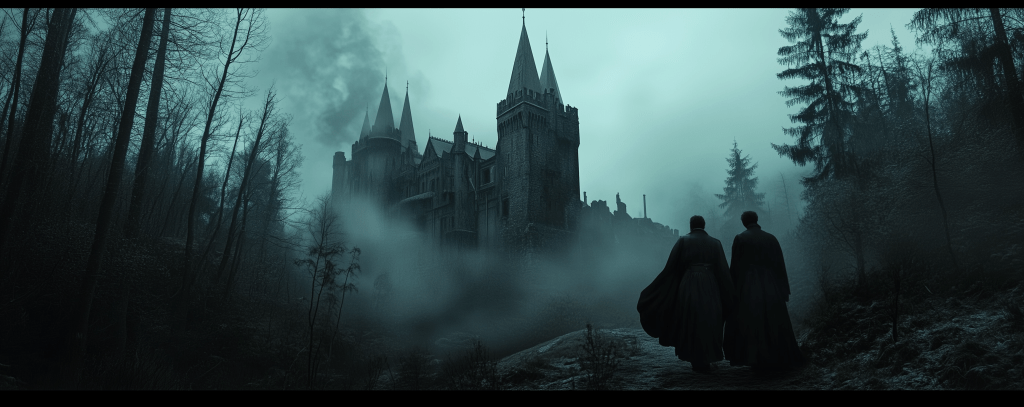
The film is set in a decaying Gothic castle, repurposed as a mental asylum for military officers suffering from PTSD and other psychological disorders. This atmospheric choice plays a crucial role in amplifying the film’s themes. From a screenwriting perspective, the setting functions as a reflection of the characters’ fractured minds. The castle, with its labyrinthine halls and eerie ambiance, symbolizes the confusion and chaos of mental illness.

Blatty’s decision to place the asylum in an isolated location is significant for the narrative’s psychological stakes. The seclusion heightens the tension, creating a sense of being trapped—not just physically, but mentally. The soldiers, each manifesting different forms of madness, are left to confront their inner demons with no way out. This isolation reflects how mental illness can feel like a personal prison.

Moreover, the setting allows for surreal and absurd situations that mirror the characters’ mental states. In one scene, a character stages a Shakespearean production with dogs as the actors, a bizarre yet poignant display of creativity gone awry. The castle and its inhabitants serve as a microcosm for the world at large, where the line between sanity and insanity is perpetually blurred.


Characters: Embodiments of Madness

The strength of The Ninth Configuration lies in its character-driven narrative. Blatty’s script is not content with presenting madness as a singular concept but instead explores its many facets through a diverse cast of characters, each representing different psychological struggles.

  • Colonel Kane (Stacy Keach) is the protagonist, a military psychiatrist sent to take over the asylum. However, it soon becomes apparent that Kane himself is battling severe psychological trauma. The revelation of his own instability raises questions about the role of authority in diagnosing and treating madness. Can someone who is unwell help others heal? Kane’s character arc is one of internal conflict, where his carefully constructed facade of sanity unravels as the film progresses.
  • Captain Cutshaw (Scott Wilson), a former astronaut who aborted a space mission due to a breakdown, serves as Kane’s philosophical foil. Cutshaw’s madness is grounded in existential despair—he questions the existence of God, the purpose of life, and the possibility of a universe devoid of meaning. His dialogue is filled with existential angst, often masking his fear with dark humor. Cutshaw’s struggle reflects the broader theme of faith versus nihilism that runs through the script.
  • The supporting characters, from a soldier who believes he’s directing a Shakespearean play with dogs to another obsessed with re-enacting scenes from old war movies, add layers of absurdity that push the boundaries of what is considered sane or insane. Their quirks are not just for comic relief; each character’s madness serves as a metaphor for deeper philosophical questions about identity, trauma, and reality.

Blatty’s script does not shy away from portraying these characters with both empathy and humor. Their madness is not treated as a spectacle but as a deeply human condition. The dialogue is sharp, blending philosophical musings with absurdist comedy, allowing the characters to navigate their psychological landscapes in ways that are both tragic and darkly humorous.


Dialogue: The Thin Line Between Humor and Horror

One of the most striking elements of The Ninth Configuration is its use of dialogue to explore complex themes. Blatty’s script walks a tightrope between humor and horror, often using absurdity to underscore the gravity of the characters’ psychological torment. This duality is best exemplified in the exchanges between Kane and Cutshaw, where philosophical debates about the nature of good and evil are punctuated with dark humor.

In one pivotal scene, Cutshaw challenges Kane’s belief in God by asking him to provide proof of divine existence. Kane’s response, a stirring defense of faith, is delivered with such conviction that it temporarily quiets Cutshaw’s skepticism. However, the moment is immediately undercut by an absurd observation from another character, re-establishing the script’s tonal balance between comedy and tragedy. This oscillation between tones keeps the audience off balance, mirroring the instability of the characters’ minds.

Blatty’s use of humor is not simply to lighten the mood, but to serve as a coping mechanism for the characters. For instance, Cutshaw’s frequent one-liners are a way for him to deflect his existential dread. By using humor as a shield, the script illustrates how individuals often use comedy to mask deeper psychological pain. The dialogue, therefore, becomes a tool for exploring the fragility of the human psyche.


Faith and Nihilism: The Core Philosophical Conflict

At the heart of The Ninth Configuration is the conflict between faith and nihilism, a thematic continuation from Blatty’s previous work, The Exorcist. Whereas The Exorcist portrayed the battle between good and evil through a supernatural lens, The Ninth Configuration places that battle within the realm of the mind.

Kane and Cutshaw embody this conflict. Kane represents faith—though it is a fragile, often questioned faith—while Cutshaw is the embodiment of nihilism. Their conversations about God, morality, and the meaning of life are not just intellectual exercises; they are existential struggles that define the characters’ psychological states.

One of the film’s most memorable moments is when Kane delivers a monologue on the inherent goodness of mankind. His argument that people are capable of profound acts of kindness and sacrifice is met with Cutshaw’s cynicism, which only deepens as the story unfolds. This philosophical tug-of-war becomes the emotional core of the film, as both characters grapple with their beliefs in a world that often feels devoid of meaning.

The script uses this philosophical discourse to delve into the larger question of whether madness is a form of escape from the harsh realities of life. In a world where suffering and chaos are ever-present, is it madness to cling to faith, or is it madness to abandon it? Blatty leaves the answer ambiguous, allowing the audience to draw their own conclusions.


Visual Storytelling: Symbolism and Surrealism

While The Ninth Configuration is dialogue-heavy, it also makes effective use of visual storytelling to convey its themes. The film’s Gothic setting, with its crumbling architecture and eerie lighting, serves as a visual metaphor for the mental decay of its characters. The castle, like the minds of its inhabitants, is a once-grand structure now in ruins, filled with hidden corridors and dark secrets.

Blatty’s direction complements his script by using surreal imagery to blur the line between reality and delusion. Dream sequences, hallucinations, and moments of heightened reality are woven into the narrative, creating a sense of disorientation that reflects the characters’ fractured psyches. The use of religious iconography—crosses, statues of saints, and other symbols of faith—further underscores the film’s exploration of spiritual themes.

In one particularly striking scene, Kane hallucinates a crucifixion, his own mind projecting a Christ-like sacrifice onto his psychological struggle. This visual moment reinforces the idea that the characters are not just battling their own madness but are also engaged in a spiritual conflict.


Conclusion: Madness as a Mirror to Humanity

The Ninth Configuration is a unique exploration of madness that defies easy categorization. Blatty’s script, with its complex characters, philosophical depth, and dark humor, challenges the audience to question their own perceptions of reality and sanity. Through its blend of comedy, horror, and existential inquiry, the film presents madness not as an aberration but as a reflection of the human condition.

The script’s handling of faith and nihilism, as embodied by Kane and Cutshaw, offers no easy answers but instead presents a dialogue that resonates long after the film’s conclusion. In the end, The Ninth Configuration suggests that madness may be the only sane response to a world that is itself chaotic and unpredictable.

For screenwriters and storytellers, The Ninth Configuration serves as a masterclass in balancing tone, character development, and philosophical inquiry. It shows that madness, when explored with empathy and depth, can reveal profound truths about humanity and the nature of existence.


✍️  Whether you’re mastering the art of dialogue, structure, or character development, the power of AI can be a game-changer in your writing journey. My Free Ebook, ‘AI for Authors’ delves into how AI-powered prompts can provide a unique edge to your storytelling process. If you’re intrigued by the prospect of supercharging your fiction skills, download your free copy today and explore new horizons in creative writing.