‘The Ice Storm’: Family Dysfunction Through Screenwriting

In the realm of screenwriting, few films capture the intricacies of family dynamics and societal upheaval as masterfully as Ang Lee’s 1997 drama, “The Ice Storm.” Based on Rick Moody’s novel and adapted for the screen by James Schamus, this film serves as a prime example of how skilled screenwriting can bring complex characters and themes to life. In this article, we’ll delve into the screenwriting techniques employed in “The Ice Storm” to portray family dysfunction, exploring how the film’s structure, dialogue, and character development contribute to its powerful narrative.

Setting the Scene: 1970s Suburban Malaise

One of the first challenges faced by Schamus in adapting “The Ice Storm” was establishing the film’s setting and atmosphere. The story takes place in New Canaan, Connecticut, during Thanksgiving weekend of 1973. This era, marked by political scandal, sexual liberation, and shifting social norms, provides a rich backdrop for the film’s exploration of family dysfunction.
Schamus masterfully weaves historical context into the screenplay without resorting to heavy-handed exposition. Instead, he allows the setting to emerge organically through character interactions, visual cues, and subtle references. For instance, the film opens with Paul Hood’s voiceover narration as he reads from a Fantastic Four comic book, immediately situating us in the early 1970s while also introducing themes of isolation and disconnection that will permeate the story.

Screenwriting Tip: When establishing a historical setting, look for opportunities to integrate period-specific details naturally into your characters’ lives and dialogue. This approach is more engaging than relying on expository narration or text overlays.

Character Development: The Fracturing Family Unit

At the heart of “The Ice Storm” are two interconnected families: the Hoods and the Carvers. Schamus’s screenplay excels in developing these characters, each grappling with their own form of discontent and searching for meaning in a rapidly changing world.

The Hood Family

  • Ben Hood: The patriarch, struggling with his own desires and inability to connect with his family.
  • Elena Hood: The matriarch, feeling unfulfilled and exploring her own sexuality.
  • Paul Hood: The teenage son, navigating his first romantic experiences while away at boarding school.
  • Wendy Hood: The precocious daughter, experimenting with her sexuality and pushing boundaries.

The Carver Family

  • Jim Carver: The absent father, whose work takes him away from home frequently.
  • Janey Carver: The bored housewife, engaging in an affair with Ben Hood.
  • Mikey Carver: The introspective teenage son, questioning societal norms and his place in the world.
  • Sandy Carver: The younger son, curious about sexuality and often following his brother’s lead.

Schamus’s screenplay gives each character depth and complexity, avoiding stereotypes and easy categorizations. This is achieved through a combination of revealing dialogue, subtle actions, and moments of introspection.

Screenwriting Tip: When developing characters in a family drama, ensure that each member has their own distinct arc and internal struggles. This adds depth to the overall family dynamic and creates opportunities for conflict and growth.

Dialogue: Revealing Character Through Subtext

One of the strengths of “The Ice Storm” screenplay lies in its nuanced dialogue. Schamus crafts conversations that reveal character and advance the plot while maintaining a sense of naturalism. The characters often talk around their true feelings, with subtext playing a crucial role in conveying emotion and tension.

Consider this exchange between Ben and Elena Hood:

BEN: How was your day?
ELENA: Oh, you know. The usual. 
BEN: (pause) Janey Carver called. She's having a "gathering."
ELENA: (coolly) Is she?
BEN: I thought we might go.
ELENA: Why not? We wouldn't want to miss out on all the fun.

This seemingly mundane conversation is loaded with unspoken tension. Elena’s curt responses and the mention of Janey Carver (with whom Ben is having an affair) create an undercurrent of hostility and resentment.

Screenwriting Tip: Use subtext in dialogue to convey complex emotions and relationships. Allow characters to talk around their true feelings, creating tension and inviting the audience to read between the lines.

Structure: The Gathering Storm

“The Ice Storm” employs a non-linear structure, with events unfolding over the course of the Thanksgiving weekend, punctuated by flashbacks and parallel storylines. This approach allows Schamus to build tension gradually, with each scene revealing new layers of dysfunction within and between the two families.

The screenplay is structured around several key events:

  1. Paul’s experiences at boarding school
  2. The “key party” at the Carvers’ house
  3. Wendy’s sexual experimentation with the Carver boys
  4. The titular ice storm that brings events to a climax

This structure allows for a slow burn, with tensions mounting until they reach a breaking point during the ice storm. The natural disaster serves as both a literal and metaphorical catalyst, forcing characters to confront their actions and relationships.

Screenwriting Tip: Consider using non-linear structures and parallel storylines to build tension and create thematic resonance between different character arcs. Look for ways to use external events (like the ice storm) as metaphors for internal conflicts.

Themes: Alienation and Connection in the Modern World

Throughout the screenplay, Schamus explores themes of alienation, disconnection, and the search for meaning in a rapidly changing society. These themes are reflected in various ways:

Technology and Disconnection

The screenplay incorporates references to technology of the era, such as the Watergate hearings on television and Paul’s fascination with comics. These elements serve to highlight the characters’ disconnection from one another and from their own emotions.

Sexual Exploration and Emptiness

Both the adults and teenagers in the film engage in sexual experimentation, but these encounters often leave them feeling more isolated than fulfilled. The “key party” scene, in particular, serves as a potent symbol of the emptiness underlying the characters’ pursuit of pleasure.

Nature vs. Civilization

The encroachment of the ice storm on the carefully manicured suburban landscape serves as a metaphor for the breakdown of social norms and family structures. The storm forces characters to confront the fragility of their lives and relationships.

Screenwriting Tip: Develop strong thematic threads that run throughout your screenplay. Use symbolism, recurring motifs, and parallel storylines to reinforce these themes and add depth to your narrative.

Visual Storytelling: Translating Words to Images

While a screenplay is primarily a written document, it’s crucial for screenwriters to think visually. Schamus’s script for “The Ice Storm” demonstrates a keen awareness of how words on the page will translate to images on screen.

Consider this description from the screenplay:

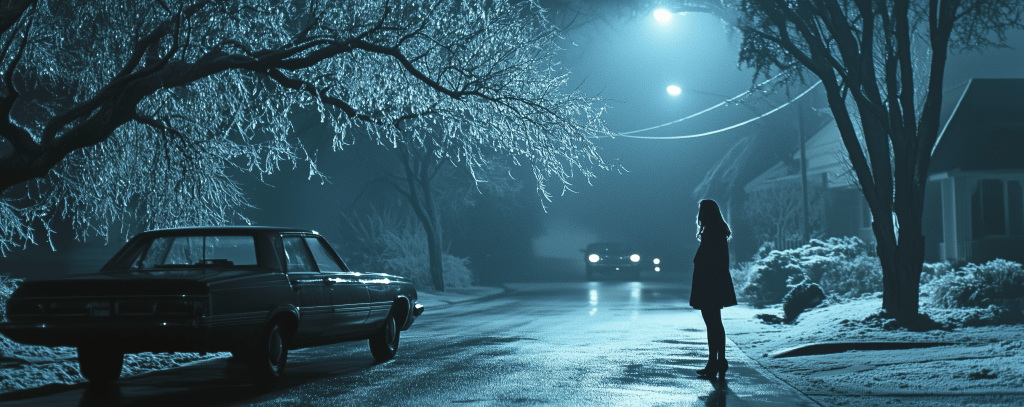
EXT. SUBURBAN STREET - NIGHT

The ice-covered trees glisten in the moonlight. Branches CREAK under the weight of the ice. In the distance, we hear the SNAP of a branch breaking.

Wendy walks alone down the middle of the street, her breath visible in the frigid air. She looks small and vulnerable against the looming trees.

This passage not only sets the scene but also conveys mood and character. The description of the ice-covered trees and breaking branches creates a sense of tension and impending danger, while Wendy’s solitary figure emphasizes her vulnerability and isolation.

Screenwriting Tip: When writing scene descriptions, focus on details that convey mood and theme as well as physical setting. Think about how your words can be translated into striking visual images that enhance the story’s emotional impact.

Conclusion: Crafting Complex Family Narratives

“The Ice Storm” stands as a masterclass in screenwriting, particularly in its portrayal of family dysfunction. Through careful character development, nuanced dialogue, thematic depth, and a keen sense of visual storytelling, James Schamus created a screenplay that captures the complexities of human relationships and the turbulent spirit of an era.

For screenwriters looking to craft their own family dramas or complex character studies, “The Ice Storm” offers valuable lessons:

  1. Develop rich, multifaceted characters with their own internal struggles and arcs.
  2. Use dialogue and subtext to reveal character and build tension.
  3. Employ non-linear structures and parallel storylines to create thematic resonance.
  4. Integrate historical and cultural context organically into the narrative.
  5. Think visually, using descriptive language that translates well to the screen.
  6. Explore universal themes through specific, well-realized characters and situations.

By studying and applying these techniques, screenwriters can create narratives that resonate deeply with audiences, offering insights into the human condition and the complex dynamics that shape our most intimate relationships.


✍️  Whether you’re mastering the art of dialogue, structure, or character development, the power of AI can be a game-changer in your writing journey. My Free Ebook, ‘AI for Authors’ delves into how AI-powered prompts can provide a unique edge to your storytelling process. If you’re intrigued by the prospect of supercharging your fiction skills, download your free copy today and explore new horizons in creative writing. 

‘The Hidden’: Blending Sci-Fi and Thriller in Screenwriting

In the vast landscape of cinema, few genres captivate audiences quite like science fiction and thrillers. When these two powerhouses collide, the result can be nothing short of cinematic magic. Today, we’re diving deep into the art of blending sci-fi and thriller elements in screenwriting, using the 1987 cult classic “The Hidden” as our guide. This underappreciated gem serves as a masterclass in genre fusion, offering valuable lessons for aspiring and seasoned screenwriters alike.

The Premise: Where Sci-Fi Meets Thriller

“The Hidden,” directed by Jack Sholder and written by Jim Kouf (under the pseudonym Bob Hunt), tells the story of an FBI agent and an LAPD detective hunting down an alien entity that body-hops between human hosts, leaving a trail of destruction in its wake. At its core, the film is a thrilling chase narrative, but it’s elevated by its sci-fi premise and execution.

Lesson 1: Start with a Strong Hook

The film’s opening sequence is a perfect example of how to grab your audience’s attention from the get-go. We’re thrust into a bank robbery that quickly escalates into a high-speed car chase. The twist? The perpetrator seems impervious to pain and possesses superhuman strength. This opening immediately sets up both the thriller and sci-fi elements, leaving the audience hungry for answers.

Takeaway for screenwriters: When blending genres, use your opening scene to establish both elements. Give your audience a taste of the action and the otherworldly, leaving them intrigued and eager to discover more.

Character Development: The Human Element in an Alien World

One of the strengths of “The Hidden” lies in its character development, particularly in the relationship between FBI agent Lloyd Gallagher (Kyle MacLachlan) and LAPD Detective Thomas Beck (Michael Nouri).

Lesson 2: Use the Familiar to Ground the Fantastic

While the alien premise is undoubtedly sci-fi, the buddy cop dynamic between Gallagher and Beck is pure thriller territory. This familiar relationship helps ground the more outlandish elements of the story, making the sci-fi aspects more palatable to a wider audience.

Takeaway for screenwriters: When blending genres, use familiar tropes or character dynamics from one genre to make the other more accessible. This creates a bridge for your audience, easing them into the more unfamiliar elements of your story.

Lesson 3: Character Reveals as Plot Devices

As the story progresses, we learn that Gallagher himself is an alien, pursuing the body-hopping entity to avenge his family. This reveal serves multiple purposes:

  1. It deepens the sci-fi elements of the story
  2. It raises the emotional stakes for our protagonist
  3. It creates tension in his partnership with Beck

Takeaway for screenwriters: Use character revelations to serve both your plot and your genre blend. A well-timed reveal can deepen your sci-fi world while simultaneously ratcheting up the thriller aspects of your story.

Pacing: Keeping the Audience on the Edge of Their Seats

“The Hidden” maintains a breakneck pace throughout its runtime, a hallmark of great thrillers. However, it also takes time to explore its sci-fi concepts, creating a balanced viewing experience.

Lesson 4: Alternate Between Action and Exposition

The film cleverly alternates between high-octane chase sequences and quieter moments where the sci-fi elements are explored. This pacing allows the audience to catch their breath while also deepening their understanding of the alien threat.

Takeaway for screenwriters: When blending sci-fi and thriller elements, use your pacing to serve both genres. Use action sequences to drive your thriller narrative forward, and use quieter moments to explore your sci-fi concepts.

Lesson 5: Use Sci-Fi to Escalate Tension

As the story progresses, the alien entity moves into increasingly powerful hosts, from criminals to a stripper to eventually a U.S. Senator. This escalation serves the sci-fi premise while also raising the stakes of the thriller narrative.

Takeaway for screenwriters: Look for ways your sci-fi elements can naturally escalate the tension of your thriller plot. The unique aspects of your sci-fi world should create new and exciting challenges for your characters.

World-Building: Creating a Believable Sci-Fi Universe

While “The Hidden” is set in contemporary Los Angeles, it still needs to establish its sci-fi rules and mythology. The film does this efficiently, revealing information as needed without getting bogged down in unnecessary details.

Lesson 6: Show, Don’t Tell

Rather than lengthy expositions about alien biology, the film shows us the entity’s abilities through action. We see it transfer between bodies, experience its superhuman strength, and witness its insatiable appetite for sensory experiences.

Takeaway for screenwriters: When establishing your sci-fi elements, look for ways to demonstrate them through action rather than dialogue. This keeps your thriller pacing tight while still building your world.

Lesson 7: Use Familiar Settings to Highlight the Unfamiliar

By setting the alien invasion in familiar locations like banks, strip clubs, and police stations, “The Hidden” creates a stark contrast between the mundane and the extraordinary. This juxtaposition makes the sci-fi elements feel more real and immediate.

Takeaway for screenwriters: Don’t be afraid to set your sci-fi elements in everyday locations. This contrast can make your fantastical elements feel more grounded and your thriller elements more heightened.

Themes: Using Sci-Fi to Explore Human Nature

Great science fiction often serves as a mirror to our own society, and “The Hidden” is no exception. The film explores themes of identity, free will, and the nature of humanity through its sci-fi premise.

Lesson 8: Use Your Sci-Fi Premise to Explore Deeper Themes

The body-hopping alien serves as a metaphor for the worst aspects of human nature – greed, violence, and hedonism. In contrast, Gallagher represents a more evolved being, one who values justice and selflessness.

Takeaway for screenwriters: Look for ways your sci-fi elements can serve as metaphors or explorations of deeper themes. This adds depth to your story and elevates it beyond a simple genre exercise.

Lesson 9: Create Thematic Contrast Between Your Protagonists and Antagonists

The contrast between the two aliens – one destructive and selfish, the other protective and selfless – creates a thematic backbone for the film. This contrast drives both the sci-fi and thriller elements of the story.

Takeaway for screenwriters: Use your characters to embody different aspects of your themes. This can create compelling conflicts that serve both your sci-fi world-building and your thriller narrative.

Dialogue: Balancing Exposition and Naturalism

Writing dialogue for a sci-fi thriller presents unique challenges. You need to convey complex ideas and backstory while maintaining the snappy, tension-filled exchanges expected in a thriller.

Lesson 10: Use Dialogue to Reveal Character, Not Just Information

In “The Hidden,” the dialogue does more than just explain the plot. It reveals character, particularly in the exchanges between Gallagher and Beck. Gallagher’s slightly off-kilter responses hint at his alien nature, while Beck’s increasing frustration and eventual acceptance show his character arc.

Takeaway for screenwriters: When writing dialogue for your sci-fi thriller, look for ways to reveal character through how your protagonists speak, not just what they say. This adds depth to your characters while maintaining the pace of your thriller.

Lesson 11: Let Silence Speak

Some of the most powerful moments in “The Hidden” come not from dialogue, but from silence. The alien’s inability to fully understand or mimic human behavior is often conveyed through awkward pauses or inappropriate reactions.

Takeaway for screenwriters: Don’t underestimate the power of silence in your sci-fi thriller. What your characters don’t say can be just as revealing as what they do say, especially when dealing with alien or otherworldly elements.

Visual Storytelling: Showing the Unseen

One of the biggest challenges in blending sci-fi and thriller elements is visualizing the unreal. “The Hidden” uses a combination of practical effects and clever cinematography to bring its alien threat to life.

Lesson 12: Use Visual Metaphors

The film uses visual metaphors to represent the alien’s body-hopping ability. We see reflections, distortions, and point-of-view shots that suggest the transfer of consciousness without relying on expensive special effects.

Takeaway for screenwriters: When writing your sci-fi thriller, think about visual metaphors that can represent your fantastical elements. This can be especially useful if you’re writing with budget constraints in mind.

Lesson 13: Let the Camera Tell the Story

“The Hidden” uses camera movement and composition to create tension and suggest the alien presence. Odd angles, sudden zooms, and voyeuristic shots all contribute to the feeling of an unseen threat.

Takeaway for screenwriters: While you can’t control how a director will shoot your script, you can suggest camera movements and compositions in your action lines. Use these to enhance both the sci-fi and thriller elements of your story.

Conclusion: The Art of Genre Fusion

“The Hidden” stands as a testament to the power of genre blending. By skillfully combining elements of science fiction and thriller, the film creates a unique viewing experience that is greater than the sum of its parts. As screenwriters, we can learn much from its approach:

  1. Start strong, introducing both genres from the outset
  2. Use familiar elements to ground the unfamiliar
  3. Pace your story to serve both genres
  4. Show your sci-fi elements through action, not just exposition
  5. Use your fantastical elements to explore deeper themes
  6. Create dialogue that reveals character as well as plot
  7. Think visually, using metaphors and cinematography to enhance your story

By following these lessons, you can create sci-fi thrillers that captivate audiences, challenge expectations, and stand the test of time. Remember, the key to successful genre blending lies not in simply mashing two genres together, but in finding the sweet spot where they naturally overlap and complement each other.

So, grab your laptop, fire up your imagination, and start writing. The next great sci-fi thriller is waiting to be born. Who knows? Maybe thirty years from now, aspiring screenwriters will be studying your work, looking for the secrets to your success in blending the ordinary with the extraordinary, the thrilling with the fantastic. Happy writing!


✍️  Whether you’re mastering the art of dialogue, structure, or character development, the power of AI can be a game-changer in your writing journey. My Free Ebook, ‘AI for Authors’ delves into how AI-powered prompts can provide a unique edge to your storytelling process. If you’re intrigued by the prospect of supercharging your fiction skills, download your free copy today and explore new horizons in creative writing. 
AI in Hollywood: Navigating Regulation, Representation, and Creativity

As the entertainment industry grapples with the rapid advancement of artificial intelligence, recent developments in California and New York highlight the complex interplay between regulation, representation, and creative potential. From legislative battles to industry summits, AI is reshaping the landscape of Hollywood and beyond.

California’s AI Regulation Saga: Balancing Innovation and Safety

Newsom’s Veto and the Future of AI Regulation

In a move that has sparked intense debate, California Governor Gavin Newsom recently vetoed SB 1047, a bill aimed at regulating advanced AI models. This legislation, considered the most controversial AI bill of the legislative session, sought to prevent potential catastrophic risks associated with AI, such as the development of chemical or nuclear weapons.

The bill’s journey through the California legislature was marked by a stark divide between supporters, who argued for addressing potential existential threats, and opponents, who feared it would stifle innovation and drive AI companies out of the state. Governor Newsom’s decision to veto the bill underscores the challenges of crafting effective AI regulation that balances safety concerns with technological progress.

In his veto message, Newsom acknowledged the gravity of the issue but stated that SB 1047 did not establish an appropriate regulatory framework for AI. Instead of signing the bill, he plans to convene experts to develop regulations for the safe development of AI and continue working on the issue in the coming year.

Hollywood’s Stake in AI Regulation

While SB 1047 focused on “frontier” AI models that don’t currently exist, its potential impact on the entertainment industry was not lost on key players. The Screen Actors Guild-American Federation of Television and Radio Artists (SAG-AFTRA) threw its support behind the bill, reflecting growing concerns over the use of AI to clone actors without consent.

SAG-AFTRA’s involvement in AI regulation extends beyond SB 1047. The union also backed two other AI-related bills that were signed into law by Governor Newsom earlier this month. One of these, AB 2013, requires AI developers to disclose if they are training models using copyrighted works—a crucial protection for artists in an era where AI can easily replicate and potentially misuse creative content.

The Concept Art Association’s support for AB 2013 highlights the importance of protecting artists’ work from being used without acknowledgment in AI training datasets. This issue is particularly relevant for screenwriters and visual artists in Hollywood, whose creative output could be at risk of unauthorized use in AI systems.

Protecting Copyrighted Works in the AI Era

The conversation around AI and copyright protection has expanded beyond California’s borders. In Congress, Representative Adam Schiff has introduced a bill similar to AB 2013, aiming to safeguard copyrighted artistic works from being used in AI model training without permission.

For screenwriters and other creatives in Hollywood, these legislative efforts represent a crucial step in preserving the value and integrity of their work in an increasingly AI-driven landscape. As AI tools become more sophisticated in generating and manipulating content, the need for clear guidelines and protections becomes ever more pressing.

Women in AI: Shaping the Future of Entertainment

The Inaugural Women in AI Summit

While California grapples with AI regulation, New York is set to host a groundbreaking event that could significantly impact the future of AI in entertainment. The inaugural Women in AI Summit, presented by ATTN: and The Female Quotient, aims to address the gender gap in AI and explore its impact on various industries, including media and entertainment.

Set to take place on November 13 at New York’s Webster Hall, the summit will bring together an impressive roster of speakers, including Chelsea Clinton, Ashley Graham, and Arianna Huffington. AI experts like Allie K. Miller and Dr. Joy Buolamwini will join them, along with New York’s first chief technology officer, Minerva Tantoco.

Bridging the Gender Gap in AI

The summit’s focus on women in AI is particularly relevant to the entertainment industry, where AI is increasingly being used in various aspects of production, from script analysis to visual effects. With women currently making up only 26% of the global AI workforce, events like this are crucial for ensuring diverse perspectives shape the future of AI in Hollywood and beyond.

Panel discussions at the summit will cover topics directly relevant to the entertainment industry, such as AI’s impact on storytelling and the role of AI for creators. These conversations could provide valuable insights for screenwriters and other industry professionals looking to navigate the AI landscape.

Fostering Female Leadership in AI

One of the summit’s most exciting initiatives is the launch of the Women in AI Cohort, a six-month program for ten up-and-coming leaders in marketing, media, and entertainment. This program, focusing on using AI to elevate participants’ work and careers, could help cultivate a new generation of AI-savvy female leaders in Hollywood.

The Female Quotient’s president, Talia Bender Small, emphasized the critical need for women leaders in AI to prevent biased algorithms and ensure ethical standards. This is particularly relevant in the context of screenwriting and content creation, where AI tools are increasingly being used to generate and analyze scripts.

The Road Ahead: AI’s Impact on Hollywood’s Future

As these developments unfold, it’s clear that AI will continue to play a significant role in shaping the future of Hollywood and the broader entertainment industry. From regulatory challenges to representation issues, the industry must navigate a complex landscape to harness AI’s potential while addressing its risks.

For screenwriters and other creatives, staying informed about these developments is crucial. As AI tools become more sophisticated, understanding their capabilities, limitations, and ethical implications will be essential for creating compelling content in the digital age.

The coming years will likely see further legislative efforts, industry initiatives, and technological advancements in the AI space. By engaging with these issues now, Hollywood can help ensure that the future of AI in entertainment is not only innovative but also ethical, inclusive, and respectful of creative rights.

As we look to the future, one thing is certain: AI will continue to transform the entertainment industry in ways we’re only beginning to imagine. The challenge for Hollywood will be to embrace this transformation while staying true to the creative spirit that has always been at its core.


✍️  Whether you’re mastering the art of dialogue, structure, or character development, the power of AI can be a game-changer in your writing journey. My Free Ebook, ‘AI for Authors’ delves into how AI-powered prompts can provide a unique edge to your storytelling process. If you’re intrigued by the prospect of supercharging your fiction skills, download your free copy today and explore new horizons in creative writing. 

Safeguarding Artistic Expression: The Case Against AI-Generated Content

In the ever-evolving landscape of creative industries, the emergence of AI-generated content has sparked intense debate among writers, screenwriters, and artists across various mediums. As AI technology continues to advance, it’s crucial to examine the potential impact on artistic expression and the creative process. This article delves into the arguments surrounding AI-generated content, exploring the potential threats it poses to human creativity and the importance of preserving authentic artistic voices.

The Rise of AI in Creative Fields

Artificial Intelligence has made significant strides in recent years, with language models and creative AI tools becoming increasingly sophisticated. These advancements have led to AI systems capable of generating written content, including scripts, stories, and even entire novels. While this technology presents exciting possibilities, it also raises important questions about the future of human-driven creativity.

AI’s Current Capabilities

AI language models can now produce coherent and sometimes convincing pieces of writing across various genres and styles. They can:

  1. Generate plot outlines and story ideas
  2. Create character descriptions and dialogues
  3. Write short stories and articles
  4. Assist in scriptwriting and screenplay formatting

However, it’s important to note that AI-generated content still requires human intervention and editing to reach professional standards.

The Unique Value of Human Creativity

Emotional Depth and Authenticity

One of the primary arguments against AI-generated content in artistic fields is the lack of genuine emotional depth and life experience. Human writers draw from their personal experiences, cultural backgrounds, and emotional intelligence to create stories that resonate with audiences on a profound level.

The Human Touch in Screenwriting

In screenwriting, the ability to craft believable characters and emotionally impactful scenes stems from an understanding of human nature that AI currently lacks. The nuances of human interaction, the complexities of relationships, and the subtleties of nonverbal communication are elements that human writers instinctively incorporate into their work.

Innovation and Originality

While AI can analyze existing works and generate content based on patterns and structures it has learned, true innovation often comes from breaking established rules and norms. Human creators have the unique ability to challenge conventions, experiment with new forms, and push the boundaries of their craft in ways that AI, bound by its training data, cannot replicate.

Potential Threats to Artistic Integrity

Homogenization of Content

One concern about the widespread use of AI in content creation is the potential for homogenization. If many writers and creators rely on the same AI tools, there’s a risk that the output could become increasingly similar, leading to a loss of diversity in storytelling styles and perspectives.

The Importance of Diverse Voices in Screenwriting

In the world of screenwriting, diverse voices and unique perspectives are crucial for creating a rich tapestry of stories that reflect the complexity of human experience. AI-generated content, drawing from existing works, may inadvertently perpetuate existing biases and limit the representation of underrepresented groups in media.

Intellectual Property and Attribution Challenges

The use of AI-generated content raises complex questions about intellectual property rights and proper attribution. When an AI system creates content based on its training data, which includes copyrighted works, it becomes difficult to determine ownership and originality.

Screenwriting and Copyright Concerns

For screenwriters, protecting their intellectual property is paramount. The introduction of AI-generated scripts could complicate the process of proving originality and ownership, potentially leading to increased legal disputes and challenges in the industry.

The Devaluation of Human Creativity

As AI-generated content becomes more prevalent, there’s a risk that the value placed on human creativity and craftsmanship could diminish. This could lead to reduced opportunities for human writers and potentially lower compensation for creative work.

Impact on the Screenwriting Profession

The screenwriting profession, already competitive, could face additional challenges if studios and production companies begin to rely more heavily on AI-generated content. This could potentially lead to fewer job opportunities and a shift in the skills required for success in the industry.

Ethical Considerations

Transparency and Disclosure

As AI-generated content becomes more sophisticated, there’s a growing need for transparency about its use. Audiences have a right to know whether the content they’re consuming was created by a human or an AI system.

Audience Trust in Screenwriting

In the film and television industry, audience trust is built on the understanding that the stories they’re watching are the product of human creativity and vision. The use of AI-generated content without proper disclosure could erode this trust and potentially change the way audiences engage with media.

The Role of AI in the Creative Process

While there are valid concerns about AI-generated content, it’s important to consider the potential role of AI as a tool to augment human creativity rather than replace it entirely.

AI as a Collaborative Tool in Screenwriting

AI could be used as a brainstorming tool, helping writers overcome writer’s block or generate initial ideas that can then be developed and refined by human creators. The key is to find a balance where AI enhances the creative process without diminishing the human element.

Preserving Human Artistry in the Age of AI

Education and Skill Development

To safeguard human artistry, it’s crucial to continue emphasizing the development of creative skills and critical thinking in education. This includes fostering an understanding of storytelling techniques, character development, and the nuances of human emotion that are essential to compelling writing.

Cultivating the Next Generation of Screenwriters

Film schools and writing programs should focus on nurturing the unique voices of aspiring screenwriters while also teaching them how to navigate a landscape where AI tools are increasingly present. This could include courses on ethical AI use in creative fields and workshops on maintaining authenticity in an AI-assisted writing process.

Establishing Ethical Guidelines

The creative industry, including publishers, studios, and writing organizations, should work together to establish ethical guidelines for the use of AI in content creation. These guidelines could address issues such as:

  1. Proper attribution and disclosure of AI involvement
  2. Fair compensation for human creators
  3. Protecting the rights of writers whose work may be used to train AI systems

Industry Standards for AI Use in Screenwriting

Organizations like the Writers Guild of America (WGA) could play a crucial role in developing industry standards for the use of AI in screenwriting. This could include guidelines on how AI-generated content should be credited and how it factors into writing credits and residuals.

Emphasizing the Value of Human Creativity

It’s important for the industry and audiences alike to continue recognizing and valuing the unique contributions of human creators. This includes:

  1. Celebrating and promoting works that showcase distinctly human creativity
  2. Supporting initiatives that provide opportunities for emerging writers and diverse voices
  3. Educating the public about the creative process and the value of human-driven storytelling

Showcasing Human Talent in Screenwriting

Film festivals, screenwriting competitions, and industry awards should continue to highlight and celebrate the achievements of human screenwriters. This not only provides recognition for talented individuals but also reinforces the importance of human creativity in the storytelling process.

The Future of Writing in an AI-Integrated World

As we navigate the challenges posed by AI-generated content, it’s important to remember that technology has always influenced and shaped the creative process. From the invention of the printing press to the advent of word processors, writers have adapted to new tools while maintaining the essence of human creativity.

Embracing AI as a Tool, Not a Replacement

The key to preserving artistic expression in the face of advancing AI technology lies in approaching AI as a tool to enhance human creativity rather than a replacement for it. Writers and screenwriters can leverage AI to streamline certain aspects of their work, allowing them to focus more on the elements that require human insight and emotional intelligence.

AI-Assisted Screenwriting: Finding the Balance

In the realm of screenwriting, AI could potentially assist with tasks such as:

  1. Generating initial plot outlines or story beats
  2. Providing suggestions for character backstories
  3. Offering alternatives for dialogue or scene descriptions

However, the critical aspects of storytelling – the unique voice, the emotional core, and the nuanced character development – should remain firmly in the hands of human creators.

Continued Evolution of Copyright Law

As AI-generated content becomes more prevalent, copyright law will need to evolve to address new challenges. This may include developing new frameworks for determining originality and ownership in cases where AI has been used in the creative process.

Protecting Screenwriters’ Rights in an AI Era

The screenwriting community, along with legal experts, should be proactive in advocating for copyright laws that protect the rights of human creators while allowing for innovation. This could include establishing clear guidelines for what constitutes an original work in cases where AI tools have been used in the writing process.

Conclusion

The debate surrounding AI-generated content in artistic fields, particularly in writing and screenwriting, is complex and multifaceted. While AI technology presents both challenges and opportunities, it’s crucial to approach its integration into creative processes with careful consideration and ethical guidelines.

By emphasizing the unique value of human creativity, establishing clear standards for AI use, and adapting our educational and legal frameworks, we can work towards a future where AI enhances rather than threatens artistic expression. The goal should be to harness the potential of AI while preserving the irreplaceable human elements that make storytelling a powerful and essential part of our culture.

As we move forward, it’s important for writers, screenwriters, and all creative professionals to stay informed about AI developments, engage in discussions about its ethical use, and continue to hone their distinctly human creative skills. By doing so, we can ensure that the future of writing remains vibrant, diverse, and profoundly human.


✍️  Whether you’re mastering the art of dialogue, structure, or character development, the power of AI can be a game-changer in your writing journey. My Free Ebook, ‘AI for Authors’ delves into how AI-powered prompts can provide a unique edge to your storytelling process. If you’re intrigued by the prospect of supercharging your fiction skills, download your free copy today and explore new horizons in creative writing. 

‘Near Dark’: Reinventing Vampire Lore in Screenwriting

In the realm of vampire cinema, few films have managed to reinvent the genre quite like Kathryn Bigelow’s 1987 cult classic, “Near Dark.” This gritty, neo-Western horror film not only subverted traditional vampire tropes but also showcased innovative screenwriting techniques that continue to influence filmmakers today. In this article, we’ll explore how “Near Dark” breathed new life into vampire lore and what screenwriters can learn from its unique approach to storytelling.

Breaking the Mold: The Genesis of “Near Dark”

When Kathryn Bigelow and Eric Red set out to write “Near Dark,” they faced a saturated market of vampire films. The challenge was to create something fresh and captivating in a genre that seemed to have exhausted all possibilities. Their solution? Throw out the rulebook entirely.

Bigelow and Red made a conscious decision to never use the word “vampire” in the script. This simple yet radical choice forced them to approach the story from a completely different angle. Instead of relying on established vampire lore, they had to show rather than tell, creating a world where the supernatural elements were grounded in a gritty, realistic setting.

Takeaway for Screenwriters: When tackling a well-worn genre, consider what elements you can strip away or subvert. Sometimes, the most powerful storytelling comes from what you choose not to say or show explicitly.

Genre Fusion: The Western Vampire

One of the most striking aspects of “Near Dark” is its seamless blend of horror and Western genres. The film’s vampires aren’t aristocratic European counts lurking in gothic castles. Instead, they’re a nomadic family unit traveling through the American Southwest in beat-up vehicles, more akin to outlaws than traditional bloodsuckers.

This genre fusion allowed Bigelow and Red to explore vampire mythology through a distinctly American lens. The vast, open landscapes of the West become both a hunting ground and a metaphor for the vampires’ eternal existence.

Takeaway for Screenwriters: Don’t be afraid to mix genres. Finding unexpected connections between different storytelling traditions can lead to fresh and exciting narratives.

Character-Driven Horror

While many horror films of the era relied heavily on gore and jump scares, “Near Dark” took a more character-driven approach. The screenplay devotes significant time to developing its cast, both human and vampire alike.

The protagonist, Caleb, serves as the audience’s entry point into this dark world. His transformation and struggle to maintain his humanity form the emotional core of the story. Meanwhile, the vampire family is portrayed with unexpected depth. Each member has a distinct personality and backstory, making them more than just one-dimensional monsters.

Takeaway for Screenwriters: Even in genre films, strong character development can elevate your story. Give your audience characters they can connect with emotionally, and the scares or thrills will be all the more impactful.

The Power of Implication

One of the most impressive aspects of the “Near Dark” screenplay is how much it accomplishes through implication rather than exposition. The vampires’ origins are never explicitly stated, nor are the rules of their existence clearly defined. Instead, the writers trust the audience to piece together the mythology through character actions and sparse dialogue.

This approach not only maintains an air of mystery but also allows viewers to fill in the gaps with their imagination. It’s a masterclass in the “show, don’t tell” principle of screenwriting.

Takeaway for Screenwriters: Trust your audience’s intelligence. Sometimes, what you leave unsaid can be more powerful than pages of exposition. Use visual storytelling and subtle hints to convey information.

Subverting Expectations: The “Cure”

In a bold move that further distinguishes “Near Dark” from traditional vampire narratives, the screenplay introduces the concept of a cure for vampirism. This plot element adds a new layer of tension and hope to the story, challenging the notion of vampirism as an irreversible condition.

By including this possibility of redemption, the writers raise the stakes (pun intended) for all characters involved. It forces both the characters and the audience to grapple with questions of choice, humanity, and the nature of family.

Takeaway for Screenwriters: Don’t be afraid to challenge genre conventions. Introducing unexpected elements can breathe new life into familiar tropes and create compelling moral dilemmas for your characters.

The Art of the Set Piece

While “Near Dark” is character-driven, it doesn’t skimp on memorable set pieces. The infamous bar scene, where the vampire family terrorizes a group of locals, is a tour de force of tension and dark humor. This scene, like others in the film, is meticulously crafted to reveal character through action while simultaneously advancing the plot.

Takeaway for Screenwriters: When writing action or suspense sequences, look for ways to make them serve multiple purposes. A well-constructed set piece should do more than just provide thrills; it should reveal character, advance the plot, or explore themes.

Dialogue: Less is More

The screenplay for “Near Dark” is remarkably sparse when it comes to dialogue. When characters do speak, their words carry weight. The vampire family, in particular, speaks in a clipped, almost poetic manner that hints at their long history and otherworldly nature.

This economical approach to dialogue forces the writers to convey much of the story through visual means, resulting in a script that’s lean, mean, and highly cinematic.

Takeaway for Screenwriters: Don’t rely too heavily on dialogue to tell your story. Challenge yourself to convey information and emotion through action, reaction, and visual storytelling. When characters do speak, make every word count.

The Power of Atmosphere

One of the most striking elements of “Near Dark” is its atmosphere. The screenplay creates a palpable sense of dread and unease, not through cheap scares, but through its depiction of a world that’s slightly off-kilter. The night scenes have a dreamlike quality, while the day scenes feel harsh and unforgiving.

This atmospheric approach extends to the way the vampires are portrayed. Their aversion to sunlight is depicted not with melodramatic hissing and smoke, but with a visceral, almost painful realism that makes their condition feel more like a disease than a supernatural curse.

Takeaway for Screenwriters: Atmosphere can be a powerful tool in your storytelling arsenal. Think about how you can use setting, time of day, weather, and other environmental factors to enhance the mood and themes of your story.

Balancing Action and Emotion

While “Near Dark” has its fair share of violent encounters and tense chases, the screenplay never loses sight of its emotional core. The relationship between Caleb and Mae, as well as Caleb’s bond with his family, provide the heart of the story.

This balance between action and emotion ensures that the audience remains invested in the characters’ fates, elevating “Near Dark” above many of its genre contemporaries.

Takeaway for Screenwriters: Even in action-packed or horror-filled scripts, don’t neglect the emotional journeys of your characters. The most memorable stories are often those that balance external conflicts with internal struggles.

The Art of the Ending

The conclusion of “Near Dark” is both satisfying and thought-provoking. Without spoiling too much, it manages to wrap up the main storylines while still leaving room for interpretation. The screenplay resists the urge to over-explain or tie everything up too neatly, instead opting for an ending that resonates emotionally and thematically.

Takeaway for Screenwriters: Endings are crucial. Strive for a conclusion that satisfies the main arcs of your story while still leaving the audience with something to ponder. Sometimes, a degree of ambiguity can make your ending more powerful and memorable.

Conclusion: The Lasting Impact of “Near Dark”

Over three decades after its release, “Near Dark” continues to be celebrated for its innovative approach to vampire lore and its skillful screenwriting. By breaking away from genre conventions, focusing on character development, and trusting in the power of visual storytelling, Bigelow and Red created a film that stands the test of time.

For screenwriters looking to make their mark in genre filmmaking, “Near Dark” offers valuable lessons:

  1. Don’t be afraid to reinvent established tropes
  2. Focus on character development, even in genre pieces
  3. Use genre fusion to create unique narratives
  4. Trust in the power of implication and visual storytelling
  5. Create memorable set pieces that serve multiple purposes
  6. Use dialogue economically and effectively
  7. Pay attention to atmosphere and how it can enhance your story
  8. Balance action with emotion
  9. Craft endings that satisfy while still leaving room for thought

By studying and applying these lessons, screenwriters can hope to create works that, like “Near Dark,” push the boundaries of genre filmmaking and leave a lasting impact on audiences and fellow creators alike. Remember, the most enduring stories are often those that dare to be different, challenging our expectations and offering fresh perspectives on familiar themes.


✍️  Whether you’re mastering the art of dialogue, structure, or character development, the power of AI can be a game-changer in your writing journey. My Free Ebook, ‘AI for Authors’ delves into how AI-powered prompts can provide a unique edge to your storytelling process. If you’re intrigued by the prospect of supercharging your fiction skills, download your free copy today and explore new horizons in creative writing.