The Layered Reality of ‘Synecdoche, New York’: Writing Complex Narratives

Charlie Kaufman’s Synecdoche, New York is a towering achievement in screenwriting, renowned for its labyrinthine structure, existential depth, and meta-narrative brilliance. A film about a theater director’s attempt to create an ever-expanding, hyperrealistic stage production, it captures the complexity of human life and the artistic process. Writing complex narratives like Synecdoche, New York involves balancing ambition with coherence, emotional resonance with intellectual challenge. This article dissects Kaufman’s methods to uncover lessons for screenwriters aspiring to tackle intricate storytelling.


Breaking Conventional Narrative Structures

A Theater of Infinite Layers

At its heart, Synecdoche, New York revolves around Caden Cotard, a theater director whose life and art blur together. As he builds a life-size replica of New York City inside a warehouse for his play, the line between the play and reality dissolves. Kaufman’s script mirrors this complexity, eschewing linear storytelling for a recursive, self-referential narrative.
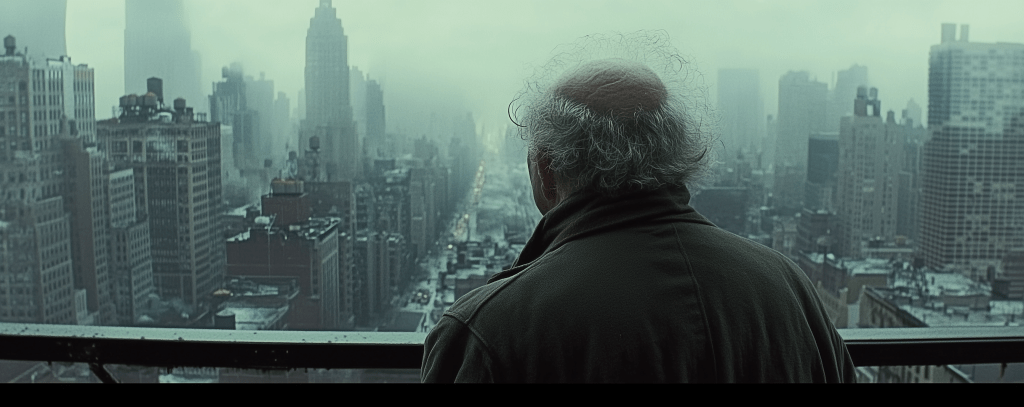
This technique serves to immerse the audience in Caden’s existential crisis. His ever-expanding project becomes a metaphor for life’s unrelenting complexity and the human need to find meaning. Kaufman’s willingness to abandon conventional three-act structures for a fractal-like approach invites screenwriters to explore how narrative forms can reflect thematic content.

Example for Writers: To write a similar narrative, consider how the structure of your story can mirror its themes. If your story is about chaos, for instance, a fragmented narrative might better reflect that than a traditional plot.


Themes of Mortality and Meaning

Life as Art, Art as Life

Synecdoche, New York delves into profound themes: mortality, legacy, and the nature of art. Caden’s obsessive creation becomes a way to confront his mortality, but as the project spirals out of control, it highlights the futility of fully understanding or encapsulating life. Kaufman’s script repeatedly reminds the audience of time’s relentless march through visual and narrative cues, such as characters aging abruptly or dialogue referencing death.

For writers, this underscores the importance of grounding abstract themes in relatable human experiences. Kaufman’s exploration of mortality resonates because it is filtered through Caden’s personal struggles—his failing health, crumbling relationships, and obsessive need for artistic perfection.

Writing Tip: Anchor your thematic exploration in character-driven moments. A universal theme like mortality gains power when it’s revealed through specific, personal stakes.


Meta-Narratives and Self-Reflection

Stories Within Stories

Kaufman layers his screenplay with meta-narratives, where characters play other characters, creating an infinite regression of stories. In the warehouse, actors play real-life counterparts, who themselves are acting out their own lives. This recursive storytelling mirrors the human tendency to interpret life as a narrative—a story we tell ourselves to make sense of chaos.

The meta-narrative also invites audiences to question their role as observers. Are they watching Caden’s life, his play, or Kaufman’s commentary on storytelling itself? This multi-layered approach enriches the narrative, making it as much about the act of creation as it is about the story being told.

Lesson for Screenwriters: Use meta-narratives to explore storytelling itself, but ensure they serve a purpose. Self-referential layers should illuminate the central themes, not distract from them.


The Role of Surrealism in Complex Narratives

Blurring the Lines of Reality

Kaufman incorporates surrealist elements to heighten the emotional and philosophical stakes. Houses burn indefinitely, time shifts unpredictably, and characters’ roles blur. These surreal touches make the narrative dreamlike, reflecting Caden’s deteriorating grasp on reality and reinforcing the film’s existential themes.

Surrealism, when used effectively, allows writers to explore abstract ideas in ways that realism might constrain. However, it requires careful calibration; surreal elements must feel integral rather than arbitrary.

Practical Insight: Introduce surreal elements that echo the emotional or thematic underpinnings of your story. For example, a character’s fragmented memory might be mirrored by a fractured narrative timeline.


Character Complexity and Emotional Resonance

Flawed Protagonists

Caden Cotard is not an immediately likable character. He is self-absorbed, indecisive, and often lost in his own head. Yet, his flaws make him deeply human, allowing audiences to empathize with his fears and desires. The supporting characters—each representing aspects of Caden’s psyche or life—add depth, serving as mirrors to his internal conflicts.

Kaufman crafts characters that feel simultaneously exaggerated and painfully real. Their interactions provide moments of levity, heartbreak, and profound insight, grounding the film’s more abstract ambitions in human emotion.

Screenwriting Takeaway: Embrace flawed, multi-dimensional characters. Their struggles, contradictions, and vulnerabilities will resonate with audiences far more than perfect heroes.


Dialogue as a Tool for Philosophical Inquiry

Existential Conversations

The dialogue in Synecdoche, New York is dense, often serving as a vehicle for existential inquiry. Characters discuss death, purpose, and identity in ways that feel both profound and conversational. Kaufman strikes a balance between philosophical depth and emotional accessibility, ensuring that the dialogue enhances rather than overwhelms the narrative.

Example for Writers: Use dialogue to reveal your characters’ internal struggles while advancing the story. Philosophical conversations can be compelling when they feel organic to the characters and their situation.


Visual Storytelling in Complex Narratives

The Power of Symbolism

Kaufman’s screenplay is brought to life through rich visual symbolism. The warehouse becomes a microcosm of Caden’s mind, and the decaying set pieces mirror his failing health and waning grasp on reality. Kaufman uses these visuals to externalize the internal, allowing audiences to “see” Caden’s thoughts and emotions.

Tip for Writers: Collaborate with directors and visual artists to translate abstract themes into tangible imagery. Consider how settings, props, and visual motifs can deepen your story’s impact.


Lessons from Synecdoche, New York for Aspiring Screenwriters

Writing a complex narrative like Synecdoche, New York requires a bold vision, meticulous planning, and a willingness to experiment. Here are some practical takeaways for screenwriters:

  1. Start with Themes: Anchor your narrative in a central theme or question, and let the story’s structure and characters emerge from it.
  2. Embrace Non-Linearity: Experiment with narrative forms that reflect the story’s emotional or philosophical dimensions.
  3. Balance Surrealism with Humanity: Use surreal elements to amplify your themes but ensure they remain emotionally grounded.
  4. Layer Your Story: Incorporate meta-narratives or subplots that enrich rather than confuse the central narrative.
  5. Prioritize Emotional Resonance: Even the most abstract story needs relatable characters and stakes.

Conclusion

Synecdoche, New York is a masterclass in writing complex narratives that challenge and captivate. Kaufman’s ability to weave existential themes, meta-narratives, and surrealism into an emotionally resonant story is a testament to the power of ambitious storytelling. For screenwriters, it’s an inspiring example of how to push the boundaries of narrative form while remaining deeply human at its core. Whether you’re crafting a straightforward drama or an intricate puzzle of a story, the lessons from Synecdoche, New York remind us that complexity, when handled with care, can lead to profound cinematic experiences.


✍️  Whether you’re mastering the art of dialogue, structure, or character development, the power of AI can be a game-changer in your writing journey. My Free Ebook, ‘AI for Authors’ delves into how AI-powered prompts can provide a unique edge to your storytelling process. If you’re intrigued by the prospect of supercharging your fiction skills, download your free copy today and explore new horizons in creative writing. 

Scripted Isolation in ‘The Station Agent’: A Study of Minimal Dialogue

In the landscape of dialogue-heavy films, The Station Agent (2003) stands out for its intentional, minimalistic approach to dialogue. Written and directed by Tom McCarthy, the film follows Finbar “Fin” McBride (Peter Dinklage), a man who isolates himself due to his dwarfism and personal traumas, as he moves into an abandoned train depot in rural New Jersey. This article explores how The Station Agent achieves emotional depth and character development with minimal dialogue, demonstrating that sometimes, silence can be as powerful as words.

Introduction to The Station Agent: Less is More

When The Station Agent premiered at the Sundance Film Festival, its quiet but evocative storytelling captivated audiences. Its minimalistic style is best exemplified through dialogue, or more precisely, the lack thereof. In a market where complex plots and rapid-fire dialogue often dominate, McCarthy’s approach showcases how restraint in speech can lead to a richer understanding of characters. The narrative centers on three main characters—Fin, Joe (Bobby Cannavale), and Olivia (Patricia Clarkson)—each of whom carries personal burdens they seldom articulate. Their interactions highlight the potency of silence, as McCarthy allows body language, scenic composition, and subtle shifts in tone to convey complex emotions and relationships.

Setting the Stage: Isolation as a Narrative Tool

Fin’s choice to live in a remote, abandoned train station reflects his desire for isolation. The station, standing alone and surrounded by open space, becomes an extension of his character—a fortress protecting him from the outside world and the judgments it holds. The rural landscape, void of city noise and bustling crowds, invites introspection and encourages the characters to confront their inner lives. This setting allows the film to slow down, granting audiences a chance to observe, without interference from excessive dialogue, how solitude impacts the human spirit.

McCarthy’s sparse screenplay aligns with this choice of location. As Fin goes about his routine—walking along railroad tracks, reading books, and watching trains pass by—his silence becomes the medium through which his loneliness and desire for autonomy are expressed. This reserved approach aligns the viewer with Fin’s perspective, where every small interaction is significant and fraught with unspoken emotion.

Dialogue as a Last Resort: Characterization through Action

In a film with minimal dialogue, actions naturally take on a heightened significance. Each gesture or movement becomes a form of expression. For example, Fin’s reluctance to engage with others, whether it’s Joe’s persistent attempts at friendship or Olivia’s quiet sorrow, communicates his discomfort with human interaction. Instead of explaining his desire to be left alone, Fin’s physical responses—his turning away, his silence, and his avoidance of eye contact—convey his internal state.

McCarthy uses this tactic to establish Joe’s character as well. Joe, who operates a food truck near Fin’s station, is extroverted and talkative, a stark contrast to Fin. Their friendship develops through Joe’s repeated attempts to break Fin’s barriers, symbolizing his own need for connection despite Fin’s reluctance. Joe’s chatter, often met with silence, underscores the dynamic between someone who is comfortable with social engagement and another who actively avoids it. This unbalanced interaction creates tension, humor, and eventually a bond between the two.

The Power of Non-Verbal Communication: Body Language and Expression

In a restrained screenplay like The Station Agent, non-verbal cues become critical for conveying character emotions. Peter Dinklage’s portrayal of Fin is a masterclass in restrained performance. Fin’s body language—stiff, withdrawn, and often defensive—communicates his guarded nature. In contrast, Joe’s open, energetic gestures reveal his optimism and desire to connect. Olivia, grappling with the loss of her son and her broken marriage, often sits in a slumped, defeated posture, embodying her grief without needing to verbalize it.

This reliance on body language invites the audience to read between the lines. For instance, Fin’s rare smiles are indicators of his growing comfort with Joe and Olivia. These subtle shifts in his demeanor show the gradual breakdown of his emotional walls, rendering each moment of non-verbal connection profoundly impactful.

Silence as a Reflection of Inner Life

Silence in The Station Agent is more than just a lack of dialogue; it is a space where characters’ internal struggles are laid bare. Fin’s silence is not empty—it’s loaded with years of pain, self-consciousness, and a desire for invisibility. He’s a character who has long been scrutinized for his height, and his silence becomes a form of control, a way to disengage from a world that constantly confronts him with its judgments.

Similarly, Olivia’s silence reflects her grief and detachment from life after her son’s death. McCarthy refrains from having her articulate her sorrow explicitly, instead allowing the quiet moments in her home and the way she interacts with her surroundings to communicate her emotional state. This approach respects the viewer’s intelligence, letting us piece together her story through visual cues rather than exposition.

Creating Tension and Release through Dialogue Sparsity

Despite its minimalistic style, The Station Agent does have moments where dialogue is used to release the tension built up by silence. When Fin eventually opens up to Joe and Olivia, it’s in small doses, each word carefully chosen. For instance, a scene where Fin finally discusses the challenges of his dwarfism is powerful not because of an elaborate monologue but because it’s a rare moment of vulnerability. By the time he speaks, the audience has already sensed his struggle, so these words resonate deeply.

The few emotional exchanges between the characters are placed strategically, breaking up long stretches of silence and allowing the audience a brief look into their emotional cores. This approach reinforces the idea that words are powerful when used sparingly, a technique that reflects McCarthy’s understanding of dialogue as a tool to punctuate rather than dominate the narrative.

The Role of Environment and Soundscape in Enhancing Silence

The natural soundscape of The Station Agent—the rustle of leaves, distant train whistles, and ambient sounds of rural New Jersey—serves as a subtle backdrop that enhances the film’s quietude. These sounds fill the space left by dialogue, creating a meditative atmosphere that invites viewers to slow down and focus on the details. The absence of traditional background music in several scenes allows the sounds of the environment to deepen the sense of isolation and introspection.

McCarthy’s choice to let these natural sounds play a central role reflects an understanding that dialogue is not the only way to convey mood and meaning. Instead, the sounds of the world Fin inhabits become a character in their own right, mirroring his journey from isolation to tentative connection.

Lessons for Screenwriters: When to Use Silence over Dialogue

For screenwriters, The Station Agent offers a compelling case study in the strategic use of silence and minimal dialogue. Here are a few takeaways:

  1. Silence Can Convey Depth: Not every emotion or thought needs to be articulated. Allowing characters to experience their feelings in silence can add layers to their personalities. Instead of relying on dialogue to explain every detail, consider how visual cues and body language can reveal just as much.
  2. Dialogue as a Tool, Not a Crutch: In many scripts, dialogue becomes the go-to for advancing the plot or explaining a character’s emotions. The Station Agent illustrates how dialogue can be used sparingly, allowing characters to “speak” through their actions and choices instead.
  3. Environmental Sound as an Emotional Backdrop: Silence does not mean the absence of sound. The ambient noises in The Station Agent demonstrate how a soundscape can replace dialogue, helping to establish setting and mood. Screenwriters should think about how sounds might enhance the emotional experience of a scene.
  4. Pacing with Minimal Dialogue: When dialogue is minimal, the pacing must adapt. The Station Agent uses the rhythms of daily life to create a slower, more contemplative pace. This slower rhythm works well for stories centered around introspective themes and character studies, where the viewer’s focus is on observation rather than plot twists.

Conclusion: Embracing Quietude in Storytelling

The Station Agent exemplifies how minimal dialogue, when paired with thoughtful visual storytelling, can create a profound and resonant narrative. In embracing silence, Tom McCarthy allows audiences to experience the nuances of each character’s inner life without the interference of excessive exposition. This technique offers a reminder to screenwriters and filmmakers alike: sometimes, the strongest voices are those that speak the least.

In a screenwriting landscape that often prioritizes dialogue as the primary storytelling device, The Station Agent stands as a testament to the power of restraint. Its use of silence, setting, and subtle character interactions provides a rich viewing experience that lingers with audiences, demonstrating that the quietest stories often have the loudest impact.


✍️  Whether you’re mastering the art of dialogue, structure, or character development, the power of AI can be a game-changer in your writing journey. My Free Ebook, ‘AI for Authors’ delves into how AI-powered prompts can provide a unique edge to your storytelling process. If you’re intrigued by the prospect of supercharging your fiction skills, download your free copy today and explore new horizons in creative writing. 

Hollywood’s AI Dilemma: Embracing Innovation or Protecting Human Creativity?

Artificial intelligence (AI) has made profound inroads into nearly every industry, and Hollywood is no exception. While technological advancements have historically enhanced storytelling—from CGI to advanced sound design—AI is pushing boundaries in ways that challenge not only the production process but also the essence of creative authorship itself. Hollywood’s AI dilemma is as complex as it is consequential, setting the stage for a conversation about the balance between innovation and the preservation of human creativity.

As studios explore AI’s potential for enhancing production efficiency and creating new storytelling forms, they are also confronted with questions about authorship, originality, and the role of human artistry in an AI-augmented landscape. This article delves into the multi-faceted challenges and opportunities AI presents to the industry, ultimately examining whether Hollywood’s embrace of AI is advancing creativity—or undermining it.

The Rise of AI in Storytelling

AI’s applications in Hollywood are extensive, with algorithms already influencing various aspects of film and television production. This includes everything from script analysis and CGI animation to virtual casting. Platforms like ScriptBook analyze thousands of scripts to forecast box office potential, giving studios more data-driven insights into which projects are worth pursuing. Similarly, AI-assisted editing tools like Adobe Sensei streamline production processes by automating tasks that traditionally required human intervention, such as color correction, scene matching, and even preliminary cuts of footage.

AI is also breaking new ground in generating content. GPT-based models, like those developed by OpenAI, are increasingly being used to write preliminary drafts or outline plots. This technology has the potential to transform content creation, as AI can generate an extensive array of ideas or even dialogue, providing screenwriters with creative material to refine. While this technology is revolutionary, it also raises questions about originality, intellectual property, and, perhaps most importantly, the very nature of storytelling.

Scriptwriting: Collaborator or Competitor?

One of AI’s most controversial applications in Hollywood is its potential role in screenwriting. In the realm of film and television writing, AI is seen as both a collaborator and a potential competitor. Platforms like Jasper and Sudowrite allow writers to input prompts and receive quick drafts, outlines, or suggestions. AI algorithms can rapidly synthesize tropes, themes, and plot structures, creating narratives that adhere to established storytelling norms. While this is useful in ideation, it raises concerns about the value and uniqueness of human-crafted dialogue, character development, and subtext.

Hollywood has a longstanding reverence for screenwriters as the original creators of cinematic narratives. Crafting a screenplay often involves a deep emotional and psychological investment in characters and themes, a complexity that AI struggles to replicate. The intricate, morally ambiguous characters seen in shows like Breaking Bad are not easily generated by algorithms. Instead, they result from writers’ nuanced understanding of human psychology, cultural subtext, and thematic relevance.

The debate over AI’s role in screenwriting intensifies as algorithms evolve, leading some to ask: Could a Hollywood blockbuster ever be written by AI alone? While AI may aid in generating ideas, many argue it lacks the emotional intelligence to create narratives with resonance and depth. This sentiment echoes concerns in the wider creative community, as AI’s potential to diminish the screenwriter’s role challenges long-held beliefs about authorship.

CGI and Virtual Actors: Enhancing or Replacing?

AI has already had a significant impact on CGI, making it more cost-effective and accessible. Deep learning techniques allow for enhanced image generation and rendering, enabling studios to produce realistic visual effects quickly and at a fraction of the traditional cost. AI-driven CGI has enabled groundbreaking scenes in movies such as The Irishman, where de-aging technology brought younger versions of actors to life on screen.

But AI’s ability to simulate human actors raises ethical and professional questions. Virtual characters, created through AI-driven CGI, can take on complex roles, potentially circumventing the need for human actors entirely. There’s also the issue of digital reanimation, with studios recreating deceased actors. While such technology enables unique storytelling opportunities—think about the possibilities of featuring iconic actors in new narratives—it also sparks debates about consent, ownership, and the future role of human actors in Hollywood.

Moreover, AI-driven digital performances could create a dynamic where actors’ unique qualities are synthesized and replicated, reducing the need for new talent. The implications are especially concerning for up-and-coming actors who might be sidelined in favor of digital reproductions of past stars. While CGI and digital manipulation have always been part of filmmaking, the move toward fully virtual actors represents a paradigm shift that could redefine casting and acting.

AI and Ethical Quandaries: Ownership, Consent, and Fair Use

The implementation of AI in Hollywood brings up pressing legal and ethical issues, particularly around intellectual property and consent. If an AI model is trained on a vast dataset of scripts, films, and performances, who owns the output? This question strikes at the heart of Hollywood’s AI dilemma. Traditional copyright laws are ill-equipped to address issues surrounding AI-generated content, leaving the industry in a legal gray area.

Authorship is another point of contention. If an AI algorithm is involved in generating a script or editing footage, should it receive credit? Or does the ultimate responsibility lie with the human who operates or curates the AI’s output? This issue of “authorship by proxy” forces Hollywood to rethink traditional definitions of creativity and credit.

Consent is also a vital consideration. For instance, AI can now synthesize an actor’s voice or likeness based on past performances, raising concerns about the ethical use of digital replicas. Actors like Carrie Fisher and Paul Walker have been digitally resurrected for films posthumously, sparking discussions on the boundaries of respect and consent. Hollywood must confront these ethical issues if it intends to incorporate AI into production workflows responsibly.

AI in the Writing Room: Efficiency or Creative Compromise?

AI tools are often marketed as productivity enhancers, allowing writers to streamline tedious tasks and focus on creativity. Programs that analyze dialogue for emotional impact or scan for plot inconsistencies can save hours of manual work. But some argue that this shift toward automation in the writing room risks homogenizing creative expression.

Screenwriting has long been a blend of structure and intuition. Classic works in film and television, like American Psycho, are shaped by an individual writer’s unique vision, often exploring themes and narratives that diverge from formulaic storytelling. AI, while efficient, tends to lean on established patterns and formulas. There’s a risk that AI-driven creativity could reduce complex narratives to predictable structures, undermining the artistic complexity that characterizes Hollywood’s finest writing.

The Cultural Impact: Is AI Changing How We Experience Stories?

AI’s influence extends beyond production; it’s altering audience expectations and experiences. Platforms like Netflix and Amazon Prime use AI algorithms to personalize content recommendations, giving viewers a seemingly endless flow of tailored options. However, some critics argue that such algorithms create “filter bubbles,” limiting exposure to new or challenging content. By reinforcing user preferences, AI might narrow the range of stories viewers are exposed to, thereby impacting the diversity of narratives Hollywood produces.

For audiences, there’s also the issue of authenticity. Many filmgoers cherish the knowledge that a story was crafted by a human hand, with all its inherent imperfections, insights, and nuances. If viewers increasingly suspect that AI had a substantial role in creating a film, they may feel less connected to the story, perceiving it as a product rather than a personal narrative experience. Hollywood thus faces a delicate balancing act between integrating AI to streamline content creation and preserving the human touch that fosters audience engagement.

The Future: Can AI and Human Creativity Coexist?

Hollywood’s AI dilemma ultimately boils down to a question: Can AI and human creativity coexist without compromising the artistic integrity of the industry? There’s no simple answer, as both AI proponents and skeptics bring valid arguments to the table. Proponents highlight AI’s capacity to push the boundaries of storytelling by generating fresh ideas and facilitating creative experimentation. Meanwhile, skeptics worry that the more Hollywood relies on AI, the less it will invest in nurturing human creativity and innovation.

One possible middle ground is to view AI as a tool rather than a replacement for human creativity. Used thoughtfully, AI could amplify the work of writers, directors, and actors by freeing them from routine tasks, allowing them to focus on high-level creative decisions. This approach could lead to a more collaborative model, where AI handles logistical and technical demands while human creatives remain at the heart of storytelling.

However, this vision depends on the industry’s commitment to ethical practices and transparency. As Hollywood navigates this new era, it must establish clear guidelines on the appropriate use of AI and prioritize respect for human authorship and originality. These steps will be essential in fostering a future where AI enhances rather than detracts from the industry’s creative vibrancy.

Conclusion: Navigating the AI-Creativity Balance in Hollywood

AI’s impact on Hollywood is undeniable, offering possibilities that could revolutionize storytelling while posing serious questions about the preservation of human creativity. As AI becomes more integrated into the industry, Hollywood must balance the advantages of efficiency and innovation with a respect for the irreplaceable value of human artistry. Screenwriters, actors, directors, and the industry at large stand at a crossroads, faced with the challenge of harnessing AI’s power without compromising the heart and soul of cinematic storytelling.

By addressing ethical considerations, establishing fair usage policies, and respecting the sanctity of authorship, Hollywood can forge a path where AI serves as a supportive tool rather than a creative replacement. In the end, the future of Hollywood lies not in choosing between AI and human creativity, but in finding a way for the two to coexist, enriching the world of storytelling for generations to come.


✍️  Whether you’re mastering the art of dialogue, structure, or character development, the power of AI can be a game-changer in your writing journey. My Free Ebook, ‘AI for Authors’ delves into how AI-powered prompts can provide a unique edge to your storytelling process. If you’re intrigued by the prospect of supercharging your fiction skills, download your free copy today and explore new horizons in creative writing. 
The Hallucinogenic Horror of ‘Altered States’: Exploring Scripted Psychedelia

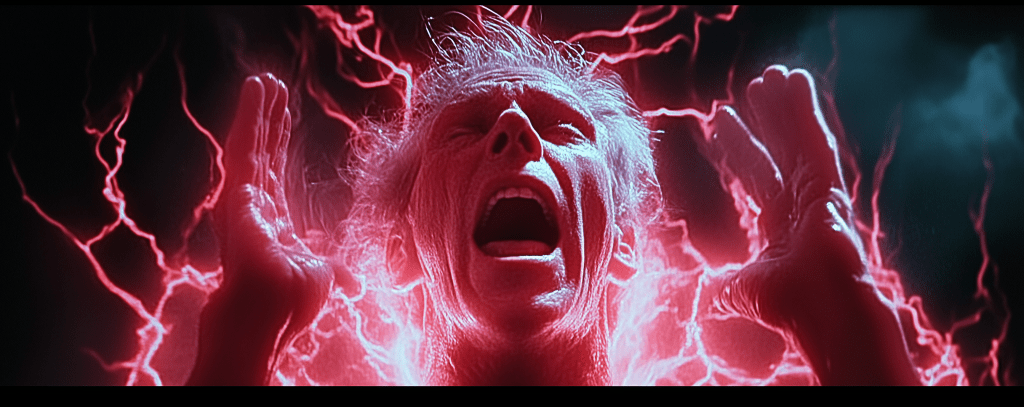
When it comes to films that blur the lines between reality and the inner psyche, few are as daring or as visually compelling as Altered States (1980). Directed by Ken Russell and based on the novel by Paddy Chayefsky, Altered States offers a psychedelic journey that challenges the very nature of human consciousness. Its screenplay, adapted by Chayefsky himself, is a labyrinthine exploration of science, psychology, and mysticism—a powerful example of how screenwriting can convey hallucinogenic horror on screen. In this article, we’ll delve into the unique elements of Altered States‘ screenplay, exploring how it pushes the boundaries of reality, incorporates layered symbolism, and utilizes sensory experiences to craft an unforgettable cinematic trip.

Setting the Stage: Psychedelia and the Roots of Altered States

The 1970s and 1980s marked a golden age of experimental cinema, with filmmakers pushing visual and thematic boundaries to explore the human mind and the countercultural allure of psychedelics. Altered States emerged from this cultural zeitgeist, pulling from both scientific experimentation and the mystical experiences associated with psychedelics. At the film’s core is Dr. Eddie Jessup, a Harvard scientist obsessed with the idea of transcending human consciousness through mind-altering substances and sensory deprivation. His goal is not merely to understand altered states of mind but to regress, shedding layers of human evolution to find an ancient, primal self.

The screenplay, largely faithful to Chayefsky’s novel, taps into a fascination with inner transformation, a quest for meaning that is as terrifying as it is seductive. The film’s premise takes the psychedelic experience, which typically involves deep introspection and the dissolution of ego, and ramps it up to nightmarish heights. Here, the screenplay succeeds in creating a hallucinogenic horror story—one that is both deeply cerebral and viscerally terrifying.

Building Tension through Transformation

One of the most fascinating aspects of the Altered States screenplay is its approach to physical and mental transformation. Chayefsky’s script is relentless in depicting Eddie’s descent, not merely as a metaphor but as a literal regression. Screenwriters and novelists who tackle transformations usually focus on emotional or intellectual changes, yet Altered States amplifies this trope by manifesting Eddie’s inner journey through horrifying physical shifts.

From a screenwriting perspective, these transformations serve multiple purposes. First, they drive the story’s tension, as Eddie’s experiments grow increasingly dangerous. As his body begins to morph in response to his altered states, the horror becomes tangible, linking mind and body inextricably. The screenplay uses these transformations as a physical embodiment of psychological horror, bridging the internal and external worlds in a way that is rare and unsettling. This transformation-based horror has been a thematic element in films like The Fly (1986) and Black Swan (2010), but Altered States takes it a step further by treating consciousness as a vehicle of metamorphosis.

In screenwriting terms, this is achieved through a careful layering of Eddie’s transformations, each one pushing further into the unknown. The gradual build, with each experiment diving deeper and becoming more perilous, is crucial. This progression mirrors a three-act structure where each act escalates the stakes, with Eddie’s obsession pushing him to near-destruction by the final climax.

The Language of Psychedelic Visuals and Sensory Detachment

One of Altered States’ most distinctive screenwriting elements is its visual language, specifically tailored to communicate the psychedelic experiences Eddie undergoes. While scripts are often thought of as word-based blueprints, in Altered States, Chayefsky’s writing places emphasis on sensory cues that transcend traditional dialogue or action. This is evident in the way the script describes Eddie’s hallucinations—visions that are both vividly detailed and intentionally disorienting.

For instance, instead of simply writing “Eddie hallucinates,” the screenplay provides sensory-based descriptions like “a swirl of molten colors” or “a desert storm inside the eye of a deity.” These choices enhance the surrealism, creating a layered sensory experience that invites the director and visual artists to experiment with disturbing, otherworldly imagery. The effect is cinematic yet deeply script-driven, as the screenplay gives clear cues that guide the creation of visuals meant to unnerve and overwhelm.

This approach has become a hallmark of psychological and horror films dealing with altered states, as seen in Darren Aronofsky’s Requiem for a Dream (2000) and Black Swan (2010). In these films, sensory overload or deprivation becomes a storytelling technique that conveys character descent or transformation. By embedding visual horror within the screenplay itself, Altered States creates a sensory language that builds an immersive world, one in which viewers feel the disorientation and dread of Eddie’s experience.

Characterization through Obsession and Isolation

In Altered States, Eddie Jessup’s character is the classic obsessive scientist trope turned up to eleven, embodying both a seeker of truth and a tragic hero lost in his quest. However, the screenplay diverges from the stereotypical “mad scientist” by giving Eddie a multidimensional, almost philosophical drive. His pursuit of self-discovery reflects not just a hunger for knowledge, but an insatiable desire to unravel the very fabric of reality. This is an essential aspect of the script that gives Eddie’s journey a tragic depth.

What’s particularly compelling from a screenwriting perspective is how Eddie’s character arc reflects an internal conflict between scientific detachment and personal obsession. He isolates himself from his family, colleagues, and even his own sense of self. The screenplay uses dialogue sparingly, relying instead on Eddie’s actions, his intensity, and his detachment from reality to convey his decline. For example, early scenes depict Eddie as intellectually curious yet dismissive of emotional connections; by the film’s climax, he has alienated himself completely, becoming an “altered state” both physically and emotionally.

The isolation aspect resonates with screenwriting in the horror genre, where isolation can often be a vehicle for psychological horror. Films like The Shining (1980) and Hereditary (2018) utilize characters’ withdrawal from loved ones to emphasize their descent into madness. Altered States employs this device effectively, using Eddie’s psychological isolation as a manifestation of his inner conflict, which culminates in a hauntingly lonely and ambiguous resolution.

Symbolism and the Spiritual Abyss

Altered States is rich with symbolism that enhances its psychedelic narrative. Chayefsky’s screenplay incorporates religious and mythological motifs, with Eddie’s journey serving as both a scientific exploration and a quasi-spiritual quest. This dual approach elevates the script beyond simple horror; Eddie’s regression taps into primal and universal fears. By exploring themes of God, human origins, and the boundaries of consciousness, the screenplay connects Eddie’s journey to broader, archetypal questions that resonate deeply with viewers.

For instance, Eddie’s hallucinations often depict biblical and primordial imagery—flames, deserts, and figures of ancient gods—each scene adding a layer to the idea of man’s insignificance in the face of the universe. From a screenwriting perspective, this use of symbolism allows the film to engage in abstract philosophical themes without relying heavily on expository dialogue. Instead, the horror of Eddie’s experiences speaks for itself, using symbols to communicate ideas that transcend language. In many ways, Altered States resembles films like Apocalypse Now (1979), where visuals and symbolic sequences speak to a character’s internal struggle and spiritual dissolution.

Screenwriters looking to imbue their work with deeper layers can take inspiration from Chayefsky’s symbolic approach. By weaving visual and thematic symbols into the screenplay, writers can craft a narrative that feels intellectually and emotionally complex, rewarding viewers who look beyond surface-level horror.

Exploring the Hallucinogenic: Writing and Portraying the “Unreliable Reality”

In Altered States, reality itself becomes an unreliable element. Eddie’s perceptions, increasingly warped by his experiments, challenge both the character and the audience to question what is real. This is a crucial technique for any screenplay that aims to explore psychedelia or altered states of mind. The script frequently destabilizes the viewer’s grasp on reality, employing disjointed scenes, dream logic, and hallucinatory visuals to mirror Eddie’s psychological descent.

For screenwriters, portraying an “unreliable reality” requires careful calibration between showing and disorienting. Too little ambiguity, and the hallucinogenic quality is lost; too much, and the plot risks becoming incoherent. Altered States finds this balance by rooting Eddie’s experiences in recognizable yet twisted versions of reality. Each altered state is grounded in his desire for truth, making even the most outlandish scenes feel anchored in character motivation. The film’s screenplay echoes other works that employ unreliable reality, such as Inception (2010), where the disintegration of layers of consciousness is crucial to the story’s structure.

Final Thoughts: Lessons from Altered States for Screenwriters

Altered States is an exemplar of hallucinogenic horror, a genre that uses surrealism and psychological depth to unsettle and provoke. Chayefsky’s screenplay demonstrates how scriptwriting can effectively portray altered states of consciousness, blending horror with philosophical inquiry. For screenwriters, the film offers several valuable lessons:

  1. Use Transformation as Tension: Character transformations, both psychological and physical, can serve as horror elements. Build tension by gradually increasing the stakes with each transformation, leading the audience deeper into the character’s experience.
  2. Prioritize Sensory Descriptions: Particularly in scripts exploring altered states, sensory language is essential. Describe colors, sounds, and textures to give directors and artists a canvas for immersive, psychedelic visuals.
  3. Embrace Symbolism: Use religious mythological, or natural symbols to convey complex ideas and emotions that transcend simple dialogue. These can enrich a screenplay, adding layers for viewers to unravel.
  4. Balance the Unreliable Reality: For stories that question reality, a balance is crucial. Ground hallucinogenic or dream-like sequences in character motivations to maintain coherence while still disorienting the viewer.
  5. Characterization through Obsession: Obsession can be a powerful driving force in horror, and isolating the character can heighten this effect. Use their fixation as a narrative tool to create both horror and sympathy.

In Altered States, we see the potential of screenwriting as a medium to explore the farthest reaches of human consciousness and horror. For writers and filmmakers interested in psychedelic or psychological horror, it serves as both inspiration and a masterclass in depicting the limits of reality, transformation, and the terrifying depths of the human psyche.


✍️  Whether you’re mastering the art of dialogue, structure, or character development, the power of AI can be a game-changer in your writing journey. My Free Ebook, ‘AI for Authors’ delves into how AI-powered prompts can provide a unique edge to your storytelling process. If you’re intrigued by the prospect of supercharging your fiction skills, download your free copy today and explore new horizons in creative writing. 

‘Fearless’: Crafting Trauma and Recovery in Screenwriting

In Peter Weir’s 1993 film “Fearless,” Jeff Bridges plays Max Klein, a man who survives a catastrophic plane crash only to find himself fundamentally altered by the experience. The film serves as a masterclass in portraying trauma and recovery on screen, offering valuable lessons for writers tackling these challenging themes in their own work.

The Weight of the Moment

When writing about trauma, many screenwriters make the mistake of focusing solely on the traumatic event itself. While the inciting incident is crucial, it’s the aftermath—the ripples that spread through a character’s life—that often proves most compelling. In “Fearless,” the plane crash occurs in the first act, but the story’s heart lies in Max’s transformed relationship with mortality, his family, and his own identity.

The key is understanding that trauma isn’t just about what happened; it’s about how that event reshapes a character’s entire worldview. Max’s newfound fearlessness isn’t portrayed as superheroic but as a complex psychological response that both empowers and isolates him. This nuanced approach offers audiences a more authentic exploration of post-traumatic growth and dysfunction.

Building the Before and After

One of the most effective techniques in portraying trauma is establishing a clear “before” and “after” for your character. However, this doesn’t mean simply showing two different versions of the same person. Instead, focus on the subtle ways trauma manifests in everyday moments:

  • Changed relationships with loved ones
  • Altered daily routines and habits
  • New triggers and associations
  • Shifted perspectives on previously important matters
  • Modified coping mechanisms

In your screenplay, these changes should be revealed gradually rather than announced explicitly. Show your character struggling with seemingly simple tasks that were once automatic, or finding comfort in unexpected places. Let the audience piece together the transformation through carefully crafted scenes and moments.

The Language of Trauma

When writing dialogue for traumatized characters, resist the urge to make them overtly articulate about their experiences. Trauma often defies easy verbalization. Instead, look for ways to communicate through:

  1. Subtext in ordinary conversations
  2. Physical behaviors and reactions
  3. Environmental interactions
  4. Metaphoric or symbolic expressions
  5. Silence and what remains unsaid

Consider how “Fearless” uses Max’s relationship with food as a metaphor for his altered state. His ability to eat strawberries (to which he was previously allergic) becomes a powerful symbol of his disconnection from his former self.

Recovery Isn’t Linear

One of the most common pitfalls in writing about recovery is portraying it as a straightforward journey from broken to healed. Real recovery rarely follows such a neat arc. Your story will feel more authentic if you:

  • Include setbacks and false starts
  • Show progress in one area while regression occurs in another
  • Acknowledge that some changes are permanent
  • Recognize that “healing” doesn’t mean returning to who one was before

The goal isn’t to return your character to their previous state but to show them integrating their experience into a new way of being. This might mean that some relationships can’t be salvaged, some beliefs remain permanently altered, or some wounds never fully close.

Supporting Characters: The Web of Impact

Trauma doesn’t exist in isolation. When writing about a character’s traumatic experience, consider how it affects their entire social ecosystem. Supporting characters serve several crucial functions:

  • Mirrors reflecting the protagonist’s changes
  • Anchors to pre-trauma identity
  • Catalysts for both healing and regression
  • Representations of different coping mechanisms
  • Vessels for audience empathy

In “Fearless,” Rosie Perez’s character Carla provides a different perspective on survival guilt and grief, while Isabella Rossellini’s therapist character offers a framework for understanding trauma without reducing it to clinical terms.

Technical Considerations

When crafting scenes dealing with trauma and recovery, pay special attention to:

Pacing

  • Vary the rhythm between intense moments and quieter scenes
  • Use silence and stillness effectively
  • Allow space for emotional impact to land

Point of View

  • Consider when to stay close to your protagonist’s perspective
  • Know when to pull back for context
  • Use subjective experience to convey psychological states

Sensory Details

  • Include specific sensory triggers
  • Show how everyday stimuli can become charged with new meaning
  • Use sound and visual motifs to connect past and present

The Ethics of Representation

As screenwriters, we have a responsibility to portray trauma and recovery thoughtfully. This means:

  • Researching thoroughly and consulting experts when possible
  • Avoiding exploitation or sensationalism
  • Considering the impact on viewers who have experienced similar trauma
  • Being mindful of cultural and social contexts
  • Balancing authenticity with audience engagement

Finding Hope Without Easy Answers

Perhaps the most challenging aspect of writing about trauma is striking the right balance between hope and realism. Your ending doesn’t need to show complete recovery, but it should offer something meaningful—whether that’s acceptance, understanding, or a new way forward.

In “Fearless,” Max’s journey concludes not with a return to his old self but with a reconciliation between his transformed identity and his need to remain connected to life and love. This kind of complex resolution respects both the gravity of trauma and the human capacity for adaptation and growth.

Conclusion

Writing about trauma and recovery requires a delicate balance of research, empathy, and craftsmanship. By focusing on the subtle complexities of psychological transformation, the non-linear nature of healing, and the ripple effects through relationships, writers can create stories that resonate deeply while avoiding common pitfalls and clichés.

Remember that your goal isn’t to provide neat solutions but to explore the messy, challenging, and ultimately human process of grappling with life-altering experiences. When done well, these stories can offer both recognition for those who have experienced trauma and insight for those seeking to understand it better.


✍️  Whether you’re mastering the art of dialogue, structure, or character development, the power of AI can be a game-changer in your writing journey. My Free Ebook, ‘AI for Authors’ delves into how AI-powered prompts can provide a unique edge to your storytelling process. If you’re intrigued by the prospect of supercharging your fiction skills, download your free copy today and explore new horizons in creative writing.