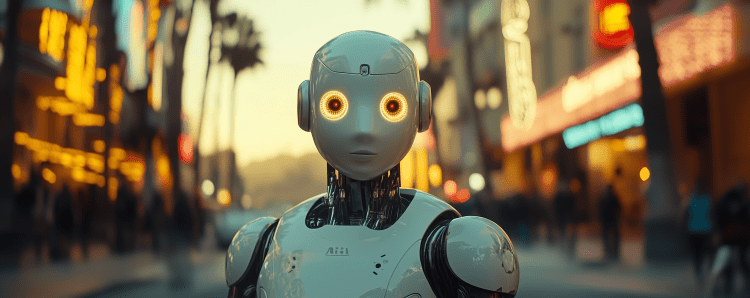
AI in Hollywood: Weekly News, December 5, 2024

Artificial Intelligence (AI) has been a buzzword across industries, but its emergence in Hollywood has sparked a wide range of conversations, from cautious optimism to outright concern. Recently, prominent figures like Doctor Who writers Steven Moffat and Russell T Davies, as well as two-time Oscar winner Cate Blanchett, shared their perspectives on AI’s role and potential impact on the entertainment industry.

The Doctor Who Writers on Generative AI

Steven Moffat and Russell T Davies, iconic writers for the Doctor Who franchise, weighed in on AI during an interview with Radio Times. Moffat, known for his sharp wit and narrative ingenuity, expressed a blend of fascination and skepticism about generative AI.

“AI is fascinating,” Moffat remarked, “but it lacks the efficiency and creativity of human minds.”

He pointed out AI’s tendency to recycle its own material, leading to diminishing returns in quality over time. For Moffat, this contrasts sharply with the unique ability of human writers to consistently generate fresh ideas.

Russell T Davies, known for his optimistic outlook, joked that television has already been operating like AI by recycling ideas, hinting at the industry’s penchant for reboots and sequels. Yet, despite acknowledging these parallels, Davies dismissed the notion of writers being replaced by machines anytime soon.

“There’s still a steady flow of brilliant, innovative ideas,” Davies noted, emphasizing his confidence in the creative resilience of human writers.

A Sneak Peek into Doctor Who’s Future

Fans of Doctor Who can look forward to the upcoming Christmas special, “Joy To The World”. It stars Ncuti Gatwa as the Doctor and Nicola Coughlan as a guest star. The episode promises a time-hopping adventure as the Doctor visits a “time hotel” to experience every Christmas Day in history—an imaginative premise that underscores the irreplaceable creativity of human storytelling.

Cate Blanchett’s Concerns about AI in Hollywood

Cate Blanchett, a celebrated actress with a keen eye for societal issues, took a more critical stance on AI. Speaking about its implications during the recent writers’ strike, Blanchett raised alarms about AI’s potential to “totally replace anyone.” She highlighted its impact beyond Hollywood, emphasizing the risks for vulnerable populations such as the elderly and low-income workers.

Blanchett criticized much of AI technology as “absolutely pointless,” questioning its broader societal benefits. Drawing parallels with dystopian fiction, she compared the real-world AI advancements to surreal narratives from her horror-comedy film Rumours.

“AI developments feel more absurd than the satire we created,” Blanchett commented, underscoring the dissonance between technological ambitions and real-world utility.

AI’s Broader Impact on Entertainment

The rise of AI has undeniably shaken Hollywood, particularly during the writers’ strike, where its role as a creative tool and a potential disruptor became a focal point. While figures like Davies and Moffat focus on the limitations of AI, Blanchett highlights the broader societal risks. Together, their insights reveal the multifaceted conversation surrounding AI in entertainment.

For writers and creators, AI offers possibilities but also challenges. Generative AI can assist in brainstorming and drafting but struggles to match the depth, nuance, and originality of human storytelling. These limitations resonate with Moffat’s critique of AI’s “recycling problem.” On the flip side, Blanchett’s broader societal concerns serve as a reminder that Hollywood’s AI debate is a microcosm of a much larger conversation about technology’s role in shaping the future.

Where AI Stands in Hollywood’s Creative Landscape

As the entertainment industry grapples with the integration of AI, the perspectives of prominent figures like Moffat, Davies, and Blanchett provide a balanced view of its potential and pitfalls. For screenwriters and creatives, AI may remain a tool rather than a threat for the foreseeable future.

With projects like Doctor Who continuing to deliver bold, innovative storytelling, the message is clear: human creativity remains at the heart of Hollywood, even as AI looms in the background. Whether as an assistant or a disruptor, AI will likely coexist with traditional creativity, shaping a new chapter in the story of entertainment.


✍️  Whether you’re mastering the art of dialogue, structure, or character development, the power of AI can be a game-changer in your writing journey. My Free Ebook, ‘AI for Authors’ delves into how AI-powered prompts can provide a unique edge to your storytelling process. If you’re intrigued by the prospect of supercharging your fiction skills, download your free copy today and explore new horizons in creative writing. 

The Ethics of AI in Entertainment: Ensuring Responsible Use

Artificial Intelligence (AI) has rapidly integrated into various facets of the entertainment industry, revolutionizing content creation, distribution, and consumption. While AI offers numerous advantages, it also presents ethical challenges that necessitate careful consideration. This article explores the ethical implications of AI in entertainment, focusing on screenwriting and writing, and discusses strategies to ensure its responsible use.

AI in Content Creation: Opportunities and Challenges

AI’s ability to generate content has opened new avenues for creativity. In screenwriting, AI tools can assist writers by suggesting plot developments, character arcs, and dialogue, potentially streamlining the creative process. However, this technological advancement raises several ethical concerns:

  • Authorship and Originality: The use of AI in generating scripts blurs the lines of authorship. If an AI system contributes significantly to a screenplay, questions arise about who should receive credit and compensation. The Writers Guild of America (WGA) has addressed this issue by stipulating that AI cannot be credited as a writer, ensuring that human authors maintain recognition for their work.
  • Intellectual Property Rights: AI systems often train on existing works, leading to potential copyright infringements. A recent investigation revealed that generative AI models have been trained using Hollywood screenplays without consent, raising legal and ethical concerns about unauthorized use of copyrighted material.
  • Quality and Creativity: While AI can generate content, it may lack the nuanced understanding of human experiences and emotions that are crucial for compelling storytelling. Filmmaker Ben Affleck has expressed skepticism about AI’s ability to replicate the quality of human-created art, suggesting that AI is unlikely to replace human creativity in filmmaking.

AI in Performance: Digital Replicas and Consent

The creation of digital replicas of actors using AI technology has become increasingly prevalent, offering possibilities for posthumous performances or de-aging actors. However, this practice raises significant ethical issues:

  • Consent and Autonomy: Utilizing an actor’s likeness without explicit consent infringes on personal rights. California has enacted legislation to protect actors from unauthorized digital replicas, allowing performers to maintain control over their image and prevent misuse.
  • Posthumous Use: The use of AI to recreate deceased actors poses ethical dilemmas regarding respect for the individual’s legacy and the potential for exploitation. The new California law also addresses this concern by allowing the estates of deceased celebrities to sue if their likeness is used without consent.

Bias and Representation in AI-Generated Content

AI systems can inadvertently perpetuate biases present in their training data, leading to issues in representation:

  • Cultural Stereotypes: If AI models are trained on biased data, they may generate content that reinforces harmful stereotypes. Ensuring diverse and representative training datasets is crucial to mitigate this risk.
  • Inclusion: The underrepresentation of certain groups in training data can result in AI-generated content that lacks diversity, failing to reflect the richness of human experiences.

Transparency and Accountability in AI Development

The opaque nature of AI algorithms poses challenges for accountability:

  • Explainability: Understanding how AI systems make decisions is essential for identifying and correcting biases. Developers should strive for transparency in AI processes to build trust and ensure ethical use.
  • Regulation: Establishing clear guidelines and regulations for AI use in entertainment is necessary to prevent misuse. The Senate Select Committee on Adopting AI has called for comprehensive regulation of AI technology across the economy, highlighting the need for transparency and accountability.

Economic Impacts: Job Displacement and Industry Dynamics

The integration of AI into entertainment has economic implications:

  • Job Displacement: Automation of tasks traditionally performed by humans, such as scriptwriting or editing, could lead to job losses. It is essential to balance technological advancement with the preservation of employment opportunities.
  • Industry Dynamics: AI’s role in content creation may shift power dynamics within the industry, potentially marginalizing human creators. Ensuring fair compensation and recognition for human contributions is vital.

Ensuring Responsible Use of AI in Entertainment

To navigate the ethical challenges posed by AI in entertainment, stakeholders should consider the following strategies:

  • Develop Ethical Guidelines: Industry bodies and organizations should establish ethical guidelines for AI use, addressing issues of consent, authorship, and representation.
  • Promote Transparency: Developers should be transparent about how AI systems are trained and used, allowing for scrutiny and accountability.
  • Foster Collaboration: Encouraging collaboration between AI developers and human creators can lead to more ethical and innovative outcomes.
  • Implement Regulatory Measures: Governments and regulatory bodies should develop policies that protect individual rights and promote ethical AI use in entertainment.

Conclusion

AI’s integration into the entertainment industry offers exciting possibilities but also presents significant ethical challenges. By proactively addressing issues related to authorship, consent, bias, transparency, and economic impact, stakeholders can harness AI’s potential while ensuring its responsible and ethical use. As the industry evolves, ongoing dialogue and collaboration will be essential to navigate the complex landscape of AI in entertainment.


✍️  Whether you’re mastering the art of dialogue, structure, or character development, the power of AI can be a game-changer in your writing journey. My Free Ebook, ‘AI for Authors’ delves into how AI-powered prompts can provide a unique edge to your storytelling process. If you’re intrigued by the prospect of supercharging your fiction skills, download your free copy today and explore new horizons in creative writing. 

Writing Humanity into Animation: How The Iron Giant Masters Real-Life Themes

Animation often walks a delicate line between entertaining younger audiences and exploring deeper, often universal themes. Few films have achieved this balance as deftly as Brad Bird’s The Iron Giant (1999). Adapted from Ted Hughes’ novel The Iron Man, this animated feature tells the story of Hogarth Hughes, a young boy who befriends a towering robot from outer space. While its surface appeal lies in thrilling action and heartfelt friendship, the screenplay is a masterclass in weaving profound real-life themes—such as fear, identity, and the human capacity for both destruction and redemption—into an animated narrative.

In this article, we’ll explore the screenwriting brilliance behind The Iron Giant, analyzing its structure, character development, dialogue, and thematic depth. For screenwriters, it provides a blueprint for crafting family-friendly stories that resonate across generations.


The Power of a Simple, Universal Premise

At its heart, The Iron Giant is a “boy and his otherworldly friend” story, a familiar trope seen in classics like E.T. and The Jungle Book. This simplicity is one of its strengths. Screenwriter Tim McCanlies, working alongside Bird, keeps the premise straightforward while imbuing it with layers of emotional and thematic complexity.

The story takes place during the Cold War, a period of palpable tension and paranoia. By rooting the film in this historical moment, the screenplay immediately establishes a world of fear and suspicion. Hogarth’s small-town setting is relatable, but the looming presence of the government and militaristic attitudes make the stakes feel global.

For screenwriters, the lesson here is clear: a simple premise is not a limitation. When paired with rich subtext and context, it becomes a foundation for stories with immense emotional and intellectual depth.


Building Complex Characters in a Simplified World

One of the standout features of The Iron Giant is its character development, which makes every figure in the film, from Hogarth to the titular robot, feel multidimensional.

Hogarth Hughes: A Relatable Protagonist

Hogarth’s arc is the emotional core of the story. He’s a bright, lonely kid with a penchant for science fiction and a longing for connection. The script smartly establishes his curiosity and courage in the opening scenes—Hogarth is the type of child who not only dreams big but also acts on those dreams. This makes his relationship with the Giant believable and earned.

Through Hogarth, the audience learns the importance of empathy and critical thinking. The screenplay avoids the trap of making him a precocious, “perfect” kid; his temper and impulsiveness feel real. This relatability grounds the film’s more fantastical elements.

The Iron Giant: A Machine with a Soul

The Giant himself is one of animation’s most enduring creations, thanks to both Bird’s direction and the screenplay’s thoughtful handling of his character. The robot is a blank slate at first, learning morality and self-awareness through Hogarth’s guidance. This journey is rich with symbolism, mirroring human development and asking profound questions: Can we choose what we become, or are we doomed to follow our programming?

The Giant’s ultimate decision to reject his destructive origins—most powerfully encapsulated in his whispered affirmation, “I am not a gun”—is a testament to the screenwriter’s skill in merging character development with thematic resonance.

Supporting Cast: Aiding the Themes

The supporting characters are similarly nuanced. Dean McCoppin, the beatnik artist, serves as a counterbalance to the era’s conformity and fearmongering. His laid-back demeanor and philosophical outlook encourage Hogarth to think outside societal norms.

Conversely, Kent Mansley, the paranoid government agent, represents the dangers of blind fear and unchecked authority. He’s a caricature of Cold War hysteria, yet he’s written with enough depth to feel like a genuine threat rather than a cartoon villain.

The interplay between these characters deepens the story’s exploration of moral choices, making every interaction purposeful. For screenwriters, The Iron Giant serves as a reminder that secondary characters should not exist solely to fill space—they should actively contribute to the protagonist’s journey and the story’s themes.


Dialogue that Balances Humor and Gravitas

Animation, particularly family-oriented films, often relies on humor to keep younger audiences engaged. The Iron Giant uses humor effectively without ever undercutting its serious moments.

Take, for example, Hogarth’s early conversations with the Giant. Their exchanges are simple but layered, with Hogarth teaching the robot about Earth while the Giant’s childlike responses elicit both laughter and pathos. These scenes establish their bond while subtly introducing the film’s larger questions about identity and morality.

The screenplay also excels at using dialogue to highlight contrasts between characters. Kent Mansley’s exaggerated patriotism and condescension provide comedic relief, but his rhetoric also underscores the insidious nature of fear-driven ideology. Similarly, Dean’s laid-back, sardonic wit serves as a counterpoint to Mansley’s intensity, reinforcing the film’s central conflict between open-mindedness and fear.

For screenwriters, The Iron Giant demonstrates the importance of dialogue that serves multiple purposes. Every line should not only entertain but also reveal character, advance the plot, or reinforce the theme.


Themes Rooted in Real Life

The thematic depth of The Iron Giant is what elevates it from a good animated film to a timeless masterpiece. By weaving real-world concerns into its narrative, the screenplay ensures the story resonates with audiences of all ages.

The Fear of the Other

Set against the backdrop of the Cold War, the film explores humanity’s fear of the unknown. The Giant, despite his gentle nature, is immediately perceived as a threat by the authorities. This fear leads to catastrophic consequences, mirroring the real-world dangers of paranoia and xenophobia.

The Choice to Be Good

Central to the story is the idea that we are not defined by our origins. The Giant, designed as a weapon, grapples with his destructive programming but ultimately chooses to be a protector. This message—that individuals have the power to define their identity and actions—resonates deeply, particularly in a world often quick to label and judge.

The Cost of War

The film doesn’t shy away from depicting the destructive consequences of militarism. The climax, in which the Giant sacrifices himself to prevent a nuclear disaster, is a poignant reminder of the cost of fear-driven aggression. Yet, the hopeful ending reinforces the idea that peace and understanding are possible.

By addressing these themes within an accessible, engaging narrative, The Iron Giant achieves what many films—animated or otherwise—struggle to do: it entertains while provoking meaningful reflection.


A Well-Structured Story with Emotional Payoff

The screenplay of The Iron Giant adheres to classic three-act structure, ensuring a tight, emotionally satisfying narrative.

Act One: Setting the Stage

The opening scenes establish the world, tone, and stakes. We see Hogarth’s curiosity, the town’s paranoia, and the Giant’s mysterious arrival. The inciting incident—Hogarth’s discovery of the robot—occurs early, propelling the story forward.

Act Two: Building Relationships and Conflict

The second act focuses on Hogarth teaching the Giant about humanity while hiding him from the authorities. The stakes escalate as Mansley closes in, and the Giant begins to grapple with his destructive instincts.

Act Three: The Climax and Resolution

The third act delivers an emotional and action-packed payoff. The Giant’s ultimate sacrifice and the townspeople’s recognition of his humanity tie together the film’s thematic threads, leaving audiences moved and inspired.

For screenwriters, The Iron Giant is a case study in how to build tension, develop relationships, and deliver a cathartic conclusion—all while staying true to the story’s emotional core.


Conclusion: Lessons for Screenwriters

The Iron Giant remains a benchmark in animated storytelling, and its screenplay is a treasure trove of lessons for writers:

  • Start with a universal premise: Simple setups allow for complex exploration.
  • Ground characters in relatability: Even fantastical beings need human emotions and motivations.
  • Use dialogue purposefully: Humor, exposition, and thematic resonance can coexist.
  • Explore meaningful themes: Audiences of all ages appreciate stories that reflect real-life concerns.

Above all, The Iron Giant shows that animation is not a genre but a medium—a powerful vehicle for storytelling that can tackle the same profound questions as any live-action film. For screenwriters, it’s proof that heart, humanity, and imagination can elevate even the simplest of tales into enduring art.


✍️  Whether you’re mastering the art of dialogue, structure, or character development, the power of AI can be a game-changer in your writing journey. My Free Ebook, ‘AI for Authors’ delves into how AI-powered prompts can provide a unique edge to your storytelling process. If you’re intrigued by the prospect of supercharging your fiction skills, download your free copy today and explore new horizons in creative writing. 

Suburban Tension in ‘Blue Velvet’: Analyzing Lynch’s Dark Script

David Lynch’s Blue Velvet (1986) delves deep into the duality of small-town America, offering a haunting narrative that juxtaposes the idyllic with the grotesque. Through its chilling screenplay, Lynch dissects the façade of suburban life, exposing the darkness lurking beneath. This article explores how Blue Velvet masterfully crafts tension, builds layered characters, and uses symbolism to make its suburban setting both a character and a battleground.


Unmasking the Suburbs: Setting as a Character

The town of Lumberton is Lynch’s quintessential 1950s-inspired suburb, embodying nostalgia and safety. With its manicured lawns, picket fences, and cheerful community, the setting initially suggests a comforting normalcy. However, this picturesque backdrop hides a malevolent undercurrent, revealed through visual and narrative cues.

In the opening sequence, Lynch uses vibrant colors, slow motion, and cheerful music to lull viewers into a sense of security. This imagery is abruptly shattered when a man collapses on his lawn, foreshadowing the sinister events to follow. The film’s tension arises from this dichotomy—peaceful exteriors masking chaotic interiors. It is in the soil of this manicured town, teeming with insects, that Lynch establishes his central thesis: the suburban dream is a veneer.


The Hitchcockian Influence: Ordinary Meets the Macabre

Like Alfred Hitchcock’s Shadow of a Doubt or Rear Window, Blue Velvet explores the sinister within the familiar. Lynch draws inspiration from Hitchcock’s mastery of suspense, using the suburban environment as a pressure cooker for human depravity. Jeffrey Beaumont, the protagonist, stumbles upon a severed ear, a grotesque fragment that propels him into the town’s underbelly. This discovery is symbolic—a literal “ear” into a world people choose not to hear or see.

Jeffrey’s curiosity mirrors the audience’s voyeuristic tendencies, a theme Lynch exploits to heighten tension. As Jeffrey descends into the world of Frank Booth and Dorothy Vallens, the contrast between his wholesome persona and the depravity he witnesses forces viewers to confront their own complicity in seeking out such narratives.


Characters as Duality Embodied

Lynch’s characters in Blue Velvet embody the tension between appearances and reality, a reflection of the town itself.

Jeffrey Beaumont: The Naïve Detective

Jeffrey, played by Kyle MacLachlan, starts as the archetypal all-American boy, inquisitive yet naïve. His discovery of the ear plunges him into a moral gray zone, where his curiosity is both heroic and dangerously reckless. Lynch uses Jeffrey’s transformation to question the cost of uncovering truth in a world that thrives on suppression.

Dorothy Vallens: The Wounded Femme Fatale

Isabella Rossellini’s Dorothy is the film’s emotional core, a woman trapped in an abusive nightmare at the hands of Frank Booth. Dorothy is both victim and survivor, and her oscillation between vulnerability and seduction makes her one of Lynch’s most compelling characters. In the infamous “closet scene,” Dorothy’s complex layers are laid bare—she is both the object of Jeffrey’s voyeurism and an agent of her own shattered psyche.

Frank Booth: Chaos Personified

Dennis Hopper’s Frank Booth is one of cinema’s most terrifying villains. His erratic behavior, peppered with bizarre rituals (such as his use of gas inhalation), destabilizes the audience. Frank embodies the chaos lurking beneath Lumberton’s idyllic surface—a primal force disrupting societal norms.


Building Tension: The Power of Ambiguity

Lynch’s screenplay thrives on ambiguity, allowing tension to percolate without easy resolutions. Key moments, such as Jeffrey’s nightmarish encounters with Frank and Dorothy’s contradictory behavior, resist simple explanations. This refusal to tie up loose ends mirrors the unpredictability of real-life darkness.

The Use of Silence and Sound

Lynch is a master of sound design, and in Blue Velvet, audio becomes a character of its own. The juxtaposition of Roy Orbison’s “In Dreams” with Frank’s violent tendencies creates an eerie dissonance. Similarly, the use of silence heightens suspense, such as during Jeffrey’s voyeuristic observation of Dorothy’s apartment. These auditory choices keep the audience on edge, never fully at ease.

Layered Visual Symbolism

The severed ear, with its close-up unveiling, represents a gateway into the story’s hidden layers. Lynch’s camera zooms into the ear, creating a sensation of plunging into another world—one where normalcy no longer applies. This motif of entry and discovery recurs throughout the film, emphasizing the dangers of seeking the truth.


Suburban Horror: Themes of Control and Chaos

At its heart, Blue Velvet examines power dynamics—between innocence and corruption, control and chaos. Frank’s domination over Dorothy symbolizes the oppressive structures that undergird seemingly perfect societies. In contrast, Jeffrey and Dorothy’s relationship, though fraught with ethical complexities, offers glimpses of resistance against these forces.

Lynch also questions masculinity and its role in suburban tension. Jeffrey’s journey can be read as a coming-of-age tale where he grapples with the duality of protector and predator. His encounters with Frank force him to confront the darker impulses lurking within himself and others.


The Legacy of Blue Velvet: A New Kind of Noir

Blue Velvet redefined the neo-noir genre by stripping it of urban grit and relocating it to the pristine suburbs. Lynch’s innovative screenplay rejected traditional storytelling tropes in favor of exploring psychological depth and moral ambiguity. Its influence is visible in later works such as Todd Haynes’ Far from Heaven and Sam Mendes’ American Beauty, both of which explore the darker sides of suburban life.


Conclusion: The Darkness Beneath

David Lynch’s Blue Velvet is not just a film but a meditation on the fragility of societal facades. Through its unsettling screenplay, it exposes the inherent tension in suburban life, where appearances can never fully suppress the chaos beneath. The brilliance of Blue Velvet lies in its refusal to give easy answers, leaving viewers to grapple with its haunting ambiguity long after the credits roll. For writers and cinephiles, it remains a masterclass in crafting psychological tension, proving that the most chilling horrors often emerge from the most familiar places.


✍️  Whether you’re mastering the art of dialogue, structure, or character development, the power of AI can be a game-changer in your writing journey. My Free Ebook, ‘AI for Authors’ delves into how AI-powered prompts can provide a unique edge to your storytelling process. If you’re intrigued by the prospect of supercharging your fiction skills, download your free copy today and explore new horizons in creative writing. 
AI in Hollywood: Weekly News, November 28, 2024

Generative AI in Hollywood: Creativity, Copyright, and Controversy

As generative AI continues to advance, its impact on Hollywood and the broader creative industry becomes more pronounced. From tools designed to enhance creativity to the ethical and legal debates surrounding their development, AI’s role in storytelling and filmmaking is under scrutiny. This article explores the latest developments in generative AI, its applications in Hollywood, and the challenges it presents, based on recent industry events and discussions.


The Rise of AI Video Tools: OpenAI’s Sora and Meta’s Movie Gen

Generative AI tools are rapidly evolving, with text-to-video models like OpenAI’s Sora and Meta’s Movie Gen leading the charge. These technologies promise to revolutionize how stories are visualized and presented on screen.

Sora: A Text-to-Video Pioneer

OpenAI’s Sora is a groundbreaking tool capable of generating 60-second videos with intricate scenes, characters, and movements based on text prompts. Early access to Sora was granted to 300 filmmakers and visual artists to refine the tool, but the initiative faced backlash. Participating artists accused OpenAI of exploiting their creative labor for unpaid testing and PR purposes. A manifesto signed by 19 artists criticized the program’s compensation model and called for greater transparency and artist-centric approaches.

The fallout underscores a deeper tension in the creative industry: the balance between empowering creators with AI tools and ensuring their contributions are fairly valued. OpenAI’s response emphasized the program’s voluntary nature, citing grants and free access to Sora as part of their support efforts. However, the incident highlights the need for companies to address concerns about equity and collaboration with artists.

Meta’s Entry with Movie Gen

Meta’s competing tool, Movie Gen, represents another leap in AI video generation. Currently in pilot testing, it produces 16-second videos with synchronized audio. Meta plans a public rollout in 2025, signaling the growing competition in this space. While Meta’s tool is still in development, its emergence reflects the broader push to integrate AI into visual storytelling.


Training AI with Subtitles: A Controversial Foundation

AI models like Sora and Movie Gen rely on extensive datasets for training, raising questions about the sources and ethics of this data. One notable example is the use of subtitles from films and TV shows to teach AI naturalistic dialogue patterns.

Subtitles as AI Training Gold

A recent dataset included subtitles from over 53,000 movies and 85,000 TV episodes, encompassing iconic works like The Simpsons, Breaking Bad, and The Wire. Subtitles provide raw written dialogue that mirrors human speech, making them invaluable for AI training. Unlike scripts, subtitles capture the essence of spoken language, which is crucial for developing conversational AI tools.

However, the origins of this data—specifically OpenSubtitles.org—have sparked controversy. Originally created to aid language translation, the site’s subtitle repository has faced criticism for copyright issues. This raises broader ethical questions about using copyrighted material for AI training without clear consent from creators.

Implications for Writers and Copyright Concerns

Writers have expressed concern over their work being repurposed for AI training. While subtitles differ from scripts, they still represent a distilled version of human-written dialogue. Critics argue that AI’s reliance on repurposed material undermines the originality of its output and exploits creative labor. These concerns have intensified calls for greater transparency and ethical guidelines in AI development.


AI in Filmmaking: A Tool, Not a Replacement

At the recent EnergaCamerimage Festival, the American Society of Cinematographers (ASC) hosted a panel discussing AI’s role in filmmaking. Industry experts and legal professionals weighed in on the opportunities and challenges posed by these tools.

Applications in Previsualization

AI has already found practical applications in previsualization, helping filmmakers plan shots and visualize scenes before production. Cinematographers like Salvatore Totino (Unstoppable) and Catherine Goldschmidt (House of the Dragon) shared their experiences using AI tools to streamline the creative process. Robert Legato, a VFX supervisor on The Jungle Book, emphasized that AI is a supportive tool rather than a standalone creator, stating, “It’s not going to make a movie.”

Legal Perspectives on Copyright and AI

Angela Dunning, a legal expert, explored the complex issue of copyright in AI training. She argued that AI’s use of data could be considered “fair use,” likening it to how human creators synthesize influences to produce original work. Drawing parallels to filmmakers like Quentin Tarantino and George Lucas, Dunning suggested that AI’s operation might mirror traditional artistic processes.

However, this perspective remains contentious. Critics point out that AI’s capacity to replicate and remix existing works raises questions about originality and intellectual property. As AI tools become more sophisticated, these legal and ethical dilemmas are likely to intensify.


The Creative Industry’s Response to Generative AI

AI’s growing presence in Hollywood has sparked significant debate, not only about its capabilities but also its potential to disrupt traditional creative processes.

Artists’ Protests Against Exploitation

The backlash against OpenAI’s Sora program highlights broader concerns about how AI companies engage with creative professionals. Artists involved in the program felt their contributions were undervalued, calling for more equitable partnerships. This sentiment reflects a larger unease within the creative community about being sidelined in favor of automated tools.

Hollywood’s Cautionary Stance

The impact of generative AI on the entertainment industry has prompted caution from key figures. Filmmaker Tyler Perry recently cited AI tools like Sora as a factor in halting an $800 million studio expansion. This decision underscores the uncertainty surrounding AI’s implications for job security and creative control.


Balancing Innovation and Ethics

As generative AI continues to evolve, the industry must navigate the fine line between innovation and ethical responsibility. Several key considerations will shape the future of AI in storytelling:

Transparency and Collaboration

The protests against Sora and concerns about subtitle datasets underscore the importance of transparency. AI companies must clearly communicate how data is sourced and used while fostering genuine collaboration with creators.

Ethical Data Usage

The inclusion of copyrighted material in AI training datasets raises significant ethical and legal questions. Developing clear guidelines for data usage will be crucial in maintaining trust and ensuring fairness in AI development.

AI as a Creative Partner

Panelists at the EnergaCamerimage Festival encouraged filmmakers to embrace AI as a tool rather than a threat. By integrating AI into the creative process, professionals can leverage its capabilities to enhance storytelling while retaining artistic control.


Conclusion: The Future of AI in Hollywood

Generative AI has the potential to revolutionize Hollywood, offering new tools for storytelling and filmmaking. However, its integration into the industry comes with challenges, from ethical concerns to fears of job displacement. To fully realize AI’s potential, companies must prioritize transparency, fairness, and collaboration with creators.

As AI continues to reshape the creative landscape, the industry faces a pivotal moment. By addressing these challenges thoughtfully, Hollywood can ensure that generative AI serves as a force for innovation rather than division.


✍️  Whether you’re mastering the art of dialogue, structure, or character development, the power of AI can be a game-changer in your writing journey. My Free Ebook, ‘AI for Authors’ delves into how AI-powered prompts can provide a unique edge to your storytelling process. If you’re intrigued by the prospect of supercharging your fiction skills, download your free copy today and explore new horizons in creative writing.