The Art of the Single-Location Film: A Case Study of ’12 Angry Men’

In the pantheon of cinematic masterpieces, Sidney Lumet’s 12 Angry Men holds a unique place as a taut, claustrophobic drama that unfolds entirely within the confines of a jury room. Adapted from Reginald Rose’s teleplay, the 1957 film is a masterclass in storytelling, using its single location not as a limitation, but as a powerful narrative device.

For screenwriters, 12 Angry Men offers invaluable lessons in the art of single-location storytelling. It demonstrates how to create tension, develop character, and sustain audience engagement—all without ever leaving the room. In this article, we’ll dissect the film’s brilliance, exploring how its setting enhances the story and what writers can learn from its construction.

The Power of a Single Location

Single-location films rely on economy and creativity. With no sweeping vistas or action-packed set pieces to fall back on, the focus shifts entirely to the characters and their interactions. This can create a sense of intimacy and immediacy that’s hard to achieve in more expansive settings.

In 12 Angry Men, the jury room becomes a crucible where personalities clash, biases surface, and truths emerge. The physical constraints of the space heighten the drama, forcing the characters—and the audience—to confront the issues head-on.

Writing Tip: When crafting a single-location story, think of the setting as a character in its own right. How does it shape the narrative? What unique challenges or opportunities does it present?

Conflict as the Engine of Drama

At its heart, 12 Angry Men is a story about conflict. The jurors must decide the fate of a young man accused of murder, and their deliberations quickly devolve into a battle of wills. Each character represents a different perspective, bringing their own biases, assumptions, and emotions to the table.

The film’s genius lies in its ability to sustain tension through dialogue and character interaction. The central conflict—whether the defendant is guilty or not—is layered with smaller, interpersonal conflicts. These range from petty squabbles to deep-seated prejudices, creating a rich tapestry of drama.

Writing Tip: In a single-location story, conflict is your lifeblood. Ensure that every scene brims with tension, whether it’s overt or simmering beneath the surface.

Character as the Driving Force

In the absence of visual spectacle, character becomes paramount. 12 Angry Men assembles a diverse cast of jurors, each with a distinct personality, background, and worldview. From the calm, rational Juror 8 (Henry Fonda) to the hot-headed, bigoted Juror 3 (Lee J. Cobb), the characters drive the story forward.

The film’s structure allows each juror to have their moment in the spotlight, revealing their motivations and internal conflicts. This not only keeps the audience engaged but also deepens the story’s thematic resonance, exploring issues of justice, prejudice, and the human condition.

Writing Tip: Develop well-rounded characters with clear motivations. In a single-location setting, their personalities and dynamics will carry the narrative, so invest time in making them compelling and complex.

Pacing and Momentum

One of the challenges of a single-location film is maintaining momentum. Without scene changes to provide visual variety, it’s crucial to keep the story moving through shifts in tone, stakes, and character dynamics. 12 Angry Men achieves this masterfully, using a combination of rising tension, strategic reveals, and shifts in the balance of power.

The film’s pacing mirrors the jury’s deliberations, starting with a seemingly straightforward guilty verdict and gradually unraveling as Juror 8 introduces doubt. Each new piece of evidence, each revelation about a juror’s bias or agenda, propels the story forward.

Writing Tip: Structure your single-location script to include peaks and valleys in tension. Use moments of quiet introspection to balance high-stakes confrontations, creating a dynamic rhythm that keeps the audience engaged.

Using the Setting to Enhance the Story

The jury room in 12 Angry Men is more than just a backdrop—it’s a tool for storytelling. The oppressive heat, the claustrophobic space, and the locked door all contribute to the tension. As the jurors sweat, argue, and pace the room, the physical environment amplifies their emotional states.

The setting also creates a sense of unity and entrapment. The jurors are forced to confront each other and themselves, with no escape from the room or the decision they must make. This mirrors the central theme of the film: the responsibility of individuals to seek truth and justice, even under pressure.

Writing Tip: Use your setting to reflect and enhance the story’s themes and emotions. Consider how the environment influences the characters and their interactions.

Themes and Subtext

Beneath its surface, 12 Angry Men is a deeply thematic work, tackling issues of justice, morality, and prejudice. The jury room becomes a microcosm of society, exposing the biases and flaws that influence human behavior. Each juror’s stance on the case reflects their personal values and worldview, creating a rich layer of subtext.

For writers, this is a reminder that a single-location story can still explore complex themes. The limited setting forces the audience to focus on the dialogue and character dynamics, making the themes more immediate and impactful.

Writing Tip: Use subtext to add depth to your story. What larger ideas or societal issues are at play? How can your characters and dialogue reflect these themes without being overt?

Dialogue as the Primary Tool

In a single-location film, dialogue becomes the primary means of storytelling. In 12 Angry Men, every line serves a purpose, whether it’s revealing character, advancing the plot, or deepening the themes. The dialogue crackles with tension, wit, and emotion, keeping the audience riveted despite the static setting.

The script also uses repetition and callbacks to great effect. For instance, Juror 3’s repeated insistence on the boy’s guilt takes on new meaning as his personal biases are revealed. These moments of resonance reinforce the film’s emotional and narrative cohesion.

Writing Tip: Craft dialogue that’s layered and purposeful. Consider how each line can serve multiple functions, from revealing character to advancing the plot.

Lessons for Writers: Crafting a Single-Location Story

What can writers learn from 12 Angry Men? Here are a few key takeaways:

  1. Maximize Conflict: Make sure your setting forces characters into close proximity, heightening tension and confrontation.
  2. Leverage the Setting: Use the physical environment to reflect the story’s themes and amplify the drama.
  3. Develop Rich Characters: With limited visual elements, your characters must carry the narrative. Give them depth and distinct voices.
  4. Maintain Momentum: Structure your story to include shifts in stakes and dynamics, keeping the audience engaged.
  5. Focus on Dialogue: In a single-location setting, dialogue is your most powerful tool. Use it to reveal character, advance the plot, and explore themes.

Conclusion: The Enduring Power of 12 Angry Men

More than six decades after its release, 12 Angry Men remains a touchstone for writers and filmmakers. Its ability to create gripping drama within a single room is a testament to the power of storytelling. For screenwriters, it’s a reminder that great stories don’t require elaborate settings or action sequences—just compelling characters, sharp dialogue, and a clear understanding of the story’s themes.

As you embark on your own writing projects, consider the lessons of 12 Angry Men. Whether you’re crafting a single-location film or a sprawling epic, the principles of character, conflict, and dialogue are universal. And if you can make an audience care as much about a jury deliberation as they would about a battle scene, you’ll have achieved something truly remarkable.


✍️  Whether you’re mastering the art of dialogue, structure, or character development, the power of AI can be a game-changer in your writing journey. My Free Ebook, ‘AI for Authors’ delves into how AI-powered prompts can provide a unique edge to your storytelling process. If you’re intrigued by the prospect of supercharging your fiction skills, download your free copy today and explore new horizons in creative writing. 

Dialogue as a Weapon: The Art of Verbal Sparring in ‘Succession’

Television is a battleground, and in HBO’s Succession, dialogue serves as the ultimate weapon. Jesse Armstrong’s acclaimed series about the power struggles within the Roy family, heirs to a global media empire, has captivated audiences not just with its plot but with its razor-sharp dialogue. Each verbal exchange becomes a duel, every insult a cutting blade. For writers and screenwriters, Succession offers a masterclass in crafting dialogue that isn’t just conversation—it’s combat.

In this article, we’ll dissect how Succession turns dialogue into a weapon, exploring its layered construction, use of subtext, and the way it brings characters to life. Let’s dive into the mechanics of verbal sparring and see how this show raises the stakes with every line.

The Power of Precision: Every Word Counts

In Succession, words are wielded with surgical precision. Whether it’s Logan Roy delivering a curt dismissal or Shiv launching a well-aimed barb at her brothers, the dialogue often feels like a high-stakes chess match. The key here is that no word is wasted. For screenwriters, this is a valuable lesson: brevity can be devastating.

Take Logan’s infamous “You’re not a killer” line to Kendall. At just four words, it’s an annihilation of his son’s character, reducing Kendall’s ambition and efforts to rubble. This is a reminder that dialogue doesn’t have to be long-winded to have a profound impact. In fact, sometimes the shortest sentences leave the deepest wounds.

Writing Tip: When crafting dialogue, focus on economy. Ask yourself: Can this line be distilled further? Is each word carrying its weight?

Subtext as Ammunition

One of the hallmarks of Succession is its masterful use of subtext. Rarely do characters say exactly what they mean. Instead, the true meaning lurks beneath the surface, waiting to be unearthed by the viewer. This mirrors real-life power dynamics, where what’s left unsaid is often as important as what’s spoken.

Consider the scene where Shiv subtly undermines Kendall at a family dinner by feigning concern for his well-being. On the surface, it’s a caring gesture; beneath it, it’s a strategic move to destabilize him. Subtext in Succession is not just about adding depth—it’s a tool for manipulation and control.

Writing Tip: Use subtext to layer your dialogue. What’s the character hiding? What does their body language suggest? Make sure every line operates on multiple levels.

Insults as an Art Form

If Succession has a signature style, it’s the artful insult. Characters trade barbs like seasoned fencers, each attempting to outwit and outmaneuver the other. These insults are rarely crude; instead, they’re tailored to hit the opponent where it hurts most.

Roman, in particular, excels at this. His quips are lightning-fast and deeply personal, often combining wit with cruelty. For instance, when he tells Greg, “You don’t have a dog in this fight, and if you did, I’d put it down,” it’s a line that’s both hilarious and viciously cutting.

Writing Tip: To write compelling insults, know your characters intimately. Tailor the insult to their personality and vulnerabilities. And remember, humor often makes a harsh line more palatable—and more memorable.

Rhythm and Cadence: The Music of Dialogue

Dialogue in Succession is as much about rhythm as it is about content. The rapid-fire exchanges, the pauses pregnant with tension, and the overlapping interruptions create a musicality that mirrors the chaos of the Roy family’s interactions. This pacing keeps the viewer engaged, drawing them into the conversational tug-of-war.

The writers use rhythm strategically to heighten tension. For instance, in moments of conflict, sentences often grow shorter, resembling jabs in a boxing match. During moments of manipulation or persuasion, the dialogue slows, allowing the words to sink in like a carefully planted seed.

Writing Tip: Pay attention to the rhythm of your dialogue. Read it aloud to ensure it flows naturally and conveys the intended emotion. Experiment with pacing to match the tone of the scene.

Character Voice: Distinctive and Authentic

One of Succession’s greatest strengths is its ability to give each character a distinct voice. Logan’s blunt, domineering style contrasts sharply with Roman’s sardonic wit, Shiv’s calculated elegance, and Kendall’s often tortured verbosity. These voices are consistent, reflecting their personalities and positions within the family hierarchy.

For example, Logan’s dialogue is direct and authoritative, often punctuated by expletives. This reflects his no-nonsense approach to life and business. Meanwhile, Roman’s penchant for juvenile humor and shock value underscores his insecurity and need for attention.

Writing Tip: Develop a unique voice for each character by considering their background, motivations, and emotional state. Consistency is key—your audience should be able to recognize who’s speaking even without dialogue tags.

Conflict in Every Exchange

At its core, Succession is about power, and the dialogue reflects this by embedding conflict into almost every exchange. Even seemingly mundane conversations bristle with tension, as characters jockey for dominance or attempt to undermine one another.

This is particularly evident in scenes involving negotiation. Whether it’s a boardroom showdown or a family argument, every line is a power play. The stakes are always high, and the dialogue ensures that the audience feels the weight of every word.

Writing Tip: Infuse conflict into your dialogue by giving each character a clear objective. What do they want from the conversation? How do their goals clash with the other character’s? This friction will keep your scenes dynamic and engaging.

Humor as a Defensive Mechanism

Despite its often dark subject matter, Succession is also incredibly funny, and much of its humor comes through dialogue. Characters use humor as a shield, a sword, or a smokescreen, deflecting vulnerability or disarming their opponents.

Roman, again, is a standout here, but even Logan’s gruff one-liners carry a sardonic edge. The humor often emerges organically from the characters’ personalities and the absurdity of their circumstances, making it all the more impactful.

Writing Tip: Use humor strategically in your dialogue. It can break tension, reveal character, or provide a moment of levity. However, ensure it aligns with the tone of your story and feels natural to the character delivering it.

Lessons for Writers: Crafting Your Own Verbal Sparring

What can writers learn from Succession’s approach to dialogue? Here are a few key takeaways:

  1. Know Your Characters: Understand their motivations, insecurities, and relationships. This knowledge will inform their dialogue and make their verbal sparring feel authentic.
  2. Embrace Conflict: Don’t shy away from confrontation in your dialogue. It’s often where the most compelling drama lies.
  3. Use Subtext: Allow your characters to speak in code, revealing their true intentions through what they don’t say.
  4. Edit Ruthlessly: Great dialogue often emerges in revision. Trim the fat, sharpen the edges, and ensure every line serves a purpose.
  5. Experiment with Style: Play with rhythm, pacing, and humor to find a style that fits your story.

Conclusion: The Power of Words in Succession

In Succession, dialogue isn’t just communication—it’s war. Every line is a move in the game, every exchange a battle for supremacy. For screenwriters and writers, the series is a treasure trove of lessons on crafting dialogue that crackles with tension, wit, and emotional resonance.

By studying the show’s approach to verbal sparring, we can learn to wield words with the same precision and power as the Roy family. Whether you’re writing a screenplay, a novel, or even a short story, remember: in the right hands, dialogue can be the sharpest weapon of all.


✍️  Whether you’re mastering the art of dialogue, structure, or character development, the power of AI can be a game-changer in your writing journey. My Free Ebook, ‘AI for Authors’ delves into how AI-powered prompts can provide a unique edge to your storytelling process. If you’re intrigued by the prospect of supercharging your fiction skills, download your free copy today and explore new horizons in creative writing. 
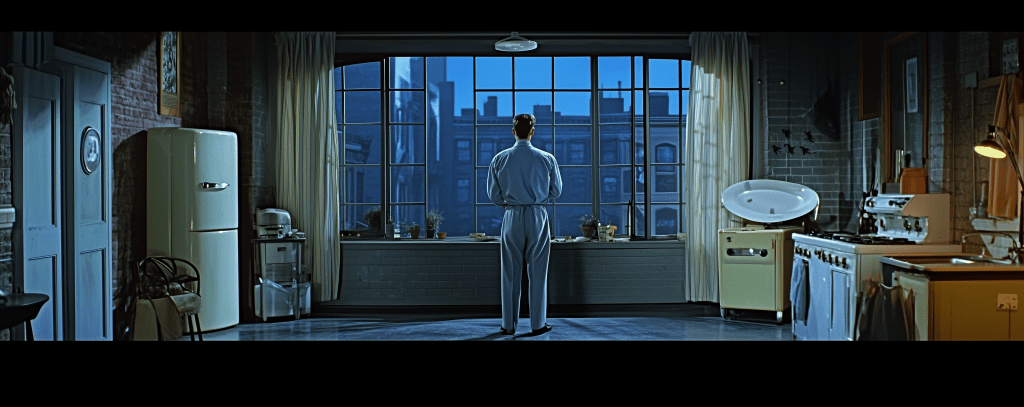
Crafting Suspense Through Limited Perspective: ‘Rear Window’

Few films demonstrate how powerful perspective can be in storytelling as effectively as Alfred Hitchcock’s Rear Window (1954). A masterclass in crafting suspense, the film employs a limited point of view—both literal and narrative—to immerse the audience in the protagonist’s paranoia and isolation. By placing the viewer squarely in the shoes of its central character, Hitchcock draws out tension, fuels uncertainty, and keeps us questioning what we think we see.

For screenwriters, Rear Window serves as a shining example of how restricted perspective can amplify mystery and suspense. In this blog, we’ll explore the techniques used in Hitchcock’s Rear Window, breaking down its storytelling mechanics and extracting lessons to improve your writing craft.


The Setup: A Limited World

The premise of Rear Window is deceptively simple: L.B. “Jeff” Jefferies (James Stewart), a professional photographer, is confined to his New York apartment with a broken leg. Stuck in a wheelchair, his only form of entertainment becomes observing his neighbors through the window of his apartment. Soon, he begins to suspect that one of them, Lars Thorwald (Raymond Burr), has murdered his wife.

Hitchcock limits the world of the film almost entirely to Jeff’s perspective. The camera never ventures beyond what Jeff himself can see. This restricted point of view creates both opportunities and constraints:

  • Opportunities: It allows the audience to share in Jeff’s growing paranoia and obsession. By withholding information, Hitchcock keeps viewers guessing.
  • Constraints: The narrative must sustain itself within a single location and limited action.

This simple setup forces the story to rely on visual storytelling, character dynamics, and an escalating sense of unease. For screenwriters, it’s a masterclass in making a story feel vast within confined parameters.


Suspense Through Visual Storytelling

In Rear Window, Hitchcock proves that dialogue is not always necessary to advance the story or create tension. Much of the suspense comes from what Jeff sees—or thinks he sees—through his camera lens.

1. Creating Curiosity with Small Details

Suspense builds gradually in Rear Window. Instead of jumping straight to overt threats, Hitchcock plants seeds of doubt:

  • Mrs. Thorwald’s sudden disappearance.
  • Lars Thorwald’s peculiar late-night behavior, including carrying heavy suitcases and making repeated trips out of the apartment.
  • The small but unsettling visual cue of Thorwald cleaning a large saw and knife.

Each detail, while seemingly insignificant on its own, combines to form a growing puzzle. The audience, restricted to Jeff’s viewpoint, becomes an active participant in piecing together the narrative. As screenwriters, this highlights the power of planting information visually rather than spelling it out in dialogue.

2. Playing with the Audience’s Perception

By adopting Jeff’s limited perspective, Hitchcock invites viewers to question what they’re seeing. Are Jeff’s suspicions grounded in reality, or is his boredom and isolation driving him to paranoid conclusions?

  • At several points, characters like Jeff’s girlfriend Lisa (Grace Kelly) and nurse Stella (Thelma Ritter) express doubts, challenging Jeff’s narrative.
  • The audience, like Jeff, is left searching for clues and second-guessing assumptions.

This creates a back-and-forth tension: is the threat real, or is Jeff projecting meaning onto innocent behaviors? Hitchcock masterfully uses ambiguity to keep us on edge.


Restricted Perspective: Immersion and Identification

One of Hitchcock’s most brilliant choices in Rear Window is making Jeff’s perspective synonymous with the audience’s perspective. By restricting the camera to Jeff’s vantage point, Hitchcock traps us in the same confined world, sharing Jeff’s sense of frustration and powerlessness.

1. Immersion Through Camera Techniques

The film never gives us omniscient information. Every shot mirrors Jeff’s field of vision:

  • When Jeff uses binoculars or a telephoto lens, the audience sees through the same tools. This creates an intense, almost voyeuristic immersion.
  • Conversely, when Jeff cannot see something (e.g., when curtains close or lights turn off), the audience is equally blind.

This technique increases suspense because the viewer can only observe clues in the same limited way as the protagonist.

2. Identification with the Protagonist

By aligning the audience with Jeff’s viewpoint, Hitchcock encourages identification. Jeff’s immobility becomes our immobility. We share his helplessness as events escalate:

  • Jeff cannot investigate Thorwald himself because of his broken leg. This limitation builds tension as he must rely on Lisa and Stella to act on his behalf.
  • Hitchcock amplifies our anxiety with brilliant timing. For example, when Lisa sneaks into Thorwald’s apartment, the suspense is heightened because we are stuck watching helplessly through Jeff’s—and by extension, the audience’s—point of view.

This alignment with Jeff deepens our emotional investment. We become complicit in his voyeurism, sharing both his fear and thrill.


Conflict and Escalation

Hitchcock’s use of limited perspective forces the conflict to escalate creatively. With Jeff physically confined and the story restricted to one location, the script focuses on inventive ways to raise stakes.

1. From Curiosity to Threat

The suspense starts small—Jeff’s innocent observations of neighbors—but escalates into a life-and-death situation:

  • Jeff transitions from curiosity to suspicion as he collects circumstantial evidence against Thorwald.
  • The stakes rise when Thorwald begins to suspect that someone is watching him, creating a cat-and-mouse dynamic.

This gradual escalation keeps viewers hooked, showing that a well-paced buildup can be just as thrilling as action-packed sequences.

2. The Role of Secondary Characters

Despite Jeff’s limited mobility, supporting characters like Lisa and Stella drive the action forward.

  • Lisa becomes more involved as she moves from skeptic to believer, ultimately taking the dangerous step of entering Thorwald’s apartment.
  • Stella provides comic relief but also grounds Jeff’s paranoia with her practical wisdom.

These characters serve as extensions of Jeff’s limited perspective, expanding the scope of the story without breaking its central conceit.


Themes: Voyeurism and the Ethics of Observation

Beneath the suspense, Rear Window explores deeper themes of voyeurism, privacy, and moral ambiguity:

  • Jeff’s obsessive watching raises ethical questions: Is he justified in spying on his neighbors? At what point does curiosity cross a moral line?
  • The film makes viewers complicit in this voyeurism. By aligning us with Jeff’s perspective, Hitchcock forces us to examine our own relationship with observation and entertainment.

For screenwriters, this highlights how genre storytelling can double as a commentary on societal issues. A suspense thriller can still raise thought-provoking questions while delivering an engaging plot.


Lessons for Screenwriters

Hitchcock’s Rear Window provides several takeaways for writers looking to craft suspenseful and immersive stories:

  1. Limit the Perspective: Restricting what the audience sees can heighten tension and immerse viewers in the protagonist’s experience. This technique works especially well for thrillers and mysteries.
  2. Build Suspense Through Details: Use visual storytelling to plant small clues that build over time, leading to a larger mystery. Trust the audience to pick up on these details.
  3. Escalate Conflict Creatively: When physical action is limited, focus on raising the stakes through character choices, timing, and pacing.
  4. Play with Ambiguity: Keep the audience guessing by presenting conflicting information and challenging their perceptions.
  5. Explore Larger Themes: Even within a genre story, consider deeper themes that resonate on an emotional or societal level.

Conclusion

Rear Window remains a timeless example of how limited perspective can create unparalleled suspense and emotional engagement. By restricting what the audience sees, Hitchcock pulls us into the story, making us both accomplices and participants in Jeff’s voyeuristic journey.

For screenwriters, the film serves as a masterclass in visual storytelling, pacing, and building tension. Whether you’re writing a contained thriller or a broader narrative, Rear Window demonstrates that limitations—far from being a creative barrier—can inspire some of the most compelling storytelling.

Next time you’re stuck in a story, ask yourself: What if the audience only knew what the protagonist knows? Sometimes, less really is more.


✍️  Whether you’re mastering the art of dialogue, structure, or character development, the power of AI can be a game-changer in your writing journey. My Free Ebook, ‘AI for Authors’ delves into how AI-powered prompts can provide a unique edge to your storytelling process. If you’re intrigued by the prospect of supercharging your fiction skills, download your free copy today and explore new horizons in creative writing. 

AI in Hollywood: Weekly News, December 26, 2024

The entertainment industry is rapidly evolving, with artificial intelligence (AI) playing an increasingly significant role in various aspects of production. Recent developments in Hollywood highlight both the opportunities and challenges that AI presents to creators and studios alike. Let’s explore two major stories that showcase the industry’s complex relationship with AI: the Animation Guild’s new contract ratification and Cineverse’s launch of an AI rights management service.

Animation Guild Ratifies New Contract Amid AI Concerns

The Animation Guild, representing over 5,000 animation professionals, has recently ratified a new three-year contract with major studios. This agreement, approved by 76.1% of voting members, introduces several key improvements but also raises questions about the future of AI in animation[1][4].

Contract Highlights

The new contract includes significant wage increases, with members receiving a 7% raise in the first year, followed by 4% and 3.5% in the subsequent years[1]. It also addresses specific craft concerns, such as implementing “pay equity” for color designers and establishing staffing minimums for TV animation writers[4].

AI Protections: A Step Forward or Not Enough?

One of the most contentious aspects of the new contract is its approach to AI. While the agreement does include some AI-related provisions, many members feel they don’t go far enough to protect jobs and creative rights[1][4].

The contract stipulates that:

  • AI work will be covered under the agreement
  • AI cannot be used to undermine members’ pay or credit
  • Studios must notify and consult with members regarding AI use[4]

However, the contract doesn’t include more robust protections that some members had hoped for, such as:

  • The right to opt out of using AI in their work
  • The ability to prevent their work from being used to train AI systems
  • Guild-wide staffing minimums to protect jobs from AI replacement[4]

Mixed Reactions and Future Plans

The ratification has been met with mixed reactions. While a supermajority approved the contract, some prominent members have voiced their concerns. Mike Rianda, director of “The Mitchells vs. the Machines,” criticized the AI terms as “far from what we were going for” and warned of potential job losses[4].

Steve Kaplan, the union’s business representative, acknowledged the need for further work on AI-related issues. The guild plans to address these concerns through various means, including:

  • Lobbying for effective AI legislation
  • Advocating for tax incentives for human-made work
  • Addressing potential abuses through grievance procedures[1][4]

Cineverse Launches Matchpoint Reel Visuals AI: A New Frontier in Content Monetization

While the Animation Guild grapples with AI protections, Cineverse, a next-generation entertainment studio, is embracing AI’s potential with the launch of Matchpoint Reel Visuals AI[3][6].

Bridging Content Owners and AI Companies

Matchpoint Reel Visuals AI is a rights management service that allows content owners to monetize their video and audio libraries by providing them to AI companies for training purposes[3]. This service aims to create a win-win situation:

  • Content owners can generate new revenue streams from their existing libraries
  • AI companies gain access to high-quality, diverse content for training their models

Key Features of Matchpoint

The service offers several advantages for content owners:

  • Elimination of delivery costs, making it more accessible for smaller content creators to participate
  • Non-exclusive revenue-sharing model
  • Strict limitation to AI training purposes, prohibiting web scraping or unauthorized use[3][6]

Market Potential and Current Progress

Cineverse has already secured rights to over 350,000 hours of video and audio content in just 6-8 weeks[6]. This rapid adoption reflects the growing demand for AI training datasets. According to industry projections, the global AI training dataset market is expected to grow from $2.6 billion in 2024 to $10.3 billion by 2030[3].

Ethical Considerations and Industry Impact

While Matchpoint Reel Visuals AI presents exciting opportunities, it also raises important ethical questions. The use of copyrighted material for AI training has been a subject of legal challenges and industry debate[6].

Cineverse emphasizes its commitment to ethical AI content procurement and fair compensation for content owners. COO and CTO Tony Huidor stressed the importance of respecting intellectual property rights and ensuring that content creators receive appropriate compensation for their work[6].

The Bigger Picture: AI’s Role in Hollywood’s Future

These two stories – the Animation Guild’s contract negotiations and Cineverse’s AI rights management service – illustrate the complex and sometimes contradictory ways in which AI is reshaping the entertainment industry.

On one hand, there’s a clear demand for AI technologies and the data needed to train them. Services like Matchpoint Reel Visuals AI demonstrate the potential for new revenue streams and innovative uses of existing content libraries.

On the other hand, there’s significant concern among creative professionals about job security, creative rights, and the potential for AI to fundamentally alter the nature of their work. The Animation Guild’s contract negotiations highlight the challenges of balancing technological progress with worker protections.

As AI continues to evolve and integrate into various aspects of film and television production, the industry will need to grapple with several key questions:

  • How can we ensure fair compensation for content used in AI training?
  • What protections are needed to safeguard jobs and creative rights in an AI-enhanced industry?
  • How can we harness the benefits of AI while preserving the human creativity that is at the heart of storytelling?

The answers to these questions will shape the future of Hollywood and the broader entertainment landscape. As screenwriters, producers, and industry professionals, it’s crucial to stay informed about these developments and actively participate in shaping the policies and practices that will govern AI’s role in our creative processes.

The journey of integrating AI into Hollywood is just beginning, and it promises to be as dramatic and transformative as any blockbuster film. Stay tuned for more updates as this story continues to unfold.


✍️  Whether you’re mastering the art of dialogue, structure, or character development, the power of AI can be a game-changer in your writing journey. My Free Ebook, ‘AI for Authors’ delves into how AI-powered prompts can provide a unique edge to your storytelling process. If you’re intrigued by the prospect of supercharging your fiction skills, download your free copy today and explore new horizons in creative writing. 


Citations:
[1] https://www.latimes.com/entertainment-arts/business/story/2024-12-23/animation-guild-ratifies-contract-with-hollywood-studios-despite-ai-concerns
[2] https://www.screendaily.com/news/animation-guild-members-ratify-new-amptp-deal/5200400.article
[3] https://www.stocktitan.net/news/CNVS/cineverse-unveils-matchpoint-reel-visuals-ai-a-new-product-that-i7rps4vltpi6.html
[4] https://www.aol.com/animation-guild-ratifies-contract-despite-174347731.html
[5] https://www.animationmagazine.net/2024/12/animation-guild-members-ratify-new-contract/
[6] https://martechedge.com/news/cineverse-launches-reel-visuals-ai-for-rights-management
[7] https://www.hollywoodreporter.com/business/business-news/animation-guild-ratifies-2024-27-contract-1236092993/
[8] https://www.yahoo.com/news/animation-guild-ratifies-contract-hollywood-183005858.html
[9] https://www.prnewswire.com/news-releases/cineverse-unveils-matchpoint-reel-visuals-ai-a-new-product-that-empowers-content-owners-to-tap-into-revenue-opportunities-from-artificial-intelligence-302334890.html
[10] https://variety.com/2024/biz/news/animation-guild-ratification-vote-artificial-intelligence-ai-1236258024/

Exploring the Potential of AI in Interactive and Immersive Entertainment

As we approach the end of 2024, the landscape of interactive and immersive entertainment continues to evolve rapidly, with artificial intelligence (AI) playing an increasingly significant role. From video games to virtual reality experiences, AI is reshaping how we create, interact with, and consume digital content. This article delves into the latest developments in AI-driven entertainment, examining its impact on storytelling, user experience, and the creative process.

The Rise of AI-Powered Gaming Companions

One of the most exciting developments in the gaming world is the emergence of AI-powered gaming companions. Google DeepMind has recently introduced agents using Gemini 2.0 that can assist players in navigating virtual game worlds[3]. These AI companions can analyze on-screen action in real-time, offering suggestions and insights to players as they progress through games. This technology is being tested across various genres, from strategy games like “Clash of Clans” to more casual titles such as “Hay Day”[3].

For writers and narrative designers, this development opens up new possibilities for creating dynamic, responsive characters within game worlds. AI companions could potentially serve as interactive storytellers, adapting narratives based on player choices and providing a more personalized gaming experience.

AI in Game Development and Design

The integration of AI in game development is transforming how games are created and experienced. The global AI in games market is projected to grow by USD 4.5 billion from 2024 to 2028, with a compound annual growth rate (CAGR) of 24.65%[6]. This growth is driven by several factors, including:

  1. Enhanced Non-Player Characters (NPCs): AI is being used to create more realistic and responsive NPCs, making game worlds feel more alive and interactive.
  2. Procedural Content Generation: AI algorithms can generate vast, diverse game environments, reducing development time and costs while increasing replayability.
  3. Predictive Analytics: Game developers are using AI to analyze player behavior, allowing for more tailored gaming experiences and better balancing of game mechanics.

For writers working in the gaming industry, these advancements mean adapting to a more dynamic storytelling environment. Narratives may need to be more flexible, accommodating AI-generated content and player-driven storylines.

Immersive Experiences: VR, AR, and Beyond

The adoption of virtual reality (VR) and augmented reality (AR) technologies continues to grow, with AI playing a crucial role in enhancing these immersive experiences. Meta recently introduced Meta Motivo, an AI model designed to improve the lifelike movements of digital avatars in the Metaverse[2]. This technology, along with Meta’s Large Concept Model (LCM) for language reasoning, aims to create more engaging and realistic virtual interactions.

In the music industry, artists like The Weeknd are pushing the boundaries of immersive entertainment. The singer recently launched an audio-visual experience for the Apple Vision Pro headset, combining spatial audio with immersive visuals to create a unique concert experience[4].

For writers and content creators, these developments present new challenges and opportunities. Crafting narratives for immersive environments requires a different approach, considering spatial storytelling and user interaction in three-dimensional spaces.

AI-Generated Content and Creative Tools

AI-powered tools are becoming increasingly sophisticated, offering new ways for creators to generate and edit content. Some notable developments include:

  1. OpenAI’s Sora: This new video generator allows users to create 20-second videos from text prompts or extend existing clips[2]. For screenwriters, this tool could be used for quick storyboarding or visualizing scenes during the writing process.
  2. X’s Aurora: A photorealistic AI image generator that offers advanced visual creation tools with minimal content restrictions[2]. This could be valuable for concept artists and visual storytellers working in film and game development.
  3. YouTube’s AI Dubbing: An expanded tool that can translate videos into multiple languages, potentially broadening the reach of video content across global audiences[2].

These tools are not meant to replace human creativity but to augment it, providing writers and creators with new ways to visualize and iterate on their ideas.

Ethical Considerations and Challenges

As AI becomes more prevalent in interactive entertainment, it brings with it a host of ethical considerations and challenges. The recent lawsuit against Character.AI for allegedly exposing minors to harmful chatbot content highlights the need for robust safeguards in AI-driven interactions[2].

For writers and content creators, it’s crucial to consider the ethical implications of AI-generated content and interactions. This includes issues of copyright, authenticity, and the potential for AI to perpetuate biases or harmful content.

The Future of AI in Interactive Storytelling

Looking ahead, the potential for AI in interactive storytelling is vast. Projects like “Coded Dreams” in Montreal showcase how AI can be used to create immersive, interactive narratives that adapt to user input[4]. “The Golden Key,” one of the exhibits, allows visitors to participate in a never-ending story where their choices influence the narrative direction.

This type of adaptive storytelling could revolutionize how we approach screenwriting and narrative design in interactive media. Writers may need to develop new skills in creating branching narratives and designing story systems that can work in conjunction with AI to produce coherent, engaging experiences.

AI and the Evolution of the Creative Process

As AI tools become more integrated into the creative process, writers and content creators may find their roles evolving. Rather than seeing AI as a replacement, it’s more likely to become a collaborative tool that can enhance creativity and productivity.

For instance, AI could be used to:

  1. Generate initial story ideas or plot outlines
  2. Assist in character development by suggesting traits or backstories
  3. Provide real-time feedback on pacing and structure
  4. Offer language translation and localization services for global audiences

The key for writers will be to learn how to effectively leverage these tools while maintaining their unique creative voice and vision.

Conclusion

As we’ve explored, AI is rapidly transforming the landscape of interactive and immersive entertainment. From enhancing gaming experiences to revolutionizing how we create and consume content, the potential applications of AI in this field are vast and exciting.

For writers and content creators, staying informed about these developments is crucial. While AI presents new challenges, it also offers unprecedented opportunities for creativity and innovation. By embracing these technologies and learning to work alongside AI tools, writers can push the boundaries of storytelling in interactive media.

As we move forward, the most successful creators will likely be those who can effectively blend human creativity with AI-powered tools, crafting immersive, interactive experiences that captivate audiences in new and unexpected ways.


✍️  Whether you’re mastering the art of dialogue, structure, or character development, the power of AI can be a game-changer in your writing journey. My Free Ebook, ‘AI for Authors’ delves into how AI-powered prompts can provide a unique edge to your storytelling process. If you’re intrigued by the prospect of supercharging your fiction skills, download your free copy today and explore new horizons in creative writing. 


Citations:
[1] https://www.bigdatawire.com/2024/11/28/the-data-and-ai-agenda-key-conferences-in-december-2024/
[2] https://www.marketingprofs.com/opinions/2024/52468/ai-update-december-13-2024-ai-news-and-views-from-the-past-week
[3] https://blog.google/technology/google-deepmind/google-gemini-ai-update-december-2024/
[4] https://worldxo.org/18-extraordinary-experiences-open-now-coming-soon-december-2024/
[5] https://www.crn.com/news/ai/2024/the-10-biggest-ai-news-stories-of-2024-nvidia-genai-and-cybersecurity
[6] https://finance.yahoo.com/news/ai-games-market-grow-usd-223800854.html
[7] https://spectrumnews1.com/ca/southern-california/news/2024/09/06/ai-innovation-moviescent
[8] https://finance.yahoo.com/news/activate-brings-high-tech-interactive-183000918.html
[9] https://www.dlnews.com/research/xterio-partners-with-reka-to-build-emotionally-intelligent-ai-agents-for-gaming-and-beyond/
[10] https://www.aiandgames.com/p/reflecting-on-ai-in-the-games-industry