Rethinking Childhood in ‘Paperhouse’: Crafting Psychological Horror

Childhood is usually treated in cinema as a domain of innocence, wonder, and eventual coming-of-age. Yet in Bernard Rose’s Paperhouse (1988), the familiar tropes are not simply subverted — they are weaponized.
This haunting film, adapted from Catherine Storr’s novel Marianne Dreams, uses the building blocks of a child’s imagination to construct an intensely psychological horror landscape — one where fantasy and trauma are not at odds, but deeply intertwined.

For screenwriters and storytellers interested in the psychological horror genre, Paperhouse offers a rare and powerful study in how internal fears can be externalized without leaning on gore, jump scares, or the conventional monsters of childhood tales. Today, we’ll rethink how childhood is portrayed in horror, using Paperhouse as a lens.


The Premise: A Dreamscape of Unfiltered Emotion

At its core, Paperhouse follows 11-year-old Anna Madden, a rebellious and emotionally volatile girl who, after falling ill with a fever, begins to dream vividly of a house she has drawn in her sketchbook. Initially, the dreams are filled with wonder — the house stands isolated in a vast field, a symbol of pure, untouched creativity.
But as Anna continues to draw details into her paper creation, the dream house mutates, reflecting her internal struggles: grief, guilt, anger, and fear.

What makes Paperhouse so fascinating from a screenwriting perspective is how early the screenplay commits to treating Anna’s experience seriously.
There is no winking at the audience, no parental narration filtering the events through an adult rationality. In Anna’s fevered visions, we are fully immersed in the logic of childhood — unmoored from strict causality but rich with symbolic meaning.

Key takeaway for writers: Psychological horror can flourish when the emotional rules of a character’s world outweigh the physical rules of the real world.


Childhood Without a Safety Net

Traditional storytelling often presents childhood as protected — even in dark fantasies, there is usually a comforting undercurrent: a sense that good will prevail, adults will step in, or the child will learn a lesson that “saves” them.
Paperhouse ruthlessly strips this away. Anna’s parents are flawed and distant — her mother is short-tempered; her father is absent, and later revealed to have a drinking problem.
Anna’s dreams do not simply mirror her fears — they expand on them, producing twisted versions of her reality where the comforting structures of adult protection no longer exist.

The portrayal of her dream-world father — a monstrous, sightless figure who blindly lashes out, hunting her inside the paperhouse — is especially striking. This is not a nightmare generated by cliché “boogeymen.” It is an authentic child’s-eye view of emotional abandonment and fear of parental rage.

For screenwriters: If you want to create truly resonant psychological horror, ask: What would it feel like if all the structures a child relies upon — family, rationality, safety — disintegrated?


Dream Logic as Story Structure

Paperhouse doesn’t follow a neat three-act structure. Instead, its story rhythm mirrors the unpredictable lurches of a fever dream: calmness giving way suddenly to terror, small triumphs collapsing into new horrors.
Bernard Rose (also the screenwriter) structures the narrative less like a sequence of events and more like a sequence of emotional states.

Notably, the screenplay treats Anna’s sketches as acts of unintentional world-building. When she draws a boy in the window, she meets Marc, a disabled boy trapped inside the house. When she sketches her father, she summons a distorted version of him into the dream.
Each addition she makes out of loneliness, guilt, or anger immediately changes the dream’s terrain — a perfect dramatization of how children’s emotions can feel world-shattering and omnipotent.

Writing insight: Dream logic can replace traditional cause-and-effect, but it must remain emotionally logical. Paperhouse is “unreal” — but it is never random. Every strange event flows directly from Anna’s unprocessed emotions.


Visual Minimalism, Psychological Maximalism

While many horror films create fear through elaborate set pieces and intense sensory overload, Paperhouse opts for visual sparseness.
The dream world is defined by a haunting minimalism: a house in an endless field, interiors drawn with simple lines and eerie, child-like proportions. The walls don’t quite align. Shadows stretch too far. Windows loom too large.
It’s unsettling because it taps into a primal discomfort — the world looks almost right, but not quite.

For screenwriters and directors, this offers a critical lesson:
Sometimes, less is more — and simplicity can actually heighten psychological horror.
By creating a limited dreamscape, Paperhouse forces us to sit inside Anna’s loneliness, making every shift in the environment feel massive and intrusive.


Psychological Horror Rooted in Empathy, Not Sadism

One of the enduring problems with modern psychological horror is the temptation to wallow in cruelty or shock for its own sake. Paperhouse demonstrates the alternative: it elicits deep dread without losing empathy for its characters.

Marc, the boy trapped in the house, is not an antagonist or a twist villain — he is a companion figure, sharing Anna’s loneliness and fear. Their tentative connection offers some of the film’s most poignant moments, even as the horror elements escalate.

Even Anna’s monstrous father figure is not a cartoon villain. His creation stems from Anna’s hurt and confusion about her real-world father’s absence. In the end, Anna’s confrontation with this nightmare is not a battle to “kill the monster” — it’s an emotional reckoning. She must face the parts of her emotional life she has feared naming.

Screenwriting takeaway:
Horror becomes transcendent when it cares about its characters. We fear for Anna and Marc not because they might die, but because we recognize their emotional wounds.


Paperhouse in the Context of Psychological Horror Evolution

Although Paperhouse wasn’t a major box-office hit, it sits on the evolutionary timeline that leads directly to later psychological horror masterpieces like The Babadook (2014) and Hereditary (2018).
All these films share a commitment to grounding horror not in supernatural rules, but in emotional authenticity.

Whereas The Babadook uses a children’s pop-up book to externalize a mother’s grief and rage, Paperhouse uses a child’s sketchbook to externalize feelings of isolation, guilt, and parental fear.
There is no “curse” in either film that can be lifted by burning the haunted object. The horror persists because it reflects the truth of human emotions: they cannot simply be destroyed — they must be faced and integrated.

Screenwriters working today should note:
Audiences crave psychological horror that respects their intelligence and emotional complexity. In an era saturated with formulaic horror, deeply personal stories like Paperhouse feel more frightening — and more timeless.


Final Thoughts: Writing Horror From the Inside Out

Paperhouse is not just a well-crafted horror film. It’s a manifesto for a different approach to the genre:
Start inside the character’s psyche. Build the horror world outward from emotional realities rather than building monsters first and slotting in “tragic backstories” later.
Treat the child’s imagination — and the child’s pain — with full narrative seriousness. Refuse to condescend. Refuse to “fix” everything by the end.

For writers and filmmakers interested in psychological horror, Paperhouse remains a blueprint worth studying — and emulating.
Its unsettling power comes not from its monsters, but from its radical empathy: the recognition that a child’s emotions are vast, dangerous, and transformative enough to build — and destroy — entire worlds.


  Whether you’re mastering the art of dialogue, structure, or character development, the power of AI can be a game-changer in your writing journey. My Free Ebook, ‘AI for Authors’ delves into how AI-powered prompts can provide a unique edge to your storytelling process. If you’re intrigued by the prospect of supercharging your fiction skills, download your free copy today and explore new horizons in creative writing. 
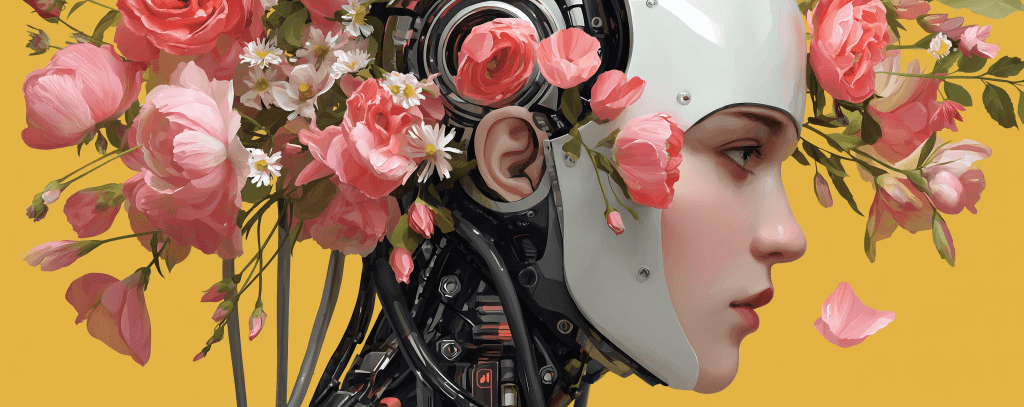
AI in Hollywood: Weekly News, May 22, 2025

AI Takes Center Stage in Hollywood: What Screenwriters and Creators Need to Know Now

The entertainment industry is undergoing a seismic shift as artificial intelligence (AI) technologies redefine storytelling, production, and creative collaboration. In the past week alone, major developments have emerged that directly impact screenwriters, filmmakers, and studios. From Google’s unveiling of the Flow AI moviemaking tool to OpenAI’s advancements with Sora, here’s a breakdown of the latest AI-driven innovations shaping Hollywood.


🎬 Google’s Flow: A New Era for Filmmaking

At the 2025 Google I/O conference, Google introduced Flow, an AI-powered video tool designed to revolutionize filmmaking. Built on Google’s Imagen 4 and Veo 3 models, Flow enables users to create cinematic-quality content using text prompts, incorporating camera movements, sound effects, and dialogue. Demonstrations showcased the tool’s capacity to produce Pixar-like animated films and make seamless scene edits. (The Times of IndiaBusiness Insider)

Implications for Screenwriters:

  • Rapid Visualization: Screenwriters can now transform scripts into visual sequences swiftly, aiding in pitching and development.
  • Collaborative Editing: Flow’s editing capabilities allow for real-time adjustments, fostering a more dynamic writing process.(LinkedIn)
  • Democratization of Content Creation: By lowering production barriers, Flow empowers independent creators to bring their visions to life without extensive resources.

🎥 OpenAI’s Sora: Bridging Text and Visual Storytelling

OpenAI’s Sora is a text-to-video AI model that creates realistic and imaginative scenes from text instructions. By understanding and simulating the physical world in motion, Sora aims to assist in solving problems requiring real-world interaction. (OpenAI)

Implications for Screenwriters:

  • Enhanced Previsualization: Writers can generate visual representations of scenes, aiding in refining narratives and pitches.
  • Creative Experimentation: Sora allows for testing various visual styles and scenarios, expanding storytelling possibilities.(LinkedIn)
  • Efficient Iteration: Quickly visualize and modify scenes based on feedback, streamlining the development process.(India Today)

🎞️ Promise Studio and Google’s Strategic Partnership

Promise, a generative AI studio backed by Andreessen Horowitz, announced a partnership with Google to integrate Google’s AI technologies into its operations. The collaboration will enhance Promise’s production pipeline and its workflow software, MUSE, and will include joint efforts with researchers from Google’s DeepMind. Additionally, Promise has expanded its investor base, securing new funding from Google’s AI Futures Fund and others. 

Implications for Screenwriters:

  • AI-Enhanced Writing Tools: Integration with MUSE could offer advanced tools for script development and formatting.
  • Collaborative Opportunities: Writers may find new avenues for collaboration with AI-driven studios focusing on innovative storytelling.
  • Access to Cutting-Edge Technology: Partnerships like this signal a trend toward integrating AI into traditional writing and production workflows.

🎬 Darren Aronofsky’s Primordial Soup: AI Meets Auteur Filmmaking

Director Darren Aronofsky’s company, Primordial Soup, has partnered with Google DeepMind to explore AI as a tool to unlock the next chapter of human creativity. The studio is producing three short films using Google DeepMind’s state-of-the-art generative AI models, including Veo. The first project, “Ancestra,” directed by Eliza McNitt, blends live-action performance with AI-generated visuals and is scheduled to premiere at the Tribeca Festival on June 13, 2025. (Google DeepMindblog.google)

Implications for Screenwriters:

  • Innovative Storytelling Techniques: The fusion of AI-generated visuals with traditional filmmaking opens new narrative possibilities.
  • Exploration of Complex Themes: AI tools can assist in visualizing abstract concepts, aiding in the development of unique storylines.
  • Collaborative Creation: Working alongside AI technologies encourages a collaborative approach to storytelling, blending human creativity with machine-generated insights.

🎭 Natasha Lyonne’s “Uncanny Valley”: Ethical AI in Storytelling

Actress and filmmaker Natasha Lyonne is making her directorial debut with “Uncanny Valley,” a project developed in collaboration with Brit Marling and technologist Jaron Lanier. Backed by Asteria, an AI-based film and animation studio co-founded by Lyonne, the film explores video game culture and artificial intelligence through the lens of a teenage girl’s adventure. The project utilizes “Marey,” an AI model trained entirely on licensed content, emphasizing ethical AI practices in filmmaking. (marieclaire.comThe Verge)

Implications for Screenwriters:

  • Ethical Considerations: The use of AI models trained on licensed content highlights the importance of ethical practices in AI-assisted storytelling.
  • Narrative Innovation: Incorporating AI into the narrative structure offers fresh perspectives and themes for exploration.
  • Integration of Technology and Story: “Uncanny Valley” exemplifies how AI can be both a tool and a subject within storytelling, enriching the narrative depth.

📌 Final Thoughts: Embracing the AI Revolution in Hollywood

The integration of AI into Hollywood is not a distant future—it’s happening now. For screenwriters and creators, these advancements offer tools to enhance storytelling, streamline production, and explore new creative horizons. Embracing AI technologies can lead to more dynamic, inclusive, and innovative narratives, shaping the future of entertainment.

As the industry continues to evolve, staying informed and adaptable will be key for professionals looking to thrive in this new era of AI-driven storytelling.

AI in Hollywood: Weekly News, May 15, 2025

The intersection of artificial intelligence and the entertainment industry has never been more electrifying. Over the past week alone, a string of announcements—from OpenAI’s cinematic ambitions to union contract updates—has crystallized AI’s rapid evolution from experimental novelty to production mainstay. For screenwriters, filmmakers, and studio executives alike, these developments aren’t distant “what-ifs” but immediate game-changers shaping storyrooms, budgets, and creative workflows. Below, we dive deep into the five most consequential stories—and explore exactly what they mean for the future of screenwriting and Hollywood at large.


OpenAI’s Sora: From Prompt to Picture—Instantly

On May 6, 2025, OpenAI lifted the curtain on Sora, its text-to-video AI platform, hosting an invite-only screening at Brain Dead Studios in Los Angeles. Attendees watched three- to five-minute shorts generated entirely from natural-language prompts—ranging from hyper-realistic sci-fi vistas to impressionistic dream sequences—demonstrating frame-by-frame coherence that was science fiction just six months ago [1][2].

Key takeaway for screenwriters: Sora’s rise signals a seismic shift in previsualization. Instead of crude animatics or hand-drawn storyboards, writers’ rooms can now conjure near-final “proof of concept” scenes in hours. Imagine pitching a spec script with embedded Sora reels that showcase an emotional arc rather than simply describing it on paper. That level of experiential storytelling not only accelerates green-lighting discussions but also raises the bar on screenplay formatting standards: prompts will need to include tone, shot composition, and even color palette to guide the AI effectively [1][2].

Yet with great power comes fresh challenges. Ethical concerns about deepfake misuse surfaced alongside the demos, as some attendees worried about unlicensed likeness generation. For scripters, the takeaway is twofold: refine your visual literacy (learn to write prompts with cinematic precision), and stay abreast of evolving guild guidelines on AI usage to avoid unintentional rights infringements.


Theatrical Language Processing: AI as Roommate in the Writer’s Room

Just two days later, on May 8, researchers at the University of Southern California published a paper on Theatrical Language Processing (TLP)—a hybrid AI framework melding large language models with live-feedback tools for improv training and script drafting [3]. In controlled workshops, actors performed short scenes guided by TLP prompts, then collaborated with the system to iterate dialogue in real time.

Why it matters: Unlike one-and-done draft generators, TLP is designed for interactive creativity. Screenwriters can seed the system with character profiles and narrative beats, then workshop dialogue on the fly as actors respond to AI-driven prompts. Early trials showed that TLP boosted creative spontaneity by 40 percent, though some performers found overly prescriptive outputs stifling when not properly tuned [3].

For filmmakers, TLP offers a new paradigm: treat the AI not as a replacement but as a rehearsal partner. Directors might run TLP-powered table reads, dynamically generating alternative lines based on pacing or subtext cues. The result? A more agile iteration loop that blurs the lines between writing, rehearsal, and editing. To harness TLP effectively, writers should experiment with meta-prompts—instructions that guide how the AI collaborates, not just what it writes.


Cheehoo’s $10 Million Bet on Real-Time 3D Pipelines

Meanwhile, L.A. startup Cheehoo closed a $10 million seed round—co-led by Greycroft and Point72 Ventures—to build “clean-data” real-time 3D animation pipelines that propagate edits instantly across scenes [4]. Where traditional VFX workflows can take weeks to update shot changes across a sequence, Cheehoo’s toolset accomplishes full renders in minutes.

Impact on story development: This technology promises to collapse the gap between script and screen. In a typical four-week writers’ room, story artists labor over static panels; with Cheehoo’s system, those same teams could adjust framing, camera movement, or even environmental details on the fly—within the writers’ room itself. Imagine aligning dialogue beats with confirmed visual pacing in real time, spotting tonal mismatches immediately rather than discovering them during post-production.

From a budgeting standpoint, studios might reallocate portions of their visual effects budgets toward writers’ room software licenses. And screenwriters will need to think visually like never before—anticipating how their scenes will be constructed in 3D and writing with an eye toward spatial storytelling. Learning basic scene-graph logic and 3D layout conventions could become as essential as mastering three-act structure.


SAG-AFTRA’s New “Digi-Double” Premium: Contract Clarity in the AI Era

On the labor front, SAG-AFTRA’s 2025 Commercials Memorandum of Agreement introduced a 1.5× session fee (plus explicit consent requirements) whenever advertisers employ AI-generated digital doubles of performers [5]. Though this initially applies to commercials, it foreshadows broader union negotiations for feature and streaming contracts.

What writers should note: As AI de-aging, digital stunt doubles, and synthetic background actors become routine, screenplays will increasingly specify “AI-enabled scenes” or “captured performance segments.” Crafting these script attachments will demand new formatting conventions—similar to how stage directions differentiate between “INT.” and “EXT.” scenes. Budget lines for “Digi-Double consent and fee” may soon be as common as “Casting – Principal” costs.

Proactively, savvy screenwriters can integrate AI-double clauses into spec scripts submitted to studios, demonstrating awareness of performers’ rights and cost implications. This won’t just curry favor with production lawyers; it positions the writer as a forward-thinking collaborator fluent in AI age labor dynamics.


AI-Native Vendors Undercut Legacy VFX: A Market Disruption

Finally, an independent survey of 70 studio executives, conducted May 10–12, revealed that AI-first post-production vendors are underbidding traditional VFX houses by 30–40 percent on end-to-end pipelines—from previs and layout to color grading and localization [6]. These startups leverage proprietary machine-learning tools to automate rotoscoping, compositing, and even basic lighting adjustments.

Why screenwriters care: As studios chase ever-leaner budgets, writers may face requirements to deliver “prompt-engineered” storyboards and rough 3D layouts optimized for AI processing—essentially providing machine-readable input alongside the shooting script. In practice, this means embedding descriptive metadata into screenplay files or exporting sketches in standardized XML formats tailored for AI ingestion.

Moreover, the new competitive landscape might pressure legacy post houses to demand upfront “AI-augmentation” clauses in production contracts. Screenwriters who understand how to craft these clauses—and who can write actionable prompts—will be uniquely positioned to smooth production handoffs and reduce costly revisions.


Weaving the Threads: What This Means for Hollywood’s Next Chapter

Taken together, these five stories illustrate a common theme: AI is migrating upstream in the filmmaking process, embedding itself into ideation, drafting, rehearsal, budgeting, and vendor selection. For industry professionals passionate about screenwriting, staying ahead means:

  1. Upskilling Prompt Literacy
    As generative tools proliferate, the finest difference between AI success and AI chaos lies in how you ask the question. Writers must develop fluency in prompt engineering—learning to specify shot angles, emotional beats, character subtext, and visual tone in natural language.
  2. Adopting Interactive Workflows
    Static drafts are slowly giving way to dynamic, AI-assisted workshops. Embrace tools like TLP not as crutches but as collaborative partners, and integrate realtime feedback sessions—be they virtual table reads or on-set animatics—into your process.
  3. Revising Format Paradigms
    The standard 12-point Courier screenplay may soon require new appendices: AI usage logs, digi-double consent forms, and embedded storyboards. Writers who pioneer these formats will act as invaluable translators between creative and technical teams.
  4. Anticipating Labor and Legal Shifts
    With SAG-AFTRA’s premiums for digital doubles setting a precedent, expect further union negotiations over AI credits, residuals, and consent frameworks. Awareness of these evolving contracts can safeguard both writers’ creative vision and their professional standing.
  5. Embracing Visual Storytelling
    Real-time 3D pipelines and AI-driven previs demand a writer’s eye for spatial dynamics. Whether sketching scene layouts or writing camera movement cues, strengthen your visual vocabulary to fully exploit these innovations.

Conclusion: Writing Tomorrow’s Classics Today

Hollywood’s AI renaissance is neither hype nor fleeting novelty—it’s an industry-wide metamorphosis unfolding in real time. From OpenAI’s dazzling Sora demos to the nuts-and-bolts of union agreements and undercutting vendors, each development threads into a larger tapestry: one where the line between writer and technical collaborator blurs, and success hinges on adaptability, curiosity, and prompt craft.

For screenwriters and creative professionals, the roadmap is clear. Master the language of AI prompts, adopt interactive co-writing tools, reimagine screenplay formats, and stay informed on labor contracts. Those who do will find themselves not just keeping pace with Hollywood’s AI evolution, but leading it—scribing the next generation of stories that captivate audiences in a world where imagination is only a prompt away.


References
[1] OpenAI Press Release, May 6, 2025.
[2] Variety, “OpenAI Unveils Sora—AI for Filmmakers,” May 7, 2025.
[3] Smith, J. et al., “Theatrical Language Processing: Interactive AI in Scriptrooms,” USC Media Lab, arXiv, May 8, 2025.
[4] Deadline Hollywood, “Cheehoo Raises $10 M for Real-Time 3D Animation,” May 12, 2025.
[5] The Hollywood Reporter, “SAG-AFTRA’s AI ‘Digi-Double’ Premium Explained,” May 5, 2025.
[6] Variety Adapted from Independent Studio Exec Survey, May 2025.

The Surreal Satire of ‘Brazil’: Creating a Dystopian Comedy

In the labyrinth of science fiction cinema, few films are as singular—and as maddeningly brilliant—as Terry Gilliam’s Brazil (1985). Equal parts Orwellian nightmare, Kafkaesque absurdity, and Monty Python-esque dark humor, Brazil offers an invaluable masterclass for screenwriters and storytellers in crafting a dystopian comedy that is as haunting as it is hilarious.

Today, we dive into what makes Brazil such an enduring example of surreal satire, and what lessons it holds for writers interested in blending genres, pushing visual storytelling, and turning bureaucracy itself into the villain.


The Mad Genesis of Brazil

Every great film starts with a bold vision, and Brazil was no exception. Originally envisioned by Gilliam as part of an informal “trilogy” on the theme of imagination versus oppressive systems (alongside Time Bandits and The Adventures of Baron Munchausen), Brazil emerged from Gilliam’s frustration with modern life: the suffocating rules, the endless paperwork, the bland conformity.

As writers, it’s worth noting that Gilliam didn’t start with a tight, clean logline. Brazil was messy from the start. It was born from imagery—a man trapped in a world of ducts and typewriters—and only later did it grow into a (somewhat) coherent narrative. This “image-first” approach may not suit every project, but it shows that when chasing raw emotional or thematic power, the traditional “three-act structure” can sometimes come later.

Lesson: Trust your creative instincts, even if they seem irrational at first. Cohesion can be built after inspiration strikes.


Bureaucracy as the True Villain

Unlike traditional dystopias featuring tyrannical overlords or overtly evil regimes, Brazil’s world is ruled by something more banal and terrifying: paperwork. Errors aren’t sinister acts of malice—they’re administrative mishaps. The entire plot is set in motion by a typo (the arrest of “Buttle” instead of “Tuttle”).

This choice flips traditional expectations on their head. The villain isn’t a person—it’s a system. And, crucially, it’s a system so broken that everyone inside it behaves either like a coward, a stooge, or a delusional fantasist.

For writers, this is a critical lesson: Villains don’t have to twirl mustaches or deliver monologues. Sometimes the most horrifying antagonists are systemic, impersonal, and ubiquitous. Sometimes evil wears a grey suit and carries a clipboard.


Tone: The Tightrope of Satire and Tragedy

Creating a dystopian comedy is a delicate balance: lean too much into humor, and you risk undermining the horror; lean too much into the darkness, and you lose the absurdity that gives satire its sting.

Brazil walks this tightrope masterfully. The film’s most absurd sequences—the endless forms, the self-heating suits, the terrifyingly cheerful plastic surgery disasters—are hilarious because they are so close to real-world experiences of inefficiency and vanity. But just when you think you’re watching a comedy, Gilliam pulls the rug out, delivering moments of real despair and cruelty.

Writers must note: Tone is not just about alternating between laughs and tears. It’s about fusing them, sometimes within the same scene. In Brazil, laughter curdles into horror—and horror into laughter—almost seamlessly.


Worldbuilding Through Excess

One of the most striking aspects of Brazil is its cluttered, chaotic production design. The world is overloaded with ducts, wires, and nonsensical technology. There’s no sleek minimalism here; Brazil’s world feels dense, claustrophobic, and drowning in its own debris.

Gilliam famously encouraged his designers to fill every inch of the frame. The result? A world that feels alive—but sick, suffocating, and ultimately unmanageable.

As writers, the lesson is clear:
When creating a dystopia, specificity matters. Details matter. Brazil doesn’t just tell you the world is broken—it shows you through every crooked hallway and flickering fluorescent light. In prose, this means giving readers sensory overload. In screenplays, this means thinking visually about how dysfunction can be shown rather than told.


Dreams as a Form of Escape—and Betrayal

Throughout Brazil, protagonist Sam Lowry (Jonathan Pryce) retreats into elaborate, romantic dreams where he flies freely and rescues his damsel. These sequences are bright, sweeping, and soaring—pure freedom compared to the grimy world he inhabits.

At first, these dreams seem like a source of hope. But as the film progresses, it becomes clear: dreams are not just an escape; they are Sam’s undoing. He becomes so obsessed with fantasy that he loses his grip on reality, ultimately falling prey to the very system he tries to evade.

For writers exploring dystopian themes, dreams are a potent symbol. But Brazil shows that escapism, while seductive, can be a trap just as much as oppression can be. Fantasy must be handled carefully; it can liberate—but it can also anesthetize.


The Ending: No Heroes, No Comfort

If there’s one thing that defines Brazil’s final moments, it’s its refusal to grant a conventional “happy ending.” Sam’s final escape—riding away in the countryside—is revealed to be just another fantasy. In reality, he is broken, lobotomized, and lost.

Gilliam fought famously with the studio over this ending, refusing to give in to pressure for a more optimistic resolution. His insistence preserved the film’s integrity—and its message: in some dystopias, escape is impossible. Hope itself becomes a delusion.

Screenwriters and novelists alike can learn from this:
The most memorable stories are not always the ones that “end well”—they are the ones that end truthfully. A bleak ending, when earned, can be far more powerful than a false note of triumph.


Surrealism as Narrative Strategy

Beyond its dystopian themes, Brazil’s surrealism is a tool that allows it to explore deeper psychological and philosophical questions. The film is not interested in the “realism” of a functional sci-fi world like Blade Runner; it’s interested in emotional and symbolic truth.

The world bends, warps, and folds around Sam’s perceptions. Reality is unstable. And yet, this very instability allows Brazil to reveal a different kind of reality: one where repression, cowardice, and yearning shape the world more than any law or architecture.

As a writer, ask yourself:
Can surrealism be used not just for style, but for substance? How can the elasticity of reality help you probe deeper into your characters’ inner lives and the themes you want to explore?


Lessons for Today’s Writers

Although Brazil was released in 1985, its relevance has only grown. In a world of endless forms, automated customer service nightmares, and constant surveillance capitalism, Brazil feels eerily prescient.

For writers, Brazil offers a template—and a warning:

  • Satire is sharper when rooted in truth.
  • Systems are scarier villains than individuals.
  • Dreams can liberate—or destroy.
  • Ending honestly is better than ending happily.
  • Visual storytelling is worldbuilding.

Terry Gilliam’s Brazil reminds us that comedy and tragedy are two sides of the same coin, and that the most powerful dystopias are not those we can barely imagine—but those we recognize all too well.


Final Thought: Embrace the Madness

If you’re writing your own dystopian comedy—or even just dreaming of a story that feels a little too big, too messy, too absurd—remember that madness isn’t a flaw. It’s part of the engine.

Brazil endures because it leans into its chaos without losing its thematic anchor. The film doesn’t apologize for being grotesque, sad, funny, and horrifying all at once.

As writers, maybe we shouldn’t apologize either. Maybe, like Terry Gilliam, we should let the ducts and wires and wild dreams clog up our stories a little—because that’s where the real, messy, beautiful truth lies.


  Whether you’re mastering the art of dialogue, structure, or character development, the power of AI can be a game-changer in your writing journey. My Free Ebook, ‘AI for Authors’ delves into how AI-powered prompts can provide a unique edge to your storytelling process. If you’re intrigued by the prospect of supercharging your fiction skills, download your free copy today and explore new horizons in creative writing. 

The Realism of ‘American Splendor’: Blurring Documentary and Drama

In the landscape of modern cinema, there are few films as genre-defying—and quietly revolutionary—as American Splendor (2003), directed by Shari Springer Berman and Robert Pulcini. Based on the autobiographical comics of underground icon Harvey Pekar, the film is neither a traditional biopic nor a straightforward adaptation. Instead, it blurs the lines between narrative fiction, documentary, and memoir, forging a hybrid structure that both honors and expands the storytelling potential of cinema.

For screenwriters and storytellers, American Splendor offers a masterclass in experimentation and form. It doesn’t merely tell a story—it questions how stories are told. It dares to ask: What is truth in storytelling? What role does performance play in autobiography? And how can we use the tools of filmmaking to depict a life that resists simplification?

This article breaks down how American Splendor blurs documentary and drama, why it works, and what writers can learn from its meta-textual, realist storytelling approach.


Who Was Harvey Pekar, and Why Does His Story Matter?

Before diving into the film’s construction, it helps to understand its subject. Harvey Pekar was a file clerk from Cleveland who, inspired by the possibilities of underground comics, began writing his own autobiographical comic series American Splendor in 1976. Collaborating with illustrators like Robert Crumb, Pekar’s comics chronicled the drudgery, neuroses, and absurdity of everyday life with deadpan wit and unflinching honesty.

He wasn’t a superhero. He didn’t rise to fame through glamor or charisma. In fact, his whole appeal was that he didn’tfit the mold of a protagonist. But in that anti-charisma, Pekar found a uniquely authentic voice—and the film that bears his comic’s name captures that spirit perfectly.


Genre-Blending as a Storytelling Device

What makes American Splendor unique isn’t just its subject—it’s how that subject is rendered. At various moments, the film:

  • Shows a dramatized version of Pekar played by Paul Giamatti
  • Cuts to the real Harvey Pekar giving commentary on the dramatization
  • Includes interviews and documentary footage of Pekar’s actual friends and family
  • Animates panels from his comics
  • Allows characters to break the fourth wall and address the audience directly

These elements aren’t gimmicks. They’re intentional choices that reflect the fractured, self-aware nature of autobiographical storytelling. Rather than presenting one polished narrative, the film admits the multiplicity of perspectives involved in telling a “true” story.

This hybrid form creates a meta-commentary on the act of adaptation itself. Screenwriters are often told to “find the core truth” of a story. American Splendor suggests that the truth is the complexity.


The Power of Performance: Paul Giamatti vs. Harvey Pekar

One of the most compelling—and at times disorienting—aspects of the film is how it toggles between Paul Giamatti’s portrayal of Harvey Pekar and appearances by the real man himself. Giamatti, in one of his career-best performances, fully embodies Pekar’s gruffness, awkward cadence, and existential malaise. But just when the viewer starts to suspend disbelief, the real Pekar shows up to remind us that this is, in fact, a performance.

For writers, this dual-layered portrayal is a powerful lesson in contrast and complexity. Characters are not static representations—they are created, shaped, interpreted. The film’s willingness to expose the machinery behind the portrayal becomes its own form of authenticity.

This is especially relevant in biographical screenwriting. Rather than trying to create a flawless imitation of a real person, American Splendor embraces the discrepancies. It trusts the audience to hold multiple versions of a character in their minds at once.


Structure Without Formula: How the Film Breaks—and Rebuilds—Narrative Conventions

Structurally, American Splendor resists easy classification. It doesn’t adhere to the three-act model in any traditional sense. The film instead moves through loosely connected episodes: Pekar’s job at the VA hospital, his friendship with R. Crumb, his marriage to Joyce Brabner, his appearances on Late Night with David Letterman, and his cancer diagnosis. Each of these threads receives attention, but none dominates. The arc is not linear—it’s mosaic.

Yet the film doesn’t feel meandering. Why? Because each scene is unified by a consistent voice and worldview. Pekar’s dry commentary, whether through voiceover or direct address, acts as the spine of the film. The episodes accrue emotional weight not through escalation, but through accumulation.

This approach can be liberating for writers. It demonstrates that you don’t have to force a traditional arc onto your material—especially in character-driven or autobiographical stories. You can instead structure your narrative around themesmoments, and perspective shifts, allowing authenticity to guide your choices.


Visual Language: Comics, Panels, and Collage

The visual design of American Splendor further supports its hybrid form. The film frequently cuts to comic book panels, animated sequences, or split-screen effects that mimic the layouts of comic pages. These elements don’t just serve as stylistic flair—they underscore the idea that memory, art, and identity are inherently interpretive.

The comic-inspired visuals also let the filmmakers play with tone. Pekar’s world can be bleak and mundane, but the overlay of stylized imagery and ironic narration injects levity without diminishing the gravity. In this way, American Splendor straddles the line between tragedy and comedy—just like life.

For screenwriters interested in visual storytelling, this is an important takeaway: Your screenplay isn’t just a vehicle for dialogue and plot. It’s a visual document. Think of how form and content can work in tandem. Consider how images can comment on or contrast with the narrative itself.


Meta-Narrative as Emotional Truth

In perhaps its boldest stroke, American Splendor becomes a commentary on its own creation. As the film reaches its conclusion, we watch scenes of the real Harvey Pekar on the movie set with Paul Giamatti. We see him reflect on his life not just as lived—but as depicted. It’s deeply moving and a little surreal.

Here, the film reaches a level of truth that traditional narrative might struggle to express. By acknowledging its own artifice, American Splendor paradoxically becomes more real. It doesn’t try to “fool” the viewer into thinking it’s all seamless. It invites them into the seams.

Writers often feel pressure to “disappear” into the work, to make the narrative smooth and invisible. But sometimes, letting the cracks show—letting the process of storytelling become part of the story—is where the most resonant art lives.


What Writers Can Learn from American Splendor

For those working in screenwriting, memoir, or even fiction, American Splendor offers a number of powerful lessons:

  • Form can follow voice. The film doesn’t impose structure on Pekar’s life—it lets his worldview shape the story’s rhythm.
  • Authenticity is multifaceted. Truth can exist in contradictions: between performance and person, fiction and fact, frame and reality.
  • You don’t need to resolve every arc. Life rarely wraps itself up in neat climaxes. Embrace ambiguity.
  • Meta isn’t just clever—it can be emotional. Self-awareness doesn’t have to be cold or detached. It can deepen intimacy.
  • Visual storytelling matters. Don’t just write what people say—write what the audience sees. Think in layers.

Final Thoughts: A Blueprint for Honest Art

At its core, American Splendor is about a man who found meaning in the mundane, and about artists who found creative freedom in blurring the lines between reality and representation. It reminds us that storytelling isn’t about perfection—it’s about perspective. It’s about what we choose to show, how we choose to frame it, and what happens when we’re brave enough to let the audience see us figuring it out in real time.

For screenwriters, it’s both an invitation and a challenge: to play with form, to question the rules, and to honor the messy, fragmentary nature of lived experience.

In an age where audiences are increasingly media-literate and craving honesty, American Splendor remains a quietly radical film. It doesn’t demand your attention—it earns it, through candor, craft, and courage.

And for that, it deserves a place not just on our screens, but in our writing hearts.


  Whether you’re mastering the art of dialogue, structure, or character development, the power of AI can be a game-changer in your writing journey. My Free Ebook, ‘AI for Authors’ delves into how AI-powered prompts can provide a unique edge to your storytelling process. If you’re intrigued by the prospect of supercharging your fiction skills, download your free copy today and explore new horizons in creative writing.