Dystopian fiction is uniquely powerful because it transforms our deepest fears about society, politics, and human nature into compelling storytelling. Margaret Atwood’s landmark novel, The Handmaid’s Tale, first published in 1985, has seen renewed relevance through the groundbreaking Hulu adaptation that premiered in 2017. With critical acclaim, widespread cultural resonance, and deep emotional impact, the series demonstrates how screenwriters can adapt classic dystopian narratives to resonate with modern audiences.
Below, we’ll explore exactly how The Handmaid’s Tale achieves this remarkable feat, focusing specifically on screenwriting techniques and storytelling strategies that make dystopian themes resonate in the contemporary moment.
Updating a Classic: Dystopia in Context
When Margaret Atwood penned The Handmaid’s Tale in the mid-1980s, the dystopian vision she portrayed—a patriarchal theocracy, environmental collapse, and a rollback of women’s rights—was already chillingly familiar to readers concerned about the growing cultural conservatism and political uncertainty of the era. Yet, in adapting the novel for modern television, showrunner Bruce Miller and the series’ writers faced the task of connecting this prescient but era-specific vision to contemporary anxieties.
Addressing Modern Issues
The brilliance of the adaptation is how carefully it selects elements from today’s political and social climate—reproductive rights battles, authoritarian tendencies, climate anxiety, gendered violence—and seamlessly integrates them into Atwood’s original framework. By updating subtle details (such as characters referencing recent technological advancements or real-world legislation), the series underscores the timelessness of Atwood’s warnings.
A powerful example appears in Season 1, where the series explicitly references digital surveillance technologies, creating a tangible modern threat. The series amplifies audience anxiety by reflecting back their real-world fears about the erosion of privacy, freedom, and bodily autonomy in ways Atwood’s original readers could never have anticipated.
Character Development for Emotional Impact
For dystopia to resonate deeply with modern audiences, it’s not enough to paint a bleak societal landscape—viewers must emotionally invest in individual journeys. Here, The Handmaid’s Tale excels through nuanced character development.
Complexity of the Protagonist: June Osborne
Atwood’s unnamed protagonist (“Offred”) takes on greater emotional depth and agency in the series adaptation as June Osborne (Elisabeth Moss). Screenwriters embraced this expanded character space, allowing June’s inner monologue from the novel—so vital for emotional immersion—to be vividly externalized through performance and dialogue.
June’s character arc is masterfully paced, showing her transformation from passive survival to active resistance. Modern audiences, accustomed to complex protagonists with morally ambiguous edges, find June’s mixture of strength, vulnerability, courage, and occasional ruthlessness compelling. This layered characterization is a hallmark of contemporary storytelling, aligning perfectly with audience expectations for sophisticated television narratives.
Expanded Secondary Characters
In adapting the book, writers also flesh out secondary characters, providing audiences multiple perspectives on Gilead’s horror. Figures like Serena Joy (Yvonne Strahovski), Aunt Lydia (Ann Dowd), and Emily (Alexis Bledel) move from novelistic sketches into fully realized individuals, each with distinct motivations and backstories.
These expansions are a crucial lesson for screenwriters: Dystopia is richer and more believable when characters possess complexity and ambiguity, reflecting real human contradictions and emotional conflicts.
Visual and Cinematic Storytelling
A key consideration for adapting dystopia to modern audiences is how screenwriters and directors translate thematic content visually. The Handmaid’s Tale is a masterclass in visual storytelling, leveraging symbolic color palettes, cinematography, and production design to amplify its emotional and thematic power.
The Power of Symbolism
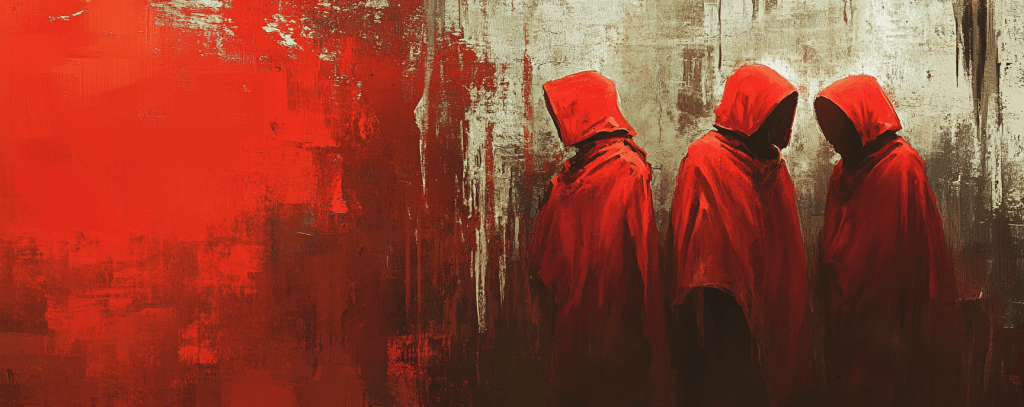
The iconic red cloaks and white bonnets worn by Handmaids create a striking visual metaphor, instantly recognizable and powerfully symbolic of oppressive conformity and erasure of individuality. The careful visual coding—blue for Wives, green for Marthas, gray for the working class—provides visual storytelling shortcuts for audiences to instantly grasp social hierarchies without exposition-heavy dialogue.
Framing Oppression Visually
Directors frequently frame shots through tight, oppressive compositions, often emphasizing characters’ lack of space or freedom visually. Close-ups on faces behind windows, fences, or doors underscore themes of isolation, captivity, and powerlessness.
Writers crafting dystopia can learn from the effective synergy between script and visual choices: showing, not telling, enhances audience empathy and visceral engagement with oppressive realities.
Balancing Brutality and Hope
Dystopian storytelling risks becoming emotionally overwhelming or unrelentingly bleak, alienating audiences rather than engaging them. The adaptation carefully balances graphic, harrowing portrayals of violence and oppression with glimmers of hope, resistance, and human dignity.
Nuanced Portrayals of Violence
Though notoriously difficult to watch, scenes of brutality are presented deliberately, neither gratuitously nor sensationally. The violence always serves narrative and thematic purposes, illustrating power dynamics and the personal cost of rebellion or complicity. This careful treatment prevents desensitization and continually shocks the audience into emotional awareness.
Infusing Narrative with Hope
Crucially, writers give audiences emotional relief by showing meaningful moments of resistance, kindness, and solidarity. June’s relationships with fellow Handmaids and Marthas, and the underground resistance network, provide brief respites of warmth and humanity amid overwhelming darkness. These moments make the series emotionally sustainable, showing audiences hope can persist even in despair.
Adapting Structure for Serialized Television
Adapting dystopian fiction to serialized television requires structural adjustments that differ significantly from novel writing. The episodic and seasonal format of television enables deeper exploration of character arcs, societal backstory, and thematic complexity.
Episodic Structure and Pacing
Screenwriters skillfully distribute plot twists, revelations, and character turning points across episodes and seasons, pacing the narrative to maintain suspense and emotional engagement. Each episode functions as a coherent story within the larger narrative framework, while cliffhangers and unresolved storylines keep viewers invested.
This adaptation choice differs substantially from the novel, which is inherently constrained by its format. Modern viewers, accustomed to binge-watching, demand sustained narrative tension and evolving character journeys that serialized storytelling can provide.
Using Flashbacks and Backstory
The extensive use of flashbacks—another significant adaptation choice—enriches the storytelling by providing contrast between pre-Gilead normalcy and post-collapse horror. Flashbacks deepen characters’ motivations, reinforce emotional stakes, and illustrate the gradual erosion of freedoms that resonate strongly with contemporary anxieties.
Cultural Impact and Real-World Resonance
Finally, The Handmaid’s Tale owes much of its modern relevance to cultural timing. Premiering during a period of heightened political polarization and increasing anxiety about women’s rights globally, the series tapped into broader cultural conversations.
Connecting with Modern Movements
The series became a cultural touchstone, with imagery from the show becoming iconic in real-world protests related to women’s rights and reproductive freedoms. Writers aiming for cultural resonance should recognize the value of connecting fictional narratives with real-world social movements and anxieties.
Lessons for Screenwriters
For screenwriters, the lasting impact of the series demonstrates that dystopian fiction thrives when it intersects authentically with genuine fears and issues confronting contemporary society. The adaptation’s writers remained mindful that dystopia is not merely escapist entertainment—it is a mirror held up to our collective anxieties and potential futures.
Final Thoughts: Crafting Relevant Dystopia
The success of The Handmaid’s Tale adaptation offers screenwriters a vital lesson: dystopia remains compelling not because it is futuristic fantasy, but precisely because it feels frighteningly possible. By integrating nuanced character development, sophisticated visual storytelling, balanced emotional content, serialized structure, and authentic cultural resonance, screenwriters can craft dystopian narratives that profoundly resonate with modern audiences.
The Handmaid’s Tale not only succeeds as entertainment; it achieves something more ambitious—sparking conversations, challenging assumptions, and remaining emotionally and culturally relevant long after the credits roll. For screenwriters and storytellers alike, there could hardly be a higher aspiration.
✍️ Whether you’re mastering the art of dialogue, structure, or character development, the power of AI can be a game-changer in your writing journey. My Free Ebook, ‘AI for Authors’ delves into how AI-powered prompts can provide a unique edge to your storytelling process. If you’re intrigued by the prospect of supercharging your fiction skills, download your free copy today and explore new horizons in creative writing.
 A.I. in Screen Trade