Quentin Tarantino’s screenplays have long fascinated, shocked, and inspired audiences and critics alike. Renowned for his distinct dialogue, non-linear storytelling, and explosive character dynamics, Tarantino’s most controversial yet critically acclaimed signature remains his poetic use of violence. Far from gratuitous, the violence in his scripts serves narrative depth, character exploration, and thematic resonance, creating its own complex form of cinematic poetry.
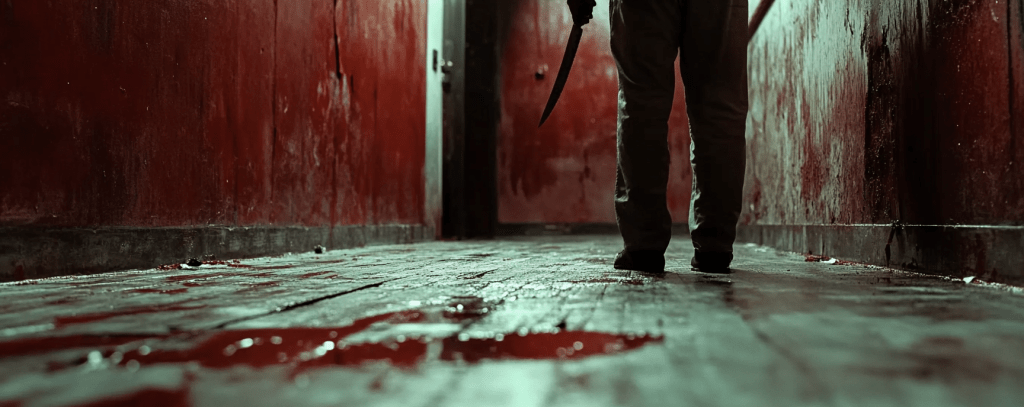
In this article, we’ll delve into how Quentin Tarantino scripts violence not merely as spectacle, but as a profound and symbolic narrative element. We’ll dissect his approach, examining what makes his violent scenes both artistically compelling and dramatically essential.
Violence as Dialogue: Communication through Conflict
Tarantino’s films often showcase violence as an alternative form of dialogue, a visceral means of expressing power dynamics, character motivations, and inner truths. Where other screenwriters use physical conflict primarily as spectacle or climax, Tarantino embeds meaning within each violent action. Consider the interrogation scene in Reservoir Dogs, where Mr. Blonde’s infamous ear-cutting sequence unfolds with startling brutality. This violence isn’t arbitrary; it communicates Mr. Blonde’s twisted moral compass, establishing a chilling power dynamic between captor and captive.
In Pulp Fiction, the accidental shooting of Marvin by Vincent Vega doesn’t just shock—it speaks volumes about Vincent’s careless detachment and the absurdity of random violence. Thus, violence becomes a nuanced layer of storytelling, functioning much like dialogue—filled with subtext, irony, and dark humor.
Screenwriters can learn from Tarantino’s approach by using violent moments to enrich character arcs or underscore thematic elements, rather than simply propelling action forward.
Rhythm and Tempo: The Musicality of Violence
One defining characteristic of Tarantino’s violence is its rhythmic quality. His scripts choreograph violence as meticulously as dance sequences, using rhythm, pacing, and timing to build tension and release. In Kill Bill: Vol. 1, the Bride’s legendary showdown with the Crazy 88 is not only hyper-stylized but is paced like a symphony, featuring slow crescendos, rapid bursts, and deliberate pauses.
This rhythm also applies to dialogue surrounding violence. Conversations preceding violent acts are often elongated, mundane, or humorous, creating contrast with the sudden eruption of brutality. For example, in Inglourious Basterds, the tavern scene steadily builds tension through deceptively calm dialogue and carefully measured pacing before exploding into swift, chaotic violence.
Screenwriters studying Tarantino can incorporate rhythmic elements—such as varying sentence length, tempo, and tension—to maximize emotional impact, turning violent sequences into dramatic punctuation marks within the narrative.
Symbolism and Metaphor: Violence Beyond Literalism
Tarantino’s violence frequently operates on metaphorical and symbolic levels, reflecting broader themes like revenge, redemption, or moral ambiguity. His violent scenes aren’t just acts of aggression; they’re visual metaphors that deepen narrative resonance. In Django Unchained, violence symbolizes historical trauma and collective vengeance, portraying the brutality of slavery and the catharsis of revenge through exaggerated, visceral imagery.
Similarly, The Hateful Eight explores violence as an allegory for America’s persistent racial tension, suspicion, and mistrust, with brutality becoming the externalization of hidden societal conflicts. Each violent act or confrontation is embedded with layers of historical and thematic meaning, forcing audiences to confront deeper moral questions.
For screenwriters, approaching violence symbolically rather than literally can offer richer, more meaningful narratives. Violence becomes not just spectacle, but poetry, echoing central ideas that resonate long after the credits roll.
Stylized Realism: Balancing Authenticity with Hyperbole
While Tarantino’s violence often feels exaggerated or stylized, it paradoxically remains emotionally authentic. This balance—hyperbole paired with authenticity—is essential to the poetic quality of his scripts. The bloodbath in the finale of Once Upon a Time in Hollywood is both absurdly exaggerated and deeply cathartic, providing an alternate history where justice feels poetically satisfying.
Screenwriters can achieve this balance by grounding stylized elements in authentic emotions and believable character motivations. The audience will accept heightened violence if it emotionally aligns with character objectives or thematic integrity. Violence, when grounded in character truths, can speak authentically even in exaggerated scenarios.
Character Arcs and Transformation Through Violence
Violence in Tarantino’s scripts often acts as a catalyst for profound character transformation. Characters frequently enter scenes one way and emerge permanently altered after experiencing or inflicting violence. Consider Jules Winnfield in Pulp Fiction: his near-death encounter and subsequent act of violence lead directly to an existential awakening, transforming his trajectory forever.
Likewise, Shosanna in Inglourious Basterds evolves through traumatic violence inflicted upon her family, emerging as a symbol of defiant vengeance. Violence doesn’t merely shape her—it defines her.
Screenwriters looking to emulate Tarantino’s approach should ensure violent acts directly impact characters, triggering genuine change or revelation. Violence thus becomes a narrative turning point, integral to character development rather than mere spectacle.
Ethical Ambiguity: Challenging the Audience’s Morality
Another poetic dimension of Tarantino’s violence is its deliberate ethical ambiguity. His screenplays rarely deliver straightforward moral judgments. Instead, they invite audiences to question their own responses. Is cheering for Django’s violent retribution justified? Is the catharsis experienced during the violent resolution in Inglourious Basterds ethically defensible?
By presenting violence without clear moral framing, Tarantino compels audiences to grapple with discomfort, introspection, and debate. Screenwriters interested in engaging audiences deeply can embrace ethical complexity, refusing to simplify morality and instead letting violence provoke thoughtful reflection.
Influences and Homages: Intertextuality in Violent Expression
Tarantino openly references cinema history in his violent scenes, paying homage to Spaghetti Westerns, exploitation films, and Asian martial arts cinema. His violence is often intertextual, borrowing visually and narratively from filmmakers like Sergio Leone, Sam Peckinpah, and John Woo. These cinematic homages provide additional layers of meaning, creating dialogues between Tarantino’s scripts and cinematic history.
The iconic ear-slicing in Reservoir Dogs echoes Peckinpah’s exploration of brutality in Straw Dogs, while Kill Bill’s sword fights consciously recall classic samurai films by Akira Kurosawa. For screenwriters, recognizing and thoughtfully incorporating influences can enrich their own work, adding depth and cultural resonance.
Violence as Meta-Narrative Commentary
Finally, Tarantino uses violence to comment explicitly on storytelling itself, often employing meta-narratives. Films like Death Proof and Once Upon a Time in Hollywood actively deconstruct cinematic violence, questioning audiences’ attraction to brutality. By foregrounding violence within a critical, self-aware framework, Tarantino invites audiences to recognize their complicity in consuming violent media.
Screenwriters can similarly employ violence as meta-commentary, not only enhancing narrative layers but also prompting audiences to reflect critically on violence’s pervasive role in entertainment.
Conclusion: The Poetic Power of Violence
Quentin Tarantino’s scripts illustrate that violence, when handled thoughtfully, can be an essential and poetic storytelling device. His use of violence as dialogue, rhythmic composition, symbolic metaphor, character catalyst, ethically ambiguous provocation, intertextual homage, and meta-narrative critique elevates violence beyond mere sensationalism.
For screenwriters and storytellers, Tarantino’s scripts provide a powerful blueprint: violence should always be purposeful, emotionally authentic, and integrated into the thematic heart of the narrative. Far from simple spectacle, cinematic violence can speak profoundly, resonating as deeply as poetry itself.
✍️ Whether you’re mastering the art of dialogue, structure, or character development, the power of AI can be a game-changer in your writing journey. My Free Ebook, ‘AI for Authors’ delves into how AI-powered prompts can provide a unique edge to your storytelling process. If you’re intrigued by the prospect of supercharging your fiction skills, download your free copy today and explore new horizons in creative writing.
 A.I. in Screen Trade