The Western genre has long been associated with rugged landscapes, lone gunslingers, and moral battles between good and evil. But in recent decades, the genre has evolved into something darker, more introspective, and more unsettling. One of the most compelling examples of this evolution is No Country for Old Men (2007), written and directed by Joel and Ethan Coen, adapted from Cormac McCarthy’s novel of the same name.
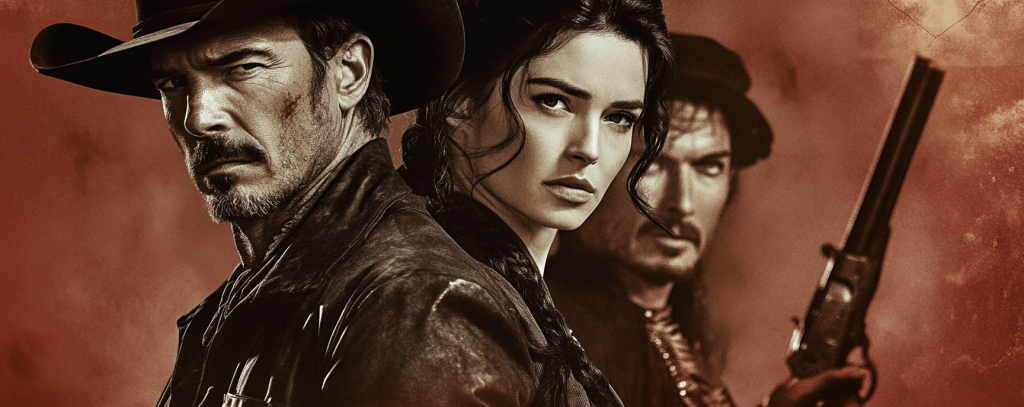
This film (and its source material) serves as a masterclass in modern Western storytelling—subverting tropes, embracing existential themes, and using lean, precise writing to build tension. Whether you’re writing for the screen or crafting a novel, No Country for Old Men offers valuable lessons on structure, character, and tone that can elevate your own modern Western narratives.
1. Stripping Down Dialogue: Less is More
One of the defining characteristics of McCarthy’s writing—and by extension, the Coen brothers’ adaptation—is its economy of dialogue. No Country for Old Men resists over-explanation, opting instead for sparse, clipped exchanges that reveal character without exposition.
Consider Anton Chigurh’s infamous coin-toss scene. The tension doesn’t come from long-winded speeches or obvious threats. Instead, it stems from the precise, almost mundane back-and-forth between Chigurh and the gas station clerk. The threat is implied, not spoken outright, making the scene even more chilling.
For writers, this is a crucial lesson: resist the temptation to over-explain. Trust in subtext. Allow your audience to read between the lines. A character’s silence or hesitation can speak volumes.
2. Subverting the Classic Western Hero
Traditional Westerns revolve around clear-cut heroes—often lawmen or outlaws with a strong moral code. No Country for Old Men throws this convention out the window. Its supposed protagonist, Llewelyn Moss, isn’t an archetypal cowboy hero; he’s an ordinary man who stumbles upon a briefcase full of drug money and makes a desperate, ultimately doomed attempt to escape with it.
Meanwhile, Sheriff Ed Tom Bell, who might have been the moral center of a classic Western, is instead a tired, aging lawman grappling with his own sense of helplessness in an increasingly brutal world.
For modern Western writers, this presents an opportunity: rather than relying on the classic hero-villain dynamic, consider exploring flawed, morally ambiguous characters who reflect the complexities of contemporary life.
3. Embracing Existential Themes
Unlike the clear moral narratives of traditional Westerns, No Country for Old Men leans into existentialism. Fate, chance, and the randomness of violence dominate the story. Anton Chigurh, with his philosophical musings and deterministic mindset, acts as a force of nature rather than a traditional villain.
The film’s ending—abrupt, unresolved, and deeply unsettling—reinforces this existential outlook. Sheriff Bell’s final monologue isn’t about justice or closure, but about his dreams and the inevitability of time catching up to all men.
This lesson is vital for writers: modern Westerns don’t need to deliver neat resolutions. Instead, they can explore ambiguity, forcing audiences to confront uncomfortable truths about fate, morality, and mortality.
4. Using Landscape as a Character
The setting of No Country for Old Men—the barren, sun-scorched plains of Texas—plays as much of a role as any human character. The vast emptiness serves to heighten tension, emphasizing the isolation of the characters and the stark brutality of their choices.
This is a crucial technique for modern Western writers. The landscape should not merely be a backdrop; it should reflect and intensify the themes of the story. A desolate highway, an abandoned gas station, or a silent, wind-swept desert can speak to themes of loneliness, lawlessness, and the inevitability of death.
When writing a modern Western, ask yourself: How does the setting reinforce the tone and themes of the story? How does it shape the characters’ decisions?
5. Writing Tension Through Action, Not Words
No Country for Old Men is a masterclass in suspenseful storytelling without relying on excessive action or dialogue. One of the most gripping sequences—Moss being pursued through the desert at night—works because of its careful buildup, its use of shadows, silence, and breathless pacing.
Tension in modern Westerns doesn’t always require shootouts or over-the-top violence. Instead, slow-burn suspense, drawn-out chases, and the constant threat of unseen danger can be just as effective.
For writers, this means thinking about how to stretch moments of suspense. Instead of jumping straight into a confrontation, build up to it. Let the reader or viewer feel the weight of anticipation.
6. Crafting an Unconventional Villain
Anton Chigurh is one of the most memorable antagonists in modern cinema, largely because he defies easy categorization. He’s not a gunslinger, a sheriff, or a vengeful outlaw—he’s something much more terrifying: a relentless, enigmatic force of chaos.
Chigurh operates by his own twisted logic, making his character all the more unsettling. His coin flips symbolize a belief in fate and chance, stripping away personal accountability.
For writers looking to craft compelling villains, Chigurh offers a template:
- Give your antagonist a unique, unwavering philosophy.
- Make their menace understated rather than overt.
- Allow them to operate by a set of rules that seem logical (to them) but terrifying to others.
A villain like Chigurh lingers in the audience’s mind long after the story ends.
7. The Power of an Unconventional Ending
In a traditional Western, the story would conclude with justice served, the villain defeated, and the hero victorious. No Country for Old Men shatters this expectation. The final confrontation between Chigurh and Moss doesn’t even happen on-screen. Instead, the film subverts expectations, leaving Moss’s fate off-camera and closing on Sheriff Bell’s quiet resignation.
This is a powerful lesson: modern Westerns don’t need to wrap everything up neatly. Sometimes, an unresolved ending—one that leaves the audience unsettled and thoughtful—can be far more impactful.
For writers, consider whether your story needs a conventional resolution, or if leaving certain threads open-ended might better serve the narrative’s themes.
Final Thoughts: Redefining the Western for a New Generation
No Country for Old Men redefined what a Western could be. By stripping away traditional tropes, embracing moral ambiguity, and focusing on character-driven tension, it crafted a story that felt both timeless and unsettlingly modern.
For today’s writers—whether in screenwriting or fiction—there’s a lot to learn from its approach. Modern Westerns can be grim, introspective, and existential. They can defy audience expectations while still delivering gripping, unforgettable narratives.
If you’re writing in this genre, don’t be afraid to subvert conventions. Let your characters wrestle with fate. Use the landscape to deepen the story’s mood. And, above all, trust your audience to find meaning in what’s left unsaid.
The Western isn’t dead—it’s just evolving. And No Country for Old Men proves that the best stories are the ones that challenge everything we think we know about the genre.
✍️ Whether you’re mastering the art of dialogue, structure, or character development, the power of AI can be a game-changer in your writing journey. My Free Ebook, ‘AI for Authors’ delves into how AI-powered prompts can provide a unique edge to your storytelling process. If you’re intrigued by the prospect of supercharging your fiction skills, download your free copy today and explore new horizons in creative writing.
 A.I. in Screen Trade