Taika Waititi’s Jojo Rabbit (2019) is a masterclass in balancing comedy and tragedy within a screenplay. Adapted from Christine Leunens’ novel Caging Skies, the film takes an audacious approach to one of history’s darkest periods—the final days of Nazi Germany—through the eyes of a 10-year-old boy. By blending sharp satire with deeply emotional moments, Jojo Rabbit demonstrates how screenwriters can use humor not to undermine tragedy, but to heighten its impact.
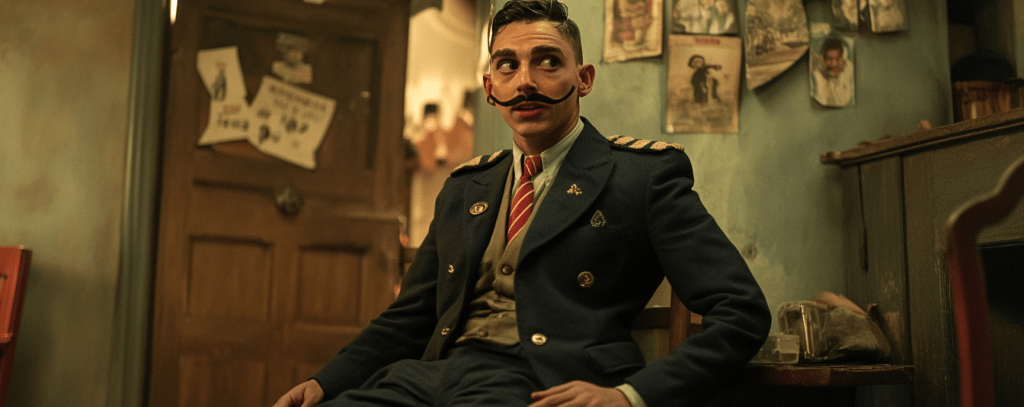
In this article, we’ll examine how Waititi’s script deftly navigates tone, uses character perspectives to bridge comedy and drama, and employs structure to sustain emotional weight while keeping the humor effective.
Finding Humor in the Absurd: The Satirical Approach
One of the most striking choices in Jojo Rabbit is its satirical portrayal of Nazi Germany, particularly through the character of Adolf, Jojo’s imaginary friend, played by Waititi himself. The film’s comedy is largely derived from absurdity—presenting the Third Reich through the naive lens of a child who idolizes Hitler. The exaggerated, buffoonish depictions of Nazi officers and Hitler Youth training camp sequences establish the world’s comedic tone early on.
This approach works because it mirrors the way a 10-year-old might interpret war—through a simplified, almost cartoonish understanding of heroism and national pride. By exaggerating these figures to the point of ridiculousness, the film exposes the irrationality and absurdity of their ideology.
For screenwriters, this highlights a key technique: using satire to deconstruct serious topics. The humor never minimizes the real horror of Nazi Germany but instead mocks the perpetrators, making them appear foolish rather than powerful. The script ensures that the satire is always punching up—ridiculing oppressors rather than making light of suffering.
Shifting Tone: When to Let Tragedy Take Center Stage
While Jojo Rabbit establishes itself as a comedy, it does not shy away from harsh realities. The film’s most devastating moment—Jojo discovering his mother’s hanging body—serves as a pivotal shift in tone. Up until that point, Jojo’s world has been largely insulated from direct violence. His understanding of war has been shaped by propaganda and the over-the-top caricatures around him. But this moment is stark and unflinching. There’s no comedic undercurrent, no witty retort to soften the impact.
Waititi’s screenplay allows this moment to breathe. Instead of showing the act itself, the audience experiences the realization through Jojo’s perspective. The choice to focus on his mother’s distinctive shoes, first introduced earlier in the film through lighthearted moments, makes the reveal even more gut-wrenching.
This moment exemplifies how a screenplay can handle tonal shifts effectively. Comedy and tragedy are not mutually exclusive; in fact, humor can make sorrow hit even harder by lulling the audience into a sense of comfort before pulling it away. The contrast between lighthearted scenes and devastating moments mirrors the unpredictability of real-life emotions, making the tragedy feel even more profound.
Character Dynamics: The Role of Perspective in Balancing Tone
Much of Jojo Rabbit’s tonal balance comes from character interactions, particularly between Jojo and Elsa, the Jewish girl hiding in his home. Their relationship begins with hostility—Jojo sees her as the monster Nazi propaganda has painted Jewish people to be. However, as the film progresses, their dynamic shifts, becoming the heart of the story.
Elsa serves as the film’s emotional anchor. While Jojo’s journey is framed through comedy, Elsa’s reality is never played for laughs. The script ensures that she is never the subject of ridicule; instead, humor often comes from Jojo’s misguided beliefs and how Elsa outsmarts him. Their conversations range from comedic (Jojo’s ridiculous questions about Jewish people) to deeply moving (Jojo forging a letter from Elsa’s deceased boyfriend).
This dynamic is crucial because it prevents the film from trivializing its historical context. Elsa’s perspective reminds both Jojo and the audience of the true stakes. When writing a screenplay that blends tones, it’s essential to establish which characters ground the story emotionally and which ones provide comedic contrast.
Structuring Comedy and Drama for Maximum Impact
Jojo Rabbit’s screenplay follows a three-act structure that allows comedy and tragedy to coexist without feeling disjointed:
- Act One: Establishing the Absurdity
- The film introduces Jojo’s world through humor—his idolization of Hitler, his enthusiasm for the Hitler Youth, and his blind acceptance of propaganda.
- The satire is dominant, setting up the exaggerated characters and comedic tone.
- Act Two: Emotional Complexity Emerges
- Jojo discovers Elsa, introducing a more serious undercurrent.
- The comedic elements remain, but the humor begins to shift. Instead of mocking Nazis in general, the comedy often stems from Jojo’s misunderstandings and growth.
- Moments of sincerity, such as Jojo reading Elsa fake letters, create emotional depth.
- Act Three: The Reality of War Takes Over
- Jojo’s mother’s death acts as the turning point where humor takes a backseat to raw emotion.
- The final act, including the fall of Nazi Germany and Jojo’s ultimate rejection of his imaginary Hitler, is largely driven by character growth rather than satire.
- The film ends on a bittersweet note—Jojo and Elsa’s uncertain future is met not with despair, but with a quiet, hopeful dance.
This structure ensures that humor never undermines tragedy but instead works in tandem with it. By gradually shifting the balance as the story progresses, the audience is eased from laughter into emotional weight without feeling jarred.
Lessons for Screenwriters: How to Balance Comedy and Tragedy
Waititi’s screenplay for Jojo Rabbit provides valuable lessons for writers looking to blend humor and heartbreak in their own work:
- Humor can make heavy themes more accessible, but it should never trivialize real suffering.
- The laughter should come at the expense of oppressors, not victims.
- When it’s time for an emotional gut-punch, commit to it fully.
- Avoid immediately undercutting sorrow with a joke—let the moment have weight.
- Have characters who embody each side—those who deliver comedy and those who ground the drama.
- Ensure that humor doesn’t compromise a character’s emotional integrity.
- Early humor can set the stage for later emotional impact.
- Gradually shifting the ratio of comedy to drama helps maintain cohesion.
Conclusion: Why Jojo Rabbit Works So Well
Blending comedy and tragedy in screenwriting is no easy feat, but Jojo Rabbit serves as a shining example of how to do it effectively. Through its satirical approach, well-timed tonal shifts, and carefully constructed character dynamics, the film delivers a story that is both hilarious and heartbreaking.
By embracing the absurdity of war from a child’s perspective while never losing sight of its horror, Waititi’s screenplay achieves a rare balance—one that makes us laugh while reminding us why we should never forget the realities of history.
For screenwriters, Jojo Rabbit is a testament to the power of contrast. When handled with care, humor and tragedy don’t cancel each other out; instead, they amplify one another, making the story’s emotional core all the more resonant.
✍️ Whether you’re mastering the art of dialogue, structure, or character development, the power of AI can be a game-changer in your writing journey. My Free Ebook, ‘AI for Authors’ delves into how AI-powered prompts can provide a unique edge to your storytelling process. If you’re intrigued by the prospect of supercharging your fiction skills, download your free copy today and explore new horizons in creative writing.
 A.I. in Screen Trade