Cinema is a fusion of sight and sound, but some films elevate the role of sound to a storytelling force as potent as dialogue or visuals. Music-driven films—where the soundtrack, score, or diegetic music play a central role in the narrative—demand a unique approach to screenwriting. Damien Chazelle’s Whiplash (2014) is a masterclass in this kind of storytelling. The film, which follows an ambitious jazz drummer pushed to his limits by a ruthless instructor, uses music not just as background but as the pulse of the story itself.
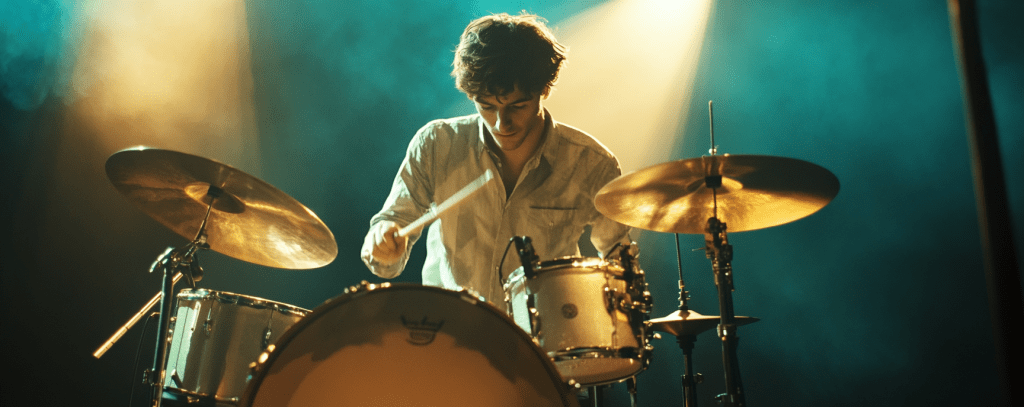
Writing for music-driven films like Whiplash requires more than just a keen ear—it demands an understanding of how sound and rhythm shape emotion, structure, and character. Let’s explore how screenwriters can craft compelling narratives where music becomes an active participant in the storytelling process.
1. Music as a Character
In Whiplash, music is not just part of the setting; it is a driving force that shapes the protagonist, Andrew Neiman. The film treats jazz—specifically the titular piece “Whiplash” and “Caravan”—as more than just songs. These pieces are obstacles, goals, battlegrounds, and emotional barometers for Andrew’s journey.
For screenwriters, this means approaching music with the same depth as a human character. Just as antagonists push protagonists toward transformation, music in Whiplash acts as an ever-present challenge. When writing a music-driven film, consider:
- How does music influence the protagonist’s desires, fears, and conflicts?
- Can specific compositions or musical motifs symbolize emotional shifts in the story?
- Does the protagonist have a relationship with music that evolves over time?
By personifying music, writers can give it weight beyond ambiance, allowing it to shape the story’s stakes and character arcs.
2. Structuring a Story Around Rhythm
Music-driven films often have a built-in rhythm to their storytelling. Whiplash mirrors the structure of a musical composition, with crescendos of tension, syncopated surprises, and climactic payoffs that feel almost symphonic.
The film’s final sequence—where Andrew defies his instructor Terence Fletcher and delivers a breathtaking drum solo—is not just a resolution in narrative terms; it is a musical climax. Chazelle’s screenplay reflects this rhythm by building tension in waves, allowing moments of quiet before unleashing explosive conflict.
Screenwriters can incorporate musical structure into their scripts by:
- Using the rise and fall of tension like musical dynamics (soft moments before explosive scenes).
- Pacing scenes to mirror musical structures (verse-chorus-bridge dynamics).
- Creating payoffs that feel like the resolution of a symphony.
By thinking of a screenplay as a composition, writers can craft a narrative that is as rhythmically compelling as the music that drives it.
3. Writing the Sound on the Page
One of the biggest challenges in music-driven films is conveying sound through a silent medium—the screenplay. Since scripts are primarily visual, how does a writer capture the energy, intensity, and emotion of music on the page?
Chazelle’s script for Whiplash is a fantastic example of this. He uses short, punchy sentences to replicate the rapid-fire intensity of drumming sequences. His descriptions are visceral:
“Andrew’s hands, gripping drumsticks, CLENCH TIGHTER. Sweat beads. Arms tense. The sticks seem to POUND the snare on their own now, moving faster and faster and faster…”
The best ways to bring sound to life in a script include:
- Using specific, active language to describe music’s effect on characters and the environment.
- Varying sentence length to mimic musical pacing—short bursts for fast beats, longer descriptions for swelling moments.
- Utilizing onomatopoeia and rhythm in prose to immerse the reader in the musical world.
Screenwriters should ensure the music’s presence is felt even in the silent format of a screenplay, making the reader hear the film as they read.
4. Character Development Through Performance
In music-driven films, performances often serve as key emotional beats. In Whiplash, Andrew’s drumming is not just a skill—it is the vehicle for his obsession, his suffering, and his ultimate triumph. Every performance scene deepens his character arc, showing his evolution through physical exhaustion, pain, and perseverance.
When writing performance scenes, consider:
- How does the character’s relationship with music change between performances?
- What emotions should the audience experience through the music?
- Can the character’s body language, mistakes, or mastery of music reflect their inner journey?
By making musical performance a storytelling tool rather than a mere showcase of talent, writers can create emotionally charged moments that define the film.
5. Conflict and Music as an Arena
One of the reasons Whiplash is so compelling is that it treats musical performance as an arena of combat. Terence Fletcher’s brutal teaching methods turn jazz into a battlefield, where every missed note or failed tempo is a sign of weakness.
This approach turns a practice room into a war zone, making the film as intense as any sports drama or action thriller. Screenwriters crafting music-driven films can learn from this by:
- Using music as a source of external and internal conflict.
- Treating practice and performance spaces as arenas where characters prove themselves.
- Raising the stakes of failure—missing a note shouldn’t just be a mistake, it should be catastrophic for the character’s goals.
By making music a high-stakes endeavor, writers can craft scenes that feel as exhilarating as a climactic fight sequence.
6. The Sound of Silence
While music is the heartbeat of films like Whiplash, silence is just as crucial. Some of the most powerful moments in the film come not from drumming but from its absence—the stillness before an explosion of sound, the hush of an audience before a performance, the lingering silence after a mistake.
Screenwriters should embrace silence as a storytelling tool by:
- Using it to build tension before major musical moments.
- Letting characters react to silence, revealing emotions through body language.
- Creating contrast between sound and silence to enhance impact.
Silence, when used strategically, can make the return of music even more powerful.
Conclusion: Writing with Your Ears
Writing a music-driven film is an exercise in listening. It’s about hearing not just the notes of a composition but the emotions, struggles, and triumphs embedded in every beat. Whiplash succeeds because it treats music as more than just a backdrop—it is the story itself, driving character, structure, and conflict.
For screenwriters tackling similar projects, the key is to think musically, write rhythmically, and let sound shape the narrative. Whether it’s jazz, rock, or orchestral scores, music-driven films thrive when their scripts sing just as powerfully as their soundtracks.
So next time you write, don’t just see the story—listen to it.
✍️ Whether you’re mastering the art of dialogue, structure, or character development, the power of AI can be a game-changer in your writing journey. My Free Ebook, ‘AI for Authors’ delves into how AI-powered prompts can provide a unique edge to your storytelling process. If you’re intrigued by the prospect of supercharging your fiction skills, download your free copy today and explore new horizons in creative writing.
 A.I. in Screen Trade