The AI Revolution Hits Tinseltown
The entertainment industry is witnessing a seismic shift as artificial intelligence moves from science fiction plots to behind-the-scenes reality. Recent developments across multiple sectors of Hollywood demonstrate how AI is rapidly transforming everything from high-level executive decisions to the nuts and bolts of animation and film production. Let’s explore how this technological revolution is reshaping the entertainment landscape.
AGBO’s Bold Move: Bringing AI Expertise to the Executive Suite
In a significant development that signals Hollywood’s serious commitment to AI integration, AGBO—the production powerhouse founded by Joe and Anthony Russo—has taken a pioneering step by appointing Dr. Dominic Hughes as their Chief Scientific Officer. This move isn’t just another executive hire; it represents a fundamental shift in how major production companies view the role of AI in creative processes.
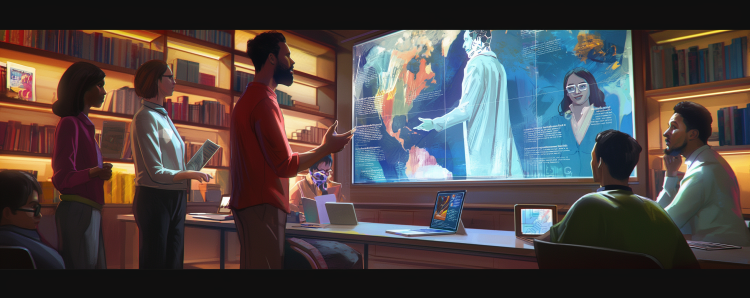
Dr. Hughes brings an impressive background to this groundbreaking position. As an AI and machine learning expert who previously co-founded Swell (a personalized audio news app later acquired by Apple) and contributed to Apple News’s AI and language models, Hughes possesses the perfect blend of technical expertise and media industry experience. His academic credentials, including a Ph.D. from Oxford University and a position as a visiting scholar at UC Berkeley, add further weight to AGBO’s AI initiatives.
What makes this appointment particularly interesting is AGBO’s stated approach to AI integration. Rather than viewing AI as a replacement for human creativity, AGBO’s Chief Creative Officer Angela Russo-Otstot emphasizes their commitment to ensuring that AI technology is developed by creatives, for creatives. This “creative-centric” approach could serve as a model for other studios grappling with AI integration.
The Asian Market: A Glimpse into AI’s Cost-Cutting Potential
While AGBO focuses on high-level AI integration, developments in the Asian film market provide concrete examples of AI’s transformative potential in production costs. At TIFFCOM, industry leaders shared compelling insights into how AI is reshaping the economics of filmmaking.
Perhaps the most striking example comes from South Korea, where Kevin D.C. Chang, AI director and CEO of Metavision Co., demonstrated AI’s dramatic impact on production budgets. Chang’s film “Cinque Terra” serves as a case study in AI-driven cost reduction, with the budget plummeting from $4.1 million to $400,000—a 90% reduction achieved by leveraging AI for computer-generated production instead of traditional location shooting.
The Investment Landscape: AI as a Game-Changer
This dramatic reduction in production costs isn’t just affecting how movies are made—it’s changing who can invest in them. Nicholas Aaron Khoo, chair of N Prime Partners Capital in Singapore, points out that AI’s impact on production costs and timelines is making film investment more accessible than ever. Projects that once required major studio backing can now attract smaller investors, with some entering the market with investments as modest as $5,000 to $15,000.
However, this democratization of film investment comes with its own challenges. Khoo warns that the rapidly evolving nature of AI technology makes due diligence particularly challenging, especially when assessing competitive advantages in an increasingly crowded market.
Government Support and International Collaboration
The Japanese government’s involvement through the Ministry of Economy, Trade and Industry’s GENIAC program demonstrates how seriously some countries are taking AI’s role in content creation. This initiative, aimed at promoting AI use in the industry and fostering collaboration between animation and tech companies, could serve as a model for other countries looking to support their entertainment sectors.
The rise of cloud-based AI tools is also breaking down geographical barriers in film production. As Chang emphasizes, these tools enable real-time, borderless collaboration that was impossible under traditional filmmaking methods. This technological advancement could lead to more international co-productions and creative collaborations.
Labor Relations: The Animation Guild’s AI Concerns
However, not all developments in AI integration are running smoothly. The ongoing negotiations between the Animation Guild and the Alliance of Motion Picture and Television Producers (AMPTP) highlight the complex labor relations issues surrounding AI adoption. The extension of contract talks to December 2, primarily focused on AI-related issues, underscores the serious concerns animation professionals have about their future in an AI-enhanced industry.
The Animation Guild, representing approximately 5,000 artists, writers, and technicians, is pushing for stronger protections against AI’s potential impact on jobs. While the existing IATSE Basic Agreement includes some AI-related provisions—such as consultation rights and protection against outsourcing to non-union labor—many union members feel these safeguards are insufficient.
The Way Forward: Balancing Innovation and Tradition
The entertainment industry stands at a crossroads. While companies like AGBO are embracing AI with a focus on enhancing rather than replacing human creativity, others are using it to dramatically reduce costs and democratize production. Meanwhile, labor organizations are fighting to ensure that AI integration doesn’t come at the expense of workers’ livelihoods.
As moderator Andrijana Cvetkovikj noted at TIFFCOM, the industry needs to find a balance between AI-driven innovation and the preservation of traditional filmmaking values and artists’ roles. This balance will be crucial as Hollywood continues to navigate the AI revolution.
Conclusion: A Transformative Moment
The integration of AI in Hollywood is no longer a future prospect—it’s happening now, from executive suites to animation studios. The appointment of AI experts like Dr. Hughes at major production companies, the dramatic cost reductions demonstrated in Asian markets, and the ongoing labor negotiations all point to an industry in transformation.
As we move forward, the key challenge will be harnessing AI’s potential while preserving the human creativity that has always been at the heart of storytelling. The success of this integration will depend on finding the right balance between technological innovation and artistic tradition, between cost efficiency and job protection, and between automated processes and human creativity.
The next few years will be crucial in determining how this balance is struck. With companies like AGBO leading the way in creative-centric AI development, and unions fighting for worker protections, the stage is set for a fascinating period of evolution in the entertainment industry. One thing is certain: AI is here to stay in Hollywood, and its influence will only grow stronger in the years to come.
✍️ Whether you’re mastering the art of dialogue, structure, or character development, the power of AI can be a game-changer in your writing journey. My Free Ebook, ‘AI for Authors’ delves into how AI-powered prompts can provide a unique edge to your storytelling process. If you’re intrigued by the prospect of supercharging your fiction skills, download your free copy today and explore new horizons in creative writing.
 A.I. in Screen Trade