Introduction
In the pantheon of gangster films, Abel Ferrara’s 1990 crime drama “King of New York” stands out as a pivotal work that redefined the genre for a new era. Starring Christopher Walken as drug lord Frank White, the film blends classic gangster tropes with a gritty, urban realism that would come to characterize many crime dramas of the 1990s and beyond. This article delves into the screenwriting techniques and narrative choices that make “King of New York” a seminal work in modern gangster cinema.
The Evolution of the Gangster Film
From Classic to Modern
The gangster film has been a staple of American cinema since the early days of Hollywood. Classics like “Little Caesar” (1931) and “The Public Enemy” (1931) established many of the genre’s conventions: the rise and fall of a criminal antihero, loyalty and betrayal within criminal organizations, and the allure of power and wealth.
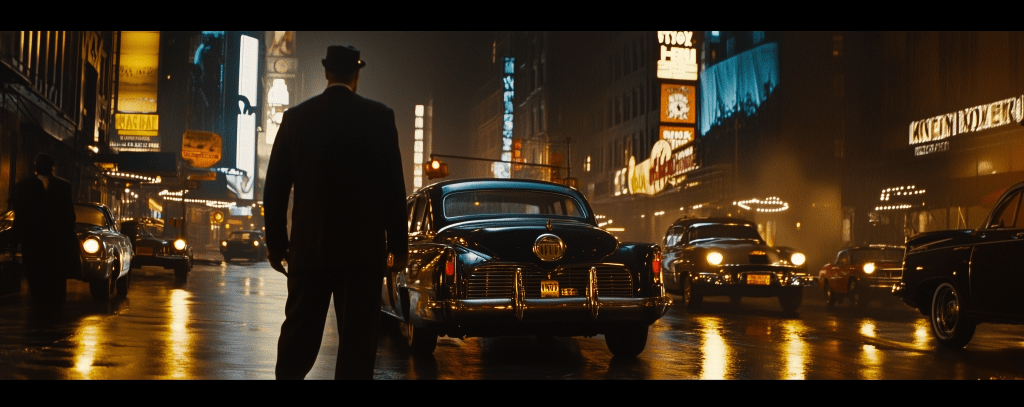
As the genre evolved, films like “The Godfather” (1972) and “Goodfellas” (1990) added layers of complexity to these themes, exploring family dynamics, cultural identity, and the dark side of the American Dream. “King of New York” emerged at a time when the genre was ripe for reinvention, incorporating elements of urban crime dramas and blaxploitation films to create something distinctly modern.
The Influence of New York City
New York City has long been a character in its own right in gangster films, from the immigrant neighborhoods of “Once Upon a Time in America” (1984) to the five boroughs of “The French Connection” (1971). “King of New York” takes this a step further, using the city’s gritty landscape and diverse population as more than just a backdrop. The film’s New York is a crucible of ambition, corruption, and violence, reflecting the social and economic realities of the late 1980s and early 1990s.
Character Development in “King of New York”
Frank White: The Antihero Reimagined
At the center of “King of New York” is Frank White, a character that both embodies and subverts gangster film archetypes. Screenwriter Nicholas St. John crafts White as a complex figure: a ruthless criminal with a Robin Hood complex, determined to rebuild the Bronx hospital that cared for him during his prison stint.
This moral ambiguity is key to the film’s narrative tension. White’s charitable ambitions blur the line between hero and villain, challenging the audience’s expectations and moral compass. The script carefully balances White’s brutal actions with moments of vulnerability and apparent altruism, creating a character that is simultaneously repulsive and magnetic.
Supporting Characters: A Tapestry of Urban Life
While Frank White dominates the narrative, the supporting characters in “King of New York” are far from one-dimensional. The script populates its world with a diverse cast that reflects the multicultural reality of New York City:
- Jimmy Jump (Laurence Fishburne): White’s volatile lieutenant, embodying the streetwise swagger of the era.
- Dennis Gilley (David Caruso): A determined cop whose obsession with bringing down White blurs ethical lines.
- Thomas Flanigan (Wesley Snipes): A young detective grappling with the moral complexities of law enforcement.
These characters, and others, serve not just as foils to White but as representatives of different facets of urban life. Their interactions and conflicts drive the narrative forward while providing commentary on race, class, and power in the city.
Narrative Structure and Pacing
The Rise and Fall Arc Reimagined
“King of New York” follows the classic gangster film structure of rise and fall, but with a twist. Frank White begins the film at his lowest point – in prison – and his “rise” is actually a return to power. This structure allows the script to hit the ground running, immersing the audience immediately in White’s world of crime and ambition.
The pacing of the script is relentless, mirroring the frenetic energy of New York City itself. Scenes of violence and criminal dealings are interspersed with quieter moments that reveal character depth, creating a rhythm that keeps the audience engaged while providing necessary breathers.
Parallel Narratives: Cops and Criminals
One of the script’s strengths is its parallel focus on both the criminal underworld and the law enforcement trying to contain it. This dual narrative creates tension and allows for a more nuanced exploration of morality and justice. As Frank White’s empire grows, we see the increasing desperation of the police force, particularly through the eyes of Dennis Gilley and Thomas Flanigan.
This structure also serves to blur the lines between law and crime, a common theme in modern gangster films. As the police become more ruthless in their pursuit of White, the distinction between cop and criminal becomes increasingly murky.
Dialogue and Subtext
The Power of Silence
While “King of New York” features its fair share of memorable lines, much of the film’s power comes from what is left unsaid. Christopher Walken’s portrayal of Frank White is marked by long silences and enigmatic expressions, leaving the audience to interpret his thoughts and motivations.
This use of subtext in the script creates an air of unpredictability and menace. White’s silence often speaks louder than words, a technique that would influence many subsequent crime dramas.
Street Vernacular and Poetic Violence
When characters do speak, the dialogue crackles with authenticity. The script captures the street vernacular of New York’s criminal underworld, with each character having a distinct voice that reflects their background and position.
Particularly notable is the poetic quality given to scenes of violence. The script elevates what could be standard action sequences into almost balletic displays of brutality, often underscored by surprisingly eloquent dialogue that contrasts sharply with the violent acts being committed.
Themes and Social Commentary
Power and Corruption
At its core, “King of New York” is an exploration of power – who has it, how they use it, and what it costs. The script delves into the corrupting influence of power on both criminals and law enforcement, suggesting that the line between the two is often thinner than we’d like to believe.
Frank White’s journey is not just about reclaiming his criminal empire, but about reshaping the city in his image. His charitable acts serve as a critique of a system that has failed its most vulnerable citizens, even as they highlight the moral bankruptcy of his methods.
Race and Class in Urban America
The film’s diverse cast allows for a nuanced exploration of race and class dynamics in New York City. Frank White’s multiracial gang and his efforts to help underprivileged communities touch on issues of racial solidarity and economic disparity that were (and remain) pressing concerns in urban America.
The script doesn’t shy away from the complexities of these issues, presenting a world where racial allegiances are often secondary to power and economic interests.
The American Dream Corrupted
Like many gangster films before it, “King of New York” offers a dark take on the American Dream. Frank White’s rise to power is a twisted version of the rags-to-riches story, highlighting the limited options available to those born into poverty and the allure of criminal life as a means of escape.
The script’s portrayal of White’s ambitions – to rebuild hospitals and “do more for the poor than all the politicians put together” – serves as a biting commentary on the failures of legitimate institutions to address social inequalities.
Visual Storytelling and Set Pieces
The City as a Character
While primarily focusing on the screenplay, it’s worth noting how the script of “King of New York” lays the groundwork for the film’s distinctive visual style. The screenplay calls for a New York City that is both glamorous and gritty, juxtaposing glittering penthouses with run-down housing projects.
This visual contrast serves the narrative by highlighting the vast economic disparities within the city and the different worlds inhabited by the characters. The script’s descriptions of locations are vivid and purposeful, each setting chosen to reveal something about the characters or the themes of the story.
Iconic Scenes and Set Pieces
Several scenes in “King of New York” have become iconic, thanks in part to their careful construction in the screenplay. The opening sequence, where Frank White is released from prison, immediately establishes his power and the loyalty of his crew. The famous subway confrontation between White and the police officers is another masterclass in building tension through setting and dialogue.
These set pieces are not just action sequences but pivotal moments that drive the narrative forward and reveal character. The script balances these high-intensity scenes with quieter, character-driven moments, creating a rhythm that keeps the audience engaged throughout.
Legacy and Influence
Impact on the Gangster Genre
“King of New York” left an indelible mark on the gangster film genre. Its gritty realism, morally ambiguous protagonist, and unflinching portrayal of urban crime set a new standard for crime dramas in the 1990s and beyond. Films like “New Jack City” (1991) and “Carlito’s Way” (1993) would follow in its footsteps, exploring similar themes of power, redemption, and the cost of the criminal lifestyle.
The film’s influence can also be seen in the rise of hip-hop crime dramas, which often draw on the visual and thematic elements established in “King of New York.” The blending of crime drama with social commentary has become a hallmark of modern gangster films, a trend that can be traced back to Ferrara and St. John’s groundbreaking work.
Cultural Impact
Beyond its influence on cinema, “King of New York” has permeated popular culture in numerous ways. The film has been referenced in hip-hop lyrics, with artists like The Notorious B.I.G. and Nas drawing inspiration from Frank White’s character. This cultural crossover speaks to the authenticity and resonance of the film’s portrayal of urban life and criminal ambition.
The enduring fascination with Frank White as a character – complex, charismatic, and ultimately tragic – has ensured the film’s place in the canon of great crime dramas. His moral ambiguity and the questions the film raises about power, justice, and urban decay continue to resonate with audiences decades after its release.
Conclusion
“King of New York” represents a pivotal moment in the evolution of the gangster film genre. Through its nuanced character development, innovative narrative structure, and unflinching exploration of urban themes, the screenplay created a template for the modern crime drama.
The film’s lasting impact is a testament to the power of bold, uncompromising storytelling. By reimagining familiar tropes and infusing them with gritty realism and social commentary, “King of New York” pushed the boundaries of what a gangster film could be. It remains a masterclass in screenwriting for the genre, demonstrating how to create complex characters, build tension, and explore weighty themes within the framework of a crime narrative.
As we continue to see new iterations and subversions of the gangster film, the influence of “King of New York” can still be felt, a reminder of the enduring power of innovative, thoughtful screenwriting in shaping cinematic genres.
✍️ Whether you’re mastering the art of dialogue, structure, or character development, the power of AI can be a game-changer in your writing journey. My Free Ebook, ‘AI for Authors’ delves into how AI-powered prompts can provide a unique edge to your storytelling process. If you’re intrigued by the prospect of supercharging your fiction skills, download your free copy today and explore new horizons in creative writing.
 A.I. in Screen Trade