Introduction
In the realm of horror cinema, few subgenres have captivated audiences and filmmakers alike quite like folk horror. At the forefront of this niche but influential category stands “The Wicker Man” (1973), a British classic that continues to inspire and unsettle viewers nearly five decades after its release. This article delves into the power of folk horror in screenwriting, using “The Wicker Man” as a prime example of how to craft a compelling narrative that taps into primal fears and cultural anxieties.
What is Folk Horror?
Before we dive into the specifics of “The Wicker Man,” it’s essential to understand what defines folk horror. This subgenre typically involves:
- Rural or isolated settings
- Ancient folklore and pagan rituals
- Clash between modernity and tradition
- Themes of sacrifice and nature worship
- A sense of “otherness” in the community
Folk horror often explores the tension between urban sensibilities and rural traditions, creating an atmosphere of unease and dread that stems from the unfamiliar and the ancient.
The Plot of “The Wicker Man”
“The Wicker Man,” directed by Robin Hardy and written by Anthony Shaffer, tells the story of Sergeant Neil Howie, a devout Christian police officer who travels to the remote Scottish island of Summerisle to investigate the disappearance of a young girl. What he discovers is a community that has rejected Christianity in favor of ancient pagan beliefs, culminating in a shocking climax that has become one of the most iconic scenes in horror cinema.
Crafting Atmosphere Through Setting
One of the most powerful tools in the folk horror screenwriter’s arsenal is the use of setting to create atmosphere. “The Wicker Man” exemplifies this brilliantly through its depiction of Summerisle.
Isolation and Otherness
The island setting immediately creates a sense of isolation for both the protagonist and the audience. This physical separation from the mainland serves as a metaphor for the cultural and ideological divide between Sergeant Howie and the islanders. Screenwriters can leverage this technique to heighten tension and create a feeling of “no escape” for their characters.
Natural Beauty vs. Hidden Darkness
The lush, picturesque landscape of Summerisle stands in stark contrast to the darkness that lurks beneath its surface. This juxtaposition of natural beauty and hidden horrors is a hallmark of folk horror. It suggests that even in the most idyllic settings, ancient and terrible things may be waiting to emerge.
Character Development and Conflict
The power of folk horror often lies in its ability to create complex, believable characters whose conflicts drive the narrative forward.
The Fish Out of Water
Sergeant Howie serves as the quintessential “fish out of water” character. His rigid Christian beliefs and law enforcement background make him an outsider on Summerisle. This character archetype is common in folk horror, allowing the audience to experience the strangeness of the setting through the protagonist’s eyes.
The Charismatic Antagonist
Lord Summerisle, played brilliantly by Christopher Lee, represents the other side of the coin. Charming, educated, and deeply committed to the old ways, he embodies the allure and danger of pagan beliefs. The conflict between Howie and Summerisle is not just one of law versus lawlessness, but of competing worldviews and moral frameworks.
The Power of Ritual and Tradition
Folk horror often draws its strength from the depiction of rituals and traditions that are both fascinating and terrifying to modern audiences.
The May Day Celebration
Throughout “The Wicker Man,” we see the inhabitants of Summerisle preparing for their May Day celebration. These preparations, from the making of masks to the rehearsal of songs, create a sense of building tension and inevitability. Screenwriters can use similar techniques to foreshadow climactic events while immersing the audience in the cultural practices of their fictional world.
The Final Sacrifice
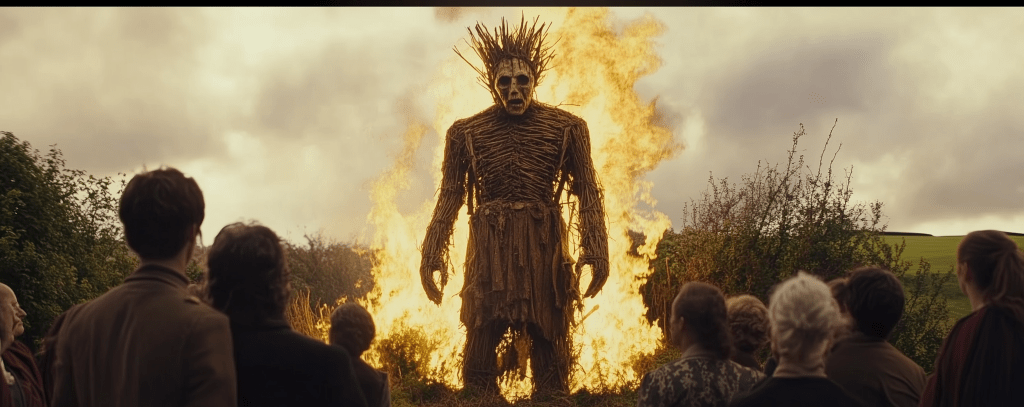
The film’s climax, in which Howie is sacrificed in the titular wicker man, is a prime example of how folk horror can shock and disturb audiences through the depiction of ancient rituals. The power of this scene lies not just in its visual impact, but in the way it forces viewers to confront the idea that beliefs and practices they find abhorrent might be considered sacred by others.
Subverting Expectations
One of the most effective techniques employed in “The Wicker Man” is the subversion of audience expectations. This approach can add depth and complexity to folk horror narratives.
The False Victim
Initially, the audience is led to believe that Rowan Morrison, the missing girl, is the victim in need of rescue. However, as the story unfolds, it becomes clear that Howie himself is the intended victim all along. This twist not only surprises viewers but also reinforces the theme of the outsider being lured into a trap.
Challenging Moral Certainties
By presenting a community that functions well under its pagan beliefs, “The Wicker Man” challenges the notion of absolute moral certainty. While the islanders’ actions are ultimately horrific, their motivations and the apparent success of their way of life create a moral ambiguity that lingers long after the film ends.
The Use of Music and Folklore
Folk horror often incorporates traditional music and folklore to enhance its atmosphere and themes. “The Wicker Man” is particularly notable for its use of folk songs and legends.
Musical Narrative
The film’s soundtrack, featuring songs like “The Landlord’s Daughter” and “Willow’s Song,” does more than just set the mood. These songs often contain clues about the island’s beliefs and foreshadow upcoming events. Screenwriters can use similar techniques to layer meaning into their scripts and create a richer, more immersive world.
Incorporating Legends
The film draws on various folk legends and pagan traditions, weaving them into a cohesive and terrifying narrative. By researching and incorporating real folklore, screenwriters can add depth and authenticity to their folk horror stories.
Themes and Symbolism
Folk horror often grapples with deep-seated cultural anxieties and existential fears. “The Wicker Man” explores several powerful themes that resonate with audiences.
Man vs. Nature
The conflict between Howie’s Christian beliefs and the islanders’ nature-worship reflects broader anxieties about humanity’s relationship with the natural world. This theme remains relevant today, making it a potent source of horror for modern audiences.
The Price of Progress
The backstory of Summerisle, in which the island’s failing crops were revived through a return to pagan practices, raises questions about the costs of modernity and the allure of returning to “simpler” times. This theme can be explored in various ways in folk horror screenwriting.
Sacrifice and Renewal
The concept of sacrifice for the greater good is central to “The Wicker Man” and many other folk horror stories. This theme taps into primal fears and forces characters (and audiences) to confront difficult moral questions.
Visual Storytelling
Folk horror often relies heavily on visual elements to create its unique atmosphere. Screenwriters can incorporate visual storytelling techniques to enhance their scripts.
Symbolic Imagery
“The Wicker Man” is rich in symbolic imagery, from the phallic maypole to the imposing figure of the wicker man itself. By incorporating such symbols into their scripts, writers can add layers of meaning and create memorable visual set pieces.
Costumes and Masks
The use of animal masks and costumes in the May Day celebration scenes adds to the film’s unsettling atmosphere. These visual elements blur the line between human and animal, civilized and primal, reinforcing the theme of man’s relationship with nature.
The Impact of “The Wicker Man” on Folk Horror
“The Wicker Man” has left an indelible mark on the folk horror subgenre and continues to influence filmmakers and screenwriters today.
Revival of Interest
The film has played a significant role in reviving interest in folk horror, inspiring contemporary works like “Midsommar” (2019) and “The Ritual” (2017). Screenwriters looking to work in this subgenre would do well to study “The Wicker Man” and understand its enduring appeal.
Blending Genres
One of the strengths of “The Wicker Man” is its ability to blend elements of horror, mystery, and even musical genres. This approach demonstrates how folk horror can transcend traditional genre boundaries to create unique and compelling narratives.
Conclusion
“The Wicker Man” stands as a testament to the power of folk horror in screenwriting. Through its masterful use of setting, character development, ritual, and thematic exploration, the film creates a deeply unsettling experience that continues to resonate with audiences decades after its release.
For screenwriters looking to delve into the world of folk horror, “The Wicker Man” offers valuable lessons in crafting atmospheric, thought-provoking narratives that tap into primal fears and cultural anxieties. By studying its techniques and understanding its impact, writers can create their own powerful contributions to this enduring and influential subgenre of horror cinema.
✍️ Whether you’re mastering the art of dialogue, structure, or character development, the power of AI can be a game-changer in your writing journey. My Free Ebook, ‘AI for Authors’ delves into how AI-powered prompts can provide a unique edge to your storytelling process. If you’re intrigued by the prospect of supercharging your fiction skills, download your free copy today and explore new horizons in creative writing.
 A.I. in Screen Trade