In the realm of surrealist cinema, few films captivate and confound audiences quite like Alejandro Jodorowsky’s 1989 masterpiece, “Santa Sangre.” This psychedelic odyssey into the human psyche blends horror, fantasy, and deeply personal symbolism to create a viewing experience that lingers long after the credits roll. At its core, “Santa Sangre” is a testament to the power of surrealist screenwriting, showcasing how the written word can be transformed into a visual feast that defies conventional storytelling norms.
The Genesis of a Surrealist Nightmare
Alejandro Jodorowsky, the Chilean-French auteur known for his avant-garde approach to filmmaking, conceived “Santa Sangre” during a period of creative rebirth. After a decade-long hiatus from directing, Jodorowsky returned to the silver screen with a story that would push the boundaries of narrative cinema even further than his earlier works like “El Topo” and “The Holy Mountain.”
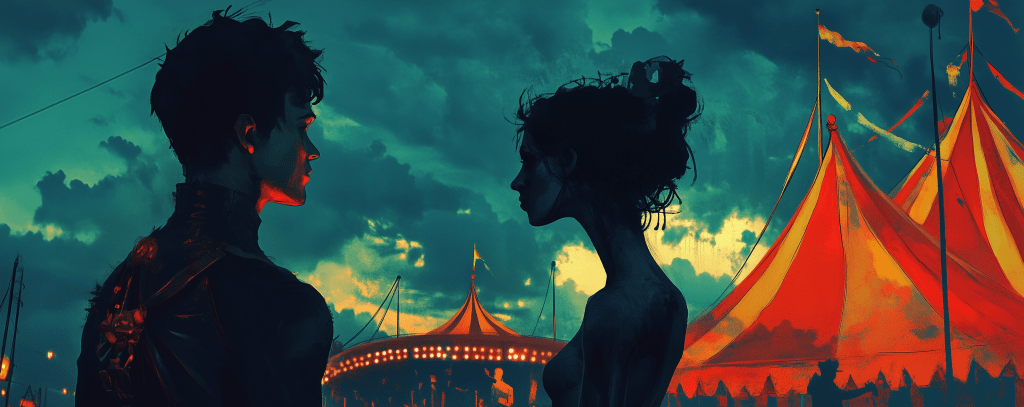
The screenplay, co-written by Jodorowsky, Roberto Leoni, and Claudio Argento, emerged from a collaborative process that embraced the unpredictable nature of surrealism. Jodorowsky’s approach to screenwriting was unconventional, to say the least. He often incorporated elements from his own life, dreams, and spiritual beliefs, creating a tapestry of images and ideas that defied logical interpretation.
The Plot: A Labyrinth of Symbols and Memories
At its most basic level, “Santa Sangre” tells the story of Fenix, a young man raised in a circus who witnesses the brutal murder-suicide of his parents. The trauma of this event leaves him institutionalized, but he eventually escapes to reunite with his armless mother, becoming her “arms” in a series of increasingly disturbing scenarios.
However, to describe “Santa Sangre” in such linear terms does a disservice to its surrealist nature. The film’s narrative is more akin to a fever dream, where time bends, reality shifts, and symbolism reigns supreme. The screenplay weaves together themes of religion, sexuality, violence, and identity into a tapestry that is both beautiful and horrifying.
Surrealist Techniques in Screenwriting
1. Non-linear Storytelling
One of the hallmarks of surrealist writing is the abandonment of traditional narrative structures. “Santa Sangre” employs a non-linear approach, jumping between past and present, reality and fantasy, often without clear demarcation. This technique mimics the fluid nature of dreams and memory, allowing the audience to experience the story as a series of powerful, interconnected images rather than a straightforward plot.
2. Symbolic Imagery
The screenplay of “Santa Sangre” is rich with symbolic imagery that operates on multiple levels. For example, the circus setting serves as a metaphor for the chaotic and performative nature of life itself. The character of Fenix’s mother, whose arms are severed in a gruesome act, becomes a living embodiment of the Virgin Mary, her stumps forming a crucifix when raised.
These symbols are not merely visual flourishes but integral to the narrative, carrying the emotional and thematic weight of the story. The screenwriters carefully crafted each symbol to resonate with the film’s deeper explorations of trauma, faith, and the human condition.
3. Juxtaposition of the Sacred and Profane
Surrealist art often seeks to challenge societal norms and expectations by juxtaposing seemingly incompatible elements. In “Santa Sangre,” this is evident in the constant interplay between the sacred and the profane. Religious imagery is set against scenes of violence and sexuality, creating a tension that forces the audience to question their preconceptions about morality and spirituality.
The screenplay achieves this through careful scene construction, where holy figures and rituals are placed in incongruous settings or paired with acts of brutality. This technique not only shocks the viewer but also invites deeper contemplation on the nature of faith and human desire.
4. Stream of Consciousness
Surrealist writing often employs a stream of consciousness technique to mimic the free flow of thoughts and associations in the human mind. While “Santa Sangre” has a more structured narrative than some surrealist works, it still incorporates elements of this technique, particularly in scenes depicting Fenix’s fragmented psyche.
The screenplay allows for moments where dialogue, internal monologue, and visual cues blend together, creating a sense of psychological immersion. This approach helps to blur the lines between reality and delusion, a key theme in the film.
Challenges of Surrealist Screenwriting
Writing a surrealist screenplay presents unique challenges that Jodorowsky and his co-writers had to navigate carefully:
1. Balancing Coherence and Abstraction
One of the primary difficulties in surrealist screenwriting is striking a balance between abstract ideas and a coherent narrative that can engage an audience. “Santa Sangre” manages this by anchoring its more outlandish elements to a central emotional core – Fenix’s trauma and his relationship with his mother. This gives viewers something tangible to connect with amidst the surreal imagery.
2. Translating Visual Ideas to Text
Surrealism often relies heavily on visual impact, which can be challenging to convey in a written screenplay. The writers of “Santa Sangre” had to find ways to describe their vivid, often bizarre visual concepts in a manner that could be understood and realized by the production team. This required a high level of descriptive precision and imagination in the screenplay’s action lines.
3. Maintaining Thematic Consistency
While surrealism thrives on unexpected associations, a successful surrealist screenplay must maintain some level of thematic consistency to avoid becoming a mere collection of random images. “Santa Sangre” achieves this by returning to key motifs and symbols throughout the script, creating a dreamlike logic that, while not always immediately apparent, feels cohesive on a subconscious level.
The Impact of “Santa Sangre” on Surrealist Cinema
“Santa Sangre” stands as a pinnacle of surrealist screenwriting, influencing filmmakers and writers long after its release. Its success lies in its ability to create a world that operates by its own internal logic while still resonating emotionally with audiences.
The film demonstrates that surrealism in screenwriting is not about abandoning narrative entirely, but about finding new ways to express complex ideas and emotions through unconventional means. It shows that by breaking free from the constraints of traditional storytelling, writers can tap into deeper truths about the human experience.
Lessons for Aspiring Surrealist Screenwriters
For those inspired by “Santa Sangre” and looking to explore surrealist screenwriting, there are several key takeaways:
- Embrace Personal Symbolism: Jodorowsky’s work is deeply personal, drawing from his own experiences and spiritual beliefs. Aspiring surrealist writers should not shy away from incorporating their own unique symbols and obsessions into their work.
- Trust in Visual Storytelling: While dialogue has its place, surrealist cinema often relies more heavily on visual storytelling. Writers should focus on crafting powerful images and sequences that can convey meaning without words.
- Explore the Subconscious: Surrealism is about delving into the depths of the human psyche. Writers should allow themselves to explore their dreams, fears, and deepest desires as source material for their screenplays.
- Challenge Conventions: “Santa Sangre” succeeds in part because it’s willing to challenge societal norms and filmmaking conventions. Surrealist screenwriters should be prepared to push boundaries and question accepted wisdom.
- Maintain Emotional Truth: Even in the midst of the most abstract sequences, “Santa Sangre” never loses sight of its emotional core. Surrealist screenplays should strive to maintain an emotional truth that audiences can connect with.
Conclusion: The Enduring Power of Surrealist Screenwriting
“Santa Sangre” remains a testament to the power of surrealist screenwriting to create unforgettable cinema. By eschewing conventional narrative structures and embracing the language of dreams and symbols, Jodorowsky and his co-writers crafted a film that continues to fascinate and perplex audiences decades after its release.
The dreamlike world of “Santa Sangre” reminds us that cinema, at its best, can be more than mere entertainment. It can be a mirror to our deepest selves, a window into the collective unconscious, and a tool for expanding our understanding of reality itself. For screenwriters willing to take the plunge into the surreal, the potential for creating truly transformative art is limitless.
In a world increasingly dominated by formulaic storytelling, the legacy of “Santa Sangre” serves as a clarion call for writers to embrace the strange, the symbolic, and the surreal. It challenges us to look beyond the surface of things, to find the hidden connections that bind us all, and to craft stories that resonate on a level beyond mere logic. In doing so, we may just discover new ways of understanding ourselves and the complex, often bewildering world we inhabit.
✍️ Whether you’re mastering the art of dialogue, structure, or character development, the power of AI can be a game-changer in your writing journey. My Free Ebook, ‘AI for Authors’ delves into how AI-powered prompts can provide a unique edge to your storytelling process. If you’re intrigued by the prospect of supercharging your fiction skills, download your free copy today and explore new horizons in creative writing.
 A.I. in Screen Trade