Artificial intelligence (AI) has become a transformative force across multiple industries, but its potential to disrupt entertainment and storytelling is particularly intriguing. As AI evolves, its influence on creative processes, content generation, and audience interaction continues to grow, challenging traditional modes of storytelling. This article will explore AI’s disruptive potential in entertainment, examining its impact on writing, production, content personalization, and ethical considerations that arise in this new creative landscape.
The Role of AI in Screenwriting and Content Generation
AI’s most visible entry into storytelling has been through content generation, particularly in screenwriting. While AI might not yet replace human writers, tools like GPT (Generative Pre-trained Transformers) and other machine learning models are already assisting with story development, dialogue creation, and even full scriptwriting. By analyzing vast amounts of data, these tools can predict narrative structures, identify plot holes, and suggest dialogue that aligns with specific character arcs.
AI in Scriptwriting: A Complement, Not a Replacement
Despite the sophistication of these tools, AI in scriptwriting is still largely a complement rather than a replacement for human creativity. For instance, in the process of adapting complex works like American Psycho, AI could assist in maintaining narrative coherence by suggesting ways to streamline episodic content into a more linear screenplay format. Similarly, AI could help writers navigate structural challenges, as seen in films like Ex Machina, where philosophical depth is embedded into a tightly wound three-act structure.
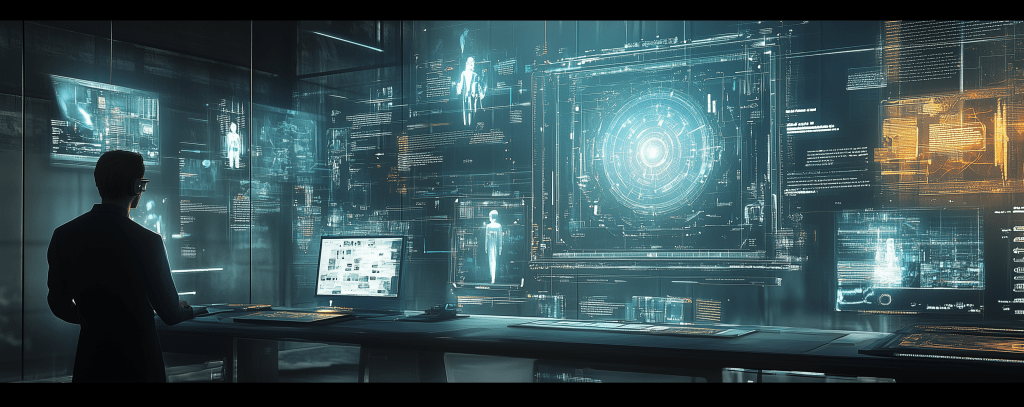
One of the major benefits of AI in screenwriting is its ability to analyze what works in storytelling by drawing from a database of successful narratives. This capability could help writers identify recurring themes, successful plot structures, or even audience preferences, which can be useful in creating commercially viable content. However, the challenge lies in preserving the uniqueness of storytelling, as the reliance on algorithms could inadvertently lead to formulaic or overly predictable stories.
AI’s Influence on Visual Effects and Production Design
Beyond scriptwriting, AI has found applications in production, particularly in visual effects (VFX) and production design. AI-driven tools can automate time-consuming tasks such as rendering, scene composition, and even character animation. This allows filmmakers to create high-quality visual experiences at lower costs and with faster turnaround times.
For example, AI can help streamline VFX-heavy projects by automating rotoscoping, a technique used to separate actors from backgrounds in post-production. Additionally, AI tools can generate photorealistic characters and environments, as seen in films like Avatar and The Lion King (2019). These AI-driven advancements enable filmmakers to push the boundaries of what can be visualized on screen, leading to more immersive and visually stunning narratives.
Procedural Content Generation: AI as the Ultimate World Builder
In world-building, AI plays an even more transformative role. Procedural content generation, a technique where AI creates dynamic environments based on pre-set rules, is revolutionizing the creation of expansive worlds in both films and video games. For instance, AI-driven tools can automatically generate vast landscapes, cityscapes, and even entire universes based on narrative needs. This technology is already in use in video game design but is gradually making its way into film, where directors can visualize complex settings without manually designing every detail.
While this enhances efficiency, it also raises questions about the loss of the human touch in world-building. Human designers infuse their work with a personal sense of artistry, an element that AI may struggle to replicate. Thus, while AI can generate worlds, it is the human eye that still refines and perfects them.
Audience Personalization and Interactive Storytelling
AI’s impact on entertainment isn’t limited to production; it’s also reshaping how audiences experience stories. With the rise of AI-driven algorithms on streaming platforms, personalized content recommendations are becoming more precise. Streaming giants like Netflix and Amazon Prime use machine learning to curate content suggestions based on viewing habits, ensuring that viewers remain engaged.
But beyond simple recommendations, AI is increasingly used to create personalized and interactive storytelling experiences. In interactive media, such as video games and choose-your-own-adventure-style films (e.g., Black Mirror: Bandersnatch), AI can dynamically adjust the narrative based on user choices. This creates a more immersive experience, allowing audiences to influence the direction of the story in real time.
AI-Driven Personalization: Navigating Story Depth and User Control
While personalization enhances user engagement, it poses a creative challenge. How does one maintain the integrity of a narrative when each user experiences it differently? In traditional storytelling, the writer maintains full control over the story arc, but with AI-powered interactivity, users gain some degree of narrative authority. This opens up exciting possibilities but also risks diluting the depth of storytelling if not handled carefully.
As AI personalizes narratives to fit the viewer’s preferences, the core themes and emotional beats of a story might shift depending on individual choices. The key challenge is striking a balance between giving users the agency to shape their experience while ensuring that the essence of the story remains intact.
Ethical and Philosophical Considerations
AI’s rise in storytelling brings with it a host of ethical and philosophical questions. One major concern is the potential for AI to replace human creatives, not just in screenwriting but across the creative spectrum. While AI can generate stories, compose music, and even paint, can these creations truly possess the emotional depth, cultural context, and uniqueness that human artists bring?
The Ethics of AI-Created Characters and Deepfakes
Another ethical concern is the use of AI in creating digital characters and deepfakes. AI-generated characters have already appeared in films, such as the digitally resurrected Peter Cushing in Rogue One: A Star Wars Story. As the technology improves, AI could potentially create entire casts of digital actors who never physically exist. This raises questions about authenticity, intellectual property rights, and the implications for actors’ careers.
Deepfake technology, where AI manipulates video footage to create hyper-realistic imitations of real people, has sparked debate over consent and misinformation. While filmmakers might use it to enhance narratives, the potential misuse of this technology in creating false narratives or infringing on actors’ likenesses is a serious concern.
Algorithmic Bias and the Risk of Homogenization
AI is also not immune to bias. Algorithms trained on biased datasets may perpetuate stereotypes or reinforce existing inequalities in storytelling. If the data fed into AI tools reflects narrow cultural perspectives, the stories produced could lack diversity, perpetuating a homogenized entertainment landscape. This issue underscores the importance of ensuring that AI models are trained on diverse and representative datasets, so the stories they help generate are inclusive and reflective of varied human experiences.
AI’s Disruptive Future: A Tool for Innovation or a Creative Threat?
The question of whether AI will disrupt storytelling for better or worse remains open. On one hand, AI offers new tools for creative expression, allowing filmmakers, writers, and game developers to push the boundaries of their craft. By automating routine tasks, AI frees up human creators to focus on the more imaginative and emotional aspects of storytelling. This symbiotic relationship between AI and human creativity could lead to a golden age of content creation, where technology amplifies human ingenuity.
On the other hand, the increasing reliance on AI could potentially stifle creativity by favoring data-driven, formulaic narratives over bold, original ideas. There’s a risk that, in prioritizing audience engagement and personalization, storytelling becomes more about giving viewers what they want rather than challenging them with new perspectives or ideas.
Conclusion: AI as a Creative Partner
In the end, AI’s role in entertainment is likely to evolve as a creative partner rather than a replacement for human storytellers. As we’ve seen in examples like Ex Machina and Breaking Bad, the richness of storytelling lies not only in its structure but in its capacity to explore moral, philosophical, and emotional complexities. AI might help streamline the storytelling process, suggest new narrative directions, or even create worlds, but it’s unlikely to replicate the full spectrum of human creativity.
The future of storytelling will likely involve a collaboration between human creators and AI tools, where technology assists in production and personalization, but the heart and soul of the story remain firmly in human hands. By understanding AI’s potential and its limitations, creators can harness its power without losing sight of the essential human element that makes stories resonate.
✍️ Whether you’re mastering the art of dialogue, structure, or character development, the power of AI can be a game-changer in your writing journey. My Free Ebook, ‘AI for Authors’ delves into how AI-powered prompts can provide a unique edge to your storytelling process. If you’re intrigued by the prospect of supercharging your fiction skills, download your free copy today and explore new horizons in creative writing.
 A.I. in Screen Trade