Introduction
In 1980, The Ninth Configuration, directed by William Peter Blatty, emerged as an unconventional psychological drama that questioned the very nature of reality and sanity. The film, which has gained a cult following over the years, is an adaptation of Blatty’s own novel Twinkle, Twinkle, “Killer” Kane, and it serves as a spiritual sequel to The Exorcist. Though the two films differ greatly in tone and content, both probe the human condition—particularly the conflict between faith and despair. Where The Exorcist concerned itself with the battle between good and evil in a literal sense, The Ninth Configuration places its characters inside the battleground of their own minds.
The film’s script is a daring exploration of madness, trauma, and the line between reality and delusion. Through a combination of black comedy, philosophical musings, and raw emotional depth, Blatty created a narrative that challenges both its characters and audience to question the nature of truth. In this blog, we will examine how the script of The Ninth Configuration uses dialogue, character development, and visual storytelling to craft a powerful depiction of madness.
Setting the Stage: The Perfect Backdrop for Madness
The film is set in a decaying Gothic castle, repurposed as a mental asylum for military officers suffering from PTSD and other psychological disorders. This atmospheric choice plays a crucial role in amplifying the film’s themes. From a screenwriting perspective, the setting functions as a reflection of the characters’ fractured minds. The castle, with its labyrinthine halls and eerie ambiance, symbolizes the confusion and chaos of mental illness.
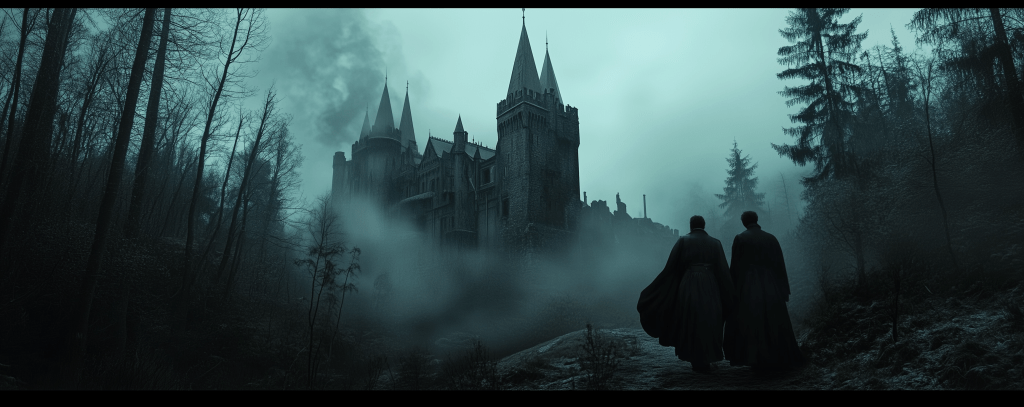
Blatty’s decision to place the asylum in an isolated location is significant for the narrative’s psychological stakes. The seclusion heightens the tension, creating a sense of being trapped—not just physically, but mentally. The soldiers, each manifesting different forms of madness, are left to confront their inner demons with no way out. This isolation reflects how mental illness can feel like a personal prison.
Moreover, the setting allows for surreal and absurd situations that mirror the characters’ mental states. In one scene, a character stages a Shakespearean production with dogs as the actors, a bizarre yet poignant display of creativity gone awry. The castle and its inhabitants serve as a microcosm for the world at large, where the line between sanity and insanity is perpetually blurred.
Characters: Embodiments of Madness
The strength of The Ninth Configuration lies in its character-driven narrative. Blatty’s script is not content with presenting madness as a singular concept but instead explores its many facets through a diverse cast of characters, each representing different psychological struggles.
- Colonel Kane (Stacy Keach) is the protagonist, a military psychiatrist sent to take over the asylum. However, it soon becomes apparent that Kane himself is battling severe psychological trauma. The revelation of his own instability raises questions about the role of authority in diagnosing and treating madness. Can someone who is unwell help others heal? Kane’s character arc is one of internal conflict, where his carefully constructed facade of sanity unravels as the film progresses.
- Captain Cutshaw (Scott Wilson), a former astronaut who aborted a space mission due to a breakdown, serves as Kane’s philosophical foil. Cutshaw’s madness is grounded in existential despair—he questions the existence of God, the purpose of life, and the possibility of a universe devoid of meaning. His dialogue is filled with existential angst, often masking his fear with dark humor. Cutshaw’s struggle reflects the broader theme of faith versus nihilism that runs through the script.
- The supporting characters, from a soldier who believes he’s directing a Shakespearean play with dogs to another obsessed with re-enacting scenes from old war movies, add layers of absurdity that push the boundaries of what is considered sane or insane. Their quirks are not just for comic relief; each character’s madness serves as a metaphor for deeper philosophical questions about identity, trauma, and reality.
Blatty’s script does not shy away from portraying these characters with both empathy and humor. Their madness is not treated as a spectacle but as a deeply human condition. The dialogue is sharp, blending philosophical musings with absurdist comedy, allowing the characters to navigate their psychological landscapes in ways that are both tragic and darkly humorous.
Dialogue: The Thin Line Between Humor and Horror
One of the most striking elements of The Ninth Configuration is its use of dialogue to explore complex themes. Blatty’s script walks a tightrope between humor and horror, often using absurdity to underscore the gravity of the characters’ psychological torment. This duality is best exemplified in the exchanges between Kane and Cutshaw, where philosophical debates about the nature of good and evil are punctuated with dark humor.
In one pivotal scene, Cutshaw challenges Kane’s belief in God by asking him to provide proof of divine existence. Kane’s response, a stirring defense of faith, is delivered with such conviction that it temporarily quiets Cutshaw’s skepticism. However, the moment is immediately undercut by an absurd observation from another character, re-establishing the script’s tonal balance between comedy and tragedy. This oscillation between tones keeps the audience off balance, mirroring the instability of the characters’ minds.
Blatty’s use of humor is not simply to lighten the mood, but to serve as a coping mechanism for the characters. For instance, Cutshaw’s frequent one-liners are a way for him to deflect his existential dread. By using humor as a shield, the script illustrates how individuals often use comedy to mask deeper psychological pain. The dialogue, therefore, becomes a tool for exploring the fragility of the human psyche.
Faith and Nihilism: The Core Philosophical Conflict
At the heart of The Ninth Configuration is the conflict between faith and nihilism, a thematic continuation from Blatty’s previous work, The Exorcist. Whereas The Exorcist portrayed the battle between good and evil through a supernatural lens, The Ninth Configuration places that battle within the realm of the mind.
Kane and Cutshaw embody this conflict. Kane represents faith—though it is a fragile, often questioned faith—while Cutshaw is the embodiment of nihilism. Their conversations about God, morality, and the meaning of life are not just intellectual exercises; they are existential struggles that define the characters’ psychological states.
One of the film’s most memorable moments is when Kane delivers a monologue on the inherent goodness of mankind. His argument that people are capable of profound acts of kindness and sacrifice is met with Cutshaw’s cynicism, which only deepens as the story unfolds. This philosophical tug-of-war becomes the emotional core of the film, as both characters grapple with their beliefs in a world that often feels devoid of meaning.
The script uses this philosophical discourse to delve into the larger question of whether madness is a form of escape from the harsh realities of life. In a world where suffering and chaos are ever-present, is it madness to cling to faith, or is it madness to abandon it? Blatty leaves the answer ambiguous, allowing the audience to draw their own conclusions.
Visual Storytelling: Symbolism and Surrealism
While The Ninth Configuration is dialogue-heavy, it also makes effective use of visual storytelling to convey its themes. The film’s Gothic setting, with its crumbling architecture and eerie lighting, serves as a visual metaphor for the mental decay of its characters. The castle, like the minds of its inhabitants, is a once-grand structure now in ruins, filled with hidden corridors and dark secrets.
Blatty’s direction complements his script by using surreal imagery to blur the line between reality and delusion. Dream sequences, hallucinations, and moments of heightened reality are woven into the narrative, creating a sense of disorientation that reflects the characters’ fractured psyches. The use of religious iconography—crosses, statues of saints, and other symbols of faith—further underscores the film’s exploration of spiritual themes.
In one particularly striking scene, Kane hallucinates a crucifixion, his own mind projecting a Christ-like sacrifice onto his psychological struggle. This visual moment reinforces the idea that the characters are not just battling their own madness but are also engaged in a spiritual conflict.
Conclusion: Madness as a Mirror to Humanity
The Ninth Configuration is a unique exploration of madness that defies easy categorization. Blatty’s script, with its complex characters, philosophical depth, and dark humor, challenges the audience to question their own perceptions of reality and sanity. Through its blend of comedy, horror, and existential inquiry, the film presents madness not as an aberration but as a reflection of the human condition.
The script’s handling of faith and nihilism, as embodied by Kane and Cutshaw, offers no easy answers but instead presents a dialogue that resonates long after the film’s conclusion. In the end, The Ninth Configuration suggests that madness may be the only sane response to a world that is itself chaotic and unpredictable.
For screenwriters and storytellers, The Ninth Configuration serves as a masterclass in balancing tone, character development, and philosophical inquiry. It shows that madness, when explored with empathy and depth, can reveal profound truths about humanity and the nature of existence.
✍️ Whether you’re mastering the art of dialogue, structure, or character development, the power of AI can be a game-changer in your writing journey. My Free Ebook, ‘AI for Authors’ delves into how AI-powered prompts can provide a unique edge to your storytelling process. If you’re intrigued by the prospect of supercharging your fiction skills, download your free copy today and explore new horizons in creative writing.
 A.I. in Screen Trade