The 2001 film Session 9, directed by Brad Anderson, is often lauded as a masterclass in psychological horror. The film, set in an abandoned mental asylum, plays on the fears embedded in both the environment and the characters’ psyches. Unlike more overtly supernatural horror films, Session 9 delves into the mind, using ambiguity and the crumbling, haunted setting as tools to craft a deeply unsettling narrative. This article explores how Session 9 achieves its psychological horror through its screenplay, examining the narrative structure, character development, and thematic depth that make it a standout in the genre.
Setting as a Character: The Danvers State Hospital
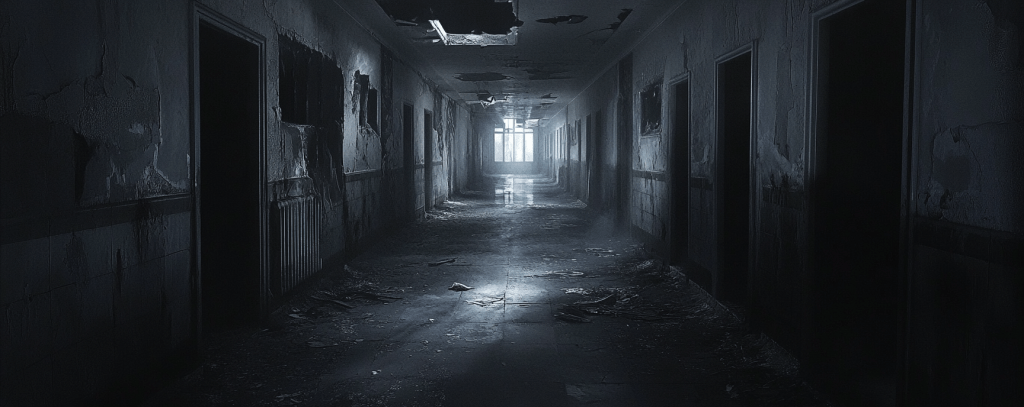
One of the most striking elements of Session 9 is its setting, the Danvers State Hospital, which looms large not just as a backdrop but as a central character in the film. The hospital, with its decaying walls, dark corridors, and eerie silence, becomes a reflection of the characters’ inner turmoil. The screenplay expertly uses the setting to build an atmosphere of dread, where the environment itself seems to be imbued with a malevolent force.
The decision to film on location at the actual Danvers State Hospital adds a layer of authenticity that is rare in horror films. The screenplay capitalizes on the building’s history and architecture, allowing the physical space to influence the narrative. The hospital’s past—echoed through the lingering presence of former patients and the remnants of their lives—becomes intertwined with the present, blurring the lines between reality and imagination.
In many ways, the hospital represents the characters’ fractured mental states. As they navigate its halls, their grip on reality weakens, mirroring the crumbling structure around them. The screenplay’s subtle integration of the setting into the story’s fabric demonstrates how a location can elevate the horror genre, turning a mere backdrop into an active participant in the narrative.
The Power of Ambiguity
Session 9 thrives on ambiguity, a narrative technique that is both challenging and rewarding when executed well. The screenplay leaves much to the audience’s imagination, allowing the horror to manifest not just on screen but in the mind of the viewer. This ambiguity is central to the film’s psychological impact, as it forces the audience to engage with the story on a deeper level, questioning what is real and what is imagined.
The film’s plot revolves around a group of asbestos removers working in the abandoned hospital. As the characters delve deeper into the building, their own psychological issues begin to surface, exacerbated by the oppressive atmosphere. The screenplay carefully balances these elements, never fully revealing whether the horrors experienced are supernatural or the result of mental breakdowns.
This deliberate ambiguity is a powerful tool in psychological horror, as it taps into the fear of the unknown. The screenplay’s restraint in providing clear answers amplifies the tension, creating a sense of unease that lingers long after the film ends. This approach is reminiscent of other psychological horror films like The Shining and Repulsion, where the horror is more implied than shown, leaving the audience to fill in the terrifying blanks.
Character Descent into Madness
At the heart of Session 9 is the exploration of the characters’ descent into madness, a common theme in psychological horror. The screenplay meticulously constructs this descent, using the characters’ interactions with the hospital and each other to peel back layers of their psyches.
The protagonist, Gordon (played by Peter Mullan), is a man already on the edge, struggling with personal and financial pressures. As the film progresses, the screenplay subtly hints at Gordon’s unraveling, using his growing detachment and the increasingly erratic behavior of the other characters to build suspense. The film’s pacing is crucial here, as it allows the audience to gradually witness Gordon’s mental deterioration, creating a slow-burn effect that is both compelling and disturbing.
The screenplay’s use of sound plays a significant role in illustrating this descent. The recurring sound of a woman’s voice, heard on an old reel-to-reel tape that one of the characters finds, serves as a haunting motif throughout the film. These tapes, which document the sessions of a patient with dissociative identity disorder, mirror Gordon’s own psychological fragmentation, drawing a parallel between the past horrors of the hospital and the present.
By the film’s climax, the screenplay leaves the audience questioning the nature of Gordon’s actions—are they the result of possession, the influence of the hospital, or simply the manifestation of his own buried guilt and stress? This ambiguity in character motivation is another strength of the screenplay, forcing the viewer to confront the unsettling reality that the horror might be entirely human in origin.
Narrative Structure: Building Tension through Nonlinear Storytelling
Session 9 employs a nonlinear narrative structure that enhances its psychological horror. The screenplay’s fragmented timeline, combined with the gradual revelation of key plot points, mirrors the disjointed mental states of the characters. This structure allows the film to build tension incrementally, leading to a climax that feels both inevitable and shocking.
The screenplay uses flashbacks and audio recordings to introduce the hospital’s dark history, weaving these elements into the present-day narrative. This technique creates a sense of temporal dislocation, where past and present seem to bleed into each other, contributing to the film’s overall atmosphere of confusion and dread.
A crucial aspect of the narrative structure is its pacing. The screenplay carefully doles out information, keeping the audience in a constant state of anticipation. The slow reveal of Gordon’s secret, for instance, is a masterclass in suspenseful storytelling. The audience is given just enough information to sense that something is wrong, but the full extent of Gordon’s actions is only unveiled in the final moments, delivering a powerful emotional and psychological punch.
Themes of Guilt and Repression
Guilt and repression are central themes in Session 9, explored through both the setting and the characters. The screenplay delves into these themes with a subtlety that allows them to permeate the entire film, influencing the characters’ actions and the unfolding of the plot.
Gordon’s storyline is particularly steeped in guilt. His actions, driven by a desperate attempt to maintain his crumbling life, are tinged with repressed emotions and unspoken fears. The screenplay hints at his internal struggle through his interactions with his crew and the hospital, with the latter acting as a catalyst for his breakdown. The hospital, once a place where society’s unwanted were hidden away, becomes a metaphor for Gordon’s own buried guilt and the secrets he keeps even from himself.
The film’s exploration of repression is also evident in the other characters, each of whom brings their own baggage to the job. Phil (David Caruso), Mike (Stephen Gevedon), Hank (Josh Lucas), and Jeff (Brendan Sexton III) are all haunted by their pasts in different ways, and the screenplay uses their time in the hospital to bring these repressed memories and emotions to the surface. This collective unraveling not only serves to heighten the tension but also reinforces the idea that the hospital itself is a repository for the darkest aspects of the human mind.
The Unreliable Narrator: A Tool for Psychological Horror
One of the most intriguing aspects of Session 9 is its use of an unreliable narrator, a common device in psychological horror. The screenplay cleverly manipulates the audience’s perspective, making it difficult to discern the truth of what is happening. This is particularly effective in creating a sense of unease and distrust, both in the characters and in the narrative itself.
Gordon’s perspective is the primary lens through which the audience experiences the film, but as his mental state deteriorates, so too does the reliability of his narration. The screenplay blurs the line between reality and delusion, using Gordon’s increasingly fractured psyche to challenge the viewer’s understanding of the events unfolding on screen. This technique draws the audience deeper into Gordon’s madness, making his eventual breakdown all the more impactful.
The use of the unreliable narrator is a hallmark of psychological horror, seen in classics like Psycho and The Shining. In Session 9, it serves to amplify the film’s themes of guilt, repression, and the fragility of the human mind. By placing the audience in Gordon’s unstable shoes, the screenplay ensures that the horror is not just something observed, but something felt on a deeply personal level.
Conclusion: Session 9 as a Blueprint for Psychological Horror
Session 9 stands as a prime example of how psychological horror can be effectively conveyed through screenwriting. The film’s use of setting, ambiguity, character development, and narrative structure all contribute to its unsettling atmosphere and lasting impact. By focusing on the internal horrors of the mind, rather than relying on external monsters, Session 9 taps into universal fears, making it a timeless piece of cinema.
For screenwriters looking to craft their own psychological horror, Session 9 offers invaluable lessons. The film demonstrates the power of suggestion over explicitness, the importance of setting in creating atmosphere, and the effectiveness of character-driven horror. Above all, it shows that the most terrifying stories are often those that explore the darkest corners of the human psyche, where the boundaries between reality and madness are perilously thin.
✍️ Whether you’re mastering the art of dialogue, structure, or character development, the power of AI can be a game-changer in your writing journey. My Free Ebook, ‘AI for Authors’ delves into how AI-powered prompts can provide a unique edge to your storytelling process. If you’re intrigued by the prospect of supercharging your fiction skills, download your free copy today and explore new horizons in creative writing.
 A.I. in Screen Trade