“My Dinner with Andre” is a cinematic gem that defies conventional storytelling. Directed by Louis Malle and written by its stars, Wallace Shawn and Andre Gregory, this 1981 film is essentially a 110-minute conversation between two friends at a restaurant. What makes this seemingly mundane setup so captivating is the masterful dialogue that unfolds, offering a profound exploration of life, art, and human connection. In this article, we will delve into the elements that make the dialogue in “My Dinner with Andre” so compelling, examining its structure, thematic depth, character development, and the art of crafting meaningful conversation in screenwriting.
Setting the Stage: A Simple Yet Profound Setup
The Power of a Single Setting
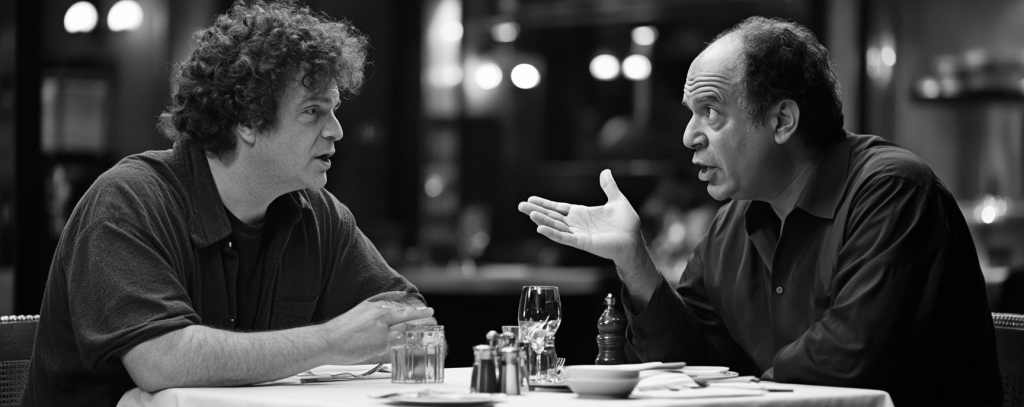
“My Dinner with Andre” takes place almost entirely in a single location: a cozy New York City restaurant. This choice of setting is critical as it strips away external distractions, focusing the audience’s attention solely on the dialogue. The single setting creates an intimate atmosphere, making viewers feel like they are eavesdropping on a private conversation. This intimacy is crucial for the depth of dialogue to resonate.
Establishing the Premise
The film begins with Wallace Shawn, playing a semi-fictional version of himself, reluctantly agreeing to meet his old friend Andre Gregory for dinner. Shawn is apprehensive about the meeting, as he has heard that Gregory has been through a series of unusual and possibly unsettling experiences. This premise sets up the anticipation and curiosity that drive the narrative forward. From the moment the conversation begins, the audience is hooked, eager to uncover the details of Gregory’s adventures and philosophical musings.
Character Dynamics: A Study in Contrast
Wallace Shawn: The Skeptical Everyman
Wallace Shawn’s character serves as the audience’s surrogate, representing the skeptical, rational, and somewhat cynical viewpoint. His initial reluctance to engage with Gregory’s outlandish stories mirrors the audience’s potential skepticism. As the conversation progresses, Shawn’s questions and doubts guide the discussion, ensuring that Gregory’s ideas are thoroughly examined and grounded.
Andre Gregory: The Philosophical Wanderer
In contrast, Andre Gregory embodies the role of the philosophical wanderer, brimming with tales of his spiritual and existential explorations. Gregory’s character is charismatic, articulate, and passionate, often delving into abstract and profound concepts. His enthusiasm and conviction provide a counterbalance to Shawn’s skepticism, creating a dynamic interplay that keeps the conversation engaging.
The Interplay of Perspectives
The strength of the dialogue in “My Dinner with Andre” lies in the interplay between these two contrasting perspectives. Shawn’s grounded, practical outlook clashes with Gregory’s idealistic and often mystical worldview. This clash creates a tension that drives the conversation, forcing both characters to articulate their thoughts and beliefs more clearly. The dialogue becomes a dance of ideas, with each character challenging and refining the other’s perspective.
Thematic Depth: Exploring Life’s Big Questions
The Search for Meaning
A central theme in “My Dinner with Andre” is the search for meaning in life. Gregory recounts his various experiences, from participating in experimental theater in Poland to exploring communal living in the Scottish Highlands, all in a quest to find deeper significance in existence. His stories raise fundamental questions about the nature of reality, the purpose of life, and the human condition.
The Nature of Reality
Throughout the conversation, Gregory challenges conventional notions of reality, suggesting that most people live in a state of unconsciousness, disconnected from true experience. He argues that modern society’s routines and material pursuits create a kind of waking sleep, preventing individuals from truly living. This theme resonates with audiences, prompting them to reflect on their own lives and the extent to which they are truly engaged with their experiences.
Connection and Isolation
Another key theme is the tension between connection and isolation. Gregory’s stories often highlight moments of profound connection with others, whether through shared artistic endeavors or communal living. However, these moments are juxtaposed with feelings of alienation and disconnection, both in his own life and in society at large. The dialogue explores how genuine human connection can be both elusive and transformative.
Crafting Dialogue: Lessons from ‘My Dinner with Andre’
Authenticity and Honesty
One of the most striking features of the dialogue in “My Dinner with Andre” is its authenticity. The characters speak with honesty and vulnerability, sharing personal anecdotes and insights without pretense. This authenticity is crucial for creating dialogue that resonates with audiences. Writers can learn from this by ensuring that their characters speak from a place of truth, reflecting genuine emotions and experiences.
Rhythm and Pacing
Despite its conversational nature, the dialogue in “My Dinner with Andre” is carefully structured to maintain a natural rhythm and pacing. The conversation ebbs and flows, with moments of intense philosophical debate balanced by lighter, more personal exchanges. This variation in tone keeps the audience engaged, preventing the dialogue from becoming monotonous. Writers should pay attention to the rhythm of their dialogue, varying the intensity and tone to maintain interest.
The Art of Listening
An often overlooked aspect of dialogue is the importance of listening. In “My Dinner with Andre,” both characters actively listen to each other, responding thoughtfully and allowing the conversation to evolve organically. This mutual respect and attentiveness create a dynamic and meaningful exchange. Writers can enhance their dialogue by ensuring that characters genuinely listen to and engage with each other, rather than simply delivering monologues.
Subtext and Implication
Much of the power of the dialogue in “My Dinner with Andre” comes from what is implied rather than explicitly stated. The characters often speak in metaphors or share anecdotes that carry deeper meanings. This use of subtext adds layers of complexity to the conversation, inviting the audience to read between the lines and uncover the underlying themes. Writers can enrich their dialogue by incorporating subtext, allowing characters to communicate on multiple levels.
Developing a Distinct Voice
Each character in “My Dinner with Andre” has a distinct voice, shaped by their experiences, beliefs, and personalities. Gregory’s speech is often poetic and expansive, reflecting his philosophical outlook, while Shawn’s is more grounded and practical. This distinction in voice helps to clearly define the characters and makes their dialogue more engaging. Writers should strive to develop unique voices for their characters, ensuring that each one speaks in a way that reflects their individual traits and perspectives.
The Impact of ‘My Dinner with Andre’ on Screenwriting
Challenging Traditional Narrative Structures
“My Dinner with Andre” challenges traditional narrative structures, demonstrating that compelling storytelling can be achieved through dialogue alone. The film’s success shows that a strong script, centered around rich, engaging dialogue, can captivate audiences without the need for elaborate plots or action sequences. This opens up new possibilities for screenwriters, encouraging them to experiment with unconventional storytelling techniques.
Emphasizing Intellectual and Emotional Depth
The film also emphasizes the importance of intellectual and emotional depth in dialogue. By tackling profound philosophical questions and exploring complex emotions, “My Dinner with Andre” elevates the conversation to a form of art. Screenwriters can learn from this by striving to infuse their dialogue with depth and meaning, making every conversation count.
Inspiring a Generation of Writers
Since its release, “My Dinner with Andre” has inspired countless writers and filmmakers. Its unique approach to dialogue-driven storytelling serves as a testament to the power of words and ideas in cinema. The film encourages writers to push the boundaries of what dialogue can achieve, inspiring them to create conversations that are not only engaging but also thought-provoking and transformative.
Conclusion: The Timeless Art of Conversation
“My Dinner with Andre” remains a timeless example of the art of conversation in film. Its compelling dialogue, rich with philosophical insights and emotional depth, captivates audiences and invites them to reflect on their own lives. For screenwriters, the film offers invaluable lessons in crafting meaningful dialogue, developing distinct character voices, and exploring profound themes. By revisiting “My Dinner with Andre,” we can appreciate the enduring power of a well-crafted conversation and its ability to resonate deeply with audiences.
In the realm of screenwriting, dialogue is more than just words on a page; it is a tool for exploring the human experience, challenging our perceptions, and connecting us to the characters on screen. “My Dinner with Andre” exemplifies this potential, reminding us that sometimes, the most compelling stories are found in the simplest of conversations.
✍️ Whether you’re mastering the art of dialogue, structure, or character development, the power of AI can be a game-changer in your writing journey. My Free Ebook, ‘AI for Authors’ delves into how AI-powered prompts can provide a unique edge to your storytelling process. If you’re intrigued by the prospect of supercharging your fiction skills, download your free copy today and explore new horizons in creative writing.
 A.I. in Screen Trade