Jacob’s Ladder is a 1990 psychological horror film directed by Adrian Lyne, renowned for its complex narrative structure and ambiguous storytelling. The film centers around Jacob Singer, a Vietnam War veteran who experiences strange hallucinations and disturbing visions. These experiences blur the lines between reality and imagination, leaving both Jacob and the audience questioning the nature of his reality.
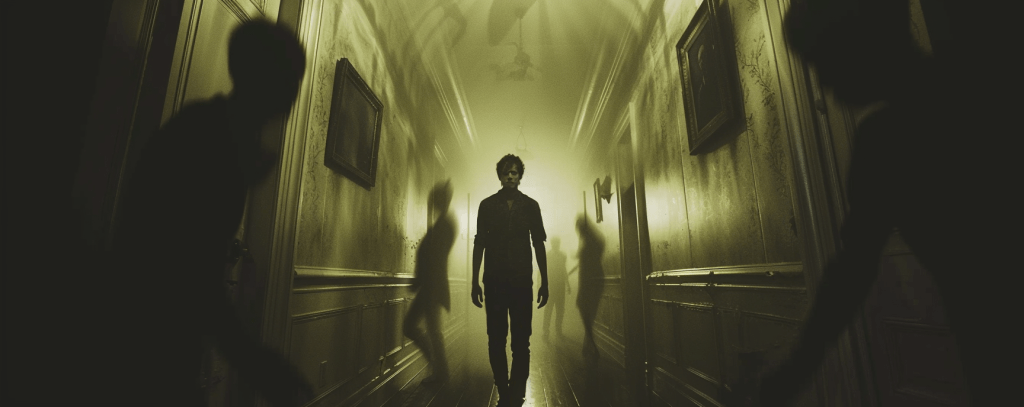
This article delves into the narrative ambiguity of Jacob’s Ladder, exploring its themes, narrative techniques, and the psychological and philosophical questions it raises. Through an analysis of key scenes and motifs, we will uncover how the film’s ambiguity serves as a vehicle for deeper reflection on trauma, identity, and the human experience.
The Plot: A Labyrinth of Reality and Illusion
The narrative of Jacob’s Ladder is a non-linear journey through the mind of its protagonist, Jacob Singer. The film opens with a harrowing battle sequence during the Vietnam War, where Jacob is critically wounded. The story then shifts to Jacob’s life in New York City, where he struggles with his post-war life, including his job, his relationships, and his haunting visions.
Fragmented Reality
Jacob’s experiences are fragmented and disjointed, reflecting his deteriorating mental state. The film constantly shifts between different time periods and realities, creating a sense of disorientation. This narrative structure mirrors Jacob’s own confusion and uncertainty about what is real and what is not. For instance, he experiences flashbacks to Vietnam, memories of his former life with his wife and children, and terrifying hallucinations of demonic figures.
The Duality of Worlds
Jacob’s Ladder presents two primary realms: the mundane reality of Jacob’s post-war life and the surreal, often nightmarish visions he experiences. The ambiguity between these worlds is heightened by the film’s refusal to clearly distinguish between them. Jacob’s reality is constantly undermined by inexplicable events, such as people morphing into monstrous forms or rooms suddenly changing. This duality raises questions about the nature of reality and the possibility of alternative dimensions or states of consciousness.
Themes of Trauma and Guilt
The film explores profound themes of trauma and guilt, which are central to Jacob’s character and the narrative’s ambiguity. Jacob’s visions and experiences can be seen as manifestations of his unresolved trauma from the war and his guilt over personal losses.
War and PTSD
Jacob’s hallucinations are often violent and chaotic, symbolizing the trauma he endured during the war. His experiences align with symptoms of Post-Traumatic Stress Disorder (PTSD), such as flashbacks, nightmares, and dissociation. The film uses these symptoms to blur the line between reality and illusion, making it difficult for both Jacob and the audience to discern the truth. This portrayal underscores the lasting impact of war on the psyche, where the boundaries between past and present, real and unreal, become increasingly porous.
Guilt and Redemption
Jacob’s journey is also marked by a deep sense of guilt, particularly related to the death of his son Gabe. This guilt manifests in his hallucinations and encounters with figures from his past, suggesting that his visions are a form of psychological punishment. The character of Louis, Jacob’s chiropractor and friend, serves as a spiritual guide, helping Jacob confront his guilt and move towards redemption. The film’s climax, where Jacob ascends a metaphorical ladder, hints at a possible release from his torment, though it remains unclear whether this signifies death, acceptance, or spiritual transcendence.
Narrative Techniques and Symbolism
Jacob’s Ladder employs a variety of narrative techniques and symbols to enhance its ambiguity and thematic depth.
Non-linear Storytelling
The film’s non-linear narrative structure is crucial in maintaining its ambiguity. Scenes are presented out of chronological order, with frequent shifts between different timelines and realities. This structure prevents the audience from forming a clear, cohesive understanding of the story, mirroring Jacob’s own confusion and disorientation. The use of jump cuts and sudden transitions further disorients the viewer, reinforcing the film’s exploration of unstable realities.
Religious and Mythological References
The film’s title itself, “Jacob’s Ladder,” is a reference to the Biblical story of Jacob’s dream, where he sees a ladder reaching to heaven with angels ascending and descending. This symbolism is prevalent throughout the film, suggesting themes of spiritual ascent, judgment, and redemption. The ladder represents a passage between different states of being, paralleling Jacob’s journey through various realities and possibly towards an afterlife or higher understanding.
The figure of Louis, who shares a name with Saint Louis, the patron saint of soldiers, adds another layer of religious symbolism. His role as a healer and guide for Jacob parallels the idea of spiritual guidance and salvation. The recurring motif of eyes and vision in the film, such as the demonic eyes Jacob sees or the eye surgery scene, symbolizes perception and the search for truth.
Interpretations and Theories
The ambiguity of Jacob’s Ladder has led to various interpretations and theories about its meaning and ending. One prevalent interpretation is that the entire film is a dying hallucination Jacob experiences in his final moments, as suggested by the final scene revealing his death in Vietnam. This reading frames the film as an exploration of the mind’s struggle to find peace and resolution in the face of death.
Psychological vs. Supernatural
Another interpretation considers the psychological aspects of the film, viewing Jacob’s experiences as manifestations of his PTSD and psychological trauma rather than supernatural occurrences. This perspective focuses on the film as a study of a fractured mind dealing with extreme stress and guilt.
On the other hand, some viewers interpret the film’s events as real within the narrative’s universe, involving supernatural elements such as demons and angels. This reading aligns with the religious symbolism throughout the film and the idea of Jacob undergoing a form of spiritual judgment.
The Ladder as a Metaphor
The titular ladder can also be seen as a metaphor for Jacob’s journey towards self-understanding and acceptance. The ladder represents a bridge between different states of consciousness, from confusion and torment to clarity and peace. This interpretation suggests that the film is less about determining the reality of Jacob’s experiences and more about his internal journey and the resolution of his inner conflicts.
Conclusion: The Power of Ambiguity
Jacob’s Ladder remains a compelling example of narrative ambiguity in cinema. Its refusal to provide clear answers or a definitive reality forces viewers to engage with the film on a deeper level, questioning their perceptions and interpretations. This ambiguity is not just a narrative device but a thematic exploration of the nature of reality, trauma, and the human condition.
The film’s lasting impact and the varied interpretations it inspires highlight the power of ambiguity in storytelling. By leaving certain elements open to interpretation, Jacob’s Ladder invites viewers to confront their understandings of reality, morality, and existence. It is a film that, much like its protagonist, exists in a liminal space—between life and death, sanity and madness, reality and illusion—challenging us to explore these boundaries in our own lives.
✍️ Whether you’re mastering the art of dialogue, structure, or character development, the power of AI can be a game-changer in your writing journey. My Free Ebook, ‘AI for Authors’ delves into how AI-powered prompts can provide a unique edge to your storytelling process. If you’re intrigued by the prospect of supercharging your fiction skills, download your free copy today and explore new horizons in creative writing.
 A.I. in Screen Trade