Introduction to the Western Genre
The Western genre, a staple of American cinema, has long captivated audiences with its unique blend of rugged landscapes, morally complex characters, and tales of frontier justice. Originating in the early 20th century, the Western became synonymous with American culture, reflecting the nation’s expansionist history and the mythos of the Wild West. This genre not only entertained but also helped shape America’s national identity, offering a cinematic canvas on which themes of freedom, adventure, and individualism were vividly painted.
Historical Context and Cultural Significance
The Western genre traces its roots back to the late 19th and early 20th centuries, a period when America was still coming to terms with its frontier past. The closing of the American frontier in 1890, as declared by the Census Bureau, marked the end of a significant era in American history. This transition spurred a nostalgic yearning for the days of westward expansion, a sentiment that the Western genre capitalized on. Early Western films drew heavily from dime novels and Wild West shows, which romanticized the exploits of cowboys, outlaws, and lawmen.
Culturally, the Western genre served as a means of exploring and mythologizing the American frontier experience. It offered a way to process the nation’s violent and turbulent history of settlement, conflict, and conquest. Through its stories, the Western articulated a vision of America that was both aspirational and reflective of its complexities. The genre’s emphasis on rugged individualism, self-reliance, and justice resonated deeply with American audiences, becoming ingrained in the cultural psyche.
Early Influences and Classic Western Elements
The early influences on the Western genre were diverse, ranging from historical accounts of the frontier to literary works and theatrical performances. James Fenimore Cooper’s “Leatherstocking Tales,” particularly “The Last of the Mohicans,” provided a literary foundation that celebrated the wilderness and the frontier hero. Buffalo Bill Cody’s Wild West shows popularized the imagery of cowboys, Native Americans, and frontier skirmishes, laying the groundwork for visual storytelling in the genre.
Classic Western elements emerged as the genre developed, establishing a recognizable framework that would endure for decades. Key elements include:
- Setting: The Western is defined by its distinctive setting, typically the American West during the late 19th century. This backdrop includes vast deserts, rugged mountains, and small frontier towns, creating a sense of isolation and untamed wilderness.
- Characters: Central to the Western are archetypal characters such as the stoic cowboy, the noble lawman, the ruthless outlaw, and the resilient pioneer woman. These characters often embody the duality of good and evil, heroism and villainy, making for compelling narratives.
- Themes: The Western genre explores themes of justice, honor, revenge, and redemption. It delves into the conflict between civilization and the wilderness, law and chaos, and individualism versus community. These themes reflect the broader societal struggles of the time, offering commentary on contemporary issues through the lens of the past.
- Conflict: At the heart of the Western is conflict, whether it be man versus nature, man versus man, or man versus himself. Gunfights, standoffs, and showdowns are iconic elements, symbolizing the struggle for survival and dominance in a harsh and unforgiving landscape.
- Morality: Westerns often grapple with moral ambiguity, presenting characters who operate in a world where the lines between right and wrong are blurred. This moral complexity adds depth to the genre, allowing for nuanced storytelling that challenges the viewer’s perceptions.
Evolution of Cinematic Techniques
As the Western genre evolved, so did its cinematic techniques. Early silent films like “The Great Train Robbery” (1903) by Edwin S. Porter set the stage for the genre’s cinematic language. This film introduced the concept of narrative filmmaking, using techniques such as cross-cutting and location shooting to create a dynamic and engaging story. The success of “The Great Train Robbery” demonstrated the Western’s potential for storytelling innovation, paving the way for future filmmakers.
The transition to sound in the late 1920s and early 1930s brought new dimensions to the Western genre. Dialogue, sound effects, and musical scores enhanced the storytelling experience, allowing filmmakers to create more immersive and emotionally resonant films. John Ford’s “Stagecoach” (1939) is a prime example of how sound transformed the Western. With its rich characterizations, intricate plot, and innovative use of sound, “Stagecoach” set a new standard for the genre, showcasing the potential for sophisticated and nuanced storytelling.
Iconic Imagery and Symbolism
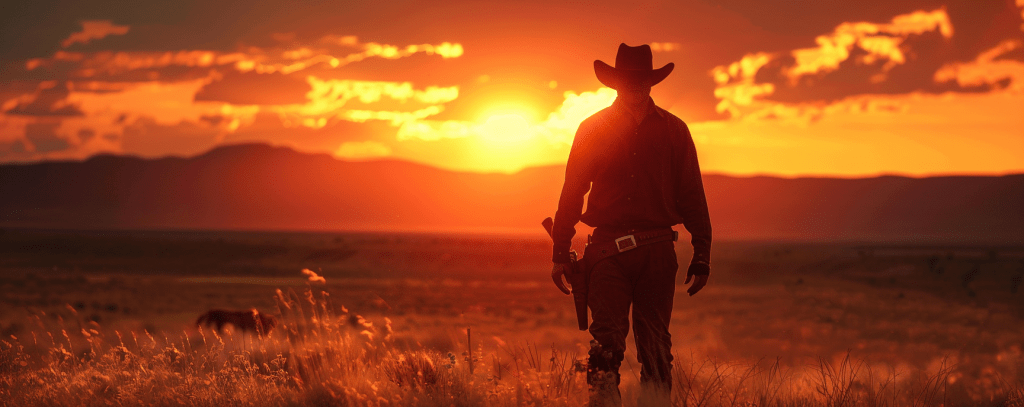
The Western genre is renowned for its iconic imagery and symbolism, which have become ingrained in the cultural imagination. The image of the lone cowboy silhouetted against a setting sun, the vast open plains, and the dusty main street of a frontier town are all visual hallmarks of the genre. These images evoke a sense of freedom, adventure, and the enduring spirit of the American West.
Symbolism plays a crucial role in the Western, often reinforcing the genre’s themes and moral dilemmas. The cowboy’s hat and six-shooter, the sheriff’s badge, and the outlaw’s black hat are not just props but symbols of identity, authority, and rebellion. The landscape itself is symbolic, representing both the promise of new beginnings and the peril of the unknown.
The Decline and Revival of the Western
By the 1960s, the popularity of the Western genre began to wane. The rise of television and changing audience tastes contributed to the decline, as did the growing critique of the genre’s portrayal of Native Americans and its often simplistic moral narratives. However, the Western never fully disappeared. Instead, it evolved, giving rise to sub-genres such as the Spaghetti Western and the revisionist Western.
Spaghetti Westerns, popularized by directors like Sergio Leone, brought a grittier and more stylized approach to the genre. Films like “A Fistful of Dollars” (1964) and “The Good, the Bad and the Ugly” (1966) introduced anti-heroes and more complex moral landscapes, revitalizing interest in the Western.
Revisionist Westerns, emerging in the 1970s and beyond, sought to deconstruct and critique the traditional Western myths. Films like “Little Big Man” (1970) and “Unforgiven” (1992) offered more nuanced portrayals of Native Americans and explored the darker aspects of frontier life. These films reflected a more critical and reflective view of America’s past, challenging the romanticized narratives of earlier Westerns.
The Searchers: Defining the Classic Western
Background and Summary of “The Searchers” (1956)
Released in 1956, “The Searchers,” directed by John Ford and starring John Wayne, is often heralded as one of the greatest Westerns of all time. The film is based on Alan Le May’s 1954 novel of the same name and tells the story of Ethan Edwards (John Wayne), a Confederate veteran who embarks on a years-long quest to rescue his niece Debbie (Natalie Wood), who has been abducted by Comanche warriors. This journey takes Ethan and his part-Comanche nephew, Martin Pawley (Jeffrey Hunter), across the vast landscapes of the American West.
The narrative begins with Ethan’s return to his brother’s home in Texas after the Civil War. Soon after his arrival, a Comanche raid results in the slaughter of his brother’s family and the abduction of his two nieces. Ethan’s obsessive and relentless pursuit of the remaining niece, Debbie, drives the plot. Over the course of their search, Ethan’s deep-seated racial hatred and vengeful nature become increasingly apparent, contrasting sharply with Martin’s more compassionate approach.
Analysis of Themes and Character Archetypes
“The Searchers” delves into complex themes that set it apart from many other Westerns of its time. One of the central themes is the idea of obsession and the lengths to which it can drive an individual. Ethan’s relentless pursuit of Debbie is fueled not only by a desire to rescue her but also by a deep-seated hatred for the Comanche, whom he views as savage and irredeemable. This obsession borders on madness, as Ethan is willing to kill Debbie if he believes she has become too assimilated into Comanche culture.
Another significant theme is racism and intolerance. Ethan’s character embodies the prejudiced attitudes of the time, and his views on Native Americans are unflinchingly negative. This is starkly contrasted with Martin, who, despite being part Comanche, is loyal, brave, and morally upright. The film does not shy away from presenting Ethan’s bigotry, making him a complex and often unlikeable protagonist.
The archetypes in “The Searchers” are classic yet layered with depth. Ethan represents the quintessential rugged cowboy but with a dark and vengeful twist. He is an anti-hero, a man whose bravery and determination are tainted by his prejudices and violent tendencies. Martin serves as the moral compass of the story, embodying empathy and tolerance. Debbie, though not as prominently featured, symbolizes innocence lost and the impact of cultural clashes.
Cinematic Techniques and Storytelling Methods
John Ford’s direction in “The Searchers” showcases his mastery of visual storytelling. The film’s cinematography, by Winton C. Hoch, is lauded for its breathtaking portrayal of Monument Valley, which serves as a stark and stunning backdrop to the narrative. The vast, rugged landscapes underscore the isolation and desolation of the characters’ journey, enhancing the epic scope of the film.
One of the most iconic visual elements of “The Searchers” is its use of framing. The film opens and closes with a doorway shot, symbolizing the threshold between civilization and the wilderness. This motif underscores the central conflict between the encroaching modern world and the untamed frontier. The final shot of Ethan standing in the doorway, alone and isolated, poignantly encapsulates his character’s fate as an eternal wanderer, unable to integrate into the society he fought to protect.
Ford also employs a rich color palette to convey mood and theme. The stark contrasts between the bright, open landscapes and the dark, confined interiors reflect the characters’ internal struggles and the larger cultural conflicts. The use of music, particularly the haunting score by Max Steiner, further enhances the emotional weight of the film.
Impact on the Genre and Subsequent Westerns
“The Searchers” had a profound impact on the Western genre, influencing countless filmmakers and redefining the narrative possibilities of Westerns. Its complex characters, moral ambiguity, and mature themes marked a departure from the more straightforward, black-and-white morality of earlier Westerns. This shift paved the way for more nuanced and psychologically rich Westerns in the decades to come.
Filmmakers such as Martin Scorsese, Steven Spielberg, and George Lucas have cited “The Searchers” as a major influence on their work. The film’s themes of obsession and revenge, its complex protagonist, and its visual storytelling techniques have inspired numerous films across various genres. For instance, the character of Ethan Edwards can be seen as a precursor to the morally ambiguous anti-heroes that populate contemporary cinema.
“The Searchers” also contributed to the evolution of the revisionist Western, a sub-genre that emerged in the 1960s and 1970s. Revisionist Westerns, such as “Little Big Man” (1970) and “Unforgiven” (1992), challenged traditional Western tropes by presenting a more critical and realistic view of frontier life and the American expansion. These films often depicted Native Americans more sympathetically and explored the darker aspects of the American frontier experience, a narrative shift that “The Searchers” helped to initiate.
In summary, “The Searchers” is a seminal work that not only exemplifies the classic Western but also transcends it, offering a rich, multifaceted exploration of character and theme. Its influence on the genre and on filmmaking as a whole is undeniable, making it a touchstone for understanding the evolution of the Western in American cinema.
Django Unchained: Reimagining the Western
Background and Summary of “Django Unchained” (2012)
“Django Unchained,” released in 2012 and directed by Quentin Tarantino, represents a bold and innovative take on the Western genre. The film stars Jamie Foxx as Django, a former slave turned bounty hunter, Christoph Waltz as Dr. King Schultz, a German bounty hunter who becomes Django’s mentor, and Leonardo DiCaprio as Calvin Candie, a brutal plantation owner. Set in the antebellum South, the film follows Django and Schultz as they rescue Django’s wife, Broomhilda (Kerry Washington), from the clutches of Candie.
The narrative begins with Schultz freeing Django from a chain gang, recognizing Django’s potential as a partner in bounty hunting. Schultz and Django develop a partnership built on mutual respect and a shared mission to find and rescue Broomhilda. Their journey takes them through various encounters with ruthless characters, culminating in a dramatic showdown at Candie’s plantation, Candyland. The film combines elements of traditional Westerns with the brutality of slavery, offering a raw and unflinching portrayal of America’s past.
Modern Interpretations and Subversions of the Genre
“Django Unchained” stands out for its modern interpretations and subversions of the Western genre. Tarantino, known for his genre-bending style, infuses the film with a blend of spaghetti Western aesthetics, blaxploitation cinema, and his signature dialogue and violence. This amalgamation creates a unique cinematic experience that both honors and critiques traditional Western tropes.
One of the most significant subversions is the film’s protagonist. Unlike the typical white male hero of classic Westerns, Django is a black former slave who takes on the role of the avenger. This casting choice challenges the genre’s historical lack of diversity and provides a platform for exploring themes of race and retribution. Django’s transformation from a shackled slave to a formidable bounty hunter embodies a powerful narrative of empowerment and resistance.
Tarantino also subverts the genre through his use of humor and anachronistic elements. The film’s dialogue is peppered with modern slang, and the soundtrack features contemporary music, including hip-hop. These choices create a dissonance that disrupts the historical setting, reminding viewers of the film’s constructed nature and encouraging a critical examination of the genre’s conventions.
Social and Political Themes Addressed in the Film
“Django Unchained” delves deeply into social and political themes, particularly those related to race, slavery, and justice. The film’s portrayal of slavery is unflinchingly brutal, depicting the physical and psychological horrors endured by enslaved individuals. This stark representation contrasts sharply with the often sanitized versions of history presented in traditional Westerns.
One of the central themes is the quest for justice and revenge. Django’s mission to rescue Broomhilda and punish those who have wronged him and his loved ones serves as a vehicle for exploring the broader concept of retribution. Through Django’s journey, Tarantino examines the moral complexities of revenge, questioning whether violence can ever truly be justified as a means of achieving justice.
The film also addresses the dehumanization inherent in the institution of slavery. Characters like Calvin Candie epitomize the sadistic and callous attitudes of slave owners, treating human beings as mere property. The character of Stephen (Samuel L. Jackson), Candie’s loyal house slave, adds another layer of complexity. Stephen’s complicity in the system of oppression raises questions about power dynamics and survival within the brutal hierarchy of slavery.
Furthermore, “Django Unchained” comments on the enduring legacy of racism in America. By setting the film in the pre-Civil War South and highlighting the atrocities of slavery, Tarantino draws a direct line to contemporary issues of racial inequality and systemic injustice. The film challenges viewers to confront the uncomfortable truths of America’s past and consider their implications for the present.
Influence on Contemporary Westerns and Other Genres
“Django Unchained” has had a significant impact on contemporary Westerns and other genres, inspiring filmmakers to explore more diverse and critical narratives within the Western framework. Its success demonstrated that the Western genre could be revitalized by incorporating fresh perspectives and addressing previously marginalized histories.
The film’s influence can be seen in subsequent Westerns that feature diverse casts and tackle complex social issues. For example, “The Hateful Eight” (2015), also directed by Tarantino, continues the trend of blending Western elements with critical social commentary. Other films, like “The Harder They Fall” (2021), directed by Jeymes Samuel, offer similarly diverse and modern takes on the Western, showcasing black cowboys and addressing racial themes.
Beyond the Western genre, “Django Unchained” has impacted how filmmakers approach historical narratives. Its blend of historical setting with contemporary stylistic elements has encouraged a more creative and critical approach to storytelling. This method allows for a richer exploration of historical themes while making them accessible and engaging for modern audiences.
In conclusion, “Django Unchained” reimagines the Western genre by subverting traditional tropes, addressing significant social and political themes, and influencing contemporary cinema. Its bold narrative and stylistic choices have opened the door for more inclusive and thought-provoking Westerns, ensuring the genre’s continued evolution and relevance.
✍️ Whether you’re mastering the art of dialogue, structure, or character development, the power of AI can be a game-changer in your writing journey. My Free Ebook, ‘AI for Authors’ delves into how AI-powered prompts can provide a unique edge to your storytelling process. If you’re intrigued by the prospect of supercharging your fiction skills, download your free copy today and explore new horizons in creative writing.
 A.I. in Screen Trade