World-building is an essential component of storytelling in movies and TV shows. It serves as the foundation upon which narratives unfold, creating immersive environments that captivate audiences and provide a context for characters and plots to thrive. With the advent of artificial intelligence (AI), the art of world-building has seen significant advancements. AI tools and techniques are enhancing the creative process, allowing writers, directors, and designers to construct detailed, dynamic, and believable worlds more efficiently than ever before. This article delves into the intersection of AI and world-building, exploring how AI is revolutionizing the creation of immersive worlds in film and television.
The Evolution of World-Building
World-building has always been a fundamental aspect of storytelling. From the richly detailed realms of Middle-earth in “The Lord of the Rings” to the dystopian future of “Blade Runner,” the ability to create vivid and consistent worlds is crucial for engaging storytelling. Traditionally, this process has been labor-intensive, requiring meticulous planning and extensive collaboration among writers, artists, and designers. The introduction of AI into this creative workflow marks a significant shift, enabling more sophisticated and intricate world-building with greater efficiency.
AI Tools for Enhanced Creativity
AI offers a range of tools that assist in various aspects of world-building, from generating landscapes and environments to crafting languages and cultures. One notable example is the use of procedural generation, a method where algorithms create complex and diverse environments based on a set of rules. This technique is widely used in video games but is increasingly being adopted in film and TV production. AI can generate realistic terrains, cities, and ecosystems, providing a solid foundation upon which writers and directors can build their stories.
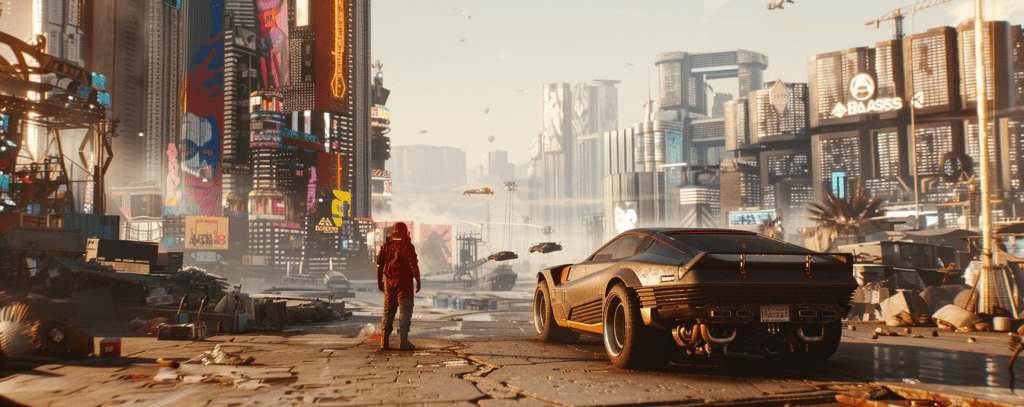
For instance, the AI-powered tool World Creator allows designers to create highly detailed landscapes and terrains quickly. By adjusting parameters such as terrain roughness, vegetation density, and water flow, creators can generate unique and realistic environments that would be time-consuming to design manually. This not only saves time but also expands the creative possibilities, allowing for more diverse and imaginative settings.
Generating Realistic Characters and Cultures
Beyond physical landscapes, AI is also instrumental in developing the social and cultural aspects of world-building. Tools like GPT-3 can generate detailed backstories, customs, and languages for fictional civilizations. This capability enhances the depth and authenticity of the worlds being created, making them more immersive for the audience.
For example, in the development of a fantasy series, AI can assist in creating a unique language complete with grammar rules and vocabulary, adding a layer of realism and consistency to the fictional world. Similarly, AI can generate cultural norms and societal structures, providing writers with a rich tapestry of elements to weave into their narratives.
Case Studies: AI in Modern Productions
Several recent productions have leveraged AI to enhance their world-building efforts. One notable example is “The Mandalorian,” a series set in the Star Wars universe. The production team used Unreal Engine, a game engine that incorporates AI, to create virtual sets and environments. This technology allowed for real-time rendering of complex scenes, providing actors and directors with a more immersive and interactive filming experience. The use of AI in this context not only streamlined the production process but also enabled the creation of visually stunning and believable worlds.
Another example is “Blade Runner 2049,” where AI was used to design the sprawling, dystopian cityscapes that define the film’s aesthetic. By using AI algorithms to generate the city’s intricate details, the filmmakers were able to create a visually rich and coherent environment that enhanced the storytelling.
Ethical Considerations and Challenges
While AI offers numerous benefits for world-building, it also presents certain ethical considerations and challenges. One significant concern is the potential for AI to perpetuate biases present in the data it is trained on. If not carefully monitored, AI-generated worlds could unintentionally reinforce stereotypes or exclude diverse perspectives. It is crucial for creators to be aware of these risks and take steps to ensure that their use of AI promotes inclusivity and diversity.
Additionally, the use of AI in creative processes raises questions about authorship and originality. As AI becomes more involved in the creation of content, it is important to delineate the roles of human creators and AI tools. Striking a balance between leveraging AI’s capabilities and preserving the unique vision and voice of human storytellers is essential for maintaining the integrity of the creative process.
The Future of AI in World-Building
The integration of AI into world-building is still in its early stages, but its potential is immense. As AI technology continues to advance, we can expect even more sophisticated tools that will further enhance the creative process. For instance, future AI systems might be capable of not only generating environments and cultures but also simulating complex social interactions and dynamics, providing an even richer foundation for storytelling.
Moreover, AI has the potential to democratize the world-building process, making it accessible to a broader range of creators. Independent filmmakers and small studios, who may lack the resources of major production companies, can leverage AI tools to create high-quality worlds and compete on a more level playing field.
Conclusion
AI is transforming the art of world-building in film and television, offering powerful tools that enhance creativity, efficiency, and realism. By enabling the rapid generation of detailed environments, characters, and cultures, AI is helping creators construct immersive worlds that captivate audiences. However, it is essential to navigate the ethical considerations and challenges associated with AI to ensure that its use in world-building promotes diversity and maintains the integrity of the creative process. As AI technology continues to evolve, it holds the promise of unlocking new realms of storytelling possibilities, pushing the boundaries of what is achievable in the world of entertainment.
✍️ Whether you’re mastering the art of dialogue, structure, or character development, the power of AI can be a game-changer in your writing journey. My Free Ebook, ‘AI for Authors’ delves into how AI-powered prompts can provide a unique edge to your storytelling process. If you’re intrigued by the prospect of supercharging your fiction skills, download your free copy today and explore new horizons in creative writing.
 A.I. in Screen Trade