The Structure of “Memento”
“Memento,” directed by Christopher Nolan and released in 2000, stands as a masterclass in non-traditional narrative structure. Its innovative approach to storytelling, particularly through its unique structure, sets it apart from conventional cinema and establishes it as a seminal work in the puzzle film genre. The film’s narrative structure is not merely a stylistic choice but is intricately tied to the story’s themes of memory, identity, and perception. To fully appreciate the brilliance of “Memento,” one must delve into the mechanics of its structure and understand how it serves to enhance the film’s core narrative and thematic elements.
Overview of “Memento” and Its Unique Narrative Structure
“Memento” employs a dual narrative structure, where one storyline is presented in color and runs backward in time, while the other is in black-and-white and runs forward. This non-linear approach reflects the protagonist Leonard Shelby’s condition—anterograde amnesia, which prevents him from forming new short-term memories. As Leonard attempts to uncover the truth about his wife’s murder, the audience is immersed in his fragmented and disorienting world, experiencing the same confusion and disarray he feels.
Chronological vs. Reverse Chronological Order
The colored sequences in “Memento” unfold in reverse chronological order, starting from the end of the story and moving backward to its beginning. This technique places the audience in Leonard’s shoes, as they, too, lack context and must piece together the narrative from fragmented segments. Each scene reveals what happened immediately before the previous one, creating a puzzle that the viewer must solve alongside Leonard.
In contrast, the black-and-white sequences follow a chronological progression. These scenes provide a more traditional narrative flow, gradually revealing Leonard’s backstory and his motivations. As the film progresses, these two narrative threads converge, culminating in a revelation that recontextualizes the entire story.
The Significance of Black-and-White vs. Color Sequences
The use of black-and-white and color sequences in “Memento” is not just an aesthetic choice but a narrative device that delineates the different timelines. The black-and-white segments represent Leonard’s moments of clarity and objective reasoning, as he meticulously records information to compensate for his memory loss. In contrast, the color sequences, presented in reverse, symbolize the chaotic and subjective nature of his existence, where he is constantly grappling with incomplete memories and distorted truths.
Analysis of How the Structure Serves the Story and Themes
The structure of “Memento” is intricately tied to its central themes of memory, identity, and the nature of truth. By mirroring Leonard’s cognitive disarray, the film forces the audience to engage actively with the narrative, piecing together clues and questioning the reliability of what they see and hear.
Memory and Identity
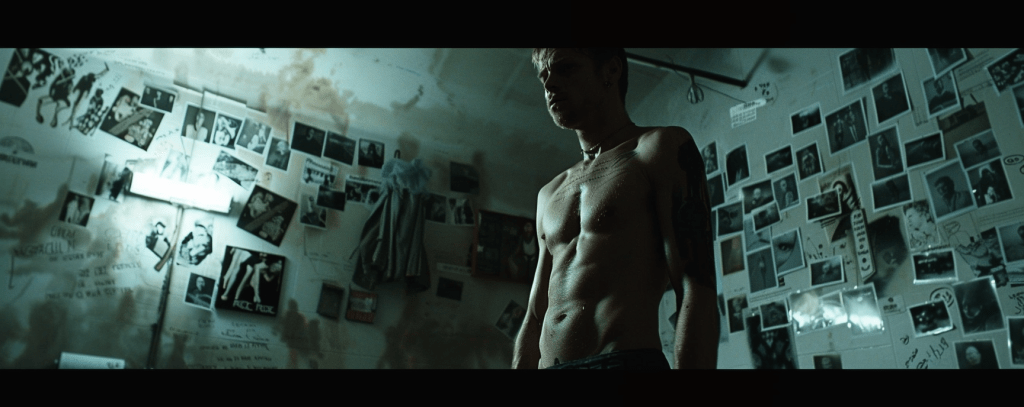
Leonard’s struggle with memory loss is not just a plot device but a profound exploration of identity. In the absence of a continuous memory, Leonard relies on notes, tattoos, and Polaroid photos to construct a sense of self and purpose. This reliance on external aids to remember and define himself raises questions about the nature of identity and how it is constructed. The backward narrative structure underscores this theme, as the audience, like Leonard, must rely on fragmented information to make sense of the story.
The film also delves into the fallibility of memory. Leonard’s tattoos and notes, intended to be reliable records, are subject to misinterpretation and manipulation. This idea is reinforced through the reverse chronology, which reveals that Leonard’s understanding of events is often based on incomplete or erroneous information. The fragmented narrative thus becomes a metaphor for the unreliability of human memory and the subjective nature of truth.
Unreliable Narration
“Memento” is a prime example of unreliable narration in cinema. Leonard, the protagonist and the film’s narrator, is inherently unreliable due to his amnesia. This unreliability is compounded by the film’s structure, which constantly challenges the audience’s perceptions and assumptions. As viewers piece together the narrative, they are forced to question the veracity of Leonard’s beliefs and the information presented.
The convergence of the black-and-white and color sequences at the film’s climax serves as a pivotal moment where the full extent of Leonard’s unreliability is revealed. It becomes clear that Leonard has been manipulating his own memories to maintain a sense of purpose, leading to a revelation that upends the audience’s understanding of the story. This twist not only redefines the narrative but also highlights the theme of self-deception and the lengths to which individuals will go to preserve their sense of identity.
Thematic Resonance and Audience Engagement
The non-linear structure of “Memento” serves to immerse the audience in Leonard’s disoriented reality, fostering a deeper connection to his plight. This engagement is not passive; viewers are invited to become active participants in the narrative, constantly re-evaluating their understanding of events as new information is revealed. This interactive aspect of the film enhances its emotional and intellectual impact, making the audience’s experience of the story as fragmented and challenging as Leonard’s own.
By disrupting the conventional flow of time and narrative, “Memento” challenges viewers to rethink the nature of storytelling itself. It demonstrates how structure can be used not just to tell a story but to embody the themes and experiences it seeks to convey. In doing so, “Memento” elevates the act of watching a film into an immersive, puzzle-solving experience that lingers long after the credits roll.
The Art of Puzzle Films
Puzzle films represent a distinctive and intellectually engaging genre of cinema. These films are characterized by their complex narrative structures, which often require active participation from the audience to piece together the story. By defying traditional storytelling conventions, puzzle films create rich, multi-layered viewing experiences that challenge perceptions and provoke deeper thought.
Definition and Characteristics of Puzzle Films
Non-linear Storytelling
One of the defining characteristics of puzzle films is their non-linear storytelling. Unlike traditional narratives that follow a straightforward, chronological order, puzzle films often disrupt the temporal sequence of events. This can involve flashbacks, flash-forwards, and other techniques that jumble the timeline, requiring viewers to actively reconstruct the narrative in their minds. This non-linear approach not only heightens the mystery and suspense but also allows filmmakers to explore themes such as memory, identity, and the nature of reality in more nuanced ways.
Fragmented Narratives
Puzzle films frequently employ fragmented narratives that present pieces of the story in a disjointed manner. These fragments might be shown out of sequence, from multiple perspectives, or interspersed with seemingly unrelated scenes. This fragmentation mirrors the process of solving a puzzle, where individual pieces must be examined and understood before the complete picture emerges. By withholding key information and gradually revealing it throughout the film, puzzle films maintain a sense of intrigue and engagement, prompting viewers to continually reassess their understanding of the plot.
Active Audience Engagement
Puzzle films demand active engagement from the audience. Unlike passive viewing experiences, where the narrative unfolds clearly and coherently, puzzle films require viewers to participate in the storytelling process. Audiences must pay close attention to details, draw connections between disparate elements, and often rewatch the film to fully grasp its intricacies. This active engagement creates a more immersive and rewarding viewing experience, as audiences are intellectually and emotionally invested in uncovering the film’s mysteries.
Examples of Notable Puzzle Films
“Inception”
Christopher Nolan’s “Inception” (2010) is a quintessential puzzle film that explores the nature of dreams and reality. The film’s narrative structure is both complex and layered, featuring multiple levels of dreams within dreams. Each level operates on a different time scale, further complicating the narrative. As the protagonist, Dom Cobb, navigates these dreamscapes to perform corporate espionage, the audience is drawn into a labyrinthine plot that requires them to piece together the rules and logic of the dream world. “Inception” exemplifies how puzzle films can blend non-linear storytelling with high-concept ideas to create a captivating cinematic experience.
“Mulholland Drive”
David Lynch’s “Mulholland Drive” (2001) is another iconic puzzle film known for its surreal and enigmatic narrative. The film blurs the line between reality and illusion, presenting a fragmented storyline that challenges viewers to discern what is real and what is fantasy. Lynch’s use of dreamlike sequences, disjointed chronology, and symbolic imagery creates a narrative that is open to multiple interpretations. “Mulholland Drive” exemplifies the puzzle film’s ability to engage audiences through ambiguity and emotional resonance, leaving a lasting impact that encourages repeated viewings and in-depth analysis.
“The Prestige”
Christopher Nolan’s “The Prestige” (2006) offers a masterful example of a puzzle film that intertwines themes of obsession, sacrifice, and deception. The story revolves around two rival magicians whose lives are entangled in a deadly game of one-upmanship. Nolan employs a non-linear narrative, with frequent shifts in time and perspective, to gradually unveil the secrets behind the magicians’ tricks. The film’s structure mirrors the art of illusion, with each twist and turn meticulously crafted to keep the audience guessing. “The Prestige” demonstrates how puzzle films can effectively use narrative complexity to enhance thematic depth and character development.
The Role of the Director and Writer in Crafting Puzzle Films
Creating a successful puzzle film requires a delicate balance of complexity and clarity. Directors and writers play a crucial role in this process, employing various techniques to craft narratives that are challenging yet coherent.
Techniques to Create Complexity
To achieve the intricate narrative structures characteristic of puzzle films, filmmakers often use techniques such as non-linear timelines, unreliable narrators, and multiple perspectives. Non-linear timelines disrupt the conventional flow of events, prompting viewers to piece together the chronology themselves. Unreliable narrators add layers of uncertainty, forcing audiences to question the veracity of the information presented. Multiple perspectives provide a multifaceted view of the story, revealing different angles and insights that gradually coalesce into a cohesive whole.
Visual and auditory cues are also essential in puzzle films. Filmmakers use recurring motifs, symbolic imagery, and subtle clues to guide the audience’s interpretation. These elements are carefully planted throughout the film, rewarding attentive viewers who notice and connect them. By integrating these techniques, directors and writers can create a narrative that is both intellectually stimulating and emotionally engaging.
Balancing Ambiguity and Clarity
One of the key challenges in crafting a puzzle film is striking the right balance between ambiguity and clarity. While the narrative should be complex and thought-provoking, it must also provide enough clarity to prevent viewers from becoming frustrated or disengaged. This balance can be achieved by ensuring that the central themes and character motivations are clearly defined, even if the plot itself remains ambiguous.
Filmmakers must also consider the pacing of information revelation. Gradual disclosure of key details keeps the audience intrigued without overwhelming them. Strategic use of exposition can help clarify essential plot points without disrupting the narrative flow. By carefully calibrating the level of ambiguity, directors and writers can maintain the audience’s interest and satisfaction, leading to a more impactful and memorable film.
The Impact and Legacy of Puzzle Films
Puzzle films, with their intricate narratives and demand for active audience engagement, have left an indelible mark on the cinematic landscape. Their unique storytelling approaches not only challenge traditional narrative structures but also foster a deeper connection between the viewer and the film. The impact of puzzle films can be seen in their reception, their influence on other media, and their potential future evolution.
Audience Reception and Critical Analysis
Cognitive Engagement and Emotional Impact
One of the most significant aspects of puzzle films is the level of cognitive engagement they require from the audience. Unlike traditional linear narratives, puzzle films compel viewers to actively participate in the storytelling process. This active engagement leads to a more immersive and intellectually stimulating viewing experience. Films like “Memento” and “Inception” invite audiences to piece together the narrative puzzle, enhancing their emotional investment in the story and its characters.
The emotional impact of puzzle films is also profound. By placing viewers in the position of the protagonist, as seen in “Memento,” these films create a sense of empathy and connection that is often stronger than in more straightforward narratives. The process of uncovering the truth alongside the characters fosters a deeper understanding of their struggles and motivations, leading to a more emotionally resonant experience.
Discussion of Audience Satisfaction and Frustration
While puzzle films can be highly rewarding, they also carry the risk of frustrating viewers who may struggle to follow their complex narratives. The satisfaction of solving the narrative puzzle can be immensely gratifying, but the ambiguity and complexity inherent in these films can leave some audiences feeling confused or unsatisfied. This dichotomy is evident in the mixed reactions to films like “Mulholland Drive,” where some viewers revel in the interpretive freedom, while others are left perplexed by its enigmatic storyline.
Critical analysis of puzzle films often highlights this balance between satisfaction and frustration. Critics praise these films for their ingenuity and the intellectual challenge they present, but they also note that the same qualities can alienate viewers who prefer more straightforward storytelling. Despite this, the critical acclaim and enduring popularity of puzzle films suggest that their strengths far outweigh their potential drawbacks.
Influence on Subsequent Films and Storytelling
Trends in Modern Cinema
The influence of puzzle films extends beyond their immediate reception, shaping trends in modern cinema and storytelling. The success of films like “Memento” and “Inception” has inspired a new wave of filmmakers to experiment with non-linear narratives and complex storytelling techniques. This trend can be seen in movies such as “Arrival” (2016) and “Annihilation” (2018), which incorporate fragmented narratives and ambiguous endings to create thought-provoking cinematic experiences.
Puzzle films have also encouraged the blending of genres, resulting in hybrid films that combine elements of mystery, science fiction, and psychological thriller. This genre-blending approach has led to the creation of unique and innovative films that push the boundaries of traditional storytelling.
Influence on Television and Other Media
The impact of puzzle films is not limited to cinema; it has also permeated television and other media. Television series such as “Westworld” and “Dark” draw heavily on the narrative techniques popularized by puzzle films, featuring intricate plots, non-linear storytelling, and thematic complexity. These shows have garnered critical acclaim and a dedicated fan base, demonstrating the appeal and effectiveness of puzzle film elements in long-form storytelling.
Video games, too, have embraced the puzzle film ethos, with titles like “Her Story” and “The Witness” offering players fragmented narratives that require active engagement to piece together. These games create immersive experiences that mirror the cognitive challenges and rewards of puzzle films, further extending the genre’s influence into interactive media.
Future of Puzzle Films
Potential Evolution of the Genre
As technology and audience preferences evolve, so too will the genre of puzzle films. The increasing availability of digital filmmaking tools and the rise of streaming platforms provide filmmakers with new opportunities to experiment with narrative structure and storytelling techniques. Interactive films, such as “Bandersnatch” from the “Black Mirror” series, represent a potential future direction for the genre, where viewers can influence the storyline and experience multiple narrative paths.
The evolution of puzzle films may also involve a greater emphasis on multi-platform storytelling. Transmedia narratives, which span across films, television, video games, and other media, offer a way to expand the puzzle film experience beyond a single medium. By creating interconnected stories that unfold across different platforms, filmmakers can craft even more complex and engaging narratives that challenge and captivate audiences.
Emerging Technologies and Storytelling Techniques
Emerging technologies, such as virtual reality (VR) and augmented reality (AR), present exciting possibilities for the future of puzzle films. VR and AR can create immersive environments where viewers are not just passive observers but active participants in the narrative. This shift from passive to active engagement aligns perfectly with the core principles of puzzle films, offering new ways to involve audiences in the storytelling process.
Artificial intelligence (AI) also holds potential for the genre. AI-driven narratives can adapt in real-time to audience choices and interactions, creating personalized and dynamic storytelling experiences. This could lead to the development of puzzle films that are unique for each viewer, enhancing the sense of discovery and engagement.
✍️ Whether you’re mastering the art of dialogue, structure, or character development, the power of AI can be a game-changer in your writing journey. My Free Ebook, ‘AI for Authors’ delves into how AI-powered prompts can provide a unique edge to your storytelling process. If you’re intrigued by the prospect of supercharging your fiction skills, download your free copy today and explore new horizons in creative writing.
 A.I. in Screen Trade