The Anatomy of Cringe Comedy
Cringe comedy, a subgenre that revels in the discomfort of its audience, finds its humor in awkwardness, social faux pas, and the inability of characters to recognize their own inappropriate behavior. This style of comedy, often characterized by prolonged, uncomfortable scenes that challenge the traditional boundaries of the comedic form, has been perfected in popular television shows such as “The Office.” To understand the mechanics and allure of cringe comedy, it is essential to dissect its core elements and the psychological engagement it demands from viewers.
Defining Cringe Comedy
At its core, cringe comedy is built around the concept of vicarious embarrassment. Viewers are compelled to engage with scenarios that most would find mortifying or intensely uncomfortable in real life. This genre capitalizes on the tension between what is socially acceptable and the blatant disregard for these norms by its characters. In “The Office,” this is exemplified by the character of Michael Scott, whose lack of self-awareness and desperate need for approval lead to a myriad of cringeworthy moments. Unlike traditional comedies, where characters may be in on the joke, cringe comedy often leaves its characters oblivious to the absurdity of their actions, amplifying the viewer’s sense of discomfort.
Psychological Engagement
Cringe comedy’s effectiveness hinges on the psychological phenomenon of empathetic embarrassment. When viewers see a character like Michael Scott obliviously cross boundaries, they react not only to the humor intended by the creators but also to their own empathetic responses to the social discomfort being portrayed. This dual-layered engagement is unique to cringe comedy. It’s not merely about observing a character in a ridiculous situation; it’s about feeling a part of that situation in a vicariously uncomfortable way.
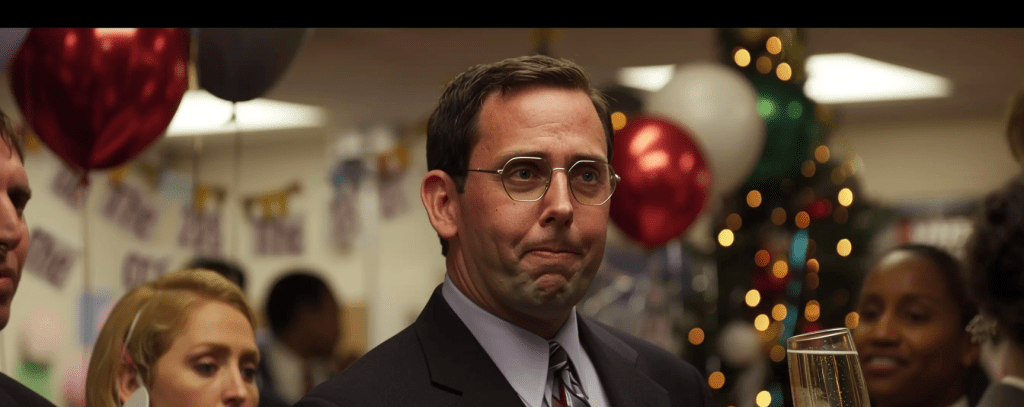
Research in psychology suggests that people who have a higher propensity for empathy might experience these kinds of comedies as more painful than humorous. This introduces a fascinating dynamic where the audience’s tolerance for embarrassment can influence their enjoyment of the show. Such engagement makes cringe comedy a polarizing yet intriguing field of study for understanding humor’s impact on human emotions.
Elements of Cringe in “The Office”
“The Office” employs several key elements that are quintessential to cringe comedy. Firstly, the mockumentary format of the show allows for an intimate examination of characters’ facial expressions and non-verbal cues, which are often laden with discomfort and awkwardness. The camera work, with its quick zooms and prolonged stares, acts almost as a character in its own right, highlighting and sometimes exaggerating the awkwardness of interactions.
Secondly, the mundane setting of a typical American office magnifies the absurdity of the characters’ behavior. The relatability of the office environment makes the abnormal behavior of characters like Michael, Dwight, or Andy all the more jarring. This juxtaposition of the ordinary with the absurd invites the audience to examine their own office experiences through a comedic, albeit cringey, lens.
Dialogue in “The Office” also plays a crucial role. Conversations often begin on a normal note but quickly devolve into awkward tangents or inappropriate ramblings, particularly in Michael Scott’s dialogues. These interactions are rarely resolved in a satisfying manner, leaving the audience to linger in the discomfort. The humor derived from these exchanges does not come from witty punchlines but from the growing realization of the conversation’s inappropriateness and the other characters’ reactions to it.
Historical Context and Influences
The roots of cringe comedy can be traced back to earlier shows and performers who embraced elements of awkwardness and social faux pas. Shows like “Fawlty Towers” and characters like Larry David in “Curb Your Enthusiasm” set the groundwork for this style by focusing on characters whose lack of social grace leads to increasingly uncomfortable situations. However, it was “The Office,” originally created by Ricky Gervais and Stephen Merchant for UK television, that mainstreamed cringe comedy and explored its depths in the context of an everyday workplace.
The influence of British humor, particularly its penchant for underplayed and awkward social interactions, is evident in the show’s comedic style. The original UK version of “The Office” introduced a brand of humor that was at once painfully awkward and subtly brilliant, challenging audiences to find amusement in the discomfort. When adapted for an American audience, the show retained much of its awkward humor while tailoring the characters and settings to resonate with a broader base.
Understanding Viewer Reception
The reception of cringe comedy, particularly of a show like “The Office,” varies widely among audiences. For some, the awkward situations and secondhand embarrassment are hilariously entertaining. For others, the same scenarios might be too uncomfortable to watch. This split is indicative of cringe comedy’s unique place in the comedy genre—it is as much about pushing boundaries as it is about eliciting laughs.
Character Development and Dynamics in “The Office”
In “The Office,” the rich tapestry of character development and interpersonal dynamics not only drives the narrative but also serves as the foundation for its cringe comedy. Each character, from the bumbling yet endearing Michael Scott to the eccentric Dwight Schrute, plays a crucial role in creating moments of discomfort and hilarity. This section explores how these characters embody the elements of cringe comedy through their development and interactions, using specific examples from the show.
Michael Scott: The King of Cringe
Michael Scott, portrayed by Steve Carell, is a quintessential example of a cringe-inducing character. His desperate need for approval, combined with a profound lack of awareness, sets the stage for many of the show’s most awkward moments. Michael’s attempts at humor, often involving inappropriate jokes or misguided attempts at relatability, typically end in silence or discomfort from his colleagues. This character trait is vividly displayed in the episode “Diversity Day,” where Michael’s attempt to teach the office about diversity ends up offending every person in the room. His inability to recognize the inappropriateness of his actions, despite the evident discomfort of his audience, perfectly encapsulates the essence of cringe comedy.
Dwight Schrute: Absurdity and Earnestness
Dwight Schrute, played by Rainn Wilson, is another pivotal character in fostering the show’s atmosphere of cringe. His intense seriousness about his job as a paper salesman and self-appointed office enforcer, coupled with bizarre behavior and beliefs (such as his obsession with survival tactics and beet farming), frequently puts him at odds with the rest of the office. Dwight’s interactions often lead to cringe-worthy moments due to his lack of social cues and extreme reactions. For instance, his fire safety demonstration in the episode “Stress Relief” causes sheer panic, demonstrating how his good intentions are often executed in the most absurdly inappropriate ways.
Jim and Pam: The Relatable Counterpart
Contrasting with Michael and Dwight are Jim Halpert and Pam Beesly, whose budding relationship offers a more relatable and less cringe-inducing subplot. However, their pranks on Dwight and their reactions to Michael’s antics often serve as a conduit for the audience’s own feelings of secondhand embarrassment. Jim, in particular, frequently breaks the fourth wall with his knowing glances into the camera, acknowledging the absurdity of the situations in a way that invites the audience to share in the cringe. This dynamic is clearly seen in episodes like “Classy Christmas,” where Jim’s fear of Dwight’s revenge encapsulates the anticipation and dread that underpin much of cringe comedy.
The Role of Supporting Characters
Supporting characters like Angela, Kevin, and Oscar each contribute to the cringe comedy environment in their unique ways. Angela’s stern moralism and obsession with cats often clash hilariously with her colleagues’ more relaxed attitudes, while Kevin’s perpetual cluelessness and simplistic thinking create awkward moments that are both endearing and cringe-worthy. Oscar’s rational and often sardonic viewpoint provides a grounded perspective on the chaos, which often highlights the absurdity of situations for comedic effect.
Character Interactions and Cringe Humor
The interactions between these characters are central to “The Office’s” success in cringe comedy. The chemistry—or often the deliberate lack thereof—between characters like Michael and Toby, whom Michael irrationally hates, adds layers to the comedic texture of the show. Episodes like “The Deposition” illustrate how Michael’s irrational dislike for Toby exacerbates already tense situations, making them even more uncomfortable and thereby funnier for the audience.
Each character’s development throughout the series also deepens the comedic potential. As characters grow, change, or reveal more about their backgrounds, their interactions evolve. This evolution allows the show to explore new dimensions of cringe comedy without losing the freshness of its humor. For example, Michael’s relationship arc, from a bumbling boss to a more self-aware and caring figure, while still maintaining his cringe-inducing qualities, showcases a sophisticated balance of character growth with comedic consistency.
Impact and Legacy of “The Office” on Modern Comedy
“The Office” not only entertained with its awkward humor and unforgettable characters but also left a significant mark on television comedy. This section examines how the show’s innovative approach to cringe comedy has influenced other series and altered audience expectations for the genre, exploring its broader cultural significance and reasons for its enduring popularity.
Redefining Situational Comedy
Before “The Office,” situational comedies largely depended on laugh tracks and studio audiences to cue viewer reactions. By eschewing these traditional elements in favor of a single-camera setup and a mockumentary style, “The Office” introduced audiences to a new, more intimate way of experiencing comedy. This approach allowed for a subtler, more organic development of comedic situations, which often stemmed from character interactions and personality quirks rather than scripted jokes. The show’s realistic setting and relatable scenarios—amplified by the cringe-worthy behavior of its characters—created a form of humor that resonated deeply with viewers, influencing subsequent comedies like “Parks and Recreation,” “Modern Family,” and “Brooklyn Nine-Nine,” which adopted similar stylistic elements.
Influence on Audience Expectations
“The Office” also shifted audience expectations regarding the depth and complexity of comedic television. Viewers came to appreciate character-driven humor and stories that developed over time, valuing emotional depth alongside laughs. The series demonstrated that comedy could be both hilarious and heartwarming, leading audiences to expect more from sitcoms than just a series of gags. This emotional engagement is evident in how fans rooted for Jim and Pam’s relationship or felt genuine sadness during Michael Scott’s departure—episodes that blended humor with poignant storytelling, setting a new standard for how sitcoms could impact their audience.
Legacy of Character Archetypes
The character archetypes introduced by “The Office” have become blueprints for modern comedy. Michael Scott, the well-meaning but hopelessly inept manager, has influenced numerous characters in television comedy, where his legacy can be seen in the likes of Leslie Knope from “Parks and Recreation” and Jake Peralta from “Brooklyn Nine-Nine.” Each of these characters embodies some aspect of Michael’s blend of foolishness and sincerity, proving that characters with good intentions but flawed methods can be both loveable and hilarious. Similarly, the dynamic of rational and irrational colleagues found in Jim and Dwight’s relationship has been mirrored in many shows, highlighting the comedic potential of clashing personalities in close working environments.
Cultural Significance and Social Impact
“The Office” has permeated popular culture to an extent few other series have. Its phrases and scenes have become part of the lexicon of everyday life, referenced in everything from casual conversation to professional presentations. The show has also been credited with presenting a satirical yet accurate depiction of office life that many find therapeutic. It offers a way to laugh at the absurdities of modern work environments, serving as both a mirror and a relief for the frustrations of office-bound employees everywhere. Moreover, “The Office” has inspired numerous adaptations around the world, each reflecting and reforming the show’s themes to fit different cultural contexts, further testament to its universal appeal and relevance.
Enduring Popularity and Relevance
Decades after its premiere, “The Office” continues to be discovered by new generations of viewers, thanks to streaming platforms. Its continued relevance speaks to the timeless nature of its humor and the universal truths about workplace dynamics and human behavior it explores. The show’s ability to blend cringe-worthy moments with genuine human connection allows it to maintain a lasting presence in the cultural zeitgeist, continually attracting fans who find both comfort and comedy in its episodes.
Moreover, the show’s format has inspired corporate training videos, team-building exercises, and even academic courses that explore its portrayal of management styles and workplace ethics. By turning the mundane into the extraordinary, “The Office” has set itself apart as more than just a source of entertainment—it has become a tool for education and reflection on the nature of work and relationships in the corporate world.
In conclusion, the impact and legacy of “The Office” on modern comedy and broader culture are profound. It has reshaped how comedies are made and what audiences expect from them, enduring as a beloved classic that continues to engage and influence. Its unique blend of humor, heart, and a touch of discomfort has not only set new standards for the genre but has also established the show as a pivotal point in the evolution of television comedy.
✍️ Whether you’re mastering the art of dialogue, structure, or character development, the power of AI can be a game-changer in your writing journey. My Free Ebook, ‘AI for Authors’ delves into how AI-powered prompts can provide a unique edge to your storytelling process. If you’re intrigued by the prospect of supercharging your fiction skills, download your free copy today and explore new horizons in creative writing.
 A.I. in Screen Trade