The Storytelling Brilliance of “Some Like It Hot”
In the pantheon of classic cinema, “Some Like It Hot,” directed by Billy Wilder and released in 1959, occupies a throne of its own. Its storytelling prowess is underscored by a tantalizing plot, multidimensional characters, and an innovative narrative approach that were ahead of its time. The film’s premise—a pair of musicians disguising themselves as women to escape mafia retribution—provides a fertile ground for exploring themes of identity, love, and desperation, all wrapped in a comedic package that has endured for over six decades.
The narrative of “Some Like It Hot” unfolds during the prohibition era, introducing us to Joe (Tony Curtis) and Jerry (Jack Lemmon), two struggling musicians who inadvertently witness the Saint Valentine’s Day Massacre. Their only escape from the mob’s vendetta is to join an all-female band headed to Florida, thus birthing their alter egos, Josephine and Daphne. This initial setup catapults the audience into a whirlwind of comedic situations, but at its heart, the film navigates through the complexities of the human experience, exploring themes of friendship, love, and the quest for freedom.
Character development is a critical pillar that upholds the comedic and narrative structure of “Some Like It Hot.” Joe and Jerry, beyond their humorous antics and cross-dressing escapades, are portrayed as fully realized characters with desires, fears, and vulnerabilities. Joe, as Josephine, finds himself falling for the enchanting Sugar (Marilyn Monroe), the band’s ukulele player and vocalist, whose dreams of finding a millionaire suitor mask her own insecurities and longing for love. Jerry, on the other hand, becomes the object of an elderly millionaire’s affection, providing a subplot that is as hilariously improbable as it is a fascinating study in the fluidity of attraction and identity. Through these characters, Wilder delves into the constructs of gender and societal expectations with a deftness and subtlety that were revolutionary for its time.
The narrative techniques employed by Wilder and co-screenwriter I.A.L. Diamond are a testament to their ingenuity and understanding of comedy’s mechanics. The film’s pacing is a marvel; it briskly moves from one scenario to the next, never losing momentum even as it layers complexity upon its plot and characters. This is evident in scenes where Joe and Jerry must navigate their new identities, dodging both the mafia and romantic advances, all while maintaining their covers. The cross-dressing element serves not merely as a source of humor but as a narrative device that challenges and lampoons the rigid gender norms of the era. Wilder uses this to create a series of misunderstandings and close calls that drive the plot forward, all the while allowing for moments of genuine character growth and introspection.
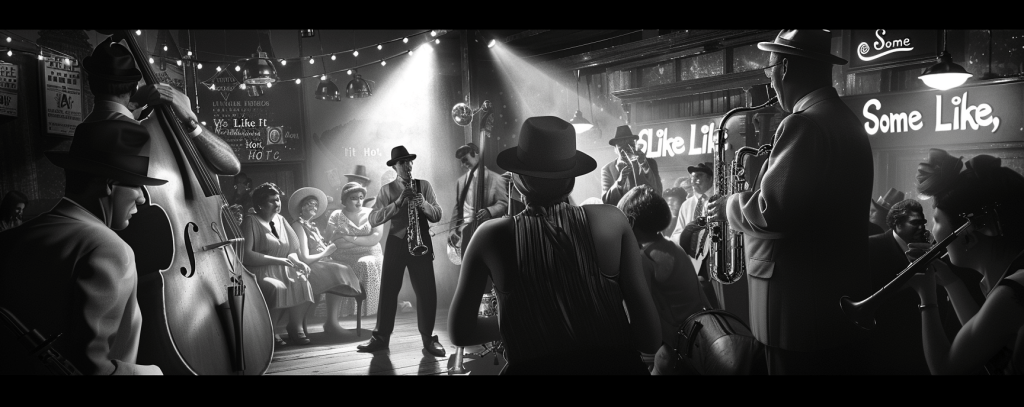
“Some Like It Hot” is also notable for its commentary on gender roles and societal expectations. Through its protagonists’ journey, the film subtly critiques the constraints society places on individual identity and expression. The characters of Joe and Jerry, when viewed through the lens of their alter egos, Josephine and Daphne, become vehicles for exploring themes of empathy, vulnerability, and the performance of gender. These themes are handled with a lightness of touch that belies their depth, a balancing act that Wilder masters with apparent ease. The film’s enduring relevance can be attributed, in part, to its willingness to engage with these issues in a manner that is both respectful and revelatory.
Perhaps the most striking aspect of “Some Like It Hot”’s storytelling is its ability to blend comedy with moments of poignancy and genuine emotion. Sugar’s vulnerability, Joe’s conflicted feelings, and Jerry’s unexpected enjoyment of his disguise all serve to humanize the film beyond its comedic trappings. This is complemented by the film’s ending, which has entered cinematic lore for its humor, openness, and underlying message of acceptance. The famous final line, “Well, nobody’s perfect,” delivered with impeccable timing by Joe E. Brown’s Osgood Fielding III, encapsulates the film’s heart and philosophy. It is a fitting conclusion to a narrative that celebrates the complexity of the human spirit with warmth, wit, and an unjudgmental embrace of life’s absurdities.
The Comedic Elements That Define “Some Like It Hot”
The comedic genius of “Some Like It Hot” lies in its masterful blend of slapstick, verbal wit, and situational comedy, executed so brilliantly by its cast and creators that it resonates with audiences even decades after its release. Billy Wilder’s direction and the screenplay’s sharp dialogue, combined with the actors’ impeccable comedic timing, create a symphony of laughs that has stood the test of time.
Slapstick and Verbal Wit
Wilder’s film is a treasure trove of comedic styles, but two of its most potent weapons are slapstick humor and razor-sharp wit. The physical comedy, especially the antics of Jack Lemmon and Tony Curtis in drag, offers a visual humor that transcends language and cultural barriers. Their exaggerated femininity, clumsy attempts at seduction, and the inevitable complications arising from their disguises provide a constant source of laughter. One particularly memorable scene involves Jerry’s (Lemmon) high-heeled mishaps and Joe’s (Curtis) attempts to navigate the intricacies of a ladies’ bathroom. These moments of slapstick genius do not merely serve as comic relief but as critical components of the film’s exploration of gender norms and identity.
However, “Some Like It Hot” does not rely solely on visual gags. The film is equally renowned for its verbal wit, with dialogue that sparkles with innuendo, double entendres, and clever repartees. Lines like Joe’s assertion that he is indeed “the manager of the band and not in that way” when Jerry fears for their moral safety among women, or Osgood’s unwavering acceptance of Daphne’s revelation, showcase Wilder’s skill in weaving humor through words. The screenplay’s verbal wit is sophisticated yet accessible, ensuring the jokes resonate on multiple levels and contribute to the film’s enduring appeal.
Situational Comedy
The situational comedy in “Some Like It Hot” is rooted in the film’s premise and the predicaments Joe and Jerry face. Their desperate bid for safety thrusts them into a world where they are perpetually on the brink of discovery, leading to a series of misadventures that are both absurd and hilarious. This comedy of errors is heightened by the romantic entanglements that ensue, particularly Joe’s infatuation with Sugar and Jerry’s unexpected engagement to Osgood. The situations the protagonists find themselves in, from navigating love interests in drag to dodging mafia hitmen, exploit the comedic potential of their dilemma to its fullest.
Moreover, the film’s setting— a beach resort in Florida—provides the perfect backdrop for these comedic escapades. The contrast between the sunny, leisurely atmosphere of the hotel and the protagonists’ internal panic adds a delicious irony to the mix. The situational comedy is further enriched by the supporting characters, whose interactions with Joe/Josephine and Jerry/Daphne add layers to the humor and complexity to the plot.
Timelessness of Humor
What makes the humor in “Some Like It Hot” timeless? At its core, the film taps into universal themes of love, desire, and the quest for freedom—elements that transcend the specific cultural context of 1959 America. The comedic situations, while often outrageous, are grounded in the characters’ genuine emotions and relationships, allowing audiences from any era to connect with the film on a personal level. The humor, therefore, does not feel dated but instead reflects the enduring absurdity of the human condition.
Additionally, the film’s approach to gender roles and identity was remarkably progressive for its time and remains relevant today. The humor derived from Joe and Jerry’s experiences in drag does not mock their femininity but rather uses it to challenge and satirize societal norms. This nuanced approach ensures that the comedy feels inclusive and empathetic, rather than alienating.
The execution of the film’s gags, from the timing to the delivery, is meticulous. Wilder’s direction ensures that each joke lands with precision, while the cast’s performances imbue the humor with warmth and vitality. The ensemble’s chemistry—particularly the dynamic between Curtis, Lemmon, and Monroe—elevates the comedy, making the interactions feel spontaneous and genuine.
Legacy and Influence of “Some Like It Hot”
Upon its release in 1959, “Some Like It Hot” immediately captured the imagination of audiences and critics alike. Directed by Billy Wilder and featuring the magnetic trio of Marilyn Monroe, Tony Curtis, and Jack Lemmon, the film was heralded for its innovative storytelling, masterful comedy, and daring exploration of themes that were considered ahead of their time. Its blend of slapstick, wit, and situational comedy set a new standard for the genre, earning it critical acclaim and a place in cinematic history.
Critical Reception and Awards
“Some Like It Hot” was not just a commercial success; it was a critical darling that garnered significant accolades. The film received six Academy Award nominations, including Best Director and Best Actor, and won for Best Costume Design, a testament to its visual flair and attention to detail. It also secured a spot on the American Film Institute’s lists of top 100 movies, further cementing its status as a classic. Critics praised Wilder’s direction, the sharp screenplay, and the performances, particularly Monroe’s portrayal of Sugar, which many consider to be one of her best roles. The film’s ability to seamlessly blend comedy with deeper themes of identity and desire was recognized as a groundbreaking achievement in storytelling.
Influence on Future Comedies
The legacy of “Some Like It Hot” extends far beyond its immediate success. It has influenced countless comedies, setting the benchmark for character-driven humor and complex narrative structures. The film demonstrated that comedy could tackle serious themes without losing its entertainment value, a principle that has been adopted by numerous filmmakers and screenwriters in the decades since. From the cross-dressing antics in “Tootsie” to the gender role explorations in “Mrs. Doubtfire,” echoes of “Some Like It Hot” can be seen across various comedic works that challenge societal norms with humor and heart.
The film’s structure, which expertly balances the development of its characters with escalating comedic scenarios, has become a blueprint for effective comedic storytelling. It proved that the audience’s investment in the characters’ journeys enhances the comedy, making every laugh resonate more deeply. This character-centric approach has influenced television comedies as well, where character development is essential to sustaining interest over multiple seasons.
Enduring Appeal
The enduring appeal of “Some Like It Hot” can be attributed to several factors, starting with its progressive themes. The film’s exploration of gender identity and societal expectations was pioneering for its time and remains relevant today. Its humorous yet empathetic treatment of Joe and Jerry’s experiences in drag resonates with contemporary discussions around gender fluidity and acceptance, making the film feel remarkably modern.
Moreover, the performances in “Some Like It Hot” are unforgettable. Marilyn Monroe’s portrayal of Sugar combines vulnerability with comedic brilliance, capturing the complexity of her character with depth and charm. Tony Curtis and Jack Lemmon’s dynamic as Joe and Jerry showcases their versatility as actors, navigating the demands of their dual roles with a blend of humor and sincerity. The chemistry among the leads, coupled with the ensemble cast’s contributions, creates a vibrant world that viewers love to return to.
The film also challenged the norms of its era, both in content and execution. Its risqué subject matter and Wilder’s refusal to conform to the Hays Code, which governed moral censorship in Hollywood at the time, set a precedent for creative freedom in filmmaking. This defiance not only marked “Some Like It Hot” as a trailblazer but also inspired future generations of filmmakers to push boundaries in their storytelling.
Finally, “Some Like It Hot” possesses a timeless quality that endears it to viewers of all ages. Its humor, while rooted in the specificities of its time, taps into universal themes of love, identity, and the pursuit of happiness. The film’s closing line, “Nobody’s perfect,” encapsulates this universality, serving as a poignant reminder of the shared imperfections that make us human. This blend of timeless humor with progressive themes ensures that “Some Like It Hot” continues to be celebrated and studied as a masterclass in filmmaking.
In conclusion, “Some Like It Hot” is more than just a comedy; it is a cultural touchstone that has left an indelible mark on the landscape of cinema. Its critical reception and awards heralded the arrival of a film that was not afraid to challenge societal conventions with wit and warmth. Its influence on subsequent generations of comedies, both in film and television, underscores its pivotal role in the evolution of the genre. The film’s enduring appeal, fueled by its progressive themes, memorable performances, and timeless humor, ensures that it remains a beloved classic. Through “Some Like It Hot,” Billy Wilder and his cast delivered a cinematic experience that entertains, challenges, and resonates, proving that great storytelling can indeed be timeless.
✍️ Whether you’re mastering the art of dialogue, structure, or character development, the power of AI can be a game-changer in your writing journey. My Free Ebook, ‘AI for Authors’ delves into how AI-powered prompts can provide a unique edge to your storytelling process. If you’re intrigued by the prospect of supercharging your fiction skills, download your free copy today and explore new horizons in creative writing.
 A.I. in Screen Trade