Epic poetry stands as one of the oldest forms of literary expression, deeply rooted in the cultural and historical tapestry of ancient civilizations. These long, narrative poems were more than mere stories; they were oral histories, moral compasses, and profound reflections on the human condition, encapsulating the values, struggles, and aspirations of the societies from which they emerged. Central to the pantheon of epic poetry is Homer’s ‘The Iliad,’ a masterpiece that has not only withstood the vicissitudes of time but has also profoundly influenced the course of Western literature and storytelling.
‘The Iliad,’ believed to have been composed in the 8th century BCE, chronicles a brief but pivotal period in the final year of the Trojan War, a legendary conflict between the kingdoms of Troy and Mycenaean Greece. Homer’s narrative is far from a mere military saga; it is a complex tapestry of human emotions, divine interventions, and the inexorable fate that binds mortals and gods alike. At its core, ‘The Iliad’ explores themes of glory and shame, honor and betrayal, love and loss, weaving them into the personal stories of its characters, who range from valiant warriors and noble kings to capricious gods and long-suffering civilians.
The epic begins with a dispute between Achilles, the greatest warrior of the Greeks, and Agamemnon, the commander of the Greek forces, over a captive woman. This quarrel leads to Achilles’ withdrawal from the battle, altering the course of the war and setting in motion a series of events that underscore the fragility of human pride and the devastating cost of conflict. The narrative unfolds on a grand scale, depicting fierce battles, heroic deeds, and divine machinations, yet it is the intimate moments of grief, compassion, and reconciliation that lend ‘The Iliad’ its enduring power.
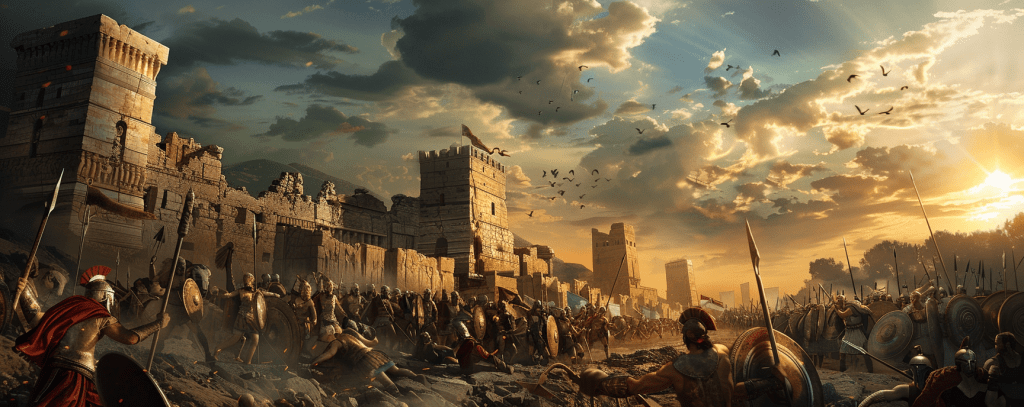
Homer’s portrayal of his characters is remarkably nuanced. Achilles, for instance, is not merely a paragon of martial prowess but a deeply conflicted hero, torn between his thirst for glory and the knowledge of his impending doom. Hector, the champion of Troy, embodies the virtues of courage and loyalty, yet he is tragically bound to a fate he cannot escape. Even the gods, with their petty rivalries and interventions, reflect the complexities of human nature, blurring the lines between the divine and the mortal.
Adapting such a rich and multifaceted work into a screenplay presents a formidable challenge. The screenwriter must distill the essence of ‘The Iliad’ into a narrative that resonates with modern audiences while navigating the constraints of cinematic form and the expectations of contemporary storytelling. This task involves critical decisions about which elements of the epic to highlight and which to omit, how to interpret the characters and their motivations, and how to convey the epic’s themes in a manner that is both faithful to the source material and accessible to viewers unfamiliar with the ancient text.
One of the key challenges in adapting ‘The Iliad’ is its narrative structure. Unlike a modern novel or screenplay, which typically follows a linear progression, ‘The Iliad’ is episodic, moving fluidly between different locations, characters, and points in time. The epic’s narrative is further complicated by frequent interventions by the gods, whose actions and motivations are often inscrutable to mortal characters and readers alike. A screenwriter must find creative ways to streamline this sprawling narrative, ensuring coherence and continuity while retaining the epic’s grandeur and depth.
Another challenge lies in the portrayal of the epic’s vast array of characters. ‘The Iliad’ features a diverse cast, each with their own intricate backstories, relationships, and arcs. Translating these characters to the screen requires a careful balancing act, giving each enough depth and development to be compelling while maintaining focus on the central narrative. The screenwriter must also navigate the epic’s portrayal of heroism and honor, concepts that have evolved significantly since Homer’s time. What constituted the height of heroism in ancient Greece might not resonate in the same way with a modern audience, requiring a nuanced approach to character motivation and morality.
Screenwriting ‘Troy’: Adapting Narrative and Character
Adapting Homer’s ‘The Iliad’ into the screenplay for ‘Troy’ was an ambitious endeavor that required a delicate balance between fidelity to the ancient text and the necessities of modern cinematic storytelling. The transition from epic poem to blockbuster film necessitated significant alterations in narrative structure, character development, and thematic focus, raising intriguing questions about the nature of adaptation and the ways in which timeless tales can be reshaped for new audiences.
The narrative structure of ‘The Iliad,’ with its episodic format and non-linear timeline, poses a unique challenge for screen adaptation. In contrast, the screenplay for ‘Troy’ adopts a more streamlined narrative, condensing the decade-long Trojan War into a matter of weeks. This compression not only facilitates a more cohesive and digestible plot for moviegoers but also heightens the drama and urgency of the conflict. By focusing on key events and relationships, the screenplay forges a clear narrative path through the complex web of stories and characters found in Homer’s original.
One of the most notable creative liberties taken in the adaptation is the amalgamation and omission of characters. ‘The Iliad’ boasts a vast ensemble cast, each with their own intricate storylines and allegiances. In the interest of narrative economy, the screenplay combines certain characters and omits others entirely. For instance, the character of Patroclus, while deeply significant in ‘The Iliad,’ is presented in ‘Troy’ with a shifted relationship to Achilles, altering the motivational dynamics and emotional resonance of their story. Such changes are emblematic of the adaptation’s approach to streamlining the epic’s narrative, focusing on a core set of characters to drive the plot forward.
The adaptation also selectively emphasizes certain themes over others, tailoring the story to the tastes and sensibilities of contemporary audiences. While ‘The Iliad’ delves deeply into questions of fate, glory, and the divine will, ‘Troy’ places greater emphasis on the human aspects of the story, such as love, loyalty, and the tragedy of war. This shift in thematic focus is reflected in the portrayal of the film’s central characters, who are rendered with a complexity and emotional depth that resonates with modern viewers.
Achilles, portrayed in ‘Troy’ by Brad Pitt, embodies this approach to character adaptation. While the Achilles of ‘The Iliad’ is driven by honor and the pursuit of eternal glory, the film’s version of the character is more introspective, wrestling with the meaning of his life and the futility of war. This nuanced portrayal highlights the screenplay’s focus on the internal struggles of its characters, making them more relatable to a contemporary audience. Similarly, Hector, played by Eric Bana, is depicted as a noble and dutiful warrior who is deeply committed to his family and city, mirroring his characterization in ‘The Iliad’ while also emphasizing his role as a tragic hero caught in the inexorable tide of destiny.
Helen of Troy, the “face that launched a thousand ships,” is another character whose portrayal in the film diverges from the epic poem. While ‘The Iliad’ offers a more ambiguous view of Helen, attributing her abduction to a mix of divine intervention and personal choice, ‘Troy’ presents her more sympathetically, focusing on her desire for freedom and love over the political machinations that lead to the war. This interpretation of Helen’s character aligns with the screenplay’s broader emphasis on personal agency and the human cost of conflict.
The adaptation of ‘The Iliad’ into ‘Troy’ is thus characterized by a series of calculated choices about which elements of the epic to preserve, which to alter, and which to omit. These decisions reflect not only the practical constraints of film as a medium but also the desire to make Homer’s story accessible and meaningful to a 21st-century audience. By streamlining the narrative, focusing on a core group of characters, and emphasizing the human rather than the divine aspects of the story, the screenplay for ‘Troy’ seeks to capture the essence of ‘The Iliad’ while also offering a fresh perspective on its timeless themes.
In doing so, the adaptation raises important questions about the nature of storytelling and the ways in which ancient tales can be reimagined for new generations. The creative liberties taken in ‘Troy’ highlight the adaptive process as a form of dialogue between the past and the present, a negotiation between the demands of historical fidelity and the creative imperatives of contemporary filmmaking. This dialogue is not without its tensions and controversies, as purists may decry deviations from the source material, while others may celebrate the ways in which ‘Troy’ brings Homer’s epic to life for a global audience.
Cinematic Techniques and Their Effectiveness in Retelling an Epic
The adaptation of Homer’s ‘The Iliad’ into the screenplay for ‘Troy’ necessitated not only a transformation of narrative and character but also a thoughtful application of cinematic techniques to translate the epic’s grandeur and emotional intensity onto the screen. This section examines how ‘Troy’ employs visual effects, set design, cinematography, music, dialogue, and performance to recreate the world of ancient Greece and bring its timeless story to life for a contemporary audience.
Visual Effects and Set Design
‘Troy’ leverages state-of-the-art visual effects to depict the monumental scale of the Trojan War, from the vast fleets of Greek ships approaching the shores of Troy to the towering walls of the city itself. These visual effects are complemented by meticulously designed sets that recreate the architectural splendor of ancient Troy and the Greek encampments. The combination of CGI and physical sets allows the film to achieve a sense of realism and immediacy, placing viewers in the midst of the historical and mythological world of ‘The Iliad’.
The set design is not merely about historical accuracy; it also serves to underscore the thematic contrasts between the Trojan and Greek cultures. The opulence of Troy, with its grand palaces and temples, contrasts starkly with the pragmatic, martial aesthetic of the Greek camps, highlighting the cultural and ideological differences at the heart of the conflict. This visual dichotomy enriches the narrative, providing a backdrop against which the personal dramas and moral dilemmas of the characters unfold.
Cinematography
The cinematography in ‘Troy’ plays a crucial role in conveying the epic scope and emotional depth of the story. Wide panoramic shots capture the vastness of the battlefield and the mass movements of armies, while intimate close-ups focus on the characters’ faces, revealing their internal struggles and emotions. The use of lighting and color palette further enhances the film’s thematic and emotional impact. The warm, golden hues of Troy’s interiors contrast with the harsh, desaturated tones of the battlefield, symbolizing the transition from peace to war and the loss of innocence.
Dynamic camera movements and framing are employed to heighten the tension and drama of key scenes, such as duels and speeches, drawing viewers into the action and emphasizing the stakes of the conflict. The cinematography not only serves the narrative but also evokes the epic’s lyrical quality, translating Homer’s poetic imagery into visual form.
Music, Dialogue, and Performance
The score of ‘Troy,’ composed by James Horner, plays an indispensable role in evoking the epic’s emotional landscape. The music blends traditional orchestral elements with regional instruments, creating a sound that is both timeless and evocative of the ancient Mediterranean world. The score underscores the film’s key themes—honor, love, loss, and destiny—enriching the narrative with an emotional resonance that words alone cannot convey.
Dialogue in ‘Troy’ is crafted to balance the poetic quality of the source material with the demands of modern cinematic storytelling. The script incorporates lines that echo the epic’s grandeur and rhetorical style, while ensuring that the characters’ speech remains accessible and relatable to contemporary audiences. This balance allows the film to honor its literary origins while also engaging viewers in the characters’ personal journeys and moral dilemmas.
The performances of the cast bring depth and nuance to the characters of ‘The Iliad.’ The actors navigate the challenge of embodying legendary figures with a combination of gravitas and vulnerability, making them compelling and relatable. Brad Pitt’s Achilles, for example, captures the warrior’s prowess and pride but also his introspection and sorrow, offering a multifaceted portrayal of a hero torn between glory and doom.
Reflection on the Film’s Reception and Its Place in the Tradition of Adapting Epic Stories for the Screen
‘Troy’s reception upon its release was mixed, with critics and audiences divided over its fidelity to ‘The Iliad’ and its effectiveness as a standalone cinematic work. Some praised the film for its visual spectacle, emotional depth, and performances, while others critiqued its deviations from the source material and the simplification of its themes. Despite these controversies, ‘Troy’ achieved significant commercial success and has since garnered a dedicated fan base, attesting to its appeal as an epic tale of love, war, and heroism.
The film’s legacy lies in its ambitious attempt to adapt one of the most revered works of literature into a cinematic epic. ‘Troy’ joins a long tradition of films that seek to bring ancient stories to life for new generations, from ‘Ben-Hur’ and ‘Spartacus’ to ‘Gladiator’ and ‘300.’ These adaptations serve as a bridge between the past and present, reimagining timeless tales in ways that resonate with contemporary values and sensibilities.
In conclusion, ‘Troy’ represents a significant undertaking in the realm of cinematic adaptation, employing a range of techniques to translate ‘The Iliad’s epic scale, complex characters, and profound themes onto the screen. Through its visual effects, set design, cinematography, music, dialogue, and performances, the film strives to capture the essence of Homer’s masterpiece, offering a version of the Trojan War that is both a homage to the ancient epic and a reflection of modern cinematic artistry. Its place in the tradition of adapting epic stories for the screen underscores the enduring power of these narratives to inspire, challenge, and move us, bridging centuries and cultures with their universal exploration of the human experience.
✍️ Whether you’re mastering the art of dialogue, structure, or character development, the power of AI can be a game-changer in your writing journey. My Free Ebook, ‘AI for Authors’ delves into how AI-powered prompts can provide a unique edge to your storytelling process. If you’re intrigued by the prospect of supercharging your fiction skills, download your free copy today and explore new horizons in creative writing.
 A.I. in Screen Trade