Genesis and Adaptation: From Thriller to Satire
In the midst of the Cold War’s tensest moments, Stanley Kubrick embarked on a cinematic journey that would lead to the creation of one of the most profound satires in film history: “Dr. Strangelove or: How I Learned to Stop Worrying and Love the Bomb.” This film, released in 1964, stands as a testament to Kubrick’s genius, transforming the grim prospects of nuclear annihilation into a dark comedy that continues to resonate with audiences. The genesis and adaptation of “Dr. Strangelove” from a thriller novel to a satirical masterpiece is a fascinating tale of creative evolution, marked by Kubrick’s visionary approach and his collaboration with writer Terry Southern and novelist Peter George.
Initially, Kubrick was drawn to the serious subject matter of nuclear war during the early 1960s, a period rife with geopolitical tensions, notably the Cuban Missile Crisis. His interest led him to Peter George’s novel “Red Alert,” a suspenseful narrative that explored the terrifying possibility of an accidental nuclear conflict between the United States and the Soviet Union. The novel’s chilling realism and detailed exploration of military protocols in the face of an existential threat captivated Kubrick, inspiring him to adapt it into a film.
However, as Kubrick delved deeper into the subject, consulting experts and immersing himself in military strategy and nuclear policy, he encountered a profound realization: the logic underpinning nuclear deterrence was inherently absurd. The doctrine of mutually assured destruction (MAD), intended to prevent war, seemed to Kubrick to be paradoxical and ripe for satire. It was this epiphany that pivoted the film’s direction from a tense thriller to a black comedy. Kubrick saw the potential to use humor as a tool to highlight the absurdity of the geopolitical situation, believing that satire could more effectively critique the Cold War mentality than a straightforward drama.
The transformation of “Dr. Strangelove” required a delicate balance between maintaining the tension inherent in the subject of nuclear war and infusing the narrative with comedic elements. Kubrick, alongside Peter George and Terry Southern, reimagined the story, keeping the framework of “Red Alert” but significantly altering its tone and characters. Terry Southern, known for his sharp wit and satirical edge, was instrumental in this transition. His contributions added a layer of biting humor to the screenplay, enriching the characters with a grotesque yet strangely believable absurdity that would define the film.
The characters of “Dr. Strangelove” are exaggerated representations of Cold War archetypes, each embodying the irrationality Kubrick sought to critique. General Jack D. Ripper, obsessed with protecting his “precious bodily fluids” from Communist contamination, initiates the plot’s central crisis based on delusional paranoia. This character, alongside others like the bombastic General Buck Turgidson and the titular Dr. Strangelove, a former Nazi scientist turned American adviser, showcased the potential for rational systems to be subverted by irrational individuals. Through these characters, Kubrick and his co-writers illustrated the precarious nature of nuclear command and control systems, emphasizing the thin line between sanity and madness in the context of global annihilation.
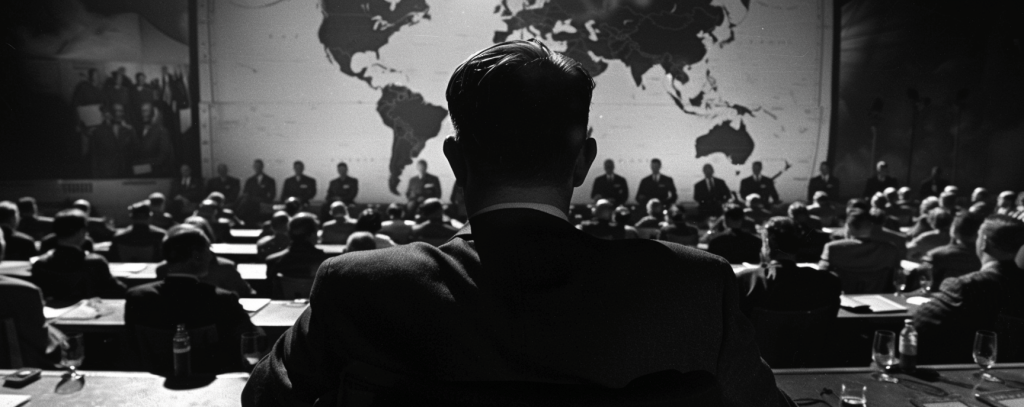
One of the most striking adaptations in the screenplay is the introduction of the War Room, a fictional space that became an iconic symbol of Cold War absurdity. The War Room, with its vast, circular table and imposing maps, served as a stage for the film’s most critical and satirical discussions on the impending nuclear apocalypse. Kubrick’s depiction of the War Room, combined with the screenplay’s sharp dialogue, underscored the surreal nature of military strategy and international diplomacy under the shadow of the bomb.
The shift to satire also allowed Kubrick to explore themes of sexual anxiety and machismo as metaphors for Cold War tensions. The film’s full title, including the phrase “How I Learned to Stop Worrying and Love the Bomb,” suggests a perverse embrace of the very instruments of destruction humanity fears. This theme is further explored through the character of Major T.J. “King” Kong, who rides a nuclear bomb like a rodeo cowboy in the film’s climactic moment—a scene that has since become emblematic of “Dr. Strangelove’s” satirical critique.
Crafting the Satire: Characters and Narrative Devices
In the heart of “Dr. Strangelove’s” enduring appeal lies its masterful deployment of satire, achieved through brilliantly crafted characters and ingenious narrative devices. Stanley Kubrick, alongside co-writers Terry Southern and Peter George, constructed a narrative that sharply critiques the Cold War mentality, the absurdity of nuclear strategies, and the bizarre nature of military and political bureaucracies. By examining the film’s characters and narrative techniques, we can uncover the layers of satire that contribute to its profound commentary on war and peace.
Characters as Satirical Archetypes
Each character in “Dr. Strangelove” is meticulously designed to represent and satirize various aspects of Cold War society and the military-industrial complex. General Jack D. Ripper, portrayed with intense paranoia and obsession, initiates a nuclear attack based on delusional beliefs about Communist conspiracies. His character mocks the extreme anti-Communist sentiment prevalent during the Cold War, highlighting how personal irrationality can have cataclysmic consequences.
Brigadier General Buck Turgidson, with his bombastic patriotism and blatant disregard for human life outside the American context, caricatures the hawkish attitudes of military leaders. His enthusiasm for nuclear war, under the guise of national security, satirizes the dangerous levels of jingoism and the dehumanization of the “enemy” that can pervade military thinking.
President Merkin Muffley, the rational yet impotent leader, embodies the political establishment’s inability to control or mitigate the military’s more destructive impulses. His attempts to maintain peace and reason in the face of impending doom satirize the inefficacy of diplomatic efforts when confronted with the machinery of war. The character’s name itself, Merkin Muffley, carries a satirical edge, with “merkin” referring to a pubic wig, suggesting a façade or cover-up of impotence.
Dr. Strangelove, perhaps the most iconic character, is a former Nazi scientist turned American adviser. His grotesque appearance and uncontrollable Nazi salutes serve as a dark reminder of the post-war recruitment of Nazi scientists by both the Soviet Union and the United States. Dr. Strangelove’s advocacy for a post-apocalyptic society where select individuals would live underground to repopulate the Earth encapsulates the ultimate absurdity of planning for survival after nuclear annihilation.
Major T.J. “King” Kong, the bomber pilot who ultimately delivers the nuclear payload, exemplifies the blind obedience and machismo often associated with military culture. His joyous ride atop a nuclear bomb, descending to oblivion, is a vivid image of the perverse embrace of nuclear weapons, turning a symbol of death into a moment of triumph.
Narrative Techniques and Satirical Elements
“Dr. Strangelove” employs a range of narrative techniques to amplify its satirical tone, using irony, exaggeration, and juxtaposition to critique the logic of nuclear deterrence and the possibility of accidental war. The film’s irony is evident in the portrayal of advanced technological systems, designed to prevent war, instead facilitating its outbreak. The War Room discussions, where military leaders and politicians debate the morality and logistics of nuclear war, are steeped in irony, as the characters seem more concerned with protocol and personal pride than with the millions of lives at stake.
Exaggeration is another key tool. The characters’ behaviors and ideologies are heightened to absurd levels, exposing the folly of their beliefs and actions. General Ripper’s obsession with bodily fluids and purity, General Turgidson’s casual acceptance of mass casualties, and Dr. Strangelove’s bizarre proposals for human survival post-nuclear war are all exaggerated to reveal the underlying madness of their logical extensions.
Juxtaposition further enriches the film’s satirical impact. Scenes of domestic tranquility or bureaucratic normalcy are contrasted with the surreal discussions of global annihilation. The mundane and the catastrophic collide, highlighting the absurdity of conducting discussions about the end of the world in calm, reasoned tones, as if planning a routine military exercise.
Through its characters and narrative techniques, “Dr. Strangelove” masterfully satirizes the Cold War era’s paranoia, political incompetence, and military excess. The film exposes the absurdity of the nuclear age’s precarious logic, where humanity’s survival hinged on the rationality of individuals who are anything but rational. Kubrick’s satirical lens magnifies the madness inherent in treating nuclear war as just another policy option, urging audiences to recognize the folly of entrusting the fate of the world to fallible human institutions. In doing so, “Dr. Strangelove” not only entertains but also delivers a potent critique of the human condition in the nuclear era.
Legacy and Influence: Echoes in Cinema and Culture
“Dr. Strangelove or: How I Learned to Stop Worrying and Love the Bomb” is not just a landmark in the annals of cinema; it is a cultural artifact that captures the zeitgeist of its era while remaining alarmingly relevant in the present day. Its legacy extends far beyond its initial release, influencing countless filmmakers and embedding itself deeply within the fabric of popular culture. This section delves into the film’s enduring impact on cinema and its significant cultural resonance.
Impact on Cinema
“Dr. Strangelove” has left an indelible mark on the landscape of cinematic history, particularly within the genre of political satire. Its innovative approach to tackling the grim subject matter of nuclear war through dark comedy and satire set a new benchmark for filmmakers. The film’s ability to blend humor with serious political commentary inspired a wave of subsequent works that sought to critique society and politics with a similar tonal balance. Its influence can be seen in a variety of films, from the anarchic humor of “MAS*H” (1970) to the satirical bite of “Wag the Dog” (1997), which explores media manipulation and political spin in the context of an international crisis.
Moreover, “Dr. Strangelove” significantly contributed to the discourse on Cold War cinema, providing a counter-narrative to the era’s prevalent propaganda films. Its skepticism towards military authority and political leadership challenged the dominant narratives of the time, offering a cynical yet insightful perspective on the absurdities of the Cold War. The film’s critical stance inspired filmmakers to explore more nuanced and critical approaches to political and military subjects, paving the way for a more skeptical and questioning cinema in the subsequent decades.
Cultural Significance
Beyond its cinematic achievements, “Dr. Strangelove” has become a cultural touchstone, its phrases, characters, and scenes infiltrating the collective consciousness. The iconic image of Major T.J. “King” Kong joyously riding a nuclear bomb to his doom has become a symbol of absurd heroism and the ultimate folly of war. Phrases from the film, such as “Gentlemen, you can’t fight in here! This is the War Room!” have entered the lexicon as shorthand for pointing out the irony and absurdity in various situations.
The film’s influence extends into various realms of popular culture, including television, music, literature, and even political discourse. References to “Dr. Strangelove” are often used to critique political decisions and military policies, demonstrating the film’s continued relevance in discussions about war, peace, and security. The character of Dr. Strangelove himself, with his outlandish proposals for surviving a nuclear apocalypse, serves as a potent metaphor for the lengths to which humanity might go to justify and rationalize its self-destructive tendencies.
The satirical portrayal of Cold War politics and the concept of mutually assured destruction in “Dr. Strangelove” resonates with contemporary audiences facing new global challenges and geopolitical tensions. The film’s enduring appeal lies in its ability to provoke thought and reflection on the nature of power, authority, and the human capacity for self-destruction. As such, it serves as a reminder of the importance of skepticism, critical thinking, and the questioning of political and military orthodoxies.
“Dr. Strangelove” also demonstrates the power of satire as a tool for social and political commentary. Through its exaggerated characters and absurd scenarios, the film offers a critique that is at once humorous and deeply serious, a balancing act that few films have managed to achieve with such efficacy. This dual capacity to entertain and provoke makes “Dr. Strangelove” a quintessential example of how cinema can influence and reflect societal attitudes and anxieties.
As we continue to navigate the complexities of the modern world, “Dr. Strangelove” remains a beacon of satirical brilliance, reminding us of the dangers of unchecked power and the absurdity inherent in the mechanisms of war. Its legacy is a testament to Stanley Kubrick’s genius and the film’s capacity to challenge, amuse, and inspire generations of viewers and filmmakers alike. In an era where the threat of global conflict and the proliferation of nuclear weapons still loom large, “Dr. Strangelove” endures as a crucial cultural artifact, offering both a warning and a wry commentary on the human condition.
✍️ Whether you’re mastering the art of dialogue, structure, or character development, the power of AI can be a game-changer in your writing journey. My Free Ebook, ‘AI for Authors’ delves into how AI-powered prompts can provide a unique edge to your storytelling process. If you’re intrigued by the prospect of supercharging your fiction skills, download your free copy today and explore new horizons in creative writing.
 A.I. in Screen Trade