Introduction to ‘Casablanca’: Setting the Stage
Few films have achieved the iconic status and universal acclaim reserved for “Casablanca.” Released in 1942, amidst the turmoil of World War II, this film transcended its era to become a timeless masterpiece, revered not just for its technical excellence and compelling narrative, but for capturing the essence of love, sacrifice, and the human condition in the shadow of global conflict. “Casablanca” is not merely a film; it is a cultural artifact, a testament to the enduring power of cinema to reflect and shape human emotions and societal values.
Directed by Michael Curtiz and starring Humphrey Bogart and Ingrid Bergman in unforgettable roles, “Casablanca” unfolds in the eponymous Moroccan city, a liminal space teeming with refugees desperate to escape the advancing horrors of the war. The story centers around Rick Blaine (Bogart), an American expatriate who runs a nightclub in Casablanca, and Ilsa Lund (Bergman), the love he thought he’d lost forever. The narrative weaves together themes of love, loss, redemption, and moral ambiguity, against the backdrop of a world at war, making “Casablanca” a compelling study in the art of storytelling and cinematic technique.
Upon its release, “Casablanca” was met with positive critical acclaim and won three Academy Awards, including Best Picture. However, its journey from a well-received wartime film to a perennial classic of world cinema was gradual, fueled by post-war re-releases and a growing recognition of its artistic merits and narrative depth. Today, “Casablanca” is celebrated not only for its narrative and thematic richness but also for its memorable lines, evocative performances, and its capacity to evoke a bygone era with a sense of immediacy and urgency that few other films can match.
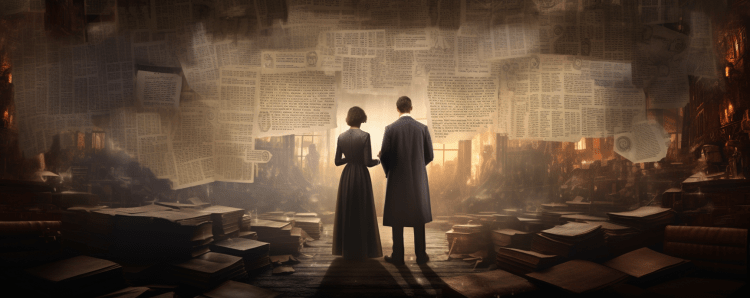
The central love story of Rick and Ilsa is the beating heart of “Casablanca.” Their romance, fraught with sacrifice and unfulfilled desire, encapsulates the film’s exploration of the personal costs of war and the complexities of love and duty. The famous line, “Here’s looking at you, kid,” delivered by Rick with a mixture of affection and resignation, has echoed through the decades, symbolizing the film’s emotional resonance and the bittersweet nature of its love story. This line, among others, underscores the screenplay’s ability to convey deep emotional truths with simplicity and elegance.
The enduring appeal of “Casablanca” lies in its masterful balance of personal drama and the larger historical context. The film captures the tension and uncertainty of the early 1940s, a time when the outcome of World War II was far from certain, and individual fates were caught in the whirlwind of history. Rick Blaine’s nightclub, a microcosm of the war’s geopolitical landscape, becomes a stage where issues of neutrality, sacrifice, and resistance are played out. Through its depiction of a diverse cast of characters—from the cynical nightclub owner to the idealistic resistance leader, Victor Laszlo—the film explores the varied human responses to oppression and conflict.
The Narrative Techniques of ‘Casablanca’
“Casablanca” is more than just a film; it is a narrative masterpiece that weaves together complex characters, intricate plot lines, and rich thematic content through a variety of narrative techniques. The screenplay, penned by Julius J. Epstein, Philip G. Epstein, and Howard Koch, based on Murray Burnett and Joan Alison’s unproduced play “Everybody Comes to Rick’s,” stands as a testament to the power of storytelling in cinema. This section delves into the screenplay’s structure, the impact of its dialogues and character development on the love story, and the significance of motifs and symbols within the narrative.
Exploration of the Screenplay’s Structure: Its Setup, Conflict, and Resolution
The structure of “Casablanca” adheres to a classic three-act formula, yet it does so with such finesse that it feels anything but formulaic. The setup introduces us to the world of Casablanca, a city teeming with refugees and intrigue, and to Rick Blaine, a man whose cynical exterior belies a complex moral compass. Through this introduction, the film establishes its central conflict: the arrival of Ilsa Lund, Rick’s former lover, with her husband, Victor Laszlo, a famed resistance leader. This encounter reignites past emotions and sets the stage for a series of moral and emotional dilemmas that drive the narrative forward.
The conflict in “Casablanca” is multifaceted, intertwining personal stakes with broader political tensions. Rick’s internal struggle between his love for Ilsa and his burgeoning sense of duty mirrors the larger conflict between neutrality and commitment in the face of fascism. The screenplay masterfully escalates these tensions, leading to a resolution that is both unexpected and inevitable. Rick’s decision to help Ilsa and Laszlo escape, sacrificing his own happiness in the process, brings the narrative to a poignant close, affirming the themes of sacrifice, love, and moral clarity.
How the Film’s Dialogues and Character Development Contribute to the Love Story
The dialogue in “Casablanca” is renowned for its wit, emotional depth, and memorability. Lines such as “We’ll always have Paris” and “I think this is the beginning of a beautiful friendship” have become etched in cinematic history, encapsulating the film’s themes and the complexities of its characters’ relationships. The dialogue serves as a crucial tool for character development, revealing Rick’s transformation from a disillusioned cynic to a selfless hero and highlighting Ilsa’s inner conflict between love and duty. The nuanced conversations between Rick and Ilsa are particularly effective, using subtext and silence as powerfully as words to convey the depth of their unresolved feelings.
The development of the characters in “Casablanca” is integral to the love story at its heart. Rick and Ilsa emerge as fully realized individuals, shaped by their past experiences and the choices they face over the course of the film. Their relationship is a dance of memory and desire, marked by longing glances and unspoken truths. The supporting characters, too, contribute to the love story’s complexity. Victor Laszlo’s unwavering dedication to his cause and his love for Ilsa, Captain Renault’s transformation from self-serving opportunist to ally, and even the brief but poignant interactions between the film’s many refugees, all serve to enrich the narrative tapestry of “Casablanca.”
The Use of Motifs and Symbols to Enhance the Narrative
Motifs and symbols play a significant role in deepening the narrative of “Casablanca.” The song “As Time Goes By,” performed by Sam, Rick’s loyal friend and pianist, serves as a recurring motif, evoking the timeless nature of Rick and Ilsa’s love and the pain of their separation. The song’s refrain, “The fundamental things apply, as time goes by,” underscores the film’s exploration of enduring values such as love, sacrifice, and integrity amidst the flux of war and change.
The use of fog as a symbol at key moments in the film, including Rick and Ilsa’s farewell at the airport, adds a layer of visual poetry to the narrative. The fog envelops the characters, mirroring their emotional turmoil and the uncertainty of their futures. It also serves to heighten the sense of transition and impermanence that permeates the film, emphasizing the ephemeral nature of human connections in a world torn apart by war.
“Casablanca” employs these and other narrative techniques with a subtlety and precision that enhance its emotional impact and thematic depth. The screenplay’s structure, rich in conflict and resolution, the nuanced dialogues that reveal character and advance the plot, and the use of motifs and symbols to evoke emotion and underscore the film’s themes, all contribute to the creation of a love story that resonates across generations. Through its masterful narrative techniques, “Casablanca” transcends its historical context to become a universal tale of love, loss, and redemption.
Visual Storytelling and Cinematography in ‘Casablanca’
The visual storytelling and cinematography of “Casablanca” play a pivotal role in cementing its status as a cinematic classic. Directed by Michael Curtiz, the film employs a sophisticated visual language that enhances its narrative depth and emotional resonance. Through a meticulous combination of lighting, framing, camera movement, and production design, “Casablanca” creates a richly textured world that is both evocative and enduring. This section explores how these visual elements contribute to the film’s atmosphere, mood, and the overarching love story at its core.
Analysis of Key Visual Elements That Contribute to the Film’s Atmosphere and Mood
“Casablanca” is renowned for its atmospheric use of light and shadow, which plays a crucial role in establishing the mood of the film. The cinematography, crafted by Arthur Edeson, makes extensive use of chiaroscuro lighting to create stark contrasts between light and dark. This technique is particularly effective in scenes set in Rick’s Café Américain, where the interplay of shadows and light mirrors the moral ambiguities and internal conflicts of the characters. The use of shadows also adds a layer of mystery and suspense, reflecting the tense political backdrop against which the personal drama unfolds.
The film’s mood is further enhanced by its iconic setting. The city of Casablanca is portrayed as a place of intrigue, danger, and romance—a liminal space where destinies can change with the roll of dice or the issuance of an exit visa. The production design, led by Carl Jules Weyl, captures the exoticism and cosmopolitan nature of Casablanca, from the bustling marketplace to the opulent interiors of Rick’s café. These visual elements work together to create an immersive world that is both specific in its historical context and universal in its emotional appeal.
The Role of Lighting, Framing, and Camera Movement in Highlighting Emotional Moments
The emotional potency of “Casablanca” is amplified by its deliberate use of lighting, framing, and camera movement. One of the most memorable examples is the sequence of close-ups between Rick and Ilsa during their reunion in the café. The soft lighting on Ingrid Bergman’s face, contrasted with the harsher shadows on Humphrey Bogart’s, visually encapsulates the vulnerability and strength of their respective characters. The framing of these shots, often in tight close-up, heightens the intimacy of their interaction, drawing the audience deeper into their emotional turmoil.
Camera movement in “Casablanca” is used judiciously to underscore key narrative moments. For instance, the slow dolly in on Rick as he makes the fateful decision to help Ilsa and Laszlo escape underscores the gravity of his choice and the personal transformation it represents. Similarly, the use of tracking shots in the airport finale adds dynamism to the scene, enhancing the suspense and emotional stakes of the farewell.
How the Setting and Production Design Add Depth to the Love Story
The setting and production design of “Casablanca” are integral to its storytelling, providing a tangible backdrop against which the love story unfolds. The design of Rick’s Café Américain, with its elegant Art Deco styling and secluded private rooms, serves as a microcosm of Casablanca itself—a place of refuge, danger, and fleeting connections. The café becomes a character in its own right, a stage upon which the drama of Rick, Ilsa, and Laszlo’s entangled lives is played out. The attention to detail in the café’s design, from the roulette wheel to the ornate bar, imbues the film with a sense of authenticity and groundedness.
The broader setting of Casablanca, with its contrasting visuals of crowded markets and desolate airfields, reinforces the themes of exile and longing that permeate the film. The production design captures the transient nature of the city’s inhabitants, many of whom are caught between worlds, unable to return to their pasts yet uncertain of their futures. This sense of displacement and longing is mirrored in the love story between Rick and Ilsa, making their romance all the more poignant.
In conclusion, the visual storytelling and cinematography of “Casablanca” are fundamental to its enduring impact and appeal. Through the strategic use of lighting, framing, and camera movement, the film crafts an immersive world that is both visually stunning and emotionally resonant. The setting and production design add layers of meaning to the narrative, enriching the love story at the heart of the film. “Casablanca” remains a masterclass in cinematic technique, its visual language as compelling today as it was upon its release. The film’s ability to convey complex emotions and themes through its visual storytelling ensures that it continues to captivate and move audiences, affirming its place as a timeless classic in the annals of cinema.
✍️ Whether you’re mastering the art of dialogue, structure, or character development, the power of AI can be a game-changer in your writing journey. My Free Ebook, ‘AI for Authors’ delves into how AI-powered prompts can provide a unique edge to your storytelling process. If you’re intrigued by the prospect of supercharging your fiction skills, download your free copy today and explore new horizons in creative writing.
 A.I. in Screen Trade