Introduction to Ensemble Storytelling
In the world of film and literature, crafting a narrative with a single protagonist can be a challenging endeavor. Now, imagine multiplying those challenges by weaving together the lives of not one, but several characters, each with their own story, into a cohesive narrative tapestry. This is the art of the ensemble cast, a storytelling technique that, when done correctly, can create a richly layered and deeply engaging experience. A shining example of this complex narrative form is the beloved film “Love Actually,” which skillfully intertwines multiple storylines into a heartwarming mosaic that speaks to the complexities of love.
Understanding the Ensemble Cast Concept
An ensemble cast narrative involves multiple main characters, each with their own distinct storyline, often intersecting with one another in various ways. This approach to storytelling is like a jigsaw puzzle, where each piece has its own individual shape and story but is essential to completing the overall picture. In screenwriting, managing an ensemble cast requires a keen understanding of screenplay structure and character development, as well as a delicate balancing act to ensure that each story is given its due weight and resolution.
‘Love Actually’ as a Case Study
“Love Actually,” written and directed by Richard Curtis, serves as an exemplary case study in ensemble storytelling. Released in 2003, this film weaves together the lives of several couples and individuals in London in the weeks leading up to Christmas. Each storyline explores a different aspect of love, from first crushes to forbidden affairs to the bonds of friendship and family. What makes “Love Actually” particularly notable is how it manages to juggle these varied narratives, giving each enough screen time and emotional depth to engage the audience fully.
The Unique Challenges and Rewards of Writing for an Ensemble Cast
Writing for an ensemble cast presents unique challenges. The primary concern is narrative balance. Each character’s storyline must be developed enough to stand on its own while also contributing to the film’s overarching theme. This requires careful planning in the screenplay structure, ensuring that each storyline is introduced, developed, and resolved in a way that feels natural and satisfying.
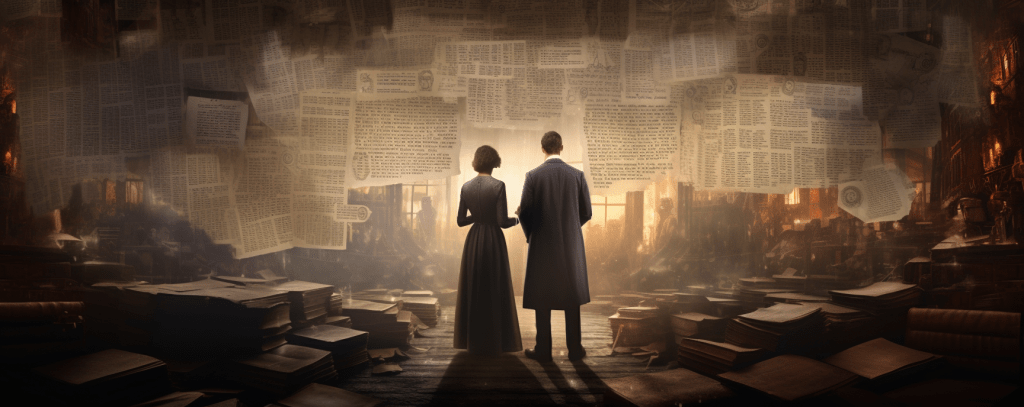
Another challenge is character development. In a standard single-protagonist narrative, the writer has the luxury of time to delve deep into the character’s psyche, background, and evolution. In an ensemble cast, however, screen time is limited, and the writer must find ways to quickly and efficiently establish each character’s personality, motivation, and arc.
Despite these challenges, writing for an ensemble cast also offers unique rewards. It allows for a broader exploration of the film’s central theme, in this case, love, from various perspectives and in different forms. It can also create a richer, more varied emotional experience for the audience, as they are invited to connect with multiple characters and storylines.
Initial Screenwriting Tips for Balancing Multiple Storylines
For those embarking on the journey of writing an ensemble cast narrative, here are a few initial tips:
- Start with a Strong Theme: Having a central theme that ties all the storylines together is crucial. In “Love Actually,” the theme of love in its many forms serves as the anchor for all the individual stories.
- Develop Distinct Character Voices: Each character should have a unique voice and perspective. This not only helps in character development but also ensures that the audience can easily follow and differentiate between the various storylines.
- Plan Your Screenplay Structure Carefully: Be meticulous in planning the introduction, development, and resolution of each storyline. A well-structured screenplay is particularly crucial in ensemble storytelling to maintain narrative coherence and flow.
- Find Natural Intersection Points: Look for organic ways to intersect and weave together the different storylines. This can add depth and complexity to your narrative and provide opportunities for interesting character interactions.
Dissecting ‘Love Actually’: A Study in Screenplay Structure
“Love Actually,” with its tapestry of interwoven narratives, stands as a compelling study in the art of structuring a screenplay with multiple protagonists. This section delves into the film’s structural composition, exploring how its myriad story arcs are developed, intertwined, and unified under a cohesive thematic umbrella.
Analyzing the Structure and Multiple Story Arcs
At its core, “Love Actually” is structured as a series of vignettes, each narrating a distinct story. However, unlike traditional vignettes that stand alone, these stories are skillfully interlaced, both narratively and thematically. The film opens with a montage at Heathrow Airport, setting the stage for a narrative exploration of love in its various forms. From here, the screenplay deftly introduces each storyline, gradually building their individual arcs before weaving them together.
Each narrative thread in “Love Actually” is given its due space to develop. For instance, the story of David (played by Hugh Grant), the newly appointed Prime Minister, and his growing affection for Natalie, a junior member of his household staff, unfolds alongside other narratives, such as the poignant tale of Daniel (Liam Neeson) helping his stepson Sam cope with the loss of his mother. The film’s structure allows these stories to develop independently while maintaining a sense of narrative cohesion.
Techniques for Developing and Intertwining Character Journeys
Developing and intertwining multiple character journeys in a single screenplay is no small feat. “Love Actually” achieves this through a combination of clever scripting and editing. Each character’s journey is introduced and developed in a way that establishes their individual motivations and challenges.
For example, the progression of Sarah’s (Laura Linney) storyline, centered around her unspoken love for her co-worker Karl, is balanced against the comedic and heartfelt pursuit of love by Colin (Kris Marshall), who travels to America. These stories, while different in tone and development, are intertwined through shared locations (like the workplace) and thematic overlap.
The screenplay also employs pivotal moments where different storylines intersect. These intersections are not just narrative conveniences but serve to enrich the understanding of the characters and their circumstances. For instance, the school Christmas concert becomes a focal point where several characters converge, bringing together disparate narrative threads in a moment of collective emotional climax.
The Role of Thematic Consistency
Thematic consistency is the glue that holds the ensemble cast of “Love Actually” together. While each story explores different facets of love – from unrequited love to forbidden love, from the blossoming of new relationships to the complexities of long-standing ones – they all contribute to a larger narrative about the universality and diversity of love.
This thematic through-line is crucial in a screenplay with multiple protagonists. It ensures that, despite their narrative independence, each story feels like a part of a larger, cohesive whole. The thematic consistency in “Love Actually” provides a shared emotional and philosophical ground that resonates with the audience, making the film more than just a collection of separate stories.
Insights into the Screenplay Structure for Multiple Protagonists
Structuring a screenplay like “Love Actually” requires meticulous planning and a deep understanding of narrative pacing. Each story must be given enough time to develop, but not so much that it detracts from the overall narrative flow. This is where the skill of the screenwriter truly shines – in the ability to balance the needs of each storyline while keeping the audience engaged.
One insight from “Love Actually” is the importance of pacing and rhythm in an ensemble screenplay. The film maintains a steady rhythm, with scenes from different stories often juxtaposed to provide contrast and maintain narrative momentum. Additionally, the screenplay ensures that each storyline reaches its emotional peak in the final act, culminating in a satisfying resolution that resonates with the film’s central theme.
Lessons from ‘Love Actually’: Writing Prompts and Tips for Aspiring Screenwriters
“Love Actually” is more than just a beloved holiday film; it is a treasure trove of lessons for any writer or screenwriter looking to master the art of ensemble storytelling. The film’s success in weaving multiple storylines into a coherent and engaging narrative offers valuable insights into tackling ensemble casts. Here, we explore key takeaways, provide writing prompts inspired by the film, and discuss how its approach can influence and enhance screenplay writing.
Key Takeaways for Writers Tackling Ensemble Casts
- Balance is Key: One of the most crucial lessons from “Love Actually” is the art of balance. Each storyline must be given enough weight to feel significant but not so much that it overshadows the others. As a writer, you must juggle different narratives, ensuring each character’s arc progresses logically and emotionally.
- Interconnectivity: The beauty of an ensemble cast lies in the subtle connections between different storylines. These connections don’t have to be overt; sometimes, thematic or emotional links are enough to create a sense of unity within the narrative.
- Thematic Cohesion: A common theme can serve as a backbone, linking disparate stories together. In “Love Actually,” the theme of love in its various forms ties the stories together, providing a unified narrative experience despite the diversity of the plots.
- Character Development: With limited screen time for each character, efficient character development is vital. Quick but powerful character-establishing moments help the audience to engage with each character’s journey.
Writing Prompts Inspired by ‘Love Actually’
- Intersecting Lives: Write a scene where two characters from different walks of life cross paths in a way that subtly influences each other’s storyline.
- A Shared Theme: Choose a theme (like love, redemption, or family) and write short vignettes for three different characters who each explore a different aspect of this theme.
- A Moment of Change: Create a scenario where a character makes a decision that significantly alters their path, and indirectly affects another character’s storyline.
- Diverse Perspectives: Develop a scene repeated from the viewpoints of two different characters, showing how their perceptions and emotions color the events.
‘Love Actually’ and its Influence on Writing Ensemble Screenplays
“Love Actually” offers a masterclass in handling ensemble casts. The film demonstrates the effectiveness of having a central motif, which can be a powerful tool in creating cohesion in a screenplay. For writers, this approach suggests the importance of having a clear vision of the overarching theme that guides the plot and character development.
The film also showcases how to give each character a distinct voice and arc, regardless of their screen time. This approach is particularly beneficial in ensemble screenplays, where the challenge is to create depth and empathy for each character in a limited amount of time.
The Impact of Ensemble Storytelling on Audience Engagement and Narrative Complexity
Ensemble storytelling, when done well, offers a rich and layered viewing experience. It provides multiple entry points for the audience, allowing different viewers to connect with different characters or stories. This multiplicity not only enhances audience engagement but also adds layers of complexity to the narrative, making for a more fulfilling viewing experience.
From an audience perspective, ensemble films like “Love Actually” offer a microcosm of society, reflecting the interconnectedness of human experiences. This style of storytelling can deepen the audience’s understanding and empathy, as they are exposed to a variety of perspectives and experiences.
Conclusion
“Love Actually” stands as an exemplary model for aspiring screenwriters and authors interested in crafting ensemble narratives. Its approach to character development, thematic consistency, and narrative interweaving provides a roadmap for managing multiple storylines effectively. For those looking to hone their skills in this area, the film not only serves as a source of inspiration but also as a practical guide, offering strategies that can be adapted and applied to their creative endeavors. In the landscape of modern storytelling, understanding and mastering the art of the ensemble cast can lead to richly textured, emotionally resonant narratives that resonate with a diverse audience.
✍️ Whether you’re mastering the art of dialogue, structure, or character development, the power of AI can be a game-changer in your writing journey. My Free Ebook, ‘AI for Authors’ delves into how AI-powered prompts can provide a unique edge to your storytelling process. If you’re intrigued by the prospect of supercharging your fiction skills, download your free copy today and explore new horizons in creative writing.
 A.I. in Screen Trade