Introduction to Visual Storytelling in Cinema
In the realm of cinema, the adage “show, don’t tell” is a guiding principle, and few films exemplify the power of this maxim as brilliantly as George Miller’s “Mad Max: Fury Road.” This high-octane spectacle not only captivated audiences with its relentless action and vivid imagery but also served as a masterclass in visual storytelling. By dissecting the techniques employed in this cinematic gem, we can glean valuable insights into how visual elements can profoundly enhance screenplay structure and narrative.
‘Mad Max: Fury Road’ as a Case Study
Released in 2015, “Mad Max: Fury Road” is an adrenaline-fueled odyssey set in a dystopian wasteland. From the opening to the climactic finale, the film is a visual feast, replete with stunning landscapes, kinetic action sequences, and a unique aesthetic that communicates as much about the world and its characters as any line of dialogue. The film’s ability to tell a story predominantly through its visuals, with minimal expository dialogue, sets it apart as a paradigm of cinematic storytelling.
The Importance of Visuals in Narrative
In screenwriting, the challenge is to translate the story from the written word to a visual medium. While traditional screenwriting tips focus on dialogue and plot structure, “Fury Road” reminds us that the visual aspect of a screenplay is equally crucial. Visual storytelling involves using images, colors, movement, and cinematographic techniques to convey the story’s mood, themes, and narrative arcs.
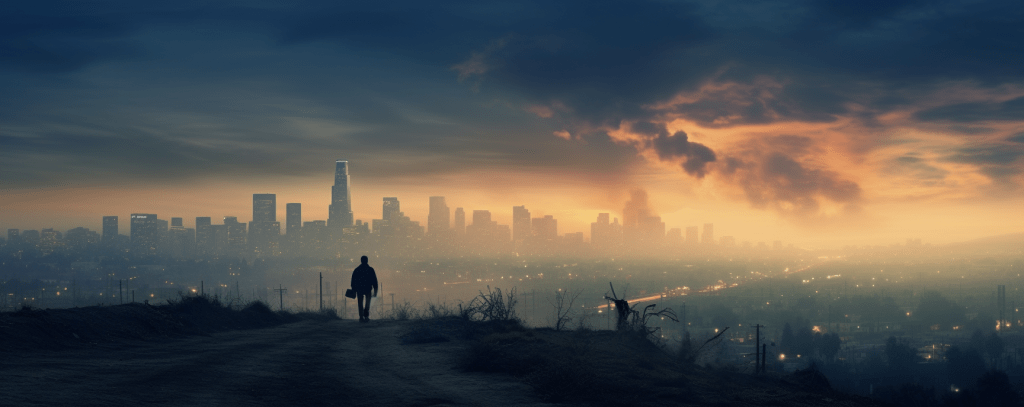
A well-crafted visual narrative can enhance the emotional impact of a story, create deeper connections with the audience, and convey complex ideas efficiently and memorably. For instance, the film’s use of color – the stark contrast between the desolate browns of the wasteland and the vibrant blues and oranges of the sky – is not just visually arresting but also serves to underscore the themes of desolation and hope.
Integrating Visual Storytelling in Screenwriting
When approaching visual storytelling in screenwriting, one must think beyond mere descriptions of settings or characters. It involves envisioning each scene as a piece of a larger visual puzzle. How will the lighting affect the mood? What does the color palette say about the world? How can camera movements enhance the scene’s tension or drama?
In “Fury Road,” for instance, the choice to have long tracking shots during chase sequences immerses the audience in the action, creating a sense of urgency and chaos. This decision, likely outlined in the screenplay, demonstrates an understanding of how visual choices can amplify narrative impact.
For writers looking to improve their writing skills in this area, it’s important to develop a keen eye for visual details and think about how these elements can be woven into the fabric of the story. When writing a screenplay, consider how visual elements can show the audience information rather than relying on dialogue to tell them.
Writing Tips for Integrating Visual Elements
To effectively incorporate visual storytelling into your script, start by visualizing each scene as you write. Imagine you’re the camera: where would you focus in this scene? What details are crucial to convey the emotion or plot point? Sketching scenes, even in a rudimentary way, can be a helpful exercise in visual planning.
Additionally, consider how elements like costume, set design, and color schemes can reflect character development or thematic elements. In “Fury Road,” the costumes and vehicles are not just cool designs; they tell a story of the characters’ ingenuity and the harshness of their world.
Another tip is to use dynamic action descriptions. Rather than static descriptions, convey movement and energy in your scene directions. This approach helps the reader (and eventually the viewer) feel the momentum of the narrative, which is especially crucial in action-packed stories like “Fury Road.”
Breaking Down ‘Mad Max: Fury Road’s’ Visual Storytelling Techniques
“Mad Max: Fury Road” is not just a film; it’s a masterclass in visual storytelling. Each frame, each sequence, and each design choice serves a purpose, collectively creating a narrative as potent visually as it is through its dialogue and plot. Let’s dissect some of the key elements of this visual feast, examining how cinematography, color palette, and production design come together to tell a story that’s as thrilling as it is poignant.
Analyzing Key Scenes for Visual Storytelling Elements
One of the film’s most notable sequences is the initial chase scene. Here, cinematography plays a crucial role. The camera work is frantic, mimicking the chaos and urgency of the chase. Quick cuts, close-ups of characters’ faces, and sweeping shots of the desolate landscape combine to create a sense of disorientation and exhilaration. This scene sets the tone for the rest of the film, establishing not just the physical landscape but the frantic pace of life in this dystopian world.
Another key scene is the night sequence in the blue-hued desert. The sudden shift to cool, blue tones contrasts sharply with the warm, orange-dominated palette of the daytime scenes. This visual shift signals a narrative and emotional shift as well. It’s a moment of relative calm, introspection, and vulnerability for the characters, conveyed primarily through the change in color palette and lighting.
The Role of Cinematography, Color Palette, and Production Design
Cinematography in “Fury Road” is not just about capturing action; it’s about telling the story of this barren, hostile world and its inhabitants. The camera becomes an active participant in the action, moving with the vehicles, zooming into characters’ expressions, and highlighting the stark contrasts of the landscape. The cinematography amplifies the intensity of the narrative, making the audience feel as if they are part of this relentless journey.
The color palette is another powerful storytelling tool used in the film. The dominant oranges and yellows during the desert chase scenes evoke a sense of heat, danger, and desolation, while the cooler blues of the night scenes provide a visual respite, reflecting the narrative’s emotional beats. This use of color enhances the storytelling by visually cueing the audience to the changing dynamics of the plot and characters’ emotions.
Production design in “Fury Road” also plays a pivotal role in narrative enhancement. The design of the vehicles, costumes, and props are not just aesthetically striking; they tell a story of survival, resourcefulness, and the characters’ histories. Each element in the design adds a layer to the narrative, creating a rich, immersive world that speaks volumes about the lives led by its inhabitants.
Writing a Screenplay with Visual Storytelling in Mind
Translating visual ideas into a screenplay can be challenging, as the medium of scriptwriting is inherently word-based. However, “Fury Road” demonstrates how a screenplay can effectively convey visual ideas. When writing a screenplay with visual storytelling in mind, it’s important to be precise yet evocative in your descriptions.
Screenwriters should think like directors or cinematographers, envisioning how a scene will look on the screen. This means considering camera angles, movement, and how these will impact the storytelling. For instance, writing a scene with a note like “The camera races alongside the War Rig, capturing the frenzy of the pursuing vehicles” can provide clear visual direction without overstepping into the director’s domain.
Moreover, screenwriters should use descriptive language to convey the mood and atmosphere of a scene. Phrases that evoke sensory experiences can be particularly effective. For example, describing the oppressive heat and blinding light of the desert or the cacophony of roaring engines and clashing metal can immerse the reader in the world you’re creating.
Applying Visual Storytelling Lessons to Your Own Writing
The striking visual storytelling of “Mad Max: Fury Road” provides more than just cinematic excitement; it serves as a fertile ground for inspiration and learning for writers and filmmakers. Applying these lessons to your own writing can elevate your work, giving it a vivid, cinematic quality that resonates with audiences. Let’s explore how you can harness visual storytelling in your projects, regardless of genre or format.
Writing Prompts Inspired by ‘Mad Max: Fury Road’
One way to improve your visual storytelling skills is through targeted writing exercises. Here are a few prompts inspired by “Fury Road” to get you started:
- Describe a Chase: Write a scene where your protagonist is being chased in a unique vehicle. Focus on the sensory details: the roar of engines, the landscape whizzing by, the protagonist’s heightened awareness.
- Color as Emotion: Choose a color and write a scene where that color dominates the setting, reflecting the emotional state of your characters.
- Post-Apocalyptic World-Building: Create a post-apocalyptic setting. Describe it in such vivid detail that the reader can visualize the world’s desolation and the remnants of the past civilization.
These exercises encourage you to think visually, using descriptive language to paint a picture in the reader’s mind.
Integrating Visual Storytelling into Various Genres and Structures
Visual storytelling isn’t confined to action-packed dystopian films. It can be effectively integrated into any genre, from romance to horror, enhancing the narrative’s impact.
In a romance, for example, the visual elements can underscore the emotional landscape of the story. A scene of two lovers parting at a train station can be made more poignant through the steam of the train, the gloomy weather, or the slow-motion goodbye.
For horror, visuals can be used to build tension. Think of a haunted house where the wallpaper peels like decaying skin, or where shadows seem to move just beyond the corner of one’s eye. These details create an atmosphere that complements the narrative.
In terms of screenplay structure, visual storytelling can be woven into both linear and non-linear narratives. In a linear structure, visuals can highlight key plot points or act as motifs. In non-linear stories, visuals can help differentiate timelines or realities, guiding the viewer through the narrative’s complexities.
Collaborating with Directors and Cinematographers
As a writer, particularly in film, collaboration is key to bringing your visual ideas to life. Directors and cinematographers are your partners in translating your script’s imagery onto the screen. Here are some tips for effective collaboration:
- Communicate Your Vision: Share your vision for the story’s visuals clearly and passionately. Mood boards, sketches, or references to other films can be helpful.
- Be Open to Input: Directors and cinematographers bring their own expertise and creative ideas. Be open to their suggestions and willing to adapt your vision to suit the practicalities of filming.
- Understand the Basics of Filmmaking: Having a basic understanding of cinematography and direction can facilitate better communication. It helps to know what’s possible within the constraints of time, budget, and technology.
- Write Visually, But Not Dictatorially: Your screenplay should suggest visuals without dictating them in excessive detail. Allow room for the director and cinematographer to bring their creativity to the project.
Conclusion
The visual storytelling techniques showcased in “Mad Max: Fury Road” can inspire and inform writers across all mediums and genres. By embracing visual storytelling, you can enhance your narrative’s emotional impact and create a more immersive experience for your audience. Whether through vivid descriptions in a novel, carefully crafted scenes in a screenplay, or collaboration with filmmakers, the potential for visual storytelling is boundless. Embrace these techniques, and you’ll find new ways to bring your stories to life, captivating your audience’s imagination just as powerfully as the wild, dystopian world of “Mad Max: Fury Road.”
✍️ Whether you’re mastering the art of dialogue, structure, or character development, the power of AI can be a game-changer in your writing journey. My Free Ebook, ‘AI for Authors’ delves into how AI-powered prompts can provide a unique edge to your storytelling process. If you’re intrigued by the prospect of supercharging your fiction skills, download your free copy today and explore new horizons in creative writing.
 A.I. in Screen Trade