Introduction: The Quiet Revolution in Storytelling
In a landscape saturated with explosive action flicks and verbose dramas, John Krasinski’s 2018 film “A Quiet Place” emerges as a quiet revolution, quite literally. When most filmmakers depend on dialogue to drive their narratives, Krasinski flipped the script—minimizing spoken words to amplify tension and emotion. The result? A gripping tale that keeps viewers on the edge of their seats using almost entirely nonverbal storytelling techniques.
Nonverbal storytelling isn’t new in the realm of cinema, but few have leveraged it as astutely as Krasinski and his team. Remember the iconic opening sequence of “Up” that told a love story in minutes, without a single line of dialogue? Or the silent communication between characters in “No Country for Old Men”? These instances resonate strongly, underlining the fact that what remains unspoken can sometimes convey much more than words.
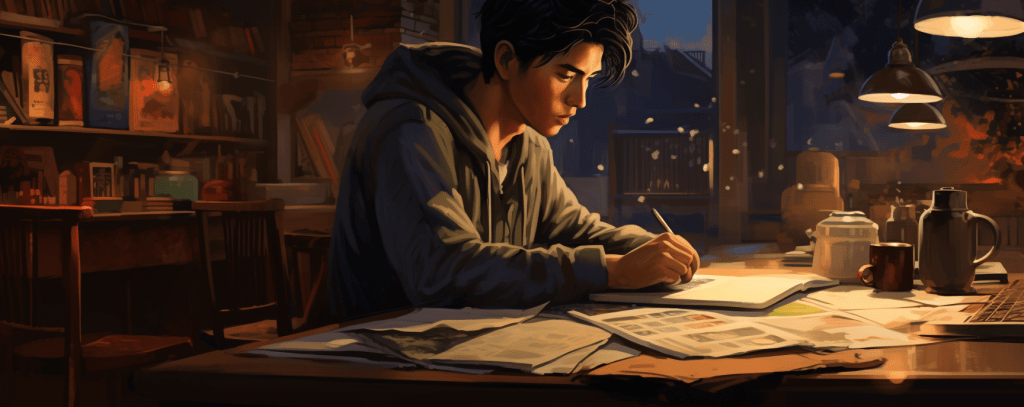
Why does this matter for screenwriting? In an age where dialogue often gets a disproportionate share of attention, aspiring screenwriters might overlook the rich tapestry of nonverbal cues that can be woven into a screenplay. Subtleties in action, environment, and even sound design can serve the narrative in potent ways. These are the underexplored gold mines in the realm of storytelling, a subject that has been researched thoroughly in literary studies, but is not often detailed explicitly in screenwriting manuals.
But why “A Quiet Place?” Well, the film took a risk by relying on a unique screenplay structure that broke conventional storytelling paradigms. Set in a post-apocalyptic world where noise is fatal, it forced its characters—and the audience—into a compelling silence. The sparse dialogue only accentuated the ambient sounds, facial expressions, and body language, transforming them into crucial storytelling tools. Instead of reining in its narrative scope, this stylistic choice expanded it, offering a multi-layered, sensory-rich experience. It’s like reading a novel where every glance counts as a sentence, and each suppressed sob becomes a paragraph.
Understanding nonverbal storytelling means appreciating the weight of the unspoken—the pauses between dialogues, the quivering of a lip, or the crumpling of a paper. All these elements are tools in your storytelling arsenal, and they are particularly powerful in genres that rely heavily on atmosphere and tension, like thrillers, horror, or even drama. This isn’t just about cutting dialogue for the sake of it; it’s about making each element in your script work harder. Think of it as economy of expression, where less truly can be more.
The purpose of this article is to delve into the groundbreaking storytelling techniques in “A Quiet Place.” We’ll unpack its minimalist yet impactful script, exploring how its nonverbal elements not only serve the story but become the story. For budding screenwriters, this offers a masterclass in how you can wield silence and subtext to heighten emotion, create suspense, and communicate complex ideas. If you’ve been focusing mainly on what your characters say, this analysis might encourage you to pay more attention to what they don’t say, without losing the essence of your story.
So, are we downplaying the importance of dialogue? Absolutely not. Dialogue has its irreplaceable role in storytelling, whether in literature or cinema. You only need to look at the sharp wit of “The Social Network”‘s script or the lyrical prose in “Call Me by Your Name” to recognize that. However, as we explore the less-talked-about (pun fully intended) aspects of storytelling, we might discover that a balanced combination of verbal and nonverbal elements can create a compelling tapestry of human experience. And that’s where the magic happens, right?
The Sound of Silence: Understanding Nonverbal Cues in “A Quiet Place”
The magic of “A Quiet Place” lies not just in the absence of dialogue but in the deliberate utilization of nonverbal cues to build its narrative. John Krasinski and his team effectively replaced traditional dialogue with a language composed of visual and audio cues. This bold move pays off in an experience rich in tension and emotion, underlining how effective nonverbal storytelling can be when executed correctly.
Examination of Key Scenes That Rely on Nonverbal Communication
Take, for instance, the nerve-wracking scene where Evelyn (played by Emily Blunt) has to give birth in silence. Words are superfluous in these moments. Evelyn’s pained expressions, the beads of sweat on her forehead, and the heightened ambient sounds like the creaking of the wooden floor or her stifled gasps—these elements tell you everything you need to know. The absence of dialogue focuses the audience’s attention entirely on her ordeal, amplifying the raw emotionality of the scene.
Similarly, the poignant moment where Lee (played by John Krasinski) signs “I love you” to his children speaks volumes without a single spoken word. The weight of his sacrifice, the palpable fear, and the overwhelming love are all conveyed through simple gestures and facial expressions.
The Role of Visual and Audio Cues in Replacing Traditional Dialogue
Visual cues like sign language or color symbolism (notice the prominence of red, signaling danger) serve as a crucial means of communication in the film. These techniques are combined with ingenious sound design. The ambient noises become almost like characters themselves, conveying a sense of danger or relief based on their volume and pitch. If you’re writing a screenplay, consider how your audio landscape can influence your audience’s emotional engagement.
Screenwriting Tips for Utilizing Nonverbal Elements Effectively
For those keen on experimenting with nonverbal storytelling in their own screenplays, here are some tips:
- Be Intentional: Every nonverbal cue should serve a specific narrative purpose. Aim to add layers to a character or further the plot.
- Show, Don’t Tell: This age-old writing tip works well here. Rather than having a character say they’re frightened, show it through their actions or reactions.
- Craft Clear Visual Descriptions: Be as detailed as possible in your script when describing visual cues. The more explicit you are, the easier it’ll be for directors and actors to bring your vision to life.
- Harness the Power of Sound: Think beyond dialogue. Background noises, music, or even the absence of sound can be as telling as words.
The Importance of Pacing and Timing in the Screenplay Structure
When dialogue is sparse or nonexistent, the structure and pacing of the screenplay take on heightened significance. The tension in “A Quiet Place” escalates gradually, each silent moment punctuated by spikes in ambient noise or sudden movements. This creates a rhythmic flow that keeps the audience invested. In your screenplay, pay special attention to pacing—know when to quicken the tempo with rapid action or slow it down with softer, emotional moments.
There’s an art to orchestrating these nonverbal elements in a way that serves the narrative. Crafting such a script requires a nuanced understanding of human emotions, the use of visual elements, and a knack for innovative screenplay structure. In a way, it’s similar to composing a piece of music—every pause, every note, and every crescendo has its role in creating a fulfilling auditory and emotional experience.
Getting this balance right could be a game-changer for your storytelling. Think about it. If one film can captivate audiences worldwide without uttering more than a few lines of dialogue, imagine the storytelling vistas that could open up for you when you apply these principles in your writing. Whether it’s for a suspense thriller, a romantic drama, or a coming-of-age tale, there’s room to experiment with nonverbal storytelling cues. And isn’t that the very essence of creativity and innovation in writing?
Writing the Unspoken: Practical Takeaways for Aspiring Screenwriters
With the profound impact that “A Quiet Place” has had on audiences and critics alike, it’s a no-brainer that the techniques employed in the film offer a goldmine of inspiration for aspiring screenwriters. The film stands as a testament to the storytelling power of the unsaid, the not-shown, and the subtly implied. So, how can you incorporate these innovative storytelling techniques into your own work? Let’s dive in.
How to Incorporate Nonverbal Storytelling in Writing a Screenplay
Firstly, let’s establish one thing: nonverbal storytelling isn’t just about omitting dialogue. It’s about replacing the spoken word with other equally expressive forms of communication. Consider the use of symbols or recurring motifs. A symbol as simple as a flickering light could serve as an ominous warning, while the recurring image of a cherished family photograph could silently communicate the emotional stakes.
Visual metaphors are another powerful tool. Imagine a character constantly trying to fix a broken watch throughout your screenplay. Without saying a word, you’ve communicated their struggle with time or perhaps an inability to let go of the past. The possibilities are as broad as your imagination.
Writing Tips for Achieving Emotional Impact Without Relying on Dialogue
- Precision in Action Descriptions: Be meticulous with how characters interact with their environment. For example, a character furiously scrubbing a coffee stain from a table could express frustration more viscerally than any line of dialogue.
- Master the Art of Pause: Utilize pauses to let the audience soak in a moment, to build tension, or to provide emotional respite. A well-timed pause can be more eloquent than a monologue.
- Facial Expressions and Body Language: Take cues from classic silent films, where actors like Charlie Chaplin spoke volumes without saying a word. Specify your characters’ facial expressions and body language in the script; this nonverbal communication often delivers an emotional payload that resonates deeply.
Writing Prompts Inspired by “A Quiet Place”
Alright, my fellow storytellers, let’s get those creative juices flowing with some writing prompts tailored to explore the world of nonverbal storytelling:
- The Warning: Write a scene where a character must silently warn others of an impending danger. How do they do it? What visual cues or ambient sounds can you utilize?
- The Confession: A character must express love, guilt, or some other intense emotion without speaking. How is this emotion conveyed through actions or the environment?
- The Twist: Without dialogue, reveal a plot twist through visual or auditory cues. This could be anything from a character discovering a hidden door to realizing they’ve been betrayed.
Feel free to let these prompts be the seed of your next script or just a playful exercise to stretch your screenwriting muscles.
Conclusion: The Potential of Silence and Subtext in Enriching Screenwriting Craft
In our dialogue-heavy culture, embracing the art of nonverbal storytelling can be both a challenge and an exciting frontier for creative expression. Films like “A Quiet Place” are shaking the foundations of traditional storytelling, showing that silence can, indeed, speak louder than words.
The use of nonverbal elements not only adds layers to the narrative but also invites audiences to engage more actively, piecing together the unspoken truths and underlying tensions for themselves. It’s an enriching process that deepens the emotional resonance of the story.
To refine your craft, don’t hesitate to read scripts that venture into non-traditional storytelling formats. Analyze them. Dissect them. And then implement what you learn into your own work. It’s an exciting time to experiment and innovate in the realm of screenwriting. Silence and subtext aren’t just storytelling techniques; they’re untapped wellsprings of emotional and thematic depth, waiting to be explored by writers like you.
✍️ Whether you’re mastering the art of dialogue, structure, or character development, the power of AI can be a game-changer in your writing journey. My Free Ebook, ‘AI for Authors’ delves into how AI-powered prompts can provide a unique edge to your storytelling process. If you’re intrigued by the prospect of supercharging your fiction skills, download your free copy today and explore new horizons in creative writing.
 A.I. in Screen Trade