Introduction: The Man, The Myth, The Screenwriter
Billy Wilder is a name that evokes both nostalgia and reverence in the realms of cinema and screenwriting. Born in 1906 in Sucha Beskidzka, then part of the Austro-Hungarian Empire, Wilder navigated an extraordinary life that saw him flee Nazi persecution, cross the Atlantic, and eventually find his way to Hollywood, the land of dreams. It’s a story as compelling as his films, steeped in resilience, humor, and a touch of the extraordinary. But who was Billy Wilder really, and why does his work still resonate in the ever-changing landscape of filmmaking?
Billy Wilder had an extensive and diverse filmography, which spanned several decades. His directorial debut, “The Major and the Minor,” hinted at the brilliance to come. Then, a string of iconic movies followed: “Double Indemnity,” “Sunset Boulevard,” “Some Like It Hot,” “The Apartment,” just to name a few. Wilder worked in an array of genres, but whatever the subject—be it a scathing satire, a romantic comedy, or a gut-wrenching drama—he left an indelible mark. His films are not merely classics; they’re study materials for anyone looking to delve into the art of writing a screenplay.
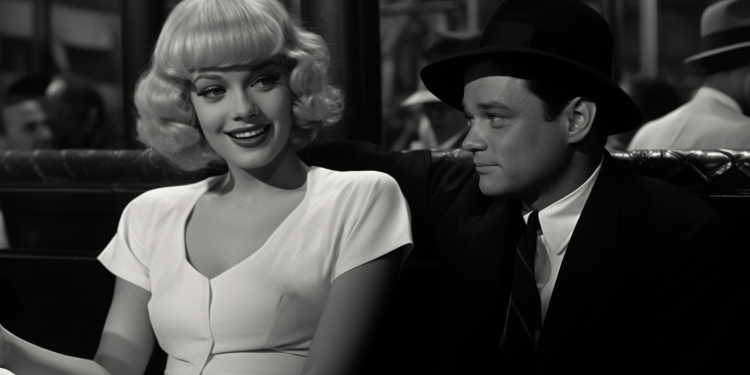
The thing is, Wilder didn’t just write movies; he wrote film textbooks in the guise of movies. In other words, every scene, every line of dialogue, and every plot twist were well-calibrated components of an exceptionally well-structured narrative. Understanding screenplay structure is like learning the rules of the road before you start driving. You might have the most incredible story to tell, but if you don’t know how to structure it effectively, you risk losing your audience. This is where Wilder excelled—his screenplay structures were immaculate, a term I don’t use lightly.
Wilder understood that a screenplay isn’t just about telling a story; it’s about engaging the viewer from the first frame to the last. His approach to screenplay structure was a bit like jazz: deeply rooted in the classics but improvisational, where necessary. His films often followed a three-act model, but he was never shy to twist it, turn it, and make it his own. He understood that the rules were not shackles but springboards. They were a foundation upon which he could build something unique, something mesmerizing. And it’s for this reason that understanding his approach to screenplay structure is not just beneficial but essential for aspiring screenwriters.
So, what is the focus of this article? We’ll delve into Billy Wilder’s unparalleled contributions to screenplay structure. Wilder was the sort of man who had a natural instinct for story architecture. Yet, his innate talents were further honed through years of writing and practical experience, which, when combined, gave us some of the most unforgettable stories ever told on screen. We’ll explore how he achieved what he did, and more importantly, we’ll delve into what modern writers can learn from him.
As a craft, screenwriting is as much about structure as it is about dialogue, characters, or themes. Billy Wilder was a maestro in balancing all these elements, making his contributions to the realm of screenwriting tips a treasure trove for anyone serious about making it in this field. His principles on screenplay structure are not just theoretical postulates; they are battle-tested methodologies that have withstood the test of time. To understand Wilder is to give yourself a robust toolkit for dissecting any movie, any plot, any narrative arc.
There are screenwriters, there are great screenwriters, and then there’s Billy Wilder. In a league of his own, Wilder was not just a filmmaker; he was a storytelling pioneer, a narrative architect, and a screenwriting guru rolled into one. His understanding of screenplay structure turned conventional wisdom on its head and introduced a fresh lens through which stories could be told and experienced. In a way, he revolutionized not just what stories are told but how they are structured, leaving an impact that would echo through the annals of film history.
The Anatomy of a Wilder Screenplay: Breaking Down His Narrative Techniques
A narrative is only as strong as its structure, and when we talk about Billy Wilder, we’re talking about an architect of narrative. Understanding his storytelling techniques isn’t just a film geek’s pastime; it’s a lesson in how to write a screenplay that resonates. So, what made his approach so unique? Well, to answer that, we first need to look at his foundational choice: the venerable three-act model.
Wilder’s Approach to Screenplay Structure: Three-Act Model, with a Twist
Wilder was not a man to shatter the mold, but he would tweak it to suit his storytelling goals. He adhered to the three-act model, a classic screenplay structure dividing a story into Setup, Confrontation, and Resolution. But the magic lay in how he populated these acts. Take “Some Like It Hot,” for example. The Setup is not just a mere introduction; it is an engaging, kinetic roller coaster that establishes characters, setting, and stakes—all while being uproariously funny. The same goes for “Double Indemnity,” where the Setup is a tale in itself, rife with tension and foreshadowing.
Case Studies: Examining the Screenplay Structure in Classics Like “Sunset Boulevard” and “Some Like It Hot”
Let’s dig into the nuances by looking at the structure of two Wilder classics: “Sunset Boulevard” and “Some Like It Hot”.
In “Sunset Boulevard,” the Setup itself is a twist, opening with a dead narrator, Joe Gillis, who recounts the events leading to his death. The Confrontation and Resolution stretch and contort traditional boundaries, offering a deeper dive into character psychology. The film plays with our expectations by maintaining suspense and intrigue, even when the outcome is presented upfront.
“Some Like It Hot” offers a different mastery of the three-act structure. It’s not just the cross-dressing or the gangsters that make this film a hit. It’s the carefully layered conflicts and character arcs that are introduced, built upon, and resolved with such finesse that the viewer might not even realize the complexity of what they’re witnessing. Each character’s desires and conflicts are so expertly interwoven into the main narrative that everything feels seamless.
Writing Tips and Screenwriting Tips Drawn from Wilder’s Techniques
Here’s where the practical application comes in. Aspiring screenwriters should take note of how Wilder accomplished so much within a seemingly traditional framework. First, never waste a scene. Each segment should offer something—be it character development, conflict escalation, or theme exploration.
Secondly, master the art of subtext. Wilder rarely told you what to feel; he showed you a situation and let you fill in the emotional gaps. Your dialogue doesn’t have to state the obvious. In fact, it shouldn’t. Subtlety delivers a more powerful punch.
Thirdly, understand pacing. Wilder’s narratives were tightly wound clocks. Each tick served a purpose, and the pacing was such that the viewer never felt rushed or bored. Achieving this balance is a skill, and a crucial one for anyone looking to improve their writing skills.
Wilder’s Legacy: Practical Applications for Modern Screenwriters
If you’re a modern screenwriter scratching your head over how to construct a compelling narrative, your screenplay’s blueprint could well be hidden in a Billy Wilder film. His techniques may have been birthed in the Golden Age of Hollywood, but they’re as timeless as the three-act structure itself.
First and foremost, Wilder shows us that character is key. Whether you’re writing a romantic comedy or a psychological thriller, your characters need to be multi-dimensional beings. Create characters who possess conflicting desires or ethical dilemmas, much like Joe Gillis in “Sunset Boulevard.” This allows for richer storytelling as your characters navigate through the acts, bringing depth to your screenplay structure.
Screenwriting Tips for Aspiring Writers Inspired by Wilder
- Master the Opening Hook: Start your script with a bang, something to instantly grab your audience’s attention. Remember the dead narrator in “Sunset Boulevard”? That’s the sort of audacity you should aim for.
- Layer Your Conflicts: Incorporate both internal and external conflicts. In “Some Like It Hot,” the characters aren’t just running from mobsters; they’re also battling gender norms, love triangles, and their own moral compasses.
- Dialogue as a Tool: Use dialogue to reveal character traits and motivations without making it expository. Wilder’s scripts are full of subtextual dialogue that accomplishes multiple things at once.
- Visual Storytelling: Wilder was an advocate for showing rather than telling. Instead of a long monologue about a character’s backstory, find a visual way to provide the same information. This enhances the cinematic experience.
- Pacing and Timing: Learn to use pacing to accentuate critical moments in the narrative. Slow down when you need to focus on emotional gravity and speed up during action scenes or comedic elements.
Writing Prompts for Practicing Techniques Found in Wilder’s Films
Okay, it’s your turn to apply these techniques. Here are some writing prompts to kickstart your creativity:
- Write an opening scene where the main character is in a perilous situation. Now, make the rest of the script reveal how they got there.
- Construct a dialogue-heavy scene without any exposition. Let your characters talk about something seemingly mundane, but layer it with subtext that reveals deeper truths.
- Create a single setting, à la “The Apartment,” and make everything happen there. How can you introduce a variety of conflicts and resolutions in a confined space?
- Develop a character with a secret. Now, write a scene where they almost get caught, heightening the tension and stakes without revealing the secret to other characters.
- Write a turning point for your protagonist. How can you make this moment both surprising and inevitable, keeping your audience on the edge of their seat?
Conclusion: Why Wilder’s Approach to Screenplay Structure Still Matters Today
Billy Wilder’s films were not just products of their time; they were lessons in timeless storytelling. The complexity of his characters, the ingenuity of his plot twists, and his mastery over dialogue and pacing make his films perpetually relevant. And his adaptability within the three-act structure offers a valuable lesson for contemporary screenwriters: the basics work, but it’s how you color between the lines that defines your story’s resonance.
So, as you’re writing a screenplay, remember to look back to go forward. Techniques from cinematic legends like Wilder are not just historical footnotes; they are tools for you to elevate your own craft. Your screenplay could very well be the “Double Indemnity” or “Some Like It Hot” of today. Why? Because great storytelling knows no era. And that, my friends, is the indelible legacy of Billy Wilder.
✍️ Whether you’re mastering the art of dialogue, structure, or character development, the power of AI can be a game-changer in your writing journey. My Free Ebook, ‘AI for Authors’ delves into how AI-powered prompts can provide a unique edge to your storytelling process. If you’re intrigued by the prospect of supercharging your fiction skills, download your free copy today and explore new horizons in creative writing.
 A.I. in Screen Trade