The Magic of Writing Prompts in Fueling Creativity
The blank page—simultaneously a canvas of endless possibilities and a daunting abyss of white space. You’re staring at it, and it’s staring back at you, tauntingly. Sounds familiar? Well, you’re not alone. Whether you’re writing a novel, penning a screenplay, or crafting a short story, creativity often feels like an elusive muse that comes and goes as she pleases. But what if you could lure her back whenever you wished? Enter the magic of writing prompts.
Writing prompts are like a shot of espresso for your imagination. They give you a starting point—a sentence, a situation, or even a single word—and let you run wild with it. If you’re skeptical, think about it this way: Have you ever been in a conversation where someone poses an interesting question, and suddenly, you’re off to the races with your thoughts and theories? Writing prompts do precisely that, except this conversation is between you and your inner storyteller.
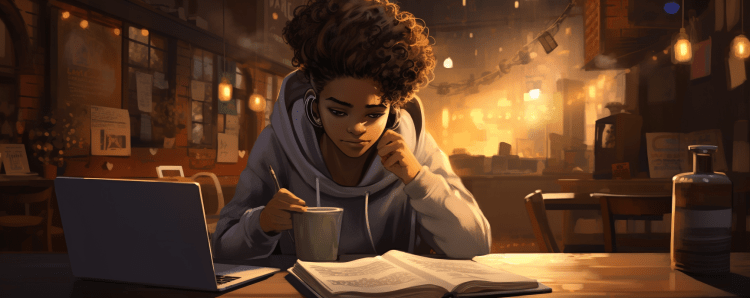
So why are writing prompts such a vital tool in a writer’s arsenal? For one, they break down the intimidating barrier of the blank page. Staring down an empty document can be paralyzing, even for seasoned writers. But when you have a prompt, you’re no longer starting from scratch. You have a seed, and your job is to water it. Even the great Stephen King once mentioned that ideas are like fossils—you unearth them bit by bit. A writing prompt can serve as your shovel.
It’s not just newbies who can benefit from a good prompt; even established authors have their dry spells. Think of J.K. Rowling, who famously came up with the idea for Harry Potter during a train ride. Ideas can come from anywhere, but sometimes, they need a little nudge. In Rowling’s case, the train ride, the scenery, and the people-watching acted as ‘real-world’ prompts. If writing prompts can work for someone who gave us the Wizarding World, why not for the rest of us?
Now, there’s also a psychological perk to using prompts: they make you commit. You see, the more you ruminate over your writing, the more likely you are to procrastinate. By committing to a prompt, you’re essentially giving yourself a mini-assignment. This changes your mental frame from “I have to write something perfect” to “I have to write something.” That shift can be liberating.
It’s also worth mentioning that writing prompts are the ultimate creative workout. Just as you would do some stretches before a strenuous exercise, prompts can act as a warm-up for your writing muscles. They prepare you for the more extensive writing projects you may have, effectively helping you improve your writing skills.
But let’s talk about the fun part: the sheer unpredictability of it all. You never know where a prompt might take you. One moment you could be writing about a mysterious door that appears in your living room, and the next, you find yourself crafting a complex fantasy world with its own set of rules. Prompts are also versatile; they can fit into various genres and styles, accommodating your creative whims.
What’s beautiful about prompts is that they aren’t just for solo writers. They can be a fantastic tool for writing groups or classes, creating a shared space for creativity. Remember the Iowa Writers’ Workshop? This world-renowned program has been known to use prompts to inspire its students, which have included the likes of Flannery O’Connor and John Irving. If it’s good enough for a Pulitzer Prize winner, it’s good enough for us mere mortals.
Finally, the best thing about writing prompts? They’re everywhere! From dedicated prompt books to online communities, you’ll find a plethora of options tailored to every genre, style, and mood.
In short, writing prompts aren’t just an exercise; they’re a celebration of what makes writing such an adventure—the thrill of the unknown, the joy of discovery, and the sheer exhilaration of creating something out of nothing. Whether you’re a novice looking for writing tips or a seasoned author stuck in a rut, never underestimate the power of a good prompt. It might just be the key to unlocking your creative treasure chest.
Writing Prompts for Every Genre: Sparking Your Imagination
You’re raring to go, fingers itching to dance across the keyboard. You’ve got your steaming cup of coffee, a playlist of ambient noise—or maybe you’re a ‘silence is golden’ type. Regardless, you’re settled in your favorite writing spot, but wait… what are you actually going to write about? Before you spiral into the writer’s block abyss, let me introduce you to a treasure trove of writing prompts designed for every genre.
Let’s kick things off with fiction. Ah, the genre of unlimited scope, where you can conjure worlds with the stroke of a pen. One of my favorite writing prompts for fiction is: “Write a story that starts and ends with the same sentence, but make the sentence have a completely different meaning by the end.” This challenge does wonders for developing your storytelling skills. It pushes you to consider narrative arc, character development, and most importantly, how to structure your screenplay or novel in a way that it comes full circle.
If you’re more into non-fiction, don’t feel left out; we’ve got something for you too. Try tackling a prompt like: “Write about a moment in history from the perspective of a forgotten bystander.” This can be a phenomenal way to hone your research skills while lending a fresh angle to known events. Think about those everyday citizens in the backdrop of Martin Luther King’s “I Have a Dream” speech or the local Parisians witnessing Marie Curie’s ground-breaking experiments. The world is full of unsung heroes and unnoticed witnesses; why not give them a voice?
For those who are deep in the labyrinthine corridors of creative writing, let’s not forget the beloved realm of fantasy and sci-fi. How about this for a prompt: “Write a story where magic is a finite resource, and the world is running out.” This isn’t just an imaginative playground; it’s an exercise in world-building and perhaps even a subtle nod to themes of environmentalism and scarcity. Are you the next Ursula K. Le Guin or Philip K. Dick in the making? You won’t know until you try.
I can hear my mystery and thriller aficionados asking, “What about us?” Have no fear! Imagine crafting a story based on this prompt: “Write a mystery where the detective solves the case but decides to let the criminal go.” The possibilities here are electrifying. You could delve into the complexities of morality, explore the psychology of your characters, and keep your readers on the edge of their seat, all in one go.
If romance is where your heart lies, then bask in the glory of prompts like “Write a love story where the main characters are from different timelines.” This kind of prompt not only lets you play with romantic tension but also gets you juggling with high-concept ideas. It’s like mashing together the DNA of “Outlander” and “The Notebook”, and who wouldn’t want to read that?
Let’s not forget our poets—oh, the lyrically gifted souls who can say so much with so little. A simple prompt like “Write a poem about the moment night turns to dawn, without using the words ‘sun,’ ‘moon,’ ‘night,’ or ‘day'” can be an enlightening exercise in metaphor and abstraction.
And for our screenwriters, you know the unique challenges you face in writing a screenplay: limited space, the visual storytelling, the tight arcs. Why not try a prompt aimed at this medium like: “Write a 5-minute screenplay about two people stuck in an elevator, but they can only communicate through song lyrics.” This could be a quirky exercise to think about dialogue, pacing, and let’s face it, it just sounds like a lot of fun.
For writers interested in exploring self, memoir prompts can be deeply therapeutic. Try writing to this prompt: “Describe the room where you spent most of your childhood in extreme detail, then reveal why you can never go back there.” It’s not just about the room; it’s about your past, your emotional fabric, and how space and time have shaped who you are.
So, how do you make the most of these prompts? Well, the first step is to choose one that resonates with you. Once you’ve made your pick, set aside dedicated time to write. Go where your imagination leads you, but also don’t be afraid to veer off course. These are merely starting points, so feel free to break the rules a little. And don’t forget to read and revise; every draft brings you one step closer to your masterpiece.
In sum, the right writing prompt can be more than just a nudge; it can be the catalyst that transforms a fleeting thought into a compelling story. So, go ahead and seize these sparks of inspiration. After all, every fire starts with a single spark.
Making Prompts Your Own: How to Customize and Elevate Your Writing
So, you’ve picked a prompt that tickles your imagination. You’re ready to tackle it head-on, but there’s this lingering question: How do you truly make a writing prompt your own? How do you extract its maximum potential and translate it into a piece that’s uniquely you? Let’s explore some techniques that can propel your creativity to soaring heights.
First off, know that the best writing is authentic writing. Even if you’re borrowing a writing prompt from a list, you have to infuse it with your own experience, beliefs, and even your idiosyncrasies. For instance, say you’re working with the prompt: “Write a story where magic is a finite resource, and the world is running out.” Now, it might be tempting to think of Hogwarts on the brink of an energy crisis, but what if you frame this magical world around, say, indigenous myths or your local folklore? It’s like taking the initial framework of “Pan’s Labyrinth” and steeping it in the culture of your choice. Unique, powerful, and authentically yours.
One of the finest writing tips you’ll ever hear is to bring your own emotional truths into your narrative. Take a seemingly straightforward prompt like “Write about a moment in history from the perspective of a forgotten bystander.” Now, fill it with the emotions of someone who has been overlooked their entire life, or conversely, someone who chose to be anonymous for reasons known only to them. Suddenly, you’ve got layers of complexity that didn’t exist in the original prompt. You can capture the frustration or the serenity of your character with as much poignancy as Virginia Woolf did in “Mrs Dalloway”.
Let’s talk about voice. This is your stylistic signature, the literary equivalent of your spoken accent. A prompt is a skeleton; your voice is the flesh and blood. When writing a novel or even a short story, always remember to give prominence to your unique style of storytelling. If your narrative voice leans toward the dry humor of Kurt Vonnegut, let that shine through, even if the prompt seems dead serious. On the flip side, if you lean towards melancholic beauty like Kazuo Ishiguro, even the most cheerful prompt can be colored with a tinge of sadness. The point is, bend the prompt, don’t let it bend you.
If you’re dabbling in poetry or creative writing, experiment with form to elevate your prompt. Take something as simple as “Write a poem about the moment night turns to dawn,” and structure it as a sestina or a haiku. The constraints of the form will force you to think in ways you haven’t before, enriching your original idea. The magic really begins when limitations meet imagination.
For screenwriters, you’ve got the unique task of thinking visually. A prompt for you is more than just a storytelling challenge; it’s an opportunity to improve writing skills that make scenes come alive. So, when you pick a screenwriting prompt like “Write a 5-minute screenplay about two people stuck in an elevator,” think about camera angles, think about the lighting, think about how the actors would convey emotion through expression rather than dialogue. Your script is a blueprint for another form of art; make sure it’s a good one.
Customizing your prompts extends into the realm of research too. Your take on a prompt like “Write a love story where the main characters are from different timelines” can become infinitely more intriguing when you dive deep into the eras you’re contrasting. Learn the lingo, understand the social mores, and get a grasp on the fashion and technologies of the time. You’re essentially taking a leaf out of the extensive research tactics used by authors like Ken Follett in epics such as “The Pillars of the Earth”.
Lastly, engage with your audience. One of the most direct ways to improve writing skills is to share your work, especially when based on common prompts. Writing communities, both online and offline, can provide feedback, alternative approaches, and even the kind of constructive criticism that makes your work better.
In essence, a writing prompt is a seed. Your creativity, your experiences, your skills—they’re the soil, the sunlight, and the water that will nurture that seed into a full-fledged tree, unique in its splendor. So go ahead, take that writing prompt and make it unequivocally yours. Because the best stories are not just well-written; they’re well-lived.
✍️ Whether you’re mastering the art of dialogue, structure, or character development, the power of AI can be a game-changer in your writing journey. My Free Ebook, ‘AI for Authors’ delves into how AI-powered prompts can provide a unique edge to your storytelling process. If you’re intrigued by the prospect of supercharging your fiction skills, download your free copy today and explore new horizons in creative writing.
 A.I. in Screen Trade