The Blank Canvas: Understanding the Challenges and Joys of Writing a Novel
The blank page: it’s both a writer’s nemesis and most ardent suitor. Before it becomes a labyrinth of sentences, subplots, and emotional arcs, it exists in a state of infinite potential. It’s easy to underestimate just how daunting this canvas can be, particularly when you’re embarking on the adventure of writing a novel. In contrast to a short story or a screenplay, a novel is a marathon, not a sprint. But let’s get one thing straight—this stretch of emptiness is not an obstacle. It’s an opportunity.
Let’s talk about the ‘blank canvas syndrome.’ You stare at your computer screen, the cursor blinking as if taunting you. In this moment, the white abyss embodies every fear you’ve ever had about your creative abilities. Sounds melodramatic, but it’s something even celebrated authors like Stephen King have admitted to grappling with. In his must-read, “On Writing,” King touches on the universal vulnerability that comes with writing—whether you’re a newbie or a seasoned vet.
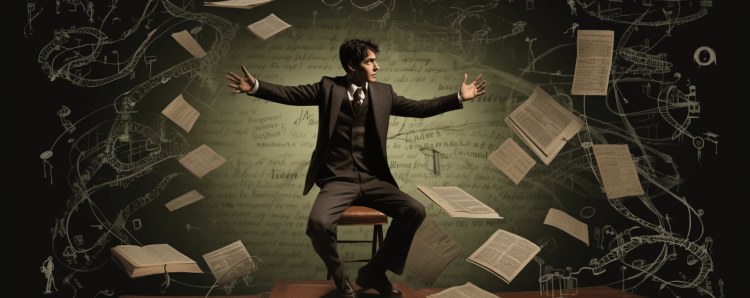
The emotional rollercoaster of writing a novel is another beast altogether. Imagine being the screenwriter, director, and leading actor of your own epic saga. The highs are mesmerizing—you’re crafting worlds, birthing characters, and sometimes even surprising yourself with plot twists. The lows, however, can make you question why you ever thought writing a novel was a good idea. Rejections, writer’s block, and the persistent feeling that your work isn’t “good enough” can take a toll.
At this point, it’s crucial to realize that every writer has been where you are now. J.K. Rowling was famously rejected numerous times before Harry Potter could wave his wand in the literary world. George Orwell had to grapple with initial indifference towards classics like “1984.” The road to crafting a memorable novel is filled with ups and downs, and understanding this is your first step towards being patient with yourself.
So, how do you go from seeing the blank page as an intimidating challenge to an inviting canvas? One word: perspective.
Think of it as your very own Tabula Rasa, a philosophical concept that suggests the human mind starts as a blank slate. Your story is your mind’s offspring. It’s still unformed, awaiting your wisdom, experiences, and imagination to shape it. Not so intimidating when you consider that every classic novel from “To Kill a Mockingbird” to “One Hundred Years of Solitude” started precisely where you are—faced with a white void.
If you’ve been keeping up with writing tips from industry veterans, you’ve probably heard the advice, “Write what you know.” Well, here’s a twist: Write what you feel. Emotional authenticity is a ticket to writing a novel that resonates with readers. The page is blank because it’s waiting for something only you can give it: a piece of your world, reflected through your unique lens.
You might already have a toolkit for your writing—maybe a writing prompt or two, some outlines, perhaps a pile of scribbled notes. The importance of such toolkits can’t be overstated, but they come later. First comes the willingness to leap into the unknown. So the next time you confront the blank page, remember this: It’s not a barrier. It’s a doorway. And on the other side is a world only you can create.
The blank canvas, then, is an invite—a dare, if you will. It’s daring you to jot down the first sentence, to mess up, to rewrite, to pull your hair out, and then to find that one idea, that one phrase that makes you nod and say, “Yes, this is it.” When you find it, you’ll realize that all those writing tips and all that advice about improving your writing skills weren’t just platitudes. They’re a compass guiding you through the enthralling yet demanding terrain of novel writing. That blank canvas? It’s your universe waiting to be penned, one word at a time.
The Idea Factory: Where Does the Magic Happen?
When it comes to generating ideas for your novel, we often get stuck in this notion that inspiration has to strike us like a bolt of lightning from the heavens. But here’s the truth: Lightning rarely strikes if you’re not standing out in the rain, right? The act of brainstorming for your novel doesn’t have to be a passive, wait-and-see process. Instead, let’s shift the paradigm and envision your mind as an ‘Idea Factory’—a proactive space where creativity is manufactured through intention and effort.
One of the most reliable gears in your Idea Factory is your own life experience. Look, I’m not saying you have to go through some earth-shattering event to be able to write about it. Just remember that every relationship, every job, and even the most mundane conversation you’ve ever had is a potential seed for a storyline or a character. Think Jack Kerouac and “On the Road,” a seminal work inspired by road trips and a close circle of friends. Real-life experiences infuse your writing with an authenticity that can’t be easily fabricated.
Speaking of fabrication, let’s touch upon the world of “what if?” This is where your imagination can run wild. What if a young orphan discovered he was a wizard? That question alone gave rise to the Harry Potter series. Asking yourself “what if” questions could lead to the discovery of untapped stories lingering in the corners of your mind. This is a valuable writing tip that can help jumpstart your novel when you’re lacking a clear direction.
Now, if you’re still feeling a bit adrift, writing prompts can act as lifeboats. Consider them catalysts that can spark a reaction when your Idea Factory seems to be running low on raw materials. Many writers swear by writing prompts to kick-start their creativity or even overcome writer’s block. But it’s not just about responding to the prompt; it’s about letting it simmer in your mind until it evolves into something unique to you. Sometimes, a single prompt can open floodgates of interconnected ideas, themes, and characters.
Another gear in your Idea Factory is your creative writing circle. Whether it’s a formal writers’ group, a class, or a couple of friends you trust with your early drafts, this circle can offer constructive criticism that opens new avenues for your story. Perhaps you’ve introduced a character who’s more compelling than your protagonist, but you’re too close to your work to see it. Or maybe your plot lacks a certain emotional weight that a different perspective could pinpoint. The social aspect of writing should never be underestimated; it can significantly improve your writing skills.
And, of course, let’s not forget the all-consuming act of reading. If you want to get really good at writing, you need to get really good at reading. This doesn’t mean you should imitate other authors; it means understanding why a particular piece of writing resonates with you or why it doesn’t. What did you like about the structure of “Gone Girl” by Gillian Flynn? What made the characters in “The Great Gatsby” so memorable? Analyzing the works of others can provide a valuable roadmap for your own journey in writing a novel.
However, don’t let your admiration for other writers intimidate you into inertia. Remember, even the most celebrated authors had to start somewhere. A wonderful example is Ernest Hemingway’s iceberg theory. Hemingway posited that the substance of a story should remain below the surface, implying that what’s left unsaid often holds more weight. It’s a theory he developed over time, through trial and error, and it might inspire you to develop your own distinct style.
Let’s be honest: The Idea Factory is never really closed. It’s always there, in the background, processing your experiences, questions, and daydreams into potential stories. But it does need fuel, and that’s where your active participation comes in. Dive into the pool of your own experiences, explore the landscape of ‘what if,’ use writing prompts as stepping stones, be open to feedback, and read voraciously.
Unleashing Creativity: The Road from Idea to Manuscript
You’ve got this brilliant idea, an intricate plot, and multi-dimensional characters just itching to leap off the page. Your Idea Factory has been busy, and you’re armed with nuggets that promise an exciting novel. Now what? How do you go from this conceptual stage to actually writing a novel that does justice to the brilliance in your head?
First, let’s talk structure. No, structure isn’t the enemy of creativity; it’s the scaffold that allows your creativity to flourish. Whether you’re an outliner who needs to have every detail mapped out or a pantser who prefers to wing it, some form of structure is essential. Think of the classic three-act structure as your foundational framework. It’s proven, it’s reliable, and it’s why movies like Star Wars and books like To Kill a Mockingbird are timeless classics. Now, I’m not saying you can’t deviate from this, but it’s a solid starting point.
Once you have a skeleton, you need to flesh it out. This is where you employ your writing tips and techniques, translating your ideas into scenes, dialogue, and action. And how you do that can either elevate your story or flatten it. Take dialogue, for example. It should serve multiple functions: advancing the plot, revealing character, or providing necessary information. Consider the sharp, memorable dialogue in Aaron Sorkin’s The Social Network; it not only pushes the story forward but also reveals character depth.
Now, let’s confront a dreaded foe many writers face: writer’s block. Yes, even with the best-laid plans and a bustling Idea Factory, you might hit a wall. When that happens, don’t despair; it’s an opportunity to step back and reassess. Sometimes, the best writing prompts are questions directed at your plot or characters. Ask yourself what motivates a character at this point in the story, or how can a plot twist organically arise from the story’s circumstances? These targeted questions can serve as internal prompts, breaking down the monolith of writer’s block into more manageable pieces.
Then there’s the much-feted writing environment. Where you write can dramatically impact how you write. Whether you need the buzzing energy of a coffee shop or the serenity of your home office, make sure your surroundings foster productivity. Pay attention to ergonomics too; comfort can substantially improve writing skills by reducing physical strains that can impede the creative process.
Here’s a nifty trick: Try the Pomodoro Technique. Essentially, you write in bursts of 25 minutes, separated by 5-minute breaks. This can help combat fatigue and keeps your mind fresh. Several apps can help you keep track of your time. But remember, it’s not just about filling time; it’s about making the time count. Aim for quality over quantity.
Feedback is a crucial part of the writing process. Constructive criticism from trusted sources can offer invaluable insights. In many cases, you might be too close to your project to see its flaws or its potential. So, when you do receive feedback, be open but also discerning. Not all advice is good advice. At the end of the day, it’s your story, and it should align with your vision.
As your novel progresses, don’t forget to revisit and possibly revise your initial outline or structure. The story often evolves during the writing process, and being too rigid can stifle creativity. Take Stephen King’s approach, for instance. He’s known for his “situation” method where he places characters in a situation and lets the story unfold. This can lead to unexpected but rewarding twists in the narrative.
Finally, let’s talk about the importance of drafting and revision. Your first draft is just that—a draft. It’s your thoughts put down on paper, not the final product. Don’t fall into the trap of endless editing during the initial stages. It’s easy to get caught up in perfecting every sentence, but this can hamper progress. You can always go back and polish; what you need initially is a complete draft.
Embrace the revision process as an opportunity to refine, to dig deeper, and to elevate your story to the masterpiece you envisioned. Look at J.K. Rowling’s early drafts for Harry Potter, and you’ll realize how significantly a story can evolve from its first iteration. The key is to keep writing and keep refining. It’s not just about how to start writing a novel; it’s also about how to finish it—and finish it well.
In summary, writing a novel is a marathon, not a sprint. It’s a complex interplay of ideas, structure, technique, and relentless effort. By systematically and creatively approaching each of these elements, you’re not just writing a novel; you’re crafting an experience, a journey for your readers. So, get those fingers dancing on the keyboard and bring that incredible story to life. After all, the world is waiting to read your masterpiece.
✍️ Whether you’re mastering the art of dialogue, structure, or character development, the power of AI can be a game-changer in your writing journey. My Free Ebook, ‘AI for Authors’ delves into how AI-powered prompts can provide a unique edge to your storytelling process. If you’re intrigued by the prospect of supercharging your fiction skills, download your free copy today and explore new horizons in creative writing.
 A.I. in Screen Trade